 English
  العربية
  日本語
日本語  한국어
한국어  Tiếng Việt
  ไทย
ไทย  Bahasa Melayu
  فارسی
فارسی  Bahasa Indonesia
  ဗမာစာ
ဗမာစာ  简体中文
简体中文  香港中文
香港中文  繁體中文
繁體中文  Русский
  Deutsch
  Nederlands
  Italiano
  Français
  Español
  Português
  Afrikaans
  Azərbaycan dili
  Български
  ਪੰਜਾਬੀ
  हिन्दी
  اردو
اردو  বাংলা
বাংলা  Հայերեն
  Íslenska
  Қазақ тілі
  नेपाली
  Српски језик
  Kiswahili
  తెలుగు
  Basa Jawa
  தமிழ்
தமிழ்  मराठी
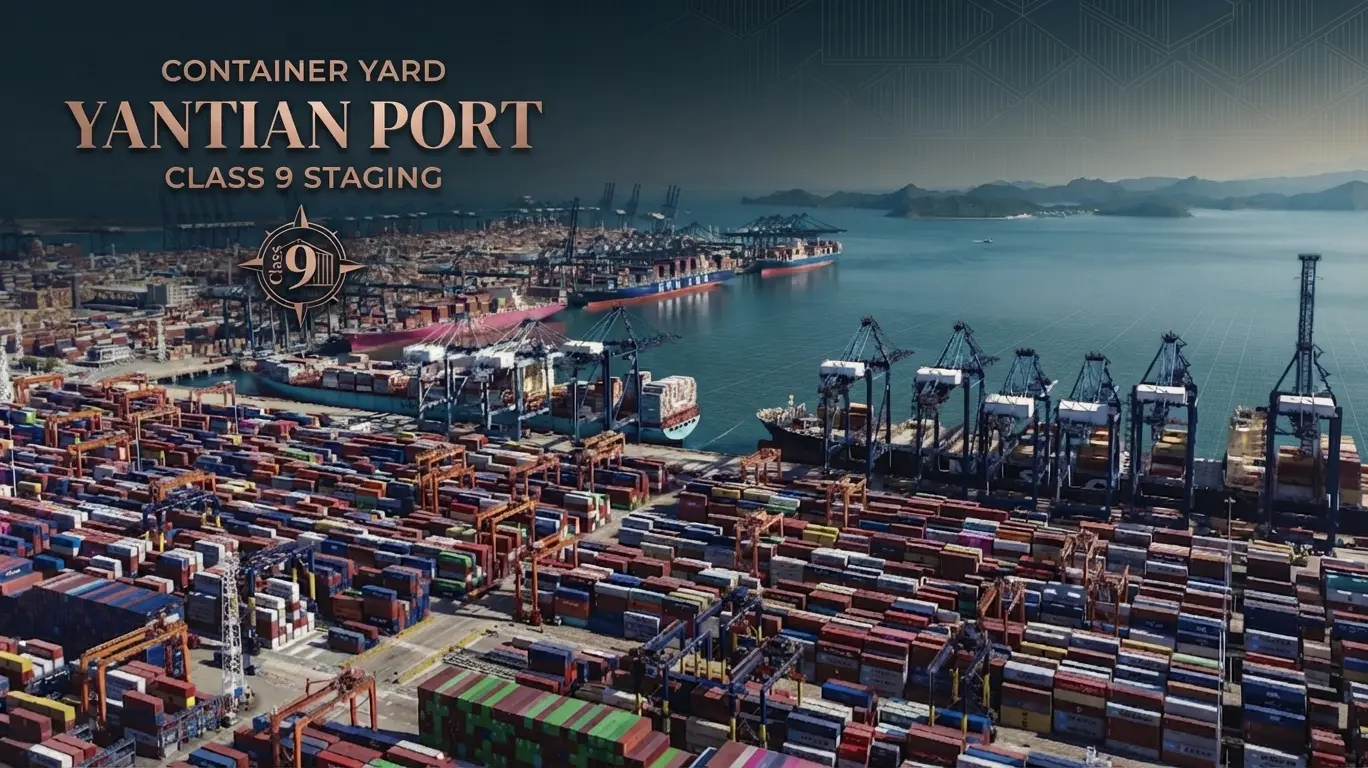
मराठी A 48V 100 Ah LFP rack battery leaves a factory in Shenzhen on a Tuesday. On Friday the container is still sitting in Yantian port, held because the UN38.3 test summary names a cell supplier that doesn’t match the bill of materials. Demurrage runs every day the box doesn’t move, and your installer in Rotterdam is calling twice a day asking where the batteries are.
UN
3480
Lithium Ion Batteries · Class 9 · P903
UN38.3 Is the Gatekeeper – What the Eight Tests Actually Do
UN38.3 is the document customs officers and carriers check first. It proves the battery passed Section 38.3 of the UN Manual of Tests and Criteria, and it applies to every lithium chemistry, LiFePO4 included. A pack without a valid UN38.3 report does not get loaded, full stop.
The standard contains eight tests, numbered T1 through T8, and each one simulates a specific failure the shipping environment might cause:
- T1 Altitude simulation holds the battery at 11.6 kPa (roughly 15,000 m) for at least 6 hours to check for leakage or venting at low pressure.
- T2 Thermal test cycles the battery between -40 °C and +72 °C for 10 cycles and confirms the casing survives rapid temperature swings inside an unheated container hold.
- T3 Vibration sweeps 7–200 Hz to mirror three weeks of ship engine vibration.
- T4 Shock applies 150 g peak acceleration to small cells and 50 g to large packs, simulating a dropped pallet.
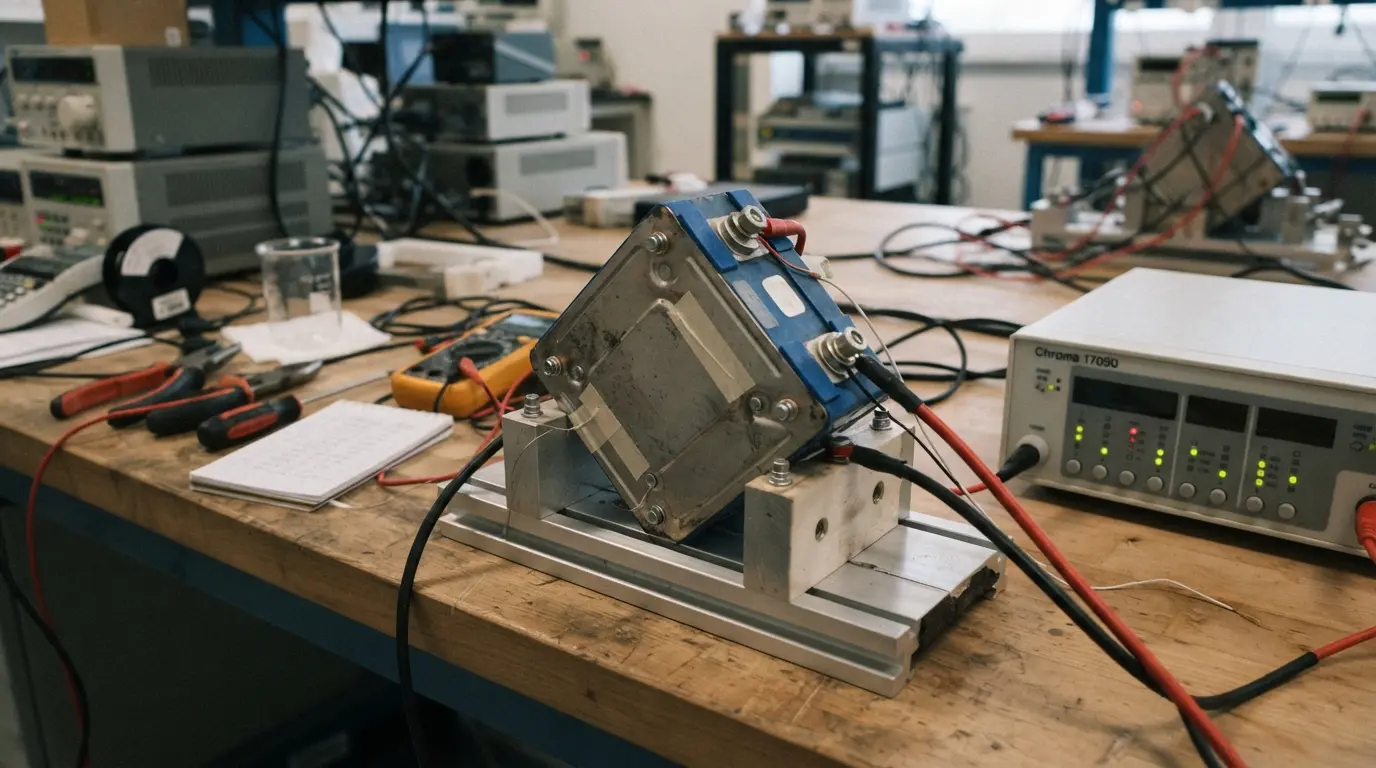
- T5 External short circuit shorts the terminals at 55 °C ambient—the test behind the terminal caps you see on every properly packed battery.
- T6 Impact and crush drops a 9.1 kg bar onto cylindrical cells and crushes prismatic cells at about 13 kN to verify the can won’t rupture under stacking damage.
- T7 Overcharge pushes the battery beyond its charge limit at twice the recommended current.
- T8 Forced discharge over-discharges a cell to confirm it fails safely rather than violently.

Two details trip up more buyers than any other. First, since 1 January 2020 the UN38.3 Test Summary is a separate mandatory document—the full report alone is not enough, and the summary must be readily available to the supply chain. Second, the report names the exact cell model, pack model and BMS configuration. Change the cell supplier on revision B of your pack and the old report becomes worthless; you retest or you don’t ship.
Beyond UN38.3, the shipment needs a 16-section SDS under GHS, a Class 9 dangerous goods declaration, and a UN number assigned by shipment form: UN 3480 for standalone batteries, UN 3481 for batteries packed with or inside equipment.
What Your OEM Should Deliver Before the Container Is Sealed
This is where a genuine OEM/ODM partner earns their margin. A factory that has shipped batteries for years hands you a complete freight folder; a trading company forwards you whatever it can find on WeChat. Ask for the folder before you pay the deposit.
The complete set looks like this:
-
UN38.3 test report plus the separate Test Summary, both in English and both matching your exact BOM
-
16-section SDS for the finished pack
-
Dangerous goods declaration for the port of export
-
A UN performance-tested packaging certificate for the crate itself—in China this appears as the dangerous goods packaging certificate (危包证) issued by the inspection authorities, and Chinese customs will not release the container without it
-
For large ESS cabinets, UL 9540A thermal-runaway test data, which the IMDG Code does not require but which a growing number of carriers and marine insurers now ask to see before they accept 500 kg battery units
A tier-1 OEM also manages state of charge at the factory gate. Most major carriers on Asia–Europe lanes accept lithium battery cargo only at 30% SOC or below, so the factory discharges every pack before packing and records the voltage of each serial number on the packing list. If your supplier cannot produce those voltage records, assume the packs went in fully charged—and assume the carrier will find out.
The same partner can brand the shipping documents and labels in your company name, handle MOQs down to 100 units with shared-container options, and turn a sample shipment with full documentation in about three weeks. None of that comes from a datasheet.
Choosing Your Shipment Configuration – UN3480, UN3481 or UN3171
The declaration changes with how the battery travels, and each form carries different packaging and SOC expectations. Importers who mix these up lose days at booking.
| Shipment form | UN number | Key IMDG references | Typical SOC requirement | Packaging expectation |
|---|---|---|---|---|
| Standalone battery (rack, wall-mount, cabinet) | UN 3480 | Class 9, packing instruction P903 | ≤ 30% per most carrier terms | UN-tested crate, terminals insulated, cushioning between units |
| Battery packed with or inside equipment | UN 3481 | Class 9, P903 | ≤ 30% per most carrier terms | Battery secured inside the equipment or separate UN-approved packaging |
| Battery installed in a vehicle or machine | UN 3171 | Special provisions 961/962 | ≤ 50% under current IMDG guidance for vehicles | Battery disconnected or protected against inadvertent activation |
| Small cells and packs (cell ≤ 20 Wh, battery ≤ 100 Wh) | UN 3480 or 3481 under SP188 | Special provision 188 | No fixed limit, but carriers still often cap at 30% | Strong outer packaging with the lithium battery mark, exempt from full Class 9 paperwork |
The practical takeaway for a distributor is simple. If you import bare rack batteries, book UN 3480 and expect the strictest scrutiny. If you import batteries inside pre-built inverter cabinets, UN 3481 slightly simplifies handling but the battery inside still needs its own UN38.3 coverage. Confirm the SOC limit with the shipping line before the factory seals the crates—terms differ between carriers and lanes.
Four Mistakes That Hold Containers at the Port
One – Shipping at full charge. A fully charged LFP pack is a smaller fire risk than a charged NMC pack, but the carrier does not grade on a curve. Discharge every unit to 30% SOC or lower, record the voltage per serial number, and hand those records to the forwarder. Fifteen minutes at the factory saves fifteen days at the port.
Two – Borrowing someone else’s UN38.3 report. A report from a different pack model, a different cell supplier or an older BMS revision will not survive a customs check against your BOM. Verify the model numbers on the report, the Test Summary and the battery label are identical, down to the firmware version line where applicable.
Three – Skimping on packaging. IMDG packing instruction P903 requires each battery fully enclosed in inner packaging, terminals protected against short circuit, non-conductive cushioning between units, and a strong rigid outer packaging. Batteries with a gross mass above 12 kg need a strong, impact-resistant outer casing—for rack batteries that means a plywood crate that has passed a drop test, not a recycled carton. Once a crate shows crushed corners or a torn UN mark, it is no longer compliant, even if the battery inside is fine.
Four – Misdeclaring to save freight cost. Declaring lithium batteries as general cargo is the fastest way to earn a fine, a seized container or worse. One misdeclared container fire can trigger a carrier-wide ban on a shipper. Declare Class 9 with the correct proper shipping name, mark every package with the UN number, and placard the container on all four sides.

Questions Buyers Ask Before Booking
No. LFP is more thermally stable, but the IMDG Code treats all lithium chemistries the same for certification. Every LFP pack ships with the same UN38.3 and Class 9 paperwork as any other lithium battery.
A full T1–T8 test program at an accredited lab typically runs two to four weeks. Factor it into the project plan before the first production run, not after the container is booked.
Not under the IMDG Code. However, for large energy storage cabinets, many carriers and marine underwriters now request the thermal-runaway test data before accepting the booking. Treat it as a commercial requirement for big units, not a regulatory one.
30% SOC or below covers the requirement of essentially every major carrier on Asia–Europe and transpacific lanes. Some lines accept 50% for vehicle installations. Confirm the exact cap in writing with the line before packing.
Ship With a Document Set, Not a Prayer
Sea freight certification for energy storage batteries is not a hurdle the industry is waiting to lower—it is a filter, and it works. The importer who arrives at booking with a matched UN38.3 report, the Test Summary, an SDS, UN-tested packaging and 30% SOC voltage records is the importer whose container leaves the port on schedule.
- UN38.3 Matched
- Test Summary
- 16-Section SDS
- UN-Tested Crate
- ≤ 30% SOC Records

Next Step
If you are looking for an experienced manufacturer, please provide us with your requirements, and we will provide you with a complete OEM & ODM solution as well as a clear and professional process within 24 hours.