1000W Portable Power Station 1000Wh – Emergency Power Supply with Metal Case for Home & Outdoor
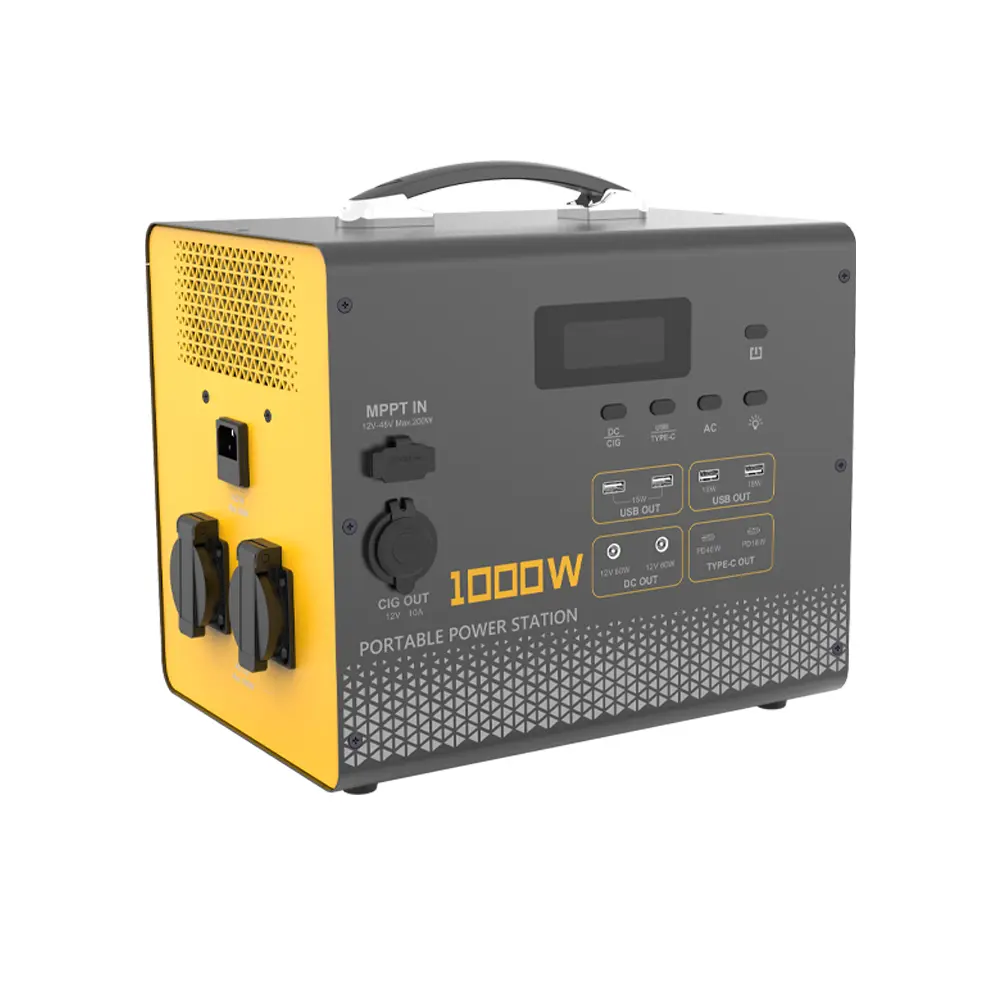
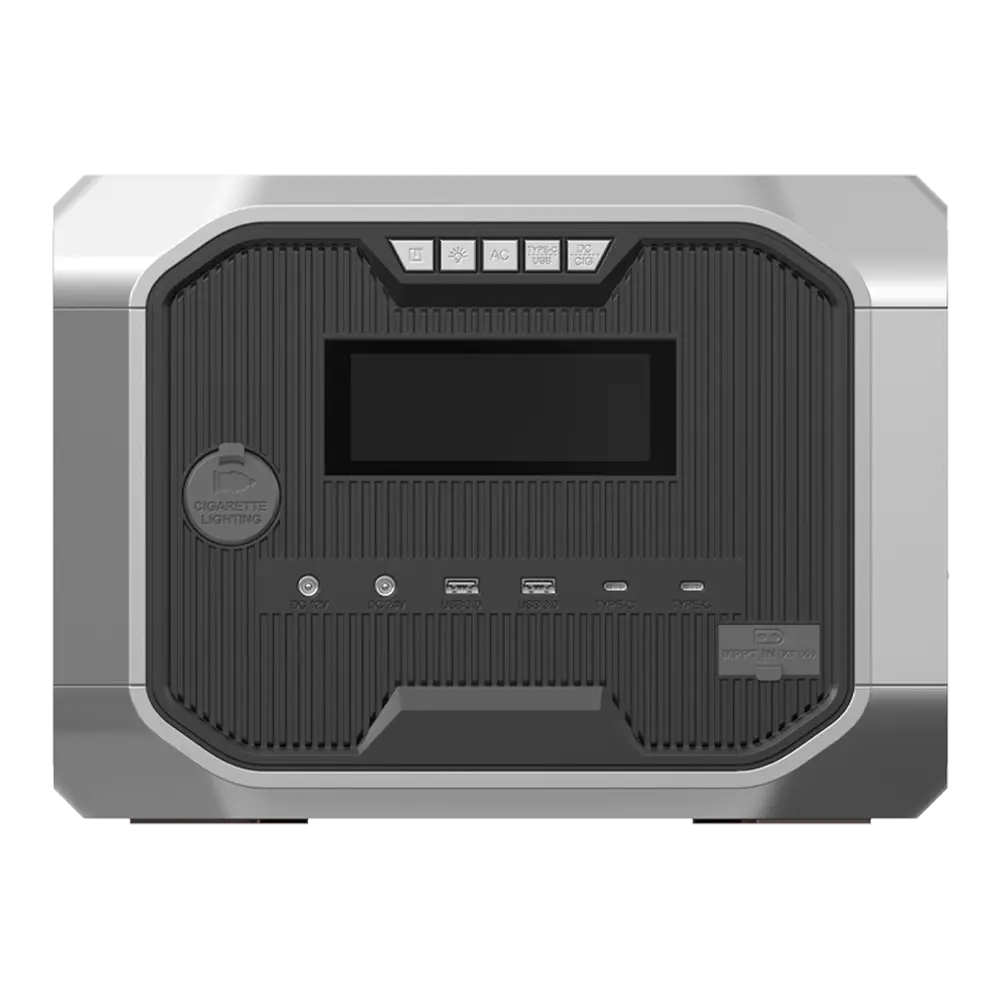
The sheet metal portable power station 1000W is a high-capacity energy solution designed for home backup, outdoor activities and mobile electricity applications. Built with a rugged metal housing and LiFePO4 battery, it provides stable and safe power with over 4000 life cycles. OEM and ODM customization are supported for distributors and brand customers.
With 1008Wh capacity and a pure sine wave inverter, this 1000W portable power station can power most daily appliances while operating silently and emission-free compared with gasoline generators, making it safe for indoor environments.
Get an up-to-date quote with additional free information to download!
Reliable 1000W Portable Power for Home and Outdoor
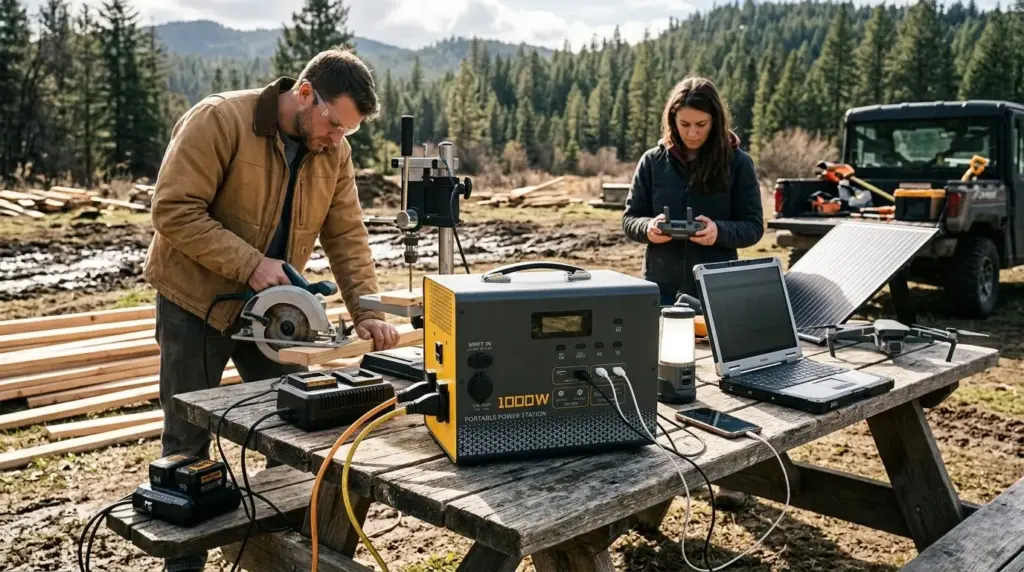
This portable power station 1000w with solar panel compatibility supports laptops, TVs, routers, cameras, drones, lighting systems and small refrigerators. It is suitable for camping, RV travel, emergency preparedness and field work. Pure sine wave output protects sensitive electronics from voltage fluctuations and interference.
Durable Metal Housing & Long-Life LiFePO4 Battery
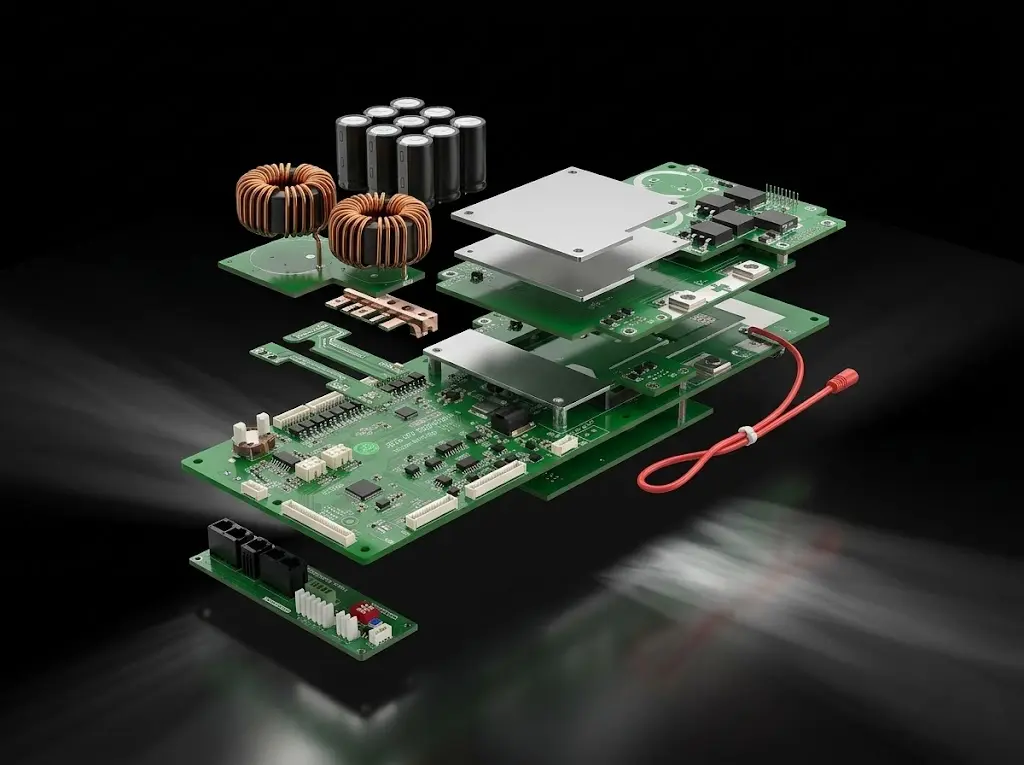
The intelligent battery management system includes:
This is essential for safe daily use, travel, and emergency backup conditions.
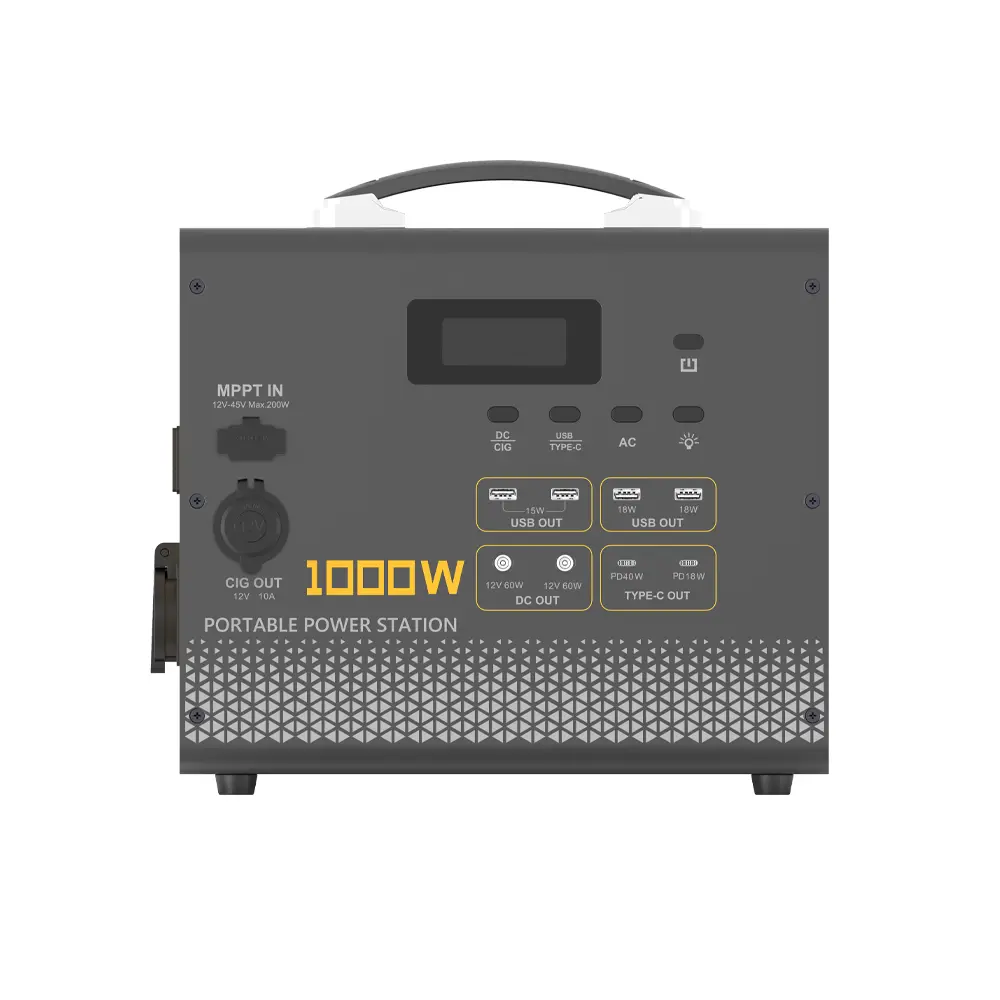
Multi-Device Fast Charging Interfaces
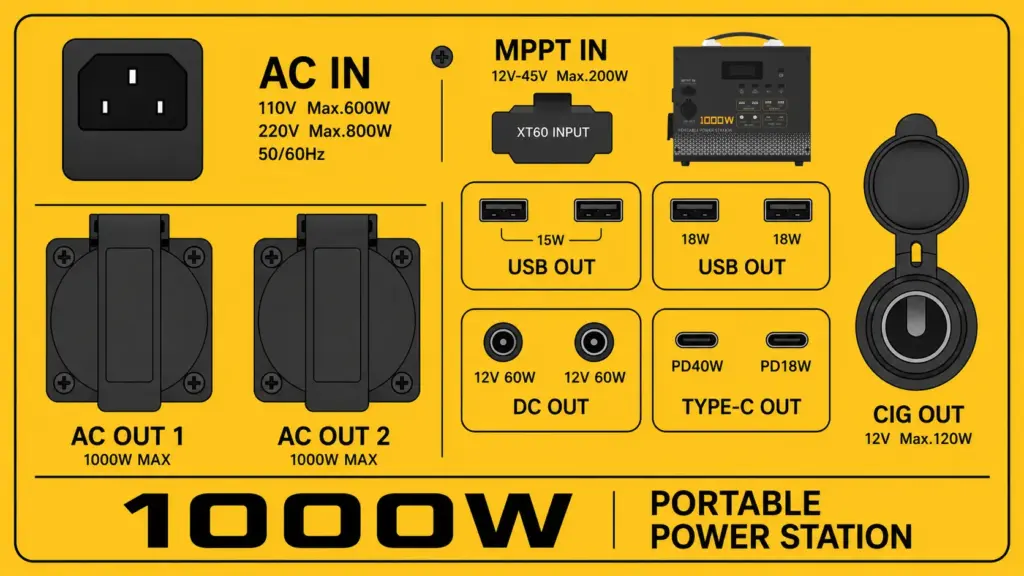
Multiple ports allow simultaneous charging:
- Type-C bidirectional PD fast charging for laptops and tablets
- USB outputs for phones and cameras
- DC ports for routers and communication devices
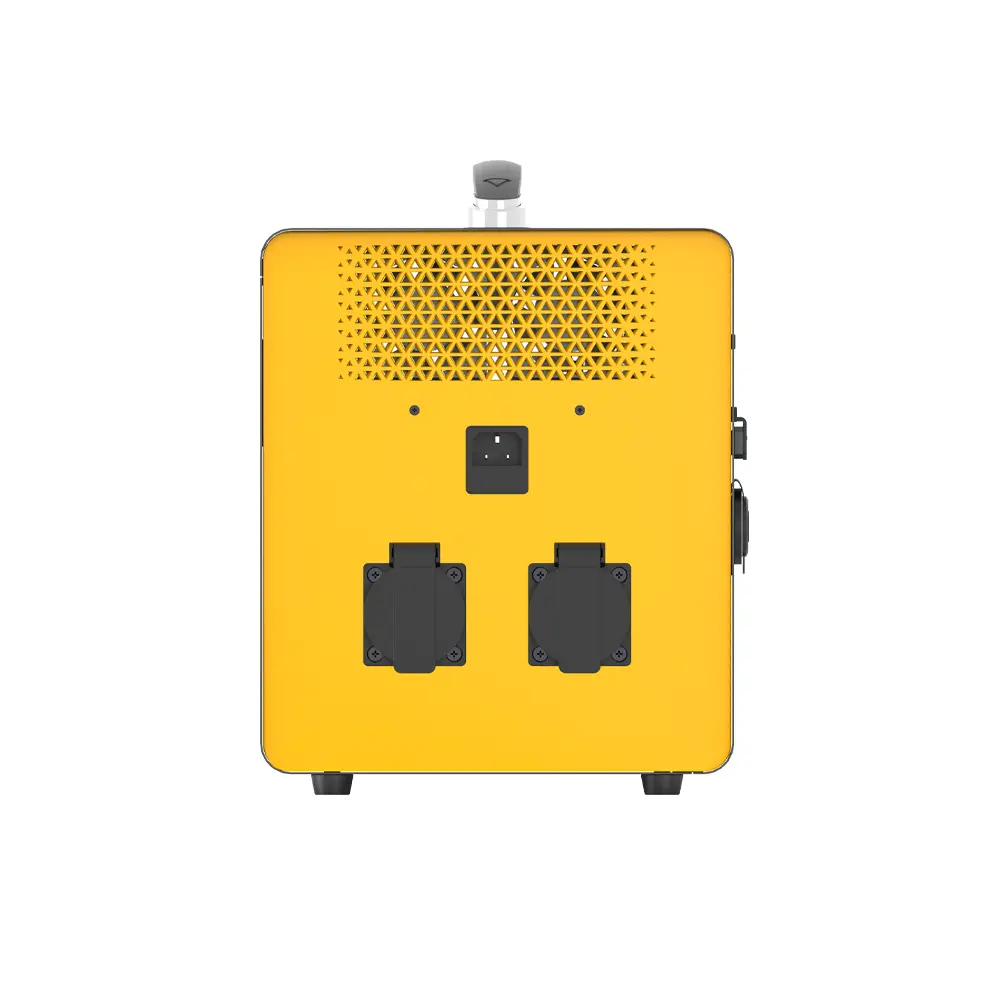
- Dual AC outlets delivering stable 1000W output
- This makes the unit suitable for nearly all daily electronics.
Fast Recharge & Solar Charging Support
Up to 800W AC input allows full charging in about 1.5 hours. The unit also supports solar panel charging through MPPT input and car charging, making it a dependable portable power station 1000W for off-grid power and travel energy independence.
Application Scenarios
Home blackout backup for essential appliances
Camping and outdoor electricity
RV and van life energy supply
Mobile office and field operations
Emergency disaster preparedness kits
Parameters
| Name | Portable Power Station |
| Rated Power | 1000W |
| Capacity | 1008Wh |
| Battery Type | LiFePO4 Battery |
| Material | Sheet Metal |
| Lifespan | ≥ 4000 cycles, 70% EOL, 25°C |
| Waveform | Pure Sine Wave |
| LED Light | 3W |
| USB-A Output × 2 | 15W |
| USB-QC Output × 2 | 18W |
| USB-C Output × 2 | PD40W / PD18W |
| DC5521 Output × 2 | 12V5A 60W Max |
| AC Output × 1 | 2 outlets, 1000W Max |
| Cigarette Lighter × 1 | 12V10A 120W Max |
| MPPT Input | 200W Max |
| AC Input | 800W Max |
| Operating Temperature | -15°C ~ 45°C |
| Weight | N.W: 14.2 kg G.W: 15.95 kg |
| Dimensions (L×W×H) | Product: 315×230×270 mm Packing box: 392x297x296 mm |
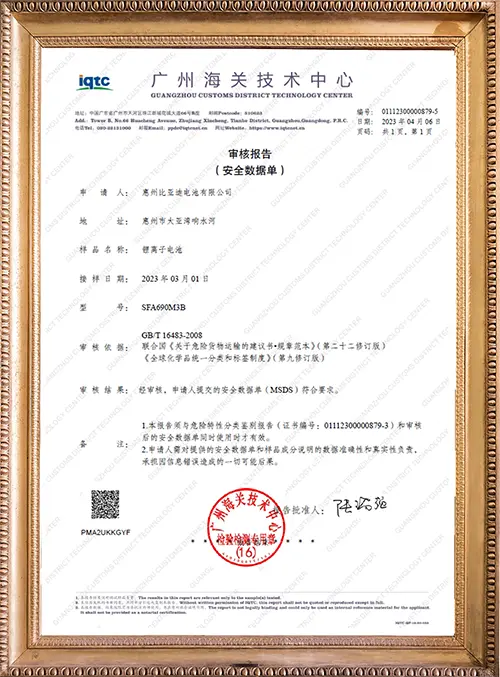
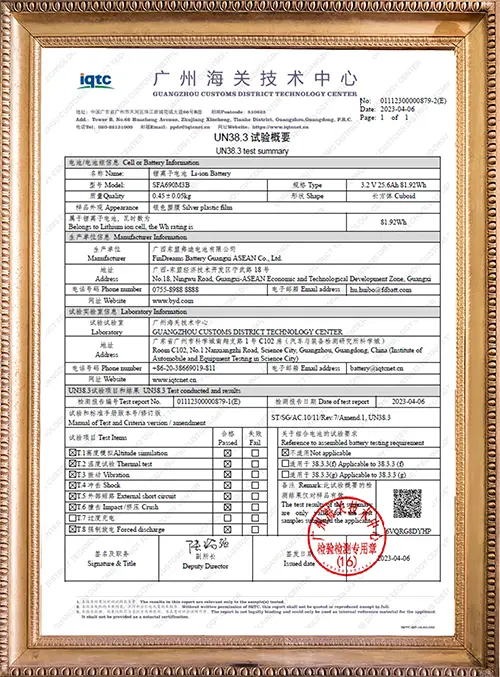
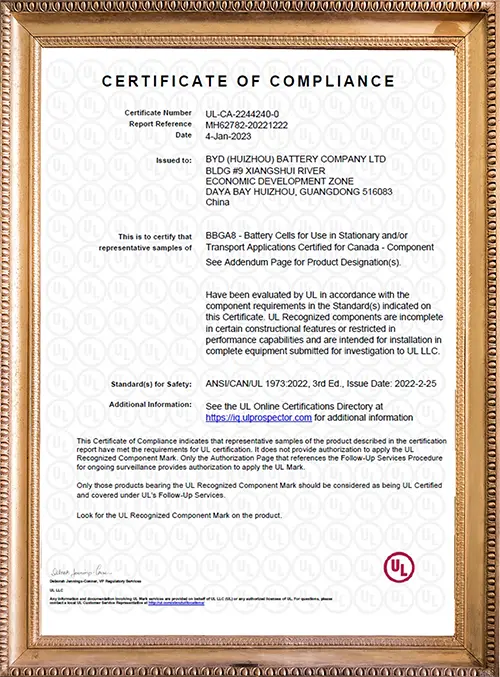
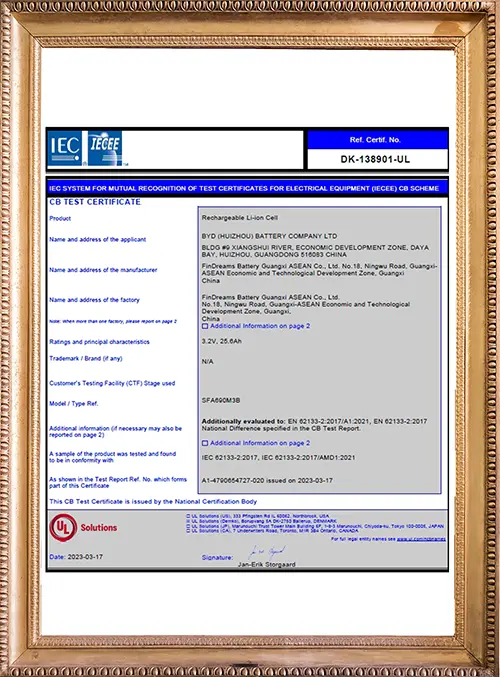
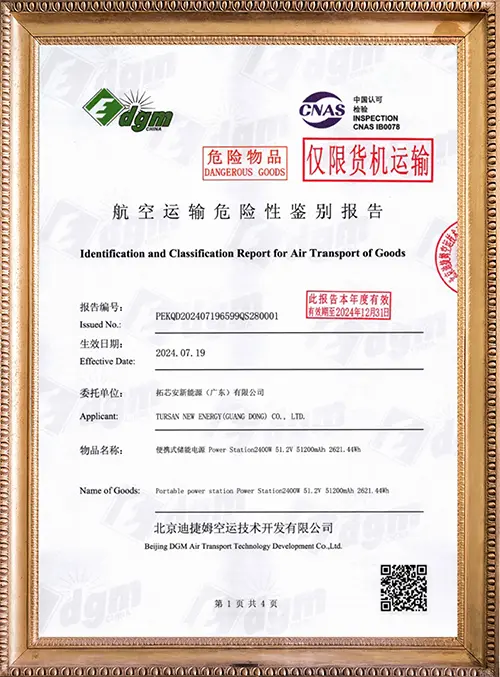
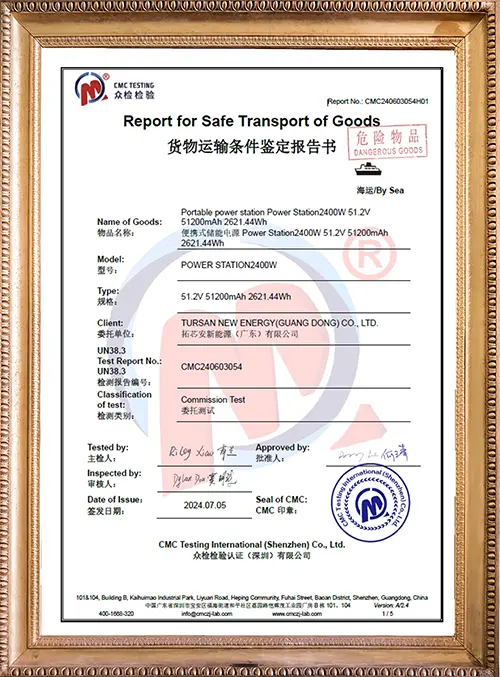
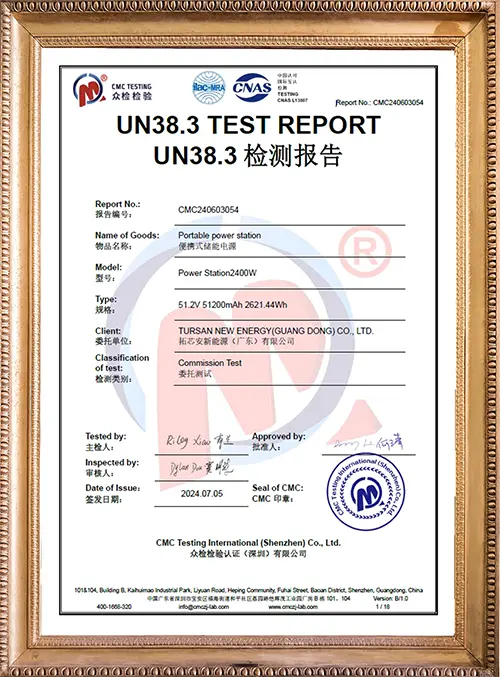
| Certificates |
Certificate


About us
A decade of energy storage manufacturing excellence.
Residential Solar Energy Storage Battery Solution Manufacturer
TURSAN is a high-tech enterprise integrating R&D, manufacturing, and global sales of lithium battery–based energy storage systems. Founded in 2016, we operate a 20,000+m² production facility producing reliable LiFePO4 power solutions for residential, commercial, and outdoor applications.
Through a strategic partnership with BYD, we co-manufacture larger-capacity, safer, and more environmentally friendly portable power stations and home battery backups. Today we serve global brand owners, distributors, EPC contractors, and project developers in over 60 countries — saving OEM clients up to 20% in annual sourcing cost while meeting the toughest international safety standards.
OEM&ODM Process
Confirm Requirements and Finalise the Solution
We collect all customer specifications: voltage, capacity, dimensions, communication protocol, etc. Then we decide if it is a pure OEM job (build exactly to your drawings) or an ODM job (we provide the design). We issue a clear BOM (bill of materials) and 2D/3D drawings for both parties to sign off, avoiding any later misunderstandings.
Procurement and Incoming Inspection
We purchase all materials according to the BOM: cells, enclosure, brackets, screws, wiring, BMS boards, etc. When goods arrive, we do sampling or 100% inspection. For cells, we measure voltage, internal resistance and check appearance. For structural parts, we check dimensions and hole sizes. Any non‑conforming items are rejected and never go into our warehouse.
Cell Sorting and Matching
We group cells from the same batch by voltage and internal resistance values. We then match cells with the closest parameters into one set (for example, if a string uses 4 cells, the voltage and resistance differences among those 4 must stay within our set limits). This directly affects how long the battery pack will last without performance decay.
Laser Welding and Module Assembly
We fix cells into holders, then laser‑weld the tabs (connectors). We do pull‑force tests on sample weld spots to check strength. After that, we fasten the welded sub‑modules into the enclosure or tray, using torque‑controlled tools to apply the correct tightening force.
BMS Installation and Wiring Connection
We mount the main BMS and slave boards in their designated positions, then plug in all voltage sampling wires and temperature sensors. We always have a two‑person verification of the wiring sequence – this prevents reverse connections that could burn the boards when we power up.
First High‑Voltage Safety Test
We apply high voltage between the positive/negative terminals and the enclosure to measure insulation resistance and withstand voltage. We check for any leakage or breakdown. If this test fails, the module goes back for rework immediately – it does not move forward.
High‑Temperature Standing and Self‑Discharge (K‑Value) Check
We place the modules in a 45 °C room for 24–48 hours. We measure voltage before and after the standing period, then calculate the daily voltage drop (K‑value). Units with excessive drop are rejected because they indicate internal micro‑shorts that could cause early failure later.
Charge/Discharge Aging and Capacity Calibration
We connect the modules to charge/discharge equipment and run several full cycles at the current specified by the customer. During the process, we record actual discharge capacity, charge/discharge efficiency, and the temperature/voltage differences among individual cells. If all data stay within our acceptance limits, we calibrate the final rated capacity. If not, we isolate and analyse the failed units.
Final Inspection, Labelling and Packaging
We re‑measure total voltage, internal resistance and insulation performance. We check appearance for scratches, gaps, or damaged screws. We attach a permanent nameplate (with serial number), UN38.3 hazardous‑goods label, and all required operation warning labels. Then we package the battery with foam or cardboard for shock protection, as per customer requirements, and record the final weight.
Shipment and Document Handover
We verify the shipping quantity, address and consignee. We prepare all accompanying documents: factory test report, MSDS, UN38.3 test summary, and transport condition certificate. We arrange pickup with our logistics partner, and after dispatch we send the tracking number and estimated arrival time to the customer.
FAQ
Q1: What can a 1000W portable power station run?
It can operate laptops, televisions, routers, lights, CPAP machines, small refrigerators, fans and many kitchen appliances below 1000W such as compact coffee makers or rice cookers.
Q2: How long does a 1000W power station last?
Runtime depends on power consumption. A 100W device can run around 10 hours, while a 500W appliance typically runs about 2 hours considering efficiency loss.
Q3: Can 1000 watts power a fridge?
Yes, most mini fridges and energy-efficient refrigerators work normally, but large refrigerators may require checking startup surge wattage.
Q4: How long will a 1000W power station run a refrigerator?
Generally between 6–12 hours depending on compressor cycles and energy rating of the refrigerator.
Q5: Is a 1000W power station good?
It is one of the most practical sizes because it balances portability and usable appliance power for everyday needs.
Q6: Can portable power stations be used indoors?
Yes. They produce no fumes and operate silently, unlike gasoline generators.
Q7: What should you not plug into an inverter?
High-power heating devices such as kettles, heaters, ovens and induction cookers exceeding rated power.
Q8: Can you charge a portable power station while using it?
Yes, pass-through charging allows devices to operate while the battery recharges.
Q9: How many solar panels for a 1000W inverter?
Usually a 300–600W solar array is recommended depending on sunlight availability.
Q10: What appliances use around 1000W?
Coffee makers, microwaves on low setting, small air fryers and certain power tools may approach this consumption.
Q11: How many amps does 1000W use?
About 4.5A at 220V AC or roughly 83A at 12V DC depending on efficiency.
Q12: Is it worth buying a portable power station?
Yes, it offers emergency readiness, quiet operation and renewable charging capability.
Q13: Can a portable power station run a window air conditioner?
Small efficient units may work briefly, but most air conditioners exceed startup power requirements.
Q14: What are the disadvantages of a portable power station?
Limited runtime compared to grid electricity and charging speed depends on input source, but portability and safety are major advantages.
Q15: Can you leave a portable power station plugged in all the time?
Yes, LiFePO4 batteries support maintenance charging, though occasional discharge cycles help maintain battery health.
Q16: What will a 1000 watt inverter run?
Most electronics and small appliances below rated power including entertainment equipment and communication devices.
Related Products
Partner with TURSAN, Ignite a New Chapter in Your Country's Energy Storage Business
As a professional manufacturer of solar lithium battery energy storage systems, TURSAN is dedicated to providing the global market with high-quality home energy storage batteries, inverters, portable power stations, and all-in-one storage solutions. We now sincerely invite you to become our exclusive partner in your country or region, to jointly develop the clean energy storage market and create steadily growing business value.
Exclusive Regional Authorization
After signing the agreement, we will cease wholesale distribution to other clients in your region, fully safeguarding your market interests.
Priority Order Processing & Shipping
Ensure you can respond to local demand immediately and capture time‑sensitive market opportunities.
Product Customization Support
From your first order, we can design and produce energy storage systems completely tailored to your brand.
Comprehensive Product Range Suppor
From home storage and portable power to inverters and all-in-one units with built-in inverters — meeting diverse application needs.
Proven Success in 30+ Countries
We have already helped partners worldwide achieve measurable brand growth and increased profitability.
Your Most Reliable Backend
Whether you are a systems integrator, electrical distributor, or building your own brand, you get stable products and flexible cooperation mechanisms.
📩 Contact us now to receive a customized partnership proposal and product information.
Let’s join hands to bring reliable power solutions to homes and businesses, and co-create a green energy future together!