< img height="1" width="1" style="display:none" src="https://www.facebook.com/tr?id=1807817223112301&ev=PageView&noscript=1" />

Rack-Mount ESS Battery Solutions Engineered for Reliability, Built for Scale

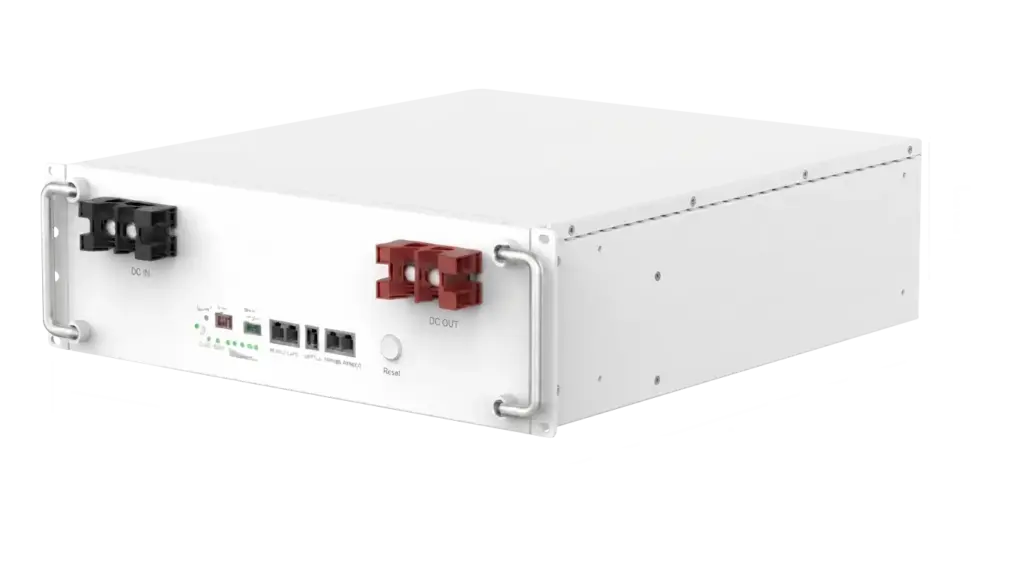
TURSAN delivers a comprehensive lineup of standardized and customized rack-mount energy storage products, from a single 5.22kWh intelligent module to fully integrated multi-module cabinets. Our 51.2V LiFePO4 platform, featuring advanced BMS control, dual AC/solar charging, and a crystal-clear display, forms the backbone of backup and off-grid systems worldwide. With dedicated OEM/ODM services, every detail can be tailored to your exact requirements – all backed by rigorous in-house manufacturing quality and a typical lead time of just 25-30 days.

5.22kWh

Per Module

6000+

Cycles Life

25-30 Days

Lead Time

OEM&ODM

Customized Solutions

Product Overview & Core Advantages

The TURSAN rack-mount ESS module is a self-contained, 5.22kWh energy storage node designed for standard 19-inch enclosures. It combines safety, intelligence, and effortless installation, serving as an ideal building block for larger systems.

Safe & Durable Chemistry

Built on proven lithium iron phosphate (LiFePO4) technology with exceptional thermal stability and >6,000 cycle life at 70% DOD (25°C).

Dual Charging Input

Onboard charger accepts both AC mains and photovoltaic DC input – no external charge controller required. Simplifies off-grid and backup system design.

Intelligent BMS & Display

High-resolution screen shows real-time SOC, voltage, current, temperature and alarm status. Advanced battery management ensures precision protection. Sleep self-consumption ≤300μA.

Plug & Play Deployment

Each module functions independently. No complex parallel communication setup for single-unit applications. Just rack it, wire it, and power up.

Module-to-Cabinet Scalability

For larger capacities, multiple modules are integrated into a pre-wired cabinet system with busbars, disconnects, and central monitoring – delivered as a single, tested unit.

Manufacturing Agility

Standard builds ship in 25-30 days. OEM/ODM projects follow transparent milestone timelines.

Technical Specifications - 5.22kWh Rack-Mount Module

The table below represents the typical configuration of our 5.22kWh rack-mount module. All parameters can be adapted during the OEM/ODM process to meet specific application needs.

Cell ChemistryLiFePO4 (Lithium Iron Phosphate)
Nominal Energy5.22 kWh
Nominal Voltage51.2 V (16S configuration)
Nominal Capacity102 Ah (configurable)
Cycle Life> 6,000 cycles (@25°C, 70% DOD)
Full Charge Voltage58.4 VDC
Discharge Cut-off Voltage43.2 VDC
Charging ModesAC Mains / Photovoltaic (DC)
Standard Charge Current50 A
Max. Charge Current100 A
Standard Discharge Current100 A
Max. Discharge Current120 A
Built-in DisplayYes – LED/LCD smart screen
Sleep Self-Consumption≤ 300 µA
Operating Temperature-10°C to +50°C
Storage Temperature0°C to +45°C
Installation FormatStandard 19-inch rack-mount.
Module ParallelNot supported at module level.
Grid-tied FunctionNo (designed for backup / off-grid)
Production Lead Time25-30 days for standard builds

Product Family: From Single Module to Complete Cabinet

Individual Rack-Mount Module

A fully operational energy storage unit in a compact 19-inch chassis. Perfect for:

What’s included: Battery cells, integrated BMS, display panel, AC/DC charger, DC output terminals, and robust metal enclosure. Simply install in your rack, connect AC or solar input, and attach the load.

Integrated Cabinet Systems

When energy demand exceeds a single module, TURSAN provides pre-configured cabinets housing multiple modules, pre-wired and factory-tested. We design the DC busbar arrangement, protection devices (breakers/fuses), and optional central communication gateway. The result is a single SKU that arrives at your site ready for final connection to the inverter and power system.

Typical cabinet configurations:

Cabinet features:

OEM/ODM Customization Capabilities

TURSAN is structured to support integrators, distributors, and solution providers who need a reliable energy storage product under their own brand or tailored to a specific project. Our customization scope includes, but is not limited to:

Electrical Customization

Battery Cell Inspection

Mechanical & Enclosure Design

To maximize customization for our customers, we operate our own injection molding, sheet metal fabrication, and SMT assembly facilities, among others.

Branding & Private Label

Your brand, front and center:

Cell Sorting

Cell Sourcing Flexibility

While our standard supply chain includes a range of fully qualified, high-cycle-life LiFePO4 cell manufacturers, we understand that some projects require specific cell brands or customer-supplied cells. Our engineering team can integrate your preferred cells (or your own stock) into our BMS and mechanical platform after thorough validation. This ensures compatibility and safety without tying you to a single cell source.

OEM/ODM Process Overview:

Production Process

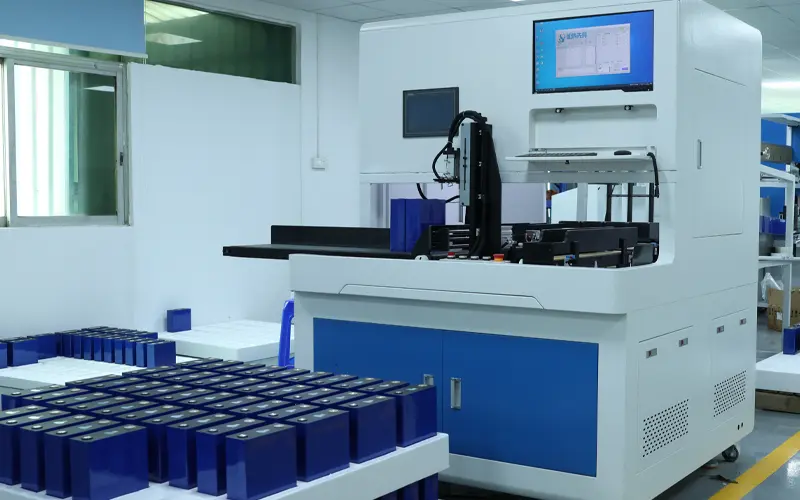
Every TURSAN rack-mount module and cabinet system moves through a tightly controlled manufacturing flow. This ensures consistent quality and traceability from raw material intake to final packaging.

Incoming Material Inspection

  • Step 1

All components – cells, BMS boards, chargers, enclosures, cables, and hardware – undergo incoming quality control (IQC). For lithium cells, we perform visual inspection, open-circuit voltage (OCV) measurement, internal resistance (IR) testing, and capacity grading as required. Only materials meeting our AQL standards are released to inventory.

Cell Sorting & Matching

  • Step 2

For multi-cell modules, we apply strict capacity, voltage, and impedance matching algorithms. Cells are grouped into batches with minimal deviation to maximize pack performance and lifespan. This step is critical for maintaining consistent cycle life across every unit.

Sub-Assembly & Module Integration

  • Step 3

Skilled technicians assemble the mechanical structure, mount the cell array with precise spacing and insulation, connect the BMS sense wires, and install the charger and display unit. All busbar connections are torque-controlled to specification.

Functional Testing & Programming

  • Step 4

Each assembled module is connected to a test station where:

  • BMS parameters are programmed and verified
  • Communication interfaces are checked
  • Charging and discharging functions are tested at rated current
  • Protection features (over-voltage, under-voltage, over-current, short-circuit, temperature) are deliberately triggered and confirmed

Burn-In & Capacity Verification

  • Step 5

Modules undergo a full charge-discharge cycle (or partial cycle as per procedure) to confirm stated capacity and monitor cell balance. Units are observed for abnormal heating, voltage drift, or BMS behavior.

Final Quality Control & Cosmetic Check

  • Step 6

Each unit is inspected for cosmetic defects, label accuracy, and packaging integrity. Labels include serial number, manufacturing date, and QR codes for traceability.

Packaging & Logistics

  • Step 7

Modules are packed into custom-designed foam and cardboard or wooden crates, depending on destination and quantity. Cabinets are secured on pallets with protective wrapping. Shipping documentation includes test reports, certificates, and packing lists.

Quality Assurance & Certifications

Quality is embedded at every stage, not just at final inspection.

In-House Testing Capabilities

Reliability Validation

Before any design enters mass production, we conduct:

Compliance & Certifications

Our products are designed and tested to meet global standards, including:

We provide full documentation packages to support your regional certifications and import clearance.

Traceability

Every critical component, from cell batches to BMS PCBs, is traceable via serial number and manufacturing date. This enables rapid root cause analysis and targeted field service if ever required.

Application Scenarios

Data Centers & IT Infrastructure

Replace legacy valve-regulated lead-acid (VRLA) batteries in server rack UPS systems. Enjoy 4x longer life, 70% weight reduction, and lower total cost of ownership. The 19-inch form factor drops directly into existing rack space.

Telecom Base Stations & Remote Sites

Harsh outdoor enclosures and temperature extremes demand rugged reliability. The TURSAN module operates up to +50°C and can be charged directly from solar arrays, reducing generator run-hours and site visits.

Residential & Small Commercial Solar Storage

Pair with a 48V off-grid or hybrid inverter to store surplus photovoltaic energy. The integrated solar charging input simplifies installation and reduces balance-of-system cost.

Industrial Equipment & Mobile Power

Ideal for AGV charging stations, construction site power carts, emergency lighting trailers, and field medical equipment. The modular rack-mount format allows quick replacement and expansion.

Why Choose TURSAN as Your ESS Partner?

TURSAN is a global provider of smart energy storage and power protection solutions. Our rack-mount ESS platform is engineered for customers who demand proven reliability, manufacturing precision, and the ability to configure a product exactly to their needs. From standard modules to fully branded turnkey systems, TURSAN is your partner for bringing energy storage solutions to market – on time and built to last.

Focused Expertise

We specialize in rack-mount energy storage. It’s not a side business; it’s our core product line.

Responsive Engineering

Our team works directly with you on customization, offering fast feasibility assessments and prototype iterations.

Transparent Manufacturing

We welcome factory audits and provide detailed production milestone reports.

Global Logistics Experience

We handle export documentation, dangerous goods packaging, and shipping to all major continents.

After-Sales Support

A dedicated service team provides technical troubleshooting, spare parts supply, and warranty claim processing.

Frequently Asked Questions (FAQ)

Q: What is the usable energy of the 5.22kWh module?

A: The rated 5.22kWh is the total nominal energy. Depending on your depth of discharge (DOD) settings, the usable energy is typically between 4.7kWh (90% DOD) and 5.0kWh (95% DOD). For maximum cycle life, many applications keep DOD at 80% or below.

A: The module itself does not support direct parallel connection at the unit level. For multi-module systems, TURSAN provides pre-engineered cabinet solutions with integrated busbars, fusing, and optional communication gateways. This ensures safe, balanced operation. Contact us to design your cabinet configuration.

A: The module outputs 51.2V nominal DC (43.2V – 58.4V range), which is compatible with most 48V off-grid inverters. As long as your inverter’s charging parameters can be set to match our voltage limits, integration is straightforward. We can also provide customized voltage ranges if needed.

A: The built-in photovoltaic charging input is designed for DC input within a specific voltage range (details provided during ordering). Typically, it works with standard 60-cell or 72-cell solar panels connected in series to achieve the required MPPT voltage. Our engineering team will confirm compatibility based on your panel specifications.

A: Standard, non-customized modules ship within 25-30 working days from order confirmation and deposit receipt. Custom OEM/ODM projects follow an agreed project schedule; prototype delivery often occurs within 30-45 days. Shipping time depends on destination and method (sea, air, express).

A: Yes, fully. TURSAN supports private labeling including logos on the enclosure, display start-up screen, packaging, and documentation. Minimum order quantities apply for fully customized branding.

A: All TURSAN ESS products come with a standard 3~5-year warranty covering manufacturing defects. Extended warranty options are available. Warranty terms are governed by the product’s design life, cycle count, and operating conditions; full details are in our warranty policy document.

A: Our standard products carry UN38.3, IEC 62619, and CE certifications. For region-specific requirements (e.g., PSE, UKCA, etc.), we can support the certification process with our documentation and design files. Please inform us of your target market during the inquiry stage.

A: Yes, as part of our OEM service we can integrate customer-supplied cells after engineering evaluation. We will adapt the BMS settings and mechanical fixture to match your cells’ specifications. This approach is suitable for customers who have an existing cell inventory or a mandatory cell vendor.

A: When stored in the recommended temperature range (0°C to 45°C) and with the module turned off, the self-discharge is extremely low (sleep mode ≤300μA). We recommend recharging to approximately 50% SOC every 6 months for optimal long-term storage.

Get Started Today

Tell us about your project. Our application engineers will review your requirements and provide a tailored solution within 48 hours.

OEM/ODM Process Overview:

Make Contact Now

Speak to Our Experts in 1 min
Got a Question? Contact me directly and l will help you quickly and directly.
Speak to Our Experts in 1 min
Got a Question? Contact me directly and l will help you quickly and directly.
WeChat Video
Use WeChat to Swipe and Watch our Videos!

Make Contact Now

Speak Directly with Our Boss!
Got a Question? Contact me directly and l will help you quickly and directly.
Speak Directly with Our Boss!
Got a Question? Contact me directly and l will help you quickly and directly.

Make Contact Now

Speak to Our Experts in 1 min
Got a Question? Contact me directly and l will help you quickly and directly.
TURSAN Smart Manufacturing
Witness how our batteries are made — from cells to finished packs — with complete quality control and rigorous testing. Submit your request and our tour coordinator will reach out.