 English
  العربية
  日本語
日本語  한국어
한국어  Tiếng Việt
  ไทย
ไทย  Bahasa Melayu
  فارسی
فارسی  Bahasa Indonesia
  ဗမာစာ
ဗမာစာ  简体中文
简体中文  香港中文
香港中文  繁體中文
繁體中文  Русский
  Deutsch
  Nederlands
  Italiano
  Français
  Español
  Português
  Afrikaans
  Azərbaycan dili
  Български
  ਪੰਜਾਬੀ
  हिन्दी
  اردو
اردو  বাংলা
বাংলা  Հայերեն
  Íslenska
  Қазақ тілі
  नेपाली
  Српски језик
  Kiswahili
  తెలుగు
  Basa Jawa
  தமிழ்
தமிழ்  मराठी
मराठी B2B Market BriefingGermany
Germany is the largest home battery market in Europe — and one of the most disciplined. CE marking alone will not get your product onto German walls. Installers, insurers, and grid operators ask for specific standards before they sign off on a system, usually before your first order. If you are a wholesaler or brand planning to bring residential storage to Germany, here is the certification landscape, in plain language.
Why Germany Is a Different Game
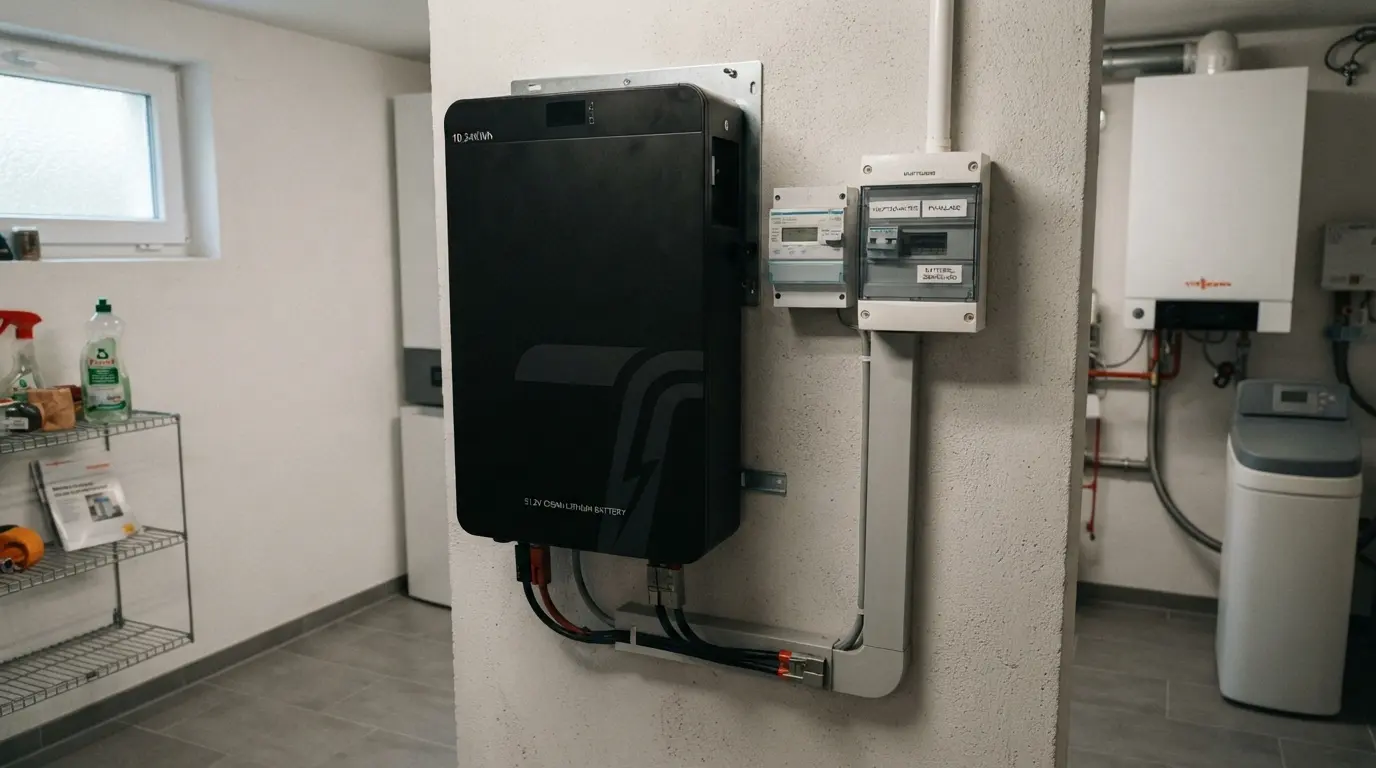
A home battery is not treated like a consumer gadget in Germany. It is part of the building’s electrical installation and, because it charges from and discharges into the grid, a grid asset as well.
Two documents dominate the conversation: the European CE framework and a German application rule called VDE-AR-E 2510-50. Insurers frequently refuse to cover systems that do not follow it, network operators ask for proof of compliance before approving the connection, and the electrician on site will want to see it documented. Get this wrong and you are not just missing a badge — you are blocking installations.
German installations must be carried out by a certified electrician (Elektrofachkraft). Keep your documentation clear enough for the on-site electrician to verify compliance in minutes.
Where the Legal Risk Sits
In EU product law, responsibility for conformity sits with whoever places the product on the market — usually the importer or the brand. Your factory can supply the test reports, but the liability stays with you.
In Germany, certification is not a badge on your box. It is the conversation your customer has before they order.
The Certifications You Actually Need
Here is the stack, in the order it matters — most test houses bundle several of these into one program.
The EU Legal Layer
CE marking is your baseline: the Low Voltage Directive (2014/35/EU) for electrical safety, the EMC Directive (2014/30/EU) for electromagnetic compatibility, and the Radio Equipment Directive (2014/53/EU) when the system uses Wi-Fi or Bluetooth. CE is a declaration of conformity, not a certificate — backed by technical files and third-party test reports.
What the New Battery Regulation Changes
The EU Battery Regulation (2023/1542) adds its own conformity, safety, and due-diligence obligations for the battery itself. Check it with your manufacturer early, not at the border.
The German Layer
VDE-AR-E 2510-50 is the standard you will hear about most. Published by VDE FNN, it is the reference German installers, insurers, and network operators actually use, and bodies such as the VDE Institute and TÜV offer testing against it.
Product Safety and Performance
German buyers also look for tested safety at the cell and system level: EN 62619 for cell and battery safety, EN 62477-1 for power converters, and EN 62620 for performance.
Transport and Materials
Batteries also have to survive customs and transport. UN 38.3 covers safe lithium-battery transport and is mandatory for air and sea freight; RoHS (2011/65/EU) and REACH handle restricted substances. A missing UN 38.3 report can strand an entire container at the port.
The Quick-Reference Table
Everything above in one table, with what it covers and typical timing.
| Certificate / Standard | What It Covers | Why Germany Cares | Typical Timing |
|---|---|---|---|
| CE marking | Electrical safety (LVD), EMC, radio (RED) | Legal minimum for every EU sale | 4–8 weeks |
| EU Battery Regulation | Battery safety, performance, due diligence | Replaces the old directive; staged duties | Ongoing |
| VDE-AR-E 2510-50 | Stationary system installation and grid behavior | Referenced by insurers and network operators | 6–12 weeks |
| EN 62619 | Cell and battery-level safety | De-facto safety proof for lithium systems | 4–8 weeks |
| EN 62477-1 | Power converter safety | Covers inverter and hybrid units | 4–8 weeks |
| UN 38.3 | Safe transport of lithium batteries | Required paperwork for customs clearance | 2–4 weeks |
| RoHS / REACH | Restricted substances | EU market access | 1–4 weeks |
Mistakes Importers Make
The errors below repeat across the German market. All are avoidable.
- Treating a generic report as German compliance. Non-accredited test results rarely satisfy a German network operator.
- Assuming one certificate covers the whole family. Variants with different cells, chemistries, or BMS firmware need separate assessments. Ask which SKUs are covered.
- Forgetting documentation language. Network operators and insurers expect technical documents — and often the manual — in German.
- Ignoring the inverter. It must meet VDE-AR-N 4105 for grid connection, or the whole system fails.
- Leaving transport to the last minute. UN 38.3 reports and Class 9 labelling are checked at customs; delays can strand shipments at the port.
- Waiting for the customer to ask. The question comes before the order; have certificates ready from day one.

A Six-Step Launch Checklist
A simple sequence to work through, in order.
- Audit your current documentation against the EU and German list above.
- Ask the factory for test reports and the declaration of conformity, and check which SKUs are covered.
- Verify the inverter’s grid code (VDE-AR-N 4105) and confirm it ships in the same container.
- Arrange German translations for manuals and technical files.
- Add UN 38.3 reports and dangerous-goods documents to your freight process.
- Keep a digital certificate folder per product line, ready for installers and network operators.
Frequently Asked Questions
Short answers to the questions wholesalers ask before a German launch.