 English
  العربية
  日本語
日本語  한국어
한국어  Tiếng Việt
  ไทย
ไทย  Bahasa Melayu
  فارسی
فارسی  Bahasa Indonesia
  ဗမာစာ
ဗမာစာ  简体中文
简体中文  香港中文
香港中文  繁體中文
繁體中文  Русский
  Deutsch
  Nederlands
  Italiano
  Français
  Español
  Português
  Afrikaans
  Azərbaycan dili
  Български
  ਪੰਜਾਬੀ
  हिन्दी
  اردو
اردو  বাংলা
বাংলা  Հայերեն
  Íslenska
  Қазақ тілі
  नेपाली
  Српски језик
  Kiswahili
  తెలుగు
  Basa Jawa
  தமிழ்
தமிழ்  मराठी
मराठी standard is
moving.
314Ah LFP is becoming the practical large-format baseline for new home energy storage platforms. The change reaches far beyond the cell itself.
314Ah Cells Are Replacing 280Ah Cells in Home Energy Storage
For years, residential battery manufacturers built 5 kWh to 15 kWh systems from smaller LFP cells. That approach gave pack engineers many assembly options, but it also created more busbar joints, more sensing points, and more opportunities for a cell mismatch to appear during production. The next change is now clear in the Chinese supply chain: 280Ah prismatic LFP cells are being phased out, while 314Ah cells are becoming the standard large-format replacement for new projects.
The change is not simply a matter of putting a larger cell inside the same enclosure. A 16-cell, 51.2V nominal battery using legacy 280Ah cells stores about 14.3 kWh. The same series layout with 314Ah cells reaches about 16.1 kWh. Almost all major Chinese battery suppliers have stopped regular production of the 280Ah format, so buyers who design around it face shrinking availability, less predictable replenishment, and a shorter service-parts window.
This article explains why the market moved from 280Ah to 314Ah, what procurement teams should verify before changing platforms, and how an OEM or ODM partner should turn the new cell choice into a serviceable, certifiable battery system.
Why 314Ah Has Become the New Large Format Baseline
Most residential LFP batteries use 16 cells in series. Each cell operates around a 2.5V to 3.65V charge and discharge window, while the pack presents a nominal voltage of 51.2V and a full-charge voltage of approximately 58.4V. The cell capacity determines the energy in one series string; the series connection increases voltage but does not add ampere-hours.
| Cell format | Typical 16S nominal energy | Continuous current at 0.5C | Supply position for new projects |
|---|---|---|---|
| 100Ah LFP | 5.12 kWh | 50 A | Mature option for 5 kWh modules |
| 200Ah LFP | 10.24 kWh | 100 A | Available for 10 kWh class systems |
| 280Ah LFP | 14.34 kWh | 140 A | Legacy format with shrinking supply and limited new production |
| 314Ah LFP | 16.08 kWh | 157 A | Current large-format choice for new residential platforms |
The energy calculation uses 16 x 3.2V x cell capacity. Actual usable energy depends on the inverter cutoff, BMS limits, temperature, and the selected depth of discharge. A battery advertised at 14.3 kWh may deliver less than that value when the integrator reserves a 10% state-of-charge floor and applies low-temperature charging protection.
16S / 314Ah
at 5 kW output
over 280Ah
The first engineering advantage is a lower connection count. A single 16S 314Ah pack has 16 cell-to-cell series interfaces. A 16S2P design using 100Ah cells needs substantially more parallel interconnects and a separate strategy for current sharing between parallel groups. Fewer cells can simplify assembly and reduce passive connection resistance, but it does not remove the need for matched cells. A 314Ah cell with a higher resistance than the rest of the batch can still heat unevenly and limit the whole string.
The second change appears in current selection. At a 5 kW inverter output, a 51.2V battery supplies roughly 98A before conversion losses. A 314Ah cell carries that load at about 0.31C, below a 0.5C design point, which leaves a useful thermal margin when the cabinet reaches 35°C. At 10 kW, the pack current approaches 196A, so the system may need two parallel 16S314Ah strings, a higher-current BMS, or a defined short-duration peak rating.
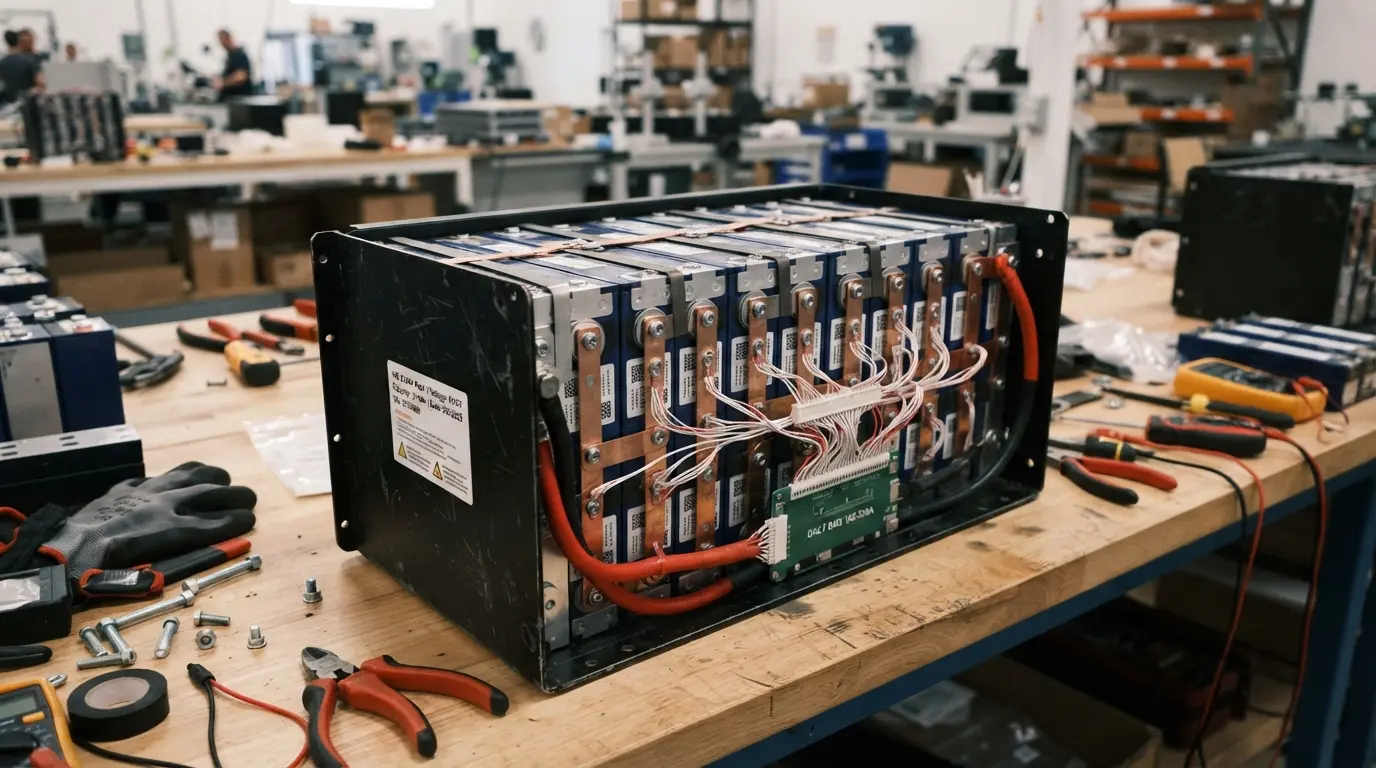
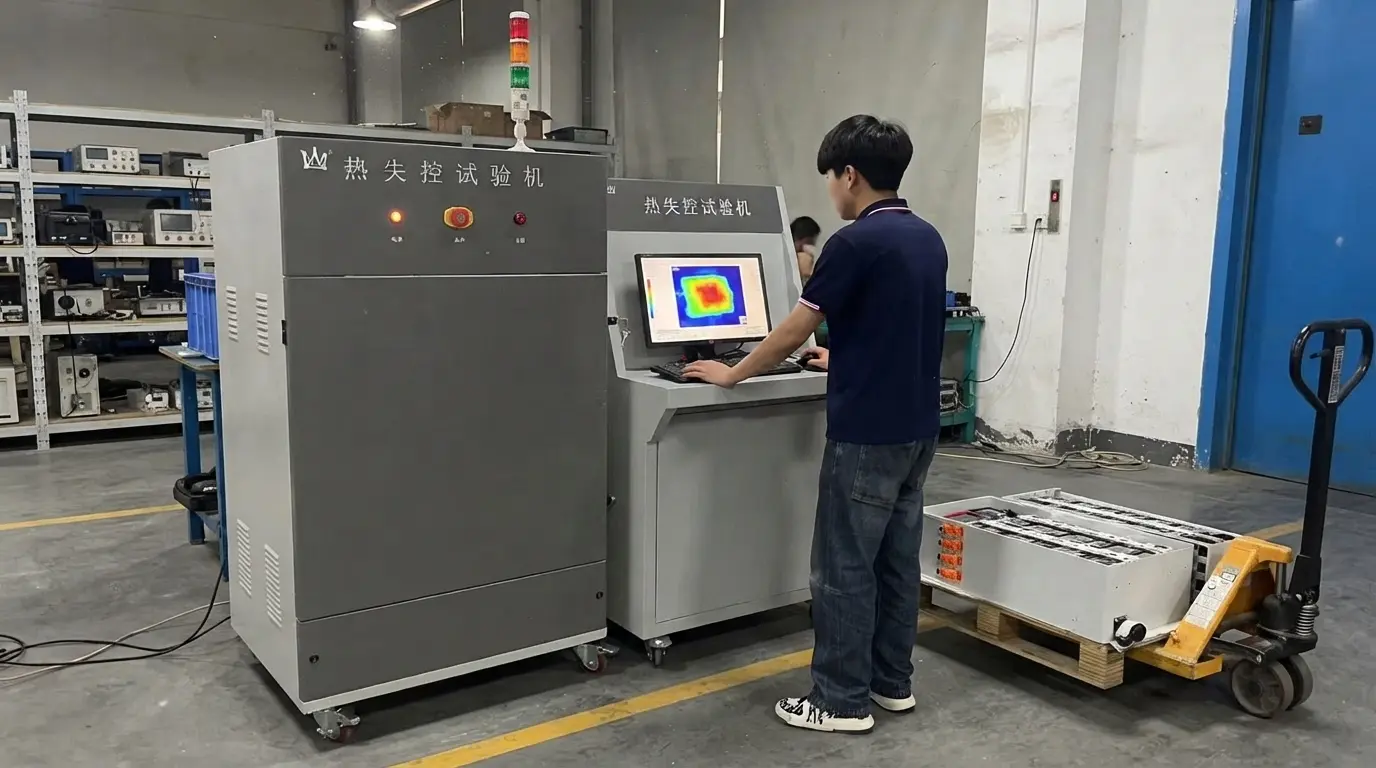
Large cells also change thermal behavior. The active material sits farther from the cell surface than it does in many smaller formats. The enclosure therefore needs a clear heat path through cell spacing, compression plates, thermal interface material, and the cabinet walls. For a naturally cooled indoor cabinet, we normally validate continuous operation around 0°C to 45°C and limit charging below 0°C unless the pack includes a heater. A design that passes a 25°C bench test can still derate early in a closed cabinet under a summer load profile.
The counter-intuitive point for buyers is simple: a larger cell can reduce pack complexity while making quality variation more expensive.
A failed 100Ah cell affects a smaller energy block. A failed 314Ah cell can remove over 1.0 kWh from a 16S string and cause a larger service event. Incoming inspection, open-circuit voltage matching, impedance checks, and traceable production records matter more as cell capacity rises.
How the BMS Must Adapt to Large Format Cells
The BMS does not measure energy directly. It measures each cell voltage, pack current, temperature, insulation status where supported, and sometimes contactor state. Firmware then applies protection thresholds and calculates state of charge. With a 280Ah or 314Ah pack, the current sensor and shunt must match the actual operating window rather than the nominal inverter rating.
For a 5 kW, 51.2V system, a 200A continuous BMS gives room for conversion loss and short overloads. For a 10 kW system, a 250A or 300A BMS may be appropriate, but the busbars, fuse, contactor, cable lugs, and connectors must carry the same current without creating a hot spot. A 300A label on a BMS does not make a 300A pack safe if the main fuse is 200A or the terminal connection is rated for less.
Passive balancing is usually adequate for a well-matched residential LFP string because the cells operate at low C-rates for much of the day. The BMS may balance near the upper voltage region, often around 3.40V to 3.55V per cell, depending on the cell supplier and firmware strategy. Procurement teams should ask for the balancing current, balance start condition, cell-voltage delta threshold, and balancing time. A 50mA passive balancer cannot correct a large capacity mismatch quickly; it can only trim a small drift over repeated full-charge periods.
CAN and RS485 communication are an integration boundary. Test the exact inverter model before approving a production run.
CAN and RS485 communication create another integration boundary. The inverter needs the correct protocol, baud rate, state-of-charge scaling, charge-current limit, discharge-current limit, and alarm mapping. A battery can show a healthy voltage on a multimeter while the inverter refuses to charge because the BMS reports a low-temperature or over-voltage alarm. Ask for the protocol document and test the exact inverter model before approving a production run.
The OEM and ODM Work Behind a 314Ah Battery Platform
Large-format cell selection should happen alongside the enclosure and shipping plan. A 16S 314Ah LFP battery commonly weighs about 120 to 140 kg once the cells, steel or aluminum enclosure, BMS, busbars, protection devices, and packaging are included. That weight can exceed the practical handling limit for a wall-mounted product and usually pushes the design toward a floor-standing cabinet, a split module, or a wheeled installation base. A 280Ah pack can remain in service, but it should not be treated as the default cell source for a new platform.
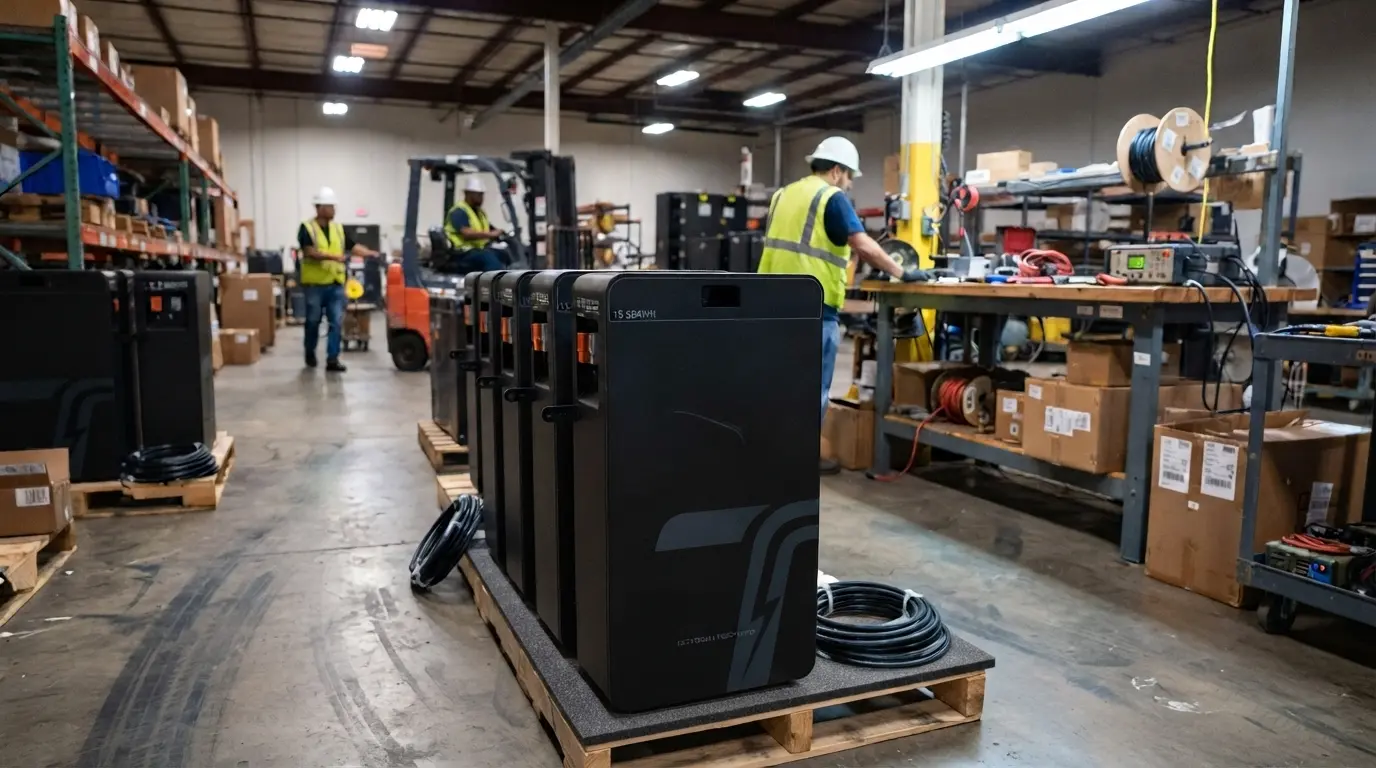
An OEM program can standardize the electrical platform while adapting the commercial shell. Typical options include a private label, front-panel color, logo process, cable exit direction, breaker position, and connector selection. For European retrofit channels, an installer may prefer an RJ45 communication port and a separate service disconnect. For an off-grid distributor, the same 51.2V module may need Anderson-style power connectors, a rugged powder-coated cabinet, and a wider low-temperature operating specification.
ODM work goes deeper into the system. It can include a new cabinet around a 16S314Ah string, a split enclosure to meet local lifting requirements, heater control, firmware tuning for a specific hybrid inverter, or a custom display and data logger. The engineering team should freeze the 314Ah cell supplier, cell batch requirements, compression method, busbar material, BMS revision, and firmware version before sample approval. Substituting 280Ah cells into a 314Ah mechanical design, or changing back after tooling, can alter the center of gravity, terminal alignment, cable length, usable energy, and certification evidence.
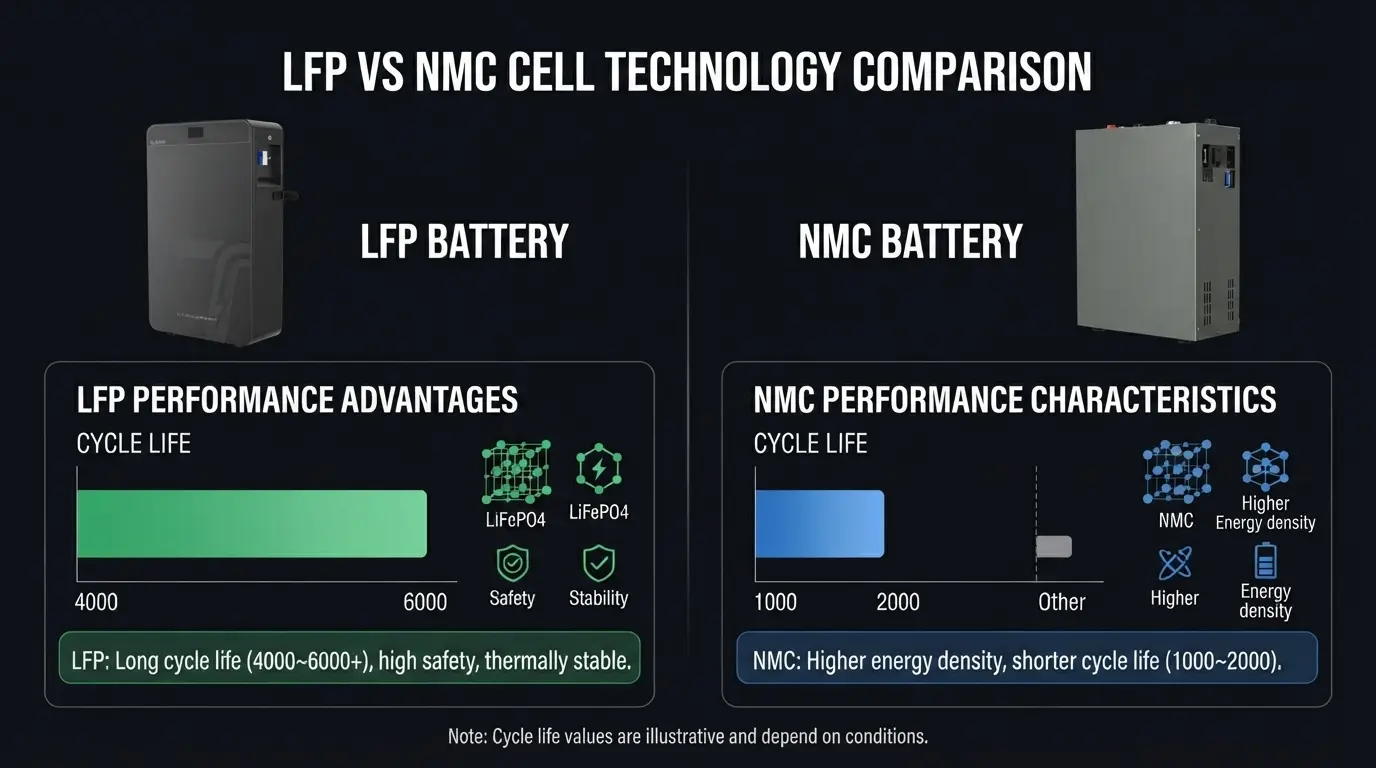
For procurement planning, request one engineering sample, one pilot batch, and a defined mass-production lead time. A sensible sample package includes the battery, wiring diagram, CAN or RS485 protocol, charge and discharge test record, UN38.3 transport test evidence, and a cycle-life test condition. At 25°C and 0.5C, a reputable LFP cell may be specified around 6,000 cycles to 80% remaining capacity, but the buyer must confirm the end-of-life criterion, charge voltage, rest time, and test current. Cycle numbers without test conditions are not a reliable comparison.
Choosing a 314Ah Configuration for a New Product
The right format depends on installation labor, target capacity, inverter power, and logistics. The following matrix gives a starting point for a 51.2V residential platform, not a substitute for a complete thermal and compliance review.
| Configuration | Nominal energy | Recommended inverter range | Main advantage | Main constraint |
|---|---|---|---|---|
| 16S 314Ah single string | 16.1 kWh | 3 kW to 8 kW | Current supply baseline with one series string | Heavy cabinet requires floor or assisted installation |
| 16S 314Ah x 2 parallel | 32.2 kWh | 8 kW to 15 kW | High capacity with lower current per string | Requires current sharing and larger protection hardware |
| 16S 314Ah x 3 parallel | 48.2 kWh | 12 kW to 25 kW | Scalable platform for large backup loads | Needs strict cable symmetry, thermal planning, and site space |
| Legacy 16S 280Ah service pack | 14.3 kWh | Existing systems only | Can support selected installed-base repairs | Shrinking cell supply makes repeat production and future service uncertain |
Use a single 16S314Ah string when a home needs evening peak shaving, solar self-consumption, or short backup periods and the inverter stays below about 8 kW. For higher power, parallel 314Ah strings can lower the C-rate, but they require symmetrical cable lengths, independent string protection, and a BMS that supports reliable current and state-of-charge coordination. Reserve 280Ah purchases for documented repairs or final production runs with a confirmed cell allocation and service-stock plan.
Four Common Pitfalls With Large Home Storage Cells
Treating cell capacity as usable pack capacity
Designers multiply 16 by 3.2V and 314Ah, then publish the result as guaranteed output energy. The inverter cutoff, reserve state of charge, temperature derating, and conversion efficiency reduce delivered energy. Publish nominal and usable energy separately, and define the test condition for both. When replacing a 280Ah design, update the product label and warranty calculation rather than carrying over the old 14.3 kWh claim.
Mounting a heavy pack on an unverified wall
A 120 kg or heavier 314Ah battery creates a different load case from a 45 kg 5 kWh module. Confirm the wall substrate, anchor rating, bracket safety factor, installation clearance, and lifting method. If installers must work alone, a split module or floor cabinet may reduce damage and injury risk.
Copying a small-cell thermal design
Large cells need controlled spacing and compression. Do not fill every enclosure gap with foam or place temperature probes only near the BMS. Put sensors where the cell temperature can peak, validate the hottest cell under the worst load profile, and specify charge derating below 0°C when no heater is installed.
Matching the battery to the wrong inverter protocol
Voltage compatibility does not guarantee communication compatibility. Verify CAN pinout, RS485 wiring, termination resistance, baud rate, protocol version, and the inverter’s expected state-of-charge range. Run a full charge, discharge, alarm, restart, and communication-loss test with production firmware.
FAQ About the 280Ah to 314Ah Transition
Build the next platform around the supply you can service.
The 280Ah format is moving into the installed-base and last-buy phase, while 314Ah LFP cells have become the practical large-format baseline for new residential battery platforms in the Chinese supply chain. A 16S314Ah string delivers about 16.1 kWh nominal energy and keeps a 5 kW inverter at a modest 0.31C rate. It also demands better incoming inspection, thermal validation, load-path design, wall-load review, and inverter communication testing.
For an OEM or ODM project, send the target nominal energy, inverter power, installation type, daily load curve, preferred communication protocol, destination market, and expected order volume. We can return a preliminary 16S314Ah BOM with enclosure dimensions, BMS current rating, protection hardware, transition requirements for any 280Ah installed base, sample scope, and a production lead-time estimate within 24 hours.
Start a 314Ah platform review