 English
  العربية
  日本語
日本語  한국어
한국어  Tiếng Việt
  ไทย
ไทย  Bahasa Melayu
  فارسی
فارسی  Bahasa Indonesia
  ဗမာစာ
ဗမာစာ  简体中文
简体中文  香港中文
香港中文  繁體中文
繁體中文  Русский
  Deutsch
  Nederlands
  Italiano
  Français
  Español
  Português
  Afrikaans
  Azərbaycan dili
  Български
  ਪੰਜਾਬੀ
  हिन्दी
  اردو
اردو  বাংলা
বাংলা  Հայերեն
  Íslenska
  Қазақ тілі
  नेपाली
  Српски језик
  Kiswahili
  తెలుగు
  Basa Jawa
  தமிழ்
தமிழ்  मराठी
मराठी Cylindrical vs Prismatic vs Pouch Cells – How We Build Reliable Portable Power Stations and Home Storage
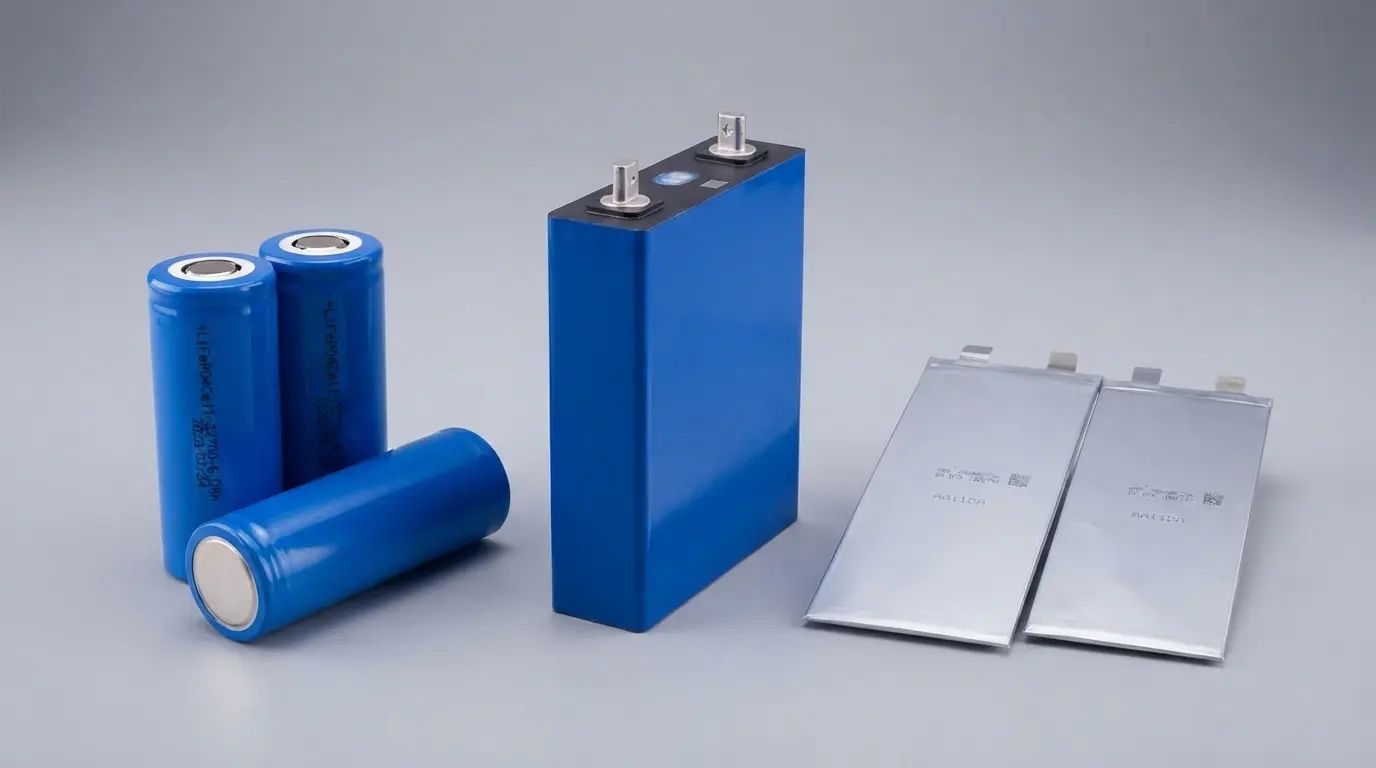
Metal cans protect the electrode stack while parallel groups distribute high current across many cells.
When we design a battery, we do not begin with the cell shape. We begin with the product’s duty cycle, peak load, enclosure volume, service conditions and expected warranty. A 1000W portable power station has a different reliability problem from a 16kWh home storage battery, even when both use LFP chemistry.
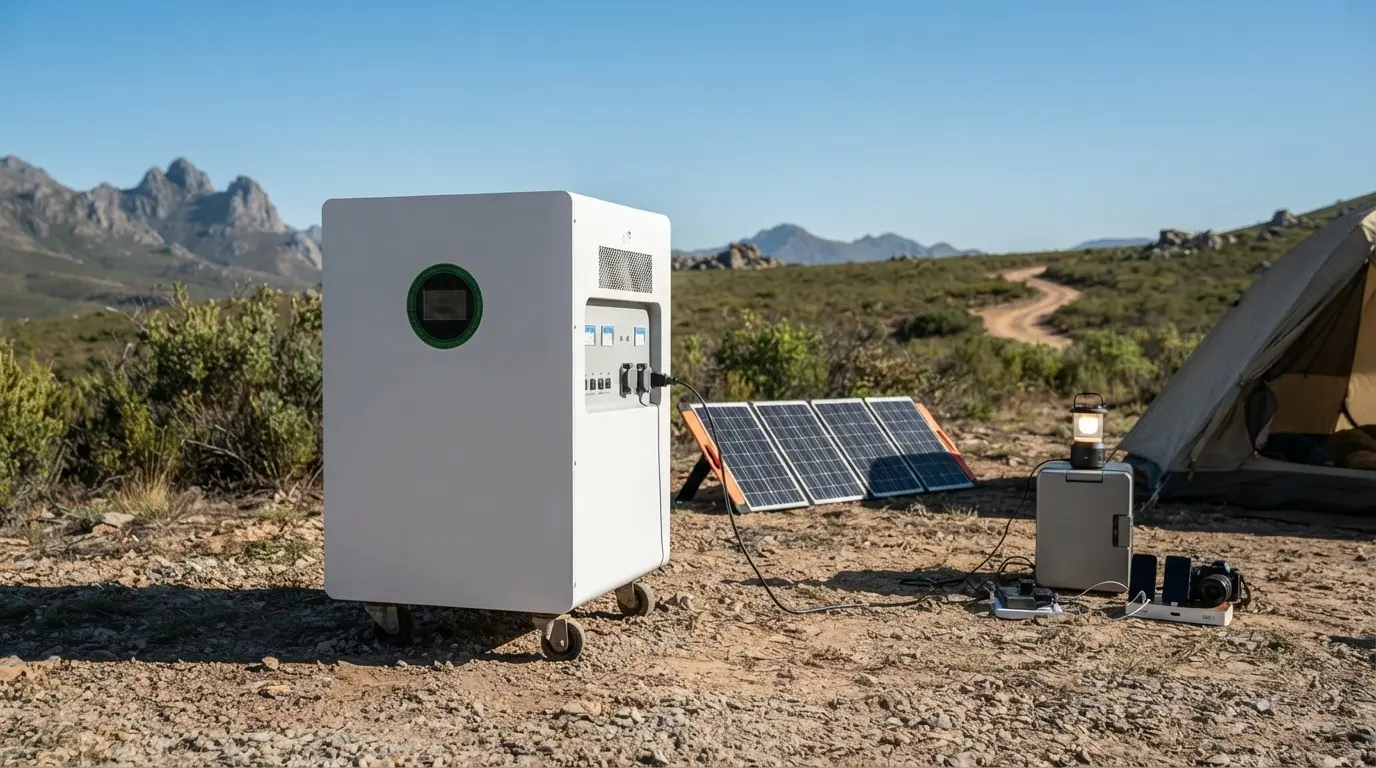
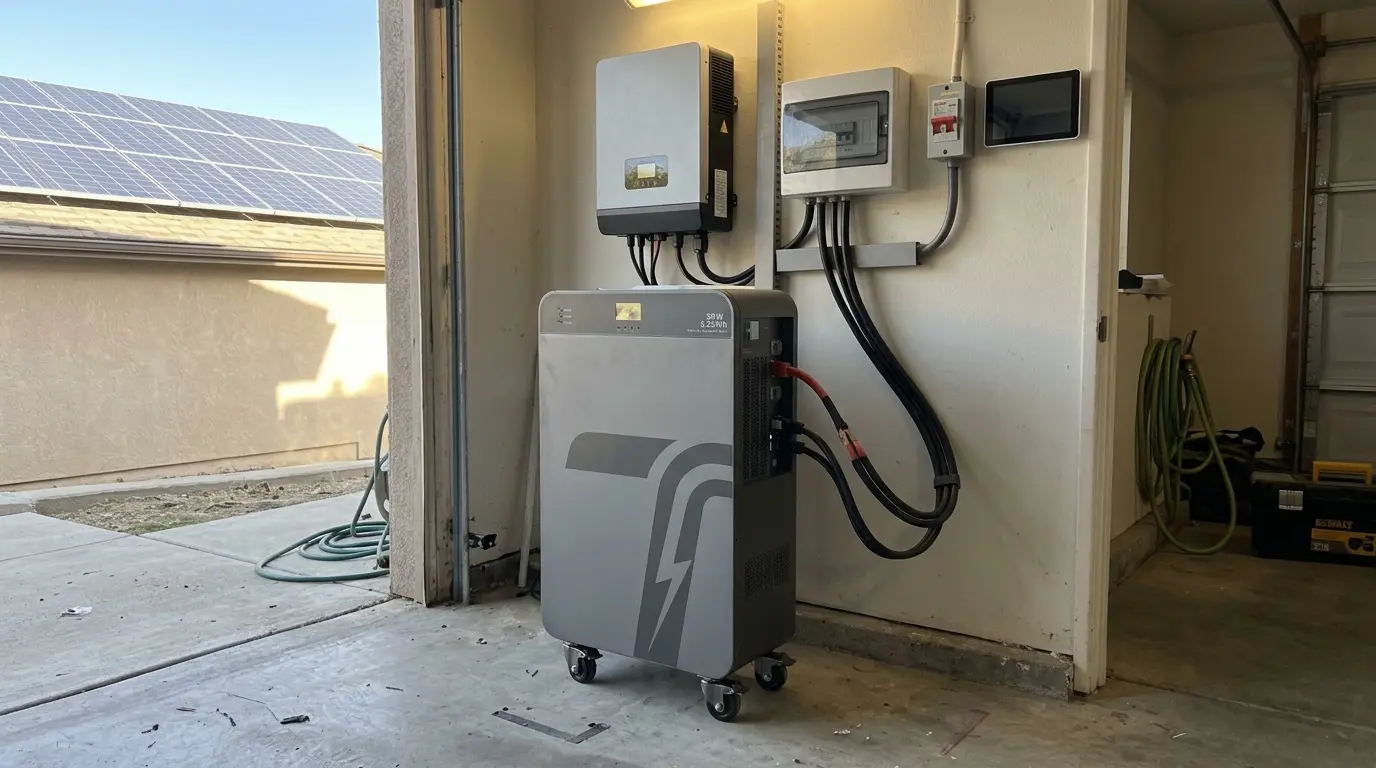
Our production approach is practical. We use cylindrical and pouch cells for portable power stations because their modular construction supports compact products that users carry, transport and discharge at high power. We use large prismatic LFP cells for home storage because a stationary 5kWh or 16kWh system benefits from fewer high-current connections, predictable thermal paths and a mechanically controlled module.
The targets are clear: portable power stations should deliver more than 4,000 cycles under defined test conditions, while home storage packs should deliver more than 6,000 cycles. These are pack-level targets, not numbers copied from an isolated cell datasheet. The BMS, busbars, compression structure, thermal design and manufacturing controls decide whether the finished battery reaches them.
How Cell Format Changes the Reliability Work
We normally build portable power stations around a 3.2V LFP cell window of approximately 2.5V to 3.65V. A 1000W model may use a 4S battery architecture with a nominal pack voltage near 12.8V and a continuous battery current near 80A at full inverter output. A 2400W model commonly uses a higher-voltage module, such as 8S or 16S, to limit current and cable heating. At 25°C, we validate the battery at 0.5C charge and discharge, then test high-load behavior at the product’s rated output.
Cylindrical cells suit these products because the metal can protects the electrode stack and each module can distribute current across many parallel cells. In a 1000W station, a cylindrical module can be divided into serviceable parallel groups with individual temperature sensors. In a 2400W station, the same approach helps spread heat from the inverter’s high-current demand. The cost is a higher weld count. Every nickel strip, busbar and weld needs resistance inspection, because one poor connection can create a hot spot during an 80A or 160A battery discharge.
Pouch cells suit portable products when weight and thickness matter. Their laminated aluminum enclosure eliminates much of the inactive metal found in rigid cells, so a pouch module can deliver high pack-level energy density. We must provide the mechanical structure that the pouch itself does not provide. Compression plates, spacers, an expansion allowance and a protected vent route keep the cell stack stable during repeated cycling and transport vibration. Without that frame, swelling can increase internal resistance and move pressure onto the tabs.
For a home battery, we select large prismatic LFP cells. A 5kWh pack can use a 16S configuration with a nominal voltage of 51.2V and a continuous current around 100A, depending on the inverter. A 16kWh system normally uses several 51.2V modules in parallel or a higher-capacity cabinet architecture. Large prismatic cells reduce the number of series and parallel connections, simplify voltage acquisition and give us broad flat surfaces for heat transfer. We still control expansion with a specified compression force, because a rigid case does not remove the stress caused by electrode ageing.
The important distinction is not that one format is universally stronger. It is that each format has a different failure surface. Cylindrical packs demand weld and connection control. Pouch packs demand compression and tab protection. Prismatic packs demand terminal, compression and module thermal control.
How We Verify 4000 Plus Cycles in Portable Power Stations
Our 1000W and 2400W portable power stations must handle more than a simple laboratory cycle. Users connect heaters, tools, refrigerators and chargers with changing loads. We therefore check capacity retention, voltage sag, connection temperature and BMS response under both steady and pulsed discharge.
For a 1000W unit, we validate the inverter output at rated power, battery discharge at the corresponding current, and repeated recharge from the low-SOC protection point to the configured upper voltage limit. The test includes fan operation, enclosure temperature and charge cut-off behavior. We target at least 4,000 cycles to 80% of initial capacity at 0.5C, 25°C and the specified depth of discharge. The BMS records the highest cell temperature and the maximum cell voltage difference so we can distinguish cell ageing from connection failure.

The 2400W unit needs a more demanding current path. Its BMS must coordinate with the inverter to prevent a short overload from causing unnecessary contactor cycling. We verify pre-charge, continuous current, surge response and cable temperature. We commonly keep the normal cell temperature below 45°C and reduce charge or discharge current as the module approaches that limit. Charging below 0°C remains locked out unless the design includes a qualified low-temperature heating system.
Pouch and cylindrical modules both need transport validation. Drop, vibration and repeated plug-in events can loosen a busbar or damage a tab even when the cell chemistry remains healthy. We inspect weld pull strength, connector retention and insulation resistance after mechanical testing. A portable product that achieves 4,000 cycles but fails after ordinary transport is not reliable in the field.
How We Design 6000 Plus Cycles for Home Storage
Home storage operates at a slower pace, but it stays installed for years. Our 5kWh and 16kWh systems use prismatic LFP modules with a 51.2V nominal platform, cell-level voltage monitoring and temperature sensors distributed across the module rather than placed only near the BMS board.
For a 5kWh wall-mounted battery, we balance usable capacity against the inverter’s charge and discharge current. A 100A DC path equals about 5.1kW at nominal voltage, so the busbar, fuse, contactor and terminal must all support that current without excessive temperature rise. We measure millivolt drop across each high-current joint and investigate any joint that creates a disproportionate temperature increase.
A 16kWh cabinet introduces a different issue: heat accumulation between modules. We define vertical spacing, airflow or liquid-cooling interfaces according to the power rating. We also configure module addressing and CAN or RS485 communication so the master BMS can identify the highest and lowest cell voltage, maximum temperature and available charge or discharge current. Parallel modules must share current evenly; otherwise one module ages faster and the system appears to have less capacity than the nameplate suggests.
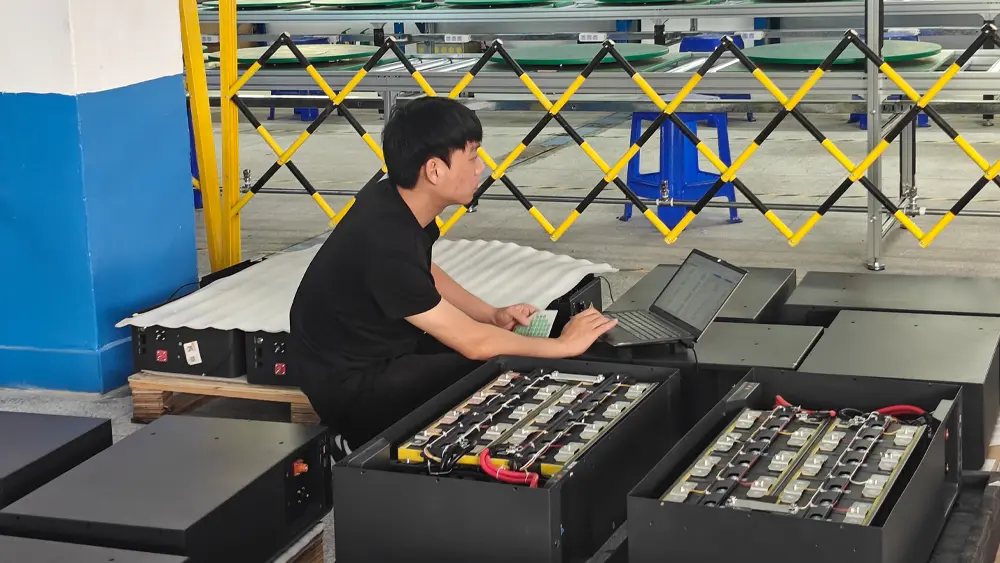
Our 6000-plus-cycle target uses documented conditions, normally 0.5C, 25°C, controlled depth of discharge and an end-of-life threshold of 80% capacity. We also run elevated-temperature and high-rate checks because field conditions rarely match a clean laboratory. A supplier should provide the test current, temperature, depth of discharge, rest time and capacity measurement method. Without those conditions, a cycle number cannot support a warranty calculation.
The OEM and ODM Controls Behind the Cell Choice
An OEM or ODM project needs a cell format that can be reproduced at the customer’s volume. We lock the cell supplier, cell grade, lot traceability and incoming inspection criteria before pilot production. For cylindrical modules, we control weld energy, strip material, pull strength and insulation distance. For pouch modules, we control compression force, tab bend radius, sealing inspection and expansion clearance. For prismatic modules, we control terminal torque, busbar plating, end-plate force and fixture alignment.
We also tune firmware to the final product. A portable power station needs fast load response, inverter protection, USB and DC output coordination, and a display that reports usable energy accurately. A 5kWh or 16kWh home battery needs SOC calibration, inverter communication, low-temperature charging lockout, over-temperature derating and controlled balancing. Passive balancing may operate in the 50mA to 150mA range, but the correct value depends on cell capacity and the expected voltage drift.
For private-label programs, we can adapt the enclosure, connector set, cable length, display language, mounting method, logo, carton and firmware parameters. We recommend a 20 to 50 unit pilot for a new portable station and a smaller engineering sample for a home storage module before volume production. The sample must prove thermal behavior and mechanical fit, not only confirm that the screen turns on. A typical sample lead time is 15 to 30 days after the technical specification is frozen.
Cell Format and Product Reliability Matrix
| Product example | Recommended cell format | Nominal architecture | Reliability target | Main reliability controls |
|---|---|---|---|---|
| 1000W portable power station | Cylindrical LFP or pouch LFP | 12.8V or 25.6V battery platform | 4,000+ cycles to 80% capacity | Weld inspection or pouch compression, vibration testing, 80A-class current path, thermal sensors |
| 2400W portable power station | Cylindrical LFP or pouch LFP | 12.8V or 25.6V battery platform | 4,000+ cycles to 80% capacity | Higher-voltage module, surge control, tab or weld protection, inverter coordination, fan and thermal derating |
| 5kWh home energy storage | Prismatic LFP | 16S, 51.2V nominal | 6,000+ cycles to 80% capacity | Cell matching, controlled compression, 100A-class busbar path, CAN or RS485 BMS, wall-mount thermal clearance |
| 16kWh home energy storage | Prismatic LFP | Several 51.2V modules or cabinet architecture | 6,000+ cycles to 80% capacity | Parallel current sharing, module addressing, cabinet airflow, contactor pre-charge, thermal propagation controls |
The format selection follows the product’s physical job. Cylindrical and pouch cells keep portable equipment practical to carry while supporting high power in a compact module. Prismatic cells make more sense when the battery stays in a fixed cabinet and long service life, thermal consistency and service mapping matter more than minimum weight.
Four Reliability Problems We Prevent at the Factory
One – Using a portable cell design in a home storage cabinet. A module designed for short, high-power use may not have the compression, terminal capacity or thermal spacing required for daily stationary cycling. We specify the cell format against the complete duty cycle and warranty period.
Two – Counting cell cycles instead of pack cycles. A cell may exceed 4,000 or 6,000 cycles while the assembled pack loses capacity through an imbalanced group, hot weld, loose terminal or inaccurate SOC calibration. We test the complete pack and record the limiting cell and connection data.
Three – Allowing current to concentrate in one parallel path. This is especially dangerous in 2400W portable units and 16kWh parallel home systems. Match busbar resistance, verify module current sharing and set BMS protections according to the weakest measured path.
Four – Ignoring enclosure temperature. An IP65 cabinet can protect a 5kWh wall battery from dust and water while trapping heat. We validate derating at the target ambient temperature, maintain a defined pressure-relief route and keep heat-generating electronics away from the most temperature-sensitive cell area.
Questions Buyers Ask About These Three Formats
Their module structures support compact 1000W and 2400W products, and both formats can exceed 4,000 cycles when the current path, thermal system and mechanical protection meet the specified test conditions.
Large prismatic LFP cells reduce connection count and provide a stable platform for compression, temperature sensing and high-capacity module service. That makes it easier to design for more than 6,000 cycles in a stationary 51.2V system.
It can, but that does not make it the correct engineering choice. A single format may simplify purchasing while forcing compromises in weight, weld count, enclosure volume or swelling control. We choose the format after fixing the power, capacity and installation requirements.
State the exact cell chemistry, format, cycle test conditions, end-of-life capacity, charge and discharge current, temperature limits, BMS communication protocol, enclosure rating, certifications and inspection records. Also define whether the 4000-plus or 6000-plus cycle claim applies to the cell, module or finished pack.
Our Manufacturing Rule Is Simple
We use cylindrical and pouch cells for portable power stations because 1000W and 2400W products need efficient module packaging, manageable weight and reliable high-current behavior. We use prismatic LFP cells for 5kWh and 16kWh home storage because fixed installations reward lower connection count, controlled compression and stable thermal integration.
The cell format starts the design. It does not finish it. Reliability comes from matching the cell to the BMS, current path, mechanical frame, cooling method, firmware and production inspection. Send us the product power, usable capacity, daily duty cycle, operating temperature, enclosure dimensions and annual quantity. We will return a preliminary cell and pack architecture with the cycle-test conditions, BMS limits, thermal assumptions and sample schedule within 24 hours.