 English
  العربية
  日本語
日本語  한국어
한국어  Tiếng Việt
  ไทย
ไทย  Bahasa Melayu
  فارسی
فارسی  Bahasa Indonesia
  ဗမာစာ
ဗမာစာ  简体中文
简体中文  香港中文
香港中文  繁體中文
繁體中文  Русский
  Deutsch
  Nederlands
  Italiano
  Français
  Español
  Português
  Afrikaans
  Azərbaycan dili
  Български
  ਪੰਜਾਬੀ
  हिन्दी
  اردو
اردو  বাংলা
বাংলা  Հայերեն
  Íslenska
  Қазақ тілі
  नेपाली
  Српски језик
  Kiswahili
  తెలుగు
  Basa Jawa
  தமிழ்
தமிழ்  मराठी
मराठी 5kWh, 10kWh or 15kWh – How to Choose the Right Residential Energy Storage Capacity
An installer in Spain calls with the same question every week. The customer has a 6 kWp rooftop array, a monthly bill of €140, and no idea whether to buy a 5 kWh, 10 kWh or 15 kWh battery. The installer’s margin depends on getting this right, because a battery that is too small never pays for itself and one that is too large sits half-empty for a decade.
The answer is never a single number. It is a calculation that starts with the household’s actual load curve, not the size of the roof. Get that curve right and the capacity choice almost makes itself.
This article gives you the sizing method, the real numbers for each tier, and the questions to ask a customer before you quote a single kilowatt-hour.
The Load Profile Is the Whole Game – Read It Before You Size
Capacity is not about how much energy a home uses in a day. It is about how much it uses after the sun stops producing. That gap, measured in kilowatt-hours, is the number the battery has to cover.
Start with the evening-to-morning window. A typical European household draws 4–7 kWh between sunset and sunrise, split across the fridge, lighting, a heat pump or air conditioner, and the always-on electronics. A 5 kWh battery covers the low end of that range and nothing more. A 10 kWh battery covers the full overnight draw for most homes. A 15 kWh battery only earns its keep when the home runs a heat pump, an EV charger, or a pool pump through the night.
Now look at the solar side. A 6 kWp array in southern Europe produces 20–30 kWh on a good summer day and 4–8 kWh on a grey winter day. The battery can only store what the array produces in surplus, so a 15 kWh battery paired with a 3 kWp array is a waste of money for half the year. Match the storage to the smaller of the two numbers: the overnight load or the daily surplus.
The third variable is the tariff. Under a flat feed-in tariff, the battery’s job is self-consumption, and the payback comes from every kilowatt-hour you don’t buy from the grid. Under time-of-use pricing, the battery can also arbitrage – charge cheap at night, discharge at the evening peak – and that changes the ideal size upward, because you now want enough headroom to shift load, not just cover it.
What a Real OEM/ODM Partner Does Differently
A drop-shipper sells you a 10 kWh box and moves on. A manufacturer helps you size the box so your installers stop fielding “why is my battery empty by 2 a.m.” calls.
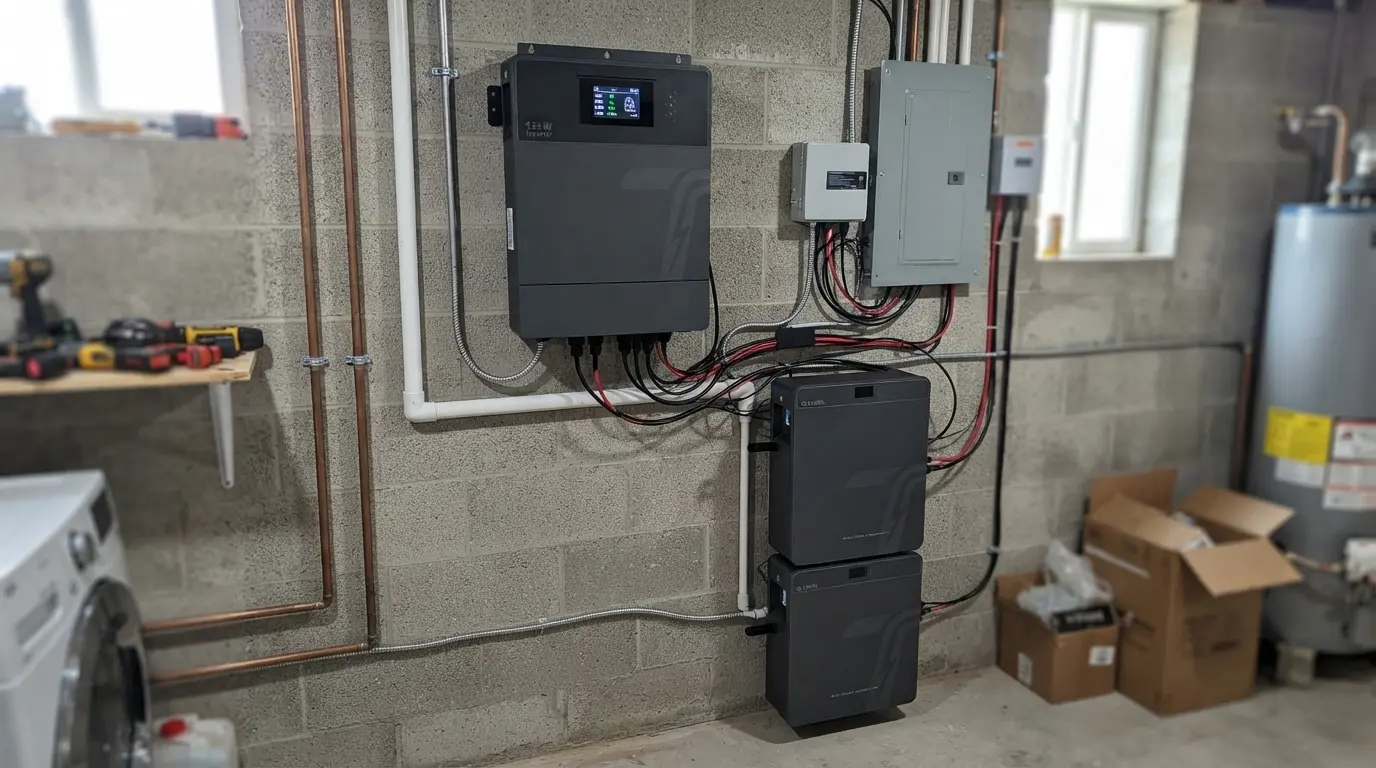
A genuine OEM/ODM partner will give you the discharge curve and the usable-capacity figure, not just the nominal number. A 10 kWh pack with a 90% depth-of-discharge window delivers 9 kWh of usable energy, and that distinction changes the sizing math by a full tier. They will also offer the same enclosure and BMS platform across 5, 10 and 15 kWh, so your installers learn one wiring scheme and one commissioning routine instead of three.
The customisation that matters here is firmware. A partner who can tune the SOC window, the charge current and the grid-export threshold to your market’s tariff structure turns a generic battery into a product that actually fits the local grid code. They will quote MOQs down to 100 units with shared-container options, and they will tell you honestly when a 15 kWh stack is overkill for a market that mostly installs 5 kWh units.
Sizing the Three Tiers Side by Side
Here is how the three common capacities line up against real household profiles, assuming a 48V LFP wall-mount platform with a 90% usable depth of discharge.
| Capacity | Usable energy | Typical overnight load it covers | Best-fit household | Payback signal |
|---|---|---|---|---|
| 5 kWh | ~4.5 kWh | Fridge, lighting, electronics | Apartment or small home, 3–4 kWp array | Flat feed-in tariff, low evening draw |
| 10 kWh | ~9 kWh | Full overnight draw, plus heat pump shoulder | 4–5 bedroom home, 5–6 kWp array | Self-consumption with moderate evening load |
| 15 kWh | ~13.5 kWh | Overnight draw plus EV or heat pump | Large home, EV charger, 8 kWp+ array | Time-of-use arbitrage or high winter load |
The payback signal column is the one to watch. A 5 kWh unit pays back fastest in a market with a flat tariff and a small evening load, because every stored kilowatt-hour directly offsets a grid purchase. A 15 kWh unit only justifies its cost when the tariff structure or the load profile gives it a second job to do.

Four Ways a Capacity Choice Goes Wrong
-
One – Sizing to the roof, not the load.
The most common error is matching the battery to the array size. A 10 kWp roof does not need a 15 kWh battery if the household only draws 5 kWh overnight. Size to the evening-to-morning gap first, then check the array can actually fill the battery.
-
Two – Ignoring usable capacity.
Nominal and usable are not the same number. A pack with a 90% depth-of-discharge window delivers 10% less than the label suggests, and a pack with a conservative 80% window delivers 20% less. Always size on the usable figure, and ask the supplier for the discharge curve that proves it.
-
Three – Forgetting the winter derating.
LFP cells lose usable capacity in the cold, and a battery installed in an unheated garage in northern Europe will deliver less in January than in July. If the market has real winters, add 10–15% to the capacity or specify a pack with internal heating.
-
Four – No room to grow.
A customer who buys a 5 kWh unit today and adds an EV charger next year will be back asking for a second unit. Check whether the platform supports parallel expansion before you quote, so the first sale doesn’t become a dead end.
Questions Installers Ask Before They Quote
Ask for the last three monthly bills and the appliance list. The bill gives you the daily average, and the appliance list tells you where the evening draw comes from. A heat pump or EV charger is the signal to step up a tier.
No. A battery that never fully discharges is paying for capacity it doesn’t use. The best size is the one that cycles fully most days, because that is what drives the payback.
Assume 90% for a quality LFP pack and verify it against the supplier’s discharge curve. Anything less and you are paying for kilowatt-hours you can’t actually use.
Only if the platform supports parallel connection and the BMS can handle the added string. Ask the supplier for the maximum parallel count and the firmware version that supports it before you promise expansion to a customer.
Size to the Load, Not the Label
The right residential capacity is the number that matches the household’s overnight draw, fits the array’s daily surplus, and earns its keep under the local tariff. Five, ten or fifteen kilowatt-hours is not a preference – it is the answer to a calculation, and the calculation starts with the load curve.
If you are sourcing residential systems at volume, send us your market’s typical load profile, tariff structure and annual volume, and we will return a sizing recommendation with the usable-capacity figures and discharge curves for each tier within 24 hours.