 English
  العربية
  日本語
日本語  한국어
한국어  Tiếng Việt
  ไทย
ไทย  Bahasa Melayu
  فارسی
فارسی  Bahasa Indonesia
  ဗမာစာ
ဗမာစာ  简体中文
简体中文  香港中文
香港中文  繁體中文
繁體中文  Русский
  Deutsch
  Nederlands
  Italiano
  Français
  Español
  Português
  Afrikaans
  Azərbaycan dili
  Български
  ਪੰਜਾਬੀ
  हिन्दी
  اردو
اردو  বাংলা
বাংলা  Հայերեն
  Íslenska
  Қазақ тілі
  नेपाली
  Српски језик
  Kiswahili
  తెలుగు
  Basa Jawa
  தமிழ்
தமிழ்  मराठी
मराठी DIY Home Battery Backup: Architecture, Sizing, and BMS Safety
A DIY battery project becomes more predictable when architecture, voltage, inverter sizing, BMS protection, and installation constraints are decided in the right order.
Step 1: Choosing the Right Battery System Architecture
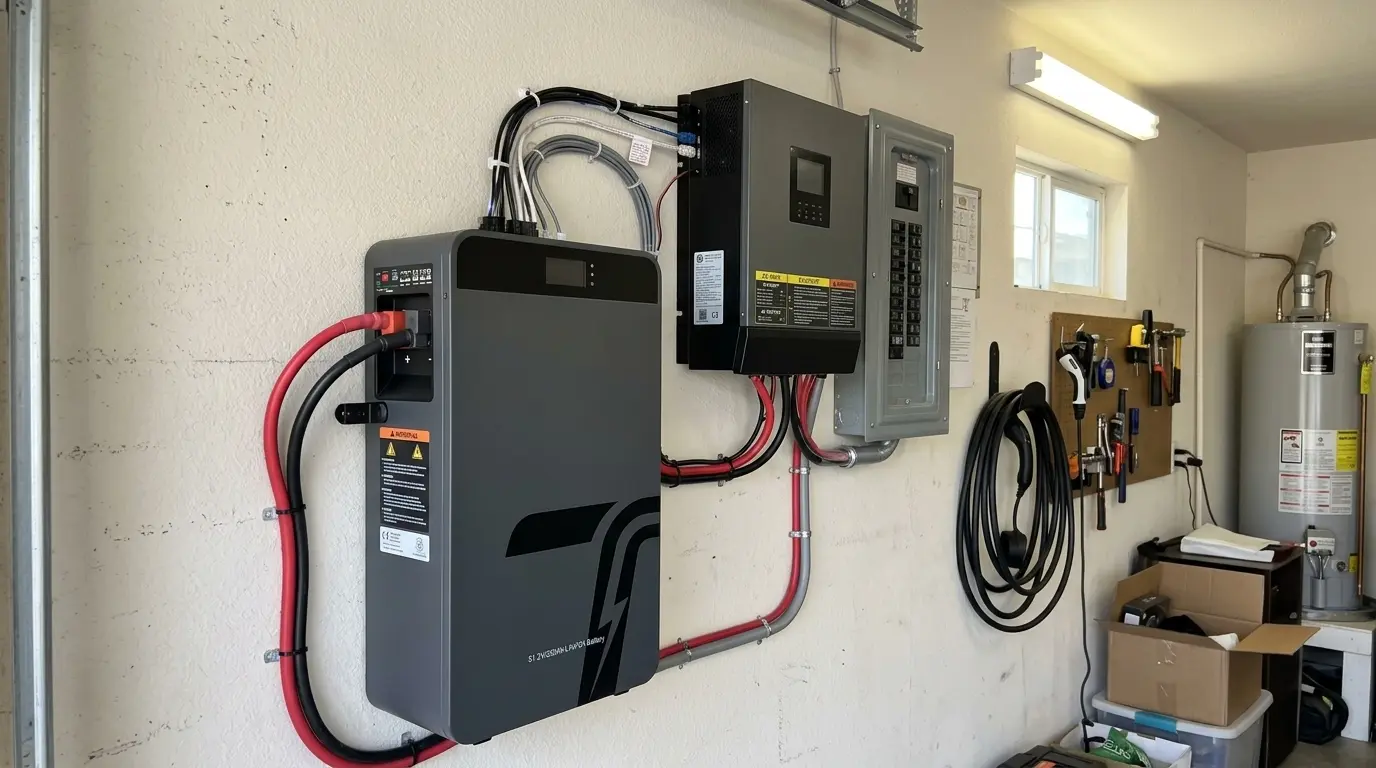
A reliable DIY home battery backup starts with the correct system architecture. I assess the required voltage, storage capacity, inverter output, installation space, wiring complexity, and monitoring needs before selecting a battery configuration.
Individual LiFePO4 Battery Packs
Individual LiFePO4 battery modules provide the most flexible design. Available nominal voltages include 12.8V, 25.6V, and 51.2V, with capacities ranging from 100Ah to 628Ah.
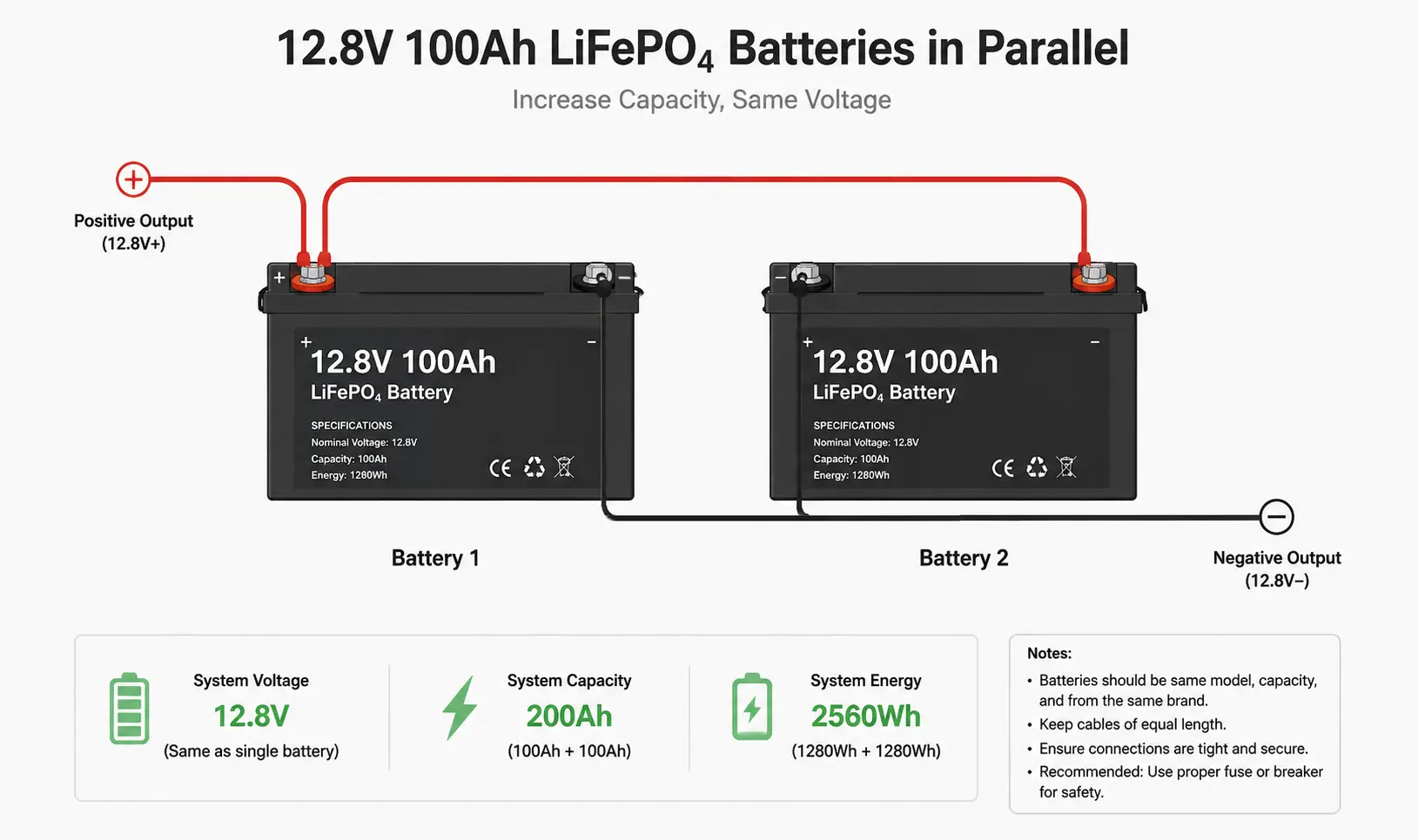
When configuring modules in series or parallel:
- Use modules with matching voltage and capacity.
- Confirm compatibility with the inverter and battery management system.
- Size conductors for the expected current and cable length.
- Secure all terminals correctly according to the component manufacturer’s specifications.
- Keep connections protected, accessible, and clearly labelled.
- Use an integrated battery management system (BMS) for monitoring and battery protection.
This approach supports custom battery banks, but it requires careful electrical design and installation in accordance with applicable local requirements.
19-Inch Rack-Mount ESS
A 19-inch rack-mount ESS offers a structured option for server-rack style builds. The TURSAN rack unit provides 5.22kWh of storage in a metal enclosure and includes an integrated BMS, display panel, AC/DC charger, and DC terminals.
| Feature | Rack-Mount ESS |
|---|---|
| Storage capacity | 5.22kWh |
| Battery voltage | 51.2V nominal |
| Enclosure | 19-inch metal housing |
| Battery protection | Integrated BMS |
| Included system elements | Display panel, AC/DC charger, DC terminals |
This architecture keeps the battery, charging components, monitoring interface, and connection points organised within one standardised chassis.
Stacked and Mobile ESS Platforms
Pre-integrated stacked battery storage systems combine battery storage with an inverter in a coordinated platform. TURSAN stacked systems are available from 5kWh to 25kWh, while All-in-One Mobile ESS platforms combine storage from 3kWh to 32.15kWh with inverter outputs from 3kW to 12kW.
| Architecture | Available range | Best suited to |
|---|---|---|
| Individual battery modules | 12.8V, 25.6V, 51.2V | Custom battery bank designs |
| Rack-mount ESS | 5.22kWh | Organised rack-based installations |
| Stacked ESS | 5kWh-25kWh | Residential energy storage |
| All-in-One Mobile ESS | 3kWh-32.15kWh; 3kW-12kW inverter | Integrated and mobile backup applications |
For a 48V home battery backup, the 51.2V battery platform is a common system voltage. Individual modules offer configuration flexibility, rack-mount systems improve organisation, and pre-integrated platforms reduce the number of separate components that must be coordinated. In every case, the battery voltage, storage capacity, inverter rating, BMS, enclosure, and protection equipment must be compatible before installation.
Step 2: Sizing Inverters & Calculating Battery Capacity
Correct sizing starts with the loads I need to support, not the battery capacity alone. I first separate essential appliances from non-essential loads and estimate how long each one must run during an outage.
Calculate Daily Energy Use
I use this basic formula for each appliance:
Daily energy use (Wh) = Power (W) x Operating time (hours)
For example, I record the expected wattage and runtime of essential equipment such as:
- Refrigerators
- Lights
- Wi-Fi routers
- Medical devices
- Small household electronics
I then add the results to create an essential load profile. A watt-hour calculation guide with practical examples can help make this estimate more consistent. I also allow for inverter losses and additional runtime needs when selecting the battery size.
Match Running and Starting Watts
The inverter must handle both the normal operating load and the temporary surge required when certain appliances start. Refrigerators and other motor-driven equipment can draw more power during startup than they use continuously.
I check:
- Continuous load: The combined running wattage of appliances operating at the same time
- Starting load: The short-term surge from inductive appliances
- Inverter waveform: Pure sine wave output for quiet operation and compatibility with sensitive electronics
- Output headroom: Extra capacity so the inverter is not operated at its limit
TURSAN offers pure sine wave off-grid inverters from 1.2kW to 12kW. For systems that combine battery storage with solar charging, hybrid inverter models range from 5.6kW to 12kW and include MPPT support. I select an off-grid inverter for standalone backup requirements and a hybrid inverter when solar input and dual charging are part of the system design.
Calculate Battery Bank Capacity
Battery capacity is measured in kilowatt-hours (kWh). I calculate the required storage by adding the energy used by essential loads during the backup period.
Required battery capacity = Essential energy demand / usable battery capacity percentage
The usable percentage should account for the selected Depth of Discharge (DoD) limit, conversion losses, and a practical operating reserve. Using an appropriate DoD buffer helps reduce unnecessary stress on the cells and supports the long service life associated with LiFePO4 battery systems.
| Essential backup demand | Planning approach |
|---|---|
| 5kWh | Suitable for a smaller essential-load profile with carefully controlled runtime |
| 10kWh | Provides more operating time or supports a broader group of essential appliances |
| 20kWh | Suited to higher energy demand, longer backup periods, or a larger essential-load panel |
For a simple example, if essential appliances require 5kWh and the system is designed to use 80% of the nominal battery capacity, the battery bank must provide more than 5kWh of rated storage to cover that demand. I apply the same calculation to 10kWh and 20kWh requirements, then verify that the inverter output, battery voltage, and expected current are compatible.
TURSAN LiFePO4 systems use nominal battery voltages of 12.8V, 25.6V, and 51.2V, with storage capacities from 1.28kWh to 32.15kWh. The product range also includes 48V-class rack-mount ESS units, stacked battery storage, and all-in-one systems. With a stated 6,000+ cycle life and a 5-year warranty, these systems are designed for repeated energy storage use when correctly specified and operated.
Step 3: Critical BMS Protection and Safety Compliance
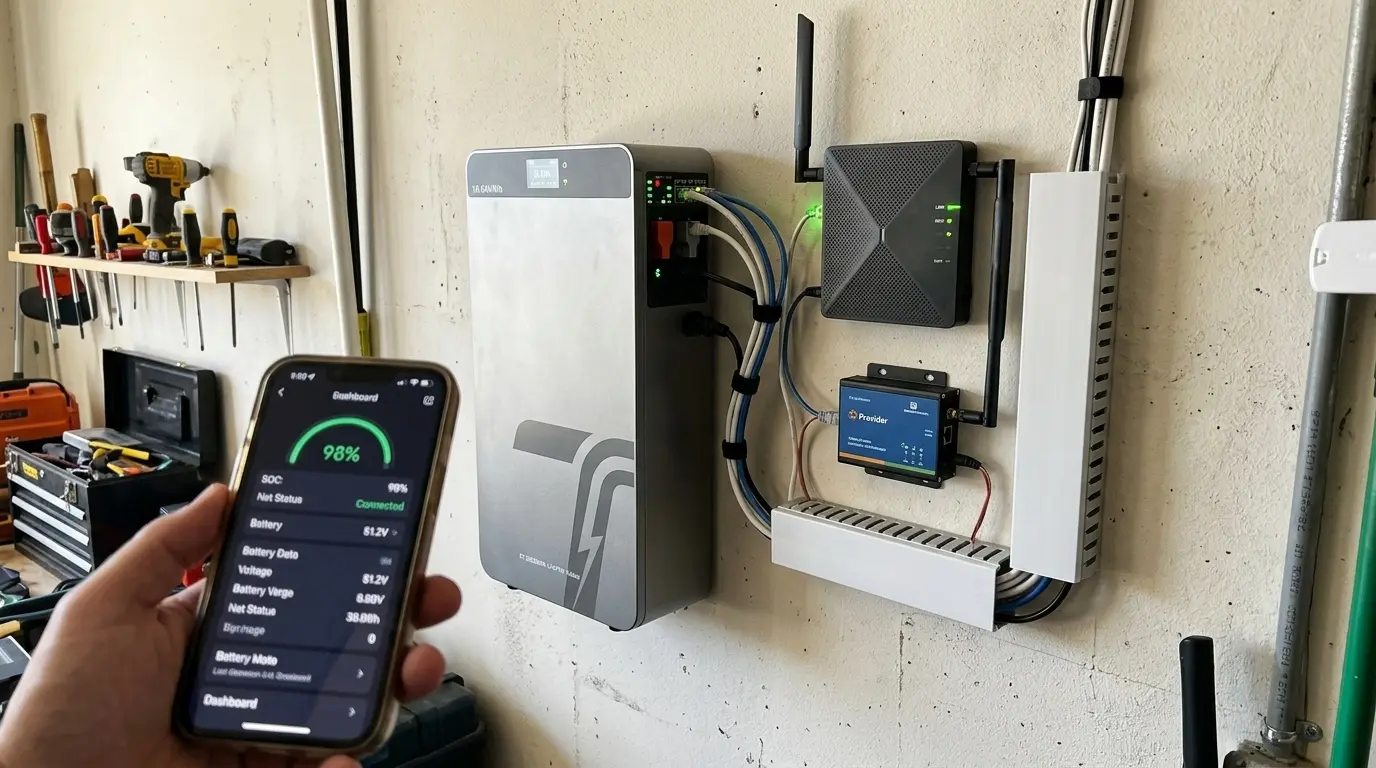
Intelligent Battery Management System (BMS)
I treat an integrated battery management system (BMS) as essential for any DIY LiFePO4 battery installation. The BMS helps manage battery operation and supports safer use of the stored energy. TURSAN battery systems use intelligent BMS technology with options for Wi-Fi, Bluetooth, IoT integration, and multi-API protocol support, allowing system data to be monitored through connected devices and platforms.
For a practical 48V home battery backup, I verify that the BMS is matched to the battery voltage, capacity, inverter, and intended installation. A correctly integrated BMS is especially important when using modular battery packs or expanding a rack-mount ESS or stacked energy storage system.
BMS points to verify:
- Compatibility with 12.8V, 25.6V, or 51.2V battery modules
- Integration with the selected inverter and charging equipment
- Monitoring support through Wi-Fi, Bluetooth, IoT, or other available protocols
- Protection and operating specifications supplied by the manufacturer
- Clear access to battery status and diagnostic information
Essential Safety Certifications
Before installing a home battery backup system, I check the available documentation and certifications for the complete battery product. TURSAN identifies compliance and documentation including UL1973, UN38.3, MSDS, CE, and FCC. These records help support product evaluation, transport requirements, and market or installation approval across different regions.
A certification review should include:
- UL1973 documentation for stationary battery applications
- UN38.3 testing documentation for lithium battery transport
- MSDS safety information for handling and storage
- CE and FCC compliance information where applicable
- Battery voltage, capacity, warranty, and installation specifications
Certification does not replace correct installation. I still follow local electrical codes, manufacturer instructions, and qualified installer requirements when working with a high-capacity solar battery storage system or home power battery backup.
Step 4: System Wiring, Safety Controls, and Grid Integration
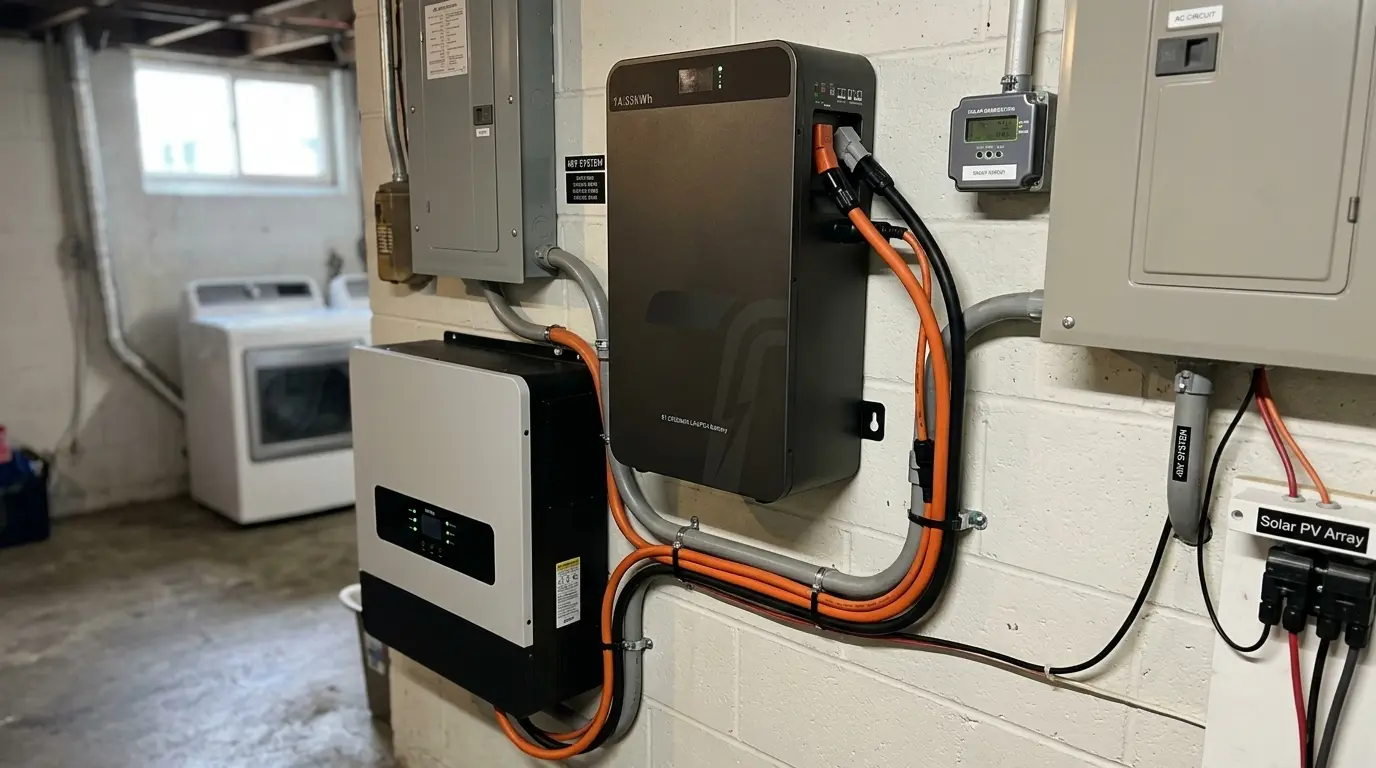
I treat the DC wiring and protection system as a safety-critical part of every DIY home battery backup installation. The battery voltage, maximum continuous current, cable length, and equipment ratings must be checked before selecting conductors or protective devices.
DC Protection and Wiring
Use components that are rated for the system’s voltage and maximum current. Cable sizing should account for continuous load, installation length, temperature, and permitted voltage drop. All connections must be secure, correctly insulated, and tightened to the manufacturer’s specified terminal torque.
| DC control | Main purpose |
|---|---|
| Correctly rated fuse | Protects cables and equipment from excessive current |
| DC circuit breaker | Provides circuit protection and a convenient isolation point |
| Rapid disconnect | Allows the battery system to be shut down quickly during maintenance or an emergency |
| Battery management system (BMS) | Monitors and protects the LiFePO4 battery during operation |
Place protective devices as close as practical to the battery source, while following the equipment instructions and applicable electrical codes. Never work on an energized battery circuit.
Grid Isolation and Transfer Switching
A battery backup connected to household circuits must be isolated from the utility grid during an outage. This prevents grid-tie backfeed, which can create a serious hazard for utility workers and damage equipment.
A qualified electrical professional should verify:
- The essential load subpanel is correctly separated from non-essential loads.
- A compatible Manual Transfer Switch (MTS) or Automatic Transfer Switch (ATS) is installed where required.
- The backup system cannot energize utility lines during a grid outage.
- Local inspection, grounding, disconnect, and permitting requirements are met.
- The inverter, battery, and transfer equipment are electrically compatible.
A clear isolation method is especially important for a 48V home battery backup, rack-mount ESS, or stacked energy storage system connected to household circuits.
Enclosure and Installation Environment
TURSAN battery systems are available in plastic, sheet metal, wall-mounted, floor-standing, stacked, and 19-inch rack-mount formats. I select the enclosure according to the installation environment, physical protection needs, available space, and system layout.
| Installation factor | Practical requirement |
|---|---|
| Thermal management | Keep the battery and inverter within the operating limits stated by the manufacturer |
| Ventilation | Maintain the required airflow around power electronics and avoid blocked openings |
| Clearance | Leave enough space for inspection, cable routing, cooling, and safe disconnection |
| Physical protection | Use a suitable metal or plastic enclosure for the location and expected conditions |
| Environment | Avoid moisture, flooding, excessive heat, direct sunlight, and locations exposed to impact |
| Service access | Keep the BMS display, breakers, terminals, and disconnects accessible |
The enclosure must remain stable and must not place strain on battery terminals or cables. For organized installations, a 48V rack-mount ESS can provide a structured metal chassis with integrated battery controls. For larger systems, a stacked configuration can help maintain a clean footprint while keeping each battery module accessible.
For component selection, I also review manufacturer background, certifications, warranty terms, and system design options, as outlined in this guide to reliable home battery brands.
Step 5: Primary Application Scenarios and Setup Configurations
Scenario A: Emergency Whole-Home Backup
For whole-home emergency backup, I use a battery system with a suitable inverter and a clearly defined essential-load strategy. The system can support selected household circuits during a grid failure, including refrigeration, lighting, Wi-Fi equipment, and other priority loads. A properly installed transfer arrangement helps isolate the home from the grid and supports a controlled transition to backup power.
TURSAN offers wall-mounted, floor-standing, stacked, and all-in-one ESS configurations. Available systems combine LiFePO4 storage with inverter options from 3kW to 12kW, depending on the selected model and capacity.
Scenario B: Off-Grid and Remote Property Power
For remote properties, I pair LiFePO4 battery storage with solar PV and an inverter that supports MPPT input where required. This configuration stores solar energy for use when sunlight is limited and can support essential loads without relying on a standard grid connection.
A 48V home battery backup system can provide a practical foundation for off-grid applications. Battery capacity, inverter output, solar input, and daily energy use must be matched to the property’s actual load profile. For wider planning, I also consider expected runtime and service life when reviewing solar generator lifespan and runtime factors.
Scenario C: Time-of-Use Peak Shaving
Time-of-Use (TOU) peak shaving uses stored energy more strategically. The battery can charge during lower-rate periods and discharge during higher-cost periods, subject to the capabilities of the inverter, battery management system, utility rules, and local installation requirements.
Hybrid inverters with MPPT support are suitable for systems that combine solar charging with battery storage. Intelligent monitoring through supported Wi-Fi, Bluetooth, IoT, or other communication protocols can help track system status and energy use. TURSAN ESS solutions are available in modular and stacked formats, making it easier to match storage capacity to a home’s operating schedule.
Step 6: Sourcing Commercial-Grade Equipment for DIY Projects
I compare the full cost and risk of DIY cell assembly with pre-assembled commercial modules before choosing a LiFePO4 battery system. A commercial module or ESS can include the battery management system (BMS), enclosure, terminals, and protection features, reducing wiring and integration work.
| Option | Main consideration |
|---|---|
| DIY cell assembly | Requires accurate cell matching, balancing, protection design, secure connections, and suitable enclosure planning. |
| Commercial battery module | Provides an integrated format with defined voltage, capacity, BMS, and enclosure options. |
| TURSAN LiFePO4 ESS | Uses LFP prismatic cells, supports up to 6,000+ cycles, and includes a 5-year warranty according to the stated product information. |
For compact backup equipment, a commercial gasless power station review can also help compare pre-integrated solutions with modular battery systems.
B2B and OEM Manufacturer Checks
When I evaluate a B2B or OEM supplier, I check the documentation and support available before placing an order:
- Confirm the rated voltage, storage capacity, cycle-life specification, and warranty terms.
- Verify applicable certifications, including UL1973, UN38.3, MSDS, CE, and FCC.
- Request evidence of quality-control and production procedures rather than relying only on product listings.
- Check whether the supplier provides BMS communication options such as Wi-Fi, Bluetooth, IoT integration, or supported API protocols.
- Confirm access to technical and project support for installation, integration, or custom configurations.
- Review the enclosure, terminals, inverter compatibility, and installation requirements before connecting the system.
TURSAN provides wholesale, OEM, and ODM services, including exterior design and modelling support for suitable projects. Exact pricing is inquiry-based, with quick quotes provided after a request.
Frequently Asked Questions About DIY Home Battery Backup
How much does a DIY home battery backup system cost compared with a commercial system?
Exact retail prices are not listed. Total cost depends on battery capacity, inverter rating, enclosure, protection equipment, installation, and monitoring requirements.
| Option | Main cost factors |
|---|---|
| DIY modular system | Battery modules, inverter, wiring, protection equipment, enclosure, and installation |
| Commercial ESS | Pre-integrated battery, inverter, BMS, enclosure, monitoring, certifications, and technical support |
TURSAN uses an inquiry-based B2B pricing model and provides quick quotations within 4 hours. Comparing home battery brands and their system options can help define the required capacity and architecture.
Is it safe to build and wire a LiFePO4 battery bank at home?
A LiFePO4 battery system still requires careful electrical design and installation. For a safer DIY home battery backup, I recommend using modules with an integrated battery management system (BMS) and checking the available safety documentation before installation.
Key points include:
- Match the battery voltage and inverter requirements.
- Use suitable cables, terminals, and enclosures.
- Follow local electrical and installation requirements.
- Confirm certifications such as UL1973, UN38.3, MSDS, CE, and FCC.
- Use qualified support for high-voltage wiring or grid-connected work.
TURSAN LiFePO4 systems specify a 6000+ cycle life and a 5-year warranty.
How do I calculate the battery storage my home needs?
I start with the essential loads rather than the entire home.
Basic calculation:
Daily energy use (kWh) = Appliance power (W) x Operating time (hours) / 1,000
List the appliances required during an outage, such as:
- Refrigerator
- Lighting
- Wi-Fi equipment
- Medical devices
- Essential communication equipment
Add the daily energy use of these devices, then select a battery capacity with a practical operating buffer. TURSAN home battery systems cover configurations from approximately 5 kWh to 25 kWh, while some all-in-one mobile ESS platforms range from 3 kWh to 32.15 kWh.
What is the difference between a pure sine wave inverter and a modified sine wave inverter?
A pure sine wave inverter produces the waveform specified for TURSAN off-grid and hybrid inverter systems. It is designed for low-noise operation and high load capacity, making it suitable for a broad range of household equipment.
TURSAN offers pure sine wave off-grid inverters from 1.2 kW to 12 kW and hybrid inverter models from 5.6 kW to 12 kW, with MPPT support on applicable hybrid systems. Performance details for modified sine wave inverters vary, so I would verify appliance compatibility before selecting one.
Do I need a manual transfer switch or an essential-loads subpanel for grid isolation?
Grid-connected backup systems must be designed so the battery system does not backfeed the utility supply during an outage. The exact equipment depends on the installation design, local regulations, and whether the system supports whole-home or essential-load backup.
A qualified installer should confirm:
- Required grid isolation equipment
- Manual or automatic transfer operation
- Essential-load subpanel requirements
- Inverter and battery compatibility
- Local electrical compliance
For a DIY home battery backup, using a pre-integrated ESS with a compatible inverter and documented installation requirements can simplify system planning.