 English
  العربية
  日本語
日本語  한국어
한국어  Tiếng Việt
  ไทย
ไทย  Bahasa Melayu
  فارسی
فارسی  Bahasa Indonesia
  ဗမာစာ
ဗမာစာ  简体中文
简体中文  香港中文
香港中文  繁體中文
繁體中文  Русский
  Deutsch
  Nederlands
  Italiano
  Français
  Español
  Português
  Afrikaans
  Azərbaycan dili
  Български
  ਪੰਜਾਬੀ
  हिन्दी
  اردو
اردو  বাংলা
বাংলা  Հայերեն
  Íslenska
  Қазақ тілі
  नेपाली
  Српски језик
  Kiswahili
  తెలుగు
  Basa Jawa
  தமிழ்
தமிழ்  मराठी
मराठी Duracell PowerSource 660 Review: Runtime, AGM Battery and Better Alternatives
A practical look at what the 660Wh gasless power station can run, how much AGM energy is really usable, and when a LiFePO4 model is the better long-term choice.
Is the Duracell PowerSource 660 still a smart buy for emergency backup power, camping, or a CPAP machine?
This gasless portable power station offers 660Wh capacity, 1,440W continuous output, and a useful built-in UPS feature—but its heavy AGM lead-acid battery makes it very different from today’s lithium models.
In this Duracell PowerSource 660 review, you’ll learn what it can realistically run, expected runtimes, the major pros and cons, and whether it delivers enough value for your needs.
The supplied reference does not verify Duracell DR660PSS specifications, battery chemistry details beyond the AGM design, outlet layout, inverter waveform, display functions, or unit weight in every market. These details should be confirmed through the product manual, manufacturer documentation, or an authorized retailer before purchase.
For a practical portable power station assessment, the core build factors are:
- Continuous and surge output: Determines whether the unit can support sensitive electronics, household appliances, and motor-driven loads.
- Inverter waveform: A pure sine wave inverter is preferred for low-noise operation and compatibility with electronics.
- Battery chemistry: LiFePO4 systems generally provide stronger cycle-life performance than traditional battery designs.
- Outlet configuration: AC, USB, and 12V DC outputs affect how easily the station supports home backup, vehicle use, and small devices.
- BMS protection: Battery management should protect against over-current, short circuits, temperature issues, and abnormal charging conditions.
- Housing and handles: A heavy-duty enclosure and secure carry handles matter, but higher-capacity battery units can still be difficult to move alone.
As a current industry benchmark, TURSAN portable power stations use LiFePO4 battery technology, pure sine wave output, and models ranging from 300W to 3,600W. Buyers comparing the Duracell PowerSource 660 should prioritize verified wattage, usable watt-hours, battery cycle life, charging method, safety certifications, and total weight rather than relying on nominal capacity alone.
660Wh AGM Battery Usable Capacity
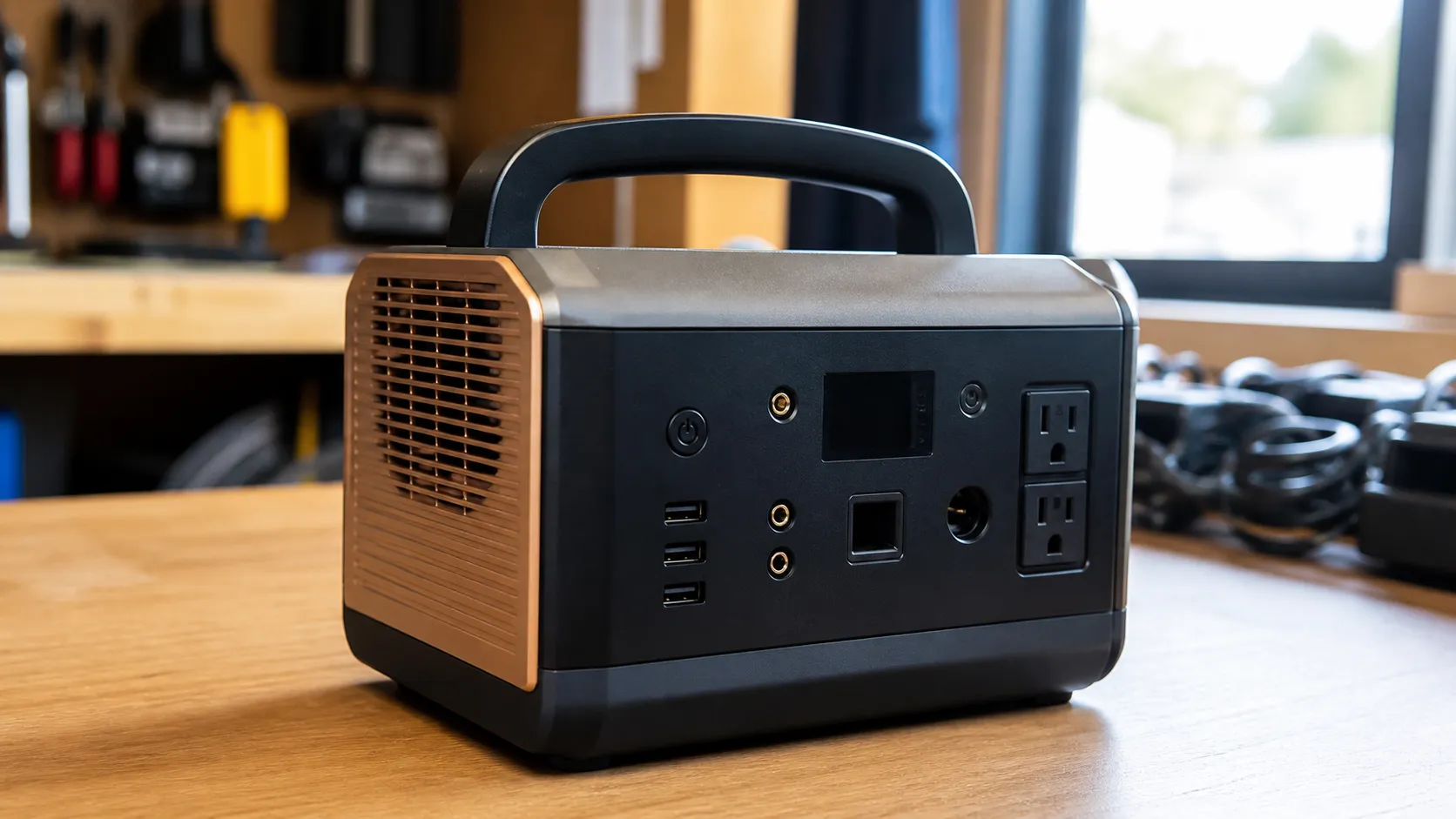
The Duracell PowerSource 660 lists 660Wh of nominal AGM battery capacity, but that is not the same as usable AC energy. For regular use, an AGM battery is best kept to about 50% depth of discharge. Deeply draining it on every cycle can shorten lead-acid battery life.
A practical planning figure is roughly 330Wh or less for the Duracell 660 usable capacity. The 50% discharge limit leaves about 330Wh in the battery, and the AC inverter also uses some energy during conversion. Actual available output can therefore be lower with AC-powered appliances.
Several conditions affect AGM battery runtime:
- Cold weather: AGM batteries deliver less energy in low temperatures.
- Battery age: Capacity declines as the battery wears over time.
- Startup surges: Refrigerators and motor-driven equipment can draw a brief, high starting load.
- AC conversion: The 1,440W inverter consumes energy when converting DC battery power to 120V AC.
- Load size: A small device can run longer, while a high-watt appliance drains the battery quickly.
Under careful use, sealed lead-acid AGM batteries commonly provide around 300–500 cycles. That is far below modern LiFePO4 designs rated for thousands of cycles, so the PowerSource 660 makes more sense for occasional outage support than daily cycling.
Battery storage matters. Keep the unit charged when not in use, avoid leaving it deeply discharged, and store it in a dry, moderate-temperature area. An AGM battery left empty for long periods can lose capacity permanently, reducing the Duracell PowerSource 660’s real-world runtime.
Duracell PowerSource 660 Real-World Appliance Runtime
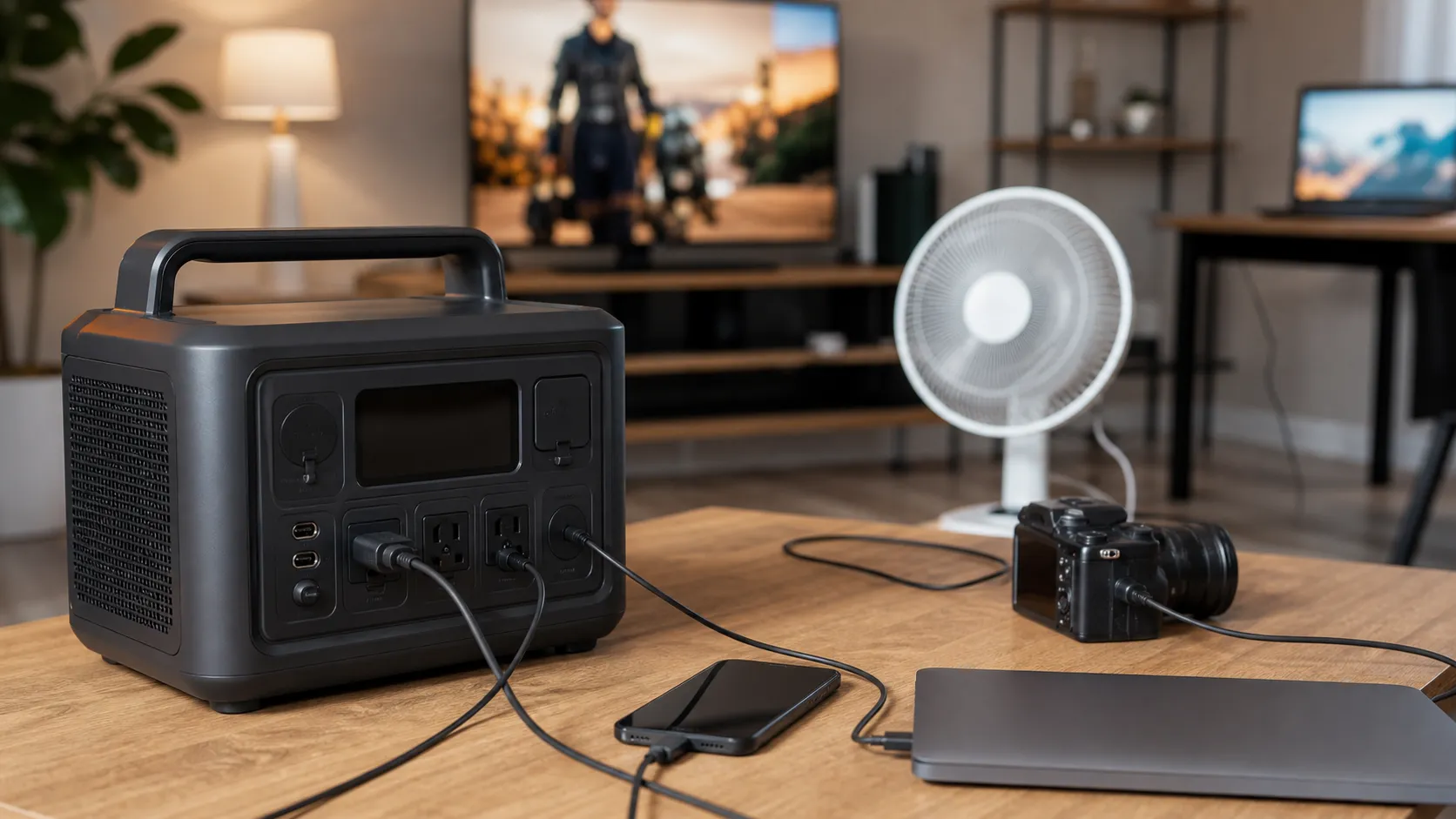
In this Duracell PowerSource 660 gasless portable power station review, the main limitation is not the 1,440W pure sine wave inverter. It is the AGM battery’s usable energy. With roughly 330Wh available after conservative depth-of-discharge limits and AC conversion losses, this unit can handle many small loads, but high-watt appliances drain it quickly.
A full-size refrigerator may draw only 100W–200W on average, but its compressor needs a much higher startup surge. The 1,800W peak surge rating can help with short compressor starts, provided the refrigerator’s startup demand stays within that limit. In practical use, expect roughly 1.5–3 hours of compressor-running time, not a full day of refrigerator backup.
Estimated Runtime Chart
| Appliance or Load | Typical Running Watts | Startup Surge | Estimated Runtime | Practical Use Notes |
|---|---|---|---|---|
| Wi-Fi router | 10W–15W | Low | 20–30 hours | Good use for communications during short outages |
| LED light | 8W–12W | Low | 25–40 hours | Multiple lights reduce runtime quickly |
| Smartphone charger | 5W–15W | Low | 20–60+ charges | USB charging is generally more efficient than AC charging |
| Tablet charger | 10W–20W | Low | 12–25 charges | Actual result depends on battery size and charge level |
| Laptop charger | 45W–90W | Low | 3–6 hours | Suitable for short work sessions |
| Small fan | 25W–45W | Low | 6–12 hours | A practical overnight cooling option at low speed |
| CPAP without heat | 20W–40W | Low | 7–14 hours | May support an overnight session, depending on settings |
| CPAP with humidifier or heated tube | 60W–100W+ | Low | 3–5 hours | Heat features can cut runtime sharply |
| Desktop PC, monitor, modem, and router | 180W–300W | Moderate | 1–2 hours | Best for saving work and maintaining short-term connectivity |
| Full-size refrigerator | 100W–200W average | High compressor surge | About 1.5–3 hours | Runtime varies with compressor cycling and room temperature |
| Microwave or power tool | 800W–1,440W | Often high | About 10–20 minutes | The inverter may run the load, but battery runtime is very limited |
Refrigerator and Home Backup Use
For a refrigerator, I would treat the Duracell 660 as a short-term food-preservation tool rather than a long-duration backup source. Keep the refrigerator door closed, connect only one major appliance at a time, and avoid adding loads such as coffee makers, kettles, heaters, or microwaves while the compressor is running.
The 1,440W inverter rating tells you what the unit can power at one moment. It does not mean the battery can run that appliance for long. A 1,200W kitchen appliance may be within the inverter’s continuous rating, but it can consume most of the practical AGM battery capacity in less than 20 minutes.
CPAP Backup Runtime
For CPAP battery power station backup, the best results come from using the lowest practical settings and turning off power-hungry heat functions when medically appropriate. A CPAP without a heated humidifier or heated tubing may draw around 20W–40W and can potentially run through much of a night. A heated humidifier or heated tube can raise consumption enough to reduce backup time to only a few hours.
For critical medical-device planning, the unit should be fully charged, tested with the exact device and settings, and treated as a short-duration backup rather than the only source of power.
Home Office and Electronics
The Duracell PowerSource 660 is better matched to a modem, router, laptop, LED lighting, and phone charging than to a high-power desktop setup. A desktop computer, monitor, modem, and router can easily reach 180W–300W together. That leaves roughly one to two hours of practical backup time.
For sensitive electronics, the pure sine wave inverter is a meaningful advantage. It provides cleaner AC output than basic modified-sine-wave units and is more suitable for routers, computers, chargers, and other electronics. For broader planning, compare TURSAN’s portable power station and generator guide when assessing backup formats.
How to Estimate Duracell 660 Runtime
Use this simple method:
- Start with about 330Wh of practical usable energy for conservative AGM use.
- Divide usable watt-hours by the appliance’s average watt draw.
- Reduce the result further for AC inverter losses, startup surges, cold weather, and battery aging.
For example:
- A 30W CPAP without heat: 330Wh ÷ 30W = about 11 hours before additional real-world losses.
- A 100W refrigerator average load: 330Wh ÷ 100W = about 3.3 hours under favorable cycling conditions.
- A 250W home office load: 330Wh ÷ 250W = about 1.3 hours.
Actual AGM battery runtime drops as the battery ages, temperatures fall, or load demand rises. The Duracell 660 works best when the load is small, essential, and well planned.
Emergency Indoor Battery Backup and UPS Pass-Through
The Duracell PowerSource 660 is a practical emergency indoor battery backup option when fuel, fumes, and generator noise are not acceptable. Its gasless design can run indoors in a dry, ventilated space, making it useful for lighting, communications, and small essential loads during a utility outage. Unlike a gas generator, it does not require gasoline storage or produce exhaust.
UPS Pass-Through Performance
The unit’s UPS pass-through function keeps connected devices powered from the wall while maintaining battery backup readiness. When grid power fails, its automatic transfer system switches to battery power in under 20 ms.
That switching time is generally suitable for:
- Wi-Fi routers, modems, and network switches
- LED lamps and phone chargers
- Many desktop computers and monitors
- Small communications and home-office equipment
A portable power station is not automatically the same as a dedicated true UPS. Some sensitive servers, professional workstations, medical equipment, and zero-interruption applications may restart during the transfer. Those loads should follow the equipment manufacturer’s backup-power requirements.
Best Emergency Backup Setup
I would reserve the Duracell PowerSource 660 for high-priority, lower-energy devices rather than trying to power an entire household. A sensible setup includes:
- A refrigerator connected only when cooling is needed
- Router, modem, and phone charging for communications
- LED lighting in key rooms
- A CPAP machine, based on its actual wattage and humidifier settings
- A laptop or modest desktop workstation during short outages
The 1,440W inverter provides useful headroom for appliance startup loads, but the 660Wh AGM battery remains the limiting factor. Avoid leaving several large loads connected at once, especially refrigerators, heaters, kettles, microwaves, or high-wattage kitchen appliances.
Indoor Safety Limits
Use the Duracell PowerSource 660 on a stable, dry surface with open space around the enclosure. Keep ventilation openings clear and avoid covering the unit while it is charging or delivering high output.
- Do not exceed the 1,440W continuous output rating.
- Do not use damaged extension cords, overloaded power strips, or loose adapters.
- Keep the power station away from rain, standing water, and damp basements.
- Do not run high-heat appliances indoors from the unit for extended periods.
- Check the display regularly for output load, battery percentage, and operating status.
- Use manufacturer-approved backup arrangements for medical devices.
For short outages, the Duracell PowerSource 660 offers quiet and simple protection for essential electronics. Its strongest role is keeping communications, lighting, and selected small appliances running without the noise and safety concerns of a fuel-powered generator.
Duracell PowerSource 660 AC Charging and Solar Input
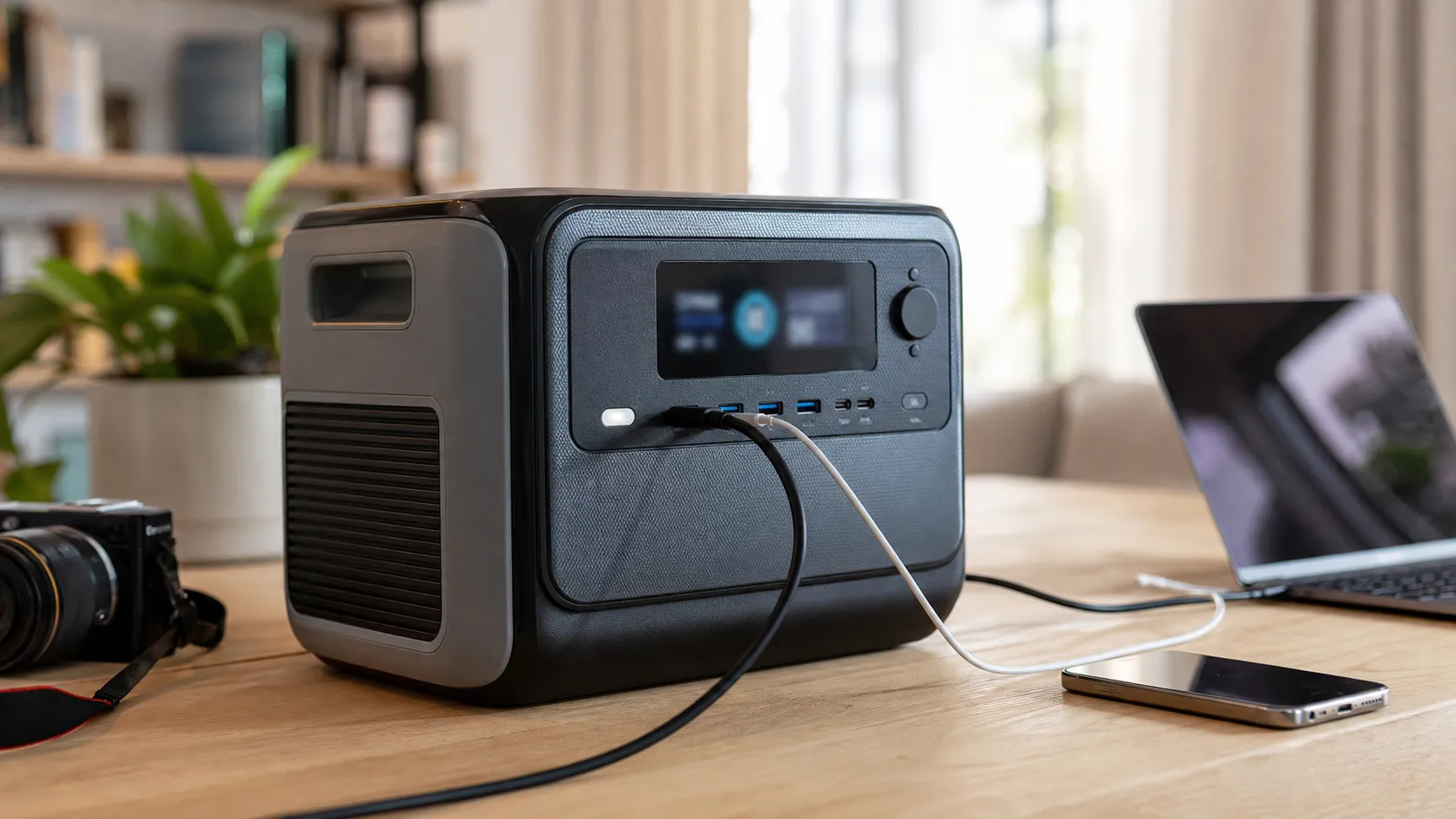
The Duracell PowerSource 660 takes about 10 hours to recharge from a standard wall outlet. That is slow by current portable power station standards, but it is typical of an AGM battery system with a modest built-in charger.
Actual AC recharge time can vary based on:
- Battery age and remaining charge
- Ambient temperature
- Wall-outlet voltage stability
- Charger condition and performance
- Whether the unit is powering loads during charging
For solar use, the DR660PSS uses an Anderson Powerpole solar input connector. A compatible solar panel or an appropriate adapter is required; connector fit alone is not enough. Confirm panel polarity, voltage range, and current limits before connecting any panel. Reversed polarity or an unsuitable panel setup can damage charging equipment.
The built-in solar charging approach is based on a PWM charge controller, not a modern MPPT controller. PWM charging can work for basic off-grid solar generator setups, but it generally captures less available panel power than MPPT charging, especially when sunlight, panel voltage, or temperature changes throughout the day.
Solar charging will usually take longer than expected. Panel ratings are measured under ideal test conditions, while real outdoor output falls with cloud cover, poor panel angle, heat, shading, and cable losses. A 660Wh AGM battery may also accept charge more slowly as it approaches full capacity.
Pass-through charging can be useful for keeping small loads running while the PowerSource 660 is connected to AC or solar input. Still, powering devices while recharging can extend total charge time and add heat. Keep the unit in a dry, ventilated location, avoid covering its vents, and reserve high-watt appliances for periods when the battery is not already under a heavy charging load.
AGM vs. LiFePO4 Portable Power Station
The Duracell PowerSource 660 uses AGM lead-acid batteries, while modern portable power stations commonly use LiFePO4 lithium batteries. The inverter rating may be strong, but battery chemistry has a major effect on usable energy, weight, recharge time, and long-term value.
| Factor | Duracell 660 AGM Design | Modern LiFePO4 Power Station |
|---|---|---|
| Nominal capacity | 660Wh | Varies by model |
| Recommended usable capacity | About 50%, or roughly 330Wh | Often 90%–100% |
| Cycle life | About 300–500 cycles with careful use | Commonly 3,000–6,000+ cycles |
| Unit weight | 63 lb | Often lower for similar usable energy |
| Recharge speed | About 10 hours by AC | Usually faster |
| Solar charging | Less efficient; PWM limitations | Often supports more efficient charging systems |
| Maintenance | Must stay charged during storage | Lower storage maintenance needs |
Usable Capacity Matters More Than the Label
A 660Wh AGM battery should not be deeply discharged regularly. Keeping discharge near 50% helps protect lead-acid battery life, leaving about 330Wh before inverter losses. By comparison, many LiFePO4 units can deliver 90% or more of their rated energy without the same daily depth-of-discharge penalty.
In practical terms: a smaller-rated lithium unit can sometimes provide as much usable runtime as the Duracell 660 while being easier to carry.
Cycle Life and Long-Term Cost
AGM batteries are proven and dependable for occasional backup use, but repeated deep cycling shortens their service life. A well-treated lead-acid battery may reach roughly 300–500 cycles. LiFePO4 designs commonly target 3,000–6,000+ cycles.
That difference changes the portable power station total cost of ownership:
- AGM: lower-tech, heavy, and likely to need replacement sooner with frequent use.
- LiFePO4: typically costs more upfront, but offers far more usable cycles and lifetime energy.
- Frequent users: camping, solar use, job sites, and repeated outage backup favor LiFePO4.
Weight, Charging, and Solar Performance
At 63 lb, the Duracell 660 is best treated as a stationary backup unit with handles rather than a grab-and-go power station. A LiFePO4 alternative with similar usable energy is often significantly lighter.
Lithium also generally recharges more efficiently and works better with modern solar charging hardware. AGM batteries can still support solar charging, but their slower charging profile and lower recommended depth of discharge make multi-day off-grid use less convenient.
Cold weather is a trade-off. AGM batteries can discharge in cold conditions, though available capacity falls. LiFePO4 batteries should not be charged below their approved temperature range unless the unit includes low-temperature charging protection.
Best Fit for Each Battery Type
The Duracell PowerSource 660 remains practical for occasional indoor emergency power, especially when it stays charged and does not need to move often. Its 1,440W pure sine wave inverter is useful, but the AGM battery limits how long high-watt loads can run.
For frequent cycling and long-term preparedness, a modern TURSAN-style LiFePO4 station is usually the stronger choice. LiFePO4 systems offer higher usable capacity, lower weight, faster recharging, and substantially longer cycle life. Compare the available TURSAN portable LiFePO4 power stations when evaluating a replacement or private-label product.
Duracell PowerSource 660 Pros and Cons
The Duracell PowerSource 660 is strongest as a stationary, short-duration emergency indoor battery backup. Its inverter is capable, but the AGM battery limits how long that power is available.
| Strengths | Practical Limits |
|---|---|
| 1,440W pure sine wave inverter supports sensitive electronics and many household loads | 63 lb weight makes it difficult to move frequently |
| 1,800W surge capacity helps start loads with higher startup demand | About 10 hours of AC charging is slow by current portable power station standards |
| Four 120V AC outlets allow several low-watt devices to run at once | 660Wh is nominal capacity; regular deep discharge can shorten AGM battery life |
| Silent, gasless operation with no fuel storage | Roughly 50% depth of discharge leaves about 330Wh for routine use before conversion losses |
| UPS pass-through can support routers, computers, and always-on electronics | AGM technology has lower cycle life and slower charging than modern LiFePO4 units |
What It Does Well
The 1,440W pure sine wave inverter is the main selling point. Pure sine wave output is better suited to laptops, routers, desktop computers, CPAP machines, chargers, and other sensitive electronics than a lower-quality modified-wave inverter. Four AC outlets also make it practical for a small emergency setup with a router, modem, lamps, and device chargers.
Silent, fume-free operation is another clear advantage. Unlike a gasoline generator, the Duracell 660 does not require fuel handling or outdoor placement for exhaust. It is better suited to indoor use for communications, lighting, and basic electronics during an outage.
UPS pass-through adds value for equipment that should stay powered. For networking gear and many computers, its transfer function can provide useful continuity during a utility interruption. For B2B buyers comparing backup product categories, TURSAN’s portable power station comparison guide offers a useful starting point.
Where It Falls Short
The 63 lb enclosure is heavy for a 660Wh nominal power station. Dual side handles help with lifting, but this is not a convenient unit to carry between rooms, load into a vehicle often, or take far from a campsite or work area.
The AGM battery is the bigger compromise. While 660Wh is the rated capacity, routinely limiting discharge to around 50% is more battery-friendly. That means the Duracell 660 usable capacity is closer to roughly 330Wh before inverter losses, appliance surges, battery age, and temperature are considered.
Charging also takes about 10 hours from an AC outlet. That can be acceptable for occasional backup duty, but it is less convenient after repeated outages. Modern LiFePO4 portable power stations commonly offer higher usable capacity, longer cycle life, and faster recharging in a lighter package.
Best-Fit Buyer
The Duracell PowerSource 660 fits users who need occasional backup for:
- Wi-Fi routers, modems, phones, and tablets
- LED lights and small fans
- CPAP machines with conservative power settings
- Desktop computers and low-power home office equipment
- Short-term indoor emergency power without fuel
It is less suitable for buyers who need long refrigerator runtime, frequent off-grid use, rapid recharging, or easy transport. For those uses, a LiFePO4 unit is generally the more practical long-term choice.
Duracell PowerSource 660 Buying Advice and Best Alternatives
I would consider the Duracell PowerSource 660 gasless portable power station mainly at a low clearance or used-market price. Its 1,440W pure sine wave inverter, 1,800W surge rating, and UPS pass-through function still suit occasional backup needs. However, the 63 lb AGM design and roughly 330Wh practical usable energy make it less attractive for frequent use.
Best fit: stationary emergency power for a router, LED lights, phone charging, a laptop, or a CPAP machine without high-heat accessories.
| Use Case | Duracell PowerSource 660 Fit | Better Option When Needed |
|---|---|---|
| Router, modem, lights | Good | Not necessary to upgrade for occasional use |
| CPAP backup | Suitable for basic CPAP use | Higher-capacity LiFePO4 for longer overnight margins |
| Refrigerator backup | Can handle compressor surge | Larger LiFePO4 unit for longer runtime |
| RV camping | Limited by weight and recharge speed | Portable LiFePO4 power station |
| Job sites | Inverter is useful for short loads | Higher-output, faster-charging system |
| Multi-day outages | Not ideal without frequent recharging | Larger solar-compatible LiFePO4 backup |
A modern LiFePO4 portable power station is the smarter long-term choice for regular camping, solar charging, repeated outages, or daily off-grid work. LiFePO4 systems commonly offer far more usable battery capacity per rated watt-hour and substantially longer cycle life than AGM designs. TURSAN portable power stations are available from 300W to 3,600W and use LiFePO4 cells rated for 6,000+ cycles, making them a stronger benchmark for frequent backup use.
Before buying any battery generator, compare the figures that affect real-world results—not just the headline capacity:
- Usable watt-hours: AGM batteries are best kept near 50% discharge for battery health.
- Continuous and surge watts: Confirm the inverter can start motors and support the appliance load.
- Battery cycle life: This affects replacement frequency and total cost over time.
- Recharge time: A roughly 10-hour AC recharge can be restrictive during extended outages.
- Solar input: Check connector type, voltage limits, polarity, and charge-controller design.
- UPS switching: Useful for routers and computers, but critical equipment may need a dedicated UPS.
- Weight: A 63 lb unit is portable only in a limited, two-hand carry sense.
For solar use, the Anderson Powerpole input should be checked carefully for panel compatibility and correct voltage before connection. A basic PWM charging system may also recharge more slowly than newer MPPT-equipped power stations. TURSAN’s portable solar generator OEM/ODM application provides a useful comparison point for newer LFP-based product planning.
Sizing rule: divide usable watt-hours by the appliance’s average watts, then allow extra margin for inverter losses and startup surges. For example, about 330Wh of usable energy can support a 30W router and modem load longer than a 150W refrigerator average load. High inverter wattage helps start demanding devices, but battery capacity determines how long they can run.
Duracell PowerSource 660 FAQs
Can the Duracell PowerSource 660 run a refrigerator, and for how long?
Yes, if the refrigerator’s startup surge stays below the 1,800W peak limit. A full-size refrigerator averaging 100W–200W may run for roughly 1.5–3 hours of continuous compressor operation. Actual time can be longer because compressors cycle on and off, but the Duracell 660 is better for short emergency support than all-day refrigerator backup.
Is the 660Wh rating fully usable with the AGM battery?
No. The 660Wh figure is nominal battery capacity. To help protect the sealed AGM battery, regular use should generally stay near 50% depth of discharge. After inverter losses, practical AC energy is roughly 300–330Wh.
Can this gasless portable power station run a CPAP machine overnight?
It can support many CPAP machines overnight when the heated humidifier and heated tubing are turned off. A low-power CPAP may use about 30W–60W, allowing roughly 5–9 hours of backup. Heated accessories raise consumption sharply and can reduce runtime to only a few hours.
How long does the Duracell DR660PSS take to recharge from a wall outlet?
A full recharge from a standard AC outlet takes about 10 hours. Battery age, ambient temperature, and charger condition can make charging slower.
Can I connect solar panels through the Anderson Powerpole input?
Yes, the Anderson Powerpole input can support compatible solar charging equipment. Verify connector wiring, polarity, panel voltage, and current limits before connecting. Its PWM charging design is less efficient than modern MPPT solar systems, so solar recharge can take longer than expected. Compare the exact input limits before selecting a panel or adapter.
Does the Duracell PowerSource 660 work as a UPS during a power outage?
Yes. Its UPS pass-through function can switch to battery power during an outage in under 20 milliseconds. This is useful for routers, modems, networking equipment, and many desktop computers. Some sensitive systems may still require a dedicated true UPS with tighter switching control.
Is a 1,440W pure sine wave inverter enough for power tools and kitchen appliances?
The 1,440W continuous pure sine wave inverter can run many appliances and tools within its rating. The 1,800W surge capacity also helps with motor startup loads. However, high-wattage appliances such as kettles, space heaters, large microwaves, and some power tools can drain the usable AGM capacity very quickly.
Is the Duracell 660 still worth buying compared with a LiFePO4 power station?
It can make sense at a strong clearance or used price for stationary emergency use. Its advantages are silent operation, indoor use, four AC outlets, and UPS support. For frequent camping, solar use, or long-term preparedness, a LiFePO4 unit is usually the stronger choice because it offers more usable capacity, faster charging, lower weight, and far longer cycle life. Modern LiFePO4 designs, including TURSAN-style portable power stations, commonly target 6,000+ cycles versus the shorter service life expected from AGM batteries.
How long will the sealed lead-acid battery last before replacement is needed?
A well-maintained AGM battery may deliver roughly 300–500 cycles under moderate discharge conditions. Keeping it charged, avoiding deep discharge, and storing it in a moderate-temperature location can extend battery health. Capacity will gradually decline with age, even when the unit is not used often.