 English
  العربية
  日本語
日本語  한국어
한국어  Tiếng Việt
  ไทย
ไทย  Bahasa Melayu
  فارسی
فارسی  Bahasa Indonesia
  ဗမာစာ
ဗမာစာ  简体中文
简体中文  香港中文
香港中文  繁體中文
繁體中文  Русский
  Deutsch
  Nederlands
  Italiano
  Français
  Español
  Português
  Afrikaans
  Azərbaycan dili
  Български
  ਪੰਜਾਬੀ
  हिन्दी
  اردو
اردو  বাংলা
বাংলা  Հայերեն
  Íslenska
  Қазақ тілі
  नेपाली
  Српски језик
  Kiswahili
  తెలుగు
  Basa Jawa
  தமிழ்
தமிழ்  मराठी
मराठी How Long Do Solar Generators Last?
On average, a quality portable power station lifespan ranges from 5 to 15 years. However, a solar generator’s true longevity is rarely about the machine breaking down completely; instead, it depends on how long the internal battery can efficiently hold a charge.
While the casing, screens, and ports are built to endure rugged use, the battery chemistry inside dictates the exact expiration date.
Premium vs. Budget Brands
Investing in premium off-grid power supply longevity pays off over time. Budget brands often cut corners on internal components, whereas premium manufacturers utilize advanced battery management systems (BMS) and high-tier cells to maximize the unit’s operational life.
| Feature / Tier | Premium Brands | Budget Brands |
|---|---|---|
| Average Lifespan | 10–15 years | 3–5 years |
| Battery Chemistry | Advanced LiFePO4 | Standard Lithium-ion (NMC) |
| Component Quality | Industrial-grade inverters & BMS | Basic circuitry and cooling |
| Warranty & Support | 5 years with service support | 1–2 years limited |
Ultimately, we see that battery tech determines the generator’s overall lifespan. Once the battery capacity degrades past a certain point, the unit can no longer efficiently sustain your emergency backup power duration needs.
LiFePO4 vs. Lithium-ion (NMC) Solar Generator Batteries
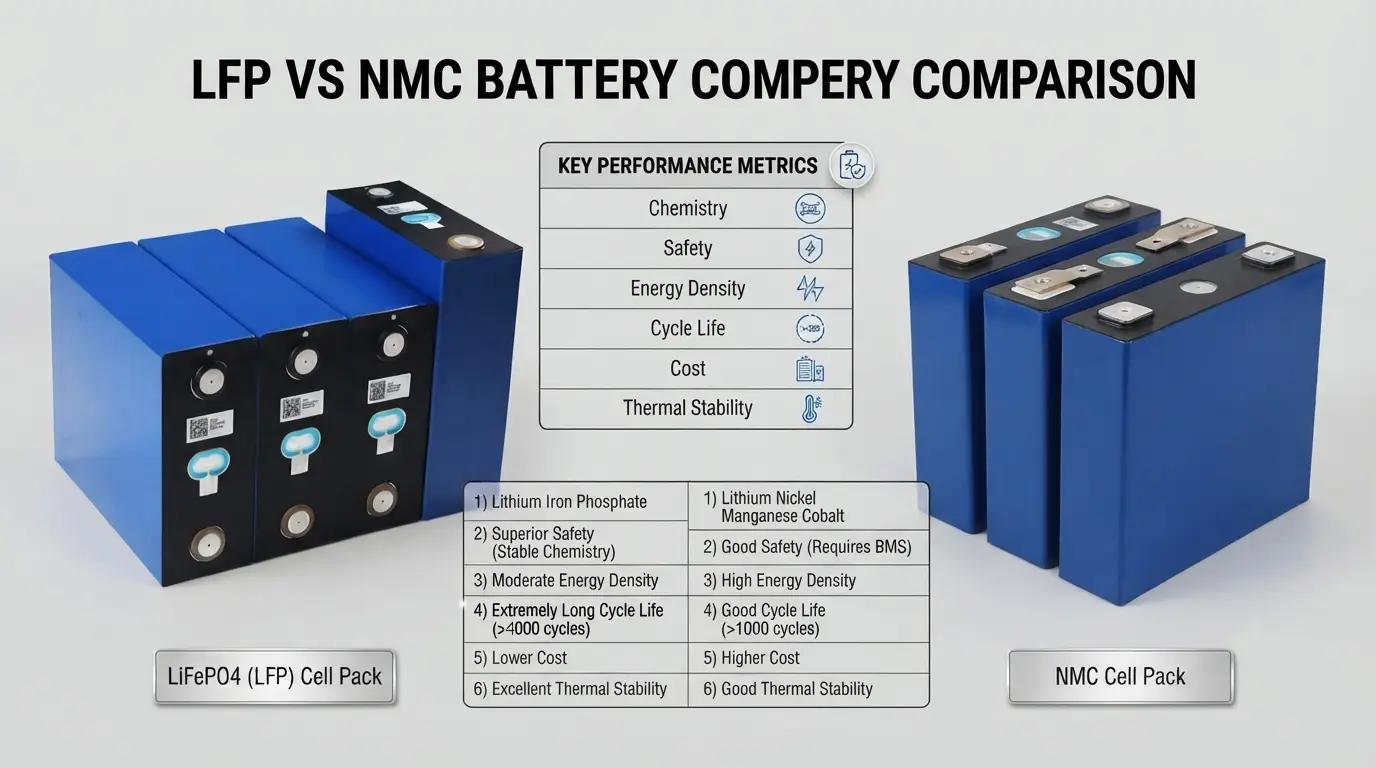
When we look at what actually determines a portable power station lifespan, the conversation always starts and ends with the battery chemistry. The type of battery inside your generator dictates how many years of reliable service you will get before the capacity begins to fade.
Most modern solar generators use one of two dominant technologies: LiFePO4 (Lithium Iron Phosphate) or Lithium NMC (Nickel Manganese Cobalt).
LiFePO4 Battery Lifespan: The Endurance King
If you want an off-grid power supply longevity champion, a LiFePO4 solar generator is the undisputed winner. These batteries are built for heavy-duty, long-term use.
- Lifespan: 3,000 to 6,000+ complete charge cycles.
- Degradation: Retains roughly 80% of its original capacity even after reaching its cycle limit.
- Real-world timeline: If you drain and recharge it every single day, it will last 10+ years before dropping to 80% capacity.
- Learn More: For a deeper dive into how these cells hold up over time, check out our breakdown on LiFePO4 battery lifespan cells to see how this chemistry performs under pressure.
Lithium NMC Battery Lifespan: Lightweight But Shorter-Lived
Lithium NMC batteries are common in older or budget-focused portable power stations. While they are lighter and easier to carry, their chemistry wears down much faster.
- Lifespan: 500 to 800 complete charge cycles.
- Degradation: Drops to 80% capacity much earlier in its life cycle.
- Real-world timeline: Daily use will deplete its optimal health in just 1.5 to 2 years.
What Does “Solar Battery Cycle Life” Mean for You?
A single solar battery cycle life measurement represents using the battery from 100% down to 0% and charging it back to 100%. If you only use 25% of the battery today and top it up, that is only a quarter of a cycle.
How you plan to use your generator determines which chemistry fits your setup:
| Usage Profile | Frequency | Recommended Battery Type | Expected Longevity |
|---|---|---|---|
| Daily Off-Grid / Van Life | 300+ cycles/year | LiFePO4 | 10+ Years |
| Occasional Camping | 30-50 cycles/year | LiFePO4 or NMC | 10+ Years (Either) |
| Emergency Backup Power | 10-20 cycles/year | NMC (Budget) or LiFePO4 (Premium) | Decades (Calendar aging applies) |
For emergency backup power duration, an NMC battery sits on a shelf perfectly fine for occasional blackouts. However, if you are relying on your generator for daily power, choosing LiFePO4 battery solutions is the difference between buying a tool that lasts a couple of years versus investing in a system that lasts a decade.
Lifespan of Other Solar Generator Components
While the battery often steals the spotlight, a portable power station relies on several other internal parts to function. When we look at how long do solar generators last, we have to look past the battery cells and evaluate the entire ecosystem.
Here is what you can expect from the other critical components under the hood:
Solar Panel Degradation Rate
solar panels are the most durable part of the setup. They do not suddenly stop working; instead, they experience a slow solar panel degradation rate of about 0.5% to 1% per year. Average Lifespan: 20 to 25 years. What to expect: After two decades, your panels will still generate power, but they will likely operate at around 80% of their original efficiency.
Pure Sine Wave Inverter Durability
The inverter changes the DC power stored in the battery into the AC power used by your household electronics. Because it handles heavy electrical loads and generates heat, it is often the first component to fail. Average Lifespan: 5 to 10 years. What to expect: Investing in a system with high pure sine wave inverter durability ensures cleaner power and fewer system faults over time, protecting both the generator and your sensitive electronics.
Charge Controller Longevity
The charge controller regulates the voltage and current coming from the panels to prevent overcharging. PWM Controllers: Older, simpler technology that lasts around 4 to 8 years. MPPT Controllers: Highly efficient, modern controllers that typically last 10 to 15 years. Pro-Tip: A premium solar charging system planning easily outlasts older PWM tech while squeezing up to 30% more efficiency out of your solar panels.
Key Factors That Can Kill Your Solar Generator Fast

While a premium portable power station lifespan can reach up to a decade, poor habits and harsh environments will cut that time in half. If you want to protect your investment, you need to avoid the most common generator killers.
Extreme Temperature Exposure
Batteries are incredibly sensitive to environment. High heat accelerates the chemical degradation inside the cells, while freezing temperatures drop efficiency and can cause permanent internal damage if you try to charge them. Always operate and store your gear in a temperature-controlled space whenever possible.
Overcharging and Deep Discharging Habits
Leaving your unit drained at 0% for months will permanently ruin the battery cells. Conversely, keeping it pinned at 100% on a charger indefinitely stresses the chemistry. If your system utilizes older cell formats, bad habits can lead to serious performance drops. For example, understanding battery quality and protection can give you a clearer picture of how internal cell damage occurs when voltage drops too low.
Dust, Moisture, and Rough Storage Conditions
Most solar generators are electronics first and outdoor gear second. Unless a unit has a specific IP waterproof rating, moisture will short-circuit the internal MPPT charge controller or pure sine wave inverter.
- Dust Accumulation: Blocks cooling fans, causing internal heat buildup.
- Moisture/Humidity: Corrodes ports and main circuit boards.
- Vibration/Impact: Loosens internal connections during rough transport.
How to Make a Solar Generator Last Longer
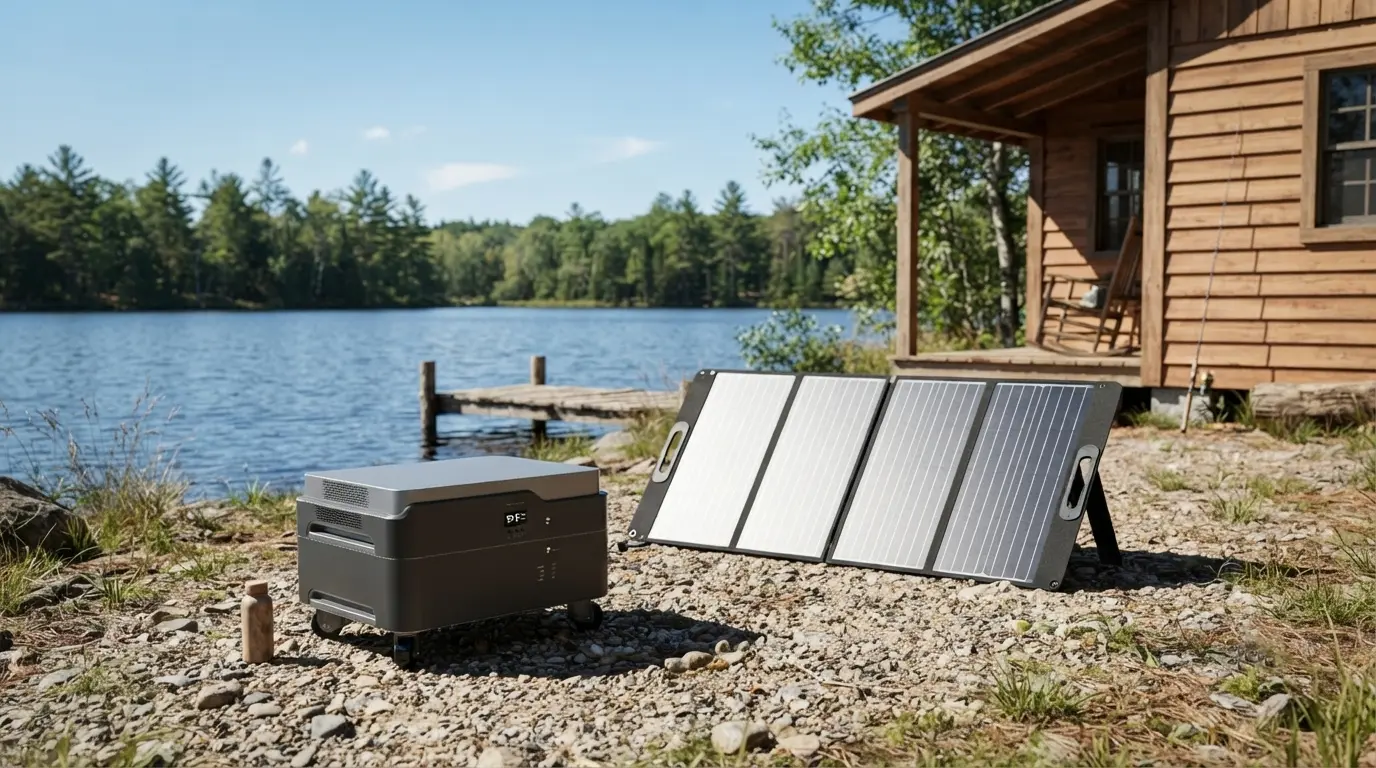
Buying a solar generator is an investment, and we want to help you get every ounce of value out of it. While the hardware eventually degrades, your daily habits dictate whether that happens in 3 years or 15 years. Follow these practical maintenance steps to maximize your portable power station lifespan.
Best Charging Practices: The 20-80% Rule
To maximize your solar battery backup setups, stop charging it to 100% and completely draining it to 0%. Keeping the battery level between 20% and 80% reduces chemical stress on the cells, which can easily double or triple your overall solar battery cycle life.
- Avoid deep discharges: Never let the generator sit at 0% capacity.
- Unplug at 80%: If you are using it for regular, non-emergency tasks, cap the charge at 80%.
- Full cycle monthly: Charge to 100% once a month to calibrate the internal state-of-charge manager.
Proper Storage Protocols
Batteries degrade fastest when left completely full or completely empty in storage. If you are packing away your off-grid power supply for seasonal use or keeping it solely for emergency backup power duration needs, follow this strict storage checklist:
| Storage Factor | Ideal Condition |
|---|---|
| Charge Level | Keep it stored at 50% to 60% capacity |
| Temperature | Cool, dry room between 50°F and 70°F (10°C to 21°C) |
| Check-in Routine | Pull it out every 3 to 6 months to top it back to 50% |
Cleaning and Maintaining Solar Panels
Your generator can only perform as well as the energy coming in. A dirty solar panel drops in efficiency, forcing your charge controller to work harder and generate more internal heat. Commit to a basic solar generator maintenance routine for your panels to combat natural solar panel degradation rates.
- Wipe down regularly: Use a microfiber cloth and clean water to remove dust, pollen, and bird droppings. Avoid abrasive soap or rough sponges.
- Inspect the connections: Check the MC4 cables and input ports for debris or loose fits that cause resistance and heat build-up.
- Angle for efficiency: Readjust the panels throughout the day to ensure direct sunlight hits the surface vertically, keeping the charging times short and efficient.
Solar Generator FAQs
Can you replace the battery in a solar generator?
For most portable power stations, the internal battery cannot be easily swapped out by the user. Once the solar battery cycle life hits its limit, the entire unit usually needs replacing. However, some premium commercial models now feature expansion slots or modular designs. If you are building or maintaining custom setups, using a dedicated LiFePO4 battery pack is often the preferred choice for long-term reliability and straightforward replacement.
How long will a solar generator run a refrigerator during a blackout?
Your emergency backup power duration depends entirely on the generator’s watt-hour (Wh) capacity and the fridge’s power draw. A standard 2,000Wh portable power station will typically run a modern, efficient refrigerator for 15 to 28 hours on a single charge. To extend this indefinitely during an off-grid power supply scenario, we recommend keeping solar panels connected to continuously replenish the battery during daylight hours.
Is it okay to leave a solar generator plugged in all the time?
Yes, most modern units are equipped with advanced MPPT charge controllers and battery management systems (BMS) that prevent overcharging. Leaving it plugged in ensures your backup power is always at 100% when a sudden blackout hits. However, to maximize overall solar generator maintenance and long-term health, we recommend discharging and recharging the unit at least once every three to six months.