 English
  العربية
  日本語
日本語  한국어
한국어  Tiếng Việt
  ไทย
ไทย  Bahasa Melayu
  فارسی
فارسی  Bahasa Indonesia
  ဗမာစာ
ဗမာစာ  简体中文
简体中文  香港中文
香港中文  繁體中文
繁體中文  Русский
  Deutsch
  Nederlands
  Italiano
  Français
  Español
  Português
  Afrikaans
  Azərbaycan dili
  Български
  ਪੰਜਾਬੀ
  हिन्दी
  اردو
اردو  বাংলা
বাংলা  Հայերեն
  Íslenska
  Қазақ тілі
  नेपाली
  Српски језик
  Kiswahili
  తెలుగు
  Basa Jawa
  தமிழ்
தமிழ்  मराठी
मराठी The Core Formula: How to Calculate Watt-Hours
A watt-hour (Wh) measures the cumulative electricity generated or consumed over time. It indicates how much energy a battery stores or how much energy a device uses.
Basic formula:
Watts (W) × Hours (h) = Watt-hours (Wh)
For batteries, use the battery capacity formula:
Nominal voltage (V) × Rated capacity (Ah) = Energy capacity (Wh)
For example:
25.6 V × 102 Ah = 2,611.2 Wh ≈ 2.61 kWh
The nominal voltage matters because amp-hours alone do not show total energy. The same Ah rating can represent different energy capacities at different voltages.
1,000 Wh = 1 kWh
Utility bills measure household electricity use in kilowatt-hours (kWh). Residential energy storage systems also use kWh to show the battery’s nominal energy capacity.
Watt vs. Watt-Hour: Power and Energy Explained
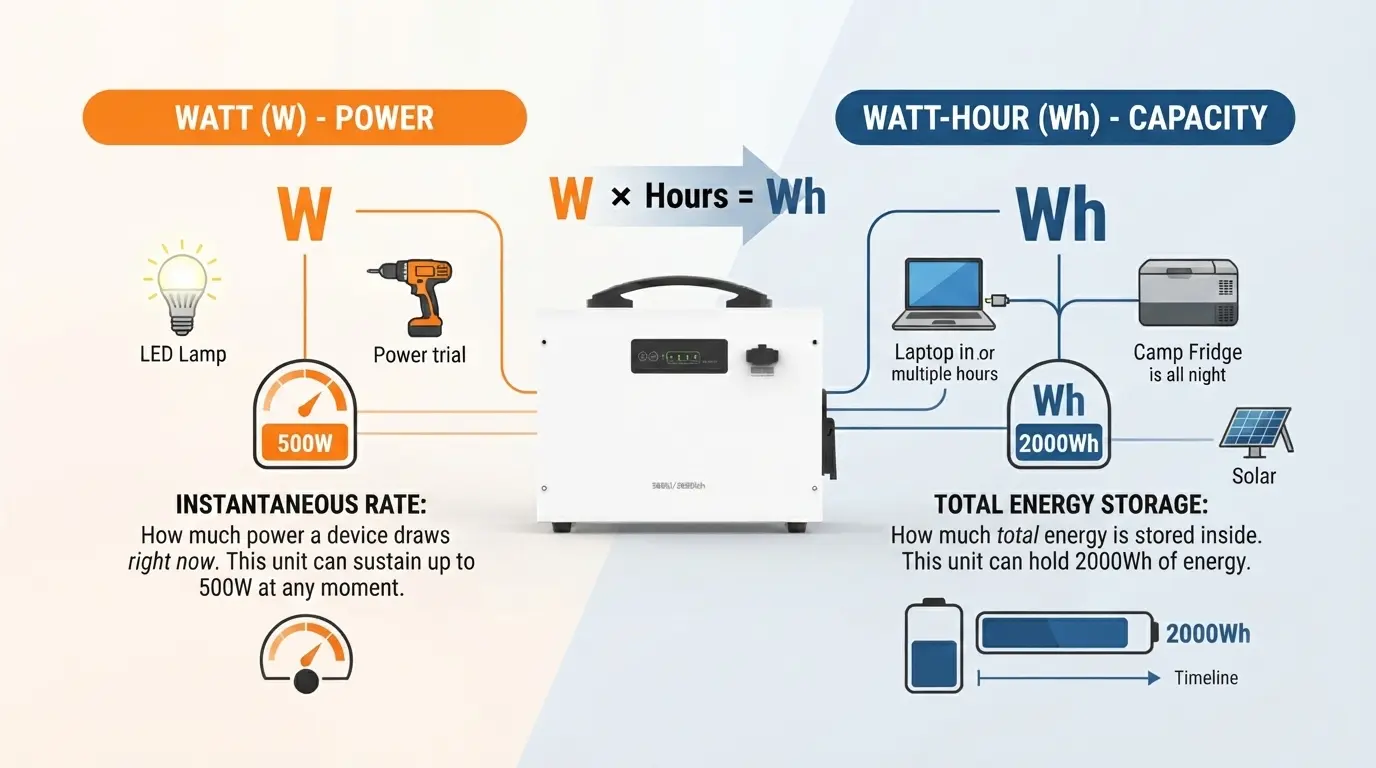
I use a simple distinction: watts measure how fast energy is used, while watt-hours measure how much energy is used or stored over time.
Watt (W): Instantaneous Power
A watt measures an appliance’s immediate power demand or the rate of energy transfer. For example, a 100 W television uses power at a rate of 100 watts while it is running.
An inverter’s watt rating shows how much load it can support at one time. Its continuous power output must meet the appliance’s operating demand.
Watt-Hour (Wh): Cumulative Energy
A watt-hour measures total energy consumption or battery capacity over a period of time.
100 W × 3 hours = 300 Wh
Therefore, a 100 W television running for three hours consumes 300 Wh of energy.
This difference is important in battery systems. A TURSAN portable power station may provide 500 W of output while storing 2,009.6 Wh of energy. The 500 W figure describes the available power, while 2,009.6 Wh describes the battery’s energy capacity.
A battery can have a high Wh rating and still fail to run a device with a high watt demand. If the appliance requires more power than the inverter’s continuous output, the system may shut down even when sufficient energy remains in the battery. When comparing battery labels, an LiFePO4 battery capacity guide can also help clarify how voltage, capacity, and energy ratings relate.
Practical Applications: Reading Energy Storage Specifications

Watt-hours help me estimate how long a battery or portable power station can run a device. The basic calculation is:
Runtime (hours) = Usable battery capacity (Wh) ÷ Device load (W)
Actual runtime is usually lower than the result because of inverter losses, depth-of-discharge limits, and overall system efficiency.
A TURSAN power station rated at 2,009.6 Wh can store more energy than a lower-capacity entry-level unit. At a 500 W load, its ideal runtime is:
2,009.6 Wh ÷ 500 W = about 4 hours
The practical runtime will be shorter after conversion losses. The load must also remain within the power station’s continuous power output. A high Wh rating cannot compensate for an appliance that demands more Watts than the inverter can deliver.
Load Calculation for Home and Off-Grid Use
To estimate household energy consumption, I use these steps:
- List each appliance, tool, or electronic device and its power rating in Watts.
- Multiply its Watts by the expected operating time in hours.
- Add the Watt-hour results for all devices.
- Select a battery and inverter that meet both the total energy requirement and the highest power demand.
For solar generators, home backup, and off-grid systems, the battery should be sized using the total load, expected runtime, usable capacity, and system efficiency. Rated capacity is the nameplate value; usable Watt-hours are lower after inverter losses and operating limits.
Battery Capacity Examples
| System type | Nominal calculation | Rated energy |
|---|---|---|
| Lead-acid replacement module | 12.8 V × 100 Ah | 1,280 Wh (1.28 kWh) |
| Medium solar lithium battery | 25.6 V × 204 Ah | 5,222.4 Wh (5.22 kWh) |
| Residential ESS module | 51.2 V × 200 Ah | 10,240 Wh (10.24 kWh) |
These examples show how voltage and amp-hours define nominal battery capacity:
Voltage (V) × Amp-hours (Ah) = Watt-hours (Wh)
For a lead-acid replacement project, this LiFePO4 battery solutions can provide useful background when reviewing storage options.
An energy storage system (ESS) specification connects nominal capacity with practical runtime. A larger Wh or kWh rating generally supports a given load for longer, but the final result still depends on appliance demand, continuous inverter output, usable depth of discharge, and system efficiency.
Why Watt-Hour Capacity Matters in LiFePO4 Battery Selection
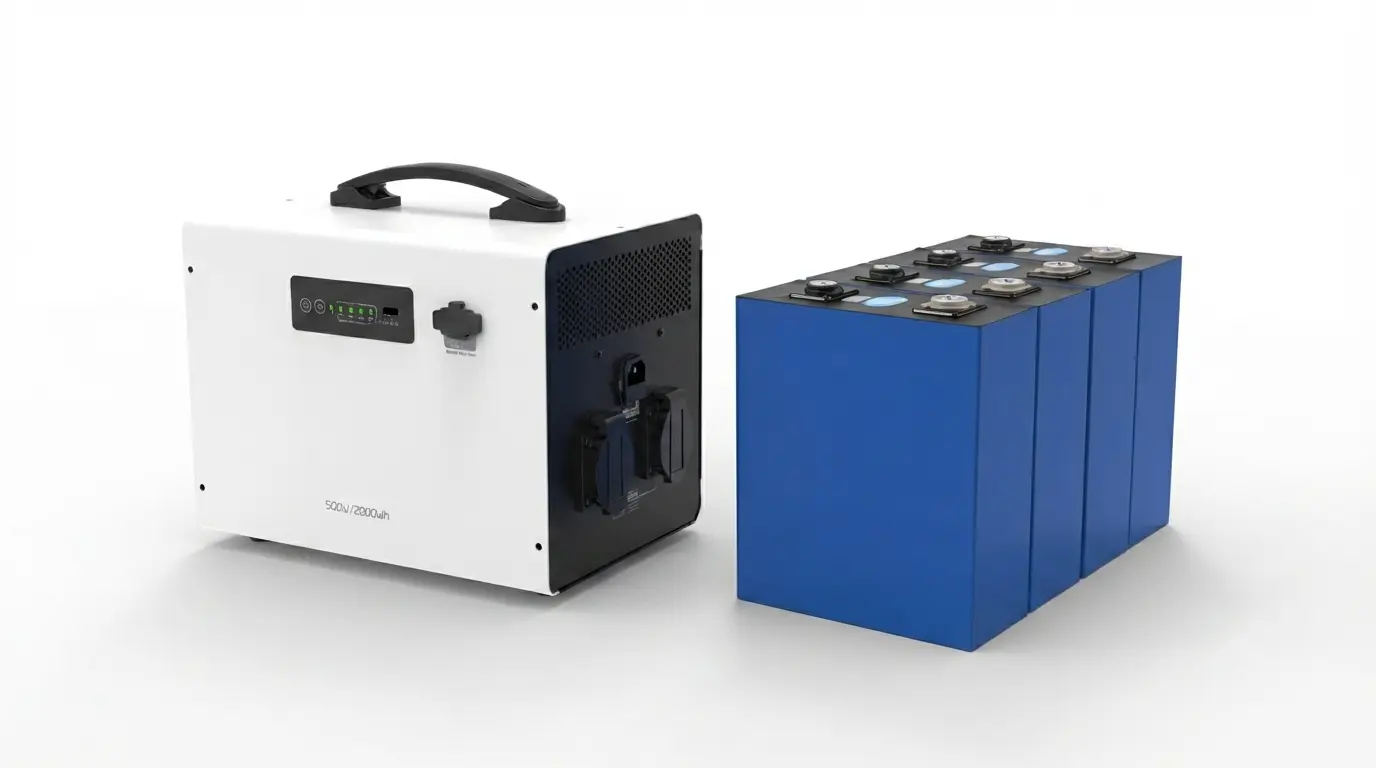
I use Watt-hour capacity to match a LiFePO4 battery with the energy a system must deliver. A battery that is too small may face overly deep discharges, while an oversized system can increase costs without adding practical value. Accurate Wh planning helps reduce avoidable capacity degradation and improve lifecycle value.
Match Battery Capacity to the Load
| Planning factor | What to match | Why it matters |
|---|---|---|
| Off-grid use | Battery Wh with daily energy demand | Supports dependable operation |
| Peak shaving | Usable Wh during the target period | Covers planned high-cost or high-load hours |
| Backup circuits | Battery capacity with expected runtime | Helps maintain essential loads |
| Inverter selection | Continuous power output with peak load | Ensures the battery system can run connected devices |
Rated capacity is not the same as usable capacity. I account for inverter losses, depth-of-discharge limits, and overall system efficiency before choosing the nominal Wh rating.
BMS, Cell Design, and Cycle Life
Prismatic LFP cells, where used, combined with an intelligent battery management system (BMS), support stable and reliable battery operation. The BMS helps the system operate within its intended limits, but correct capacity sizing remains essential. TURSAN batteries feature a cycle life of 6,000+ cycles when used within their design requirements.
For balanced project planning, I also consider the LiFePO4 battery options alongside the system’s load profile and operating conditions.
Plan for Long-Term Value
For commercial installers, EPC teams, and distributors, the right battery capacity should align with:
- Required energy in Wh or kWh
- Appliance and equipment load
- Inverter continuous power output
- Expected runtime
- Off-grid or peak-shaving operating schedule
This approach helps prevent unnecessary battery stress, supports dependable runtime, and improves the long-term return on a LiFePO4 energy storage system.
Watt-Hour FAQs
What Does a Watt-Hour Measure?
A watt-hour (Wh) measures the amount of energy generated, stored, or used over time. For example, a 100 W television running for 3 hours uses 300 Wh.
How Is a Watt Different from a Watt-Hour?
A watt (W) measures instantaneous power or the rate of energy transfer. A watt-hour measures total energy used or stored. In an energy storage system, inverter output is rated in watts, while battery capacity is rated in Wh or kWh.
How Do I Convert Amp-Hours to Watt-Hours?
Use this battery capacity formula:
Voltage (V) × Amp-hours (Ah) = Watt-hours (Wh)
For example, a 12.8 V, 100 Ah battery provides a nominal capacity of 1,280 Wh, or 1.28 kWh.
Why Does Nominal Voltage Change Battery Capacity?
Amp-hours alone do not show total energy. A higher nominal voltage provides more watt-hours at the same Ah rating. This is why voltage must be included in every Ah-to-Wh conversion.
How Many Watt-Hours Does a Household Appliance Use?
Multiply the appliance’s power rating by its operating time:
| Appliance load | Operating time | Energy used |
|---|---|---|
| 100 W | 3 hours | 300 Wh |
| 500 W | 2 hours | 1,000 Wh |
| 1,000 W | 1 hour | 1,000 Wh |
Actual consumption depends on how long the appliance runs and whether its load changes.
How Can I Estimate Portable Power Station Runtime?
Use this basic estimate:
Runtime in hours = Battery capacity in Wh / Device load in W
For a more practical result, allow for inverter losses and other system efficiency limits. A 2,009.6 Wh tursan power station can support a greater energy demand or longer runtime than a smaller entry-level unit, provided the appliance load is within its continuous power output.
What Is the Difference Between Rated and Usable Watt-Hours?
Rated watt-hours describe the battery’s nominal total capacity. Usable watt-hours are the energy available after accounting for inverter losses, depth-of-discharge limits, and overall system efficiency.
Can a High-Wh Power Station Run Every Appliance?
No. Watt-hour capacity shows how much energy the unit stores, not whether it can supply every load. The power station’s continuous output and peak capability must match the appliance’s demand, especially for tools, motors, and other high-starting-load equipment.
Why Must Continuous Power Output Match the Appliance Load?
An appliance may need more power than the inverter can deliver, even when the battery has sufficient Wh capacity. A suitable system must match the appliance’s running watts and any temporary starting demand.
For a practical battery and inverter sizing example, see this guide to inverter and battery sizing.
How Does Watt-Hour Capacity Help Size a Solar Generator or Home Battery?
Wh calculations help match stored energy with expected appliance use, backup time, and daily demand. For residential solar and off-grid projects, I compare the battery’s nominal capacity with the required load, inverter output, and expected runtime.
Why Do LiFePO4 Batteries Need a BMS?
A battery management system (BMS) helps monitor and manage battery operation. An intelligent BMS supports reliable use of LiFePO4 battery capacity and helps the system operate within its designed limits.
How Do Watt-Hour Calculations Support Off-Grid and Peak-Shaving Projects?
Wh calculations show how much energy a system needs to store and deliver during selected periods. Installers and EPC teams can use them to match battery capacity, continuous power output, load requirements, and runtime. Correct sizing also supports dependable operation and helps properly designed LiFePO4 systems reach 6,000+ cycles.