 English
  العربية
  日本語
日本語  한국어
한국어  Tiếng Việt
  ไทย
ไทย  Bahasa Melayu
  فارسی
فارسی  Bahasa Indonesia
  ဗမာစာ
ဗမာစာ  简体中文
简体中文  香港中文
香港中文  繁體中文
繁體中文  Русский
  Deutsch
  Nederlands
  Italiano
  Français
  Español
  Português
  Afrikaans
  Azərbaycan dili
  Български
  ਪੰਜਾਬੀ
  हिन्दी
  اردو
اردو  বাংলা
বাংলা  Հայերեն
  Íslenska
  Қазақ тілі
  नेपाली
  Српски језик
  Kiswahili
  తెలుగు
  Basa Jawa
  தமிழ்
தமிழ்  मराठी
मराठी Quick Answer: How Noisy Are Solar Generators?
Solar generators are generally very quiet, and many operate silently during normal use. Solar panels and LiFePO4 battery systems produce no meaningful operating noise because they do not use a combustion engine. Any audible sound usually comes from supporting components such as cooling fans, inverter activity, or switching relays. A quiet solar generator is not guaranteed to be completely silent under every operating condition, but it is typically far less disruptive than a gas generator.
Why Solar Generators Are Quieter Than Gas Generators
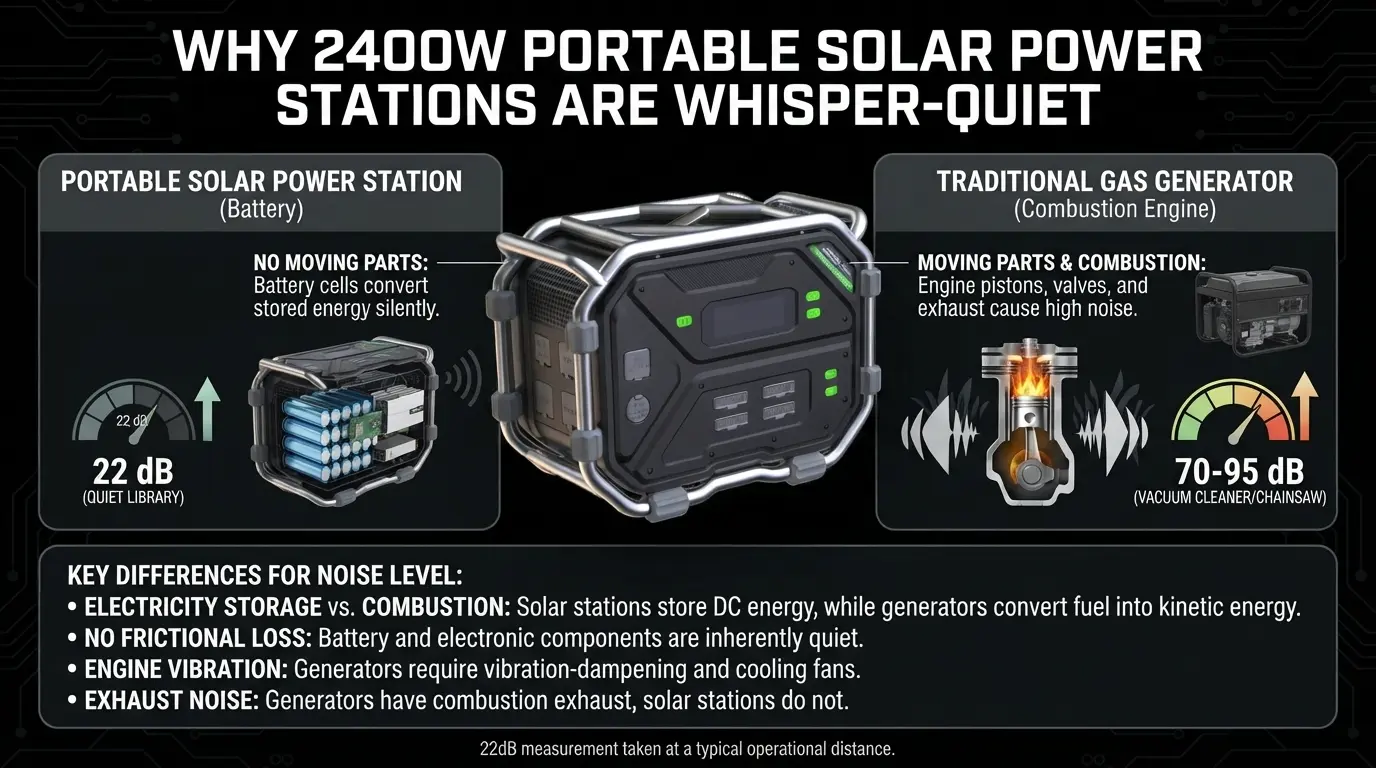
Gas generators use fuel combustion and mechanical engines, which create vibration, exhaust, and a steady engine roar. Solar generators store energy in LiFePO4 batteries and use electronic power conversion, avoiding the moving engine parts that cause most mechanical noise.
This is why many solar generators produce only low-profile electronic sounds during operation. TURSAN’s built-in pure sine wave inverters are designed for low noise, low interference, high load capacity, and stable performance. Quiet power is especially useful for camping, RV travel, home backup, and other settings where constant generator noise can be disruptive.
What Parts of a Solar Generator Make Noise?
A solar generator’s main sound sources are its support components, not the battery or solar panels. Cooling fans may become more noticeable during fast charging, high power output, or warm conditions. The fan noise is usually mild and temporary. The inverter may also produce a faint hum under heavier loads, while relays and switching components can create an occasional click when changing operating modes or managing power flow.
LiFePO4 battery cells and solar panels operate silently during normal use. TURSAN power systems use built-in pure sine wave inverters designed for low noise, low interference, stable performance, and high load capacity. As a result, portable power station noise is generally linked to workload rather than constant operation.
How Loud Is a Solar Generator in Real Life?
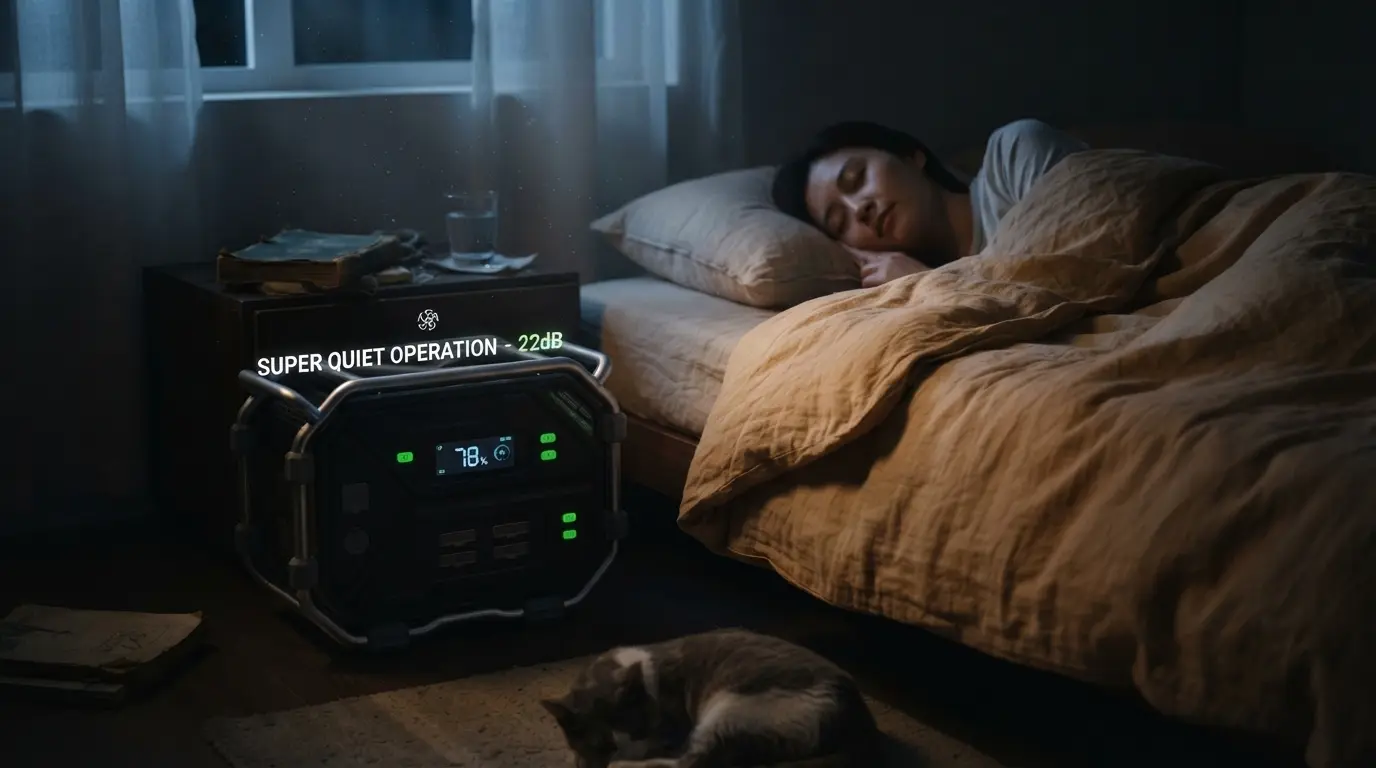
In normal use, a solar generator is usually heard as a low-profile electronic sound rather than a loud mechanical noise. A TURSAN portable power station uses a built-in pure sine wave inverter designed for low noise and stable performance.
| Location | Practical listening experience |
|---|---|
| Room | A faint fan or inverter hum may be easier to notice in a quiet space. |
| Tent or RV | The unit is generally unobtrusive, although small operating sounds may be noticeable at night. |
| Campsite | Wind, conversation, and other outdoor sounds can make portable power station noise less noticeable. |
The same unit may seem quieter outdoors than indoors because ambient sound masks low-level electronic noise. Actual sound can vary with power demand, charging activity, and cooling needs, so quiet operation does not always mean completely silent operation.
Do Solar Generators Make Noise? Solar vs. Gas Generators
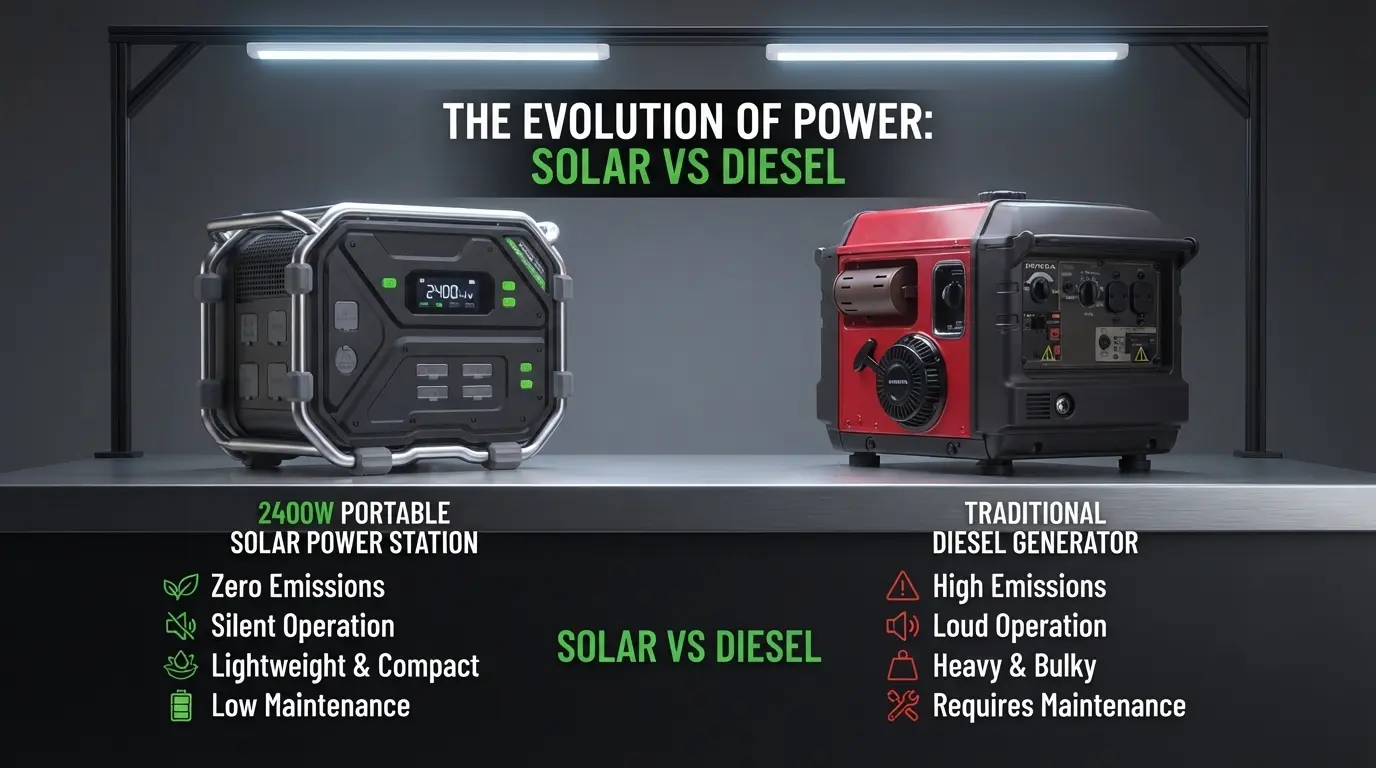
Gas generators produce continuous engine noise, vibration, and combustion sounds. Solar generators use stored battery power and an inverter, so they usually create only low-level electronic sounds. Fans may become audible when the unit is under a heavy load, but the noise is generally intermittent rather than constant.
| Feature | Solar Generator | Gas Generator |
|---|---|---|
| Main sound source | Cooling fan, inverter, or relay | Engine, fuel combustion, and vibration |
| Noise pattern | Usually low and load-based | Continuous while running |
| Best suited for | Overnight backup, indoor home use, camping, and RVs | Situations where engine noise is acceptable |
| Nearby comfort | Less disruptive to users, neighbors, and wildlife | More noticeable in quiet areas |
For overnight use, quiet outdoor settings, and home backup, a low-noise solar generator can provide power without the steady roar of an engine. TURSAN power stations use pure sine wave inverters designed for low noise, low interference, and stable performance.
When Is a Solar Generator Most Likely to Make Sound?
A solar generator is most likely to make sound when it is working hard or managing heat. During fast charging, cooling fans may become more noticeable. Running high-power appliances can also increase inverter activity and fan noise.
Noise may be more noticeable in hot weather, poor ventilation, or when heavy loads run for long periods. The cooling system then works more often to control temperature. In normal, lighter use, a portable power station generally remains quiet because its sound is linked to workload and thermal management rather than constant operation.
What Makes a Quiet Solar Generator Worth Choosing?
A quiet solar generator should deliver stable power without unnecessary sound. When I compare models, I focus on the inverter, battery chemistry, enclosure, and overall operating performance—not just advertised noise claims.
| Feature | Why It Matters |
|---|---|
| Pure sine wave inverter | Supports low-noise, low-interference power delivery and stable performance. |
| Efficient inverter | TURSAN inverter systems offer efficiency of up to 95%, helping support practical energy use. |
| LiFePO4 battery cells | Provide silent energy storage, safe operation, and a cycle life of 6,000+ cycles. Explore LiFePO4 battery solutions. |
| Suitable enclosure | Plastic and sheet-metal housings can be selected according to the intended application and operating environment. |
The best quiet backup power system combines dependable battery technology with a well-designed pure sine wave inverter. This supports comfort, reliability, and low-noise operation for home backup, camping, RVs, and off-grid use.
Why TURSAN Solar Power Solutions Fit Quiet-Power Use Cases
TURSAN portable power stations and home battery systems provide practical, low-noise power for everyday and mobile use. Their LiFePO4 battery cells store energy without engine noise, while built-in pure sine wave inverters support low interference, stable performance, and high load capacity.
| Use case | Quiet-power benefit |
|---|---|
| Home backup | Reliable power with less disruption |
| Camping and RVs | Comfortable use near sleeping areas |
| Mobile energy | Portable power without engine vibration |
| Off-grid applications | Low-noise energy for remote locations |
TURSAN portable power stations range from 300W to 3600W and use prismatic LFP cells, making them suitable for different power needs.
Best Situations for a Quiet Solar Generator
Quiet power matters wherever engine noise can disturb people or the surrounding environment. TURSAN portable power stations and home battery systems use LiFePO4 battery cells and pure sine wave inverters designed for low noise and stable performance.
- Camping and RV travel: Supports rest and outdoor activities without the constant engine noise of a gas generator.
- Home backup at night: Provides quieter battery power while keeping household routines comfortable.
- Remote cabins and off-grid living: Delivers dependable energy without adding unnecessary noise to quiet surroundings.
- Temporary work areas: Low-noise power can make communication easier and reduce disruption near other activities.
For nearby users, neighbors, and wildlife, quieter operation can improve sleep, comfort, and the overall experience of using backup power.
How to Reduce Noise From a Solar Generator
A quiet solar generator usually stays quieter when its airflow and workload are managed properly.
| Practical step | Why it helps |
|---|---|
| Place the unit on a stable, vibration-dampening surface. | Reduces movement and minor vibration. |
| Keep air vents and airflow paths clear. | Helps limit unnecessary cooling fan activity. |
| Avoid running several high-power appliances at once. | Reduces inverter and fan workload. |
| Use the unit in a cool, well-ventilated area. | Helps manage heat during operation. |
| Choose a model with a pure sine wave inverter and effective thermal design. | Supports stable, low-noise power delivery. |
| Follow the manufacturer’s placement, ventilation, and load guidance. | Helps the system operate safely and efficiently. |
How to Choose the Right Quiet Solar Generator
I choose a quiet solar generator by matching its power, battery capacity, and intended setting—not by relying on a “silent” label alone.
| What to compare | Why it matters |
|---|---|
| Power and surge capacity | Match the continuous output and startup demand to the appliances you plan to use. |
| Battery chemistry and capacity | LiFePO4 cells provide silent energy storage and long cycle life. TURSAN portable power stations use prismatic LFP cells, with models from 300W/1004.8Wh to 3600W/3225.6Wh. |
| Inverter and cooling design | Pure sine wave output supports stable, low-noise, low-interference power. Cooling performance also affects fan activity during heavy use. |
| Build quality and reliability | Check the enclosure, thermal management, cycle life, and warranty support. TURSAN LiFePO4 batteries offer 6000+ cycles and a 5-year warranty. |
| Intended use | Choose according to whether you need home backup, camping power, RV energy, off-grid use, or portable work support. |
| Charging and comfort | Compare charging options, expected workload, sound behaviour, and overall convenience before buying. |
For more reliable battery sizing, reviewing battery capacity and runtime can help when comparing usable watt-hours.
Frequently Asked Questions About Solar Generator Noise
Do Solar Generators Make Noise When Charging?
Most solar generators charge quietly. A cooling fan may become audible during fast charging, hot conditions, or heavy use. The solar panels and LiFePO4 battery cells do not create meaningful operating noise. For more on battery technology, see these solar battery backup systems.
Are Solar Generators Silent at Night?
They are often very quiet at night when the load is light. However, a fan, faint inverter hum, or occasional relay click may occur. Quiet does not always mean completely silent in every situation.
What Part of a Solar Generator Makes Noise?
Cooling fans and inverters are the most common sources of solar generator noise. Relays and switching parts may also click when the system changes operating modes. The battery and solar panels remain silent during normal operation.
Are Solar Generators Quieter Than Gas Generators?
Generally, yes. Solar generators have no combustion engine, exhaust, or engine vibration. They usually produce only low-profile electronic sounds instead of the constant roar of a gas generator.
Can I Sleep Next to a Solar Generator?
A low-noise solar generator can be suitable for overnight use in a home, RV, or campsite. Keep the unit properly ventilated, avoid overloading it, and follow the manufacturer’s placement guidance.
Which Is Quieter: the Solar Panels or the Battery Unit?
Both are normally silent. Any sound usually comes from the power station’s cooling fan, inverter, or switching components rather than the panels or battery cells.
Do All Solar Generators Have Cooling Fans?
No. Cooling systems vary by model and design. Some units use fans that run only during charging, high-power output, or warm conditions, while others may use different thermal-management methods.