 English
  العربية
  日本語
日本語  한국어
한국어  Tiếng Việt
  ไทย
ไทย  Bahasa Melayu
  فارسی
فارسی  Bahasa Indonesia
  ဗမာစာ
ဗမာစာ  简体中文
简体中文  香港中文
香港中文  繁體中文
繁體中文  Русский
  Deutsch
  Nederlands
  Italiano
  Français
  Español
  Português
  Afrikaans
  Azərbaycan dili
  Български
  ਪੰਜਾਬੀ
  हिन्दी
  اردو
اردو  বাংলা
বাংলা  Հայերեն
  Íslenska
  Қазақ тілі
  नेपाली
  Српски језик
  Kiswahili
  తెలుగు
  Basa Jawa
  தமிழ்
தமிழ்  मराठी
मराठी 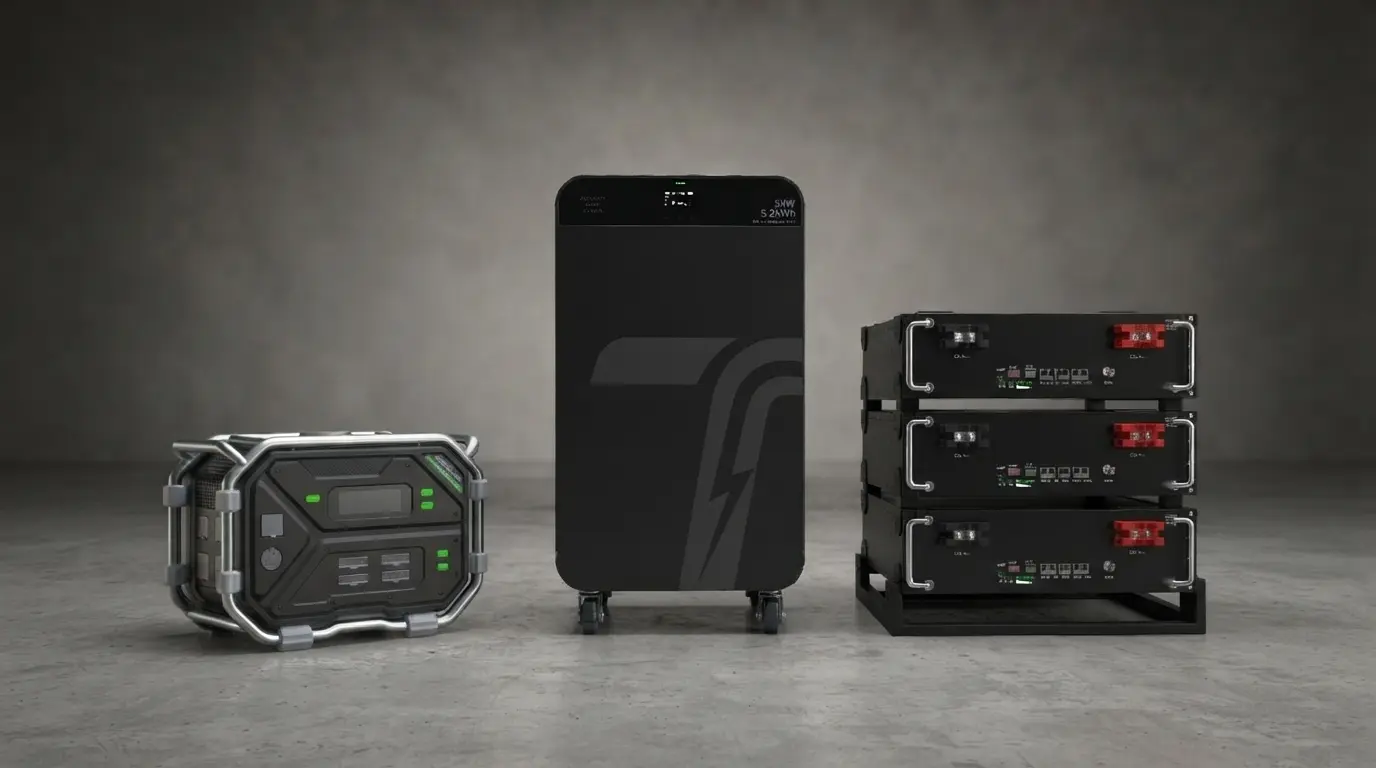
Best Off-Grid Generators Compared
Compare off-grid generator categories by output, storage, portability, serviceability, and expansion potential before selecting a system architecture.
Key Criteria for Choosing the Best Off-Grid Generator
LiFePO4 Battery Chemistry and Lifespan
For long-term off-grid power, battery chemistry is a primary consideration. Tursan systems use LiFePO4 prismatic cells, or lithium iron phosphate cells, selected for safety and long service life. The product range is specified for 6,000+ cycles and includes a 5-year warranty.
Compared with NCM or lead-acid options, buyers should assess the published cycle life, safety design, warranty, and intended application rather than comparing chemistry names alone. Prismatic cell construction provides a practical format for integrated battery systems, portable power stations, and modular storage solutions.
Continuous Output and Surge Capacity
The inverter must support both the normal operating load and the higher starting demand of motor-driven equipment. Check:
- Running watts for refrigerators, pumps, tools, and HVAC equipment
- Startup or surge watts for motors and compressors
- The highest load that may operate at the same time
- Available inverter output, from 1.2kW to 12kW across the off-grid range
A correctly sized system helps maintain stable operation when several loads are used together.
Pure Sine Wave Inverter Output
Pure sine wave output provides stable AC power with low interference. It is suited to systems that need dependable power for household equipment, electronics, tools, and other sensitive loads. Intelligent BMS protection further supports controlled battery operation.
Solar Charging and MPPT
Solar recharge performance depends on the solar array, available sunlight, battery capacity, and the inverter’s solar input specifications. Selected Tursan off-grid and hybrid inverters include MPPT, or Maximum Power Point Tracking, to manage solar energy input more effectively.
Always confirm the inverter’s supported PV wattage, voltage window, and open-circuit voltage before connecting panels. These limits vary by system and must be matched to the solar installation.
Expandable Battery Storage
A single portable power station is practical for mobile use and light backup loads. Larger off-grid applications benefit from modular battery storage that can grow with demand.
Tursan battery and ESS solutions cover approximately 1.28kWh to 32.15kWh, with configurations including 12.8V, 25.6V, and 51.2V systems. Stackable, wall-mounted, floor-standing, and rack-mount options support different installation spaces and project requirements. This modular approach allows storage capacity to be matched more closely to daily energy use and required backup duration.
Top Categories of Off-Grid Generators Compared
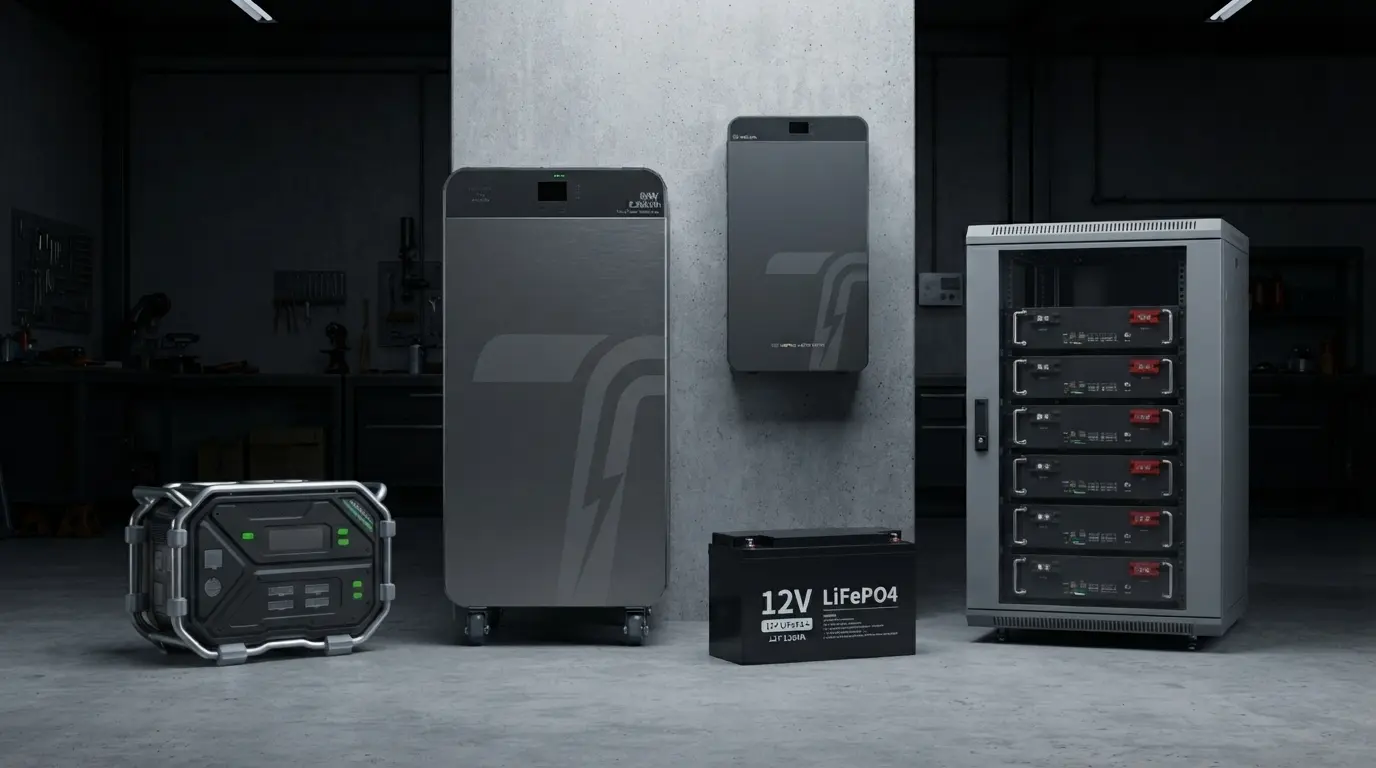
Off-grid power needs vary from mobile charging to whole-property energy storage. The main differences are output power, battery capacity, portability, scalability, and how the system is recharged. Tursan’s range covers portable power stations, integrated energy storage systems, inverters, and modular LiFePO4 battery solutions.
Portable Power Stations: 300W to 3,600W
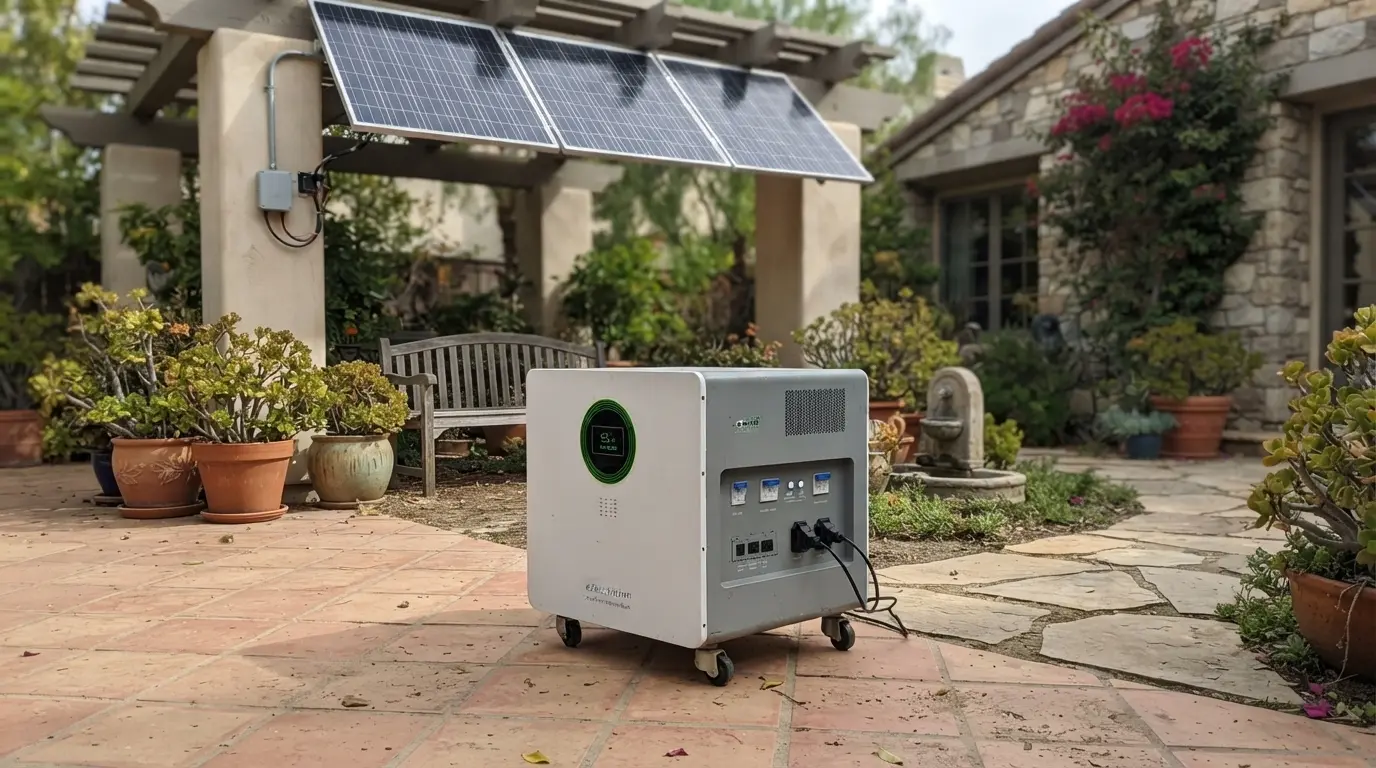
Portable power stations suit mobile setups, small cabins, outdoor work, light appliance backup, and DIY projects. Available output levels range from 300W to 3,600W, with storage capacities from approximately 0.8kWh to 3.2kWh.
These units use LiFePO4 prismatic cells and pure sine wave output. They are designed for quiet operation and can support common electronics, small appliances, lighting, and selected tools, depending on the required running and startup power. Their compact format also makes transport and installation simple.
Battery life is an important part of portable power value. LiFePO4 systems in this range are specified for 6,000+ cycles and include a 5-year warranty. Our guide to solar generator lifespan and runtime explains how usage, load size, and charging habits affect operating life.
All-in-One Energy Storage Systems: 3kW to 12kW
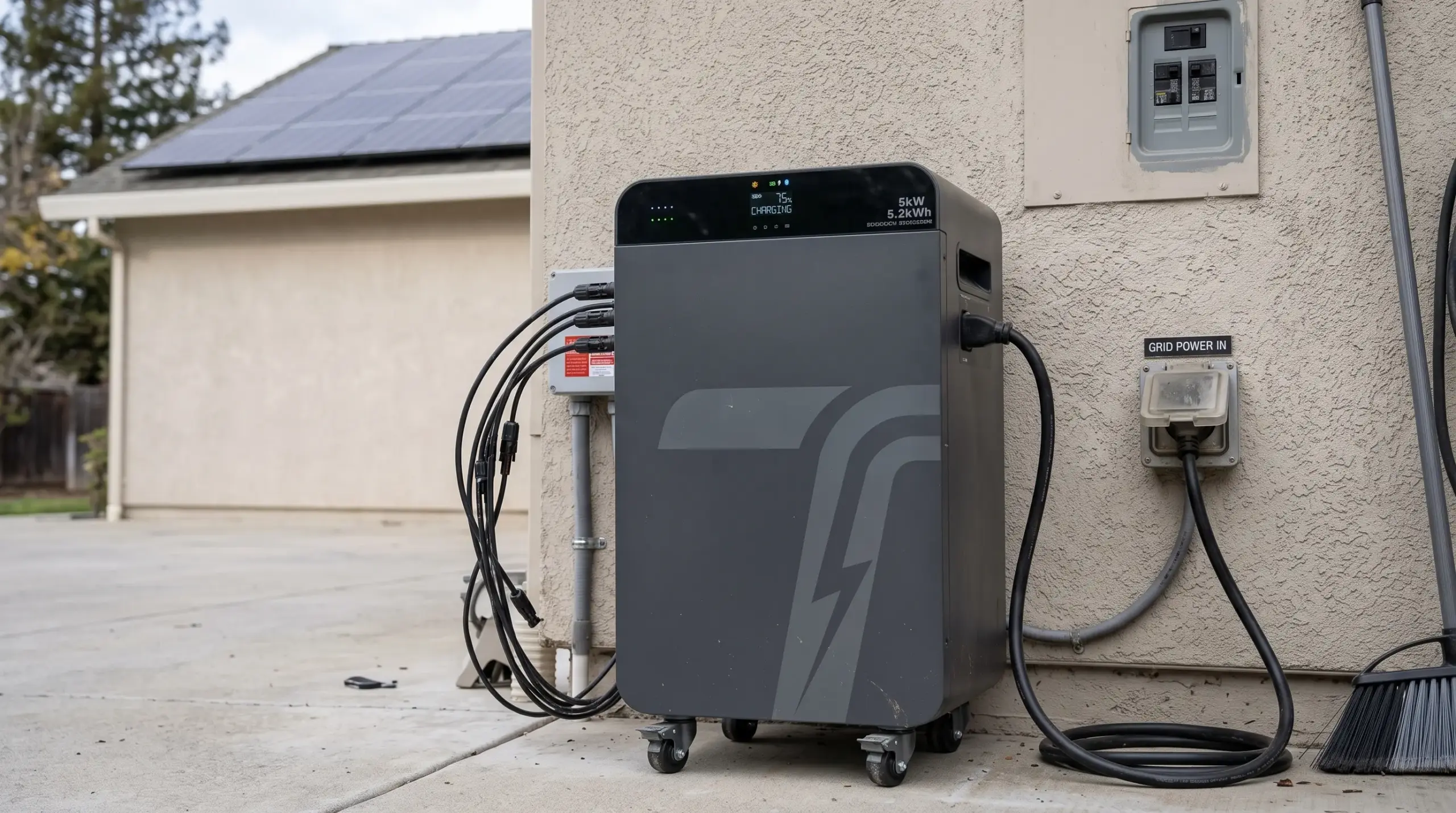
All-in-one energy storage systems combine an inverter and LiFePO4 battery storage in one integrated solution. They are suited to remote homesteads, full-time off-grid homes, island properties, and larger backup applications.
Key system ranges include:
- Inverter output: 3kW to 12kW
- Storage capacity: approximately 3.3kWh to 32.15kWh
- Battery voltage: commonly 51.2V
- Configuration: floor-standing, wall-mounted, or stackable
- Inverter type: off-grid or hybrid, with pure sine wave output
A modular configuration allows storage to increase as household energy use grows. This is useful where the system must support a wider range of loads over time, including refrigerators, workshops, pumps, and other household equipment. Exact performance depends on the connected load, inverter rating, battery configuration, and available solar input.
Modular Rack-Mount Systems: 5.22kWh Chassis Units
Rack-mount ESS solutions are designed for structured installations, including telecom applications, customised cabins, solar installer projects, and commercial energy systems. The compact 19-inch chassis provides 5.22kWh of storage and includes an integrated BMS, display panel, AC/DC charger, and DC output terminals.
This format supports organised installation and service access. Additional modular battery architecture can be specified according to the project’s voltage, capacity, available space, and load requirements. It is a practical option where standardised cabinet dimensions and expandable storage are important.
Dual-Fuel Inverter Generators
Dual-fuel inverter generators are a separate fuel-based backup category for periods of extended storms or low solar production. The available product information does not specify a dual-fuel model range, fuel consumption figures, emissions data, or refuelling requirements.
For projects comparing fuel generators with battery-based off-grid power, these factors should be checked in the selected generator’s technical documentation. Battery power stations and ESS products provide a different operating model, using LiFePO4 storage, solar charging, and inverter output rather than routine fuel refuelling.
Off-Grid Generator Comparison
| System category | Output or storage range | Main strengths | Typical use |
|---|---|---|---|
| Portable power station | 300W-3,600W; approximately 0.8kWh-3.2kWh | Portable, quiet, plug-and-play, LiFePO4 storage | Mobile setups, small cabins, light backup, DIY projects |
| All-in-one ESS | 3kW-12kW; approximately 3.3kWh-32.15kWh | Integrated inverter and battery, scalable storage | Homesteads, off-grid homes, island properties |
| Rack-mount ESS | 5.22kWh per chassis | 19-inch format, integrated BMS and charging equipment | Telecom, installer, cabin, and commercial projects |
| Dual-fuel inverter generator | Product range not specified | Fuel-based backup during low-solar periods | Extended outages and emergency backup |
Portability, Noise, and Scalability
Portable power stations are the easiest to move and install. All-in-one ESS units provide greater storage and inverter capacity but require more planning for placement, wiring, and system configuration. Rack-mount systems are suited to organised, serviceable installations rather than casual mobile use.
Battery-based systems use LiFePO4 chemistry and are designed for quiet operation. They do not depend on regular fuel refuelling during normal solar and battery operation. Their scalability depends on the selected model and battery architecture, with available solutions extending from portable capacities to systems of up to 32.15kWh.
For B2B projects, OEM and ODM support can cover system configuration, exterior design, and modelling. This helps distributors, solar installers, and project buyers match the enclosure, capacity, and installation format to local requirements without changing the core product category.
Compact and Portable Solar Generators
For camping, mobile work, light appliance backup, and small off-grid setups, a portable solar power station offers a practical alternative to fuel-based generators. Our portable models range from 300W to 1,000W, with storage capacities from approximately 806.4Wh to 2,009.6Wh.
| Feature | Portable power station |
|---|---|
| Output range | 300W-1,000W |
| Storage range | Approximately 806.4Wh-2,009.6Wh |
| Battery chemistry | LiFePO4 prismatic cells |
| Output | Pure sine wave AC power |
| Monitoring | Wi-Fi, Bluetooth, and IoT support |
| Enclosure options | Plastic or sheet metal |
Multiple AC and DC outputs can support lighting, electronics, small appliances, and selected tools. Pure sine wave output provides stable power for compatible sensitive equipment, while the integrated battery management system helps monitor and protect the battery.
The compact design is suited to weekend camping, van use, mobile workstations, emergency lighting, and light backup needs. LiFePO4 cells provide a stated cycle life of 6,000+ cycles, with a 5-year warranty. For a clearer understanding of battery service life and runtime, see this guide to how long solar generators last.
Portable solar generators also provide quiet operation, simple setup, low routine maintenance, and convenient transport for locations where fuel storage, noise, or emissions are a concern.
Mid-to-High Capacity Heavy-Duty Power Stations
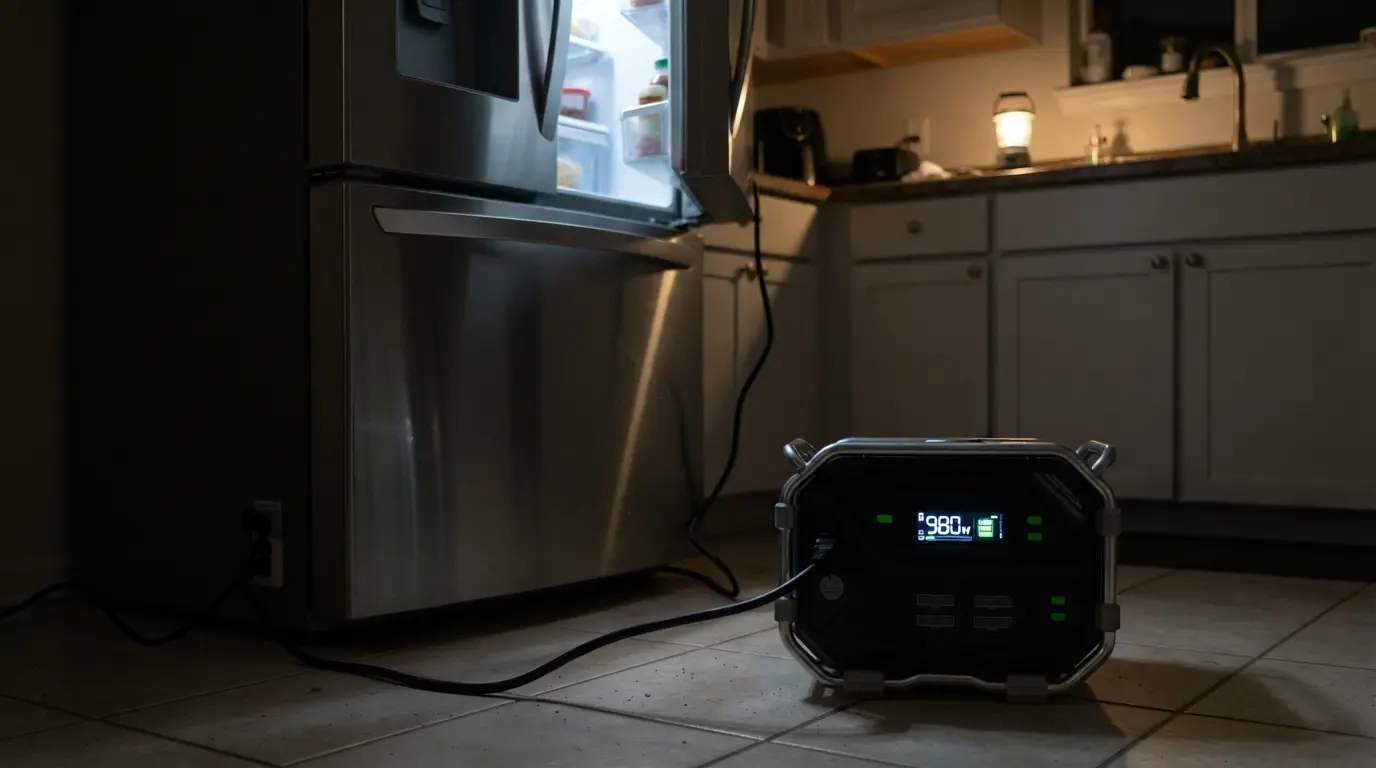
For higher-demand off-grid use, our 2,000W to 3,600W portable power stations provide approximately 2,165.2Wh to 3,225.6Wh of storage. They are suitable for refrigerators, freezers, power tools, small appliances, and selected emergency circuits.
| Feature | Specification |
|---|---|
| Output range | 2,000W-3,600W |
| Battery capacity | 2,165.2Wh-3,225.6Wh |
| Battery chemistry | LiFePO4 prismatic cells |
| Output type | Pure sine wave |
| Monitoring | Wi-Fi, Bluetooth, IoT integration, and API protocols |
| Enclosure options | Plastic or sheet metal |
LiFePO4 chemistry offers 6,000+ cycles and a 5-year warranty. Intelligent BMS protection, low-noise operation, and pure sine wave output support stable power for sensitive electronics and everyday equipment. These battery-powered generators are a practical choice for mobile workshops, outdoor work, and quiet home backup.
Whole-Homestead and Cabin Energy Storage Systems
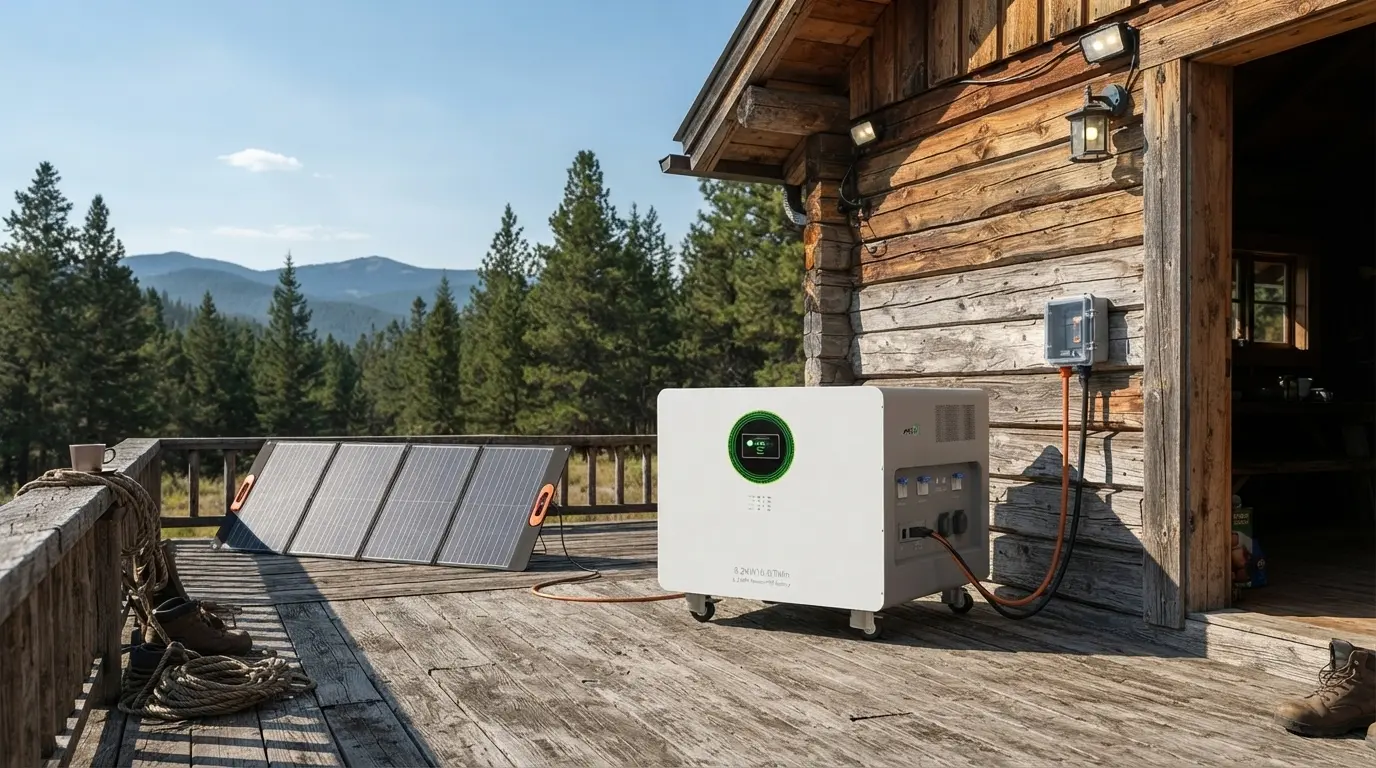
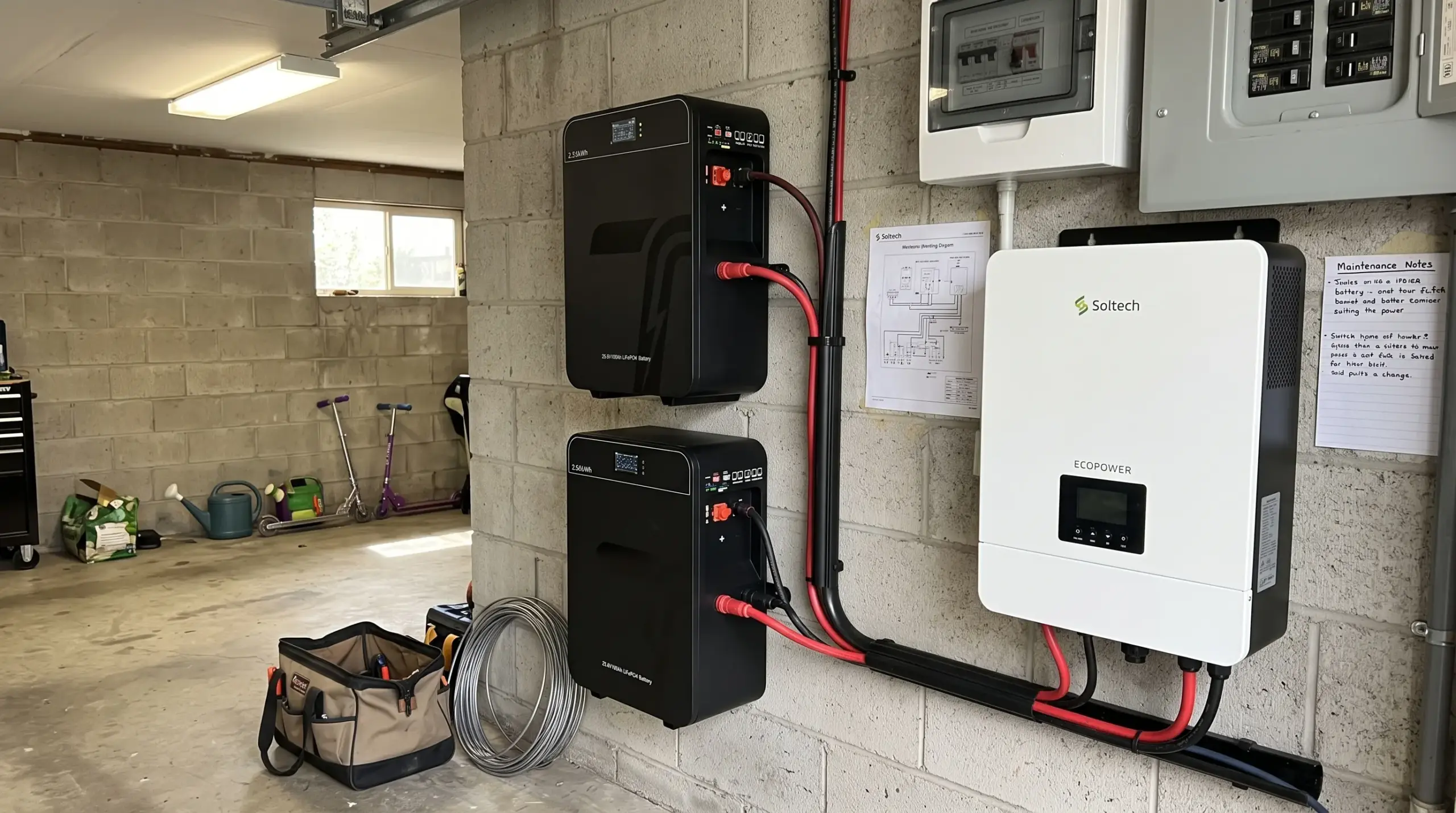
For cabins, homesteads, and larger remote properties, an all-in-one energy storage system (ESS) combines a LiFePO4 battery with an integrated off-grid or hybrid inverter. Available inverter outputs range from 3kW to 12kW, with storage capacities from approximately 3kWh to 32.15kWh.
These systems are designed to manage solar input, battery storage, and backup power in one coordinated setup. 51.2V battery modules are available from 100Ah to 628Ah, allowing storage to scale with daily energy use and peak demand. Floor-standing and wall-mounted configurations support different installation spaces.
Pure sine wave output provides stable power for refrigerators, freezers, well pumps, HVAC equipment, workshops, and other demanding loads. With intelligent BMS protection, LiFePO4 prismatic cells, and support for Wi-Fi, Bluetooth, IoT, and API connectivity, a whole-home solar backup system can provide quiet, scalable off-grid power for long-term use.
Sizing Your Off-Grid Generator Step by Step
Correct sizing starts with your actual daily energy use, not the generator’s headline wattage. I recommend listing every appliance, tool, and device that may run from the system.
1. Calculate Daily Energy Use
Use this basic formula for each load:
Daily Wh = device watts x hours used per day
Add the results for refrigerators, well pumps, lighting, electronics, power tools, and heating or cooling equipment. This gives you the approximate daily energy requirement in watt-hours.
2. Separate Running and Surge Loads
Record two figures for each appliance:
- Continuous watts: the power used while the device is operating
- Surge watts: the short-term power required when a motor or compressor starts
Refrigerators, pumps, compressors, and some power tools can require more power at startup. The generator’s surge rating must cover the highest startup demand, while its continuous output must support the largest expected load running at the same time.
3. Allow for System Losses and Weather
Inverter conversion, battery reserve, temperature, and changing solar conditions affect available energy. A practical planning buffer of 1.2x to 1.3x helps account for system inefficiency and lower solar production during cloudy periods.
For example:
Required daily capacity = calculated daily Wh x 1.2 to 1.3
This is a planning estimate. Actual performance depends on the connected loads, battery condition, solar input, and operating environment.
4. Match the Inverter to the Load
Choose an inverter with enough continuous output for the highest simultaneous load. Off-grid inverter systems in the 1.2kW to 12kW range can support different applications, from smaller cabins and mobile setups to larger home energy storage systems.
Before selecting a unit, confirm that:
- The total running watts remain below the inverter’s continuous rating.
- Motor startup demand remains below the available surge rating.
- The battery voltage matches the system design, such as 12.8V, 25.6V, or 51.2V.
- The solar input stays within the inverter and MPPT charge controller’s specified limits.
5. Estimate Solar Recharge Requirements
Solar panel capacity should reflect daily energy use, available sunlight, and charging efficiency. More panel wattage can reduce recharge time, but the system must remain within its permitted solar input and voltage range.
Plan for different conditions:
- Full sun: faster battery recovery
- Partial shade: reduced solar production
- Cloudy weather: longer recharge time and greater reliance on stored energy
An MPPT charge controller helps the system use available photovoltaic energy more effectively, but it cannot replace adequate panel capacity or sufficient sunlight.
6. Check Overnight Battery Autonomy
Calculate how much energy your essential loads need when solar production is unavailable. The battery should cover overnight consumption and, where required, several additional hours without solar input.
LiFePO4 systems with capacities from approximately 1.28kWh to 32.15kWh provide different levels of storage for portable use, cabins, homesteads, and larger off-grid installations. For long-term planning, review how solar generator lifespan and runtime affect battery sizing alongside your daily load profile.
A properly sized off-grid generator balances continuous wattage, surge capacity, battery storage, and solar recharge capability. This approach avoids selecting a system that can power an appliance briefly but cannot maintain essential loads through the night or during several hours of weak sunlight.
Solar Charging and Battery Storage Performance
Solar recharge time depends on battery capacity, solar panel wattage, sunlight conditions, and charging efficiency. A larger PV array can restore more energy during the available daylight, but the panels must remain within the inverter or power station’s specified solar input limits, voltage window, and open-circuit voltage requirements.
| Factor | Effect on off-grid performance |
|---|---|
| Solar panel wattage | Higher wattage can shorten recharge time when sufficient sunlight is available |
| Battery capacity | Larger batteries provide more stored energy but require more solar energy to recharge |
| MPPT controller | Tracks the panels’ operating point to make better use of available solar input |
| Weather and shading | Partial shade, clouds, and seasonal sunlight can reduce daily energy harvest |
| Solar input limits | The panel array must match the system’s permitted voltage and wattage range |
For planning, I compare daily energy use with expected solar generation rather than relying only on the battery’s headline capacity. A battery system should have enough storage for overnight loads and periods with limited solar production. The practical operating time of a solar battery depends on the connected loads and weather conditions, as explained in this guide to how long a solar battery can power a house.
Matching Storage to Energy Demand
Expandable battery capacity is useful when energy needs increase. Portable systems cover smaller loads, while all-in-one and stackable LiFePO4 systems support larger storage configurations, with available system capacities ranging from approximately 3kWh to 32.15kWh. Stackable battery modules are suitable when a cabin, homestead, or commercial installation needs greater daily autonomy and a modular installation approach.
Long battery cycle life also affects the long-term cost of off-grid power. LiFePO4 prismatic cells are specified for 6,000+ cycles and backed by a 5-year warranty, helping support repeated daily charging and discharging over extended use.
Installation, Safety, and Custom Engineering
Reliable off-grid power starts with certified components, correct installation, and a battery system matched to the intended load. For residential, commercial, and distributed energy projects, review the available documentation before deployment.
| Area | Practical requirement |
|---|---|
| Certifications | Check for UL1973, UN38.3, MSDS, CE, and FCC documentation where applicable. |
| Battery safety | Use systems with an intelligent Battery Management System (BMS) for battery monitoring and control. |
| Installation | Follow local requirements for placement, ventilation, weather protection, wiring, grounding, and disconnects. |
| Inverter output | A pure sine wave inverter provides stable power with low noise and interference for compatible equipment. |
| Critical loads | Assess transfer-switch and UPS requirements with a qualified installer before connecting essential circuits. |
Whole-home and high-voltage systems should be installed and commissioned by qualified electricians or energy professionals. Correct system design helps align inverter output, battery voltage, storage capacity, installation space, and the expected load profile.
OEM and ODM Off-Grid Solar Solutions
Distributors, solar installers, EPCs, and commercial buyers can source customised off-grid solar solutions through OEM and ODM support. Available services include:
- Custom exterior and industrial design
- Product modelling and enclosure development
- Battery bank configurations based on voltage and capacity
- Designs matched to available installation space and target loads
- Monitoring support through Wi-Fi, Bluetooth, IoT, and API protocols
- Serviceable systems with consideration for replacement battery modules and long-term support
For wider guidance on selecting a suitable home battery storage system, compare battery chemistry, capacity, warranty terms, certifications, and monitoring features before specifying an off-grid generator system.
Which Off-Grid Generator Solution Fits Your Needs?
I match an off-grid generator solution to the load, storage requirement, and installation environment:
- Small cabins, camping, and mobile setups: Choose a portable LiFePO4 power station from 300W to 3,600W, with capacities from approximately 806.4Wh to 3,225.6Wh. These systems suit light appliances, electronics, lighting, and mobile work.
- Full-time off-grid homes and homesteads: An all-in-one ESS with a 3kW to 12kW inverter and expandable storage up to 32.15kWh is suited to larger daily energy needs. Integrated battery and inverter design can simplify system planning.
- Remote workshops and job sites: Select a higher-output portable power station with pure sine wave output, LiFePO4 cells, and a durable enclosure. Check both continuous wattage and startup requirements before powering tools or equipment.
- Weak-grid properties and backup applications: A hybrid inverter system can combine solar generation, battery storage, and available grid power. Available hybrid inverter configurations include approximately 5.6kW/6kW and 12kW.
- Telecom, installer, and commercial projects: A 5.22kWh rack-mount ESS provides a compact 19-inch format with an integrated BMS, display panel, AC/DC charger, and DC output terminals.
- Low-sun periods: Size the battery and solar input around expected daily consumption and reserve needs. The available systems use LiFePO4 prismatic cells rated for 6,000+ cycles, supporting long-term energy storage. Understanding solar generator lifespan and runtime can help with planning operating time and battery service life.
For B2B projects, OEM and ODM support can cover exterior design, modeling, and system configurations for distributors, solar installers, EPCs, and regional energy projects.
Frequently Asked Questions About Off-Grid Generators
What Size Off-Grid Generator Do I Need for a Small Cabin?
Start with the cabin’s daily energy use and the highest load that may run at one time. Portable power stations from 300W to 3,600W suit smaller loads, while off-grid and hybrid inverter systems from 1.2kW to 12kW support larger applications.
How Many Watts Are Required to Run a Refrigerator, Well Pump, or HVAC System?
The required size depends on each appliance’s running watts and startup surge. Refrigerators, pumps, compressors, and HVAC equipment can need extra power when their motors start. Check both values before selecting an inverter.
Are LiFePO4 Battery Generators Better Than Gas Generators for Off-Grid Living?
LiFePO4 systems provide quiet, low-interference power without the operating noise and fuel handling associated with traditional generators. They are suited to backup and off-grid use, while the right choice depends on load requirements, solar availability, and operating conditions.
How Long Does a LiFePO4 Power Station Last?
The LiFePO4 prismatic cells used in these systems are rated for 6,000+ cycles and supported by a 5-year warranty. Actual service life depends on usage, charging conditions, temperature, and maintenance.
What Is the Difference Between Continuous Output and Surge Capacity?
Continuous output is the power a system can provide during normal operation. Surge capacity is the short-term power available when motor-driven equipment starts. The inverter must support both the running load and the appliance’s startup demand.
Why Should I Choose a Pure Sine Wave Inverter Generator?
Pure sine wave output provides stable AC power for sensitive electronics, appliances, and equipment that require clean electrical power. It is a practical choice for home backup and off-grid systems with mixed loads.
How Many Solar Panels Are Needed to Recharge an Off-Grid Battery System?
The number depends on daily energy use, battery capacity, available sunlight, panel output, and charging efficiency. Confirm the system’s solar input limits and voltage range before designing the PV array. Tursan’s solar generator guide explains how solar input, battery storage, and inverter output work together.
What Does an MPPT Solar Charge Controller Do?
MPPT, or Maximum Power Point Tracking, helps the system draw available power from solar panels as conditions change. It is used in selected off-grid inverter configurations and integrated energy storage systems.
Can an Off-Grid Solar Generator Run Inside a Home?
Placement depends on the product design, local electrical requirements, ventilation, weather protection, and installation instructions. Whole-home and high-voltage systems should be installed by qualified electricians or energy installers.
How Much Battery Storage Is Needed for a Full-Time Off-Grid House?
Storage should match daily energy consumption, peak demand, and the number of hours the system must operate without solar input. Tursan systems cover configurations from approximately 3kWh to 32.15kWh, with 51.2V battery options for larger installations.
Can I Expand a Portable Power Station or ESS Later?
Expansion depends on the model and system architecture. Stackable and modular LiFePO4 battery systems are designed for scalable storage, with configurations from 1.28kWh to 32.15kWh. Confirm compatibility before adding modules.
Are Battery Power Stations Reliable During Several Cloudy Days?
Reliability depends on stored energy, daily consumption, solar production, and backup planning. A larger battery bank can provide more autonomy, while a suitable inverter and backup source can support operation during extended periods of low solar production.
What Certifications Should I Check Before Buying an Off-Grid Battery System?
Look for applicable documentation such as UN38.3, MSDS, UL1973, CE, and FCC. Certification requirements vary by product, market, transport method, and installation type.
Can a Solar Generator Replace a Dual-Fuel Generator Completely?
A battery-based solar system can provide quiet backup and off-grid power, but it may not replace every backup source in every location. Extended low-sun periods, high loads, battery capacity, and recharge access should be assessed before removing a fuel-powered backup option.
When Should I Choose a Modular Rack-Mount Battery System?
Rack-mount systems suit telecom, installer, commercial, and technical projects that need a compact, serviceable format. Tursan’s rack-mount ESS uses a 5.22kWh 19-inch chassis with an integrated BMS, display panel, AC/DC charger, and DC output terminals.
How Do I Combine Solar Panels, Batteries, and a Backup Generator Safely?
Use compatible voltage, current, and power ratings across the PV array, inverter, battery, and backup equipment. Include appropriate protection, wiring, grounding, disconnects, and transfer equipment, and use a qualified installer for whole-home or high-voltage systems.