 English
  العربية
  日本語
日本語  한국어
한국어  Tiếng Việt
  ไทย
ไทย  Bahasa Melayu
  فارسی
فارسی  Bahasa Indonesia
  ဗမာစာ
ဗမာစာ  简体中文
简体中文  香港中文
香港中文  繁體中文
繁體中文  Русский
  Deutsch
  Nederlands
  Italiano
  Français
  Español
  Português
  Afrikaans
  Azərbaycan dili
  Български
  ਪੰਜਾਬੀ
  हिन्दी
  اردو
اردو  বাংলা
বাংলা  Հայերեն
  Íslenska
  Қазақ тілі
  नेपाली
  Српски језик
  Kiswahili
  తెలుగు
  Basa Jawa
  தமிழ்
தமிழ்  मराठी
मराठी Why Europe Buys 10kWh Home Batteries While Southeast Asia Runs on 5kWh
The capacity gap is not a product gap. It is a response to two different load curves, tariff structures, and outage patterns.
A German wholesaler and a Manila-based installer can order from the same OEM, pick the same 51.2V LFP module, and end up with completely different systems. The German stacks four modules into a 20 kWh tower. The Manila installer bolts a single 5 kWh unit to a wall and calls it done. Neither is wrong. Both are responding to physics, tariffs, and local load curves that most marketing decks ignore.
This article explains the gap so you can stop guessing. You’ll see the hard numbers behind each market – household consumption, outage patterns, self-consumption economics – and how one standard module serves both. By the end, you’ll know exactly which configuration to stock for each region and how to spec the same hardware to two very different buyers.
The Load Curve Decides the Capacity, Not the Brand
Start with what the battery actually powers each evening.
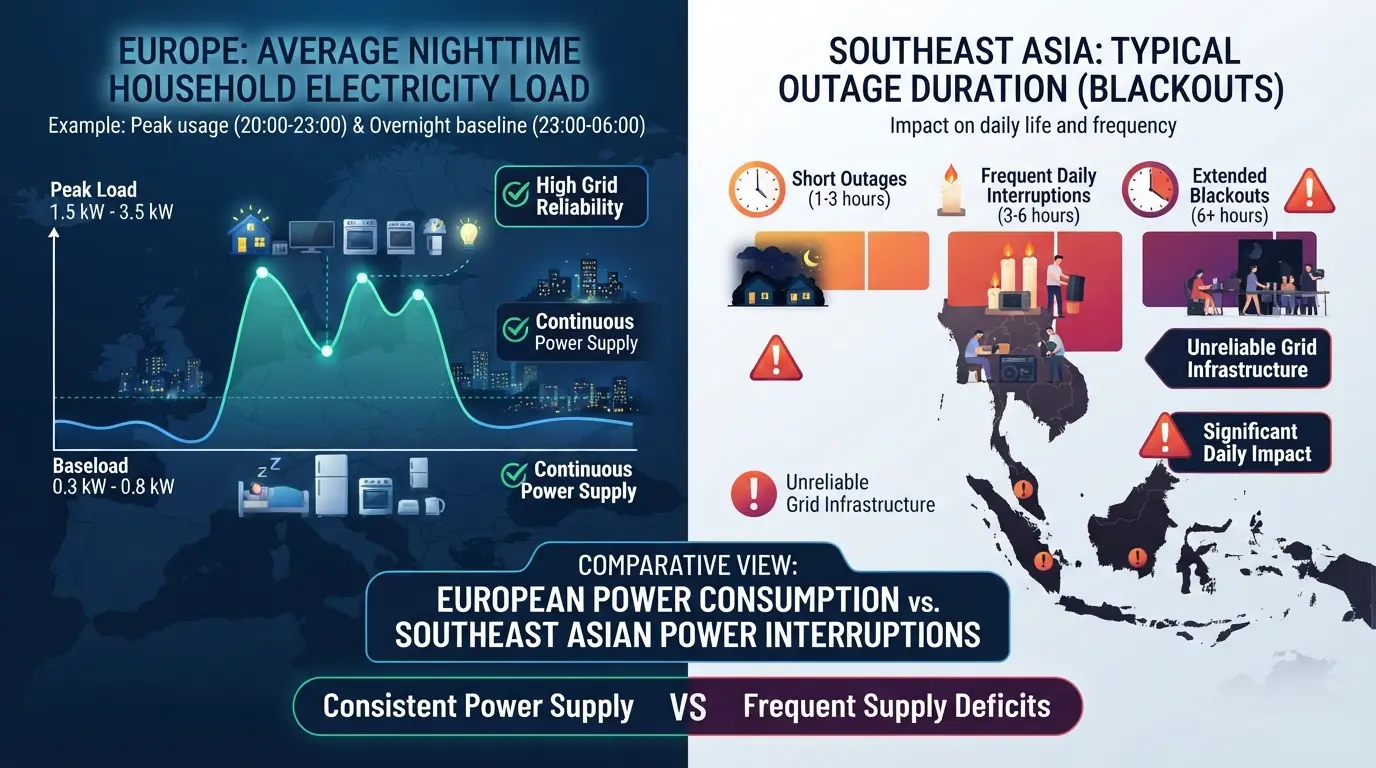
A Northern European household consumes 3,000 to 4,500 kWh per year, and roughly 70% of that lands between 16:00 and 22:00 – cooking, heat pump cycling, EV charging. A 10 kWh battery barely covers that window in winter, when a 5 kWp rooftop array might generate 3 kWh across a whole December day. Distributors there learned fast: sell a 5 kWh unit and the customer returns six months later asking for expansion. Sell 10 to 20 kWh from day one and the system performs.
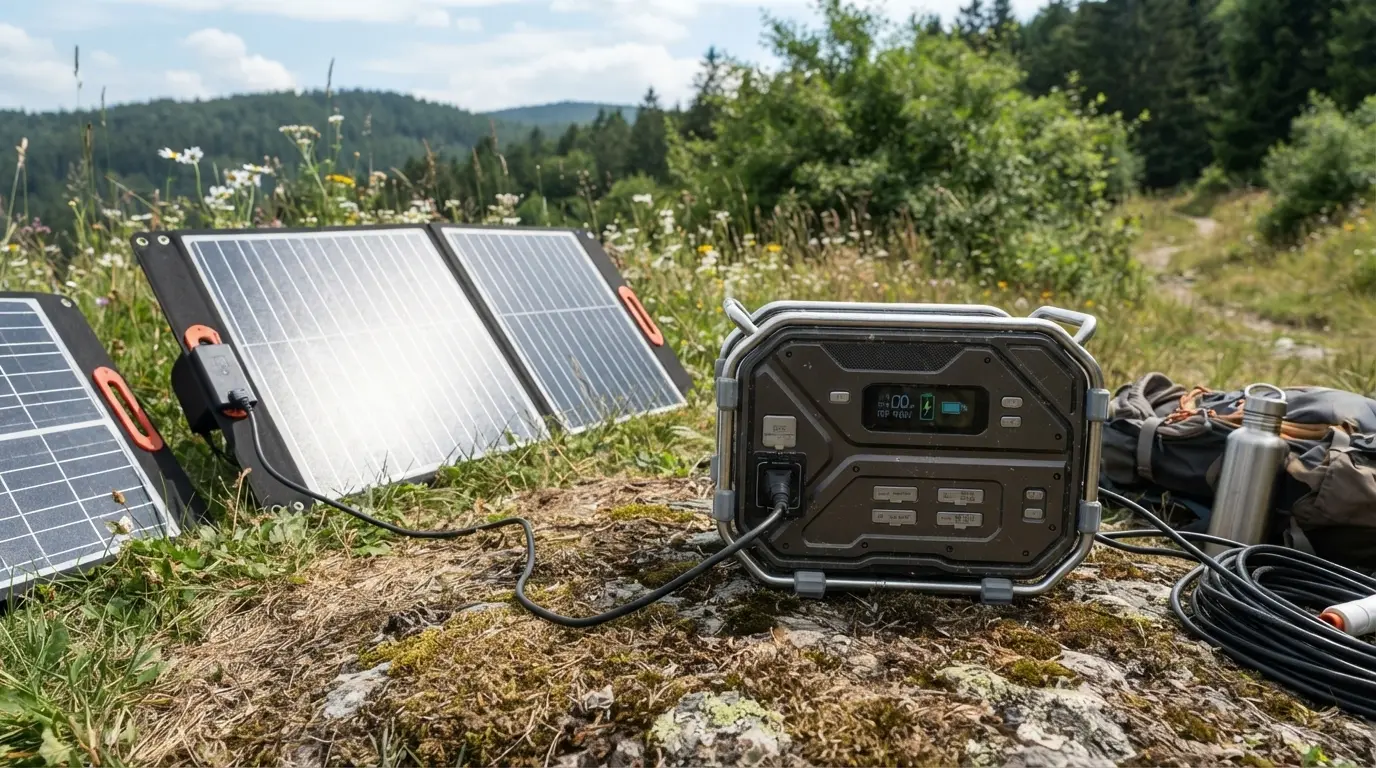
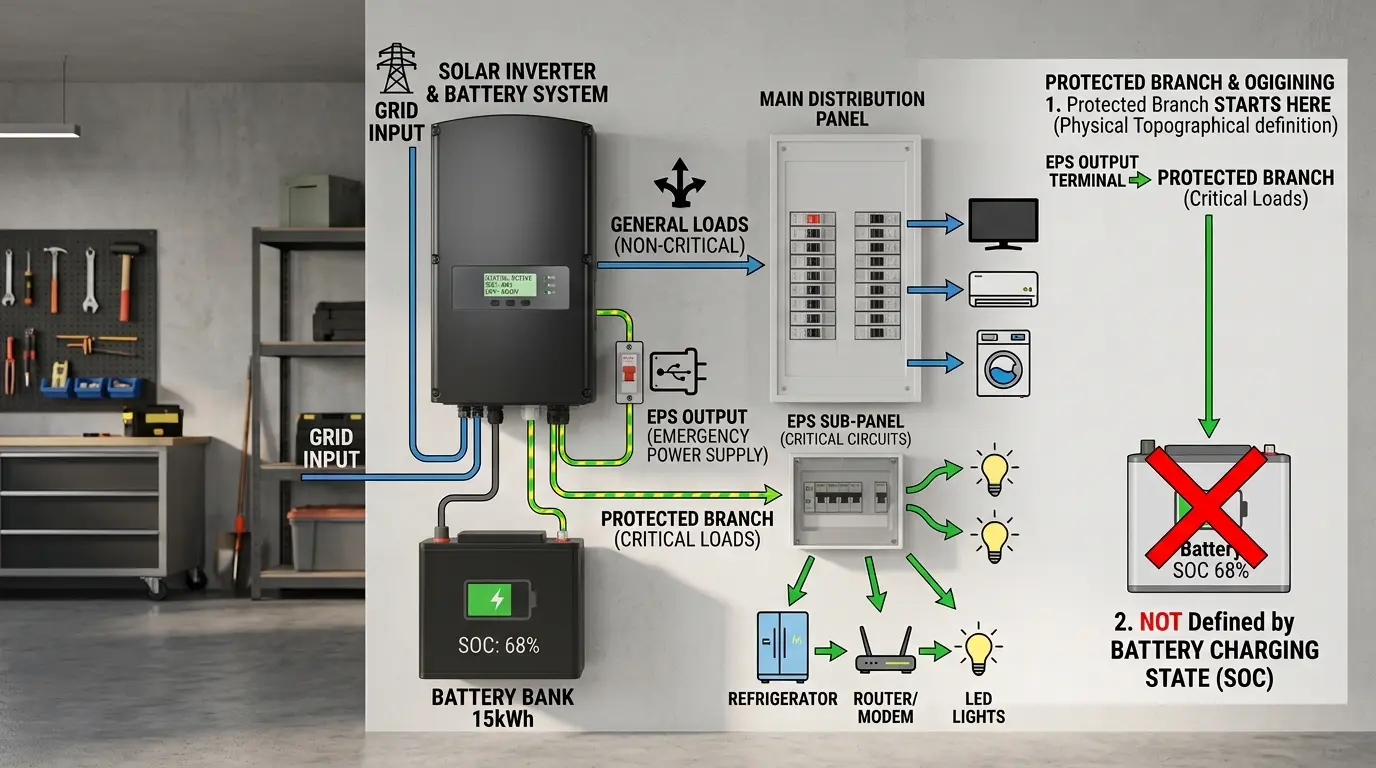
Southeast Asia inverts the equation. Grid power in Indonesia, the Philippines, and Vietnam fails for 2 to 6 hours at a time, not for days, and solar yield stays strong year-round. The battery’s job is narrower: carry lights, fans, a fridge, and Wi-Fi through the evening peak and the next outage. That’s a 5 kWh workload. A 51.2V 100Ah LFP module – 5.12 kWh nominal, 4,800 Wh usable at 94% DoD – handles it at 0.5C without stress.
One module at 6,000 cycles, 0.5C, 25°C, and 80% depth of discharge delivers roughly the same lifetime energy to either market.
The difference compounds over a year. Run the same module at 6,000 cycles at 0.5C, 25°C, 80% DoD and it delivers roughly 22 MWh of lifetime throughput. A European system cycles once daily and still has headroom after 15 years. A Southeast Asian system might cycle 1.5 times daily under load-shedding and reach the same throughput in under 10. Both buyers get their money back; they just measure it differently – one in feed-in tariff offset, the other in diesel and generator-hours avoided.
One Module, Two Markets – the OEM Logic Behind the Split
Here’s the part that matters for your procurement: the capacity gap isn’t a product gap. It’s a stacking decision on identical hardware.
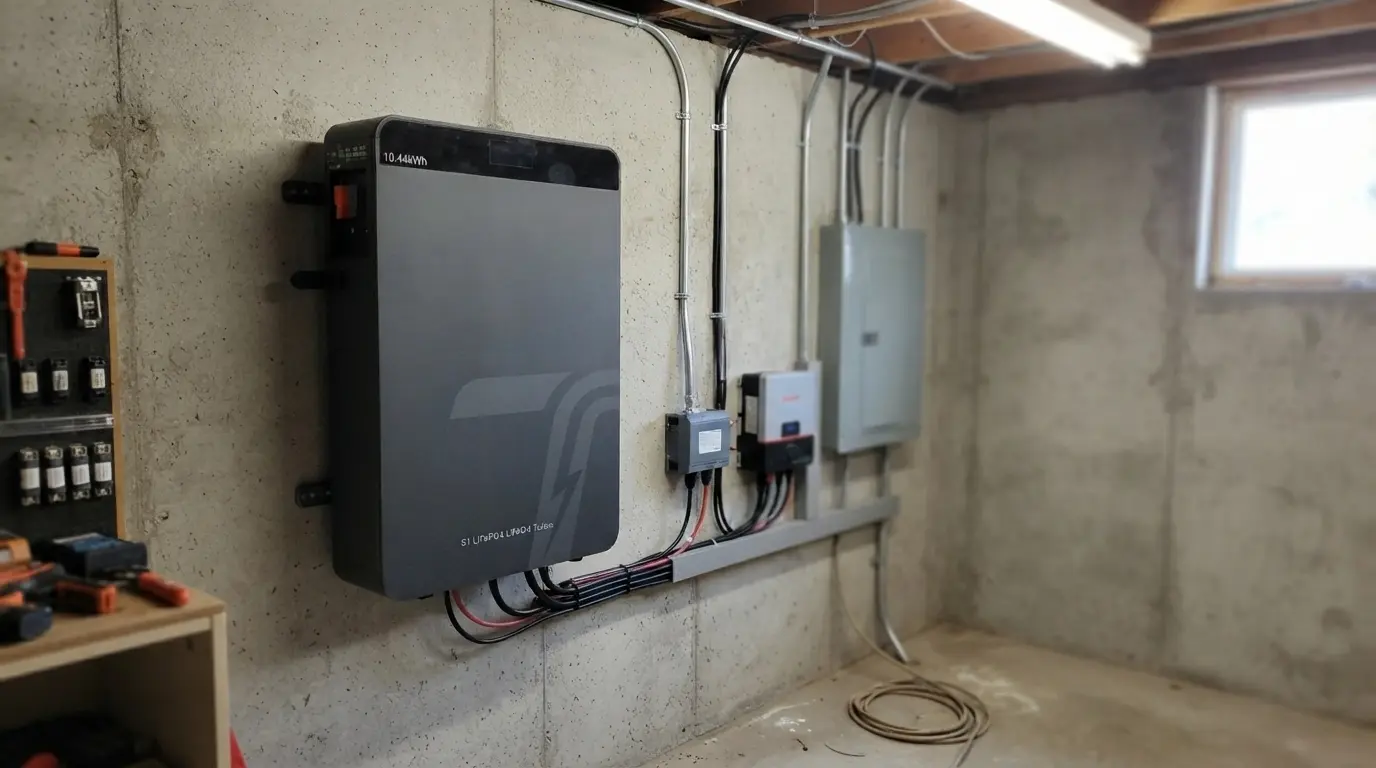
A 5 kWh LFP module with a built-in BMS, 1C rated discharge, and CAN/RS485 comms is the common building block. European integrators parallel 2 to 4 of them through the BMS’s automatic addressing – no central controller needed, just a set of paralleling cables and matching firmware across packs. Southeast Asian installers deploy the same module as a standalone unit, often as a drop-in replacement for the 4×12V lead-acid banks that still dominate the region.
This is why OEM/ODM terms matter more than the spec sheet. As a distributor, you can carry one SKU and sell it three ways: a single 5 kWh wall unit for SEA, a 2-module 10 kWh stack for Southern Europe, and a 3-4 module 15-20 kWh tower for Germany and Scandinavia. Ask your OEM for label branding, region-specific cable sets (EU plugs and certifications vs. local socket standards), and firmware profiles – a European profile prioritizes time-of-use shifting; a SEA profile prioritizes rapid recharge between outages. Sample lead times of 10-15 days and MOQs as low as 50 units for first orders are standard among tier-1 factories; anything much higher should make you pause.
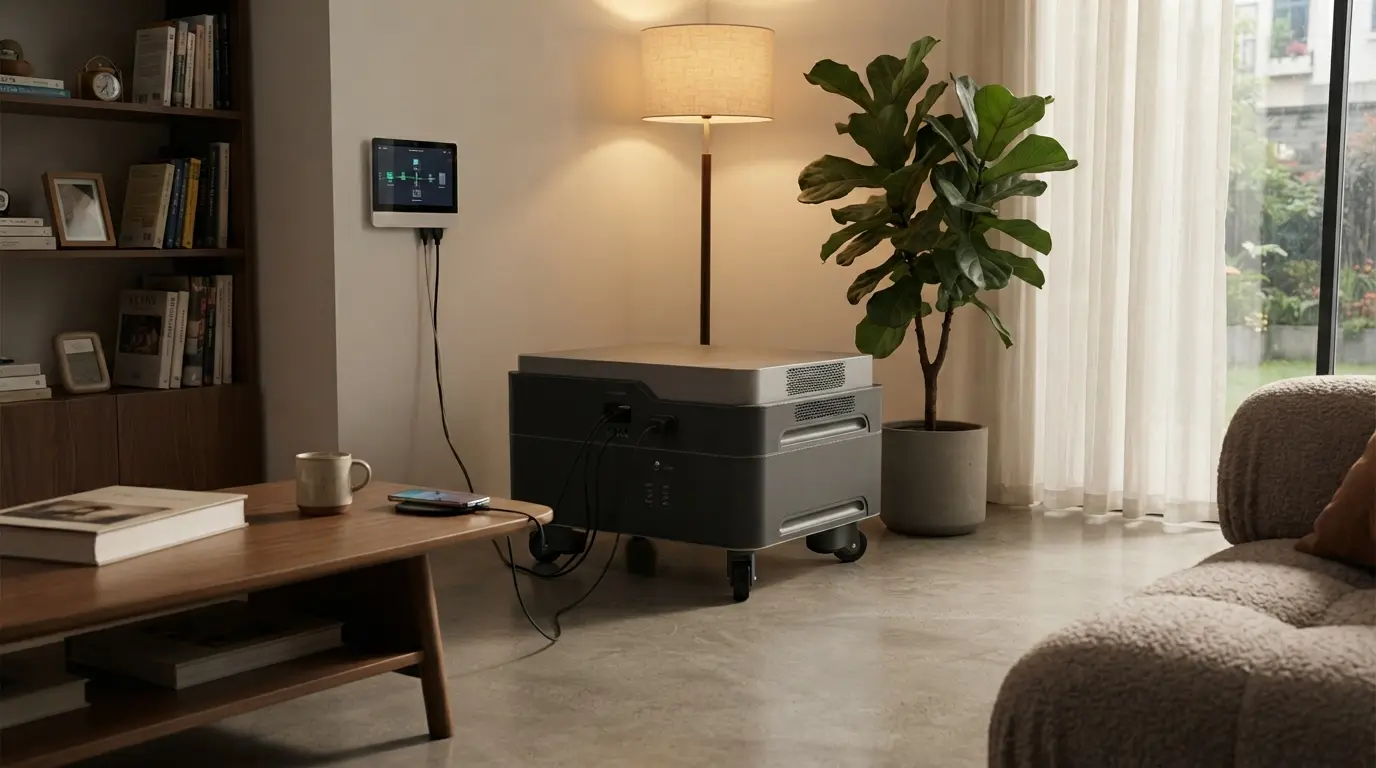
Decision Matrix – Matching Configuration to Market
| Configuration | Capacity (usable) | Daily Load Supported | Typical Market | Backfill Duration | Notes for Buyers |
|---|---|---|---|---|---|
| 1× 5 kWh wall module | 4.8 kWh @ 94% DoD | Lights, fans, fridge, Wi-Fi, 1-2h AC | Philippines, Indonesia, Vietnam | 6-8h essential loads | Lead-acid retrofit friendly, 51.2V drop-in |
| 2× 5 kWh stack (10 kWh) | 9.6 kWh | Above + evening heat pump or EV partial | Italy, Spain, Greece | 10-14h essential loads | Sweet spot for EU self-consumption |
| 4× 5 kWh tower (20 kWh) | 19.2 kWh | Full winter evening + heat pump + EV | Germany, UK, Nordics | 24h+ essential loads | Needs 48V hybrid inverter, 3-phase for full-home |
| 1× 10 kWh server rack | 9.6 kWh | Same as 2-module stack | Data-centric installers, AU/NZ | 10-14h essential loads | Higher discharge rating, rack footprint |
Every figure above assumes LFP cells, 25°C ambient, and a 0.5C discharge. Push a 5 kWh module to 1C continuous and cycle life drops measurably – expect closer to 4,000 cycles than 6,000. This matters more in SEA, where installers sometimes undersize to hit a price point and force the battery to work hard.
Four Pitfalls When Splitting Your Inventory by Region
Undersizing the European base model. A 5 kWh-only SKU line in Germany fails against competition offering 10 kWh stacks at nearly the same per-kWh price. The installation labour is identical; the customer compares total cost, not module cost.
Ignoring tropical derating. LFP batteries deliver rated capacity at 25°C. Install a 5 kWh unit against a sun-facing wall in Manila, where daytime ambient hits 40°C, and the BMS throttles charge current to protect the cells. Specify 40°C+ operating headroom and shade the enclosure – or watch warranty claims climb.
Mixing firmware versions in a parallel stack. European 4-module towers fail when packs ship with mismatched BMS firmware and the master pack can’t address the others. Insist your OEM locks firmware per shipment batch and include the update tool with every container.
Forgetting the sea-freight classification. Both markets import by sea, but SEA routes go through hubs with strict dangerous-goods checks. Every module needs UN38.3 test reports and MSDS documents filed with the forwarder before the booking, not after the vessel sails.
FAQ
The hardware, yes – with two conditions. Get region-specific certification (CE plus EN 62619 for Europe; IEC 62619 and local SDoC filings for SEA) and set the firmware profile per destination. The label, manual language, and cable kit differ; the cells and BMS don’t.
Price sensitivity and job logic. A 5 kWh module lands in Manila for roughly half the landed cost of a 10 kWh stack, and the outage it must cover is hours, not days. Financing is scarcer, so cash price drives the sale. The 10 kWh buyer exists in SEA, but only in premium villas and small commercial sites.
A 5 kWh module pairs with a 3-5 kW single-phase hybrid inverter for SEA. A 4-module 20 kWh tower needs a 48V hybrid inverter rated 6 kW or higher, 3-phase for full-home European backup, with a compatible BMS comms table – confirm the inverter’s battery list includes your OEM’s protocol before quoting.
SKU strategy
Build Your SKU Map Before You Build Inventory
The 10kWh-vs-5kWh split isn’t a mystery to solve – it’s a load profile to read. Europe buys storage capacity to shift self-generated solar across long dark evenings; Southeast Asia buys backup to bridge short grid failures. One LFP module serves both when you control stacking, firmware, and certification.
Send your target markets, voltage tier, and expected monthly order volume, and we’ll return a preliminary BOM with per-region configurations, certification scope, and landed-cost estimates within 24 hours.
Specify one controlled module, then configure the stack, firmware, cable set, and certification package around each market’s real job.