 English
  العربية
  日本語
日本語  한국어
한국어  Tiếng Việt
  ไทย
ไทย  Bahasa Melayu
  فارسی
فارسی  Bahasa Indonesia
  ဗမာစာ
ဗမာစာ  简体中文
简体中文  香港中文
香港中文  繁體中文
繁體中文  Русский
  Deutsch
  Nederlands
  Italiano
  Français
  Español
  Português
  Afrikaans
  Azərbaycan dili
  Български
  ਪੰਜਾਬੀ
  हिन्दी
  اردو
اردو  বাংলা
বাংলা  Հայերեն
  Íslenska
  Қазақ тілі
  नेपाली
  Српски језик
  Kiswahili
  తెలుగు
  Basa Jawa
  தமிழ்
தமிழ்  मराठी
मराठी How Long Will a 200W Power Station Last?
The answer isn’t as simple as “200 watts equals a certain number of hours.” 200W tells you what the power station can run—not how much energy it stores.
Your actual runtime depends on its battery capacity (Wh), the wattage of your devices, and real-world inverter efficiency.
In this guide, you’ll learn how to calculate 200W power station runtime accurately, see realistic examples for phones, laptops, lights, and more, and choose the right size for your needs.
What Does a 200W Power Station Mean?
A 200W portable power station can supply up to 200 watts of continuous output power. This determines which devices it can run, such as a laptop, Wi-Fi router, LED light, or small fan.
Its runtime depends on battery capacity, measured in watt-hours (Wh), not on the 200W output rating alone.
| Term | What It Means | Why It Matters |
|---|---|---|
| 200W | Maximum continuous output | Devices above 200W may trigger overload protection |
| Wh capacity | Stored battery energy | More Wh generally means longer runtime |
| Surge power | Brief extra output for startup | Helps support motor-driven devices at startup |
| Inverter | Converts battery DC power to AC power | Sets output limits and causes some energy loss |
A 200W power station is not automatically a 200Wh battery. For example, a unit may have 200W output with 300Wh, 500Wh, or more stored energy. Output power tells us what the unit can handle at one time; watt-hours tell us how long it can operate.
Example: A 200Wh battery can theoretically power a 100W device for two hours. In real use, inverter losses and device behavior reduce that result.
Before connecting equipment, check its label for:
- Running wattage: The power it uses during normal operation
- Startup surge: The short burst some motors and compressors need
- Input type: AC, USB, USB-C, or 12V DC
A device that exceeds the station’s continuous or surge limit can cause an automatic shutdown. A reliable portable power station uses a stable pure sine wave inverter and intelligent BMS protection to help manage overload, overcurrent, and battery safety.
How to Calculate 200W Power Station Runtime
A 200W power station runtime calculation starts with battery capacity, not the 200W output rating. Use this simple formula:
For AC-powered devices, use an efficiency rate of about 0.85 to 0.90. A pure sine wave inverter converts battery DC power to AC power, and some energy is lost as heat during that conversion. In practical planning, using 85% efficiency gives a safer estimate.
Quick Runtime Calculator Example
A 200Wh power station running a 50W laptop or similar device:
Use the actual wattage shown on the appliance label whenever possible. Device demand can rise and fall during use, while motors, compressors, and some chargers may require a brief startup surge. The power station also uses a small amount of energy while its AC inverter is switched on, even with a light load.
For phones, cameras, routers, and other compatible gear, USB or DC outputs can often preserve more usable power than AC because they avoid part of the AC-to-DC conversion loss. For backup planning, it also helps to understand the practical differences between a portable power station and a UPS, especially when continuous equipment uptime matters.
200W Power Station Runtime by Battery Capacity
A 200W power station can support very different run times because battery capacity—not the 200W output rating—sets the available energy. The estimates below use an 85% efficiency allowance for typical AC use. Actual results vary with temperature, battery condition, and the device’s real-time draw.
| Battery Capacity | Estimated Usable Energy | 20W Load | 50W Load | 100W Load | 200W Load |
|---|---|---|---|---|---|
| 200Wh power station | About 170Wh | About 8.5 hours | About 3.4 hours | About 1.7 hours | About 50 minutes |
| 300Wh power station | About 255Wh | About 12.8 hours | About 5.1 hours | About 2.6 hours | About 1.3 hours |
| 500Wh power station | About 425Wh | About 21.3 hours | About 8.5 hours | About 4.3 hours | About 2.1 hours |
| 1000Wh power station | About 850Wh | About 42.5 hours | About 17 hours | About 8.5 hours | About 4.3 hours |
200Wh Power Station Runtime
A 200Wh power station is best for compact electronics and short backup tasks. At a 20W load, such as a Wi-Fi router or several LED lights, it can run for about 8.5 hours. A 50W laptop or small fan may run for around 3.4 hours, while a constant 100W device reduces runtime to roughly 1.7 hours.
At the full 200W output, a 200Wh battery may last only about 50 minutes. This is why output watts and battery watt-hours must be checked together.
300Wh Power Station Runtime
A 300Wh model provides more breathing room for light electronics, short travel use, and basic emergency backup power. It can support a 20W router, light, or USB setup for nearly 13 hours, or a 50W laptop setup for about five hours.
For short outages, this capacity can suit essential low-draw devices. It is still not designed for long operation of high-watt appliances.
500Wh Power Station Runtime
A 500Wh portable power station is a practical step up for camping, mobile work, and daily emergency power needs. It provides about 425Wh of usable energy through an AC outlet.
Typical estimates include:
- 20W lights or router: about 21 hours
- 50W laptop or fan: about 8.5 hours
- 100W monitor, CPAP, or small TV: about 4.3 hours
- 200W load: about 2.1 hours
This capacity offers a more comfortable margin when several lower-power devices are used throughout the day.
1000Wh Power Station Runtime
A 1000Wh unit is better suited to longer outages, off-grid work, and extended camping use. With about 850Wh of estimated usable AC energy, it can run a 50W device for around 17 hours or a 100W load for about 8.5 hours.
For a 200W portable power station output limit, a larger battery does not increase the maximum appliance wattage it can run. It simply extends runtime. A 1000Wh battery paired with a 200W inverter can power a compatible 200W load for about 4.3 hours, provided the device does not exceed the unit’s continuous or surge limit.
What Can a 200W Power Station Run?
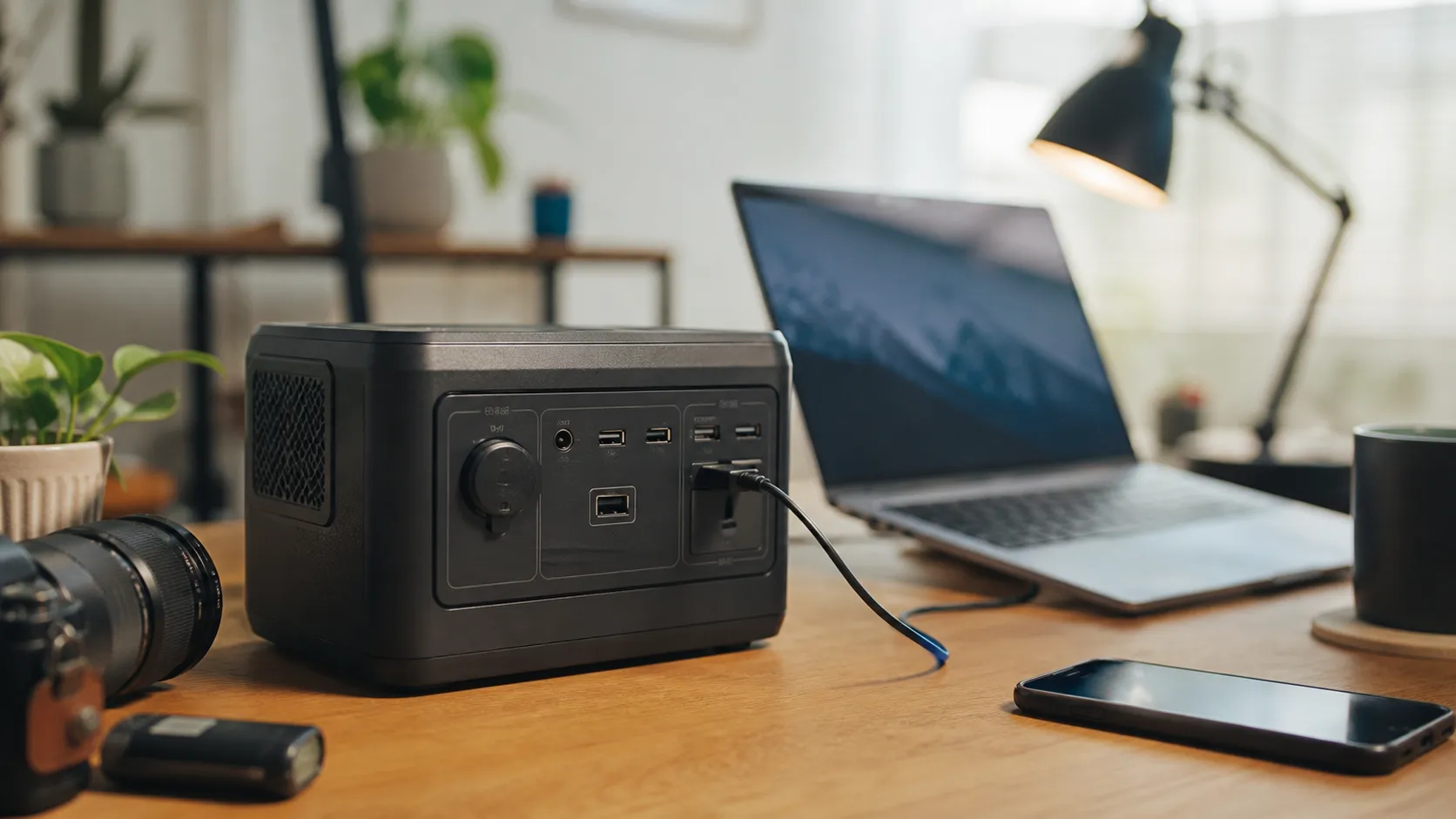
A 200W portable power station can run light electronics and selected low-demand appliances, as long as their combined continuous draw stays below 200W. Check both the appliance wattage and any startup surge before connecting it.
Low-Power Devices
These devices typically use very little power and are well suited to a 200W power station:
- Smartphones and tablets
- LED lanterns and camping lights
- Cameras and battery chargers
- Bluetooth speakers
- Wi-Fi routers and modems
- USB-powered accessories
These are practical choices for travel, camping, and basic emergency backup power.
Mid-Power Devices
Many everyday electronics can also work, depending on their actual rated wattage:
- Laptops
- CPAP machines
- Portable fans
- Small TVs
- Computer monitors
- Mini projectors
A laptop or router may only use part of the available output, while several devices connected at once can quickly push total demand closer to the 200W limit.
Devices Near the 200W Limit
Some compact refrigerators, small blenders, and compatible low-watt cooking devices may operate within the limit. However, these loads leave little output headroom. Refrigerator compressors and blender motors can draw a higher surge when starting, which may activate the power station’s overload protection even if the running wattage appears acceptable.
Devices a 200W Power Station Usually Cannot Run
A 200W power station is generally not designed for high-heat or heavy-duty equipment, including:
- Electric kettles
- Coffee makers
- Hair dryers
- Space heaters
- Microwave ovens
- Heavy power tools
These appliances commonly exceed 200W by a wide margin. Connecting one can cause the unit to shut down through overload protection.
Always check the appliance label or power adapter before use. Device categories are not reliable on their own: one mini fridge, laptop, or CPAP machine can use far more or less power than another model. Use the listed running watts, account for motor startup demand, and keep the total connected load safely under the 200W output rating.
Real-World 200W Portable Power Station Runtime Examples
For a clear 200W power station runtime estimate, use a 200Wh battery as the example. At about 85% efficiency, it provides roughly 170Wh of usable AC energy. Actual results vary with temperature, battery condition, and the device’s changing power draw.
| Connected Load | Typical Use | Estimated Runtime With a 200Wh Power Station |
|---|---|---|
| 10W | Phone charging, LED lantern, small USB devices | About 17 hours |
| 30W | Wi-Fi router, modem, camera charging, compact electronics | About 5.5 hours |
| 60W | Laptop charging, mobile work setup | About 2.8 hours |
| 100W | Monitor, portable fan, CPAP machine, small TV | About 1.7 hours |
| 150W | Higher-demand compatible device | About 1.1 hours |
| 200W | Maximum continuous load | About 50 minutes |
10W: Small Devices and Lighting
A 10W load is ideal for light camping or basic emergency use. A 200Wh portable battery backup can run LED lanterns, charge phones, and support small USB devices for much of a day. Because USB output avoids some AC inverter loss, real runtime can be slightly better when devices are powered directly through USB ports.
30W: Router, Modem, and Compact Electronics
At around 30W, a 200W portable power station can keep a router and modem running for approximately 5 hours. This makes it useful during short blackouts, road trips, or remote work sessions where internet access and device charging matter. For broader backup planning, compare a portable station with a UPS in this guide to portable power station and UPS differences.
60W: Laptop and Mobile Work Power
A 60W laptop load gives about 2.5 to 3 hours of runtime from a 200Wh unit through AC output. In practice, laptop demand rises during video calls, rendering, or external-monitor use and drops during light writing or browsing. For off-grid work, charging a laptop through USB-C PD, where supported, can reduce unnecessary conversion loss.
100W: CPAP, Fan, Monitor, or Small TV
At 100W, usable runtime is about 1.5 to 2 hours. This suits short-term emergency backup for a small television, monitor, fan, or compatible CPAP machine. Check the equipment label before use, especially for medical devices, because actual consumption and startup demand can differ from the listed average.
150W–200W: High-Demand Portable Loads
Loads close to 200W drain a small power station quickly. A 150W device may run for around one hour, while a constant 200W load can use the available energy in less than an hour. The station must also support the device’s startup surge; a motor-driven appliance can briefly demand far more than its running wattage.
Practical use by scenario:
- Camping: Best for lights, phones, cameras, a router, and modest laptop use.
- Blackout backup: Useful for communications, lighting, and selected low-power essentials.
- Road trips: Supports device charging, small electronics, and short mobile-work sessions.
- Off-grid work: Works well for laptops and network gear, but longer shifts usually need more watt-hours or solar recharging. Understanding how a portable solar generator works helps when planning renewable charging away from the grid.
Factors That Affect Portable Power Station Runtime
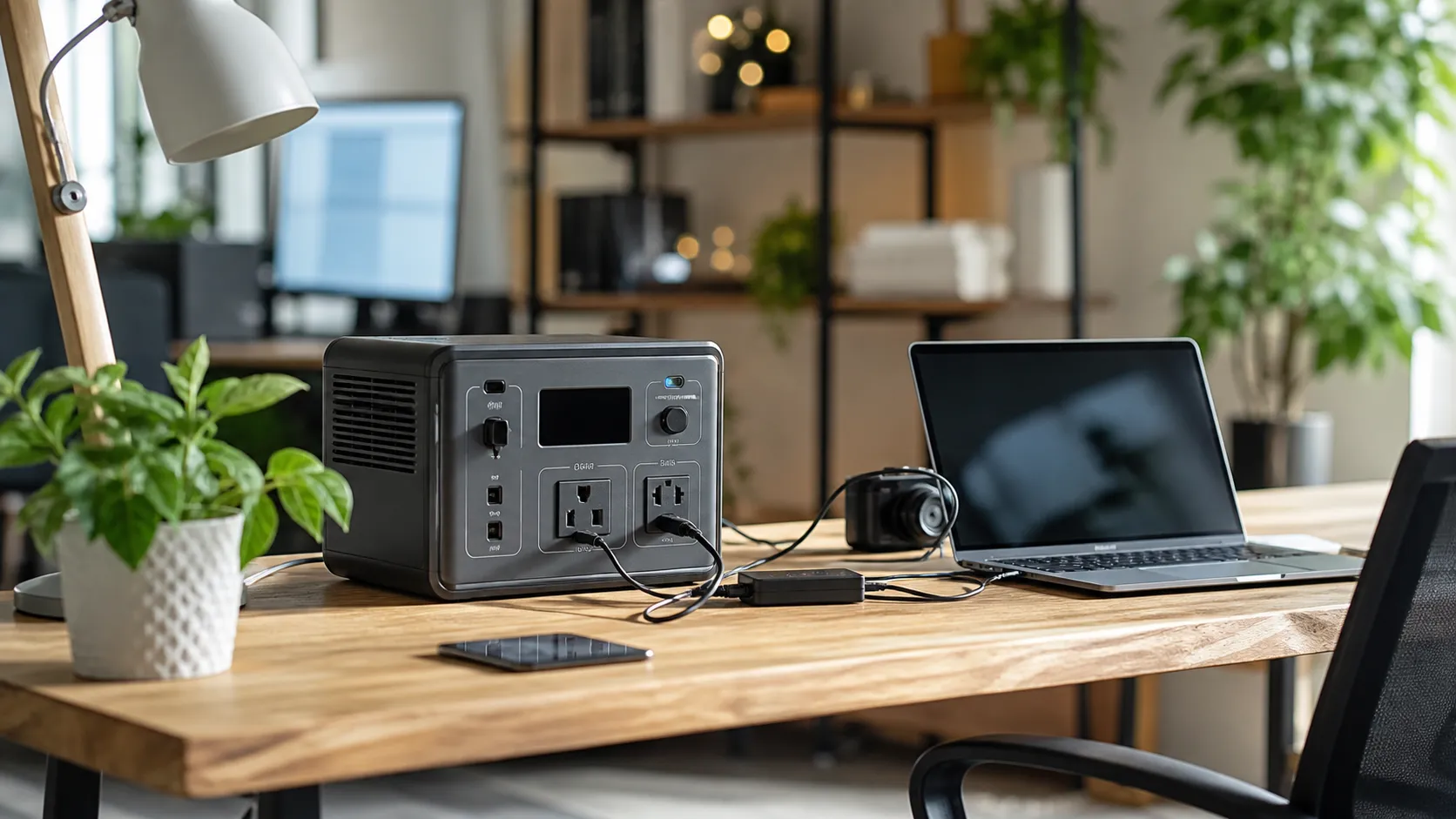
A 200W power station runtime is never based on watt-hours alone. Usable runtime changes with the load, conversion losses, battery condition, and operating environment.
-
Battery capacity: More watt-hours (Wh) means more stored energy. A 500Wh unit will generally run the same device about twice as long as a 250Wh unit, assuming similar efficiency.
-
Device power draw: Higher-watt appliances drain a portable battery backup faster. A 20W router uses energy slowly, while a 150W appliance can consume usable capacity in a short time.
-
Power station efficiency: AC output requires the pure sine wave inverter to convert battery DC power into AC power. Some energy becomes heat, while standby operation also uses a small amount of power. USB and 12V DC outputs are often more efficient for compatible devices.
-
AC-to-DC conversion loss: Many devices, including laptops and phones, convert AC power back to DC through their chargers. Using USB-C, USB-A, or DC output where supported can avoid an extra conversion step and preserve more battery energy.
-
Battery chemistry: A LiFePO4 power station is built for long cycle life, stable performance, and high safety. TURSAN portable power solutions use LiFePO4 cells and intelligent BMS protection to support reliable use across repeated charging cycles.
-
Temperature: Cold weather can temporarily reduce usable battery capacity, while excessive heat may reduce efficiency and place extra stress on the battery. Keep the unit shaded, dry, and well ventilated during use.
-
Battery age and cycle count: All batteries gradually lose capacity over time. Older units may not provide their original rated watt-hours, especially after frequent deep discharges or poor storage conditions.
-
Multiple devices: Add the wattage of every connected item. For example, a 60W laptop, 25W monitor, and 15W router create a 100W combined load. If total running power—or a device’s startup surge—exceeds 200W, overload protection may shut the power station down.
How to Make a 200W Power Station Last Longer

A 200W portable power station lasts longer when we reduce the load and avoid wasting energy through the AC inverter. Small daily habits can make a meaningful difference for camping power, travel, and emergency backup power.
| Practical step | Why it helps |
|---|---|
| Choose low-watt devices | LED lights, phones, tablets, and efficient fans use far less battery power than heating or cooking devices. |
| Run one essential device at a time | Keeping total demand low extends portable power station runtime and reduces overload risk. |
| Use DC, USB-A, USB-C, or 12V outputs | Compatible devices can avoid some AC-to-DC conversion loss. |
| Turn off AC when unused | The inverter can consume standby power even when no AC device is actively charging. |
| Enable power-saving settings | Lower laptop and phone screen brightness, sleep settings, and reduced performance modes can cut energy use. |
| Protect the battery from temperature extremes | Excessive heat, freezing conditions, and moisture can reduce available capacity and affect battery health. |
| Store it correctly | Recharge before long-term storage and avoid leaving the battery fully drained. |
For a camping power station or portable battery backup, plan the day around essential loads first. A router, phone, LED lighting, or laptop typically makes better use of a 200W power station than high-watt appliances.
- Use USB or DC power for small electronics.
- Reserve AC output for equipment that truly needs it.
- Charge devices during planned sessions instead of leaving several items connected all day.
- Keep the unit dry, ventilated, and away from direct sun or freezing surfaces.
For longer-term ownership planning, our guide to solar generator lifespan and runtime explains how battery use patterns and operating conditions affect usable service life.
Choosing the Right Power Station Capacity
A 200W power station can be a practical choice for light, low-draw use, but the right unit depends on two separate numbers: continuous output in watts and battery capacity in watt-hours (Wh). Check both before buying.
Light Backup Needs
For phones, LED lights, tablets, cameras, Wi-Fi routers, and other small electronics, a compact power station with a modest Wh capacity can provide useful short-term backup.
- Phones and USB devices: low energy use, especially through USB outputs
- LED lighting: efficient for camping and blackout lighting
- Wi-Fi routers: suitable for short network backup periods
- Small electronics: cameras, speakers, and tablets usually stay well below a 200W limit
For these uses, battery capacity matters more than having a higher output rating.
Camping Power Station Needs
A 200W portable power station works well for basic camping power: charging phones, running LED lights, powering a small fan, and keeping cameras or other gear charged. Use DC, USB-A, USB-C, or 12V outputs where possible to reduce inverter losses.
Portable cooking devices need extra care. Many kettles, coffee makers, hot plates, and heating appliances draw far more than 200W. Always check the appliance label rather than relying on its size or category.
Remote Work and Travel
For remote work, calculate the combined load of a laptop, monitor, camera charger, hotspot, and router. A laptop may be manageable on a 200W power station, but adding a monitor or multiple chargers can quickly increase total demand.
A larger battery capacity is often more valuable than extra output for mobile work. A 500Wh power station can be a better fit when you need longer laptop charging time, reliable connectivity, and power for several low-watt devices during travel.
Emergency Home Essentials
For emergency backup power, prioritize essential low-power loads:
- CPAP machines, based on their rated power draw
- Wi-Fi routers and modems
- LED lamps
- Phone charging
- Small fans
- Select compact refrigerators with compatible running and surge requirements
Refrigerators and other motor-driven appliances may need more than 200W during startup, even if their normal running wattage looks acceptable. A higher-output unit with adequate surge capability is the safer choice for these loads. For broader home energy planning, compare capacity and reliability features when reviewing the best home battery brands.
When 500Wh or 1000Wh Makes More Sense
Choose a larger battery when you need longer runtime, multiple connected devices, or greater flexibility during an outage.
| Typical Need | Practical Capacity Direction | Output Consideration |
|---|---|---|
| Phones, lights, router | Smaller capacity | 200W may be sufficient |
| Camping lights, fans, charging | Around 300Wh–500Wh | 200W works for low-draw gear |
| Laptop-based work and travel | Around 500Wh | Higher output helps with added devices |
| CPAP, router, lights, select fridge use | Around 500Wh–1000Wh | Check surge and continuous watts |
| Extended off-grid use | 1000Wh or larger | Higher output is often needed |
A 1000Wh-class battery capacity is generally better for longer outages, regular off-grid work, or situations where several devices must run throughout the day. TURSAN portable power solutions use LiFePO4 battery cells and intelligent BMS protection to support dependable energy storage configurations across different usage needs.
Calculate Watts and Watt-Hours Together
Before selecting a power station, total the wattage of every device you expect to run at the same time. Then estimate the watt-hours needed for the number of hours you need power.
Buy for higher output watts when:
- Your equipment exceeds 200W while running
- A motor, compressor, or pump needs startup surge power
- You plan to use several devices at once
- You need appliances such as larger monitors, refrigerators, or cooking equipment
Buy for more watt-hours when:
- Your devices are low wattage but must run for many hours
- You need overnight backup for a router, lights, or CPAP machine
- You are planning multi-day camping or road travel
- You need a portable battery backup for repeated charging and daily use
A 200W power station is best for light backup and portable electronics. When the load is modest but runtime must be longer, increase Wh capacity. When the appliance itself needs more power, choose a unit with higher continuous output and suitable surge handling.
Is a 200W Power Station Enough?
A 200W power station is enough for light, everyday power needs. It works well when we need to charge personal electronics, keep a router online, run LED lighting, or power a laptop for limited periods. Its 200W rating is the maximum continuous output, so both the device wattage and battery capacity matter.
Best Uses for a 200W Portable Power Station
A 200W portable battery backup is a practical fit for:
- Casual camping: LED lights, phones, cameras, speakers, and small fans
- Travel and road trips: Tablets, laptops, drones, and USB accessories
- Students and mobile work: Laptop charging, a small monitor, Wi-Fi equipment, and desk lighting
- Light emergency backup power: Phones, radios, LED lamps, routers, and select CPAP setups
- Outdoor content work: Cameras, compact displays, charging hubs, and network gear
For outage planning, a compact station can keep priority electronics running, while larger household loads require a more capable system. See our guide to home battery backup supply for power outages for broader backup planning.
When 200W Is Too Small
The 200W output limit is not suitable for appliances with heating elements or large motors. Even if a device normally appears small, its startup surge may exceed the inverter limit.
| Equipment Need | Is 200W Usually Enough? | Why |
|---|---|---|
| Phone, tablet, LED light | Yes | Very low power draw |
| Wi-Fi router or modem | Yes | Usually a light, steady load |
| Laptop and small monitor | Usually | Check combined wattage |
| CPAP machine | Sometimes | Depends on humidifier and heated tube use |
| Small TV or compact fan | Often | Confirm the appliance label |
| Mini refrigerator | Not always | Compressor startup surge can be high |
| Kettle, coffee maker, hair dryer | No | High heating load |
| Microwave, space heater, power tools | No | Output demand is far above 200W |
Check the appliance label, not the device category. The label gives the most reliable running wattage, while the manual may list a higher startup or surge requirement.
When to Upgrade
Choose a higher-capacity or higher-output portable power station when your equipment needs more than light backup power:
- Upgrade battery capacity in Wh when the device is under 200W but must run for many hours.
- Upgrade continuous output wattage when the total connected load may exceed 200W.
- Upgrade surge capability for compressors, pumps, refrigerators, and other motor-driven equipment.
- Choose a larger system for longer camping trips, remote work, repeated outages, or multi-device use.
For commercial buyers, TURSAN supports OEM and ODM portable power station configurations with LiFePO4 battery options, intelligent BMS protection, and customized designs for regional markets.
Quick 200W Power Station Checklist
| Checkpoint | A 200W Power Station Is a Good Fit If… |
|---|---|
| Device wattage | Your normal load stays clearly below 200W |
| Combined load | All connected devices remain under the output limit |
| Daily energy use | Your required watt-hours fit the battery capacity |
| Runtime target | You only need short-term charging or light backup |
| Device type | You are powering electronics, lights, routers, or compact accessories |
| Surge demand | Your equipment has no major motor or heating surge |
Bottom line: A 200W power station is a solid choice for low-watt travel, camping, study, and emergency essentials. For appliances with high running power, high surge demand, or long runtime needs, select a unit with more watt-hours, stronger continuous output, and suitable overload protection.
Safety Features and Overload Protection
A 200W power station should protect itself and your devices when power demand becomes unsafe. The continuous output limit is 200W; connecting a device that draws more can trigger automatic overload protection and shut the AC output down.
| Safety feature | What it does |
|---|---|
| Overload protection | Stops output when the connected load exceeds the power station’s rated limit |
| Surge handling | Helps manage brief startup demand from motors and compressors, within the unit’s surge capability |
| Pure sine wave inverter | Delivers stable AC power with low noise and interference for sensitive electronics |
| Intelligent BMS | Helps protect against overcharge, over-discharge, overheating, overcurrent, and short circuits |
Check Startup Surge, Not Only Running Watts
Some equipment needs more power for a few seconds than it uses while running. Compact refrigerators, pumps, fans, and other motor-driven devices can have a high startup surge. A device rated below 200W during normal operation may still overload a 200W portable power station when it starts.
Always check the appliance label for both running power and startup requirements. If the surge exceeds the inverter limit, the power station may switch off to prevent damage.
Stable Power for Sensitive Devices
A pure sine wave inverter provides cleaner, more stable AC output for laptops, monitors, CPAP machines, cameras, and other sensitive devices. TURSAN portable power solutions use pure sine wave output designed for low interference, low noise, and stable performance.
The battery management system is equally important. A smart BMS continuously monitors battery conditions and helps maintain reliable operation during charging, discharging, and changing temperatures. LiFePO4 battery cells add a high-safety, long-cycle-life foundation for portable backup power.
Safe Use Practices
- Keep ventilation openings clear during charging and use.
- Use undamaged, correctly rated charging cables and adapters.
- Keep the unit dry and away from excessive heat or freezing conditions.
- Do not cover the power station or place it near flammable materials.
- Disconnect high-draw equipment before restarting after an overload shutdown.
- Recharge before storage and avoid leaving the battery fully depleted for long periods.
For dependable portable power, choose equipment with an intelligent BMS and recognized pre-integrated certifications such as UL1973, CE, FCC, UN38.3, and MSDS. These features support safer transport, charging, storage, and everyday use.
200W Power Station FAQs
How long will a 200W power station last running a laptop?
It depends on battery capacity and the laptop’s actual draw. A laptop using about 60W on a 200Wh power station may run for around 2.8 hours after allowing for inverter efficiency: 200Wh × 0.85 ÷ 60W.
Can a 200W power station run a mini fridge?
Some compact mini fridges may be compatible if their running wattage stays below 200W and their startup surge is within the unit’s surge limit. Check the appliance label carefully, because compressor startup demand can be much higher than normal running power.
Is a 200W power station enough for camping?
A 200W portable power station can suit light camping needs such as phones, LED lights, cameras, Bluetooth speakers, and some laptops. It is generally not the right fit for high-heat appliances or extended use of refrigeration and cooking equipment.
What battery size is best for a 200W load?
For a device that continuously uses 200W, choose capacity based on the runtime you need. A 200Wh battery provides about 0.85 hours, while a 500Wh battery provides about 2.1 hours under the same load. Larger capacity is needed for longer backup time.
How long will a 200Wh battery last at 200W?
A 200Wh power station running a constant 200W load will last about 0.85 hours, or roughly 50 minutes, using an estimated 85% efficiency rate. Real runtime can be shorter if the device has startup surges or changing power demand.
Why is actual power station runtime lower than the advertised estimate?
Advertised capacity is measured in watt-hours, but not all stored energy reaches the connected device. AC inverter conversion creates energy loss, while standby use, battery temperature, cable loss, battery age, and fluctuating loads can also reduce usable runtime.
Can I charge a power station while using it?
This depends on the specific model and its supported charging design. Check the product instructions before using pass-through charging, as charging and output performance can vary by model and connected load.
Can a 200W power station run a CPAP machine overnight?
It may run a CPAP machine if the machine’s power draw stays within the 200W output limit and the battery has enough watt-hours for the full night. Using a compatible DC power option, where available, can reduce inverter loss compared with AC operation.
What happens if I plug in a device that uses more than 200W?
A device drawing more than the station’s rated continuous output can trigger overload protection and shut down the output. Devices with motors, compressors, or heating elements may also exceed the limit briefly during startup.
Is a LiFePO4 power station better for emergency backup power?
LiFePO4 power stations are a strong option for emergency backup because the chemistry is designed for long cycle life and stable operation. TURSAN portable power solutions use LiFePO4 cells with intelligent BMS protection, helping support safe, reliable use across repeated charging cycles. For buyers comparing supply partners, this overview of portable power station manufacturers can help frame a more informed sourcing decision.