 English
  العربية
  日本語
日本語  한국어
한국어  Tiếng Việt
  ไทย
ไทย  Bahasa Melayu
  فارسی
فارسی  Bahasa Indonesia
  ဗမာစာ
ဗမာစာ  简体中文
简体中文  香港中文
香港中文  繁體中文
繁體中文  Русский
  Deutsch
  Nederlands
  Italiano
  Français
  Español
  Português
  Afrikaans
  Azərbaycan dili
  Български
  ਪੰਜਾਬੀ
  हिन्दी
  اردو
اردو  বাংলা
বাংলা  Հայերեն
  Íslenska
  Қазақ тілі
  नेपाली
  Српски језик
  Kiswahili
  తెలుగు
  Basa Jawa
  தமிழ்
தமிழ்  मराठी
मराठी Match running watts, starting surge and battery runtime before connecting everyday appliances, tools or backup loads.
Planning a portable backup system?
Compare TURSAN portable power solutions by output, battery capacity and application.
When deciding what a 1000-watt inverter can run, check two power figures: continuous running watts and starting surge watts. A 1000W pure sine wave inverter can deliver up to 1,000 watts continuously, but appliances do not all draw power in the same way.
Running watts are the steady power an appliance uses after it is operating. For example, a fan, refrigerator, pump, or power tool may have a relatively modest normal load once it reaches speed.
Starting surge watts are the brief power spike required when equipment with a compressor, motor, fan, or pump starts. This surge can be two to three times the appliance’s normal running wattage, so a device that runs at 300W may require 600W to 900W for a moment at startup.
For dependable off-grid power backup, keep the combined continuous load at or below about 800 watts. This 80% safety rule leaves operating margin for startup demand, inverter heat, battery-voltage changes, and other connected loads.
Before connecting any appliance, compare:
| Check | What to Match |
|---|---|
| Appliance running watts | Must remain below the inverter’s 1,000W continuous rating |
| Combined running watts | Ideally remain below 800W |
| Appliance starting watts | Must stay within the inverter’s stated surge or peak rating |
| Multiple motor loads | Confirm that their startup surges will not occur together |
A 1000-watt pure sine wave inverter is well suited to moderate continuous loads, but its real limit is set by both the appliance’s normal draw and its peak startup requirement.
What Can a 1000-Watt Inverter Run?
A 1000-watt pure sine wave inverter can support many everyday electronics, small appliances, and light-duty tools. Before connecting anything, check the appliance label or manual for its running watts and starting watts. Add the running watts of devices that will operate at the same time, and leave capacity available for motor startup.
A device’s actual power draw may be lower than its maximum rating during normal use. For motor-driven appliances such as mini-fridges, fans, and drills, the starting demand can be higher than the continuous operating load, so the inverter’s peak rating must also be considered.
Consumer Electronics Under 150 Watts
These devices generally fit comfortably within a 1000-watt inverter’s capacity:
| Device | Approximate power draw |
|---|---|
| Laptop | 45–90W |
| Smartphone or tablet charger | 10–30W |
| LED TV | 50–150W |
| Wi-Fi router or modem | 10–20W |
| CPAP machine without a heated humidifier | 30–60W |
A laptop, router, phone charger, and small LED TV can usually operate together when their combined running load remains within the inverter’s continuous output rating. For sensitive electronics and medical equipment, I recommend a pure sine wave inverter because it provides stable, low-interference AC power.
Household and Kitchen Appliances
Small household appliances can also work with a 1000-watt inverter when their combined demand stays within a practical operating range:
- Energy Star mini-fridge: approximately 100–300W while running. Check the starting requirement because the compressor needs additional power when it begins operating.
- Slow cooker or crockpot: approximately 150–300W.
- Countertop blender: approximately 300–600W.
- Box fan or oscillating fan: approximately 50–100W.
A blender may remain below 1000 watts during normal operation, but its motor can draw more power when starting or processing a heavy load. The same principle applies to a mini-fridge compressor, so I avoid sizing the inverter from running watts alone.
Power Tools and Outdoor Equipment
A 1000-watt inverter can support several light-duty tools and outdoor devices, depending on their individual ratings and startup requirements:
- Corded hand drill: approximately 400–600W.
- Soldering iron or station: approximately 30–100W.
- LED work light: approximately 50–200W.
Resistive devices such as soldering equipment and LED lights typically have a more predictable demand. Corded drills use motors, so I check both the continuous wattage and the peak or starting wattage before operation.
How to Estimate the Actual Load
I use this simple process before connecting appliances:
- Find the wattage label on each device or check the manufacturer’s manual.
- Record the running watts for every device that will operate at the same time.
- Add those figures to calculate the total continuous load.
- Identify motor-driven appliances and check their starting or surge requirements.
- Keep the combined demand below the inverter’s continuous rating and confirm that startup demand stays within its peak rating.
For example, a 90W laptop, 20W Wi-Fi router, 100W LED TV, and 60W CPAP machine have a combined running load of approximately 270 watts. This leaves substantial capacity on a 1000-watt inverter, provided no appliance has a startup surge that exceeds the inverter’s peak capability.
Combined Real-World Power Scenarios for a 1000-Watt Inverter
I size a 1000-watt pure sine wave inverter by adding the running watts of every device used at the same time. These practical combinations remain below the inverter’s continuous rating when their startup requirements are also suitable.
| Use case | Devices | Approx. combined load |
|---|---|---|
| Remote work | Laptop, external monitor, Wi-Fi router and desk lamp | 180W |
| Emergency night backup | Four LED bulbs, mini-fridge, phone charger and CPAP machine | 400W |
| Off-grid camping | Portable car fridge, camp lights and drone battery charger | 250W |
Calculate the Simultaneous Load
Add each appliance’s running wattage before connecting it:
Total load = Device 1 + Device 2 + Device 3 + Device 4
For example, a remote work setup at approximately 180 watts leaves substantial capacity on a 1000-watt inverter. I still keep the continuous load below about 800 watts to allow operating margin and avoid nuisance overload protection.
Motor-driven devices require extra care. A mini-fridge, portable fridge, fan or pump may draw a higher starting surge when its motor begins. I check the inverter’s peak rating and avoid starting several motor appliances at the same time. For backup planning, I also compare a portable power station with a UPS because their operating roles and battery limitations can differ. This portable power station versus UPS comparison provides useful context.
Devices You Cannot Run or Should Use With Caution on a 1000-Watt Inverter
A 1000-watt inverter should not power appliances whose continuous input exceeds 1000 watts. I also keep the running load below about 800 watts where possible, leaving room for startup surges and normal power fluctuations.
High-Draw Heating Appliances
Resistance heating devices usually consume more power than a 1000-watt inverter can provide:
| Appliance | Approximate power demand | Compatibility |
|---|---|---|
| Space heater | 1,200–1,500W | Not suitable |
| Hair dryer | 1,500W or more | Not suitable |
| Electric kettle | 1,200–1,800W | Not suitable |
These appliances can trigger overload protection, shut down the inverter, or drain a battery quickly. A smaller appliance may work only when its actual input rating remains within the inverter’s continuous output.
High-Surge Compressor Appliances
Motor-driven equipment can require much more power at startup than its running rating suggests.
| Appliance | Running demand | Startup concern |
|---|---|---|
| Full-size refrigerator | 150–400W | Surge may exceed 1,200–1,500W |
| Window air conditioner | Varies | High starting requirement |
| Central air conditioner | High | Usually beyond 1000W inverter capacity |
| Heavy-duty air compressor | Varies | Motor surge may exceed the peak rating |
| Sump pump | Varies | Startup demand can be substantial |
A full-size refrigerator may appear compatible based on its running watts, but its compressor can exceed the inverter’s starting surge watts when it starts. The same issue applies to air conditioners, compressors, and pumps.
Check the Nameplate Carefully
The appliance nameplate may show only the normal operating wattage, not the full startup demand. Before connecting a motor or compressor, check the manufacturer’s running and peak specifications, then compare both figures with the inverter’s continuous and surge ratings.
Never rely only on the appliance’s advertised wattage. If the startup requirement is unknown or higher than the inverter’s peak capacity, use a larger inverter or a different power source.
Microwave and Coffee Maker Compatibility
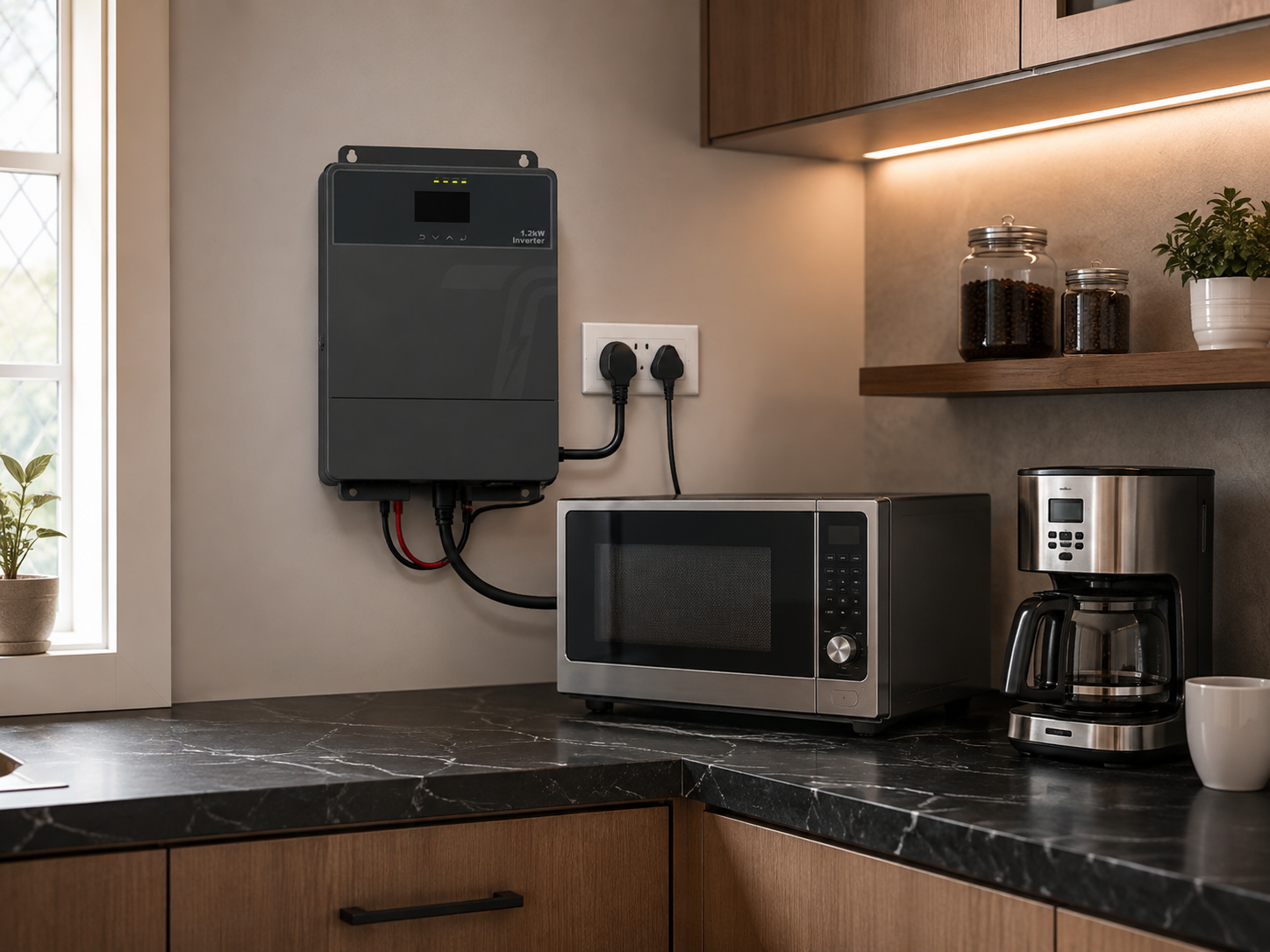
A microwave labeled 700 watts usually refers to its cooking output, not the electricity it draws from the inverter. The actual input can be considerably higher, and a microwave rated at 1,000 watts or more of cooking output commonly requires about 1,500 watts or more of input power. For this reason, a 1,000-watt pure sine wave inverter is generally not suitable for most microwaves, especially when startup demand is included.
Coffee makers also vary widely. Smaller models may operate within a 1,000-watt inverter’s practical limit, but single-serve espresso and pod machines can exceed 1,300 watts while heating. I always check the appliance’s input wattage on its nameplate rather than relying on the advertised cooking or brewing output. A coffee maker rated near 600 to 800 watts may be workable when no other major load is connected; higher-rated models can overload the inverter.
Calculating Battery Runtime for a 1000-Watt Inverter
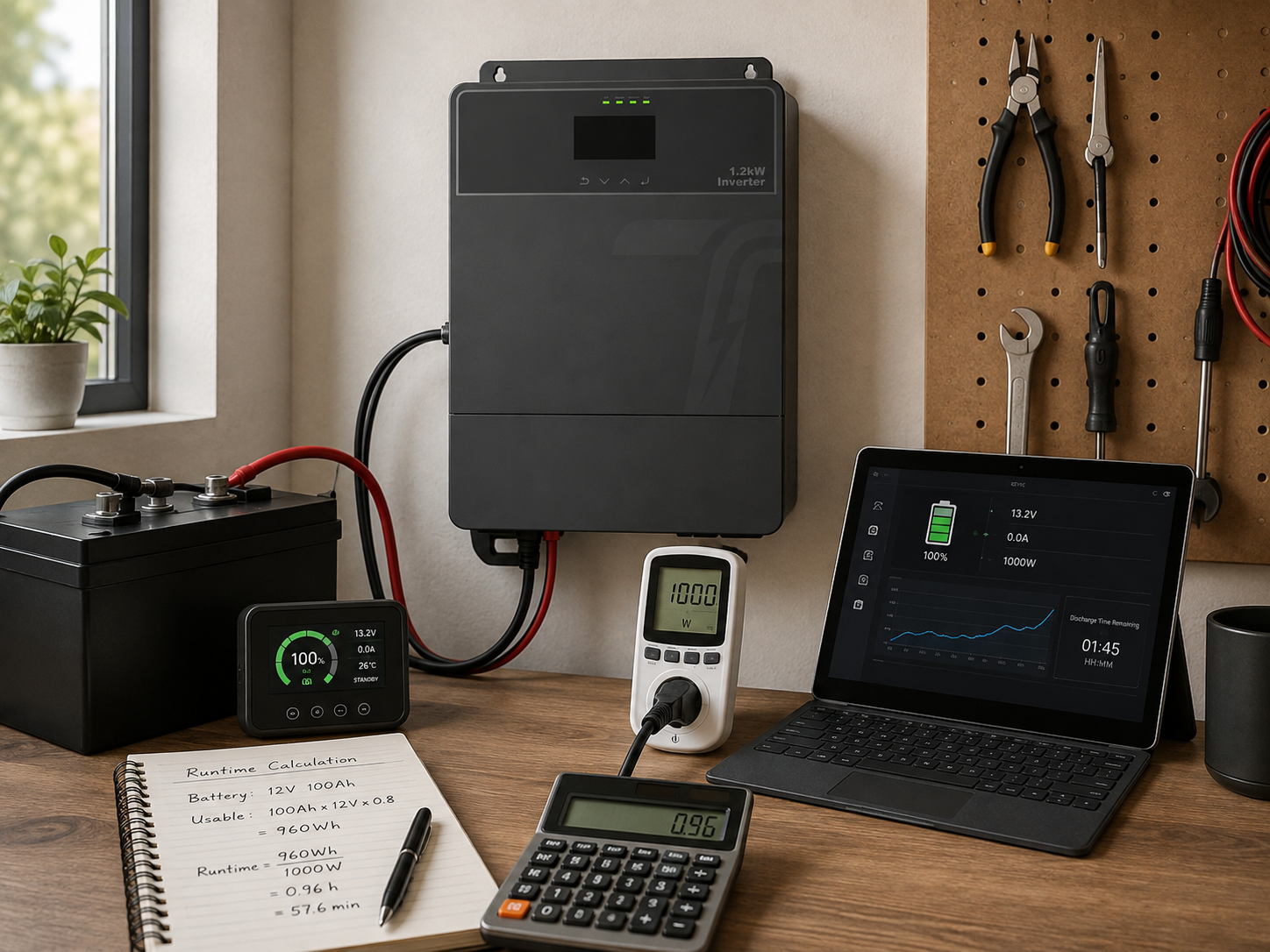
A 1000-watt inverter defines the maximum AC load, while battery capacity determines how long that load can operate. I use this basic runtime formula:
Runtime (hours) = Battery capacity (Wh) × usable capacity × inverter efficiency ÷ total load (W)
For example, TURSAN’s 1000W portable power station models include approximately 806.4Wh, 1008Wh, and 2009.6Wh LiFePO4 battery capacities. A practical explanation of watt-hours and energy use is available in this watt-hour guide.
Amp-Hours to Watt-Hours
To convert a battery rating into usable energy, multiply voltage by amp-hours:
Watt-hours (Wh) = Voltage (V) × Amp-hours (Ah)
A 12V 100Ah battery provides approximately 1,200Wh before accounting for usable capacity and conversion losses. A 24V 100Ah battery provides approximately 2,400Wh. Actual runtime depends on the battery system, load, inverter efficiency, and protection settings.
Runtime Examples
For a 100W continuous load connected to an approximately 1000Wh LiFePO4 battery system, the theoretical runtime is about 10 hours before inverter losses. After conversion losses and standby consumption, the practical result will be shorter.
For a 500W continuous load, the same battery provides about 2 hours theoretically. In real use, the runtime is reduced by inverter efficiency, battery-management-system consumption, cable losses, and the appliance’s changing power demand.
LiFePO4 batteries generally provide a more stable discharge profile than older lead-acid systems. TURSAN uses LiFePO4 prismatic cells rated for 6,000+ cycles to 80% capacity retention, but available energy still varies with battery age, temperature, charging losses, and operating conditions.
Voltage drop is another important factor, especially in high-current 12V systems. Undersized cables, loose connections, or a heavily discharged battery can reduce delivered voltage and cause the inverter to reduce output or shut down through its protection system. Keep the battery connections secure, use suitable cabling, and leave operating capacity below the inverter’s maximum rating for more predictable performance.
Pure Sine Wave vs. Modified Sine Wave
A pure sine wave inverter converts DC battery power into smooth AC electricity that closely matches utility-grid power. For a 1000-watt inverter, output quality matters as much as the wattage rating when powering electronics, medical equipment, and motor-driven appliances.
We use pure sine wave output in our inverter solutions because it provides stable power for sensitive loads, including:
- Laptops, monitors, and TV systems
- CPAP machines and other approved medical equipment
- Audio equipment and battery chargers
- Variable-speed motors and modern appliances
- Wi-Fi routers, communication devices, and control electronics
| Output Type | Best Use | Common Result With Sensitive Loads |
|---|---|---|
| Pure sine wave | Electronics, CPAP machines, audio gear, modern motor loads | Smooth, stable operation |
| Modified sine wave | Basic resistive loads and simple chargers | May create noise, heat, or compatibility issues |
Modified sine wave output has a stepped electrical pattern rather than a smooth waveform. Some fans, pumps, chargers, and audio devices may hum, run hotter, lose efficiency, or fail to operate correctly when supplied by modified sine wave power.
Basic resistance loads, such as certain incandescent lamps or simple heating elements, may work on modified sine wave power. However, a pure sine wave inverter is the more reliable choice where appliance compatibility, low interference, and equipment protection matter.
For sensitive electronics and motor loads, check both the appliance requirements and the inverter waveform before connection. A higher-capacity pure sine wave inverter solution may be needed when the total load or motor startup demand exceeds a 1000-watt inverter rating.
Essential Safety Features and Overload Prevention
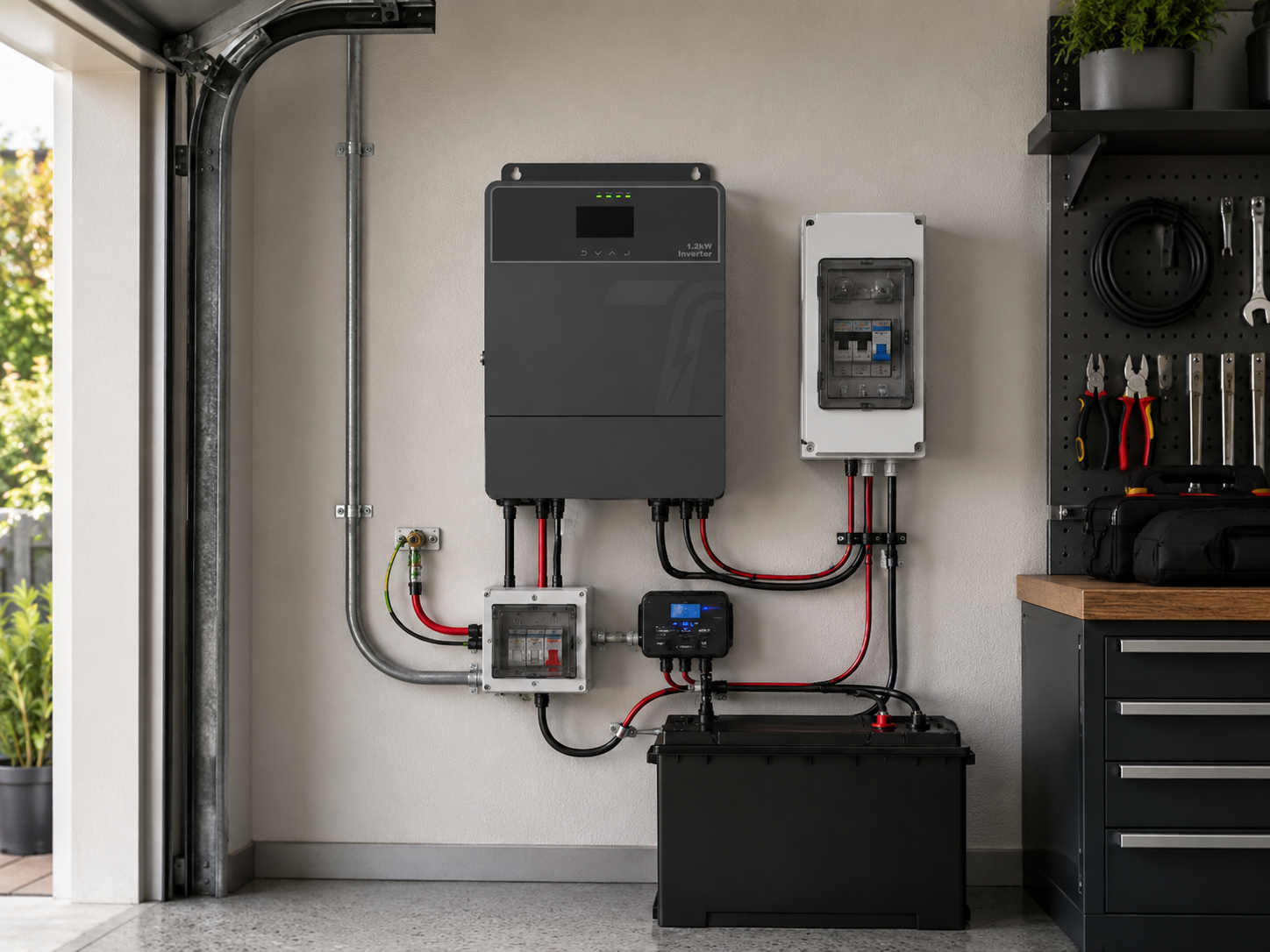
A 1000-watt inverter should be protected by a suitable battery management system (BMS). For LiFePO4 battery systems, the BMS can help manage conditions such as over-current, short circuits, low voltage, and excessive temperature.
Key Safety Checks
| Safety area | Practical guidance |
|---|---|
| Overload protection | Reduce the connected load if the inverter alarms, shuts down, becomes unusually hot, or shows unstable output. |
| DC cable selection | Use cable with a suitable current rating for the battery voltage, cable length, and installation requirements. High-current 12V systems generally need careful cable sizing because they draw more current than comparable 24V systems. |
| Voltage drop | Keep cables as short as practical, use secure terminals, and check for loose or corroded battery connections. Excessive voltage drop can cause heat, reduced performance, or an unexpected shutdown. |
| Ventilation | Leave clear space around the inverter so heat can escape. Do not cover vents or place the unit beside other heat-producing equipment. |
| Environment | Keep the inverter dry and protected from dust, moisture, impact, and direct exposure to harsh conditions. |
I also match the inverter’s overload protection to the expected appliance mix. Motor-driven devices can create a temporary surge, so running several motors, compressors, or pumps together may trigger protection even when their combined running wattage appears below 1000 watts.
For dependable backup use, I assess the battery, BMS, inverter, and cabling as one system. This is especially important when selecting a home battery backup system for regular off-grid, emergency, or commercial operation.
A 1000-watt inverter should not operate continuously at its maximum rated output. Keeping normal demand below the full rating reduces thermal stress and leaves practical headroom for short starting surges.
Choosing the Right 1000-Watt Power Solution
I start by matching the inverter to the appliance mix, startup demand, and expected runtime. A 1000-watt inverter should provide 1000W continuous output, while its surge rating must handle the temporary demand from motors, compressors, and other starting loads.
| Check | What to verify |
|---|---|
| Continuous output | Keep the combined running load within 1000W. For regular use, staying below about 800W provides practical operating margin. |
| Surge output | Confirm that the inverter can handle the starting watts of refrigerators, fans, pumps, or power tools. |
| Battery capacity | TURSAN 1000W models are listed with 806.4Wh, 1008Wh, or 2009.6Wh LiFePO4 capacity. Higher watt-hours generally support longer operation at the same load. |
| Battery chemistry | LiFePO4 batteries provide stable performance and are rated for 6,000+ cycles to 80% capacity retention. |
| Output quality | A pure sine wave inverter is the preferred option for laptops, TVs, CPAP machines, audio equipment, and other sensitive electronics. |
| Protection | An intelligent BMS helps manage over-current, low-voltage, short-circuit, and temperature protection. |
| Recharge and controls | Check the available charging inputs, display information, and operating controls before selecting a portable power station or fixed installation. |
Portable Power Station or Fixed Inverter
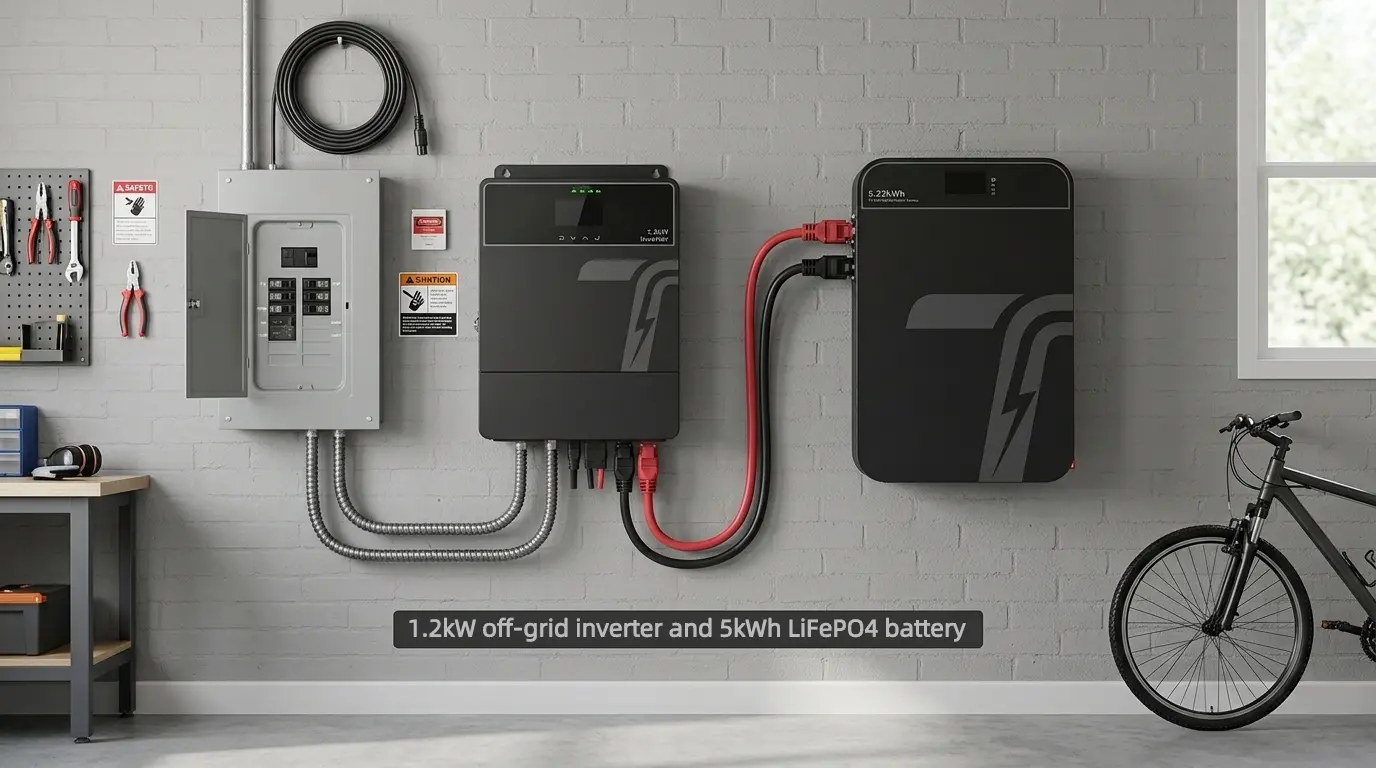
A portable power station suits temporary backup, mobile work, outdoor use, and smaller essential loads because the battery, inverter, and controls are integrated. A fixed off-grid inverter installation is more appropriate for a planned energy system with separate batteries and a defined installation location.
For backup and mobile applications, I favour an integrated LiFePO4 battery with a pure sine wave inverter. The choice between a portable power station and a fixed system should also account for portability, connector requirements, charging options, and the appliances that must operate together. A portable power station and UPS comparison can also help clarify which backup format fits the use case.
When 1000W Is Too Small
A 1000W solution may be too small when the appliance mix includes high-draw heating equipment, air conditioners, large compressors, or several motor-driven devices operating at once. In that situation, I would select a larger inverter or another suitable power source based on the combined running watts, starting surge watts, and required battery runtime.
The correct choice is the smallest system that safely covers the intended continuous load while providing enough surge capacity and usable watt-hours. TURSAN also lists larger off-grid and hybrid inverter ratings from 1.2kW to 12kW for applications that exceed the practical limits of a 1000-watt inverter.
Frequently Asked Questions About 1000-Watt Inverters
Can a 1000-Watt Inverter Run a Refrigerator?
A 1000-watt inverter may run a small refrigerator if its continuous demand and compressor startup surge stay within the inverter’s ratings. Check both the running watts and peak watts before connecting it. Full-size refrigerators may require a larger inverter because of their starting surge.
Can a 1000-Watt Inverter Run a Microwave?
Check the microwave’s actual input wattage rather than its cooking output rating. A microwave that appears to be within 1,000 watts may draw more from the inverter, so it should only be used when its input demand and startup requirements remain within the inverter’s limits.
Can a 1000-Watt Inverter Run a Coffee Maker?
A smaller coffee maker may work if its total input remains comfortably below 1,000 watts. Heating appliances can use substantial power, so I recommend checking the nameplate rating and avoiding other high-load devices at the same time.
Can a 1000-Watt Inverter Run a CPAP Machine Overnight?
A 1000-watt pure sine wave inverter can support low-power electronics such as CPAP equipment, provided the battery has enough usable capacity for the required runtime. The CPAP’s own power rating and any additional features should be included in the load calculation.
Can It Run a Laptop, TV, and Mini-Fridge at the Same Time?
It may, provided the combined running load remains below the inverter’s continuous rating and the mini-fridge’s compressor surge does not exceed the peak rating. Leave operating headroom instead of running continuously at the full 1,000-watt limit.
How Many Watts Can a 1000-Watt Inverter Handle Continuously?
Its maximum continuous output is 1,000 watts. For more reliable operation, I recommend keeping the normal combined load below approximately 800 watts, especially when motor-driven appliances are included.
How Much Starting Surge Does a 1000-Watt Inverter Need?
The required surge capacity depends on the appliance. Compressors, motors, fans, and pumps can briefly draw much more power than their normal running rating, so compare the appliance’s peak demand with the inverter’s surge specification.
How Long Will a 1000-Watt Inverter Run on a 100Ah Battery?
A 100Ah rating alone does not determine runtime. I calculate usable energy from the battery voltage and capacity, then account for depth of discharge, inverter efficiency, the connected load, temperature, battery age, and standby consumption. The inverter’s 1,000-watt rating describes output capacity, not operating time.
Is a Pure Sine Wave Inverter Necessary for Sensitive Electronics?
Pure sine wave output is the preferred choice for sensitive electronics and equipment requiring stable AC power. TURSAN 1000-watt solutions use pure sine wave inverters, which provide clean, stable output for compatible electronic loads.
What Size Battery Is Best for a 1000-Watt Inverter?
The right battery depends on the expected load and runtime. TURSAN offers 1000-watt models paired with 806.4Wh, 1,008Wh, and 2,009.6Wh LiFePO4 capacities, allowing buyers to match stored energy to the application.
What Happens When an Appliance Exceeds the Inverter’s Rating?
An overloaded inverter may shut down or trigger its intelligent battery management and protection functions. Repeated overloads can interrupt power and increase system stress, so reduce the connected load or select a higher-rated inverter.
Is a Portable 1000-Watt Power Station Suitable for Emergency Home Backup?
A portable 1000-watt power station can support selected essential loads, such as electronics, lighting, communications equipment, and other compatible appliances. It is not intended to power every household appliance at once. Match the load, surge demand, and battery capacity before using it for backup.