 English
  العربية
  日本語
日本語  한국어
한국어  Tiếng Việt
  ไทย
ไทย  Bahasa Melayu
  فارسی
فارسی  Bahasa Indonesia
  ဗမာစာ
ဗမာစာ  简体中文
简体中文  香港中文
香港中文  繁體中文
繁體中文  Русский
  Deutsch
  Nederlands
  Italiano
  Français
  Español
  Português
  Afrikaans
  Azərbaycan dili
  Български
  ਪੰਜਾਬੀ
  हिन्दी
  اردو
اردو  বাংলা
বাংলা  Հայերեն
  Íslenska
  Қазақ тілі
  नेपाली
  Српски језик
  Kiswahili
  తెలుగు
  Basa Jawa
  தமிழ்
தமிழ்  मराठी
मराठी What Can a 3500-Watt Generator Run in a House?
A 3,500-watt generator can keep essential household loads running during an outage: a refrigerator or freezer, LED lights, Wi-Fi equipment, phone chargers, fans, and selected small appliances. It is a practical emergency backup power level for protecting food, staying connected, and maintaining basic comfort without overloading the system.
Planning rule: keep normal running load around 80% of generator output when possible. For a 3,500W system, that means roughly 2,800W continuous load, leaving headroom for refrigerator, freezer, fan, or pump startup surges.
Critical Household Appliances
A carefully managed 3,500W power system can typically support:
- Refrigerator or freezer
- LED lighting circuits
- Wi-Fi router and modem
- Phones, laptops, and TV
- Ceiling fans or portable fans
- A sump pump, depending on its startup demand
- One higher-draw kitchen appliance for short periods
Running Watts vs. Starting Watts
Always separate running watts from starting watts. Running watts are the continuous power an appliance needs after it is operating. Starting watts, also called surge watts, are the brief extra power needed when motors start.
Refrigerators, freezers, pumps, and fans may need a short startup surge. A 3,500-watt generator works best when the combined continuous load stays well below its maximum output, leaving capacity for these momentary surges.
The Critical Load Zone
For home backup and off-grid use, focus on the loads that matter most:
- Keeping food cold
- Preventing water damage from a sump pump
- Maintaining lighting and communications
- Charging essential devices
- Avoiding generator overloads
A 3,500W system is designed for critical household appliances, not for powering every electric load in a house at once.
Critical Appliances Within a Safe 3500-Watt Load
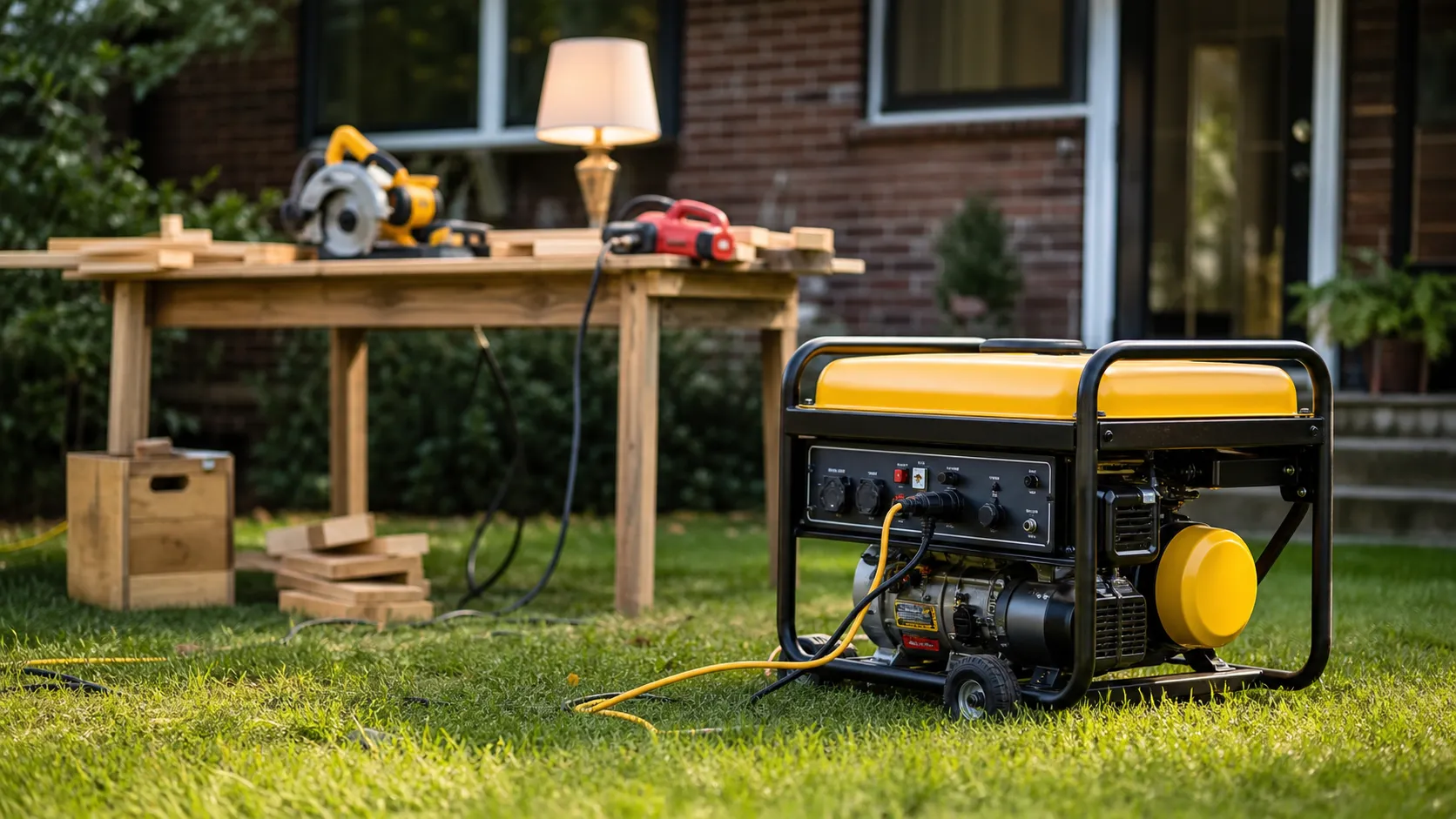
A 3,500-watt generator can support the critical appliances that protect food, prevent water damage, and keep essential communication running. The key is allowing for compressor and motor startup surges instead of looking only at normal running watts.
-
Refrigerator or deep freezer: Often uses about 700W while running, but the compressor may need roughly 1,200W to start. One refrigerator and one freezer can usually be supported if other heavy loads are kept off during startup.
-
Sump pump: A 1/3 HP sump pump may use around 800W running and about 1,300W starting. A 1/2 HP model can require more, so it should be treated as a priority load during heavy rain or flood risk.
-
Wi-Fi, phones, and work devices: A modem, router, phone chargers, and laptops generally use a small share of available power. These loads are ideal for an emergency backup power system because they keep communication and remote work available without stressing capacity.
-
LED lights and ceiling fans: LED lighting commonly uses very little power, while ceiling fans need modest running power but may draw a brief surge at startup. Essential circuits for lighting, device charging, and internet can normally run alongside a refrigerator.
For dependable planning, keep the combined continuous load well below the full 3,500W rating and leave enough capacity for a refrigerator, freezer, or pump to start. Battery runtime also depends on stored energy, not just output power; this guide to watt-hours and practical energy examples helps clarify how long essential loads can operate.
High-Draw Appliances to Run One at a Time
A 3,500-watt generator can handle many essential loads, but heating appliances should be treated as short-term, one-at-a-time loads. These items use a lot of continuous power and can cause an overload if a refrigerator, freezer, or sump pump starts at the same moment.
| Appliance | Typical Running Watts | Safe Use on a 3,500W System |
|---|---|---|
| Microwave oven | 800–1,200W | Use briefly after reducing other loads |
| Coffee maker | 800–1,200W | Run alone with only basic loads active |
| Electric kettle | 1,200–1,800W | Switch off other nonessential appliances first |
| Hot plate | 1,000–1,500W | Use in short intervals only |
| Washing machine | Varies by cycle | Run during a dedicated appliance-use window |
A microwave may appear manageable on paper, but its load is added to everything already running. Before heating food, I recommend switching off nonessential lights, fans, chargers, and especially any appliance that can wait. Keep the refrigerator and freezer connected for food protection, but avoid using the microwave when a sump pump is likely to cycle.
Coffee makers, kettles, and hot plates are similar. They convert electricity directly into heat, so they can draw high wattage for the full time they operate. Use one heating appliance at a time, then turn it off before starting another major load.
For washing machines, reserve a dedicated window. Avoid laundry when a sump pump is needed or when refrigerators and freezers are cycling heavily. Motor-driven appliances can need extra starting watts, and overlapping startup loads are one of the most common causes of generator overloads.
Prevent Startup Load Overlap
Use this simple load-management routine:
- Keep baseline loads limited to lighting, Wi-Fi, phone charging, and refrigeration.
- Wait for the refrigerator, freezer, or pump to finish its startup cycle before turning on a microwave or kettle.
- Turn off heating appliances immediately after use.
- Do not run a hot plate, kettle, coffee maker, and microwave together.
- Watch the generator’s overload indicator and circuit breakers; reduce the load at once if either activates.
This approach helps a 3,500-watt generator run household appliances more reliably while protecting food storage, flood-control equipment, and sensitive electronics.
What a 3500-Watt Generator Will Not Run
A 3,500-watt generator is designed for critical household loads, not whole-home electric heating or cooling. Large appliances can exceed its continuous output or create startup surges that trip overload protection.
-
Central air conditioning and large HVAC compressors: Most central A/C systems need far more than 3,500 watts, especially at startup. Large heat pumps and compressor-based HVAC equipment are also generally outside this power range.
-
Electric clothes dryers and water heaters: These heating appliances commonly draw several thousand watts on their own. A 3,500W generator will not reliably support them while also keeping essentials such as a refrigerator, lights, or internet running.
-
Electric ranges, ovens, and high-wattage induction cooktops: Cooking appliances can quickly use most or all available generator capacity. Full-size ovens and ranges are not practical loads for a 3,500-watt backup system.
-
Multiple heavy-draw appliances at once: Do not combine a microwave, kettle, hot plate, washing machine, or pump with other major loads unless the total running watts and possible motor startup surge stay within the generator rating.
For outages, I treat a 3,500W system as power for food storage, lighting, communications, and selected small appliances—not for running every electric appliance in the house.
3500-Watt Generator Appliance Wattage Chart
This 3500 watt generator appliance chart uses typical planning figures. Always confirm the appliance label, manual, or a watt meter before connecting equipment.
| Appliance | Running Watts | Starting Watts |
|---|---|---|
| Refrigerator or freezer | ~700W | ~1,200W |
| 1/3 HP sump pump | ~800W | ~1,300W |
| Microwave | ~1,000W | — |
| LED lights, Wi-Fi router, and device charging | ~100–150W | — |
Safe Simultaneous Loads
| Setup | Estimated Running Load | Surge Consideration |
|---|---|---|
| Refrigerator + lights + Wi-Fi | ~800–850W | Allow for refrigerator startup |
| Refrigerator + sump pump + essentials | ~1,600–1,650W | Keep capacity available for pump and compressor surges |
| Refrigerator + microwave + essentials | ~1,800–1,850W | Use the microwave briefly and avoid pump startup at the same time |
| Sump pump + lights + Wi-Fi | ~900–950W | Allow for the pump’s starting watts |
Managed-Load Combinations
Run heating appliances in short windows. Before switching on a microwave, coffee maker, electric kettle, or hot plate, turn off nonessential loads and avoid starting another motor-driven appliance.
A refrigerator compressor and sump pump can each create a brief startup surge. For reliable 3500-watt generator operation, leave a clear power margin rather than loading the system close to its full rating.
Loads That Can Exceed the Limit
Do not plan to run these heavy-draw appliances together on a 3,500W backup system:
- Central air conditioning or large HVAC compressors
- Electric water heaters and electric clothes dryers
- Electric ranges, ovens, and high-wattage induction cooktops
- Several kitchen heating appliances at the same time
- Multiple refrigerators, freezers, pumps, or other motor loads starting together
For a stable home backup setup, prioritize food storage, flood protection, lighting, communications, and essential electronics first.
How to Calculate Total Power Load for a 3500-Watt Generator
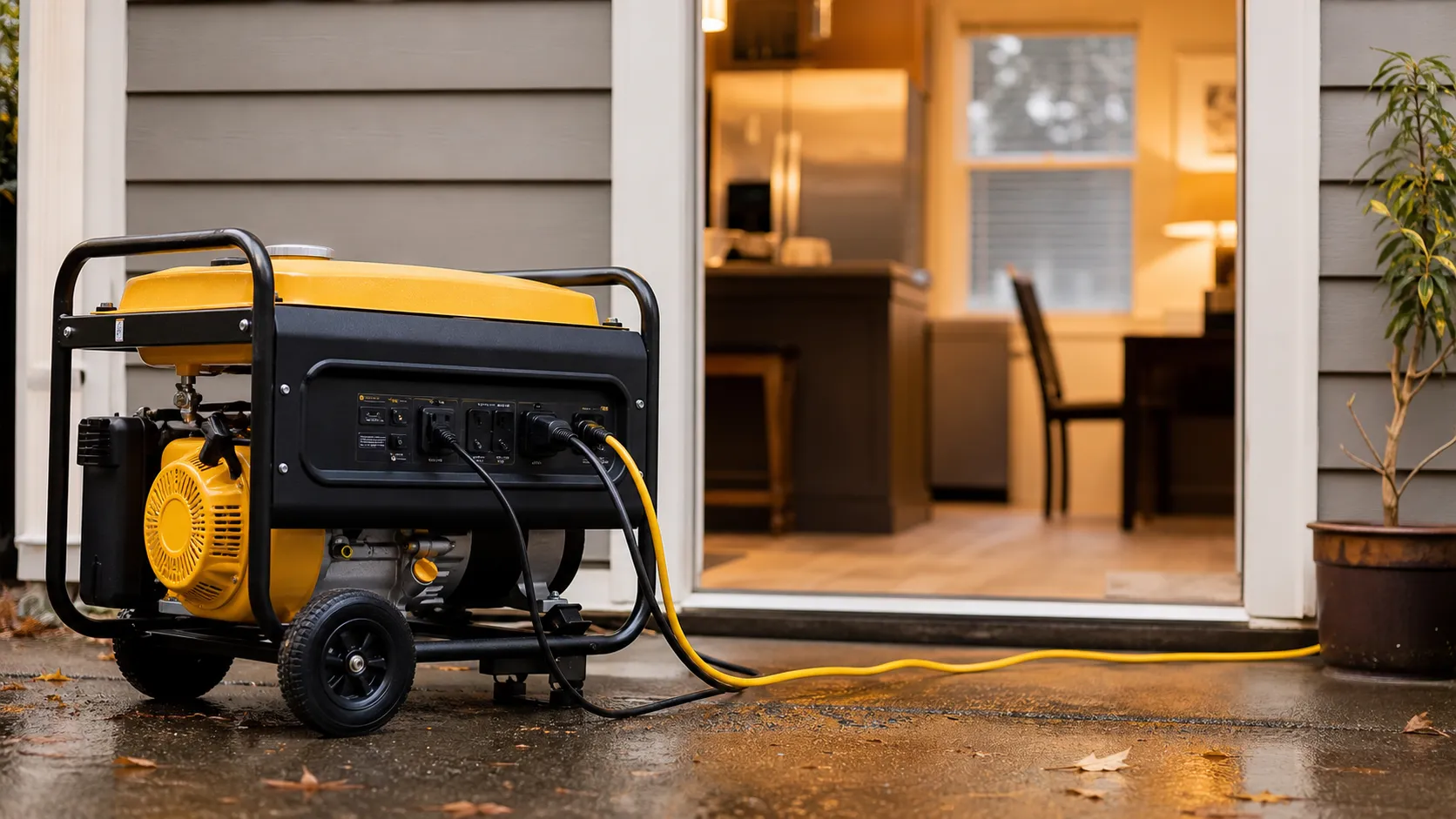
To avoid overloads, I calculate the total power load before connecting appliances. A 3,500-watt generator should not be treated as having 3,500 watts available for continuous use. Keep the normal running load at about 80% capacity, or roughly 2,800 watts, to leave room for startup surges.
1. List Running and Starting Watts
Write down every appliance you need and check its:
- Running watts: Power used while operating normally
- Starting watts: Extra power briefly needed when a motor starts
Motor-driven equipment—such as refrigerators, freezers, sump pumps, fans, and furnace blowers—can need a higher startup load than their normal running wattage.
2. Add Continuous Loads First
Add the watts for items that may run together for long periods, such as:
- Refrigerator or freezer
- LED lights
- Wi-Fi router and modem
- Phone chargers and laptops
- TV or small fan
This total is your base continuous power load. Keep it well below 2,800W whenever possible.
3. Allow for the Largest Surge Load
Next, identify the appliance with the highest startup requirement. Add that single surge amount above your running-load total. Do not assume every motor will start at exactly the same moment, but plan carefully if a refrigerator, freezer, and sump pump could cycle on together.
For example:
- Base loads: refrigerator, lights, router, and charging = 1,000W running
- Sump pump startup allowance = 1,300W
- Estimated peak requirement = 2,300W
That stays within a 3,500W generator’s surge wattage capacity, with useful headroom remaining.
4. Verify Real Appliance Ratings
Use the wattage label, owner’s manual, or a plug-in watt meter for the most accurate figures. Appliance estimates are useful for planning, but real ratings vary by model, age, efficiency, and local voltage.
For cleaner backup planning, a solar generator and portable clean backup power system can also help match inverter output and battery capacity to the loads that matter most.
Safe Load Management During a Power Outage
A 3,500-watt generator works best when we treat power as a limited emergency resource. Start with the baseline loads that protect comfort and safety:
- LED lights
- Wi-Fi modem and router
- Phone charging
- Essential medical or communication devices
- One refrigerator or freezer
Keep motor-driven appliances from starting at the same moment. A refrigerator, freezer, and sump pump can each need extra starting watts for a few seconds. Stagger their use where possible, especially during heavy rain when the sump pump may cycle automatically.
Before turning on a microwave, coffee maker, kettle, or other heating appliance, switch off nonessential items. These appliances can use a large share of the available continuous power load even though they run for only a short time.
Simple 3,500W Load Management Checklist
- Start the generator with essential circuits only.
- Let the refrigerator or freezer complete its startup cycle.
- Check that the sump pump is not running before adding another heavy load.
- Turn off fans, TVs, chargers, or extra lights before using a microwave or coffee maker.
- Use high-wattage heating appliances in short intervals, one at a time.
- Watch the generator’s output display, overload warning, and circuit breakers.
If an overload indicator appears or a breaker trips, reduce the load immediately. Avoid repeatedly resetting a breaker without removing appliances first. Careful load management helps a 3,500-watt generator keep food cold, devices charged, and essential household circuits running without unnecessary overloads.
Example 3500-Watt Generator Load Scenarios
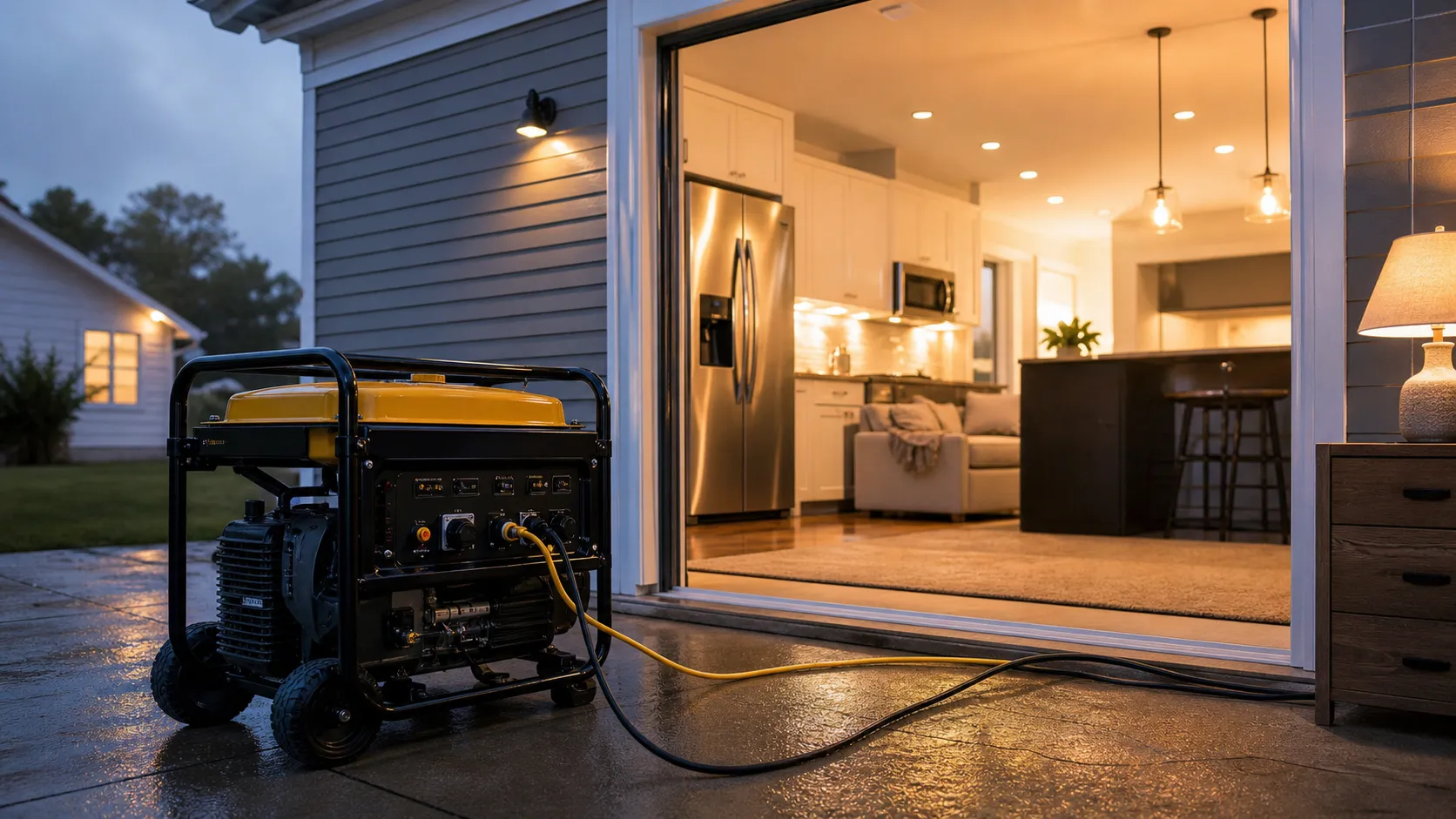
A 3,500-watt generator can cover essential household needs when we manage motor starts and heating appliances carefully. Always confirm whether 3,500W is the unit’s continuous rating or peak rating.
| Setup | Typical Load | Estimated Running Load |
|---|---|---|
| Food and communications | Refrigerator, LED lights, Wi-Fi router, TV, phone charging | 900–1,100W |
| Flood protection | Refrigerator, 1/3 HP sump pump, LED lights, router | 1,600–1,800W |
| Kitchen essentials | Refrigerator, lights, router, microwave used briefly | 1,800–2,000W while microwaving |
| Work-from-home | Laptops, modem, router, monitors, LED lighting, refrigerator | 1,000–1,400W |
Refrigerator, Lights, Wi-Fi, TV, and Phones
This is a practical outage setup for keeping food cold and staying connected. A refrigerator may use about 700W while running, while lights, a router, TV, and phone charging usually add a modest load. Leave enough spare capacity for the refrigerator compressor’s startup surge.
Refrigerator Plus Sump Pump
For homes with basement flood risk, I would treat the sump pump as a priority load. A 1/3 HP sump pump may run near 800W but need roughly 1,300W to start. Keep the microwave, kettle, and other heating appliances off while the pump is operating or likely to cycle on.
Kitchen Essentials With a Microwave
A microwave can typically draw around 1,000W while in use. It can work with a refrigerator and basic lighting, but use it in short intervals. Before starting it, switch off nonessential loads such as a TV, fans, chargers, or a second refrigerator/freezer if possible.
Work-From-Home Backup
For remote work, a 3,500W system can support laptops, monitors, a modem, router, LED lighting, and a refrigerator without heavy demand. Battery runtime depends on stored energy, not inverter watts; this guide to watt-hours and backup runtime helps put that distinction into practical terms.
What to Switch Off Before Adding Heavy Loads
Before using a microwave, coffee maker, kettle, or washing machine, switch off or pause:
- TVs and entertainment devices
- Nonessential lights and fans
- Extra chargers and power strips
- Freezers or refrigerators that are not actively cycling
- Any pump that is not required at that moment
This simple load management helps prevent overloads when refrigerator or sump-pump starting watts occur.
Generator Safety for Home Backup Power
A 3,500-watt generator can keep critical loads running, but safe setup matters as much as wattage.
- Run gas generators outdoors only. Never use one inside a house, garage, shed, basement, or near doors, vents, and windows. Exhaust can contain deadly carbon monoxide.
- Keep it away from openings. Place the generator in an open, well-ventilated area where exhaust cannot enter the home.
- Install carbon monoxide alarms. Use working CO alarms on each level of the house and near sleeping areas.
- Use a transfer switch or generator interlock. A qualified electrician should connect a generator to selected home circuits. This prevents dangerous backfeeding into utility lines.
- Never backfeed through a wall outlet. Plugging a generator into a household outlet can energize utility wiring and seriously endanger utility workers.
- Choose outdoor-rated extension cords. When powering appliances directly, use heavy-duty cords rated for the generator load. Keep connections dry and inspect cords for damage.
- Avoid overloads and unstable power. Start essential loads first, then add appliances one at a time. Turn off sensitive electronics during overload warnings or voltage fluctuations.
- Store fuel safely. Keep gasoline in approved containers, away from heat sources, open flames, and living spaces. Refuel only after the generator has cooled down.
Safe generator habits protect the household, the utility grid, and the appliances a 3500-watt generator is meant to support.
3500W Inverter Generator vs. Solar Battery Backup
A 3,500W inverter generator can provide practical emergency power, but it needs fuel, outdoor placement, and regular maintenance. A 3.6kW solar battery backup supplies stored electricity through an inverter, with no engine exhaust during operation.
| Feature | 3500W Inverter Generator | 3.6kW Solar Battery Backup |
|---|---|---|
| Power source | Fuel | LiFePO4 battery storage |
| Noise | Engine noise while running | No engine noise |
| Exhaust and CO risk | Must operate outdoors due to carbon monoxide | No fuel combustion during use |
| Maintenance | Fuel storage and engine servicing | Lower routine maintenance needs |
| Electronics | Output quality depends on model | Pure sine wave output available |
| Extended outages | Requires refueling | Can be recharged with a compatible solar setup |
Pure Sine Wave Power for Electronics
A pure sine wave inverter provides clean, stable AC power for sensitive loads such as Wi-Fi routers, laptops, phones, TVs, and modern appliances. This is useful when backup power needs to support both essential appliances and connected home devices without relying on a running engine.
LiFePO4 Battery Backup for Home Use
Our home backup systems use stable LiFePO4 battery cells designed for long-term energy storage. TURSAN systems support more than 6,000 cycles and are available in scalable home energy configurations, including 3kW to 3.6kW-class inverter options. Connectivity options such as Wi-Fi, Bluetooth, and IoT support can also help with system monitoring.
For households, installers, and distributors planning a quieter backup setup, a home solar battery backup system can pair battery storage with solar charging for longer outage coverage.
When a 3.6kW Energy Storage System Fits Better
A 3.6kW home energy storage system is often a better fit when the priority is keeping core loads running without fuel handling, generator noise, or carbon monoxide exposure. It works especially well for managed loads such as:
- Refrigerator or freezer
- LED lighting and ceiling fans
- Modem, router, phones, and laptops
- TV and small electronics
- Short, controlled use of a microwave or coffee maker
For larger residential backup projects, our LiFePO4 solar home battery backup solutions offer battery and inverter configurations for wholesale, OEM, and ODM energy storage requirements.
Choosing the Right 3500-Watt Backup Power System
A 3,500-watt backup power system should match both your normal household load and the short surge needed to start motors.
| What to check | Why it matters |
|---|---|
| Continuous output | Supports appliances running at the same time. Keep the normal load below about 2,800W for a practical safety margin. |
| Peak surge capacity | Covers brief startup demand from a refrigerator, freezer, pump, or fan motor. |
| Pure sine wave output | Provides stable power for routers, laptops, TVs, and other sensitive electronics. For medical equipment, follow the device manufacturer’s power requirements. |
| Battery capacity | Watts show how much power the system can supply; watt-hours show how long it can run. Use this guide to understand watt-hours and runtime. |
| Voltage output | Most small backup loads use 120V. Check carefully if your household circuits or appliances require 240V. |
| Connection method | A transfer switch or approved interlock helps supply selected home circuits safely. Never backfeed a utility outlet. |
| Portability and expansion | Portable units suit short-term, flexible use. A fixed battery system can support a more organized home backup setup and added storage capacity. |
For quiet indoor backup, a pure sine wave 3.6kW inverter system paired with a 48V LiFePO4 battery can be a practical alternative to a fuel generator. TURSAN LiFePO4 energy storage options use stable cells designed for 6,000+ cycles, with scalable configurations available for home backup needs.
FAQs About What a 3500-Watt Generator Can Run in a House
Can a 3500-watt generator run a refrigerator and a freezer?
Yes, in most cases. A refrigerator may use about 700W running and need around 1,200W at startup. A freezer has similar compressor surge needs. Keep lights, chargers, and other baseline loads modest, and avoid starting both compressors at the exact same time.
Can a 3500-watt generator run a sump pump?
Yes, a 1/3 HP sump pump is commonly manageable, with about 800W running and up to 1,300W starting. A 1/2 HP model may need more surge capacity, so check its label before relying on it during a flood-risk outage.
Can I run a microwave with a refrigerator on a 3500-watt generator?
Usually, yes. A microwave can use about 1,000W, while a refrigerator continues to draw power and may suddenly need a startup surge. We recommend turning off nonessential loads first and using the microwave in short intervals.
Will a 3500-watt generator run a window air conditioner?
A small window air conditioner may run if its running and starting watts fit within the available capacity. It should be treated as a dedicated load, especially when a refrigerator, freezer, sump pump, or other motor-driven appliance is also connected.
Can a 3500-watt generator run a furnace blower?
Many furnace blowers can operate on a 3,500W system, but the motor startup demand matters. Check the furnace label or manual and leave enough headroom for the blower surge, lighting, refrigeration, and communication devices.
How long will a 3500W battery backup run household appliances?
Runtime depends on the battery’s usable energy capacity and the actual load. A 3.6kW inverter rating tells us how much power the system can supply at one time; it does not define runtime. A larger LiFePO4 battery bank supports longer backup for essentials such as refrigeration, lighting, Wi-Fi, and charging. For planning, see this guide to solar generator lifespan and runtime.
Is 3500 watts enough to power a whole house?
No. 3,500W is usually enough for critical household appliances, not an entire modern home. It can keep food cold, run selected lights and fans, maintain internet access, charge devices, and support a pump or small kitchen appliance with careful load management. It is not designed for several heavy-draw appliances at once.
What size generator do I need for central air conditioning?
Central air conditioning often needs more than a 3,500W generator can safely provide, especially during compressor startup. Size the backup system from the air conditioner’s nameplate running watts and starting watts, then add the other critical household loads that must remain on at the same time.