 English
  العربية
  日本語
日本語  한국어
한국어  Tiếng Việt
  ไทย
ไทย  Bahasa Melayu
  فارسی
فارسی  Bahasa Indonesia
  ဗမာစာ
ဗမာစာ  简体中文
简体中文  香港中文
香港中文  繁體中文
繁體中文  Русский
  Deutsch
  Nederlands
  Italiano
  Français
  Español
  Português
  Afrikaans
  Azərbaycan dili
  Български
  ਪੰਜਾਬੀ
  हिन्दी
  اردو
اردو  বাংলা
বাংলা  Հայերեն
  Íslenska
  Қазақ тілі
  नेपाली
  Српски језик
  Kiswahili
  తెలుగు
  Basa Jawa
  தமிழ்
தமிழ்  मराठी
मराठी An RV air conditioner is a compressor load with a high starting demand. Understanding running watts, surge watts, soft-start options, and battery runtime makes generator selection much more reliable.

RV Air Conditioner Power Requirements: The Math Behind Generator Sizing
Choosing the best generator for an RV air conditioner requires checking two separate loads:
- Running watts: Power required while the compressor is operating.
- Starting watts: Temporary surge required when the compressor starts.
An RV air conditioner may demand substantially more power during startup than during continuous operation. The exact surge depends on the compressor, voltage, ambient conditions, altitude, wiring, and appliance age. Because the reference specifications do not provide verified wattage figures for 11,000, 13,500, or 15,000 BTU air conditioners, those values should be confirmed from the air-conditioner nameplate or manufacturer documentation.
How to Calculate RV Generator Size
Use the following basic sizing method:
Required continuous output = RV air conditioner running watts + other simultaneous loads
Required surge output = RV air conditioner starting watts + other loads operating at startup
For practical sizing, I compare the air conditioner’s verified starting requirement with the generator’s surge capability, then leave reserve capacity for essential RV appliances.
RV Air Conditioner Generator Sizing Matrix
| RV air conditioner rating | Verified running watts | Verified starting watts | Suitable TURSAN output range |
|---|---|---|---|
| 11,000 BTU | Check appliance nameplate | Check appliance documentation | 2,000W, 2,400W, or higher, subject to measured demand |
| 13,500 BTU | Check appliance nameplate | Check appliance documentation | 2,400W or higher, subject to startup requirements |
| 15,000 BTU | Check appliance nameplate | Check appliance documentation | 3,600W recommended for higher-demand applications |
TURSAN portable power stations provide pure sine wave inverter output in 2,000W, 2,400W, and 3,600W models. The 2,000W sheet-metal model has a 2,165.2Wh capacity, the 2,400W model provides 2,400Wh, and the 3,600W sheet-metal model provides 3,225.6Wh. The correct choice depends on the air conditioner’s measured running and starting demand, plus the other loads connected to the RV.
Factors That Increase Power Demand
Power requirements can rise when:
- Outdoor temperatures are high and the compressor runs longer.
- The RV operates at higher altitude.
- Voltage drops occur through undersized cables or overloaded connections.
- The air conditioner is older or has a less efficient compressor.
- Other high-load appliances operate at the same time.
For reliable RV air conditioning, I verify the compressor’s actual electrical data before selecting a portable generator. A LiFePO4 battery power station with an intelligent BMS and pure sine wave inverter can then provide stable power, while the available capacity determines how long the system can operate before recharging.
Soft-Start Kits for RV Air Conditioners
An RV air conditioner compressor draws its highest current when it starts. This short surge can exceed the generator’s continuous output, especially when the compressor starts under a heavy cooling load. A soft-start kit helps manage this initial demand by allowing the compressor to start more gradually. This can reduce the chance of overload protection shutting down the power station.
When a Soft-Start Kit Helps
A soft-start kit may make a lower-output generator more practical for an RV rooftop air conditioner, but the result depends on the air conditioner’s nameplate ratings, compressor condition, ambient temperature, altitude, and other connected appliances. The kit does not reduce the air conditioner’s normal running load; it mainly addresses the starting surge.
Before selecting a generator, I check:
- The air conditioner’s rated running watts and starting current
- The generator’s continuous pure sine wave output
- Its available surge capacity
- Other appliances operating at the same time
- The condition and installation requirements of the rooftop air conditioner
When a 2,000W Generator May Work
A 2,000W portable power station may run a 13,500 BTU RV air conditioner when the unit’s starting demand is within the available surge capacity and a compatible soft-start kit has been properly installed. I would treat this as a system-specific setup rather than a universal rating. Microwaves, electric heaters, hair dryers, refrigerators, and battery chargers should be turned off during compressor startup to preserve reserve capacity.
The TURSAN 2000W sheet metal portable power station provides 2,165.2Wh of LiFePO4 battery capacity and pure sine wave output. Its intelligent BMS is designed to manage key battery protection functions, but the connected air conditioner must still remain within the station’s output limits.
When 2,400W or 3,000W Is the Better Choice
A 2,400W or 3,000W power source provides more operating margin when the air conditioner has a higher startup demand or when other essential RV loads must remain active. TURSAN’s 2400W portable power station has a 2,400Wh capacity, while the company’s product range also includes higher-output systems for applications requiring additional headroom.
For buyers comparing a 2,000W portable power station with a 2,400W or higher model, I use the following practical rule:
- 2,000W: Suitable only when the air conditioner’s startup and running requirements are verified and other loads are limited.
- 2,400W: A stronger option for standard rooftop cooling systems where additional reserve capacity is needed.
- 3,000W and above: Better suited to demanding startup conditions, multiple loads, or commercial and heavy-use RV applications.
Rooftop Air Conditioner Installation Considerations
Soft-start equipment should be compatible with the specific rooftop air conditioner and installed according to the manufacturer’s instructions. Incorrect wiring, undersized connections, poor ventilation, or unsuitable adapters can create safety and performance problems. I also verify the RV’s 30-amp connection, cable condition, voltage compatibility, and the power station’s operating limits before use.
A soft-start kit improves compressor startup management, but it does not replace correct generator sizing. For demanding RV air conditioning, a pure sine wave portable power station with sufficient continuous output, surge capacity, and LiFePO4 storage provides a more appropriate foundation for stable off-grid operation.
Choosing the Right Generator Output for an RV Air Conditioner
Can a 2,000W Generator Run an RV Air Conditioner?
A 2,000W power station may suit some RV air-conditioning setups, but the result depends on the unit’s running demand, compressor startup surge, and other connected loads. I recommend checking the air conditioner nameplate and leaving enough output capacity for startup rather than sizing only to the normal running wattage.
The TURSAN 2,000W sheet-metal portable power station provides 2,165.2Wh of LiFePO4 battery capacity and pure sine wave output. It is a practical rugged option for compatible RV AC systems when the total load remains within the inverter’s rated output.
When a 3,000W Generator Is Suitable
A 3,000W generator can provide more operating headroom for a 13,500 BTU RV air conditioner, but actual compatibility still depends on the compressor’s starting demand. The generator must handle both the continuous AC load and the short startup surge without triggering overload protection. For related inverter load calculations, see this guide to how many amps a 3,000W inverter generator can handle.
Why Choose a 3,600W Power Station?
A 3,600W power station offers the highest portable output listed in the TURSAN range. With 3,225.6Wh of capacity, it provides greater operating headroom for demanding RV air-conditioning systems and additional essential appliances. Its sheet-metal enclosure also suits mobile applications where equipment may face frequent transport and handling.
Surge Capacity and 30 Amp RV Systems
When selecting an RV generator, compare:
- The air conditioner’s rated running watts
- The compressor’s stated starting or surge requirement
- The generator’s continuous output
- The generator’s peak output, where provided
- The wattage of other appliances operating at the same time
A 30 amp RV connection does not by itself identify the correct generator size. The connected load and startup demand determine compatibility. I recommend keeping reserve capacity available for essential appliances and avoiding simultaneous use of high-load devices such as microwaves, hair dryers, or electric water heaters during compressor startup.
For buyers comparing the TURSAN range, the 2,000W, 2,400W, and 3,600W models provide progressively higher output options. The 2,400W model offers 2,400Wh of capacity, while the 3,600W model provides the greatest output and battery reserve for demanding off-grid RV use.
Critical Features for an RV Air Conditioner Power Source
I prioritise a power source that delivers stable output, protects the battery, and operates quietly during off-grid RV use. For an RV air conditioner, these features matter most:
| Feature | Why it matters for RV air conditioning |
|---|---|
| Pure sine wave inverter | Provides stable, low-interference power for compressor motors, helping support smooth and reliable operation. |
| LiFePO4 battery chemistry | Offers a safer lithium iron phosphate design with a rated life of 6,000+ cycles. |
| Intelligent BMS | Helps manage overcurrent, voltage variation, overheating, and other battery safety conditions. |
| Quiet, emission-free operation | Battery power avoids fuel combustion during operation, making it suitable for quiet campsite use and properly ventilated RV environments. |
| Solar charging support | Useful for extending off-grid cooling time when the power station and solar system are configured for solar input. |
| WiFi and Bluetooth connectivity | Allows compatible systems to monitor power use and operating status through smart IoT functions. |
Pure Sine Wave Output
A pure sine wave inverter is important for RV AC compressors. It provides clean, stable electricity with low interference, low noise, and strong load-handling performance. This supports consistent compressor operation and helps avoid the unstable output associated with unsuitable power sources.
LiFePO4 Battery and Intelligent BMS
Our portable power stations use LiFePO4 prismatic cells, including high-capacity cells supplied through our BYD partnership. The chemistry is rated for 6,000+ cycles, making it suitable for regular travel, seasonal camping, and repeated off-grid use.
The intelligent BMS adds a key layer of protection by monitoring battery conditions and managing risks such as overcurrent, voltage changes, and overheating. For a broader comparison of portable battery systems, our guide to portable power station and UPS differences explains how these systems serve different backup needs.
Quiet Monitoring and Off-Grid Use
A LiFePO4 power station produces no fuel-related operating emissions and does not require fuel storage during use. This makes it a practical option for boondocking and campsites with quiet-hour rules. WiFi and Bluetooth IoT functions can also help users track live power demand and remaining operating status, while solar-compatible configurations can support longer periods of off-grid RV air conditioning.
Best Generator Options for RV Air Conditioners
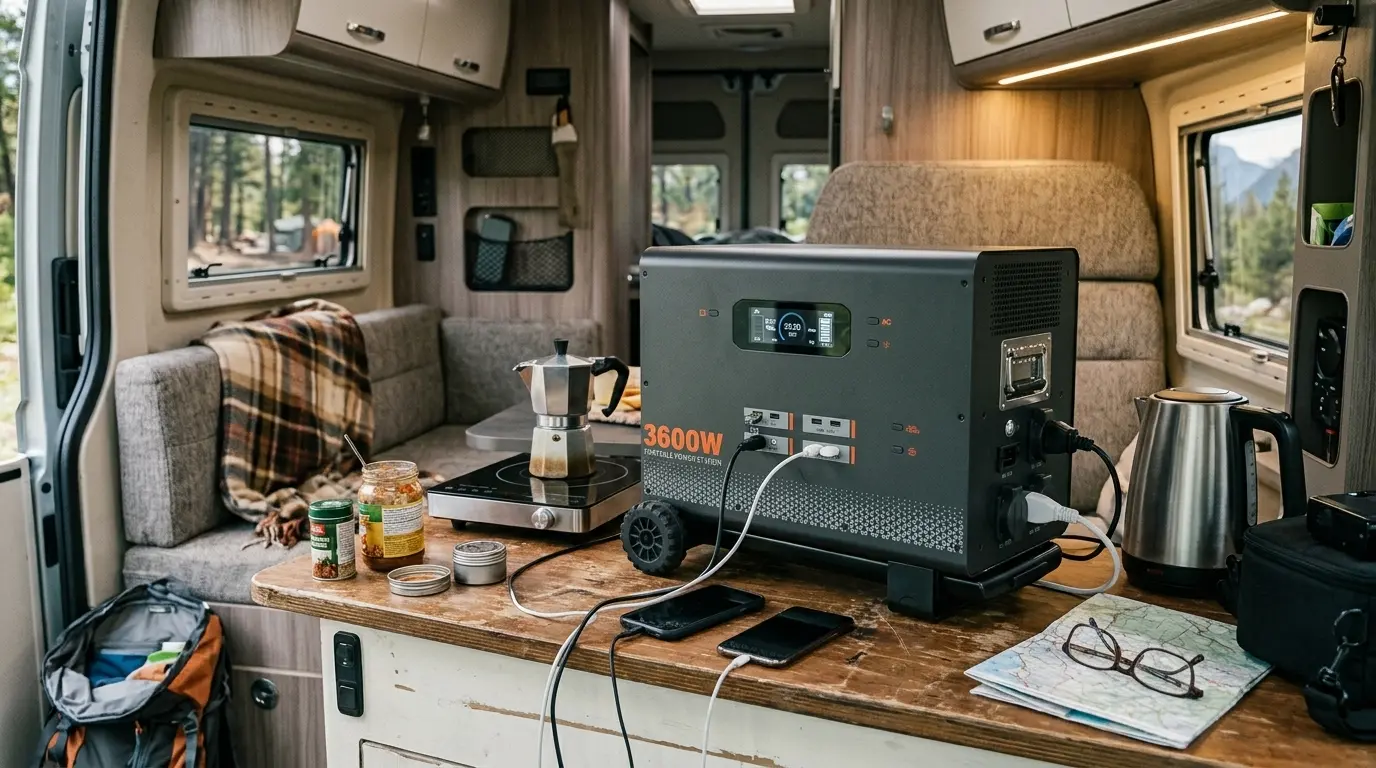
I recommend choosing an RV air conditioner power source by matching continuous inverter output, battery capacity, enclosure design, and expected travel conditions. TURSAN portable power stations use LiFePO4 battery cells, pure sine wave inverter output, and intelligent BMS protection for stable operation with compatible RV equipment. Their battery systems are rated for 6,000+ cycles.
For buyers comparing battery backup equipment, this overview of portable power station and UPS differences provides useful context.
TURSAN 3600W Portable Power Station
Best for heavy-duty RVs and 15,000 BTU air conditioners
The TURSAN 3600W Sheet Metal Portable Power Station provides the highest output in this comparison, with 3,225.6Wh of battery capacity. I consider it the strongest option for larger RV air conditioners and systems with demanding compressor startup requirements.
Key advantages include:
- 3,600W inverter output for higher continuous loads
- 3,225.6Wh capacity for longer battery-powered operation
- Pure sine wave output for compatible RV air-conditioning equipment
- Heavy-duty sheet metal enclosure for demanding travel conditions
- Additional capacity for selected RV appliances, depending on their combined wattage
This model is the most suitable choice when cooling demand is high or when the RV air conditioner must operate alongside essential appliances.
TURSAN 2400W Portable Power Station
Best balance of output, runtime, and portability
The TURSAN 2400W Portable Power Station combines 2,400W output with 2,400Wh capacity. I recommend it for standard 13,500 BTU rooftop air conditioners, particularly when the air conditioner uses a compatible soft-start kit.
Its main features include:
- 2,400W pure sine wave inverter output
- 2,400Wh LiFePO4 battery capacity
- Plastic enclosure for a lighter, more portable design
- Intelligent BMS protection for battery and system operation
- Suitable capacity for RV cooling when other loads are managed carefully
A soft-start system and controlled appliance use can help keep the starting demand within the available inverter output.
TURSAN 2000W Sheet Metal Portable Power Station
Best rugged option for boondocking
The TURSAN 2000W Sheet Metal Portable Power Station offers 2,000W output and 2,165.2Wh capacity. It is a practical choice for boondocking when the RV air conditioner has manageable startup demand and other high-wattage appliances are turned off during compressor startup.
Key features include:
- 2,000W pure sine wave inverter output
- 2,165.2Wh LiFePO4 battery capacity
- Heavy-duty sheet metal construction for rough travel environments
- Intelligent BMS protection
- Stable power delivery for compatible RV air-conditioning equipment
A 2,000W power station should be selected carefully. The air conditioner’s starting requirements, soft-start configuration, and other connected loads determine whether the system can operate reliably.
RV Air Conditioner Generator Comparison
| Portable power station | Output | Capacity | Enclosure | Recommended use |
|---|---|---|---|---|
| TURSAN 3600W | 3,600W | 3,225.6Wh | Sheet metal | Heavy-duty RVs and larger air conditioners |
| TURSAN 2400W | 2,400W | 2,400Wh | Plastic | Standard 13,500 BTU RV air conditioners with soft start |
| TURSAN 2000W | 2,000W | 2,165.2Wh | Sheet metal | Rugged boondocking setups with managed loads |
All three models use LiFePO4 battery chemistry and pure sine wave inverter technology. The best generator for an RV air conditioner depends on the unit’s startup demand, continuous running load, available battery capacity, and the number of other appliances operating at the same time.
Technical Comparison of RV Air Conditioner Generators
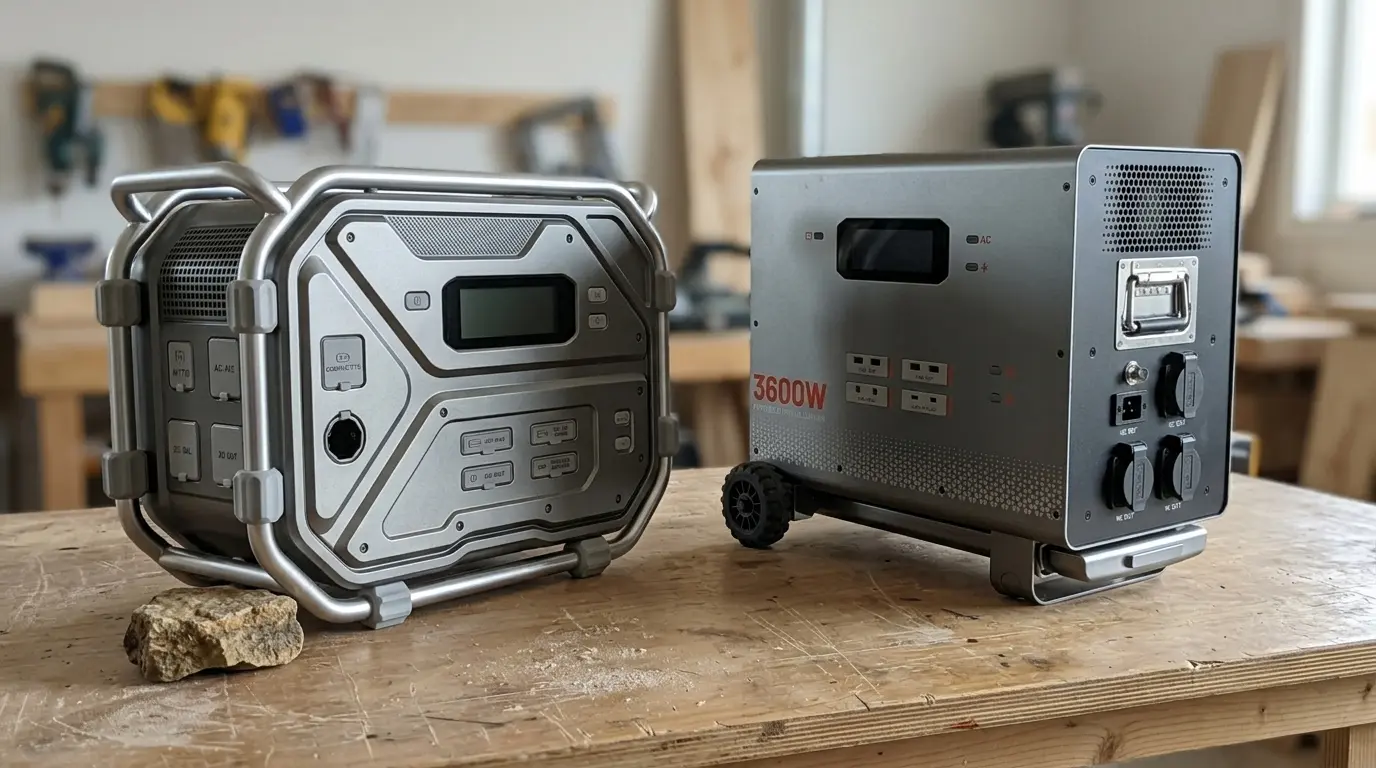
For an RV air conditioner, I compare continuous inverter output, battery capacity, enclosure design, and compressor startup support. TURSAN’s higher-output portable power stations use LiFePO4 battery technology, pure sine wave inverter output, and intelligent BMS protection.
| Model | Continuous Output | Battery Capacity | Enclosure | RV Air Conditioner Use |
|---|---|---|---|---|
| TURSAN 2000W | 2,000W | 2,165.2Wh | Sheet metal | Suitable for lower-demand or soft-start RV AC setups |
| TURSAN 2400W | 2,400W | 2,400Wh | Plastic | Practical balance for standard RV AC use |
| TURSAN 3600W | 3,600W | 3,225.6Wh | Sheet metal | Best choice for demanding AC loads and added appliances |
Output, Capacity, and Runtime
The 2,000W, 2,400W, and 3,600W models provide different levels of operating headroom. Battery capacity affects how long the RV air conditioner can run, but actual runtime varies with AC load, compressor cycling, inverter efficiency, temperature, and other connected appliances. A larger watt-hour rating generally provides more usable energy between charges.
LiFePO4 Cells and BYD Partnership
Each model uses LiFePO4 battery chemistry, known for long cycle life and stable operation. TURSAN products are developed with BYD cell partnership support, and the listed battery systems are rated for 6,000-plus cycles. This makes them suitable for repeated off-grid and mobile use. Our LiFePO4 battery manufacturer selection guide provides additional context on evaluating battery suppliers.
Pure Sine Wave and Startup Support
Pure sine wave inverter output provides stable, low-interference power for RV air conditioner compressors and other sensitive electronics. The higher-output models offer more capacity for compressor startup demand, while the intelligent BMS helps manage battery and output protection. TURSAN’s published product information does not specify exact surge-watt figures, so the RV air conditioner’s startup requirements should be checked before purchase.
Enclosure Options
The 2,000W and 3,600W models use sheet metal enclosures for a more rugged mobile setup. The 2,400W model uses a plastic enclosure, offering a lighter portable format. For an 11,000 BTU RV air conditioner, a 2,000W or 2,400W model may be considered after checking the unit’s starting demand. A 13,500 BTU RV air conditioner may require the additional headroom of the 2,400W model, particularly with a soft-start system. For a 15,000 BTU air conditioner, the 3,600W sheet metal model provides the strongest available output margin. Actual compatibility depends on the air conditioner’s running and starting wattage.
Estimating RV Air Conditioner Runtime on Battery Power
I estimate RV air conditioner runtime by comparing the portable power station’s battery capacity in watt-hours (Wh) with the air conditioner’s actual AC load:
Runtime (hours) = Battery capacity (Wh) x inverter efficiency / AC load (W)
Actual runtime will be lower than the stated battery capacity because the inverter uses some energy. Compressor startup cycles also create short periods of higher demand, while frequent cycling can increase total battery consumption.
13,500 BTU RV Air Conditioner Runtime
A 13,500 BTU rooftop air conditioner can have different power requirements depending on its design, condition, outdoor temperature, voltage, and soft-start setup. I use the air conditioner’s measured running wattage, rather than the BTU rating alone, to estimate runtime.
The TURSAN 2,400Wh portable power station provides a useful capacity range for a standard 13,500 BTU RV air conditioner, especially when the unit has a soft-start kit and other RV loads are limited. The 2,165.2Wh model offers less energy reserve, while the 3,225.6Wh model can support longer operation and additional appliances when the total load remains within its output rating.
15,000 BTU RV Air Conditioner Runtime
A 15,000 BTU air conditioner generally requires more power during operation and startup than a smaller rooftop unit. Runtime depends on the measured AC load, compressor duty cycle, ambient conditions, and available battery capacity.
For heavier-duty cooling, the TURSAN 3600W sheet metal portable power station has a 3,225.6Wh capacity and pure sine wave output. It provides more output headroom for compressor startup and more stored energy for off-grid use, but the exact runtime still requires the air conditioner’s actual watt draw.
| Portable power station | Battery capacity | Runtime calculation |
|---|---|---|
| TURSAN 2000W sheet metal model | 2,165.2Wh | 2,165.2 x inverter efficiency / measured AC load |
| TURSAN 2400W model | 2,400Wh | 2,400 x inverter efficiency / measured AC load |
| TURSAN 3600W sheet metal model | 3,225.6Wh | 3,225.6 x inverter efficiency / measured AC load |
A lower thermostat setting, high outdoor temperature, poor insulation, or an older compressor can make the air conditioner run more often. Raising the thermostat slightly and reducing other electrical loads can extend battery runtime.
Solar Charging and Recharge Timing
Solar charging can extend off-grid RV air conditioning time when the portable power station and solar system are compatible. Solar input may reduce the battery’s net discharge during daylight, but output changes with sunlight, panel placement, temperature, and system conditions.
I recharge the power station before the battery is fully depleted and allow reserve capacity for compressor startup. TURSAN LiFePO4 systems are rated for 6,000+ cycles, and the intelligent BMS helps manage operating safety during charging and discharge. For additional guidance on battery runtime and service life, see this solar generator lifespan and runtime guide.
Managing Other Power Loads While Running an RV Air Conditioner
An RV air conditioner can use a large share of a portable power station’s available output, especially when the compressor starts. Microwaves, electric water heaters, hair dryers, and refrigerators may add substantial loads or startup demand, increasing the risk of overload protection activating.
Load-Shifting Strategies
I recommend prioritizing cooling and essential equipment while the RV AC is running:
- Turn off the microwave, electric water heater, and hair dryer during compressor startup.
- Avoid starting refrigerators or other motor-driven appliances at the same time as the AC.
- Use high-demand appliances separately instead of running them together.
- Keep lighting, communication devices, and other essential loads within the remaining output margin.
- Leave reserve capacity below the power station’s maximum continuous output.
A TURSAN portable power station with pure sine wave output and an intelligent BMS can support stable operation while monitoring electrical safety. WiFi and Bluetooth connectivity also help track live wattage, battery status, and estimated remaining runtime. This makes it easier to identify rising loads before the system reaches its overload limit. Battery power stations can also provide a quieter alternative to fuel generators; the differences between these systems and UPS equipment are explained in this portable power station and UPS comparison.
Gas Generators Versus LiFePO4 Portable Power Stations for RV Air Conditioning
A dual-fuel or traditional inverter generator can support RV air conditioning when fuel availability and long operating periods are the main priorities. However, it requires fuel storage, regular maintenance, ventilation, and tolerance for engine noise and exhaust emissions. Output also depends on the generator’s rated running and surge capacity.
A LiFePO4 portable power station offers a different operating model. TURSAN units use LiFePO4 prismatic cells, pure sine wave inverter output, and an intelligent BMS. This combination supports stable RV AC operation without onsite exhaust emissions or engine maintenance during use. BYD cell partnership, a stated 6,000-plus cycle life, and WiFi/Bluetooth monitoring also support repeated off-grid use.
| Consideration | Traditional inverter or dual-fuel generator | LiFePO4 portable power station |
|---|---|---|
| Energy source | Fuel | Stored battery energy |
| Noise during operation | Engine noise | Quiet battery operation |
| Exhaust emissions | Produces onsite exhaust | No onsite exhaust emissions during use |
| Maintenance | Fuel system and engine maintenance | Battery and electrical system care |
| RV AC output | Depends on rated and surge watts | Pure sine wave inverter output |
| Long-term use | Requires continuous fuel supply | Recharge through an outlet or compatible solar system |
| Monitoring | Varies by generator | WiFi and Bluetooth IoT support on compatible systems |
For boondocking, a battery generator is often easier to manage at campsites with quiet-hour restrictions. It can also avoid fuel handling inside or around the RV. The main limitation is stored capacity: AC runtime depends on the battery’s watt-hours, compressor duty cycle, inverter efficiency, temperature, and other connected loads. Our guide to solar generator lifespan and runtime explains the main factors that affect battery runtime.
A traditional inverter generator remains practical when extended operation requires continuous energy and fuel access is reliable. A LiFePO4 power station is the better fit when quiet operation, portable use, pure sine wave output, long cycle life, and low day-to-day operating complexity matter most. For RV air conditioning, I recommend matching the power station’s continuous output and available capacity to the AC compressor’s startup demand and the owner’s expected cooling schedule.
Safety and Setup for a 30 Amp RV Generator Connection
A safe 30 amp RV generator connection starts with matching the power station output, RV inlet, and connected equipment. I recommend using the correct 30 amp RV power cable and checking that every plug, adapter, and outlet is rated for the expected load. For a better understanding of generator current limits, review this guide to how many amps a 3,000-watt inverter generator can handle.
Use Proper Cables and Adapters
Avoid undersized extension cords, loose connectors, and overloaded adapters. These can increase heat and cause voltage drops when the RV air conditioner compressor starts. Keep cable runs as short as practical, inspect them for damage, and use components designed for RV and portable power equipment.
Check Output Compatibility
Before connecting the RV air conditioner, confirm that the generator or portable power station provides compatible AC output. A pure sine wave inverter is suitable for compressor-driven equipment because it delivers stable, low-interference power. The TURSAN portable power stations in the 2,000W, 2,400W, and 3,600W classes use pure sine wave output, while the built-in intelligent BMS helps manage battery and electrical protection functions.
Control Heat and Ventilation
Place the power station on a stable, dry surface with clear space around its air vents. Do not cover the unit or operate it near materials that can block airflow. Keep the equipment away from standing water, excessive heat, and direct exposure to weather. Portable battery equipment does not produce exhaust, but it still needs airflow to manage operating heat.
Prevent Compressor Power Problems
Leave reserve capacity for the RV air conditioner startup surge and other connected loads. Microwaves, heaters, hair dryers, and similar appliances can increase total demand and may trigger overload protection. Turn off nonessential appliances while the compressor starts, and monitor the load when possible through supported WiFi or Bluetooth IoT functions.
Use a soft-start kit only when it is compatible with the rooftop air conditioner and installed according to the equipment instructions. Use the charging cables, adapters, and connection hardware specified for the power station. This helps reduce connection risks and supports stable operation during off-grid RV cooling.
Wholesale, OEM, and ODM RV Power Station Capabilities
For RV equipment suppliers and global B2B buyers, we provide wholesale portable power stations with OEM and ODM support. Our team can adapt the exterior identification, product appearance, and engineering details to match a buyer’s brand and market requirements.
B2B Customisation Options
| Requirement | Available support |
|---|---|
| Exterior design | Custom modelling and product identification |
| Branding | White-label portable power station manufacturing |
| Enclosure | Plastic or heavy-duty sheet metal housing |
| Product range | Portable power stations from 300W to 3,600W |
| Compliance | UN38.3, MSDS, UL1973, CE, and FCC documentation |
| Connectivity | WiFi and Bluetooth IoT support with API compatibility |
The sheet metal enclosure is suitable for buyers focused on durable RV and mobile power equipment, while plastic models support lighter portable applications. Product selection can cover capacities from 806.4Wh to 3,225.6Wh, depending on the required output and use case.
Our BYD cell partnership, 15 production lines, and supply coverage across more than 30 countries support consistent B2B procurement. For buyers comparing portable backup equipment, our guide to portable power stations and UPS systems explains the main differences between these product categories.
Battery compliance documents, including UN38.3 and MSDS materials, support international transport and procurement review. Wholesale buyers can also request a quote for selected models, custom exterior design, and white-label manufacturing.
Frequently Asked Questions About the Best Generator for RV Air Conditioner
What Size Generator Do I Need for a 13,500 BTU RV Air Conditioner?
The correct size depends on the air conditioner’s running and startup demand. Check the RV air conditioner nameplate and allow extra capacity for compressor startup and other appliances. A TURSAN 2400W portable power station with 2400Wh capacity is a practical option for a standard rooftop unit when the system’s surge demand is within its rated output.
What Size Generator Do I Need for a 15,000 BTU RV Air Conditioner?
A 15,000 BTU unit generally needs more startup reserve than a smaller rooftop unit. I recommend checking the compressor requirements carefully and selecting a higher-output system. The TURSAN 3600W sheet metal portable power station, with 3225.6Wh capacity, is the strongest option in this product range for demanding RV cooling loads.
Can a 2,000W Generator Run an RV Air Conditioner Without a Soft Starter?
It depends on the air conditioner’s startup surge. A 2000W power station may be suitable when the compressor demand stays within its output rating, but startup can exceed the continuous load. A soft-start kit may improve compatibility, but it does not replace checking the air conditioner and generator specifications.
Can a 2,400W Portable Power Station Run a 13,500 BTU RV AC?
A 2400W portable power station can be a suitable choice when the RV AC startup demand is within its surge rating. A soft-start kit can help reduce the initial compressor load. The TURSAN 2400W model provides 2400Wh of LiFePO4 battery capacity and pure sine wave output.
Will a 3,600W Generator Handle an RV AC and Other Appliances?
The TURSAN 3600W portable power station offers the highest output among the listed portable models. It can provide more reserve for an RV air conditioner and additional loads, but the combined wattage must remain within the station’s rated output. Avoid starting high-load appliances at the same time as the compressor.
How Many Starting Watts Does an RV Air Conditioner Need?
There is no single starting-watt figure for every RV air conditioner. Demand varies by BTU rating, compressor design, voltage, ambient temperature, altitude, and appliance age. Use the air conditioner nameplate or manufacturer data to compare startup demand with the generator’s surge capability.
Is a Pure Sine Wave Inverter Necessary for an RV Air Conditioner?
Pure sine wave output is the preferred option for compressor-driven equipment. It provides stable, low-interference power and supports smooth operation for RV air conditioners and other sensitive electronics. TURSAN portable power stations use pure sine wave inverter output.
Does a Soft-Start Kit Reduce RV AC Power Consumption?
A soft-start kit reduces the compressor’s initial startup demand. It does not necessarily reduce the air conditioner’s normal running consumption. Its main benefit is helping a smaller generator or power station manage compressor startup more reliably.
How Long Will a LiFePO4 Power Station Run an RV Air Conditioner?
Runtime depends on the AC load, inverter efficiency, compressor cycling, temperature settings, and other connected appliances. A basic estimate is:
Runtime = battery capacity in Wh / AC load in W
Actual runtime will be lower because of conversion losses and changing compressor demand. TURSAN portable models range from 2165.2Wh to 3225.6Wh in the 2000W, 2400W, and 3600W options.
Can Solar Panels Power an RV Air Conditioner Off-Grid?
Solar charging can help extend off-grid operation when the selected power station and solar equipment are compatible. Solar input may not fully match the air conditioner’s active demand, especially during peak heat. For system planning, I also recommend reviewing this guide to how a solar generator works for portable and backup power.
Are Battery Power Stations Quieter Than Gas Generators?
Battery power stations produce no engine noise or exhaust during operation. This makes them useful for boondocking and locations with campground quiet-hour rules. TURSAN LiFePO4 power stations also avoid on-site fuel storage and engine maintenance during use.
What Is the Best Generator for RV Air Conditioning During Boondocking?
The best option depends on the compressor demand, required runtime, available space, and other appliances:
| RV cooling requirement | Suitable TURSAN option |
|---|---|
| Rugged travel and moderate AC loads | 2000W, 2165.2Wh sheet metal model |
| Standard rooftop AC with suitable startup demand | 2400W, 2400Wh model |
| Higher startup reserve and longer operation | 3600W, 3225.6Wh sheet metal model |
All three use LiFePO4 battery technology, pure sine wave output, and intelligent BMS protection.
Should I Choose a Dual-Fuel Generator or a Lithium Power Station?
A dual-fuel generator may provide long operation when fuel is available, but it requires fuel storage, ventilation, engine maintenance, and produces noise and emissions. A LiFePO4 power station offers quiet, zero-emission operation at the point of use, with no engine servicing. TURSAN models use LiFePO4 prismatic cells rated for 6000+ cycles and include a 5-year warranty.
How Do I Prevent My RV Generator from Tripping During Compressor Startup?
Use a power station with enough continuous and surge capacity, and avoid running other high-load appliances during compressor startup. Confirm the 30 amp connection, check cable and adapter ratings, and use a compatible soft-start system when appropriate. An intelligent BMS helps protect against overload, voltage issues, and overheating, but the total connected load must still remain within the system rating.