 English
  العربية
  日本語
日本語  한국어
한국어  Tiếng Việt
  ไทย
ไทย  Bahasa Melayu
  فارسی
فارسی  Bahasa Indonesia
  ဗမာစာ
ဗမာစာ  简体中文
简体中文  香港中文
香港中文  繁體中文
繁體中文  Русский
  Deutsch
  Nederlands
  Italiano
  Français
  Español
  Português
  Afrikaans
  Azərbaycan dili
  Български
  ਪੰਜਾਬੀ
  हिन्दी
  اردو
اردو  বাংলা
বাংলা  Հայերեն
  Íslenska
  Қазақ тілі
  नेपाली
  Српски језик
  Kiswahili
  తెలుగు
  Basa Jawa
  தமிழ்
தமிழ்  मराठी
मराठी Understand the 120V and 240V current limits, continuous operating headroom, startup surge and appliance combinations.
Planning a larger whole-home backup load?
Review TURSAN home energy storage solutions when generator capacity, runtime and automatic backup need to be evaluated together.
Wondering how many amps a 3000-watt inverter generator can handle?
The quick answer is up to 25 amps at 120V. But that is usually the generator’s peak output, not the amount you should run continuously.
To use a generator safely, you need to account for running watts, starting surge, outlet limits, and the real amp draw of appliances such as an RV air conditioner, refrigerator, or power tools.
In this guide, you’ll learn exactly what a 3000W inverter generator can power, how to calculate amps, and how to avoid overloaded circuits.
I calculate generator amperage with this formula:
Amps = Watts / Volts
For a 3000-watt inverter generator supplying 120V:
3000W / 120V = 25A
This gives a theoretical maximum of 25 amps at 120V. The actual continuous output may be lower, depending on the generator’s rated running wattage, while motor-driven appliances can briefly require additional starting power.
| Output voltage | Theoretical amperage at 3000W |
|---|---|
| 120V | 25A |
| 240V | 12.5A |
With dual-voltage operation, the same 3000 watts are distributed differently. At 120V, the system can deliver up to 25 amps in theory; at 240V, the equivalent current is 12.5 amps. Always check the manufacturer’s rated continuous and surge specifications before connecting appliances.
Continuous Amps vs. Peak Surge Amps
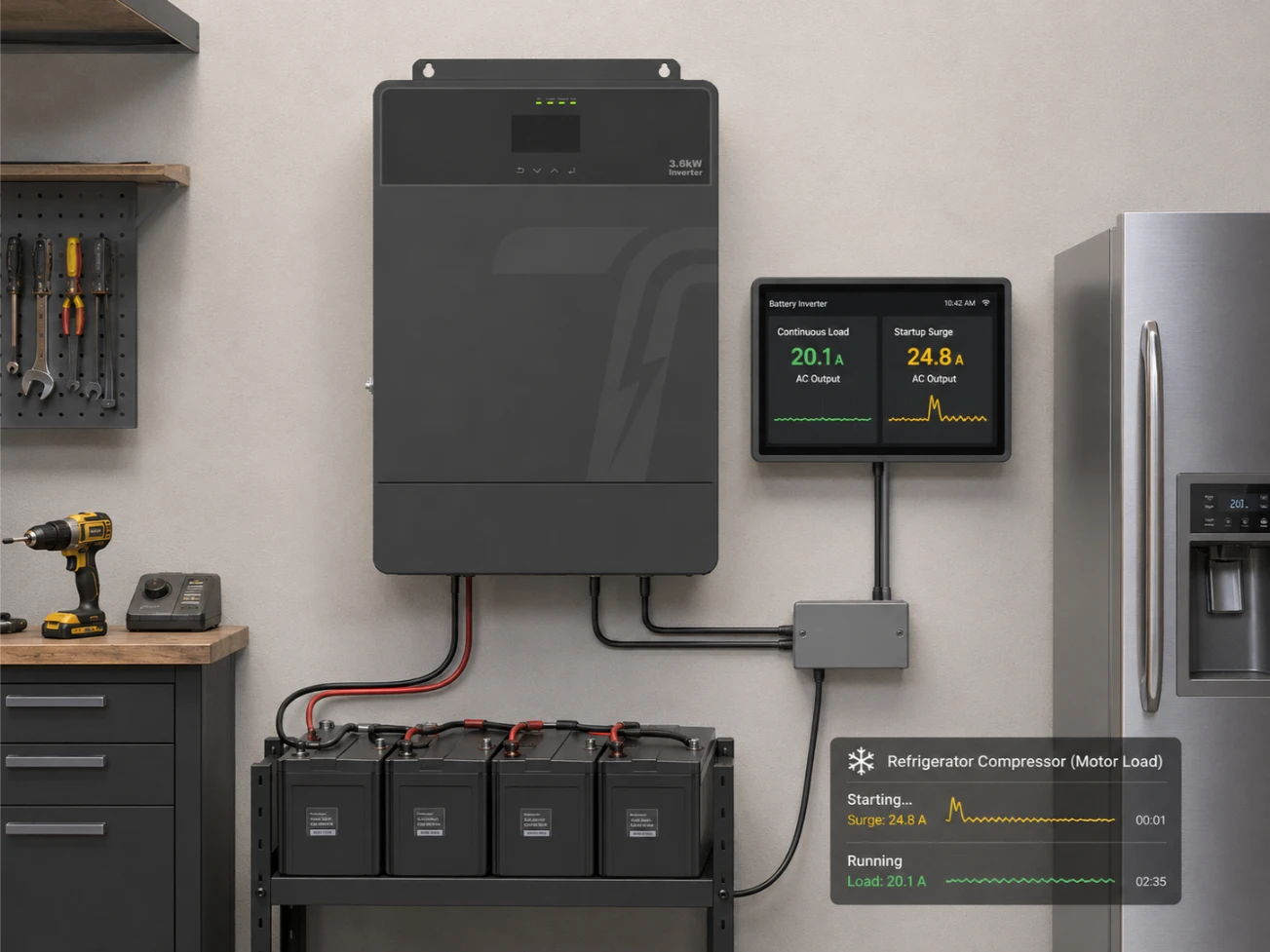
A 3000-watt inverter generator has two important power ratings: continuous running wattage and maximum surge wattage. Running wattage supports appliances during normal operation, while surge wattage handles the brief power spike when a motor starts.
At 120V, a 3000-watt output equals a theoretical maximum of 25 amps:
Amps = Watts / Volts
3000W / 120V = 25A
For continuous use, I keep the working load below the maximum rating. A practical continuous range is approximately 20.8A to 23.3A at 120V, depending on the generator’s rated running wattage and operating conditions.
| Load type | What it means | Typical effect |
|---|---|---|
| Continuous load | Power used after an appliance starts | Uses the generator’s rated running capacity |
| Surge load | Short initial demand from a motor or compressor | Requires spare capacity for startup |
| Excess load | Demand above the protected limit | May activate the overload circuit breaker |
Motorized appliances such as refrigerators, pumps, air conditioners, and power tools can briefly draw more current during startup. If the combined running and starting demand exceeds the inverter’s available capacity, the Intelligent Battery Management System (BMS) and overload protection may limit or disconnect the output to help prevent damage. Reduce the connected load before restarting the system.
Appliance Running Capacity for a 3000W Inverter Generator
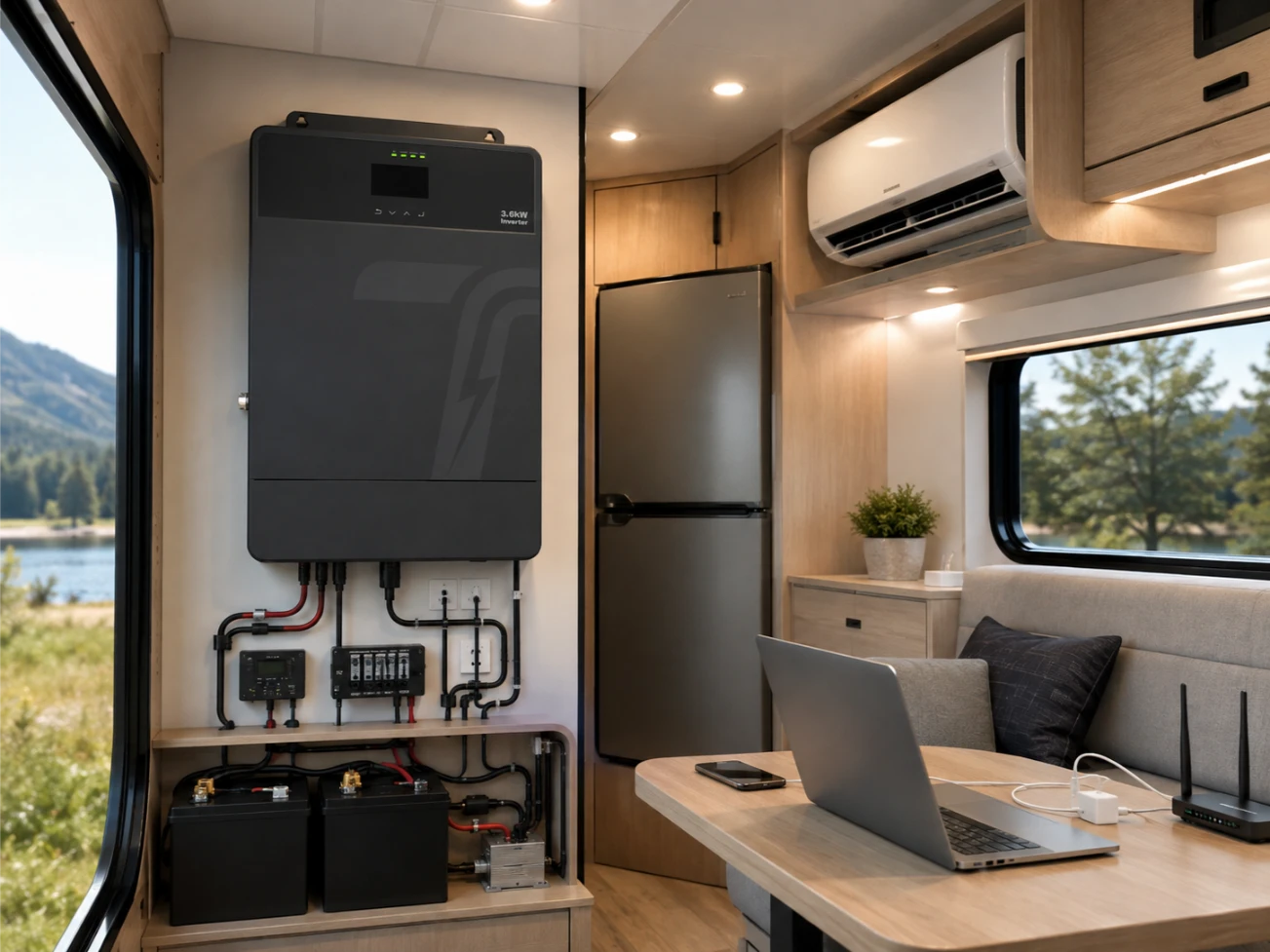
A 3000-watt inverter generator can cover essential loads, but I always total the running demand and allow room for motor start-up surges. Its real appliance capacity depends on the generator’s continuous watt rating, the appliance labels, and what is already running.
RV Air Conditioners
A 13,500 BTU RV air conditioner is generally a more practical match for a 3000W inverter generator than a 15,000 BTU unit. The compressor can create a high starting load, so running the AC alongside other high-draw appliances can overload the generator.
- 13,500 BTU RV AC: Often manageable when other loads are kept low.
- 15,000 BTU RV AC: May run, but start-up demand leaves less operating margin.
- Soft-start equipment: Can reduce compressor start-up demand where compatible.
- Best practice: Start the air conditioner before adding other loads.
Essential Household Loads
A refrigerator, chest freezer, and sump pump use modest power while running, but each motor can demand more power when it starts. A 3000W inverter generator can often support selected essential appliances, provided their start cycles do not overlap.
| Appliance Type | Practical Consideration |
|---|---|
| Refrigerator | Keep capacity available for compressor start-up. |
| Chest freezer | Similar motor surge needs to a refrigerator. |
| Sump pump | Treat as a priority load because start-up demand can be significant. |
| Electronics | Routers, lights, laptops, and phone chargers use comparatively low power. |
For wider household planning, this 6000-watt generator whole-home guide shows why larger capacity is needed as more essential circuits are added.
High-Draw Appliances
Heating appliances can consume a large share of a 3000W generator’s available output very quickly. Space heaters, hair dryers, coffee makers, kettles, and similar resistance-heating loads should be operated one at a time, especially when a refrigerator, freezer, or pump is connected.
Avoid combining multiple high-draw appliances with an RV AC or motor-driven appliance. Even when the total running watts appear acceptable, a motor starting at the same time can trigger overload protection.
Low-Watt Electronics
A 3000W inverter generator can run several low-wattage devices at once, including LED lighting, laptops, internet equipment, televisions, and charging devices. Pure sine wave output helps provide stable power for sensitive electronics while keeping noise and interference low.
Calculate Your Total Amperage Load
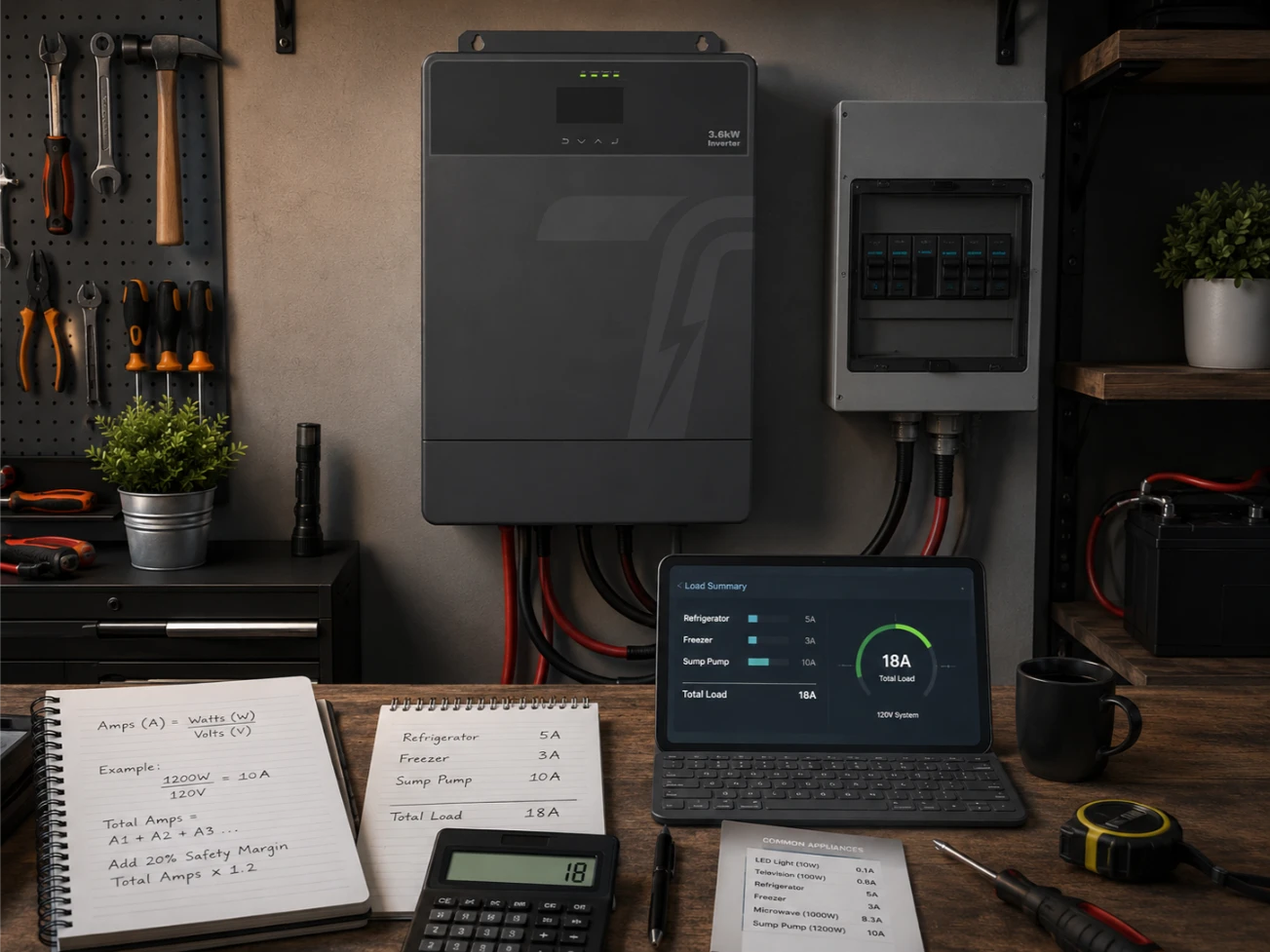
To size a 3000-watt inverter generator correctly, I add both the running load and the highest expected starting load. The basic calculation is:
Amps = Watts / Volts
At 120V, a 3000W output equals 25 amps at its absolute maximum. For steady use, keep the combined running load near 80% of rated capacity, or about 2,400W / 20A at 120V. This leaves room for normal load changes and reduces overload trips during extended operation.
Load Calculation Steps
- Read each appliance label for its voltage, watts, or amps.
- Convert amps to watts when needed: Watts = Volts x Amps.
- Add the running watts of every appliance that will operate at the same time.
- Identify the appliance with the largest motor starting demand.
- Confirm that running watts plus the required starting surge stay within the generator’s rated and peak limits.
| Appliance Load | Example at 120V |
|---|---|
| 5A refrigerator running load | 600W |
| 3A chest freezer running load | 360W |
| 10A sump pump running load | 1,200W |
| Combined running load | 2,160W / 18A |
In this example, the running load stays below the recommended 2,400W continuous target. However, refrigerator compressors, freezer compressors, and sump pumps can draw more power briefly when starting. Start those loads one at a time instead of allowing several motors to start together.
Check Labels Before Connecting
Appliance labels may list watts, volts, amps, or all three. Use the listed voltage when calculating. A device marked 120V, 10A needs about 1,200W while running. A heating appliance such as a space heater, hair dryer, or coffee maker can use a large share of a 3000W generator’s capacity by itself, so it should be balanced carefully with motor loads.
For battery-based backup systems, load planning also affects usable runtime. Our guide to solar generator lifespan and runtime explains why battery capacity, load level, and operating time must be considered together.
Prevent Overload Trips
Keep the total continuous load below the 80% target and stagger motorized appliances:
- Start the refrigerator or freezer first, then wait for it to settle.
- Start pumps, power tools, or air-conditioning equipment separately.
- Avoid operating high-watt heating appliances while a large motor is starting.
- Treat an overload circuit breaker trip as a signal to reduce demand before restarting.
This method provides a practical answer to how many amps can a 3000-watt inverter generator handle: up to 25A at 120V in theory, but about 20A of continuous planned load is a more dependable working target.
Receptacles, Extension Cords, and Parallel Connection
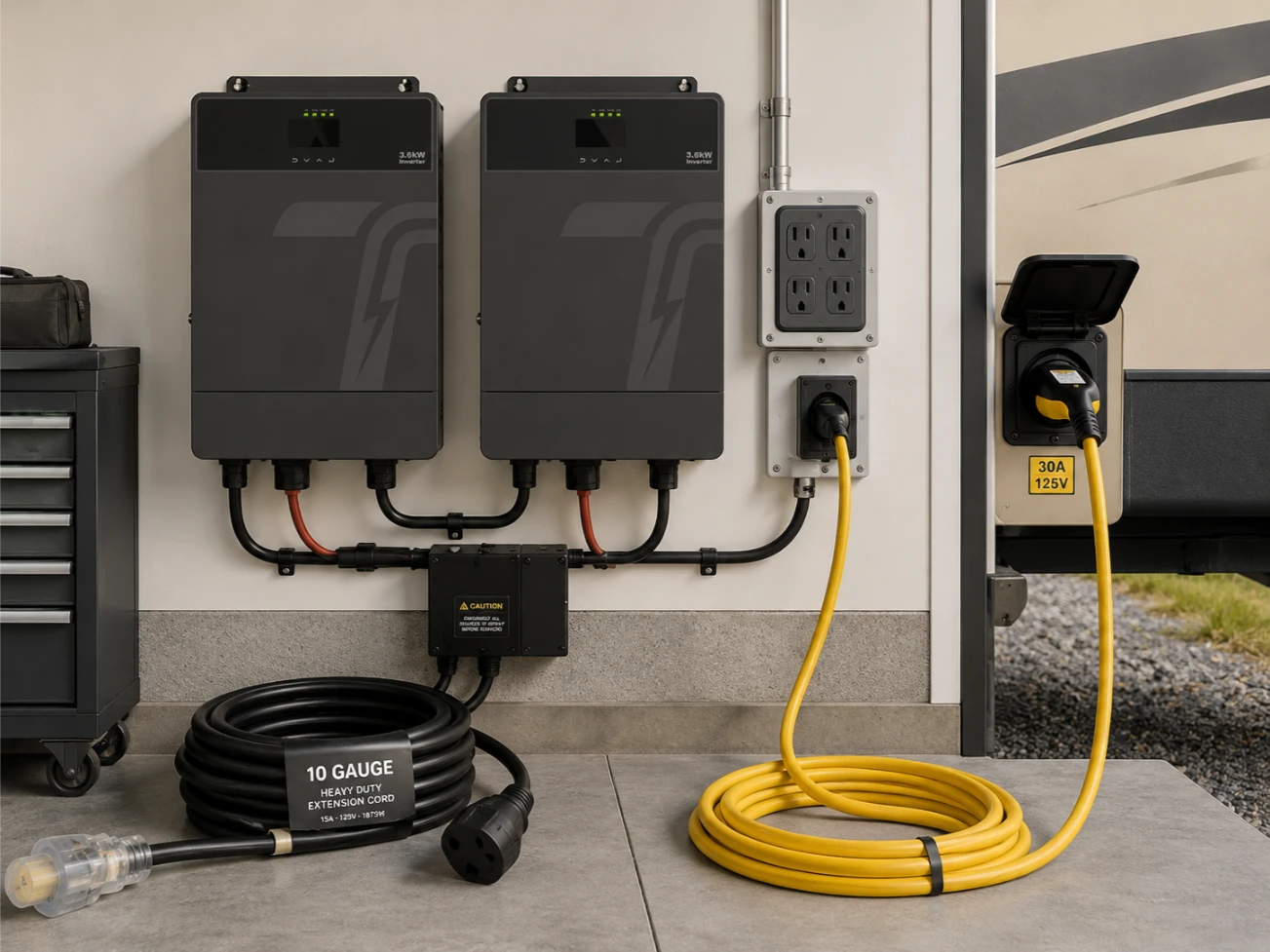
I match the receptacle to the generator’s rated output and the connected load. A standard 120V 20A duplex outlet is suited to lower-current appliances, while a TT-30R 30A RV receptacle is designed for compatible 30A RV connections. The outlet rating does not increase the generator’s total wattage capacity.
Choose the Correct Extension Cord
For a 3000-watt inverter generator, I use a properly rated extension cord with minimal length whenever possible:
- 10-gauge cord: Better for higher-current loads and longer runs.
- 12-gauge cord: Suitable for lighter loads within its rated capacity.
- Check the cord, plug, and receptacle ratings before connecting equipment.
Pure sine wave output supports stable performance for sensitive electronics, but every connected device must still remain within the inverter generator’s continuous and surge limits.
Use Parallel Kits Correctly
A compatible parallel kit can combine two supported inverter generators to increase available output. I only use the manufacturer-approved kit and matching generator models. The combined system must be installed and operated according to its rated specifications.
Connect to a Transfer Switch Safely
I connect a generator to household circuits only through a correctly installed transfer switch. Directly connecting a generator to a wall outlet can create dangerous backfeed, so this work should be completed by a qualified electrician. The transfer switch, wiring, receptacles, and generator must all be rated for the intended load.
Frequently Asked Questions
Can a 3000-Watt Inverter Generator Run a 15,000 BTU AC?
A 15,000 BTU air conditioner may exceed a 3000-watt inverter generator’s available capacity, especially during compressor startup. I check both the unit’s running watts and starting watts before connecting it. A soft-start device can reduce the initial surge, but the AC nameplate rating remains the deciding factor.
How Many 15-Amp Breakers Can It Power?
A 3000W system at 120V has a theoretical maximum of 25 amps. The number of 15-amp household breakers does not determine available power; the combined active load must stay within the inverter generator’s rated output. For broader household capacity planning, use this 6000-watt whole-home generator guide.
Will It Run a Refrigerator and Chest Freezer?
Usually, a refrigerator and chest freezer can run together when their combined running load and compressor starting surge remain below the generator’s rated limit. I avoid starting both compressors at the same time and leave capacity for other essential loads.
What Extension Cord Works for 25 Amps?
For a 25-amp load, I use an extension cord rated for the circuit current and suitable for its length and environment. 10-gauge copper cord is generally the stronger choice for higher-current or longer runs, while 12-gauge cord may not be adequate for a full 25-amp load. Always match the cord, plug, receptacle, and circuit protection ratings.