 English
  العربية
  日本語
日本語  한국어
한국어  Tiếng Việt
  ไทย
ไทย  Bahasa Melayu
  فارسی
فارسی  Bahasa Indonesia
  ဗမာစာ
ဗမာစာ  简体中文
简体中文  香港中文
香港中文  繁體中文
繁體中文  Русский
  Deutsch
  Nederlands
  Italiano
  Français
  Español
  Português
  Afrikaans
  Azərbaycan dili
  Български
  ਪੰਜਾਬੀ
  हिन्दी
  اردو
اردو  বাংলা
বাংলা  Հայերեն
  Íslenska
  Қазақ тілі
  नेपाली
  Српски језик
  Kiswahili
  తెలుగు
  Basa Jawa
  தமிழ்
தமிழ்  मराठी
मराठी Estimate outage duration from usable battery capacity, household load, solar recharge, and the circuits you choose to prioritize.
When the grid goes dark, one crucial question immediately comes to mind: How long can a solar battery power a house?
Whether you’re preparing for a sudden power outage or pushing for true energy independence, understanding your average solar battery run time makes all the difference. But keeping the lights on isn’t just about temporary relief-it’s about knowing the critical difference between daily run duration and total solar battery lifespan.
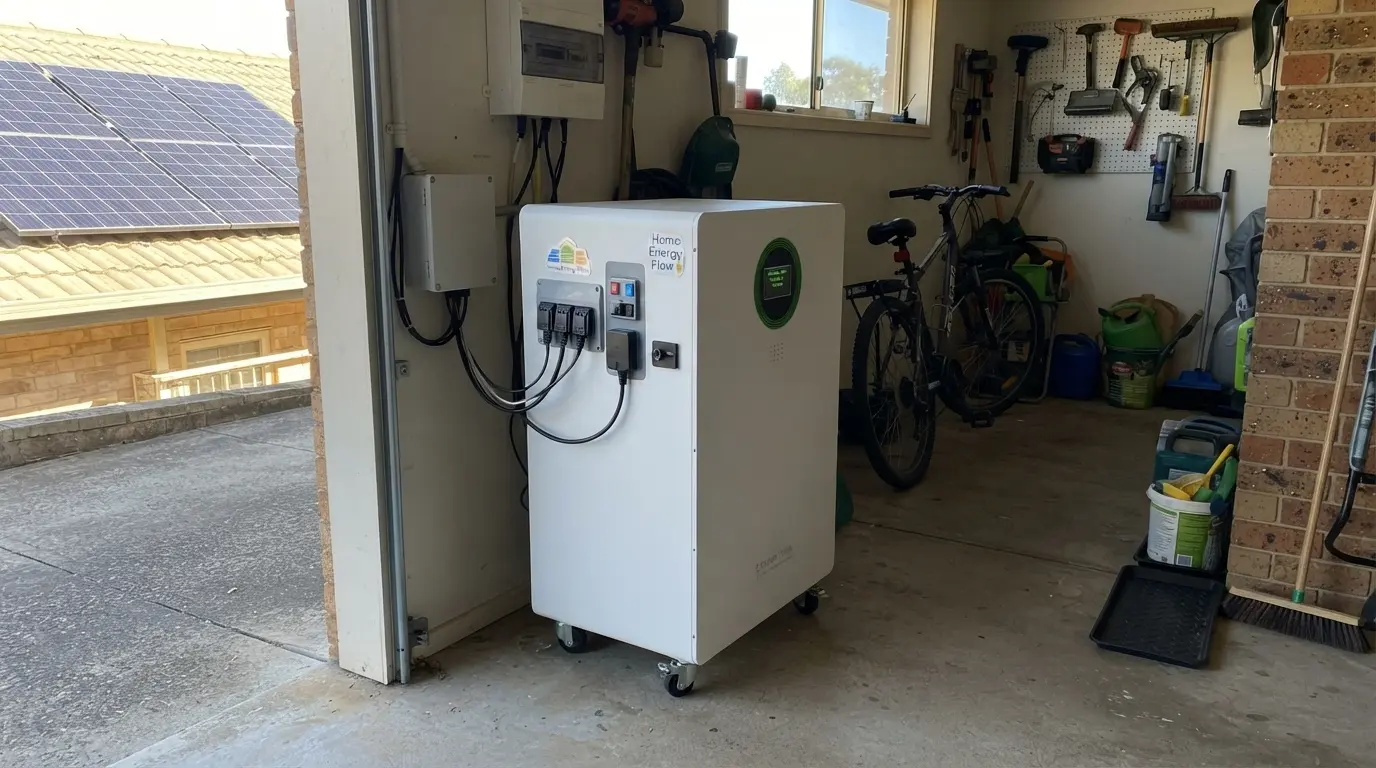
In this guide, you’ll learn exactly how battery storage capacity, power ratings, and your household’s daily energy consumption dictate your power supply. We’ll break down whole-home vs. partial-home battery backup, calculate how many batteries you actually need, and share practical ways to optimize efficiency so your system is genuinely worth the investment.
Let’s dive right in.
How Long Can a Solar Battery Power Your House?
A standard residential solar battery system powers a home for 1 to 3 days during a grid outage. Exact run time depends on daily kilowatt-hour consumption, storage capacity, and whether energy goes to essential appliances or whole-home power.
Average Solar Battery Run Time During a Power Outage
During a power outage, duration depends directly on battery capacity and home load management. Pairing the system with solar panels allows continuous daytime recharging, extending backup power indefinitely under clear skies.
| Battery Capacity | Essential Loads Only (Fridge, Lights, Wi-Fi) | Whole-Home Usage (HVAC, Major Appliances) |
|---|---|---|
| 10 kWh Battery | 24 – 36 Hours | 6 – 12 Hours |
| 13.5 kWh Battery | 36 – 48 Hours | 10 – 16 Hours |
| 20 kWh Battery | 48 – 72 Hours | 18 – 24 Hours |
- Essential Loads: Running key low-draw devices maximizes energy reserves across multiple days.
- Heavy Loads: High-draw equipment like central heat pumps or electric water heaters depletes single-battery setups rapidly.
Difference Between Battery Run Time and Total Lifespan
Evaluating home energy storage performance requires distinguishing immediate discharge capacity from long-term durability:
- Battery Run Time: The active number of hours or days a system continuously supplies electricity during an individual grid failure.
- Total Battery Lifespan: The complete service life of the unit before capacity degrades below operational standards, typically lasting 10 to 15 years or 4,000 to 10,000 charge-discharge cycles.
Key Factors That Determine Solar Battery Duration
When we design residential energy solutions, we analyze several core variables to predict exact backup times. How long your energy supply lasts depends directly on hardware specifications, daily habits, and environmental conditions.
Battery Storage Capacity and Power Rating
Two primary specifications dictate your system’s performance: total usable capacity and continuous output.
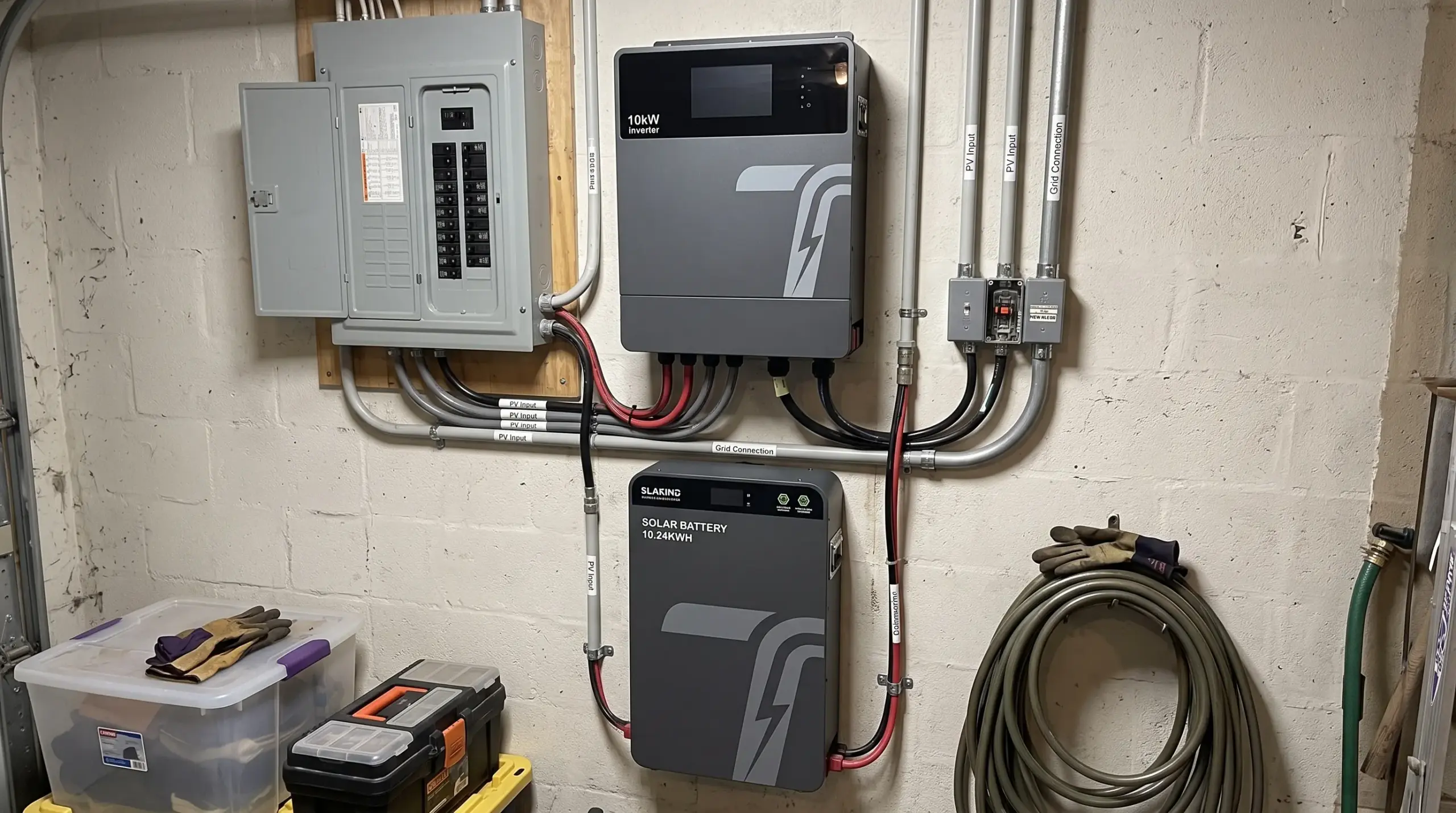
- Storage Capacity (kWh): Measured in kilowatt hours, this represents the total amount of usable energy stored in the unit. A standard 10kWh battery provides a specific energy reserve for your household to draw from during a sudden power outage.
- Continuous Power Rating (kW): Measured in kilowatts, this determines the maximum power the unit can discharge at any single moment. High usable capacity gives you longer duration, but power output determines how many devices can run at once.
Understanding how these two ratings work together is critical when evaluating solar battery backup systems for long-term off-grid protection.
Household Power Consumption and Usage Habits
Your real-time consumption habits ultimately dictate your system’s drain rate. Diverting power exclusively to essential appliances dramatically stretches your runtime, while running high-load appliances causes rapid depletion.
| Appliance | Typical Consumption | Impact on Battery Reserve |
|---|---|---|
| Refrigerator Power Consumption | 100W – 200W continuous | Low to Moderate (Runs periodically) |
| LED Lighting & WiFi Router | 30W – 60W continuous | Minimal |
| Central Air Conditioning | 3,000W – 5,000W continuous | Very High (Drains capacity quickly) |
| Electric Water Heater | 4,500W continuous | High |
By limiting energy consumption to critical electronics, refrigeration, and basic lighting during grid disruptions, you can easily extend a standard reserve from 12 hours to multiple days.
Solar Panel Generation and Recharging Capabilities
A solar battery functions as a renewable energy circuit rather than a static bank when integrated with rooftop panels.
- Daytime Recharging: Peak sunlight allows your solar array to power your active household loads while simultaneously topping off your battery capacity.
- Weather Dependencies: Clear, sunny conditions replenish your energy storage daily, providing reliable continuous power during extended multi-day power outages.
- Solar Array Sizing: Your panel array must produce enough excess wattage above daily usage to fully recharge the system before sunset.
Whole-Home vs. Partial-Home Battery Backup Coverage
When deciding how long a solar battery can power your home, the setup you choose makes all the difference. You can either back up only your most critical circuits or power the entire house seamlessly during a power outage.
Essential Load Backup for Critical Appliances
An essential load backup system isolates key circuits via a dedicated subpanel. Instead of draining your solar battery on energy-heavy HVAC units or electric dryers, you direct energy exclusively to must-have gear.
- Targeted Circuits: Powers your refrigerator, lighting, Wi-Fi router, phone chargers, and select wall outlets.
- Extended Run Time: By focusing solely on essential appliances, a standard 10kWh battery can stretch energy reserves over 24 to 48 hours without solar recharging.
- Cost Efficiency: Requires fewer kilowatt hours of storage and a lower initial investment, making it ideal for basic outage resilience.
For distributors and installers configuring reliable home battery storage solutions, essential load setups offer an economical, high-demand entry point for residential customers.
Whole-Home Backup for Uninterrupted Power
A whole-home backup system connects directly to your main electrical panel, delivering seamless transition power across every room and appliance in your house.
- High Capacity Requirement: Running major loads like central air conditioning, water heaters, and electric stoves demands multiple battery units-typically 20kWh to 40kWh or more.
- Uncompromised Lifestyle: You maintain your normal daily routine without manually toggling breakers or sacrificing comfort during grid failures.
- Peak Output Power: Requires higher continuous and peak power ratings from the system inverter to handle the heavy initial surge current of motor-driven loads.
| Feature | Essential Load Backup | Whole-Home Backup |
|---|---|---|
| Typical Battery Capacity | 10kWh – 15kWh | 20kWh – 40kWh+ |
| Coverage Area | Selected critical circuits | Entire main electrical panel |
| Key Supported Loads | Refrigerator power consumption, lights, router, outlets | Central AC, heat pumps, electric oven, all outlets |
| Outage Duration | Days (with basic power management) | 1-2 days (without solar panel recharging) |
How Many Solar Batteries Do You Need for Your Home?
Calculating Household Daily Energy Consumption
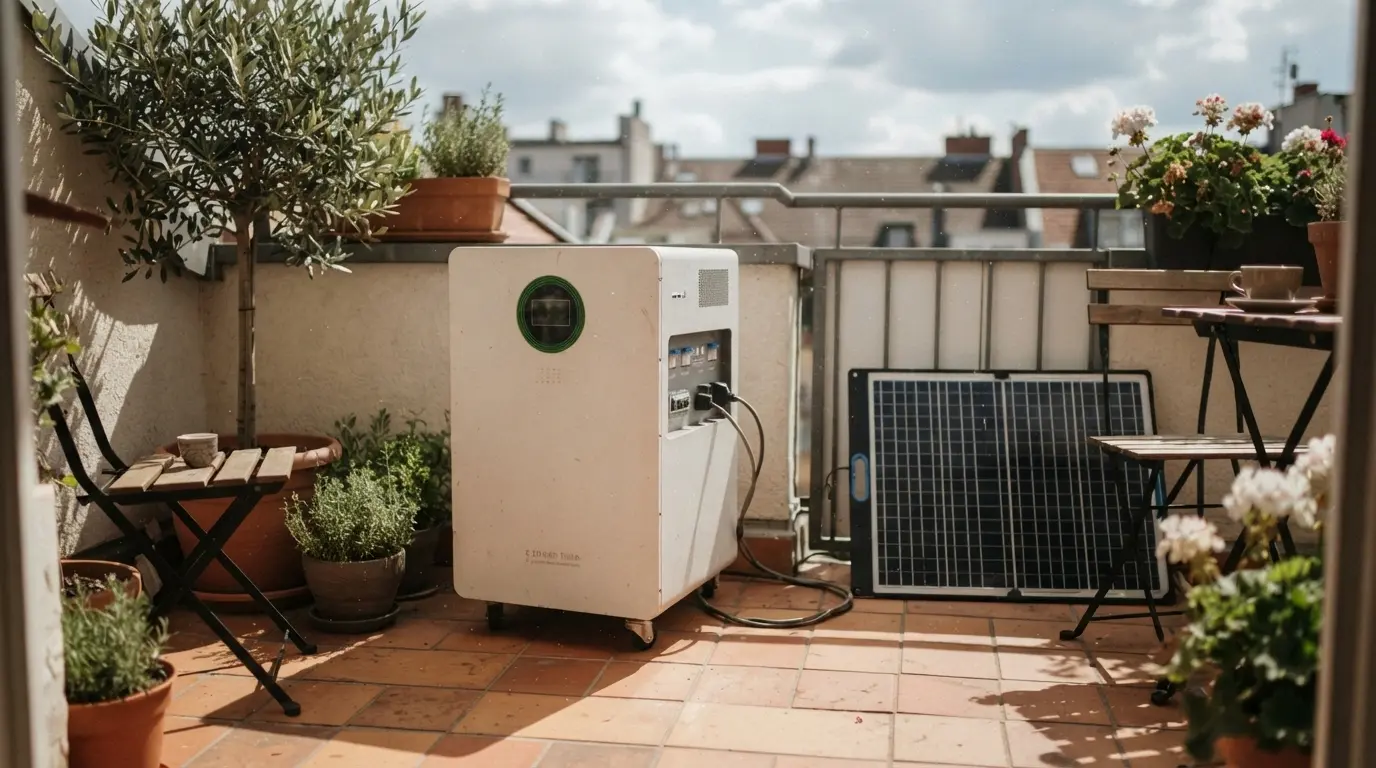
Finding the right setup starts with knowing your actual power needs. We check utility bills to measure daily usage in kilowatt hours (kWh). The average home consumes roughly 25 to 30 kWh per day, though running heavy electrical loads pushes that number higher. Learning how to size a home battery backup system gives you a clear starting baseline before selecting specific equipment.
- Audit essential loads: Add up continuous wattages for key devices like lighting, internet gear, and refrigerator power consumption.
- Identify peak surge watts: Account for heavy starting loads from sump pumps, well pumps, and air compressors.
- Account for conversion loss: Factor in standard 10% to 15% energy loss during DC-to-AC inversion.
Determining Battery Quantity Based on Backup Goals
Your ideal setup matches your precise outage goals. Most modern home energy storage solutions use modular expansion, allowing us to scale total battery capacity based on your target runtime. A single 10kWh battery unit easily handles basic coverage, while larger properties require stacked battery banks.
| Backup Goal | Target Capacity | Battery Units | Coverage Scope |
|---|---|---|---|
| Essential Load Backup | 10 – 15 kWh | 1 Unit | Powers essential appliances (fridge, lights, Wi-Fi, mobile devices) |
| Partial-Home Backup | 20 – 30 kWh | 2 Units | Covers essentials plus microwave, kitchen circuits, and select room cooling |
| Whole-Home Backup | 40+ kWh | 3+ Units | Runs the entire home uninterrupted throughout an extended power outage |
Determining your target duration allows us to configure a system that delivers reliable power without unnecessary over-investment.
Factors Affecting Overall Solar Battery Lifespan
While daily runtime depends on capacity, the long-term solar battery lifespan determines how many years your investment will power your home during a power outage. Most modern home energy storage systems last between 10 to 15 years, but specific operational conditions directly dictate whether your setup reaches that maximum potential.
Depth of Discharge and Battery Chemistry
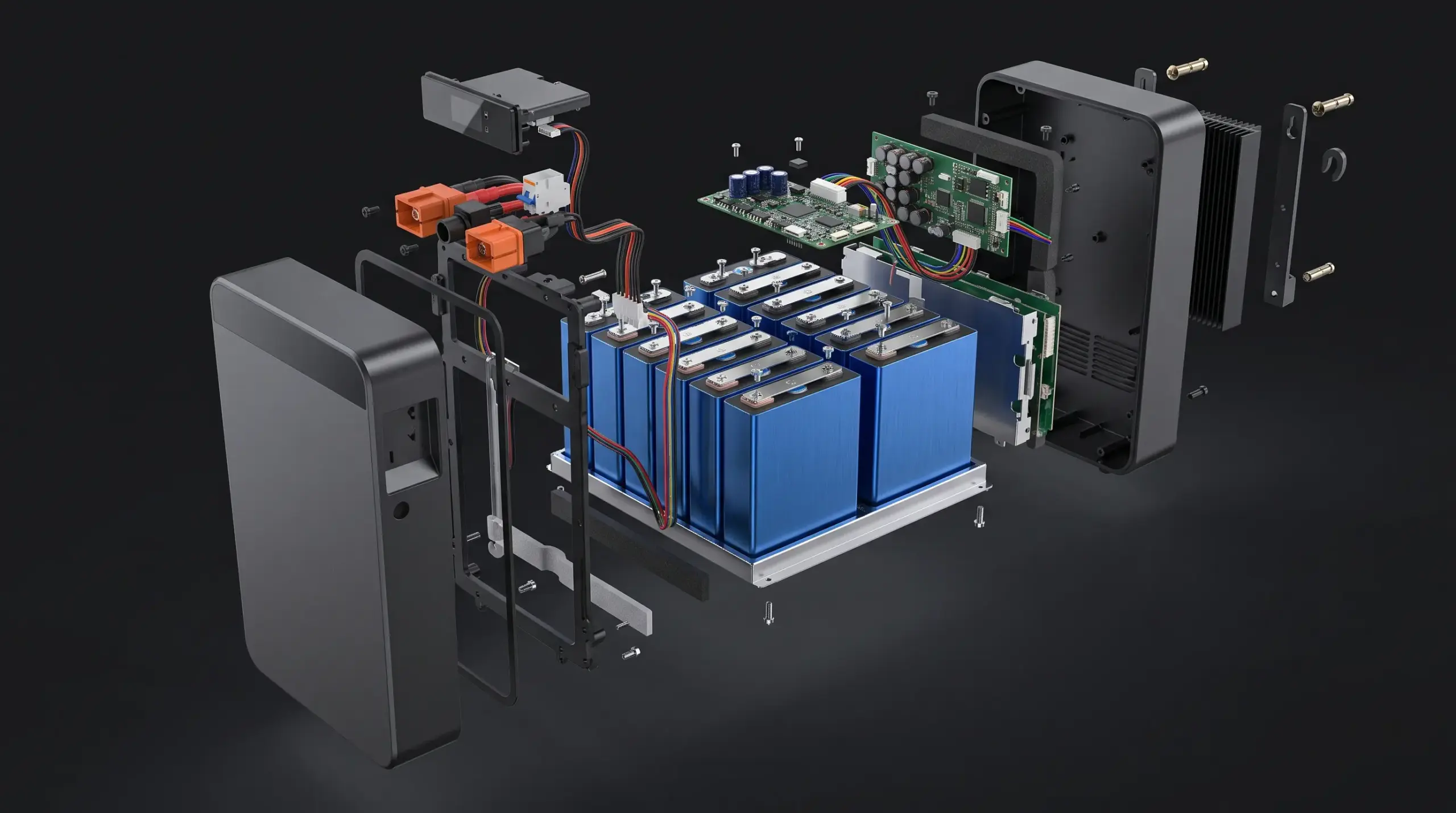
Battery chemistry plays a major role in longevity. Lithium Iron Phosphate (LFP) batteries generally outlast standard Nickel Manganese Cobalt (NMC) units because they handle daily cycling with significantly less degradation.
Equally vital is how deeply you drain the battery each day. Regularly pulling a unit down to zero capacity strains internal cells. Staying within manufacturer parameters and understanding your system’s depth of discharge and battery warranty terms ensures you preserve total usable capacity over thousands of cycles.
Operating Temperature and Environmental Factors
Ambient temperature directly impacts internal cell health and efficiency:
- Extreme Heat: Accelerates internal chemical reactions, permanently degrading usable capacity ahead of schedule.
- Freezing Temperatures: Temporarily slows down chemical movement, reducing immediate power output and charging speed.
- Optimal Environment: Installing units in a sheltered garage or climate-controlled utility area keeping ambient temps between 50°F and 80°F provides ideal working conditions.
Maintenance Practices and Manufacturer Warranties
While modern lithium systems require virtually no active physical maintenance, software management and warranty oversight keep equipment running smoothly:
- Cycle Guarantees: Leading manufacturers offer a 10-year warranty covering a minimum throughput (typically 4,000 to 6,000 total discharge cycles).
- Capacity End-of-Life: Most quality warranties guarantee the battery retains at least 70% of its original capacity at the end of the 10-year period.
- Firmware Updates: Keeping your battery monitoring software updated helps optimize charging curves automatically.
How to Maximize Solar Battery Efficiency and Life
Getting the most out of your home energy storage comes down to daily usage habits and smart energy management. Strategic battery maintenance keeps your power system performing efficiently while maximizing overall return on investment.
Optimizing Battery Charging and Discharging Cycles
To extend total battery lifespan and maintain high operating efficiency, avoid extreme daily charging habits. Consistently draining a system to empty or holding it at absolute maximum capacity accelerates cell degradation.
- Manage Depth of Discharge (DoD): Configure your system settings to operate within a 10% to 90% state-of-charge buffer for daily use.
- Align with peak solar production: Program solar generation to charge your home backup setup during mid-day sunlight hours, reserving stored power for peak evening rates.
- Choose reliable cell technology: Working with a trusted floor-standing LiFePO4 battery manufacturer provides access to durable lithium iron phosphate chemistry built for high cycle counts and long service life.
Smart Load Management During Grid Outages
During an extended power outage, stretching your available kilowatt hours requires active power management. Prioritizing critical loads ensures your energy supply lasts through multi-day blackouts.
| Load Priority | Recommended Strategy | Impact on Backup Duration |
|---|---|---|
| High-Draw Loads | Shut off electric water heaters, central AC, and dryers | Prevents sudden voltage drops and severe battery depletion |
| Essential Appliances | Run refrigerator power consumption cycles, water pumps, and routers | Preserves critical home functions with minimal drain |
| Automated Control | Use smart load panels to shed non-essential circuits | Optimizes total battery capacity without manual intervention |
Automating load management ensures your home stays powered efficiently until the grid recovers or solar panels restore energy reserves.
Are Solar Batteries Worth the Investment?
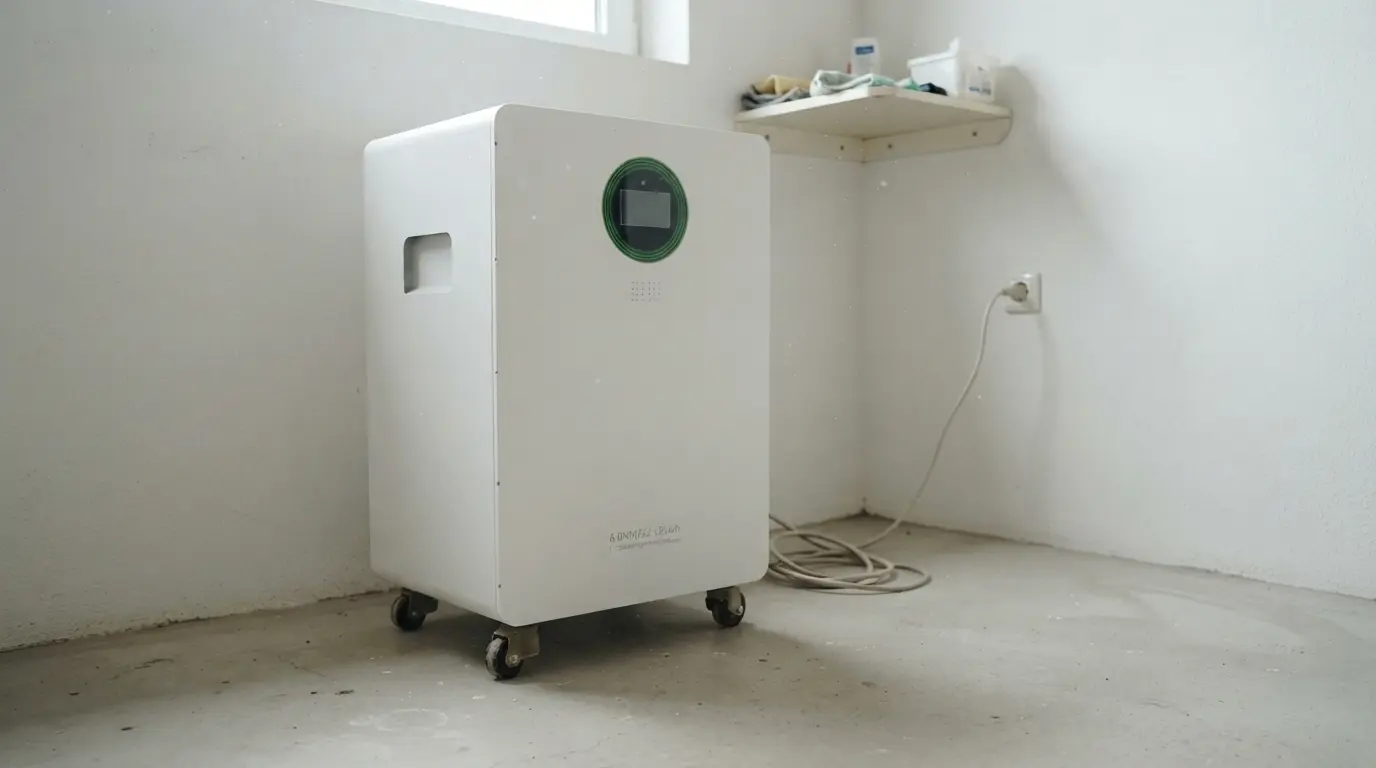
Investing in solar energy storage goes beyond standard payback periods-it is about taking control of your power supply and securing your household against rising utility rates and unpredictable power outages.
Energy Independence and Outage Resilience Benefits
A solar battery keeps your critical home loads operational the moment the grid drops. Instead of dealing with the noise, fuel demands, and fumes of a fossil-fuel backup generator, clean home energy storage delivers immediate, silent backup.
- Continuous Backup: Keeps your essential appliances running seamlessly during grid disruptions.
- Daily Self-Consumption: Store surplus daylight kilowatt hours to power your home through expensive peak evening hours.
- Complete Independence: Pair your battery with solar panels to maintain an ongoing off-grid system during multi-day emergencies.
If you are evaluating different backup options for your home or property, checking our guide on whether a solar generator is worth the investment will help you compare portable systems against fixed residential installations.
Evaluating Total System Cost versus Long-Term Savings
While upfront hardware and installation demand initial capital, daily rate arbitrage and long battery lifespan performance make energy storage a strong financial hedge against utility rate hikes.
| Investment Factor | Grid-Only Setup | Home Solar Battery System |
|---|---|---|
| Outage Security | Zero (requires gas backup) | Instant, automatic continuous backup |
| Peak Rate Exposure | High utility rates | Low (powered by stored solar capacity) |
| Utility Rate Risk | Fully exposed to price hikes | Shielded with locked-in solar energy |
| Asset Return | Sunk cost on monthly bills | Daily bill reduction + higher property value |
Deploying a typical 10kWh battery capacity unit allows you to avoid peak utility charges daily while keeping your home fully operational when local infrastructure fails.