 English
  العربية
  日本語
日本語  한국어
한국어  Tiếng Việt
  ไทย
ไทย  Bahasa Melayu
  فارسی
فارسی  Bahasa Indonesia
  ဗမာစာ
ဗမာစာ  简体中文
简体中文  香港中文
香港中文  繁體中文
繁體中文  Русский
  Deutsch
  Nederlands
  Italiano
  Français
  Español
  Português
  Afrikaans
  Azərbaycan dili
  Български
  ਪੰਜਾਬੀ
  हिन्दी
  اردو
اردو  বাংলা
বাংলা  Հայերեն
  Íslenska
  Қазақ тілі
  नेपाली
  Српски језик
  Kiswahili
  తెలుగు
  Basa Jawa
  தமிழ்
தமிழ்  मराठी
मराठी Calculate blackout runtime from usable kWh, household load, inverter output, solar recharge and the circuits that matter most.
During a blackout, homeowners usually need to know whether the battery will last through the night, support HVAC, and cover essential appliances without running flat. The answer depends on battery capacity, active household loads, inverter output, and whether solar can recharge the system during the day.
- A 10 kWh solar battery can typically support critical loads—such as a refrigerator, LED lighting, Wi-Fi, and phone charging—for about 24 hours without solar recharging, depending on actual power use.
- A 20 kWh to 30 kWh solar battery system can support a standard home with heavier appliance use or HVAC demand for roughly 12 to 24 hours per charge. High-demand equipment can reduce runtime quickly.
- Solar-plus-storage backup can last for multiple days when daytime solar production recharges the battery and exceeds the home’s daily energy consumption. In favorable conditions, backup can continue indefinitely while generation remains greater than use.
Single-charge runtime is the number of hours available from stored battery energy alone. Daily solar recharging during a blackout can extend solar battery runtime by restoring energy for evening and overnight use.
Solar Battery Runtime Calculator: Calculate Exact Backup Time
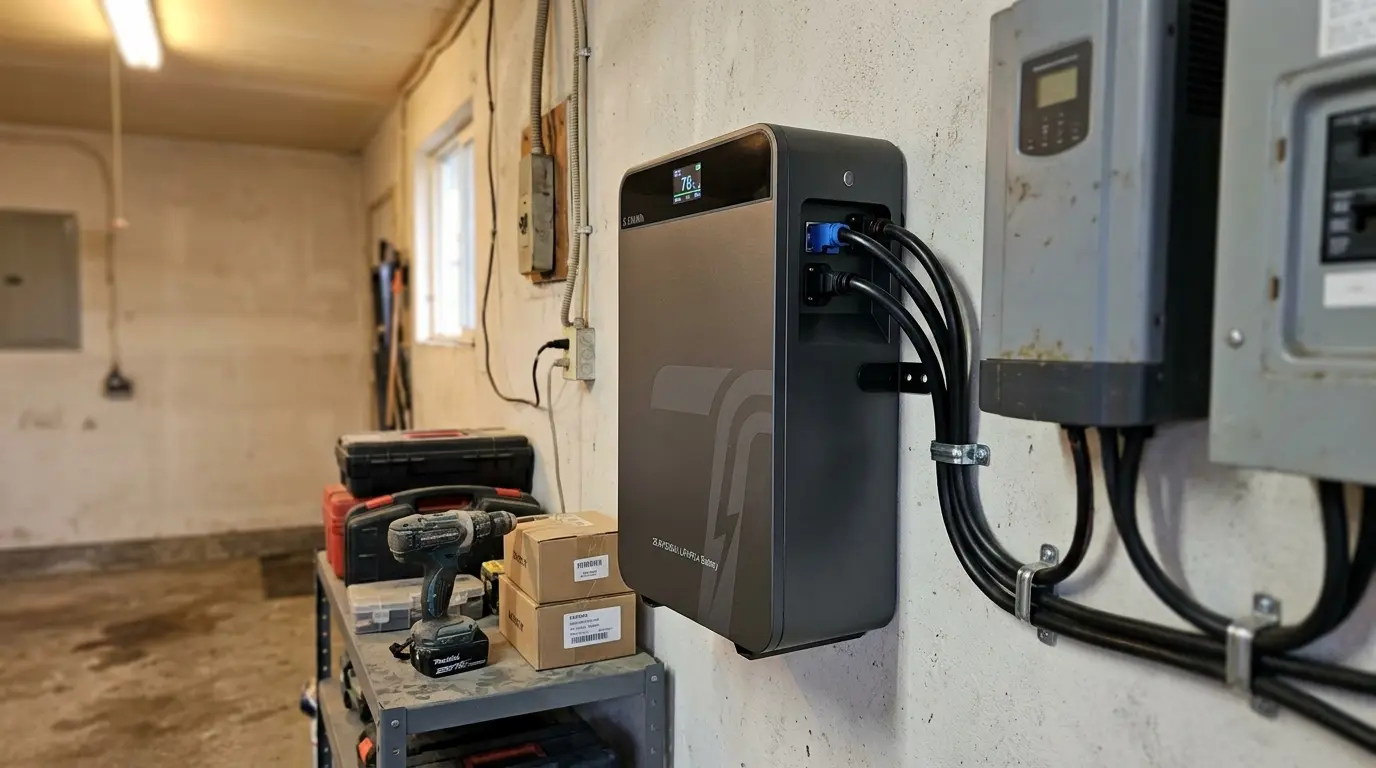
To calculate how long a solar battery can power a house, I use this simple formula:
Runtime (hours) = Usable battery capacity (kWh) × Depth of Discharge (DoD) × system efficiency ÷ average household load (kW)
A battery’s kWh rating is the energy it stores. A home’s kW load is the power being used at that moment. In simple terms, kWh is the size of the fuel tank; kW is how quickly the home uses that energy.
10 kWh Battery Runtime Example
For a 10 kWh LiFePO4 battery, assume a 90% usable energy allowance after discharge limits and inverter conversion losses:
- Battery capacity: 10 kWh
- Usable energy: 10 kWh × 90% = 9 kWh
- Average essential-load demand: 0.375 kW
9 kWh ÷ 0.375 kW = about 24 hours of backup
This load level can cover a carefully managed set of essentials, such as a refrigerator, LED lighting, Wi-Fi, phone charging, and selected small electronics. If the household load rises to 1 kW, the same usable 9 kWh provides about 9 hours.
| Term | What It Means | Example |
|---|---|---|
| kWh | Stored battery energy | A 10 kWh battery stores 10 kWh of energy |
| kW | Live power demand | A home using 0.5 kW uses energy at 0.5 kWh per hour |
| DoD | Share of battery capacity used before recharge | 90% DoD on 10 kWh = 9 kWh available |
| Efficiency | Energy retained after inverter and conversion losses | A practical estimate may be around 90% |
For accurate battery backup during a blackout, calculate the average load of the circuits you plan to keep running rather than using the home’s full electricity consumption. This is the basis for sizing a reliable home battery backup system for power outages.
Continuous Load vs. Surge Starting Watts
A solar battery can store enough energy, but the inverter must also deliver enough power at the right moment. Running watts are the power an appliance uses while operating. Surge starting watts are the short, higher burst of power needed when a motor starts.
| Appliance | Typical Running Load | Surge Consideration |
|---|---|---|
| Refrigerator | Ongoing low-to-moderate load | Compressor needs extra starting power |
| Central AC or heat pump | High continuous load | Motor startup can create a large surge |
| Sump pump | Short, high-demand cycles | Pump motor needs starting capacity |
| Well pump | High load while pumping | Requires extra inverter surge capability |
Inverter Output Sets What Can Run Together
The inverter’s continuous rating limits the combined appliances that can operate at the same time. For example, a home running air conditioning, refrigeration, lighting, internet equipment, and a pump may exceed a small inverter’s output even when the battery has stored energy remaining.
For higher-demand backup, we use pure sine wave off-grid and hybrid inverter options from 5 kW to 12 kW. A properly sized 10 kW home and commercial pure sine wave hybrid inverter helps support larger simultaneous loads while delivering clean AC power.
Battery capacity determines runtime; inverter capacity determines which loads can run. A 20 kWh or 30 kWh solar battery system cannot operate a high-demand appliance if the inverter’s continuous or surge output is too low. For reliable battery backup during a blackout, size both the battery bank and inverter around the home’s normal load and motor-starting requirements.
Essential Loads vs. Whole-Home Backup
A solar battery can back up selected essential circuits or most of the home. The right approach depends on the loads that must remain available during a blackout and the backup duration required.
Essential-Load Backup
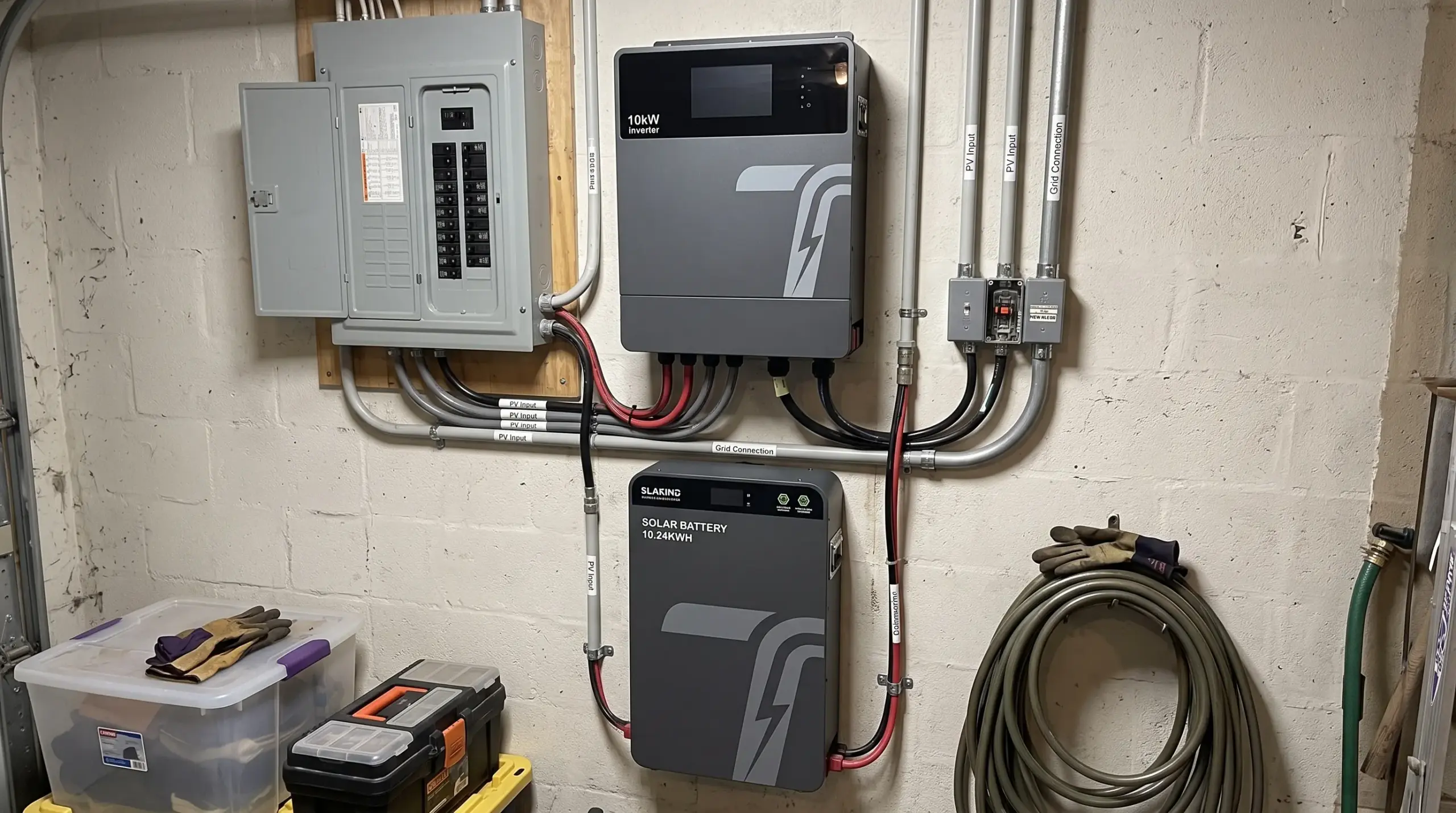
A critical load subpanel separates priority circuits from high-demand equipment. We typically prioritize:
- Refrigerator and basic kitchen outlets
- LED lighting
- Wi-Fi, communications, and phone charging
- Medical devices
- Home office equipment and security systems
For essential loads, a battery capacity of 2.61 kWh to 10.44 kWh can support practical outage coverage when energy use is controlled. A home backup battery system with LiFePO4 storage and an intelligent BMS helps manage battery discharge for these priority circuits.
Whole-Home Backup
Whole-home backup requires substantially more capacity because it may include high-power loads such as:
- HVAC or heat pumps
- Electric water heating
- Dryers and kitchen appliances
- Multiple refrigerators and freezers
- EV charging equipment
For this level of solar battery backup, systems from 16.07 kWh to 32.15 kWh or more are more appropriate. The battery bank must also be paired with an inverter that can handle the home’s continuous demand and appliance starting loads.
Choose Circuits by Priority
During a blackout, keep circuits powered based on safety, daily needs, and energy draw. Start with refrigeration, lighting, communications, medical equipment, and charging. Add HVAC, water heating, laundry, and other heavy appliances only when the battery capacity, inverter output, and available solar generation support them. This approach extends how long a solar battery can power a house while protecting reserve energy for overnight use.
Household Appliance Wattage and Battery Capacity Guide
To estimate how long a solar battery can power a house, we start with the appliances that will actually run during an outage. Watts (W) show active power demand, while kilowatt-hours (kWh) show energy used over time. Our watt-hour explanation and examples cover this difference in simple terms.
| Appliance or Load | Average Power Draw | Estimated Energy Use | Practical Battery Capacity Tier |
|---|---|---|---|
| Wi-Fi router and LED lighting | About 60W | 0.06 kWh per hour | 2.61–5.22 kWh emergency backup |
| Efficient refrigerator | About 150W average | 0.15 kWh per hour | 5.22–10.44 kWh essential-load backup |
| Microwave or coffee maker | About 1,200W while operating | About 0.20 kWh total daily use | 10.44 kWh or larger |
| 3-ton central AC | About 3,500W | 3.50 kWh per hour | 17.92–32.15 kWh whole-home system |
| Electric water heater | About 4,500W | 4.50 kWh per hour | 17.92–32.15 kWh whole-home system |
A refrigerator, lighting, internet equipment, and phone charging use relatively little energy when managed carefully. By contrast, central air conditioning and electric water heating can drain a battery bank quickly. A 3,500W AC load can use 3.50 kWh in one hour, so battery capacity and inverter output must both be sized for that demand.
Intermittent appliances change the real daily battery drain. A microwave or coffee maker may draw around 1,200W, but it usually operates for only a few minutes, not continuously. We calculate total runtime from actual operating time, then add the energy use of always-on loads such as refrigeration, lighting, and Wi-Fi.
Factors That Affect Solar Battery Runtime
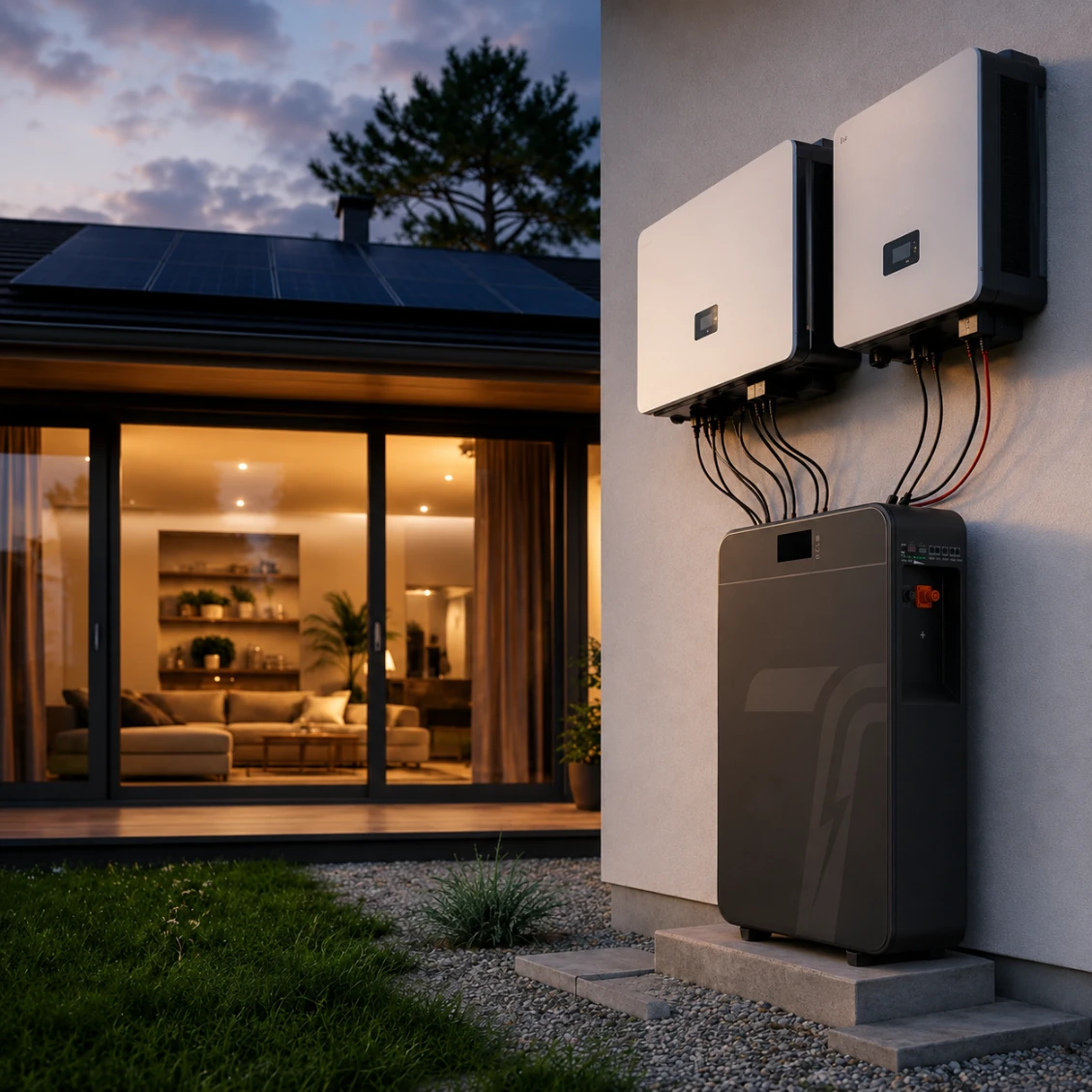
Several operating factors determine how long a solar battery can power a house beyond its nameplate kWh capacity.
- Battery chemistry and usable capacity: LiFePO4 batteries are designed for deep-cycle energy storage. Our LiFePO4 systems use intelligent battery management to support stable discharge and a 6,000+ cycle-life rating at 80% capacity.
- Depth of Discharge (DoD): The usable portion of stored energy matters more than the total battery label. A system should retain appropriate operating reserve rather than treating every rated kWh as available to household loads.
- Inverter limits: Inverter efficiency, continuous output rating, and peak load capability affect actual runtime. A battery may have sufficient stored energy, but an inverter with insufficient output cannot run all connected appliances at the same time.
- Temperature and operating conditions: Extreme heat or cold can reduce real-world discharge performance. Actual backup time can vary from the calculated result when site conditions are outside normal operating ranges.
- Daily solar recharging: Solar-plus-storage outage duration depends on solar array output, available sunlight, weather, and household consumption. When daytime solar production exceeds the energy used by the home, it can recharge the battery and extend backup power across multiple days.
- Smart BMS power management: An intelligent BMS helps manage battery discharge and maintain system health over repeated use. TURSAN systems also support smart connectivity options including IoT, Wi-Fi, Bluetooth, and API protocols on applicable configurations.
- Battery age and system losses: Capacity gradually changes with long-term use, while inverter conversion and connected equipment also consume energy. For a dependable estimate of how long a solar battery can power a house, calculate from usable energy rather than rated capacity alone.
LiFePO4 Battery Cycle Life and Usable Capacity
LiFePO4 battery cycle life and usable capacity are not the same as solar battery runtime. Runtime is the number of hours a battery can support the current household load. Cycle life describes how many charge-and-discharge cycles the battery can complete while maintaining its rated performance.
Our LiFePO4 energy storage systems use prismatic LFP cells and are rated for 6,000+ cycles at 80% capacity. This chemistry is designed for repeated solar charging and battery backup use, helping support long-term residential, off-grid, and peak-shaving applications.
Depth of Discharge (DoD) is the share of stored energy used before recharging. A higher DoD can provide more usable energy in one outage, but operating conditions, charging control, temperature, load demand, and discharge patterns all influence long-term available capacity.
An integrated intelligent BMS helps manage battery operation and protect system health during charging and discharging. For projects requiring larger capacity and long-cycle operation, our guidance on selecting a floor-standing LiFePO4 battery manufacturer can help match battery design with the intended installation.
Key point: A 6,000+ cycle rating does not mean a battery powers a house for 6,000 hours. The hours of backup depend on the battery’s kWh capacity and the home’s active kW load, while cycle life reflects long-term charging and discharging durability.
Solar Battery Sizing Guide for Every Home Backup Need
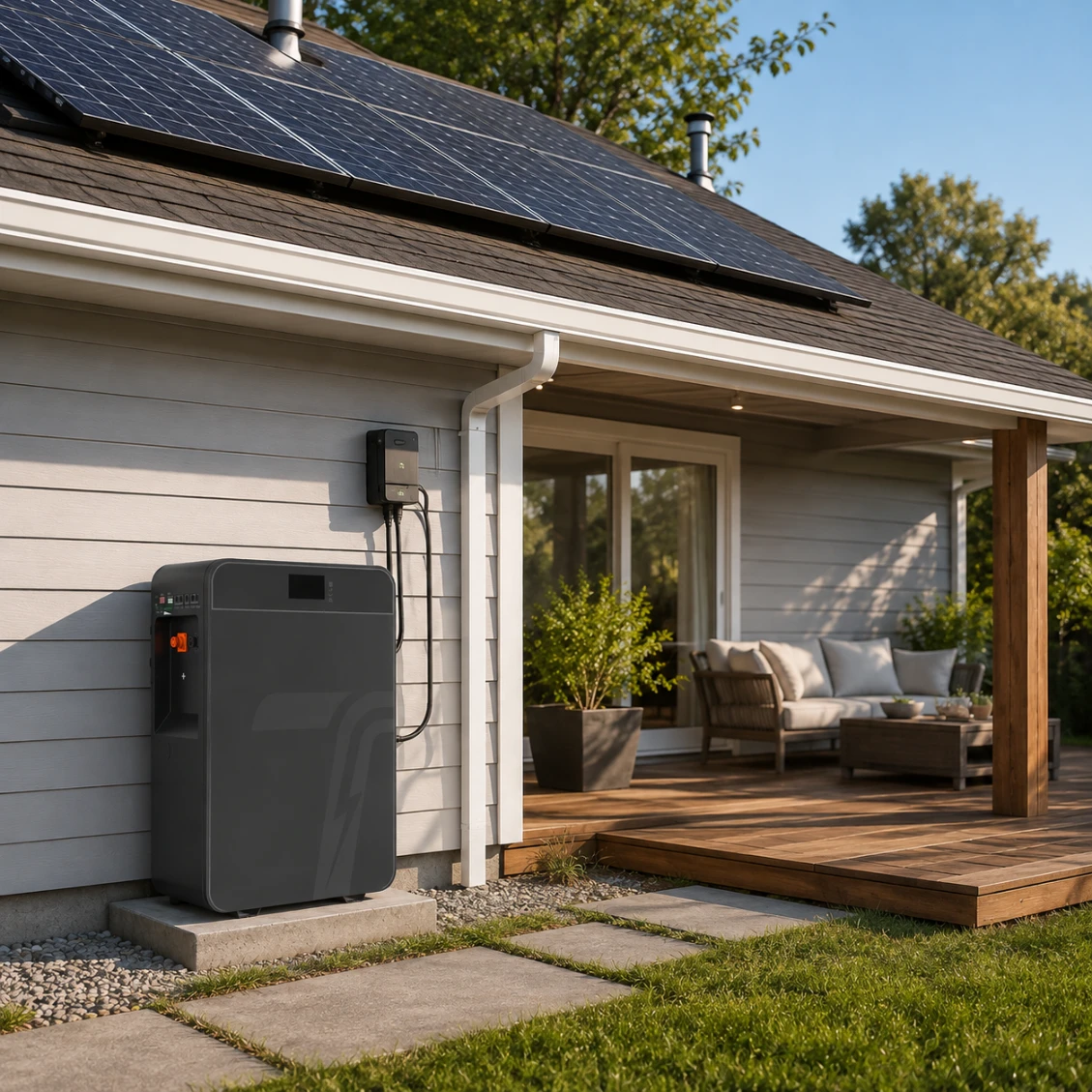
The right solar battery size depends on daily electricity use, the circuits that must stay on, and the outage duration you want to cover. We size home energy storage in kWh, then match it with inverter output and solar charging capacity.
| Backup Tier | Battery Capacity | Best Fit |
|---|---|---|
| Tier 1 | 2.61 kWh–5.22 kWh | Apartments, short outages, medical devices, Wi-Fi, lighting, electronics, and refrigeration |
| Tier 2 | 10.44 kWh–16.07 kWh | Essential circuits, home offices, light kitchen use, and approximately 24 hours of managed backup |
| Tier 3 | 17.92 kWh–32.15 kWh+ | Extended home backup, higher household loads, HVAC operation, and off-grid applications |
Tier 1: Emergency Backup
A 2.61 kWh to 5.22 kWh LiFePO4 battery system suits households that need priority power rather than full-home operation. This tier can support selected low-to-medium loads, including refrigeration, LED lighting, internet equipment, charging, and certain medical devices during short outages.
Tier 2: Essential-Circuit Backup
A 10.44 kWh to 16.07 kWh system provides more practical battery backup during a blackout for essential home circuits. It is a suitable range for a home office, refrigeration, lighting, communications, and controlled kitchen use. Actual runtime depends on the live load: lower, managed consumption can extend backup closer to a full day.
For dependable outage planning, a home battery backup solution for power outages should separate essential circuits from high-demand loads.
Tier 3: Extended Whole-Home Backup
A 17.92 kWh to 32.15 kWh system is designed for larger homes, longer outages, off-grid use, and higher energy demand. It offers more capacity for heavier appliances and can support HVAC when paired with a properly sized inverter. TURSAN systems cover capacity options up to 32.15 kWh, with off-grid and hybrid inverter output ratings from 1.2 kW to 12 kW.
Calculate How Many Solar Batteries You Need
Use this simple sizing method:
- Calculate the daily energy required for the circuits you want to back up in kWh.
- Multiply that figure by the required outage duration in days.
- Select enough battery capacity to cover that energy requirement while allowing for usable discharge capacity and system losses.
- Confirm that inverter continuous output can handle the loads expected to run at the same time.
For example, a home using 10 kWh per day on essential loads needs about 20 kWh of stored energy for two days without relying on solar recharge. If daytime solar production restores much of the energy used, the same battery bank can support a longer solar-plus-storage outage duration.
Choose Modular Capacity for Future Growth
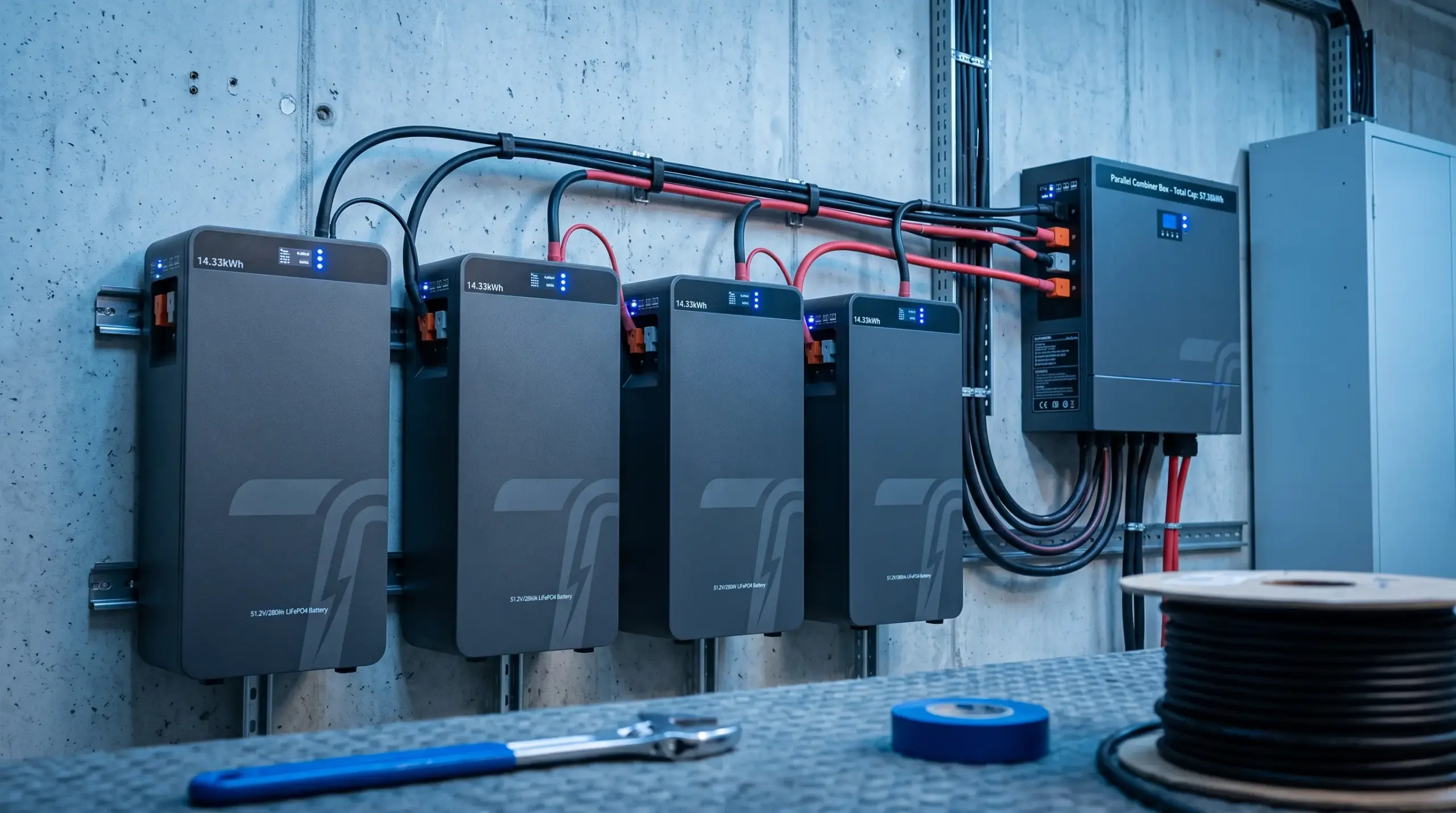
Stackable battery backup systems are often more practical than selecting one oversized unit from the start. A modular design allows capacity to grow with household consumption, new appliances, HVAC demand, or off-grid requirements. TURSAN stacked battery options support scalable energy storage from 5 kWh to 25 kWh.
Size Solar Panels for Daily Recharging
Battery capacity alone does not determine long-term blackout performance. The solar array must produce enough energy to recharge the battery bank while also serving daytime household loads. Daily solar battery recharge rate varies with array size, available sunlight, weather, and actual electricity consumption.
A well-matched system combines battery storage, solar production, and inverter capacity so priority loads remain supplied through the night and the battery can recharge during daylight hours.
How to Make a Solar Battery Last Longer During a Blackout
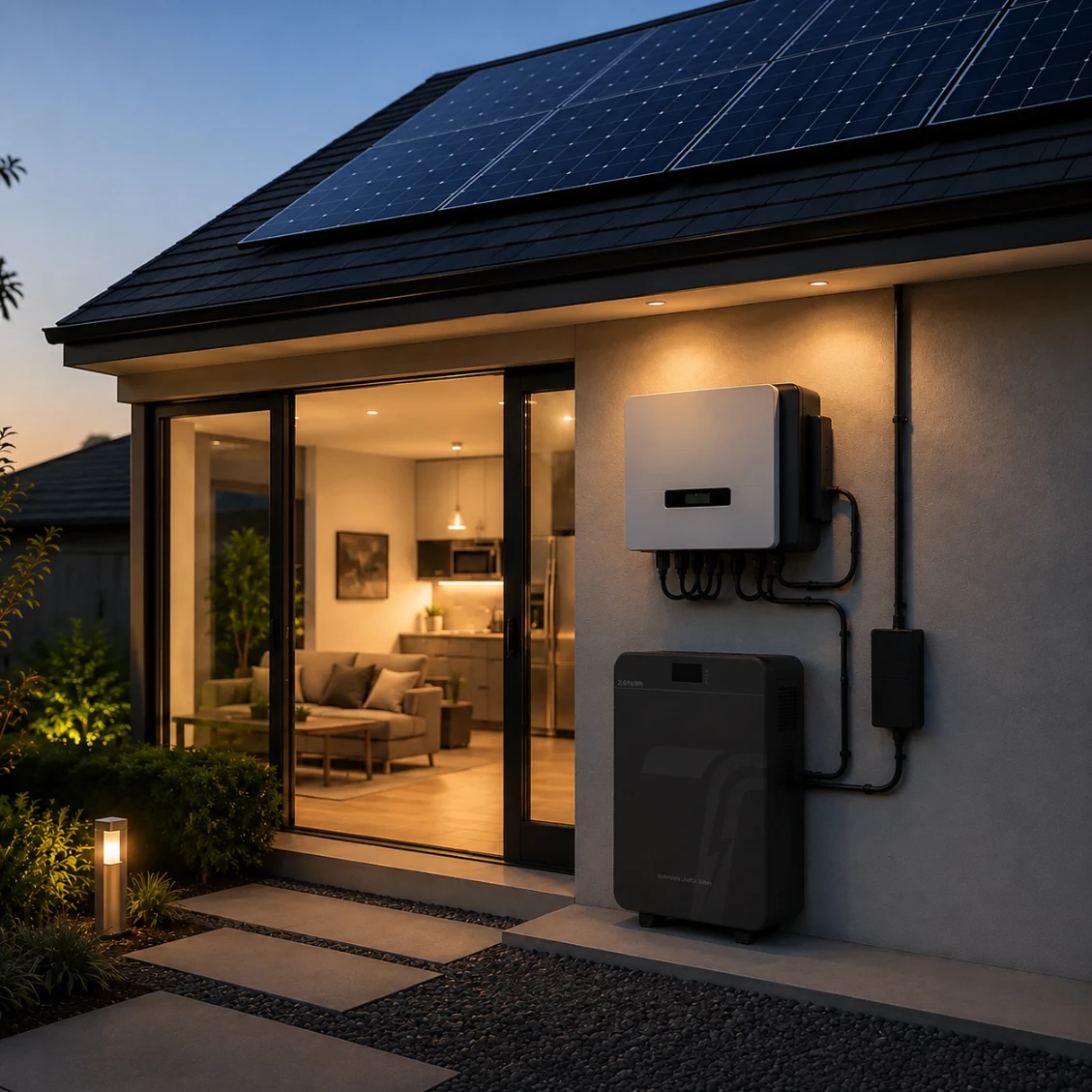
During an outage, we make a solar battery last longer by reducing demand before the battery reaches a low state of charge. Battery backup duration depends as much on load management as on battery capacity.
- Turn off nonessential loads. Avoid electric water heating, clothes dryers, large cooking appliances, and other high-drain circuits unless necessary.
- Use a critical load subpanel. Keep priority circuits—refrigeration, LED lighting, internet, phone charging, and essential medical equipment—separate from heavy household loads.
- Stagger high-surge appliances. Do not start a refrigerator, sump pump, well pump, or HVAC equipment at the same time. This helps keep inverter demand within its continuous output rating.
- Reduce HVAC use. Adjust thermostat settings, use fans, close unused rooms, and improve insulation or zone control to reduce the battery drain caused by heating and cooling.
- Monitor live energy use. An intelligent BMS and compatible inverter monitoring features can help track battery state of charge and active loads, making it easier to identify unnecessary consumption.
- Protect overnight reserves. Keep enough stored energy for nighttime essentials and account for cloudy conditions that may reduce daytime solar recharging.
A disciplined critical-load plan can significantly extend how long a solar battery can power a house during a blackout.
Time-of-Use Peak Shaving and Daily Battery Use
Time-of-Use (TOU) peak shaving uses stored battery energy when utility rates are highest. We set the battery to charge when rates are lower or when solar production is available, then discharge during higher-rate periods. This can reduce grid energy use during expensive hours.
| Battery Use Mode | Main Goal | Battery Discharge Timing |
|---|---|---|
| TOU peak shaving | Reduce high-rate grid consumption | Scheduled peak-rate hours |
| Emergency backup | Keep power available during an outage | Only when grid power fails |
| Solar self-consumption | Use more on-site solar energy | After solar production drops |
A battery used for daily TOU peak shaving may have less energy available if a blackout begins late in the day. For this reason, reserve state-of-charge settings are important. A reserve keeps part of the battery capacity protected for essential backup loads rather than allowing full discharge for daily bill management.
| Priority | Practical Battery Setting |
|---|---|
| Maximum utility savings | Lower reserve, more daily discharge |
| Balanced savings and backup | Maintain a moderate reserve |
| Strong outage readiness | Maintain a higher reserve for critical loads |
For home energy storage, the right setting depends on local electricity pricing, outage risk, solar production, and essential-load requirements. Our LiFePO4 systems use an intelligent BMS to manage battery operation, while compatible hybrid inverters can support scheduled charging and discharge strategies. Daily cycling should also be balanced with the battery’s 6,000+ cycle-life rating and the need to retain reliable battery backup during a blackout.
Choosing a Solar Battery System for Your Home or Business
A solar battery system should match the loads you need to support today and leave room for future energy use. For reliable battery backup during a blackout, we assess stored energy, inverter output, battery chemistry, usable capacity, and expansion requirements together.
| Selection Factor | What to Check | TURSAN System Considerations |
|---|---|---|
| Home energy storage capacity | kWh needed for essential or whole-home loads | Systems from 2.61 kWh to 32.15 kWh |
| Battery chemistry | Safety, discharge performance, and cycle life | LiFePO4 prismatic cells |
| Usable capacity | Energy available within operating limits | Intelligent BMS-managed operation |
| Cycle life and warranty | Long-term operating value | 6,000+ cycles and a 5-year warranty |
| Voltage | Compatibility with the battery and inverter | 12.8V, 25.6V, 48V, and 51.2V options |
| Expansion | Ability to add storage as demand grows | Stackable battery configurations from 5 kWh to 25 kWh |
Match the Battery and Inverter
Battery voltage and communication support must match the selected hybrid or off-grid inverter. TURSAN systems support inverter options from 1.2 kW to 12 kW, with pure sine wave output for stable power delivery. The inverter must cover both the continuous load—the power appliances use while operating—and the higher starting surge required by equipment such as pumps, refrigerators, and HVAC systems.
| Application | Typical Storage Approach | Inverter Consideration |
|---|---|---|
| Essential household circuits | 2.61 kWh to 10.44 kWh | Match output to lighting, refrigeration, communications, and charging loads |
| Larger home backup | 16.07 kWh to 32.15 kWh | Consider higher inverter capacity for multiple simultaneous loads |
| Remote or off-grid sites | Scalable 5 kWh to 25 kWh stacked storage | Use an off-grid or hybrid inverter sized for daily loads and surge demand |
| Business or project installations | Modular storage based on site demand | Plan for operating schedules, critical equipment, and future expansion |
Plan for Expansion and Site Design
Modular storage can be a practical choice when energy use may grow. A household may add air conditioning, more appliances, or electric vehicle charging over time; a business may add new equipment or longer operating hours. Stackable battery backup systems allow capacity to be scaled without forcing every project into one oversized configuration.
For residential, commercial, and off-grid projects, work with a qualified installer on:
- Load calculations for critical and noncritical circuits
- Inverter sizing for continuous demand and starting watts
- Electrical permits and local installation requirements
- Critical-load panel design for outage priorities
- Solar array sizing for regular battery recharging
- Battery placement, voltage configuration, and system communications
When comparing storage options, review home battery brands and system considerations alongside actual site loads. A properly matched LiFePO4 battery, smart BMS, and compatible inverter provide a clearer answer to how long a solar battery can power a house or business.
FAQs: How Long Can a Solar Battery Power a House?
| Question | Short Answer |
|---|---|
| How long will a 10 kWh solar battery run a house? | Runtime depends on the household’s active load. A 10 kWh-class system can support essential circuits longer than it can support a full home with heavy appliances running. |
| Can a solar battery power a house all night? | Yes, when the battery capacity matches overnight consumption. Lower loads such as lighting, internet, refrigeration, and device charging extend runtime. |
| How many solar batteries are needed for central air conditioning? | AC requires careful system sizing because it adds a high continuous load. We match the battery bank with an appropriately rated 5 kW to 12 kW inverter and the home’s total load profile. |
| Can solar panels recharge a battery during an outage? | Yes. In a correctly designed solar-plus-storage system, daytime solar production can recharge the battery and extend backup time beyond a single discharge cycle. |
| What drains a solar battery fastest? | High-power loads and multiple appliances operating together drain stored energy fastest. HVAC equipment, electric heating, and other heavy loads require more battery capacity and inverter output. |
| Is a 20 kWh battery enough for whole-home backup? | It can be suitable for some homes, but actual backup time depends on daily consumption and which appliances remain on. Whole-home systems commonly require capacity in the 16.07 kWh to 32.15 kWh range or more. |
| What is the difference between runtime and battery lifespan? | Runtime is the number of hours available from a charge. Lifespan is how many charge-discharge cycles the battery can provide over time. Our LiFePO4 systems are rated for 6,000+ cycles at 80% capacity rating and include a 5-year warranty. |
| Do I need a critical-load subpanel? | A critical-load setup can help reserve battery power for priority circuits, such as refrigeration, lighting, communications, and essential equipment, rather than powering every circuit during an outage. |
| Can I expand later with stackable batteries? | Yes. Stackable battery solutions provide a practical path for increasing storage as household demand grows. Available modular options range from 5 kWh to 25 kWh. |
For reliable battery backup during a blackout, we recommend matching usable battery capacity, inverter output, and priority loads as part of a complete home solar battery backup system.