 English
  العربية
  日本語
日本語  한국어
한국어  Tiếng Việt
  ไทย
ไทย  Bahasa Melayu
  فارسی
فارسی  Bahasa Indonesia
  ဗမာစာ
ဗမာစာ  简体中文
简体中文  香港中文
香港中文  繁體中文
繁體中文  Русский
  Deutsch
  Nederlands
  Italiano
  Français
  Español
  Português
  Afrikaans
  Azərbaycan dili
  Български
  ਪੰਜਾਬੀ
  हिन्दी
  اردو
اردو  বাংলা
বাংলা  Հայերեն
  Íslenska
  Қазақ тілі
  नेपाली
  Српски језик
  Kiswahili
  తెలుగు
  Basa Jawa
  தமிழ்
தமிழ்  मराठी
मराठी How Much Electricity Can a 200Ah Rack Battery Store in a 48V System
A 200Ah rack battery in a 48V system stores about 9.6kWh of nominal energy. That is the direct answer most installers need, but the number on the label does not represent the energy your loads can use at the AC output.
FIELD ESTIMATE / 200Ah RACK BATTERY / 90% DOD / RATED CONDITIONS
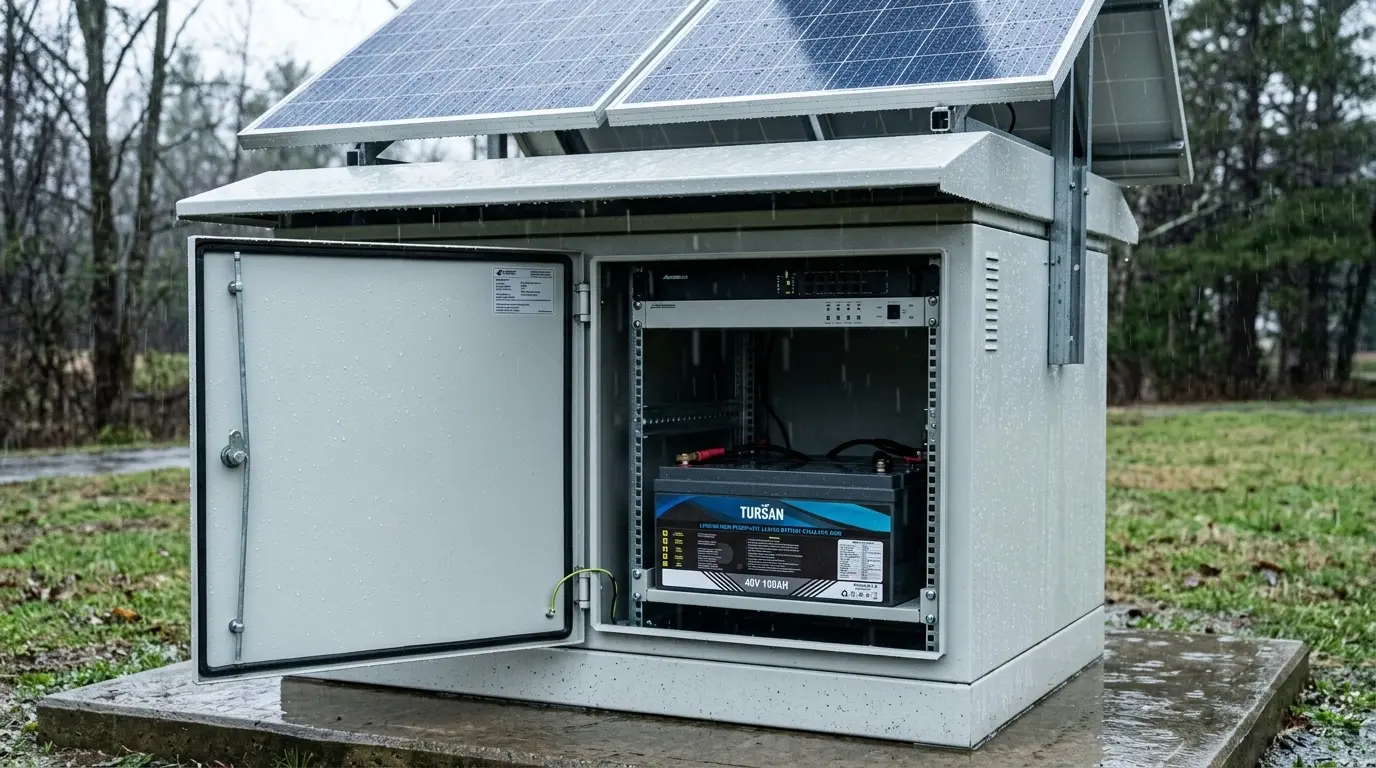
The result depends on the battery’s actual nominal voltage, the permitted depth of discharge, and inverter efficiency. A standard 48V LiFePO4 rack battery often uses a 51.2V nominal pack, so its nameplate energy may be 10.24kWh instead. TURSAN’s 48V 200Ah LiFePO4 battery is a useful product reference when checking how the marketed 48V class maps to the pack’s actual voltage and capacity.
The Core Calculation and the Usable Result
Use this formula for any battery system:
Energy in watt-hours = Voltage × Capacity in amp-hours
For a nominal 48V system:
48V × 200Ah = 9,600Wh = 9.6kWh
Many 48V rack batteries contain sixteen series-connected LFP cells. Each cell has a nominal voltage of 3.2V, producing a 51.2V pack:
51.2V × 200Ah = 10,240Wh = 10.24kWh
The battery management system normally reserves some energy to protect the cells. If the manufacturer specifies 90% usable depth of discharge, a 10.24kWh battery provides approximately 9.22kWh of DC energy. After a 94% efficient inverter, the AC load receives roughly 8.67kWh under rated conditions.
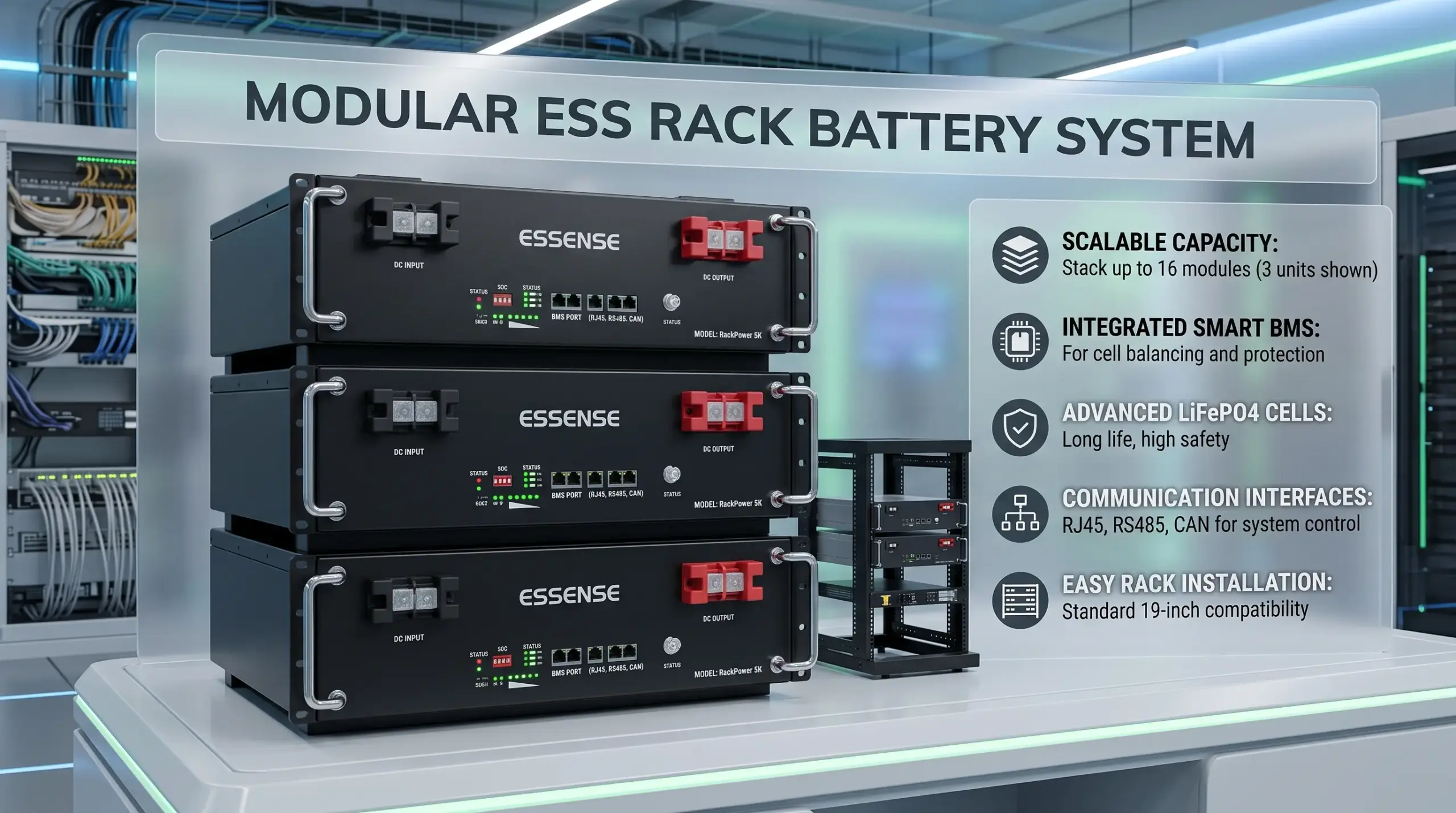
Actual output varies with discharge current, temperature, cable losses, and battery age. A rack battery rated at 200Ah at 25°C may deliver less energy when the cabinet operates below 0°C or when the load pushes the pack close to its maximum discharge current. Check the test conditions in the datasheet rather than treating 200Ah as an absolute constant. For rack-based installations, compare the battery format and integrated components against TURSAN’s rack-mount ESS solution before finalizing the enclosure and system architecture.
What a 200Ah Rack Battery Can Run
Runtime comes from dividing usable energy by load power. For example, an 800W continuous load could run for approximately 10.8 hours from 8.67kWh of AC energy. A 2,000W load would run for about 4.3 hours, before accounting for motor starting surges or additional standby consumption. For a broader residential load profile, compare these estimates with whole-home battery backup system sizing.
| Configuration | Nominal energy | Approximate usable energy at 90% DoD | Typical use |
|---|---|---|---|
| 48V 200Ah battery calculation | 9.6kWh | 8.64kWh DC | General system sizing |
| 51.2V 200Ah LFP rack battery | 10.24kWh | 9.22kWh DC | Home backup and telecom sites |
| Two 51.2V 200Ah batteries in parallel | 20.48kWh | 18.43kWh DC | Larger backup or off-grid loads |
Parallel batteries keep the system voltage at 48V-class levels while doubling amp-hour capacity. The inverter must support the combined current, and the installer should use equal-length cables, a suitable busbar, and a BMS communication scheme that the inverter recognizes. If the project needs more stored energy than one module provides, TURSAN’s higher-capacity 48V-class battery option offers another configuration to evaluate alongside a parallel bank.
The OEM and ODM Details Behind the Number
For an OEM or ODM project, the 200Ah label is only one part of the specification. Ask whether the supplier uses LFP prismatic cells, what continuous discharge current the BMS allows, and whether the rack battery supports CAN or RS485 communication. A common design may support 100A continuous discharge, with peak current limited for a few seconds by the BMS firmware.
The enclosure, connector choice, and firmware also affect installation. A 19-inch rack format, front-mounted terminals, and an operating range of 0°C to 50°C may suit a telecom cabinet, while a residential product may need a different terminal layout, display, or inverter protocol. TURSAN outlines its OEM and ODM customization support for projects where those interface and enclosure details need to match a local installation standard. OEM buyers should confirm cycle-life test conditions, UN38.3 transport documentation, label artwork, and sample lead time before approving a large batch.

Four Common Pitfalls
- Using 48V as the exact pack voltageA 51.2V LFP battery is usually marketed for a 48V system. Use the battery datasheet voltage for energy calculations and inverter compatibility checks.
- Treating nominal energy as delivered AC energyApply the specified depth of discharge and inverter efficiency. A 10.24kWh nameplate can produce closer to 8.5 to 8.8kWh for AC loads in normal operation.
- Ignoring peak loadsRefrigerators, pumps, and air conditioners can draw several times their running power during startup. Size the inverter and BMS for surge current, not only the average load.
- Connecting parallel batteries without a communication planConfirm CAN or RS485 addressing, charge limits, cable balance, and the maximum permitted number of battery modules. A parallel bank should operate as one coordinated system.
FAQ
Question: Is a 200Ah 48V battery equal to 10kWh?
Question: How much energy can I use without shortening battery life?
Question: Can I add a second 200Ah rack battery later?
Conclusion
A 200Ah battery in a 48V-class system stores 9.6kWh by the simple 48V calculation. If the product is a 51.2V, 200Ah LFP rack battery, the nameplate value is 10.24kWh, with roughly 9.22kWh available at 90% DoD before inverter losses. For a project quotation, send the battery voltage, inverter efficiency, daily load curve, and required backup time; TURSAN’s home ESS support for installers and EPC projects can help frame the system requirements, and the team can return a preliminary battery and cable BOM within 24 hours.