 English
  العربية
  日本語
日本語  한국어
한국어  Tiếng Việt
  ไทย
ไทย  Bahasa Melayu
  فارسی
فارسی  Bahasa Indonesia
  ဗမာစာ
ဗမာစာ  简体中文
简体中文  香港中文
香港中文  繁體中文
繁體中文  Русский
  Deutsch
  Nederlands
  Italiano
  Français
  Español
  Português
  Afrikaans
  Azərbaycan dili
  Български
  ਪੰਜਾਬੀ
  हिन्दी
  اردو
اردو  বাংলা
বাংলা  Հայերեն
  Íslenska
  Қазақ тілі
  नेपाली
  Српски језик
  Kiswahili
  తెలుగు
  Basa Jawa
  தமிழ்
தமிழ்  मराठी
मराठी Is 24V or 48V More Practical for Home Energy Storage?
Choosing between 24V and 48V often starts with a simple question: which battery voltage will run a home more reliably without making the installation unnecessarily expensive? The answer depends less on the battery label and more on the inverter rating, daily load, cable distance, and plans for expansion.
less current
For a small backup system, 24V can be perfectly practical. For most new residential solar installations, 48V usually gives the installer more working room. It carries the same power at roughly half the current, which reduces cable losses and makes higher-power inverters easier to support.
01 / Electrical realityThe Current Difference Matters More Than the Label
Power follows the relationship P = V x I. A 3kW inverter operating from a 24V battery may draw about 125A before conversion losses. The same inverter at 48V draws about 62.5A. In real operation, the battery current will be slightly higher because inverter efficiency is not 100%.
That difference affects every part of the installation. A 24V system needs larger conductors, shorter cable runs, and carefully tightened terminals. A 48V system can deliver the same output with lower current, so voltage drop and heat generation are easier to control. For example, at the same resistance, halving the current reduces resistive heating to one quarter because cable loss follows I²R.
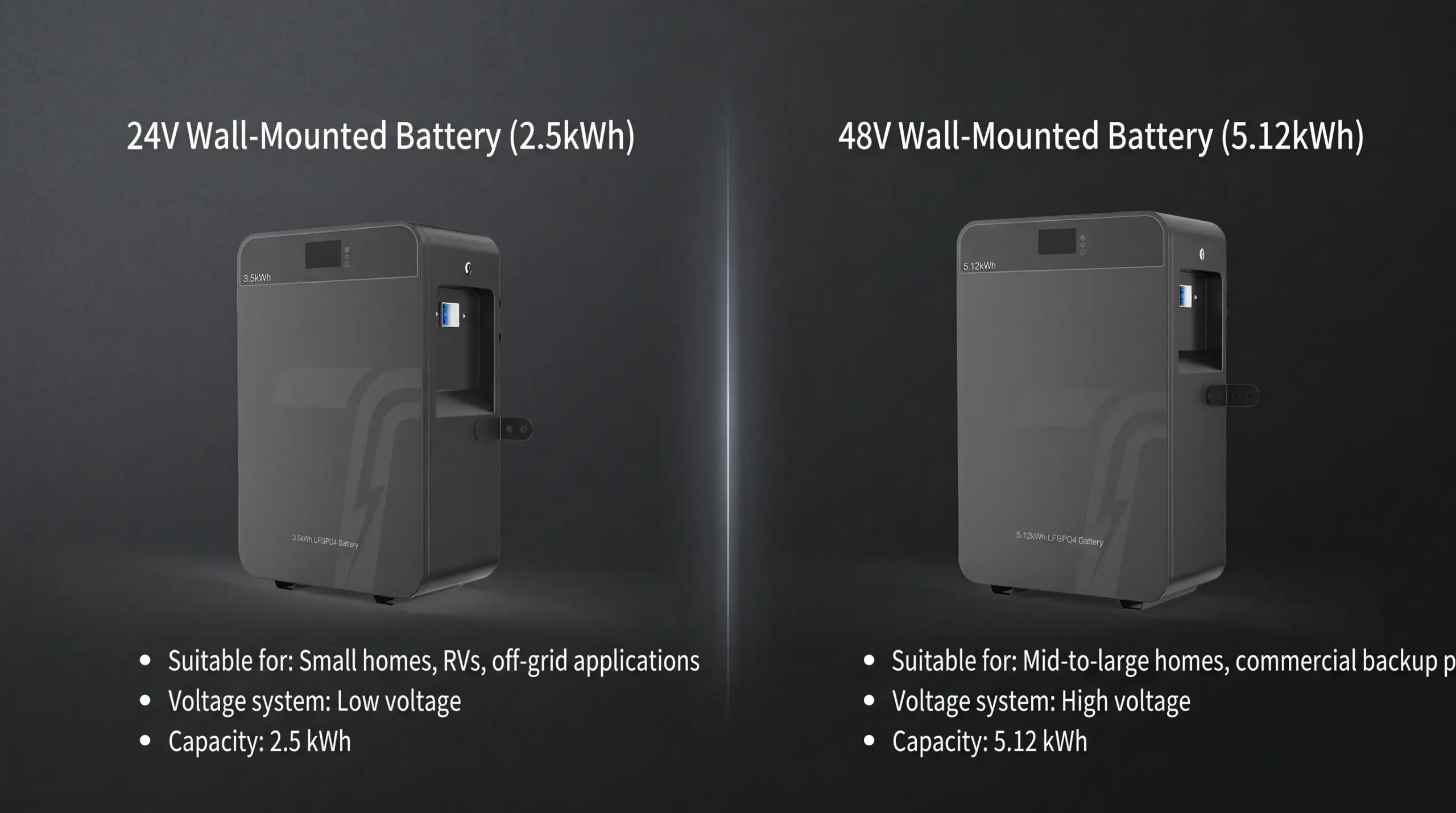
Most modern 48V home batteries use a 16-series LiFePO4 pack with a nominal voltage around 51.2V and a working range of roughly 44.8V to 57.6V. A typical 24V LiFePO4 battery uses 8 cells in series, with a nominal voltage around 25.6V and a working range near 22.4V to 28.8V. Both designs can deliver safe, long service when the BMS, inverter settings, and protection devices match the cell configuration.
The practical boundary appears when the load grows. A 24V system suits a 1kW to 2kW inverter, modest evening loads, and short battery-to-inverter cables. A 48V system is a stronger choice for 3kW to 8kW hybrid inverters, induction cooking, pumps, air-conditioning startup, or several battery modules connected in parallel.
02 / Quick scanA Simple Decision Matrix
| Home requirement | 24V system | 48V system |
|---|---|---|
| Typical inverter range | 1kW–2kW | 3kW–8kW |
| Current for 3kW output before losses | About 125A | About 62.5A |
| Cable and busbar demand | Larger, more sensitive to length | Lower current and easier routing |
| Best fit | Small backup, cabin, compact off-grid loads | Full-home backup, solar retrofit, future expansion |
| Common battery format | 8S LiFePO4, 25.6V nominal | 16S LiFePO4, 51.2V nominal |
This does not make 48V automatically better. A 24V battery may cost less at the beginning, and it can integrate well with existing 24V equipment, RV systems, lighting, or a small off-grid cabin. Replacing a working 24V installation only to follow a higher-voltage trend rarely makes financial sense.
03 / Installation watchlistFour Common Pitfalls
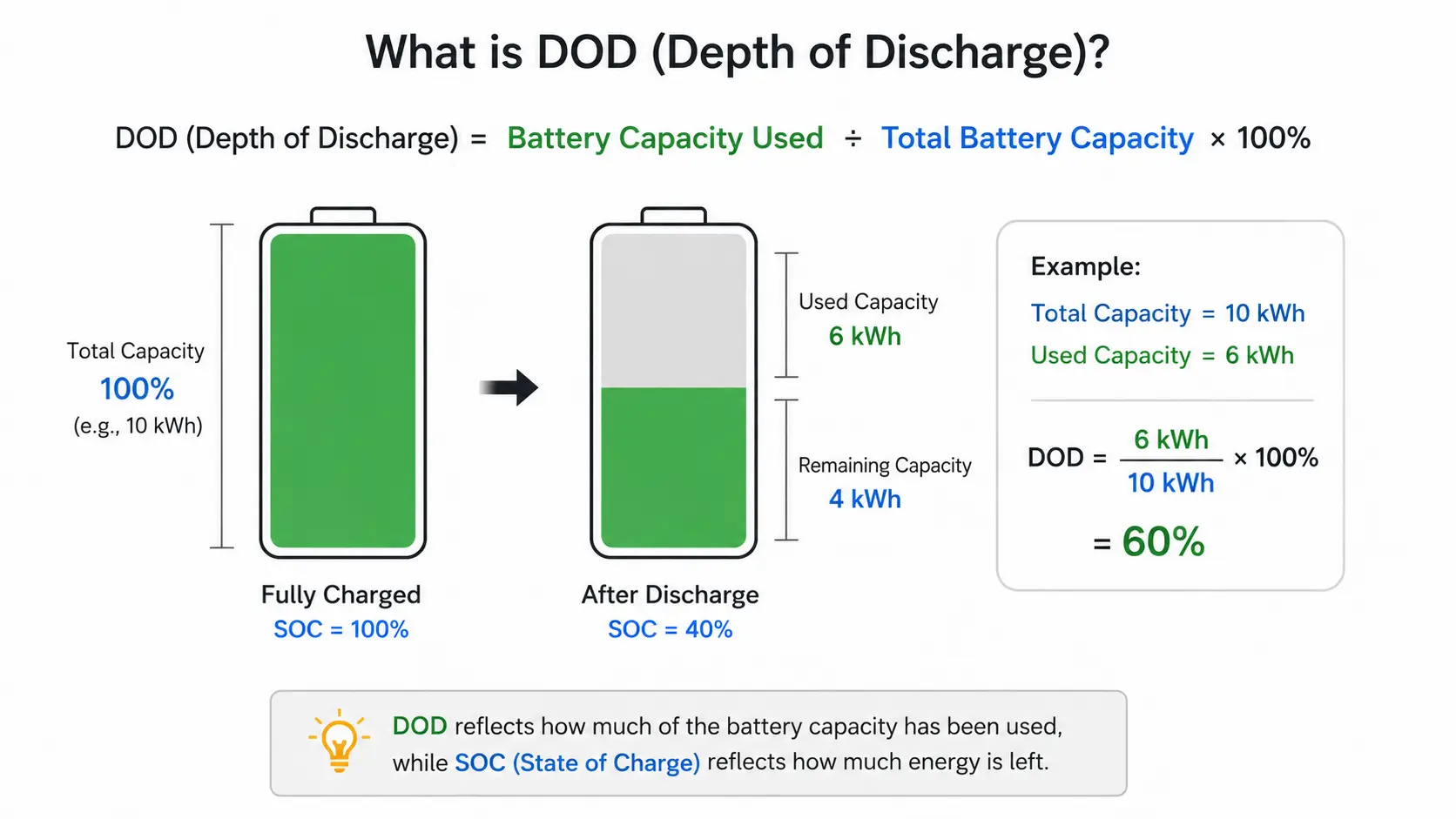
- Sizing by amp-hours aloneA 200Ah battery at 24V stores about 5.12kWh nominally. A 100Ah battery at 48V stores the same nominal energy. Compare watt-hours, usable depth of discharge, and continuous discharge current rather than amp-hours alone.
- Ignoring surge currentA refrigerator or pump may have a short startup surge several times higher than its running power. Check the inverter surge rating and the battery BMS discharge limit. A 100A BMS on a 24V pack cannot support every 3kW inverter simply because the battery has enough stored energy.
- Mixing communication profilesCAN and RS485 ports do not guarantee compatibility. Confirm the inverter protocol, baud rate, pinout, and charge-voltage limits before connecting a battery. Incorrect settings can disable state-of-charge reporting or cause nuisance protection trips.
- Treating cable length as an afterthoughtKeep high-current cables short, match positive and negative cable lengths in parallel strings, and size the fuse or breaker to protect the conductor. Ask the battery supplier for recommended terminal torque and cable cross-section instead of copying a generic chart.
Where OEM and ODM Support Changes the Choice
For distributors and installers, voltage selection also affects the product platform. An OEM or ODM battery partner can configure the same LiFePO4 product family around 24V or 48V packs, then align the BMS current limit, CAN/RS485 protocol, enclosure, and display with the target inverter brands.
Useful customization points include a 100A or 150A BMS option, wall-mount or rack-mount housing, IP-rated enclosure selection, branded labels, and firmware parameters for low-temperature charging. Request cycle-life data at the stated discharge rate and temperature; a figure such as 6,000 cycles at 0.5C and 25°C is more useful than an unqualified “long life” claim. The supplier should also provide UN38.3 and IEC-related documentation for the intended shipping and sales markets.
 05 / Field questions
FAQ
Question: Is 48V dangerous in a home?
Question: Can I run a 3kW inverter from 24V?
Question: Does 48V provide more usable energy?
Conclusion
Choose 24V when the home system is small, the inverter stays around 2kW or below, the cables are short, or existing equipment already uses 24V. Choose 48V for most new full-home backup systems, especially when the inverter is 3kW or larger, the battery is several metres from the inverter, or future parallel expansion matters. Voltage is only one decision; regional differences in 5kWh and 10kWh battery demand also affect which capacity makes sense to stock.
Send your inverter rating, maximum surge load, cable length, and expected daily energy use to an OEM battery supplier. A competent partner can return a voltage recommendation and a preliminary battery, BMS, cable, and protection BOM based on the actual load profile.