 English
  العربية
  日本語
日本語  한국어
한국어  Tiếng Việt
  ไทย
ไทย  Bahasa Melayu
  فارسی
فارسی  Bahasa Indonesia
  ဗမာစာ
ဗမာစာ  简体中文
简体中文  香港中文
香港中文  繁體中文
繁體中文  Русский
  Deutsch
  Nederlands
  Italiano
  Français
  Español
  Português
  Afrikaans
  Azərbaycan dili
  Български
  ਪੰਜਾਬੀ
  हिन्दी
  اردو
اردو  বাংলা
বাংলা  Հայերեն
  Íslenska
  Қазақ тілі
  नेपाली
  Српски језик
  Kiswahili
  తెలుగు
  Basa Jawa
  தமிழ்
தமிழ்  मराठी
मराठी Field Guide / Home Energy Storage
By 2026, home batteries have moved from niche luxury to default specification. For installers, distributors, wholesalers, and retailers, the all-in-one energy storage system (ESS) unifies the value chain: one cabinet, one vendor, one warranty, one learning curve.
01What It Is
What Is an All-in-One ESS?
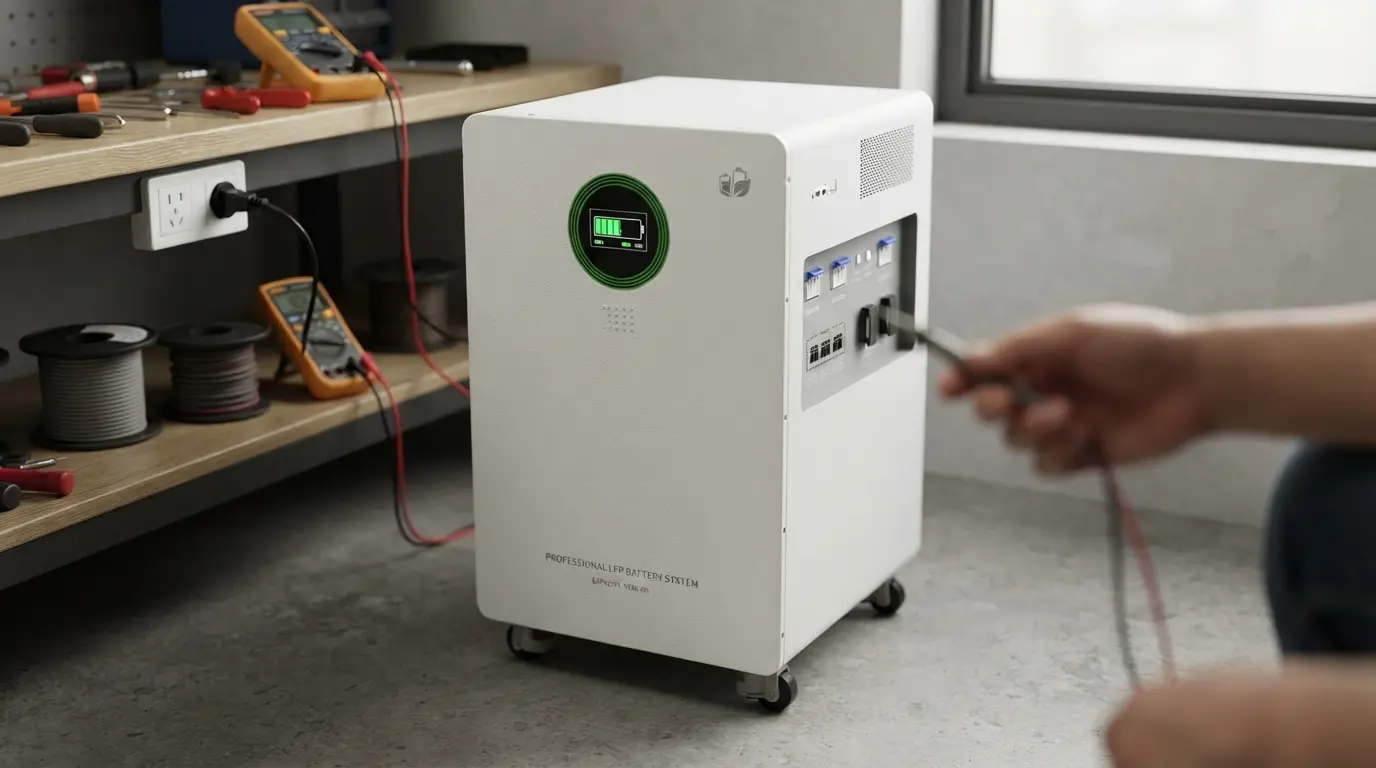
An all-in-one ESS is a pre-integrated home energy system in which the battery, hybrid inverter, transfer switch, and energy management software ship as one appliance. Instead of assembling parts from several vendors on site, you mount one enclosure, land a few cables, and commission the whole system from a single app.
The design rests on a simple promise: zero on-site integration risk. In a classic split installation, compatibility is your problem — voltages, protocols, firmware revisions, and protection curves must be matched manually, often by trial and error. An all-in-one unit removes that variable because every layer is engineered, tested, and certified as one product.
02What It Does
What Does It Actually Do?
At its core, the system manages energy flow between three poles: the solar array, the grid, and the battery. Every hour it decides where power comes from and where it goes, executing four jobs:
- Self-consumption maximization — surplus solar is stored instead of exported at low tariffs.
- Time-of-use shifting — charges cheap, discharges dear, arbitrages rate windows automatically.
- Whole-home backup — on grid failure, islanding transfers the house in milliseconds.
- Demand management — import is capped to shave peak charges and protect the grid contract.
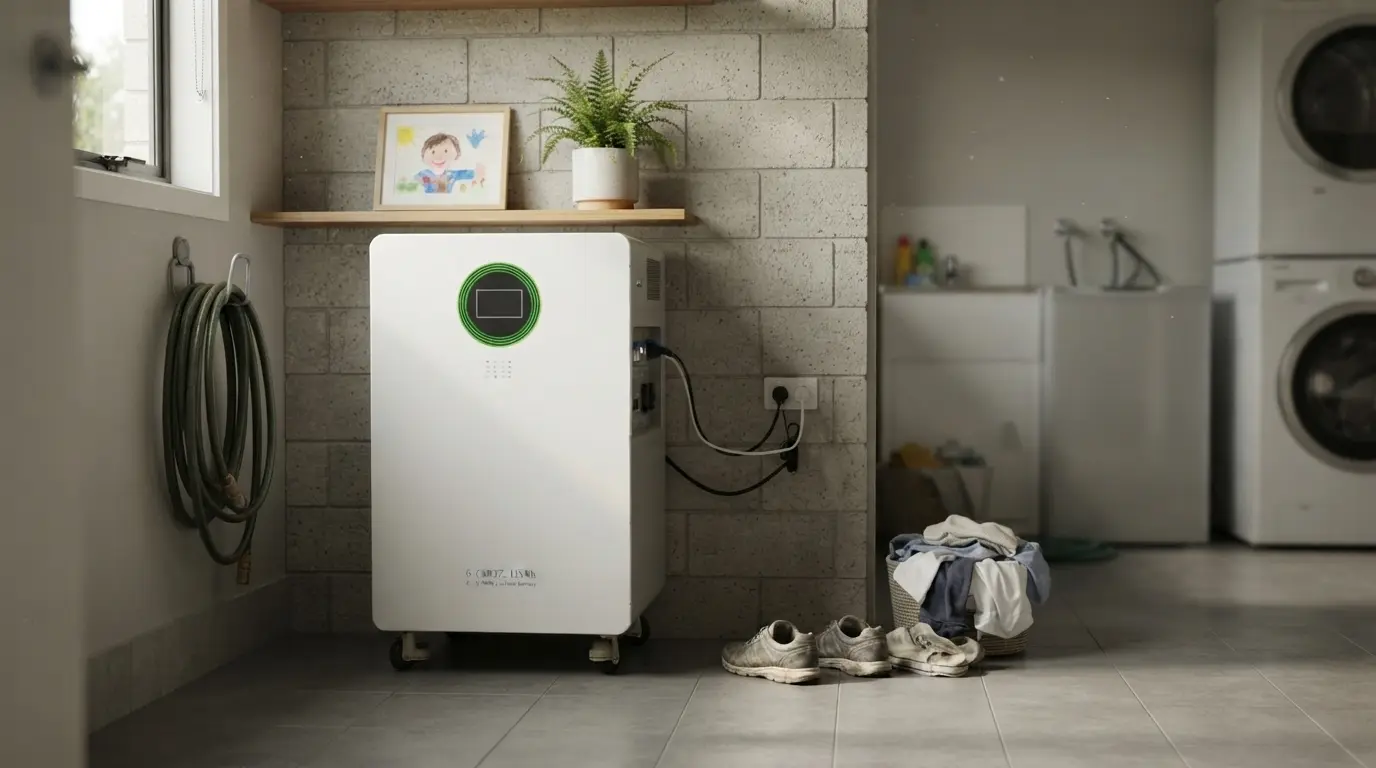
For the homeowner, all of this is invisible — the unit learns, forecasts, and rebalances silently. For you, that silence is revenue: fewer service visits.
03Anatomy
Inside the Cabinet: Anatomy of an All-in-One System
Strip away the enclosure and you will find five subsystems working in lockstep on a single shared bus.
The Battery Module
The battery module is a stack of LFP (lithium iron phosphate) cells — typically 5 to 15 kWh, expandable in fixed steps — that provides the energy buffer. LFP chemistry is the industry default: long cycle life, thermal stability, and no cobalt.
The Hybrid Inverter
The hybrid inverter is the power stage: it converts DC to AC for the house, AC to DC for charging, and synchronizes with grid frequency. Because the power stage and battery are factory-matched, efficiency peaks are higher and thermal margins are tighter than any field-assembled pairing.
The Energy Management System
The energy management system is the intelligence layer: it runs schedules, forecasts, and failover logic. It ships as on-device software with a cloud dashboard and an over-the-air update channel — the quiet revolution for service teams, because firmware fixes ship remotely, without a truck roll.
The Balance-of-System Layer
The balance-of-system layer completes the enclosure: battery management, arc-fault detection, rapid shutdown, and the backup relay. What used to be a wall of separate boxes is now one sealed, certified unit.
04Comparison
All-in-One vs. Separate Inverter and Battery
The question every field team asks is honest: why should a customer pay for integration the installer could deliver themselves? For a one-off custom build, a split system still makes sense; for a channel business installing dozens of systems a month, integration is the product.
| Dimension | All-in-One ESS | Split System |
|---|---|---|
| Time to install | 2–4 hours, single enclosure | 1–2 days, multiple enclosures |
| Wiring points | 4–6 terminations | 25+ terminations |
| Vendor contacts | One — single SLA | Two or more — blame games |
| Firmware updates | Unified over-the-air channel | Per-component and manual |
| Expandability | Modular in fixed steps | Nearly infinite, but your risk |
| Typical service cost | Lower and predictable | Higher and diagnosis-driven |
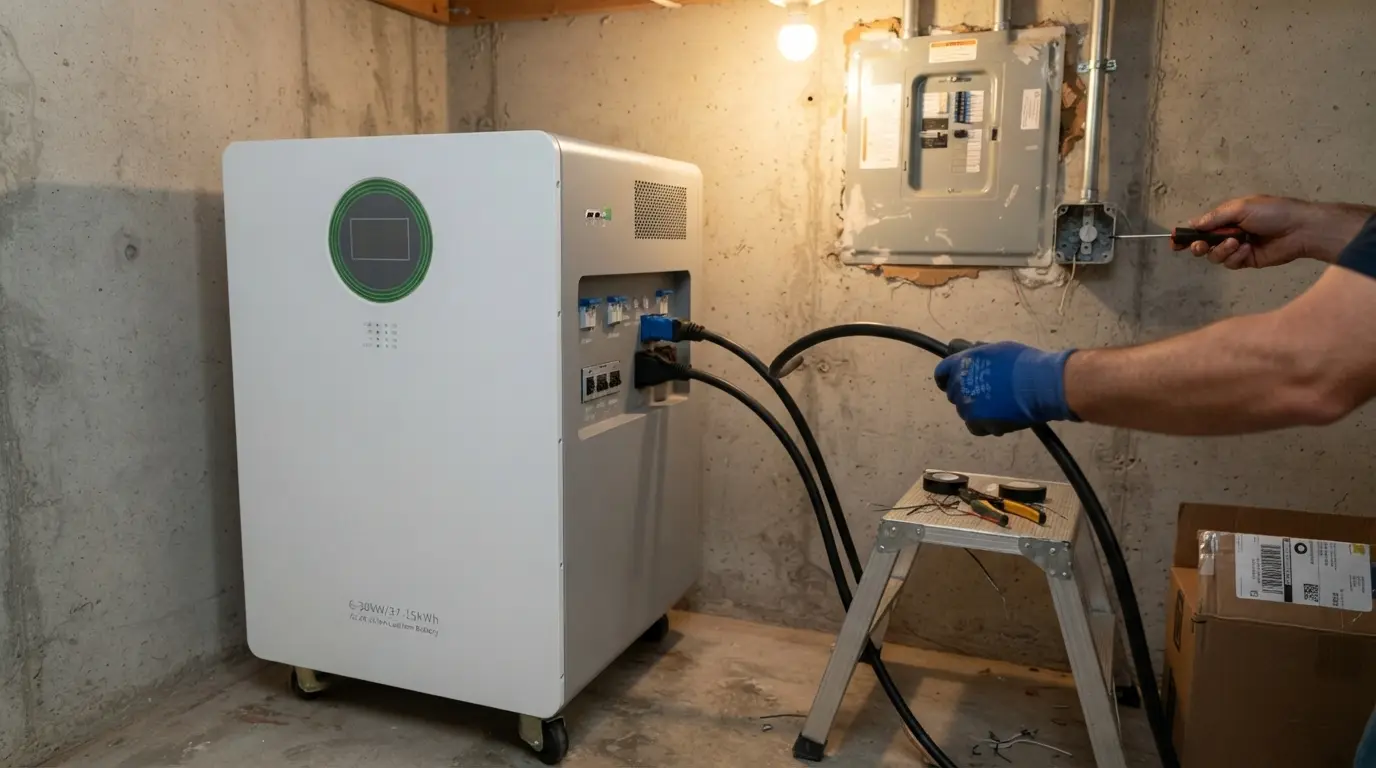
Notice what is missing from that table: performance. At equal capacity, an integrated unit is neither slower nor weaker than a split system — the factory-matched power stage usually wins on efficiency. The real trade-off is flexibility, worth something only when you have the engineering time to exploit it.
05Product Line
Reference Models, One Platform
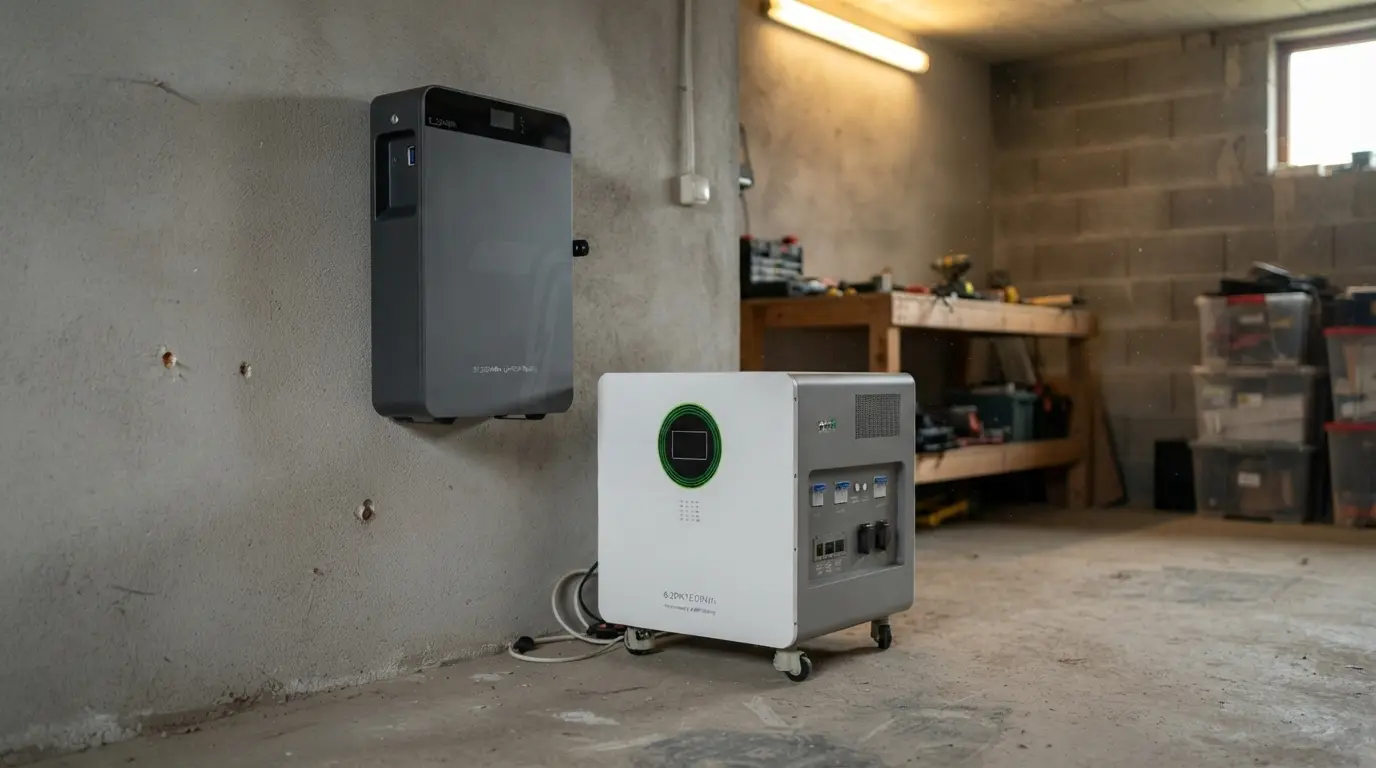
All units below run the same integrated architecture, so commissioning and support stay identical across the range.
06After-Sales
What It Changes for Your After-Sales Operation
This is where the argument moves from customer benefit to channel strategy. For installers, distributors, and retailers, after-sales decides whether a brand is profitable or merely popular.
- 01Single-vendor supportOne ticket, one SLA, one accountable party — no blame games when a fault appears.
- 02Standardized commissioningThe same twenty-minute startup routine cuts training costs and first-visit errors.
- 03Over-the-air serviceRemote fixes, configuration, and diagnostics make the service truck the exception.
- 04Smaller inventory footprintOne SKU replaces battery, inverter, meter, and accessories, freeing cash and warehouse space.
- 05Predictable warrantyOne serial number and one warranty period, which resellers translate into margin and upsell language.
- 06Cleaner upgrade pathThe same platform scales from 5 to 20 kWh, so a happy customer expands without re-engineering.
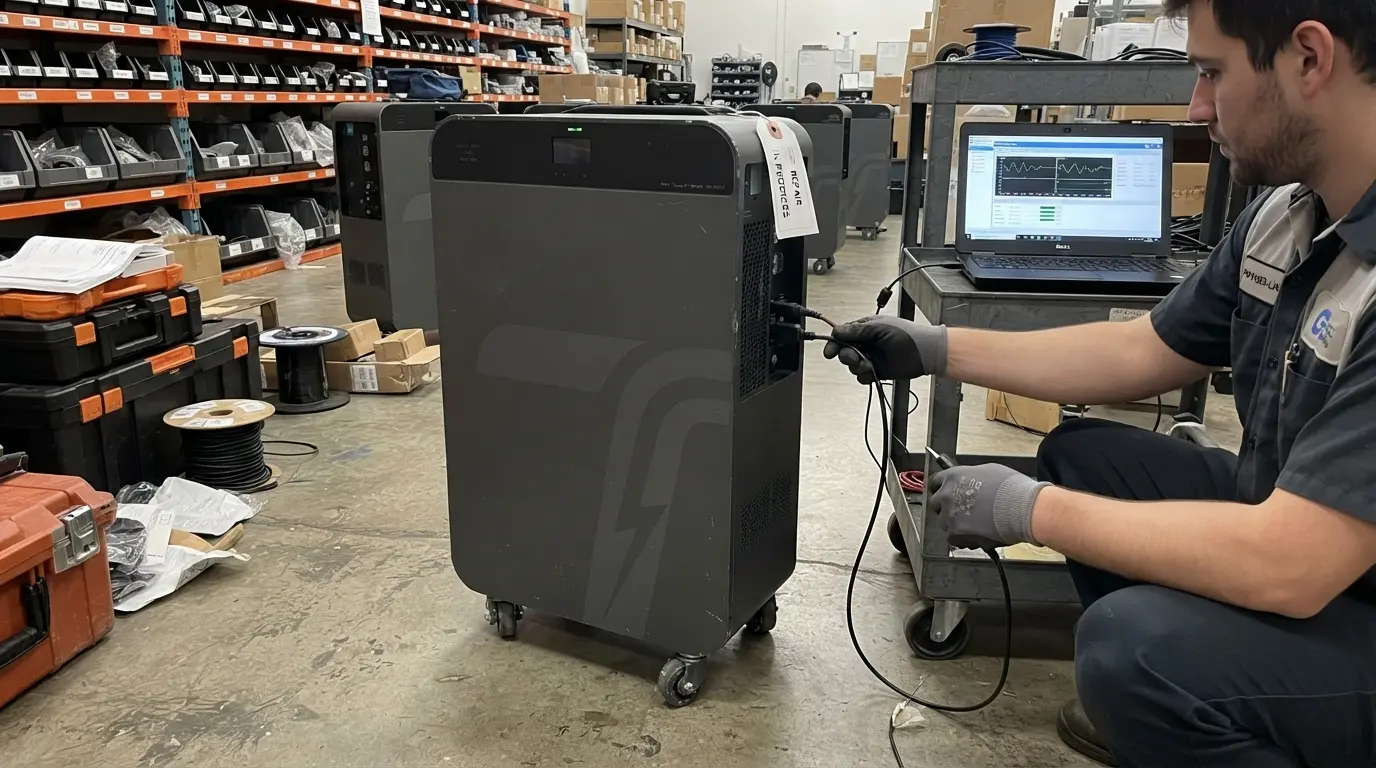
None of this is magic. It is the difference between selling components and selling a system — the all-in-one ESS concentrates support where your team can actually get good at it.
Selling components makes you a warehouse. Selling a system makes you a partner.
07Questions
Frequently Asked Questions
Most units are rated for 6,000 to 10,000 cycles at 80 percent depth of discharge — 15 to 20 years of daily cycling. LFP cells degrade slowly, and manufacturers commonly warrant the battery for ten years. The power stage has no moving parts and usually outlives the battery, so expansion, not replacement, is the upgrade path.
Yes, in fixed steps. All-in-one systems use stackable battery modules, typically 2.5 to 5 kWh increments up to a defined maximum. Adding one takes thirty to sixty minutes: shut down, plug in the module, restart, and the EMS recognizes the new capacity. Check the datasheet for the maximum stack size before promising headroom to a customer.
In most cases, yes. The DC input accepts common panel strings, and AC coupling adds a battery to an existing string inverter without rewiring the array. Verify voltage, current, and string length against the MPPT specifications first.
Most hybrid units support an island mode: the system forms its own voltage and frequency without the grid. The battery becomes the backbone of the house and the array recharges it directly. Size for the worst winter week, not the average day, and confirm the minimum PV-to-load ratio to stay online.
If your business earns on volume, the all-in-one ESS turns home storage into a repeatable, scalable product — and that is a good trade.