 English
  العربية
  日本語
日本語  한국어
한국어  Tiếng Việt
  ไทย
ไทย  Bahasa Melayu
  فارسی
فارسی  Bahasa Indonesia
  ဗမာစာ
ဗမာစာ  简体中文
简体中文  香港中文
香港中文  繁體中文
繁體中文  Русский
  Deutsch
  Nederlands
  Italiano
  Français
  Español
  Português
  Afrikaans
  Azərbaycan dili
  Български
  ਪੰਜਾਬੀ
  हिन्दी
  اردو
اردو  বাংলা
বাংলা  Հայերեն
  Íslenska
  Қазақ тілі
  नेपाली
  Српски језик
  Kiswahili
  తెలుగు
  Basa Jawa
  தமிழ்
தமிழ்  मराठी
मराठी Learn how to compare running watts, starting watts, inverter limits, battery capacity, and safe appliance combinations before connecting a load.
What a Solar Generator Can and Cannot Handle
A solar generator can safely power appliances only when their electrical demand stays within the system’s inverter output rating. The key rule is simple: match the appliance’s power needs to both the generator’s continuous watts and its available startup capacity.
Continuous Watts vs. Surge Watts
Continuous watts are the power an appliance needs while operating normally. Surge watts, also called starting watts, are the higher burst of power some appliances need when they first start.
Motor-driven equipment can require a brief surge that is much higher than its normal running load. If that surge exceeds the inverter limit, the solar generator may shut down even when the appliance’s listed running watts appear acceptable.
Inverter Capacity Comes First
Battery capacity tells you how long a solar generator can run a load. It does not determine whether the generator can start or support that load.
- Watt-hours (Wh) measure stored energy and estimated runtime.
- Inverter watts (W) determine the maximum appliance load the unit can supply.
- A larger battery cannot make a low-watt inverter run an appliance that exceeds its output limit.
Portable power stations may range from 300W to 3,600W continuous output. An appliance must remain within the rated output of the specific model, including any startup demand. See the TURSAN portable power station range when comparing output classes.
Pure Sine Wave Power
A pure sine wave inverter provides clean, stable AC power for compatible electronics and appliances. This output is important for sensitive devices with microprocessors and for equipment that needs low-noise, low-interference power.
Even with pure sine wave output, the appliance must still stay within the solar generator’s wattage and surge limits. Clean power does not remove the risk of an inverter overload.
BMS and Overload Protection
A quality LiFePO4 solar generator uses an Intelligent Battery Management System (BMS) to help protect the battery and power system. When it detects an over-current, overload, or short-circuit condition, it can cut power automatically.
Common protection responses include:
- Inverter output shutting off
- An overload or fault indicator appearing on the display
- The connected appliance stopping or failing to start
- Power returning only after the excessive load is removed and the system is reset
These shutdowns are protective. They help prevent excessive stress on the inverter, LiFePO4 cells, and connected output circuits.
Appliances You Should Not Plug Into a Solar Generator
When people ask what should you not plug into a solar generator, the short answer is: avoid any load that exceeds the inverter’s continuous or surge rating, requires a 240V or hardwired connection, or has damaged electrical parts. Even a high-capacity portable power station has clear output limits.
High-Heat Appliances
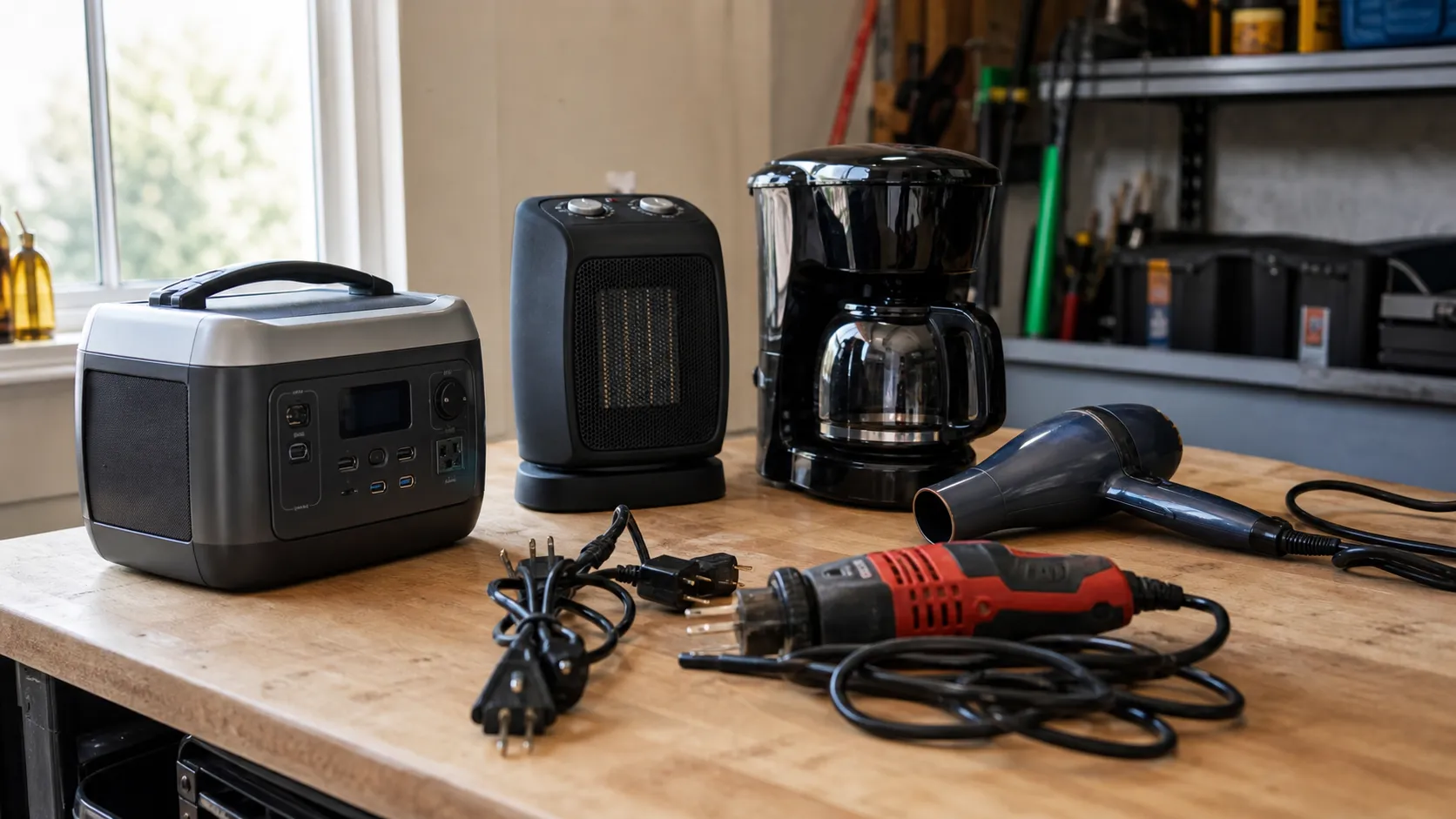
Heating elements draw high power continuously. Do not connect these appliances to an undersized solar generator:
- Space heaters
- Electric kettles
- Toaster ovens
- Air fryers
- Hair dryers
- Clothes irons
- Electric cooktops
These high-wattage appliances can quickly overload a portable unit, especially models rated from 300W to 1,000W. They can also drain stored energy very fast, even when the inverter does not trip.
Large Motor and Compressor Loads
Motor-driven appliances often need a sharp burst of surge wattage to start. Central air conditioners, large refrigerators, well pumps, air compressors, and washing machines may demand more starting power than a portable inverter can supply.
Avoid connecting these loads unless the system’s continuous and starting ratings clearly support them:
- Central AC systems
- Large refrigerators
- Well pumps
- Air compressors
- High-power workshop tools
- Washing machines
A refrigerator or portable freezer may be suitable when properly sized, but a large compressor load can exceed the portable power station load limit at startup.
240V and Hardwired Equipment
Most portable solar generators are not designed to run large 240V or permanently wired household equipment. Do not use them for:
- Electric dryers
- Water heaters
- Full-size electric ovens
- Hot tubs
- Central HVAC equipment
- EV chargers
These appliances generally require much more power than a 300W to 3,600W portable power station can provide. They may need a properly designed home energy storage system with the correct inverter configuration.
Combined Appliance Loads
Several smaller devices can become one oversized load. For example, running a microwave, kettle, fan, and refrigerator at the same time may push total demand beyond the inverter’s continuous output.
Keep the combined running watts below the generator rating, and leave practical headroom rather than operating at the maximum limit. This helps prevent inverter overload protection from shutting the system down.
Damaged or Wet Electrical Equipment
Never connect appliances with damaged cords, loose plugs, exposed wires, water exposure, or signs of internal failure. Faulty equipment can create a short circuit, increase current unexpectedly, and trigger the Intelligent BMS protection system.
A quality solar generator with LiFePO4 cells, a pure sine wave inverter, and an Intelligent BMS can help protect the battery during overload events. It cannot make unsafe wiring or damaged appliances safe to use.
Why These Devices Cause Problems
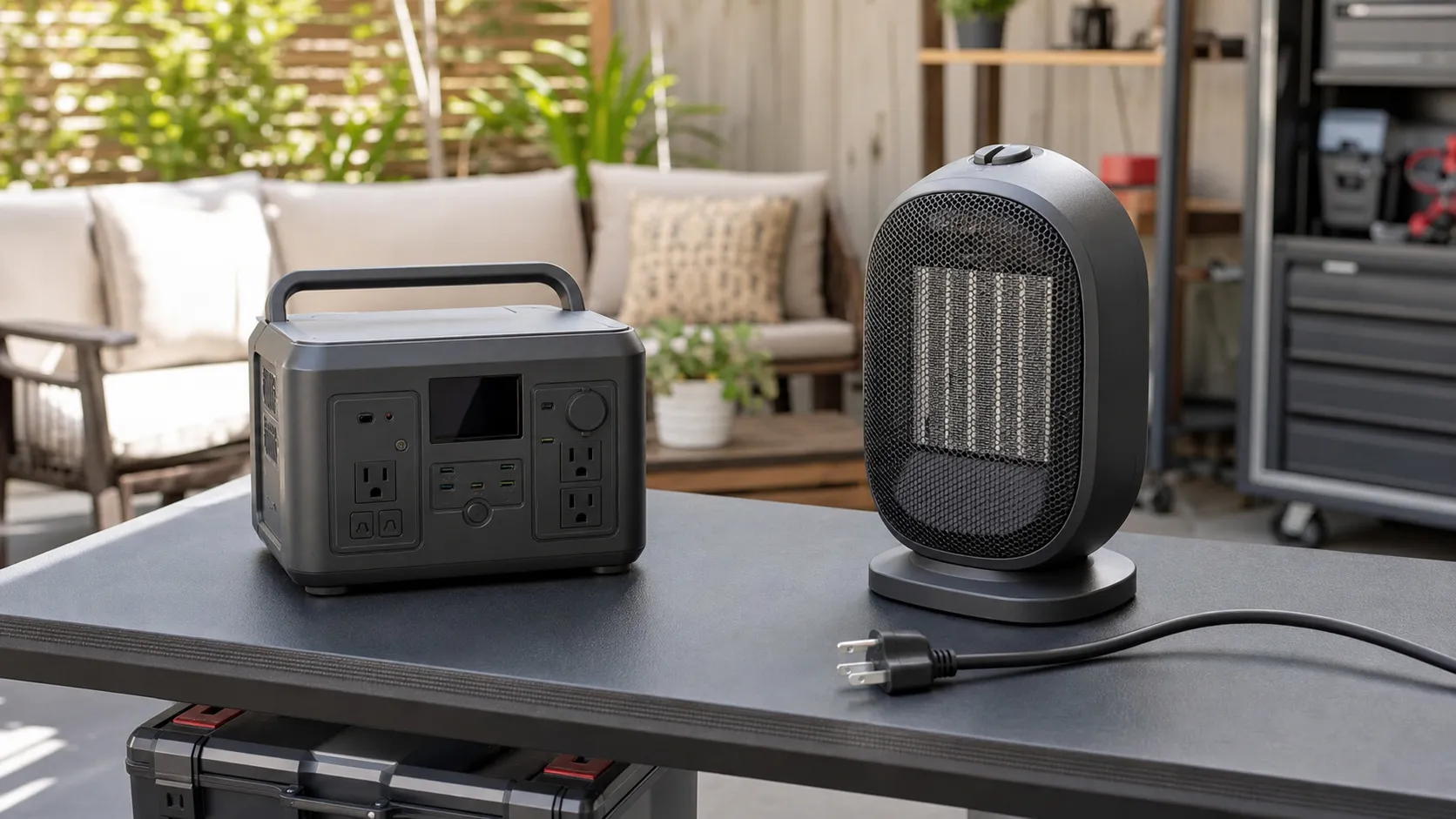
A solar generator has clear limits set by its inverter output, battery system, and protection circuitry. The most common problems come from high continuous demand, high starting demand, or unsafe electrical equipment.
Continuous High Heat Loads
Heating-element appliances convert electricity directly into heat, so they often pull high wattage without a break. Space heaters, kettles, toaster ovens, air fryers, hair dryers, irons, and cooktops can drain a battery quickly and may exceed a portable power station’s continuous output rating.
Even when an appliance starts successfully, a long high-power draw can trigger overload protection or reduce available runtime sharply.
Motor and Compressor Surge
Motor-driven appliances need extra power at startup. Refrigerators, pumps, air compressors, washing machines, and air-conditioning equipment can require a surge far above their normal running watts for a brief moment.
If that starting demand exceeds the inverter’s peak capacity, the solar generator may shut down before the appliance can start. This is why starting watts vs. running watts matters as much as the appliance’s listed power use.
Inverter and BMS Shutdowns
An oversized load can overload the inverter or activate the Intelligent BMS. The BMS monitors the LiFePO4 battery system and can cut output during over-current, overload, or short-circuit conditions to help protect the cells and connected equipment.
A shutdown is a safety response, not a sign that the generator should be pushed harder. Keep the connected load within the unit’s continuous and surge ratings.
Sensitive Equipment and Power Compatibility
Devices with sensitive electronics need stable, clean AC power. A pure sine wave inverter helps provide low-noise output suited to electronics and microprocessor-controlled equipment. However, pure sine wave output does not increase the generator’s wattage limit or make an oversized appliance compatible.
For backup-power use, it is also important to understand the practical differences between a portable power station and a conventional generator, especially where uninterrupted power and equipment protection matter.
Damaged Cords Create Real Hazards
Do not connect damaged, wet, loose, or short-circuited equipment to a solar generator. Broken insulation, worn connectors, and overheating plugs can create shock and fire hazards. They can also trigger immediate BMS protection and interrupt power to every connected device.
Inspect appliance cords, plugs, and output ports before use, and stop using any equipment that shows heat damage, exposed wiring, or unstable connections.
Signs an Appliance Is Too Much for Your Solar Generator
When an appliance exceeds your solar generator’s inverter capacity or surge limit, the system should protect itself rather than continue operating. Stop using that load if you notice any of these signs:
- The inverter trips or shuts off: An automatic shutdown usually means the appliance has exceeded the continuous output rating, starting-watt limit, or combined load limit.
- The display shows an overload, fault, or high-load alert: These warnings indicate that the power station is operating beyond a safe range. Disconnect the appliance before restarting the output.
- The appliance tries to start, then cuts out: This is common with motor-driven appliances. Their startup surge may be higher than the solar generator can supply, even if their running watts appear acceptable.
- Cords, plugs, or output ports become hot: Warm components can point to excessive current draw, poor connections, or unsuitable cables. Disconnect power immediately and inspect the equipment.
- Battery charge drops unusually fast: High-wattage appliances, especially heating elements, can drain a battery quickly. Fast depletion is a clear sign that the load is not practical for the available watt-hours.
A quality power station with a pure sine wave inverter and Intelligent BMS is designed to shut down during overload conditions. That protection helps prevent cell damage, but it does not make an oversized appliance safe to run.
How to Check If a Device Is Safe to Run
Before connecting anything, check the appliance label and compare its power demand with the solar generator’s inverter rating. A device is safe only when its running watts stay below the generator’s continuous output and its starting watts stay below the available surge capacity.
| Check Point | What to Verify |
|---|---|
| Appliance label | Look for watts (W), amps (A), or voltage (V). |
| Running power | Use the listed watts for electronics and heating appliances. |
| Starting power | Motor-driven devices may need extra surge wattage at startup. |
| Generator output | Compare with continuous watts and peak/surge watts. |
| Battery capacity | Check watt-hours (Wh) to estimate how long the load can run. |
Read the Technical Label
Most appliances list their power draw on a rear label, plug, manual, or product page. If the label gives amps instead of watts, use this simple calculation:
Account for Motor Startup Surge
Refrigerators, freezers, pumps, fans, and compressors can pull more power for a brief moment when starting. Their starting watts may be much higher than their normal running watts. Check the equipment documentation where possible and make sure the generator can support both figures.
A portable power station with a 300W to 3,600W inverter must not be asked to start a motor load above its peak capability, even if the appliance’s normal running demand looks acceptable.
Keep Output Headroom
Do not run a solar generator at its maximum rating for long periods. Leave practical headroom for startup demand, changing loads, and normal inverter operation.
| Generator Continuous Output | Sensible Load Target |
|---|---|
| 300W | Keep connected loads clearly below 300W |
| 1,000W | Avoid operating close to 1,000W continuously |
| 2,000W–3,600W | Allow room for appliance startup surge and added loads |
This approach helps prevent inverter overload protection from shutting the system down and supports more stable operation from a pure sine wave inverter.
Test One Device First
Start with one appliance and watch the display for active watts, overload alerts, or rapid battery drain. If it runs normally, add other loads one at a time while keeping the total below the rated continuous output. This is especially important for devices with motors, compressors, or heating elements.
Battery size affects runtime, not inverter limits. A larger LiFePO4 battery can store more energy, but it cannot make an undersized inverter safely power a high-wattage appliance. For runtime planning, compare the specific portable power station capacity and output class with the appliance’s actual wattage.
Simple Load Calculation Guide
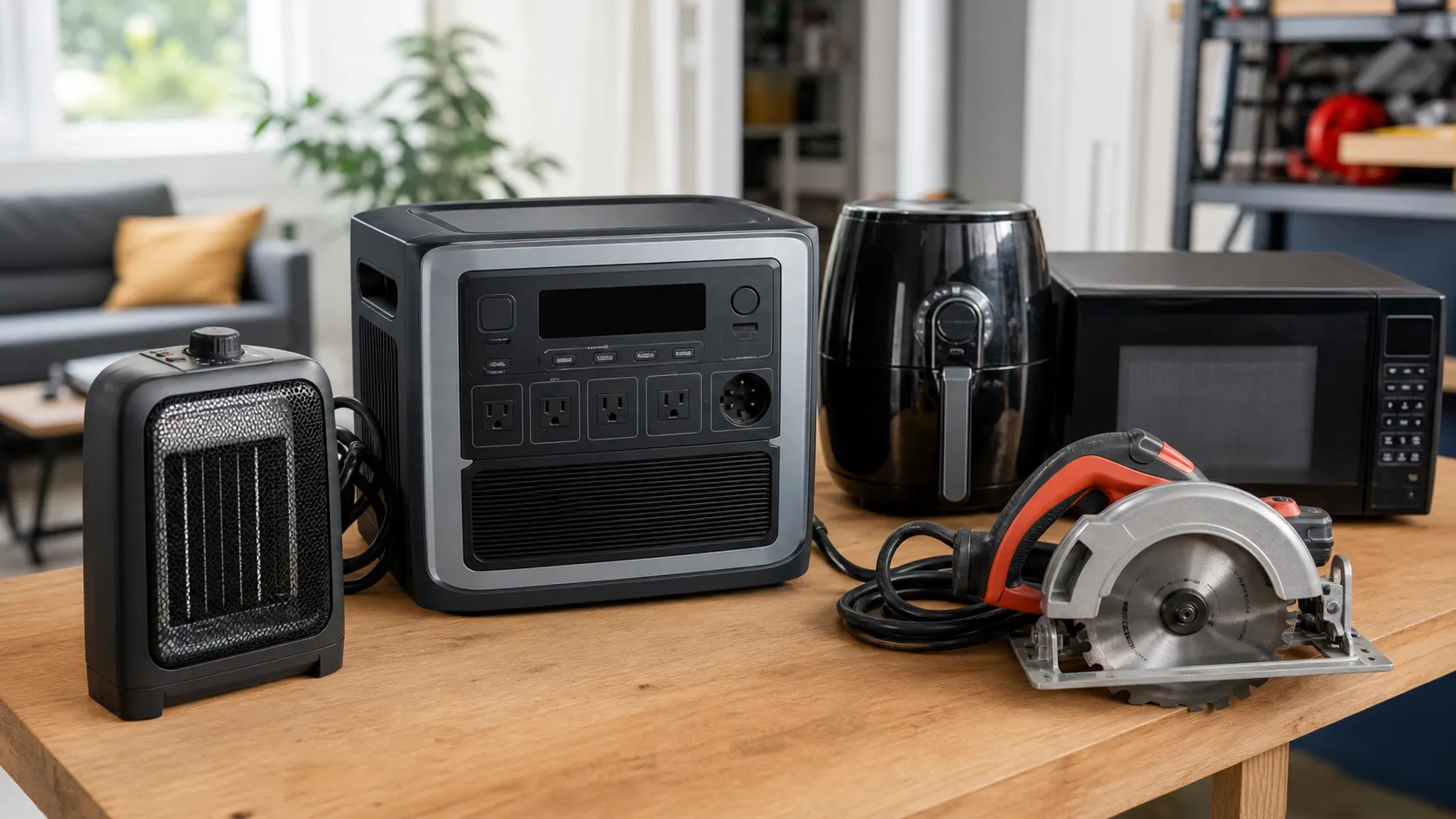
A solar generator’s runtime depends on two numbers: battery capacity in watt-hours (Wh) and the appliance’s running wattage (W). A watt-hour measures stored energy. Battery capacity affects how long equipment operates, while inverter capacity determines whether it can run at all.
Use this quick estimate:
Quick Runtime Examples
| Solar Generator Battery | Appliance Load | Basic Runtime Estimate | Practical Use |
|---|---|---|---|
| 806.4Wh | 40W Wi-Fi router and LED lights | About 20 hours | Runtime will be lower after conversion losses |
| 2,000Wh | 100W laptop setup | About 20 hours | Allow extra margin for charging cycles and accessories |
| 3,225.6Wh | 300W appliance | About 10.7 hours | Check that the appliance stays within inverter limits |
| 3,225.6Wh | 1,500W heating appliance | About 2.1 hours | High draw can deplete the battery quickly |
Step-by-Step Load Check
- Find the appliance running watts on its label, manual, or power adapter.
- Check starting watts for motor-driven equipment such as refrigerators, pumps, and compressors.
- Add every device running at the same time. Combined load must remain below the solar generator’s continuous inverter rating.
- Compare the total with inverter output and surge capacity. Battery size affects runtime, but inverter capacity determines whether the load can run at all.
- Keep headroom. Do not operate continuously at the maximum rating, especially with heating-element appliances or motor-driven loads.
- Test one appliance first. Watch the active watt display and check for overload alerts before adding more equipment.
For example, a 1,000Wh portable power station running a 100W device has a basic estimate of 10 hours. In real use, plan for less than 10 hours because the pure sine wave inverter and connected equipment use part of the stored energy. If the same unit powers a 1,200W kettle, the issue is not just short runtime—the appliance may exceed the portable power station load limit and trigger inverter overload protection.
Always calculate total watts, not only the wattage of one device. A 700W microwave, 100W laptop, 60W light, and 50W router together create a 910W load before any startup surge. This simple check helps prevent avoidable shutdowns and keeps solar generator safety under control.
What You Can Safely Plug Into a Solar Generator
For everyday backup power, a solar generator is best used with efficient devices that stay within the inverter’s continuous watt rating. Small electronics and essential low-power equipment are usually the safest fit for portable power stations.
- Phones, tablets, laptops, and cameras: These devices use relatively little power and are well suited to a solar generator with pure sine wave output.
- LED lights, Wi-Fi routers, modems, and fans: These essentials can support lighting, communication, and basic comfort during an outage or off-grid stay.
- TVs, CPAP machines, and essential tech: Check each device label first, especially CPAP equipment with heated humidifiers, then match its running wattage to the available output.
- Small refrigerators and portable freezers: A properly sized unit can run these appliances, but the generator must support both their normal running watts and compressor starting watts.
A 300W–1,000W portable power station is generally suited to personal electronics, lighting, and network equipment. Higher-output portable systems in the 2,000W–3,600W range can support selected essential appliances when their combined load remains within the rated limit.
Best Practices for Safe Solar Generator Use
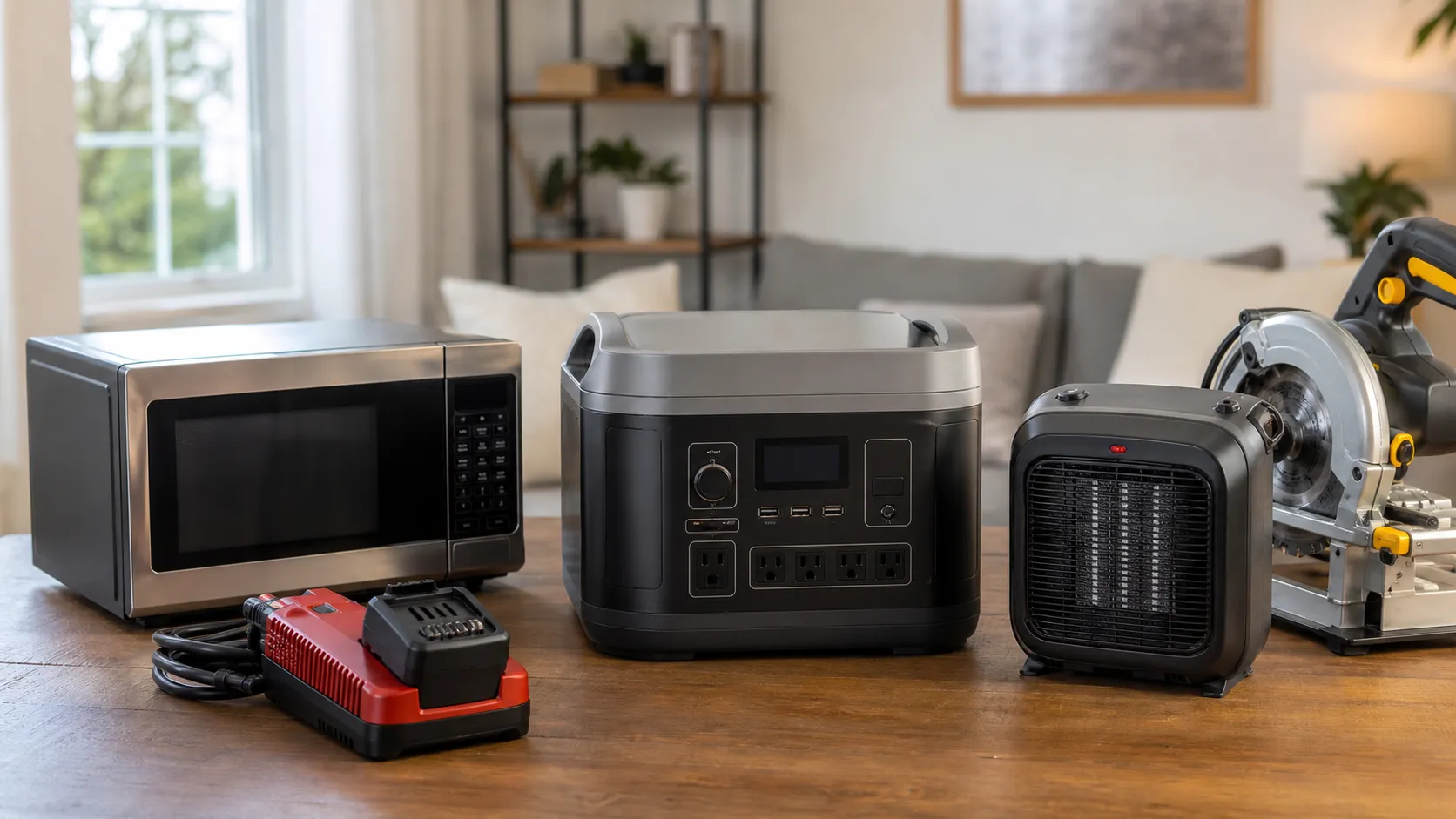
Safe solar generator use comes down to managing the inverter load, battery level, and heat. Even a high-capacity battery cannot support an appliance that exceeds the inverter’s continuous or starting-watt rating.
- Avoid stacking high-draw appliances on one output. Do not run a kettle, hair dryer, microwave, or heater at the same time unless their combined running watts and surge demand remain below the solar generator’s rated output.
- Use correctly rated extension cords. Choose heavy-duty cords rated for the intended load, keep them as short as practical, and inspect plugs and insulation before use.
- Keep airflow vents clear. Place the power station on a stable, dry surface with open space around its vents. Do not cover it with clothing, bags, or other items that trap heat.
- Do not daisy-chain power strips or surge protectors. Connecting multiple strips can hide the true combined load and raise the risk of overload.
- Match appliance watts to inverter size. Check both running watts and starting watts before connecting motor-driven equipment. Portable units from 300W to 3,600W must stay within their stated continuous and peak limits.
- Monitor active watts and battery charge. Watch the display for load level, fault indicators, and battery status. Disconnect nonessential devices if the load approaches the inverter limit.
A solar generator with a pure sine wave inverter and Intelligent BMS adds important protection, but overload protection is a safeguard—not a reason to operate at the limit. For higher household demand, compare the inverter capacity and battery storage used in home battery power systems before connecting larger loads.
Choose the Right Solar Generator
The right solar generator starts with the inverter, not just battery capacity. Match the unit to the appliances you need to run, including their continuous watts and motor starting watts.
| Power Need | Suitable System Range | Typical Use |
|---|---|---|
| Light backup and charging | 300W–1,000W portable power station | Phones, laptops, lights, routers, small electronics |
| Essential appliance backup | 2,000W–3,600W portable power station | Small refrigerators, selected microwaves, TVs, fans, essential devices |
| Heavy household or off-grid loads | 3kW–12kW home ESS inverter systems | Larger home backup loads and higher-demand off-grid use |
For light backup, compact units are practical for charging and low-wattage equipment. Check the total active load before connecting several devices. A 300W to 1,000W unit is not intended for heating-element appliances or large motor-driven equipment.
For kitchen appliances, leave inverter headroom. A microwave or refrigerator may need more power when starting than its normal running rating. Choose an inverter with enough continuous output and surge capacity instead of operating at its maximum limit.
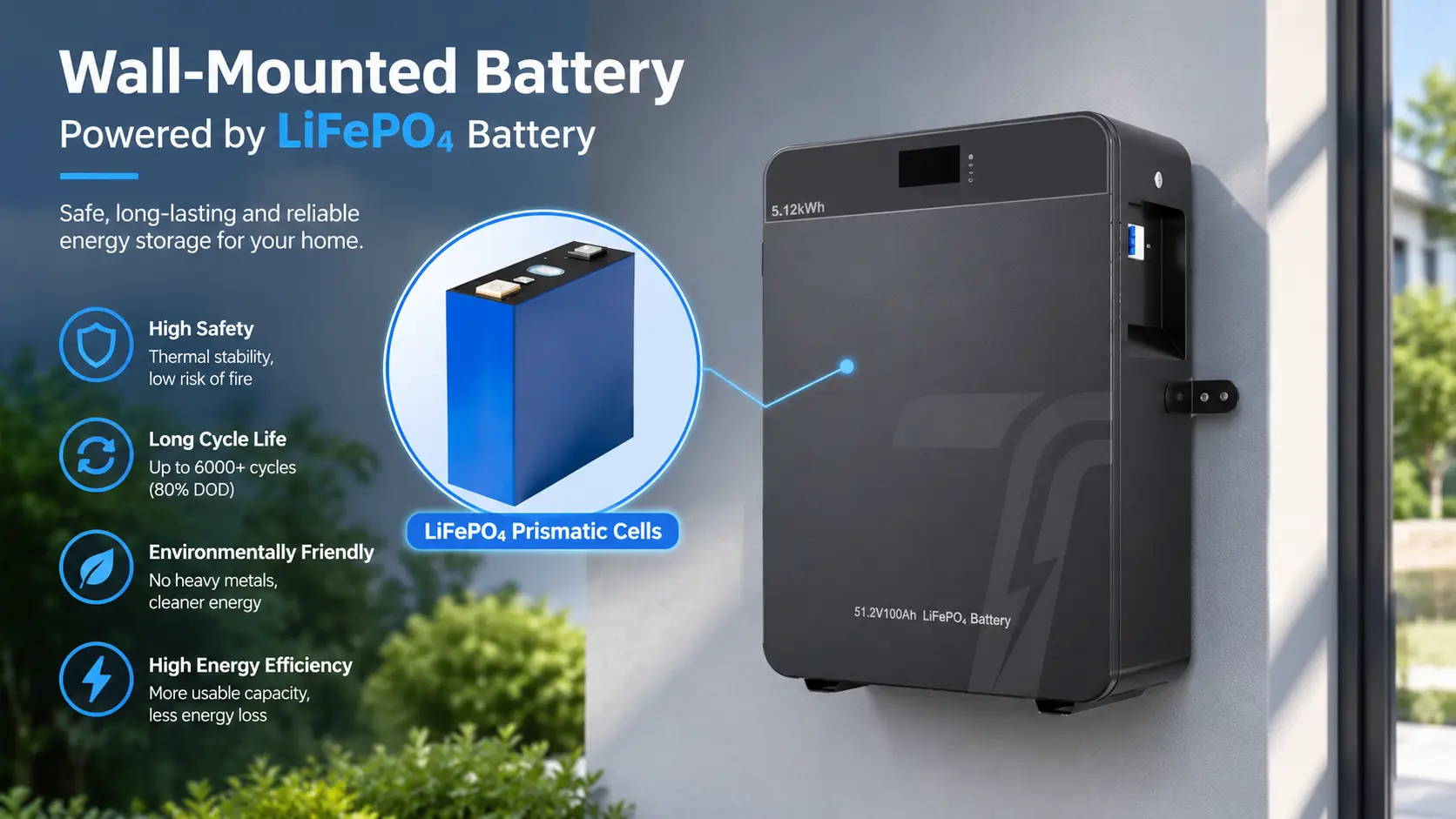
For broader household backup, use a properly sized all-in-one energy storage system rather than relying on a small portable unit. Systems with 3kW to 12kW inverter ratings and higher battery capacity are better suited to planned home loads. See TURSAN’s home energy storage solutions for a larger system category.
Core Features to Prioritize
- LiFePO4 battery cells: Built for long cycle life, with 6,000+ cycles available on selected systems.
- Pure sine wave output: Helps provide clean, stable power for electronics and sensitive equipment.
- Intelligent BMS: Supports over-current, overload, and battery protection functions.
- Adequate inverter capacity: Must cover both running watts and expected startup surge.
- Safety certifications: Look for applicable documents such as UN38.3, MSDS, UL1973, CE, and FCC.
A reliable solar generator should be engineered around safe load management, not just a large watt-hour number. Match the inverter, battery capacity, output type, and BMS protection to the real equipment you plan to power.
Frequently Asked Questions
Can I plug a microwave into a solar generator?
Yes, but only if the microwave’s running load and startup demand stay within the generator’s inverter rating. A high-output portable power station in the 2,000W to 3,600W range may support a microwave within its rated limits. Check the appliance label first, and avoid running other high-draw devices at the same time.
Can I run a space heater on a solar generator?
A space heater is usually a poor match for a small solar generator. Its heating element can draw high continuous wattage and deplete the battery quickly. Only use one when the inverter has enough continuous output and the battery capacity supports the expected runtime.
Can a solar generator power a refrigerator?
Yes. A correctly sized solar generator can run a small refrigerator or portable freezer. Refrigerators use a compressor, so their starting watts can be higher than their normal running watts. Confirm both ratings before connecting it.
What happens if I overload a solar generator?
An overload can trigger inverter overload protection or the Intelligent BMS. The output may shut off, and the display may show an overload or fault alert. Disconnect the excess load, allow the unit to cool if needed, and restart it only after the connected wattage is within the rated limit.
Is it safe to use a power strip with a solar generator?
A power strip can be used for low-power electronics, lighting, or similar loads, provided the combined wattage stays below the solar generator’s continuous output. Do not use it to combine several heating appliances or motor-driven devices. Avoid damaged strips, loose plugs, and daisy-chained extensions.
Can I run an air conditioner on a solar generator?
Most central air conditioning systems and large AC units require more startup and continuous power than portable units can provide. Some smaller air conditioners may work with a properly sized high-output system, but the compressor surge must remain within the inverter’s peak capability. For heavier household loads, a 3kW to 12kW home energy storage system is the more suitable solution.