 English
  العربية
  日本語
日本語  한국어
한국어  Tiếng Việt
  ไทย
ไทย  Bahasa Melayu
  فارسی
فارسی  Bahasa Indonesia
  ဗမာစာ
ဗမာစာ  简体中文
简体中文  香港中文
香港中文  繁體中文
繁體中文  Русский
  Deutsch
  Nederlands
  Italiano
  Français
  Español
  Português
  Afrikaans
  Azərbaycan dili
  Български
  ਪੰਜਾਬੀ
  हिन्दी
  اردو
اردو  বাংলা
বাংলা  Հայերեն
  Íslenska
  Қазақ тілі
  नेपाली
  Српски језик
  Kiswahili
  తెలుగు
  Basa Jawa
  தமிழ்
தமிழ்  मराठी
मराठी Understand input watts, 120V amp draw, circuit capacity and the backup-power requirements behind common microwave ratings.
Wondering how many amps a microwave uses before plugging it into a kitchen circuit, generator, or portable power station?
Most household microwaves draw about 8–15 amps on a standard 120V outlet. But the number on the front—such as “1,000 watts”—usually refers to cooking output, not the actual power pulled from the wall.
In this quick guide, you’ll learn how to find your microwave’s real amp draw, avoid tripped breakers, and choose the right circuit or backup power setup.
Most household microwaves use about 10 to 15 amps on a 120V supply. The exact microwave amp draw depends on its electrical input power, not only the cooking power shown on the front panel.
We calculate microwave amperage with this formula:
Amps = Watts ÷ Volts
| Electrical input power | Voltage | Approximate amp draw |
|---|---|---|
| 1,200W | 120V | 10A |
| 1,500W | 120V | 12.5A |
| 1,800W | 120V | 15A |
A microwave labeled 1,000 watts often refers to its cooking output. Its actual 120V microwave power draw may be higher because the appliance also uses energy for the magnetron, fan, light, controls, and conversion losses. For accurate results, use the input wattage or amp rating on the manufacturer safety label.
Microwave Amperage Breakdown by Wattage and Type
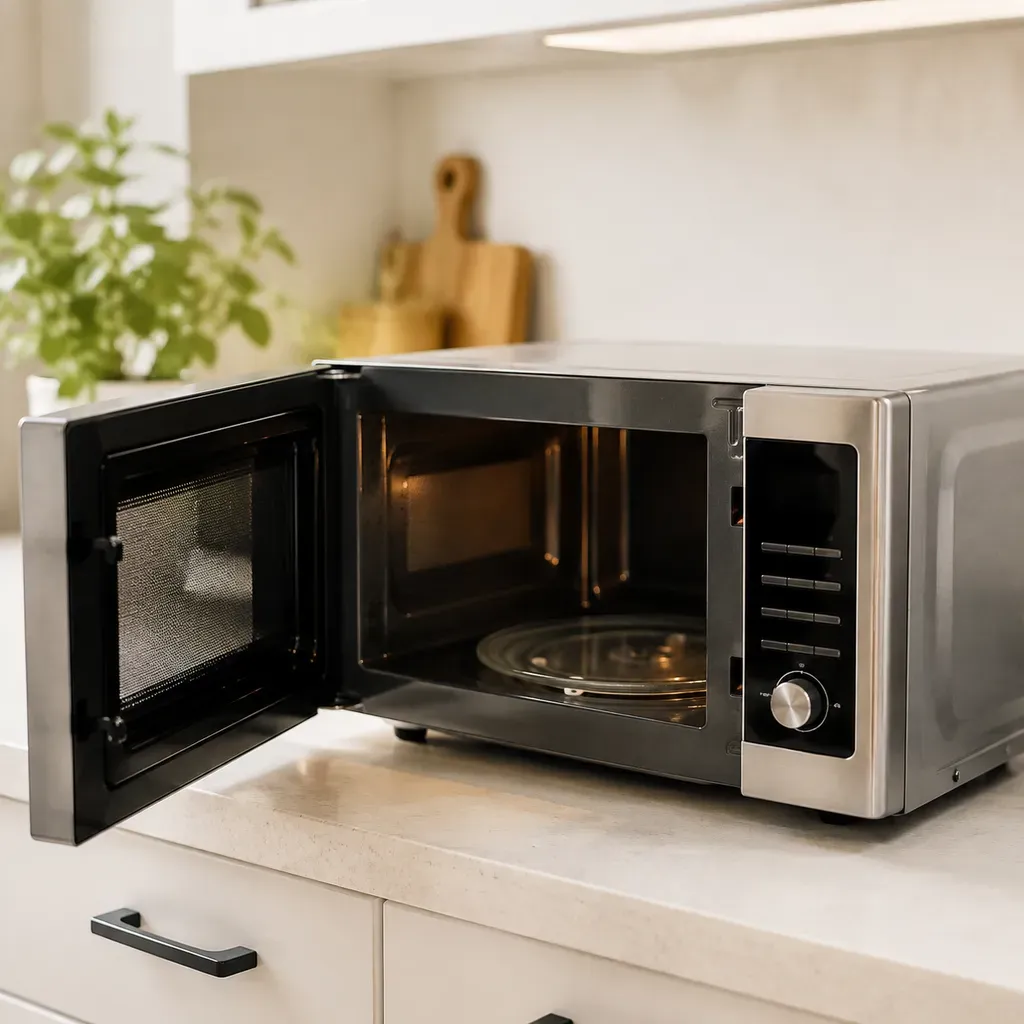
When we estimate how many amps a microwave uses, we need to look at its electrical input power, not only the cooking wattage shown on the front panel. A microwave labeled 700W, 1000W, or 1200W usually needs more power from the wall than its cooking output rating.
| Microwave cooking output | Typical input power draw | Approximate 120V amp draw |
|---|---|---|
| 700W microwave | About 900W–1,200W | 8–10 amps |
| 1000W microwave | About 1,400W–1,560W | 12–13 amps |
| 1200W microwave | About 1,680W–1,800W | 14–15 amps |
A 700-watt microwave amp draw is commonly around 8 to 10 amps. This can suit small kitchens, RVs, and compact off-grid setups, provided the circuit or power source has enough available capacity.
A 1000 watt microwave amp draw is often 12 to 13 amps at 120V. While it may run on a 15-amp circuit by itself, there is little room left for other kitchen loads. Our microwave amp-use quick guide explains why checking the appliance nameplate input rating is the most reliable approach.
A 1200W unit can pull about 14 to 15 amps, placing it near the practical limit of a 15-amp circuit. Larger microwaves may need a 20-amp circuit or a dedicated supply, especially when used frequently.
Countertop vs. Over-the-Range Microwaves
Countertop microwaves are often smaller, but their amp draw still depends on actual input watts. A compact countertop model may use around 8 to 12 amps, while larger countertop units can approach 15 amps.
Over-the-range (OTR) microwaves may require more circuit capacity because the same unit can include a ventilation fan and cooktop light. When those functions operate with the microwave, total electrical demand rises. For OTR microwave electrical requirements, a dedicated circuit is often the safer installation choice.
Circuit and Electrical Outlet Requirements

Most household microwaves use a 120V AC outlet. The outlet must be properly grounded and supplied by a circuit with enough capacity for the microwave’s electrical input draw, not only its cooking wattage.
| Microwave setup | Circuit guidance | Wire size |
|---|---|---|
| Smaller countertop microwave | 15A circuit may be suitable if the circuit has no major shared loads | 14 AWG copper |
| Standard or higher-input microwave | 20A circuit offers more working capacity | 12 AWG copper |
| Over-the-range or heavy-duty microwave | Dedicated 20A circuit is commonly the safer choice | 12 AWG copper |
15A vs. 20A Microwave Circuit
A 15-amp breaker microwave setup can work for a smaller unit on a lightly loaded circuit. However, a microwave can pull a substantial load while heating, so sharing that circuit with a toaster, coffee maker, kettle, or refrigerator can overload it.
For a typical 1000W microwave amp draw, a 20A circuit gives more room for normal operation and short startup demand. A 20 amp breaker microwave circuit is especially useful for larger countertop models and over-the-range installations.
Dedicated Circuit for Microwave
We recommend checking the appliance label and local electrical requirements before installation. A heavy-duty microwave or an over-the-range microwave may need a dedicated circuit for microwave use, meaning the circuit serves that appliance alone. This helps reduce nuisance breaker trips and avoids excessive kitchen appliance circuit load.
Choose the Correct Wire Gauge
- 14 AWG copper wire: Rated for a 15A circuit only.
- 12 AWG copper wire: Used for a 20A circuit and provides higher current capacity.
- Never install a larger breaker on wiring that is not rated for it.
The breaker, outlet, wiring, and microwave plug connection must all match the circuit design. For off-grid or backup planning, appliance wattage also affects battery capacity; see this guide to watt-hours and practical energy calculations when estimating usable stored power.
Key Factors Affecting Microwave Electrical Consumption
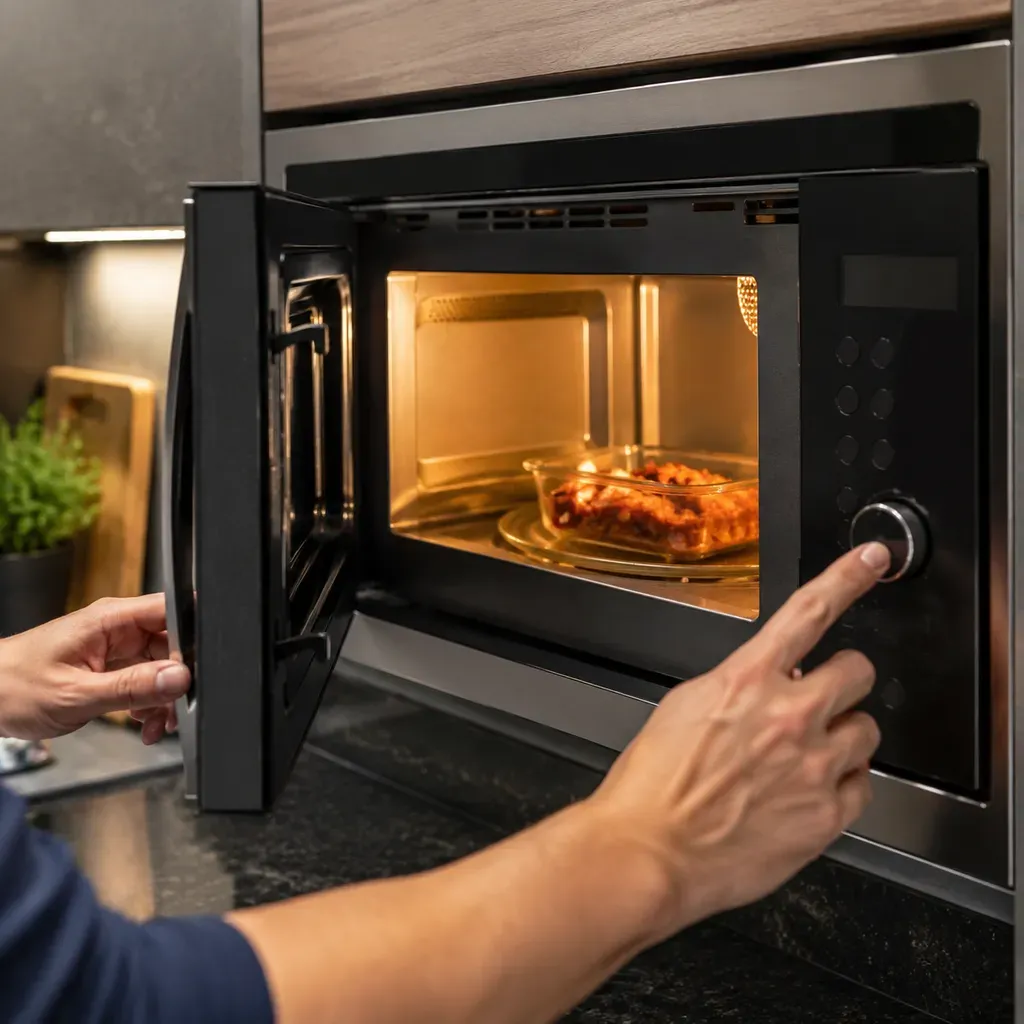
A microwave’s electrical consumption is not fixed. The label rating gives the best guide, but peak demand, circuit sharing, and appliance condition can all affect how many amps a microwave uses in real operation.
Startup Surge and Peak Draw
Most microwaves draw a brief higher current when they start. This microwave surge wattage can be above the normal running load, especially on models with a conventional magnetron. A power source, outlet, inverter, and circuit should have enough headroom for both running watts and short peak current.
For off-grid or backup use, we recommend matching the microwave to a pure sine wave inverter with sufficient continuous output and surge capacity. This helps support high-load appliances with stable power and lower interference.
Magnetron vs. Inverter Microwaves
Traditional microwaves commonly cycle the magnetron on and off to reduce cooking power. Their input draw can remain high while the magnetron is operating.
Inverter microwaves can regulate power more steadily at lower settings. However, the actual microwave amp draw still depends on the electrical input rating, not only the cooking wattage shown on the front panel. Check the appliance label for watts or amps before sizing a circuit or power station.
Shared Kitchen Circuit Load
A microwave on the same circuit as other kitchen appliances can overload the breaker quickly. Items such as kettles, coffee makers, toasters, and air fryers may each add substantial demand.
Keep the total kitchen appliance circuit load within the breaker rating. On a 15-amp circuit, a microwave may leave little capacity for another high-watt appliance. A 20-amp circuit provides more margin, but it should still be installed and protected according to local electrical requirements.
Age and Efficiency Matter
Older microwaves, worn door seals, failing components, or damaged power cords can affect efficiency and increase electrical demand. If a microwave begins tripping breakers, making unusual noise, or heating inconsistently, stop relying on estimated amps and inspect its rated input specifications.
For battery-backed operation, capacity matters as much as output power. A watt-hour explanation for battery sizing helps us compare a microwave’s power consumption with available stored energy.
How to Check and Measure Your Microwave Amp Draw
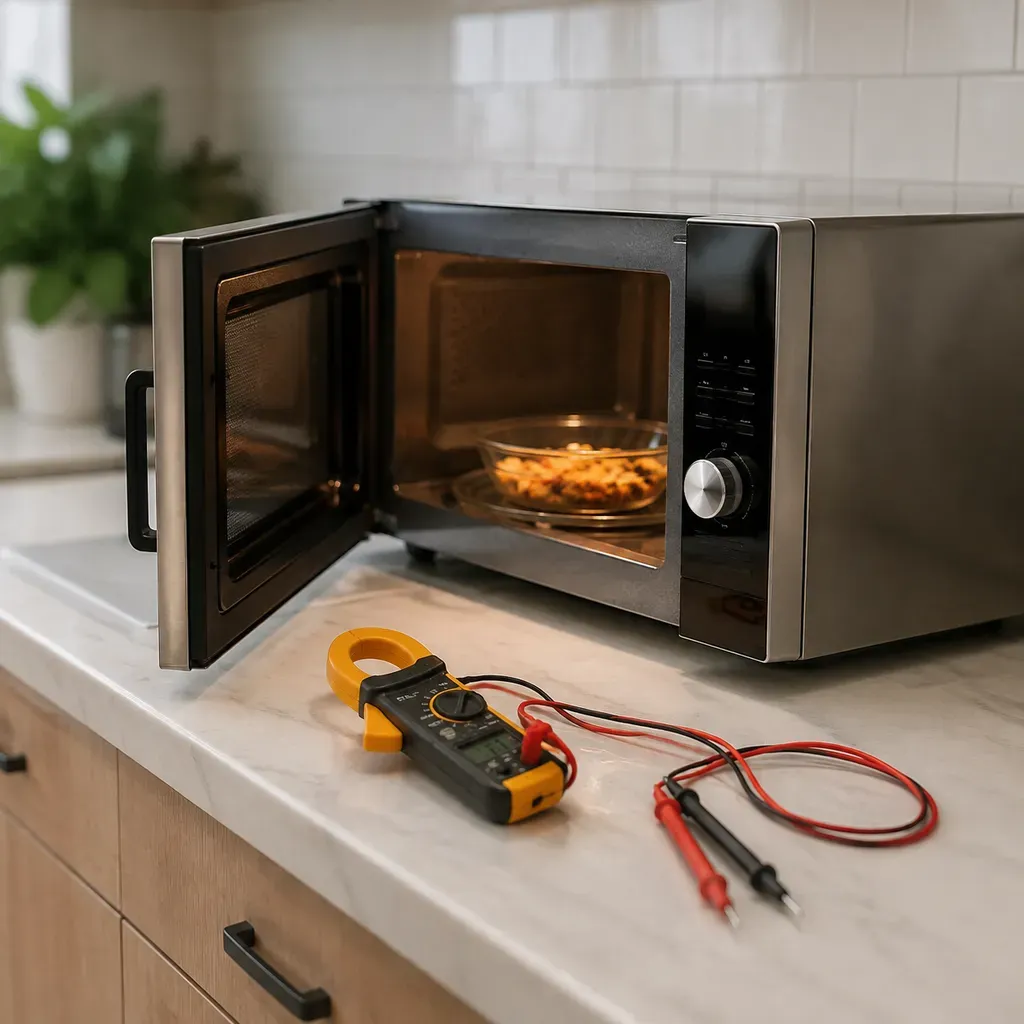
Before choosing a power station or backup system, I check the microwave’s manufacturer electrical specifications on its safety label or manual. The label may show the rated voltage, input watts, or amps. Use the input power rating, not only the cooking wattage, because electrical draw can be higher than the microwave’s advertised cooking output.
Measure Active Load
A plug-in wattmeter can measure the microwave’s live power consumption during operation. I compare the measured watts with the label rating, then estimate the amp draw with:
Amps = Watts ÷ Volts
For a practical overview of microwave wattage, voltage, and amp draw, see this microwave amp draw guide.
Check the Total Circuit Load
Before installation, I add the microwave’s electrical draw to the other appliances sharing the same circuit. This helps identify whether the circuit may be overloaded during simultaneous use. For off-grid or backup applications, I also compare the measured load with the inverter’s continuous output and available surge capacity. A TURSAN system with a pure sine wave inverter and intelligent BMS provides controlled power protection for demanding loads.
Frequently Asked Questions About Microwave Amps
Can I Plug a Microwave Into a Regular 15-Amp Kitchen Outlet?
Usually, yes. A typical microwave can run from a standard 120V, 15-amp outlet when the circuit is not heavily loaded. However, a microwave using roughly 12 to 15 amps may leave little capacity for other kitchen appliances on the same circuit. For dependable operation, follow the appliance label and local electrical requirements. Our microwave amp quick guide explains the basic microwave wattage-to-amps calculation.
Why Does My Microwave Trip the Circuit Breaker When Turned On?
A breaker may trip because the microwave’s startup demand combines with other loads, such as a kettle, toaster, or refrigerator. A weak breaker, damaged outlet, faulty appliance, or overloaded circuit can also cause a trip. Do not replace a breaker or fuse with a higher-rated one without qualified electrical assessment.
Does Reducing Microwave Power Settings Lower the Amp Draw?
Lower power settings can reduce average cooking power, but many conventional microwaves cycle the magnetron on and off rather than drawing a steadily lower current. The microwave may still pull close to its normal input amps while the magnetron is active. Actual power behavior depends on the appliance design.
How Many Amps Does a Small Portable Microwave Draw?
A small portable microwave commonly draws about 8 to 10 amps at 120V, depending on its electrical input rating. The cooking wattage shown on the front is not always the same as wall-power consumption. For portable power use, we recommend checking the input watts on the rating label and allowing extra inverter capacity for startup demand.