 English
  العربية
  日本語
日本語  한국어
한국어  Tiếng Việt
  ไทย
ไทย  Bahasa Melayu
  فارسی
فارسی  Bahasa Indonesia
  ဗမာစာ
ဗမာစာ  简体中文
简体中文  香港中文
香港中文  繁體中文
繁體中文  Русский
  Deutsch
  Nederlands
  Italiano
  Français
  Español
  Português
  Afrikaans
  Azərbaycan dili
  Български
  ਪੰਜਾਬੀ
  हिन्दी
  اردو
اردو  বাংলা
বাংলা  Հայերեն
  Íslenska
  Қазақ тілі
  नेपाली
  Српски језик
  Kiswahili
  తెలుగు
  Basa Jawa
  தமிழ்
தமிழ்  मराठी
मराठी Core Mechanism & Operational Profiles
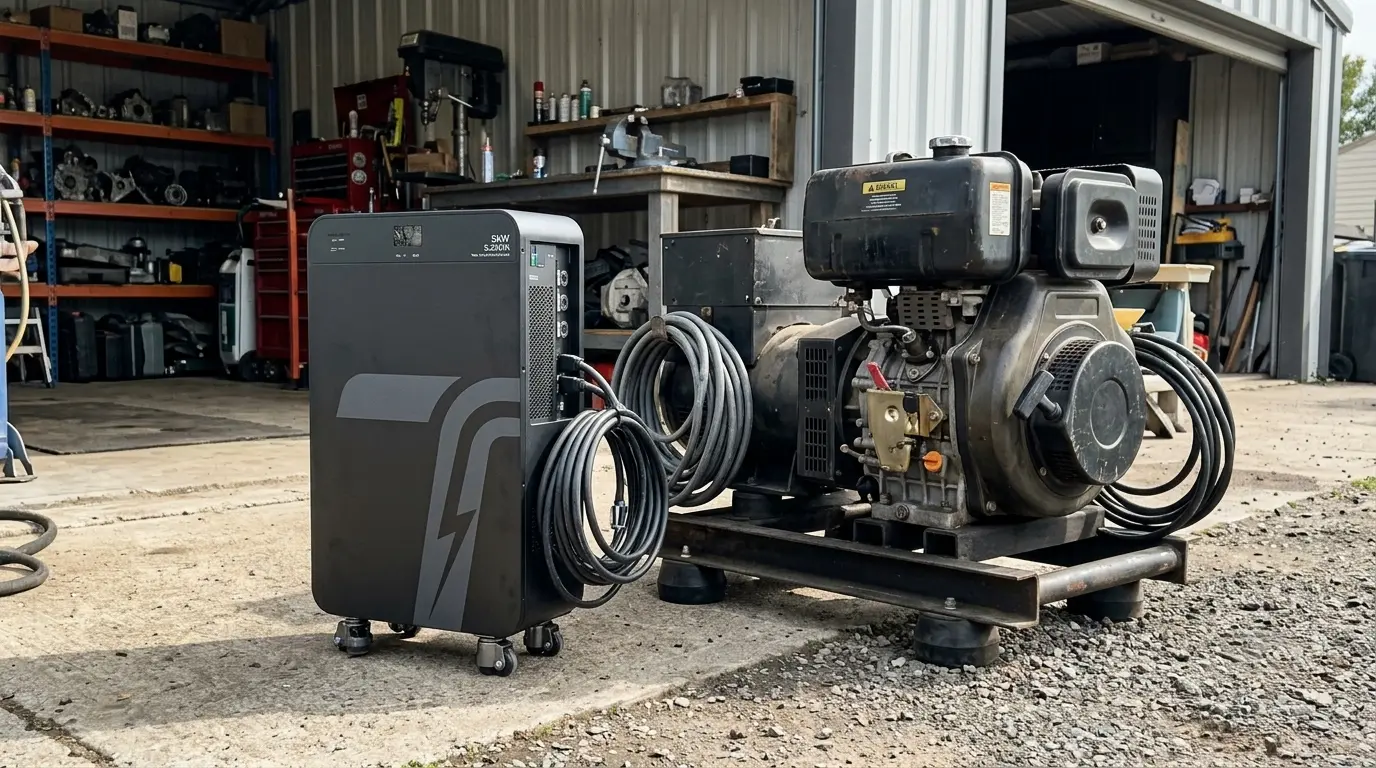
When choosing between a home battery and a traditional gas generator, we are looking at two entirely different ways of managing power. A whole-home backup power system relies on chemistry, quiet performance, and instant response. A gas generator relies on mechanical combustion, moving parts, and external fuel.
Understanding how these systems supply power and how fast they react during a blackout determines how well they protect your household.
How They Generate or Supply Power
The fundamental difference lies in whether power is stored or actively manufactured on-site.
- Home Battery Systems: These operate as a solar-plus-storage system or grid-charged reservoir. They do not generate electricity; they store it. Most modern premium systems utilize Lithium Iron Phosphate (LFP) chemistry, which provides high efficiency, deep discharging capabilities, and a long lifespan. They run completely silent, require no ventilation, and emit zero emissions.
- Gas Generators: These are compact, fossil-fuel-powered power plants. They consume fuel (natural gas, propane, or diesel) to spin an internal alternator, converting mechanical energy into electrical energy. Because they rely on combustion, they require continuous fuel logistics and maintenance, produce operational noise, and must be installed outdoors due to exhaust fumes.
The Switchover Speed (Transition Time)
During a sudden blackout, the time it takes for your backup system to kick in can mean the difference between a seamless transition and a total reboot of your household electronics.
| Feature | Home Battery Storage | Standby Gas Generator |
|---|---|---|
| Mechanism | Solid-state electronics / Internal inverter | Automatic Transfer Switch (ATS) + Engine startup |
| Transition Time | Instantaneous (Typically < 10–20 milliseconds) | Delayed (Typically 10 to 30 seconds) |
| Household Impact | Grid islanding capability keeps lights, Wi-Fi, and computers running without interruption. | Power drops completely. Digital clocks reset, computers shut down, and appliances pause until the engine revs up. |
| Operational State | Always on, constantly monitoring grid health. | Idle until a power outage protection trigger occurs. |
Financial Breakdown: Home Battery vs Gas Generator Total Cost of Ownership (TCO)
When evaluating a home battery vs gas generator, looking only at the sticker price tells a very incomplete story. The financial reality requires weighing the initial capital expenditures (CapEx) against the long-term operational expenditures (OpEx) over a 10 to 20-year lifecycle.
Initial Capital Expenditures (CapEx)
A traditional standby generator installation has a much lower barrier to entry. Upfront costs for a whole-home gas generator typically run between $7,000 and $15,000, depending on the wattage and fuel line plumbing required.
Conversely, installing a premium solar-plus-storage system requires a steeper initial investment. A reliable setup utilizing stable Lithium Iron Phosphate (LFP) chemistry can range from $12,000 to $25,000 or more. However, identifying the best home battery brands helps ensure that this upfront premium translates into decades of reliable service and grid independence.
Operational Expenditures & Lifecycle Metrics (OpEx over 10-20 Years)
While generators are cheaper on day one, their ongoing operational costs quickly pile up over a 10 to 20-year lifespan. Home batteries, by contrast, feature an inverted cost structure: high upfront, but virtually zero ongoing costs.
| Financial Metric | Standby Gas Generator | Home Battery Storage System |
|---|---|---|
| Initial Purchase & Installation | Moderate ($7,000 – $15,000) | High ($12,000 – $25,000+) |
| Fuel Logistics and Maintenance | Ongoing fuel costs + $200–$500 annual servicing | $0 (Charged via grid or solar) |
| Lifespan | 10–15 years (Depends on run-time hours) | 10–15+ years (Based on battery cycles) |
| Clean Energy Tax Incentives | None | Eligible for 30% Residential Clean Energy Credit |
| Daily ROI | Zero (Sits idle until a power outage occurs) | High (Lowers daily power bills via TOU optimization) |
Over a 15-year period, the Total Cost of Ownership (TCO) for a gas generator creeps upward due to routine oil changes, filter replacements, and the escalating cost of propane or natural gas. A home battery mitigates these expenses by leveraging clean energy tax incentives to slash the initial CapEx by 30%, while actively generating daily savings through peak-load shaving.
Everyday Value vs. Emergency-Only Utility: Home Battery vs Gas Generator
When deciding between a home battery vs gas generator, the biggest difference comes down to how often your investment actually works for you. A traditional standby generator is an insurance policy that only delivers value during an absolute emergency. The rest of the time, it sits dormant. A home battery backup system, however, operates as an active, everyday asset that optimizes your home’s energy consumption.
The Generator Idle Problem
A gas generator is built for a single purpose: emergency power outage protection. Because it relies on internal combustion, it cannot run unless the grid goes down. This creates the \”generator idle problem.\”
- Zero Daily Return: You sink thousands of dollars into an asset that sits dark 99% of the year.
- Wasted Maintenance Costs: Even when it is completely idle, a generator requires regular oil changes, filter replacements, and test runs just to ensure it will start when a storm hits.
- Fuel Logistics: Gas and propane degrade over time. You must constantly manage fuel stabilization or rely on a continuous utility natural gas line, which can still fail during major geographic disasters like earthquakes or freezing storms.
The Daily Optimization Value of Battery Storage
A solar-plus-storage system completely flips this dynamic by providing value 365 days a year. Instead of waiting for a blackout, a modern home battery constantly manages your power to lower your monthly electric bills through peak-load shaving and Time-of-Use (TOU) optimization.
- Time-of-Use (TOU) Optimization: In many regions across the United States, utility companies charge significantly higher electricity rates during peak evening hours. A home battery automatically stores cheap grid power (or free solar energy) during the day and discharges it during peak hours, shielding you from expensive utility rates.
- Seamless Grid Islanding Capability: When a blackout does strike, the transition is instantaneous. Unlike a generator that requires an Automatic Transfer Switch (ATS) to crank a motor over several seconds, a battery provides uninterrupted power so your computers, clocks, and medical equipment never skip a beat.
- Maximizing Solar Investment: If you have solar panels, a battery ensures you actually use the energy you generate rather than sending it back to the grid for pennies.

To get the most out of daily energy management, homeowners typically look to the top 10 home battery manufacturers to find high-capacity systems that feature advanced Lithium Iron Phosphate (LFP) chemistry for maximum daily cycling lifespan. Ultimately, a gas generator handles emergencies well, but a home battery balances both emergency resilience and everyday financial savings.
Power Capabilities: Capacity (kWh) vs. Continuous Output (kW) in a Home Battery vs Gas Generator
When evaluating a home battery vs gas generator, you have to understand the difference between how much power a system can hold versus how much power it can push out at any given moment. This comes down to two critical metrics: capacity (kWh) and continuous power output (kW).
- Continuous Power Output (kW): This is the maximum amount of electricity a system can deliver at one exact moment. It dictates how many appliances you can turn on at the same time.
- Battery Capacity (kWh): This is the total amount of energy stored in the system. It dictates how long those appliances can run before the power source is drained.
Traditional fossil-fuel standby generators excel at continuous power output. A standard 22 kW whole-home backup power generator can easily run a large central AC, a water heater, and kitchen appliances simultaneously without breaking a sweat, drawing fuel continuously from a dedicated natural gas line or propane tank.
A standard solar-plus-storage system relies on Lithium Iron Phosphate (LFP) chemistry, which is incredibly safe and efficient but inherently limited by its stored capacity. A single premium home battery typically offers around 5 kW of continuous output and 13.5 kWh of capacity. To match the raw output of a large gas generator, homeowners must stack multiple batteries together to build a robust whole-home backup power setup that can handle heavy household loads over an extended period.
Handling the Surge (Inductive Loads)
The biggest hurdle for any power source during a grid failure is handling the initial \”surge\” or inductive loads. Appliances with large electric motors—like central air conditioners, sump pumps, and refrigerators—require up to three times more electricity to start up than they do to keep running.
- Gas Generators: Naturally handle massive power surges well because the mechanical engine can briefly rev higher to absorb the sudden load demand.
- Home Batteries: Rely on peak or surge ratings. A battery with a 5 kW continuous rating might deliver a peak output of 7 kW for just a few seconds to start a motor. If the surge demand exceeds this limit, the battery system will instantly shut down to protect its internal circuitry. To run heavy US household appliances like a 4-ton central AC unit on battery power, installing a \”soft starter\” on the AC compressor is often required to lower that initial startup spike.
Outage Duration Limits
The ultimate winner of the home battery vs gas generator debate during a prolonged blackout depends entirely on your fuel security and weather conditions.
| Power Source | Maximum Runtime Factors | Best Case Scenario | Worst Case Scenario |
|---|---|---|---|
| Gas Generator | Continuous fuel supply (Natural Gas/Propane) | Infinite runtime as long as fuel flows and regular maintenance is performed. | Fuel supply lines are shut down during major natural disasters or local propane deliveries freeze. |
| Home Battery | Total stored kWh capacity + Solar replenishment | Infinite runtime if paired with a solar array that gets clear daily sunlight to recharge. | Consecutive days of heavy storm coverage or snow-covered panels drain the system to zero. |
Without solar replenishment, a standard battery setup offers fixed power outage protection that will typically run out within 12 to 24 hours of normal household consumption. Conversely, a gas standby generator can run for days or weeks, provided you handle the necessary fuel logistics and maintenance, such as checking engine oil levels every 24 to 48 hours of continuous operation.
Safety, Environmental Compliance, and Physical Footprint
When comparing a home battery vs gas generator, the physical impact on your living space and local environment is often the deciding factor. A backup power solution shouldn’t introduce new hazards to your household.
Environmental Obstacles & Hazards
Traditional standby generators come with significant environmental and safety liabilities. Because they burn fossil fuels, they produce toxic carbon monoxide emissions, requiring strict outdoor installation at least 15 to 20 feet away from windows and doors. They are also notoriously loud, often creating 65 to 70 decibels of noise that can disrupt your neighborhood and violate local noise ordinances. Fuel storage introduces additional risks, as gasoline and diesel degrade over time and present a constant fire hazard.
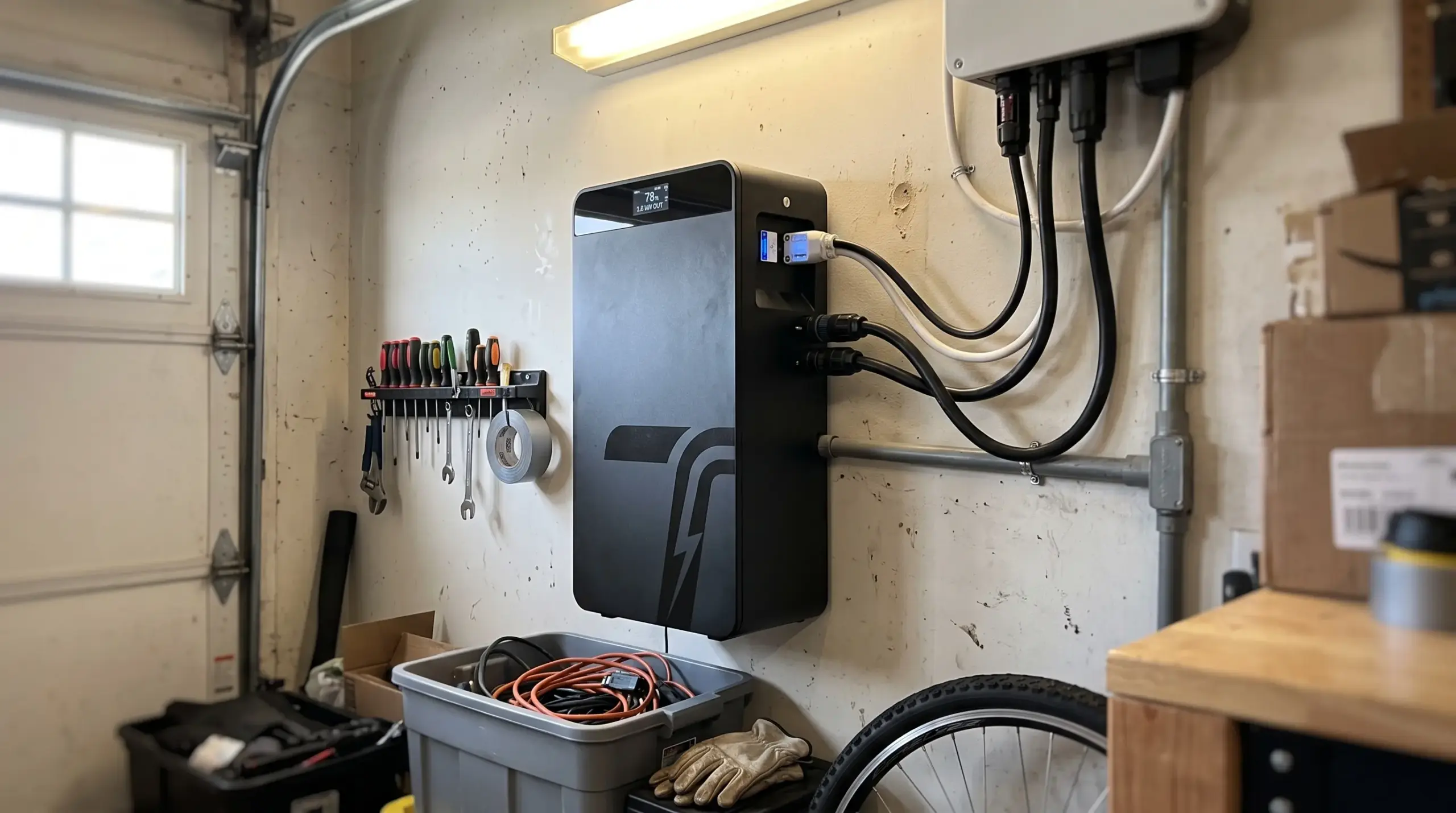
In contrast, modern battery storage systems operate in complete silence and emit zero emissions. Built using advanced Lithium Iron Phosphate (LFP) chemistry, these systems are highly stable, eliminating the thermal runaway risks associated with older lithium-ion variations. They feature a compact physical footprint, mounting flat against a garage wall or utility room without requiring fuel lines or massive clearances.
Clean Energy Compliance
As local regulations across the United States tighten around fossil fuel usage, compliance is becoming a major hurdle for gas generators. Many homeowners’ associations (HOAs) and municipal codes strictly limit generator runtime and noise levels.
Choosing a solar-plus-storage system ensures effortless compliance with all clean energy mandates. Instead of relying on a fragile fuel logistics supply chain during a widespread regional crisis, home batteries leverage grid islanding capability to safely disconnect from the utility grid, charging directly from your solar panels during the day and powering your home through the night. This clean energy alignment also qualifies your property for valuable federal and state environmental incentives while contributing to a more resilient, localized power grid.
Decision Matrix: Home Battery vs Gas Generator
Choosing between a home battery vs gas generator comes down to your energy goals, budget, and how you handle power outages. Use this direct comparison matrix to see how they stack up across critical performance metrics.
| Feature | Standby Gas Generator | Home Battery Storage System |
|---|---|---|
| Initial Cost (CapEx) | Lower upfront investment | Higher upfront investment |
| Fuel Source | Natural gas, propane, or diesel | Solar panels or grid power |
| Runtime | Unlimited (as long as fuel is available) | Limited by battery capacity and solar recharge |
| Transition Time | 10 to 30 seconds (brief flicker) | Instantaneous (0 milliseconds / seamless) |
| Daily Value | None (idles until a blackout) | Daily use for savings via peak-load shaving |
| Maintenance | High (oil changes, filter swaps, engine tests) | Zero maintenance |
| Emissions & Noise | Loud engine exhaust, high carbon footprint | Completely silent, zero emissions |
Choose a Standby Generator If:
- You experience prolonged, multi-day outages: If your area is prone to severe weather that knocks out the grid for weeks at a time, a generator offers indefinite whole-home backup power as long as the fuel logistics and maintenance are kept up.
- You have massive, continuous power demands: Running multiple central AC units, pool pumps, and heavy inductive loads simultaneously without worrying about draining a battery capacity storage bank.
- Upfront budget is your primary constraint: You need immediate power outage protection at a lower initial capital expenditure and are comfortable with ongoing operational expenses.
Choose a Home Battery Storage System If:
- You want daily financial returns: You live in an area with Time-of-Use (TOU) rates and want to use peak-load shaving to avoid high electricity bills by drawing from a high-capacity 48V LFP home battery during expensive peak hours.
- You demand seamless backup: You run a home office, sensitive electronics, or medical equipment that cannot tolerate a 30-second power interruption before a generator kicks on. A solar-plus-storage system offers instant grid islanding capability.
- You want a clean, quiet, maintenance-free lifestyle: You prefer to avoid storing flammable fuels, performing engine maintenance, or dealing with loud exhaust noise. You can maximize your off-grid energy independence safely with clean energy tax incentives that offset the initial setup costs.
Frequently Asked Questions (FAQs)
Can a home battery run a central AC system?
Yes, but it depends on your specific setup. Central air conditioners require a massive spike in power—known as locked rotor amps (LRA)—just to start the compressor. A single standard home battery might struggle with this initial surge.
To run a central AC during a power outage, you generally need to pair your system with a soft starter to reduce that initial startup spike, or stack multiple batteries together to boost your continuous power output (kW). For heavy-duty backups, a robust lithium-ion battery setup provides the high discharge rates necessary to keep your home comfortable without overloading the system.
How long will a gas generator run compared to a solar battery?
A gas generator will run indefinitely as long as you have a continuous supply of fuel. A typical standby generator can run for several days on a standard 500-gallon propane tank or continuously if hooked up to a natural gas line. However, you must shut it down every 24 to 48 hours for oil changes and routine maintenance.
In contrast, a solar battery is limited by its battery capacity (kWh) and the weather. During a prolonged utility outage, a solar-plus-storage system creates a self-sustaining microgrid: it powers your home and recharges the batteries during the day, then carries your essential loads through the night.
Is there a tax credit for installing a home backup battery?
Yes. Under the Residential Clean Energy Credit (Section 25D), United States homeowners can claim a 30% federal tax credit for installing a home battery storage system.
- Eligibility: The battery system must have a capacity of 3 kWh or greater.
- Solar Not Required: Since recent policy updates, you can claim the full 30% credit even if the battery is charged entirely from the utility grid without solar panels.
- Local Incentives: Many states offer additional rebates, such as California’s SGIP or various utility Time-of-Use (TOU) optimization incentives, which lower the total cost of ownership even further.

Do home batteries work during a freezing winter storm?
Yes, home batteries operate efficiently during freezing winter storms, provided they are installed correctly. Extreme cold slows down chemical reactions inside any battery, which can temporarily reduce charging efficiency.
To combat this, most modern home energy storage systems utilize advanced Lithium Iron Phosphate (LFP) chemistry and include built-in internal thermal management systems. If you live in a region prone to severe winter weather, installing the battery system inside a garage or basement ensures it stays within its optimal operating temperature range, delivering reliable power outage protection when the grid goes down.