 English
  العربية
  日本語
日本語  한국어
한국어  Tiếng Việt
  ไทย
ไทย  Bahasa Melayu
  فارسی
فارسی  Bahasa Indonesia
  ဗမာစာ
ဗမာစာ  简体中文
简体中文  香港中文
香港中文  繁體中文
繁體中文  Русский
  Deutsch
  Nederlands
  Italiano
  Français
  Español
  Português
  Afrikaans
  Azərbaycan dili
  Български
  ਪੰਜਾਬੀ
  हिन्दी
  اردو
اردو  বাংলা
বাংলা  Հայերեն
  Íslenska
  Қазақ тілі
  नेपाली
  Српски језик
  Kiswahili
  తెలుగు
  Basa Jawa
  தமிழ்
தமிழ்  मराठी
मराठी The outside is a specification.
A practical map of what can change on a wall mounted battery, what needs an engineering review, and where a private-label brief becomes an ODM project.
What Appearance Parameters Can Be Customized on a 5kWh Wall Mounted Battery
A 5kWh wall mounted battery may look simple from the front, but its enclosure affects installation time, transport cost, heat dissipation, and how easily a distributor can build a consistent product range. Buyers often ask whether an OEM factory can change everything visible on the unit. The practical answer is yes for many cosmetic details, but no for every structural feature.
This article separates the appearance parameters that usually support OEM and ODM battery customization from the dimensions and safety features that need engineering review. That distinction helps you prepare a workable specification before requesting samples.
Which exterior details can the OEM usually change
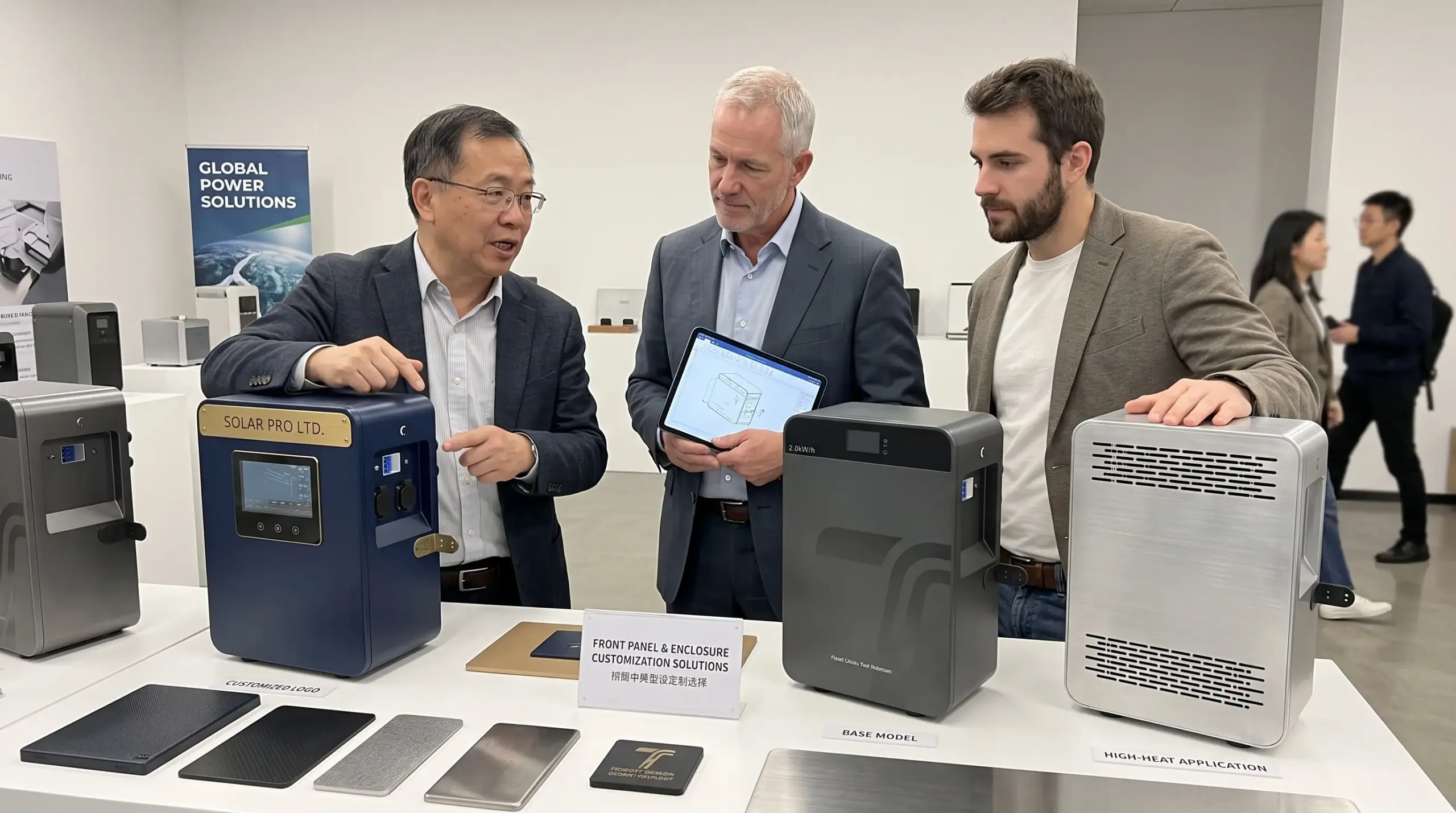
Most 5kWh residential units use a 51.2V 100Ah LiFePO4 battery pack, a BMS, and a metal enclosure. See TURSAN’s 51.2V 100Ah LiFePO4 battery as a product reference. The cells and BMS generate heat during charging and discharge, so the factory cannot treat the enclosure as a blank shell. Within those limits, a buyer can normally customize the following items.
Color and finish. You can select a powder-coating color from a RAL reference, use a matte or fine-textured finish, and specify a gloss level. Light colors can suit indoor utility rooms, while darker finishes may match inverter brands. Ask for a physical color sample because screens do not show powder-coating texture accurately.
Logo and product markings. The factory can usually add a printed logo, laser marking, nameplate, model number, barcode, serial number, and warning labels. Confirm the label material and adhesive rating if the battery will operate in a humid garage or an outdoor cabinet. Keep regulatory markings visible and unchanged where certification requires them.
Front panel layout. A custom front panel can include a logo window, LED indicators, a small LCD, a start button, or a communication port cover. Some projects remove the display to reduce cost, while others add a state-of-charge indicator for installers. The panel cutout still needs to preserve the enclosure’s sealing and impact protection.
Handle and wall-mount appearance. You may request a recessed handle, a different handle color, a concealed mounting bracket, or a bracket cover that gives several batteries the same visual line. The mounting points cannot move freely, however. A 5kWh unit can weigh roughly 45–55 kg, so the bracket must distribute the load into suitable wall anchors and keep the battery level.
Cable and connector presentation. OEM projects can often change cable length, cable color, gland style, and the position of external connectors. The connector family must still match the battery current and the inverter protocol. For a 51.2V pack delivering 100A, the cable, terminal, fuse, and connector selection deserve an electrical review rather than a cosmetic decision.
Ventilation and side details. Perforation patterns, vent covers, and small decorative grooves can change if they maintain the required airflow and IP rating. A typical indoor enclosure may target IP21, while a protected outdoor version may target IP65. A sealed IP65 design needs a different thermal solution from a ventilated indoor housing, so changing the rating can affect more than the surface appearance.
A darker coating, relocated connector, or sealed vent can change heat, service access, or protection performance. Treat every visible change as a specification input.
The OEM and ODM boundary that matters
OEM customization works best when you group requests into three levels. Level one covers color, logo, labels, and packaging. These changes normally need artwork confirmation and a production sample. Level two covers the front panel, bracket, connector position, and enclosure dimensions. These requests may require tooling, thermal checks, and a new mounting test. Level three changes the housing concept, cooling path, or internal layout. Treat these as an ODM engineering project rather than a simple private-label order, and review the OEM/ODM service scope before preparing a project brief.
Color, logo, labels, and packaging. Artwork confirmation plus a production sample.
Front panel, bracket, connector position, and dimensions. Fit, thermal, and mounting checks.
Housing concept, cooling path, or internal layout. Full ODM engineering validation.
The battery’s electrical platform also sets boundaries. A 51.2V 100Ah LFP pack commonly operates around 40–58.4V, and the BMS may communicate with an inverter through CAN or RS485. The enclosure must leave room for service access, maintain insulation distances, and protect the BMS from condensation. A new exterior design should therefore pass a fit check, a thermal test at the intended discharge current, and a wall-load test before mass production. TURSAN’s quality control process covers appearance inspection alongside functional and safety checks.

Appearance options compared by project risk
| Customization option | Typical engineering effort | Main approval check | Best fit |
|---|---|---|---|
| RAL color, logo, label, carton artwork | Low | Color and artwork sample | Existing battery platform |
| Front panel, indicator layout, bracket cover | Medium | Fit, sealing, and mounting test | Brand differentiation |
| New enclosure size or connector position | Medium to high | Thermal, cable, and inverter compatibility | New installation market |
| New cooling path or internal housing layout | High | Full safety and reliability validation | ODM product development |
Four common appearance customization pitfalls
- Choosing color without checking heat. A dark coating does not automatically cause overheating, but the final enclosure color, solar exposure, ambient temperature, and discharge rate all matter. Test the finished unit at 25°C and at the project’s maximum operating temperature.
- Moving the mounting holes for visual symmetry. The battery may look cleaner on a wall, but a new hole pattern can weaken the bracket or miss the load-bearing studs. Approve the wall-load drawing before changing the exterior dimensions.
- Adding a display without defining its function. A display that shows state of charge, alarms, and communication status needs a data source and a clear user interface. Specify whether the display reads the BMS directly or receives values through the inverter.
- Treating labels as decoration. Model numbers, polarity marks, warning symbols, and serial numbers support installation and traceability. Keep their size, contrast, and location aligned with the applicable certification and service requirements.
FAQ for 5kWh wall battery buyers
Conclusion
For a 5kWh wall mounted battery, color, finish, logo, labels, front-panel layout, bracket cover, cable presentation, and selected connector details are usually practical OEM options. Enclosure dimensions, ventilation, IP rating, and mounting points need engineering validation because they affect safety and service life. Compare available capacities and formats in TURSAN’s home battery product range.
Send your target appearance drawing, installation environment, and inverter model. An OEM partner can then return a sample plan, tooling assessment, and preliminary BOM instead of guessing from a product photo.