 English
  العربية
  日本語
日本語  한국어
한국어  Tiếng Việt
  ไทย
ไทย  Bahasa Melayu
  فارسی
فارسی  Bahasa Indonesia
  ဗမာစာ
ဗမာစာ  简体中文
简体中文  香港中文
香港中文  繁體中文
繁體中文  Русский
  Deutsch
  Nederlands
  Italiano
  Français
  Español
  Português
  Afrikaans
  Azərbaycan dili
  Български
  ਪੰਜਾਬੀ
  हिन्दी
  اردو
اردو  বাংলা
বাংলা  Հայերեն
  Íslenska
  Қазақ тілі
  नेपाली
  Српски језик
  Kiswahili
  తెలుగు
  Basa Jawa
  தமிழ்
தமிழ்  मराठी
मराठी Convert mA to A, measure current safely, compare mAh with Ah, and apply the formulas to BMS and LiFePO4 energy-storage systems.
Need to convert milliamps to amps quickly?
The rule is simple: divide the milliamp value by 1,000. So, 500 mA = 0.5 A, while 2,000 mA = 2 A.
In this updated mA to A conversion guide for 2025, you’ll learn the formula, see quick-reference examples, and understand how current ratings affect chargers, batteries, adapters, and everyday electronics. Let’s get started.
To convert milliamps (mA) to amps (A), divide the milliamp value by 1,000:
Amps (A) = Milliamps (mA) / 1,000
You can also move the decimal point three places to the left. For example:
500 mA = 0.5 A
For the reverse conversion:
Milliamps (mA) = Amps (A) × 1,000
Milliamps to Amps Conversion Table
Use this quick-reference table to convert common low-power and high-power electrical current values from milliamps (mA) to amps (A).
| Current | Equivalent | Typical application |
|---|---|---|
| 1 mA | 0.001 A | Micro-sensor standby draw |
| 50 mA | 0.05 A | BMS sleep-mode parasitic current |
| 500 mA | 0.5 A | USB output or IoT telemetry transmission |
| 1,000 mA | 1 A | Standard unit equivalence |
| 5,000 mA | 5 A | DC auxiliary load |
| 100,000 mA | 100 A | Industrial LiFePO4 battery discharge current |
For larger systems, accurate current conversion supports load assessment for home battery backup systems and other LiFePO4 energy storage applications.
Amperes vs. Milliamperes in Electrical Systems
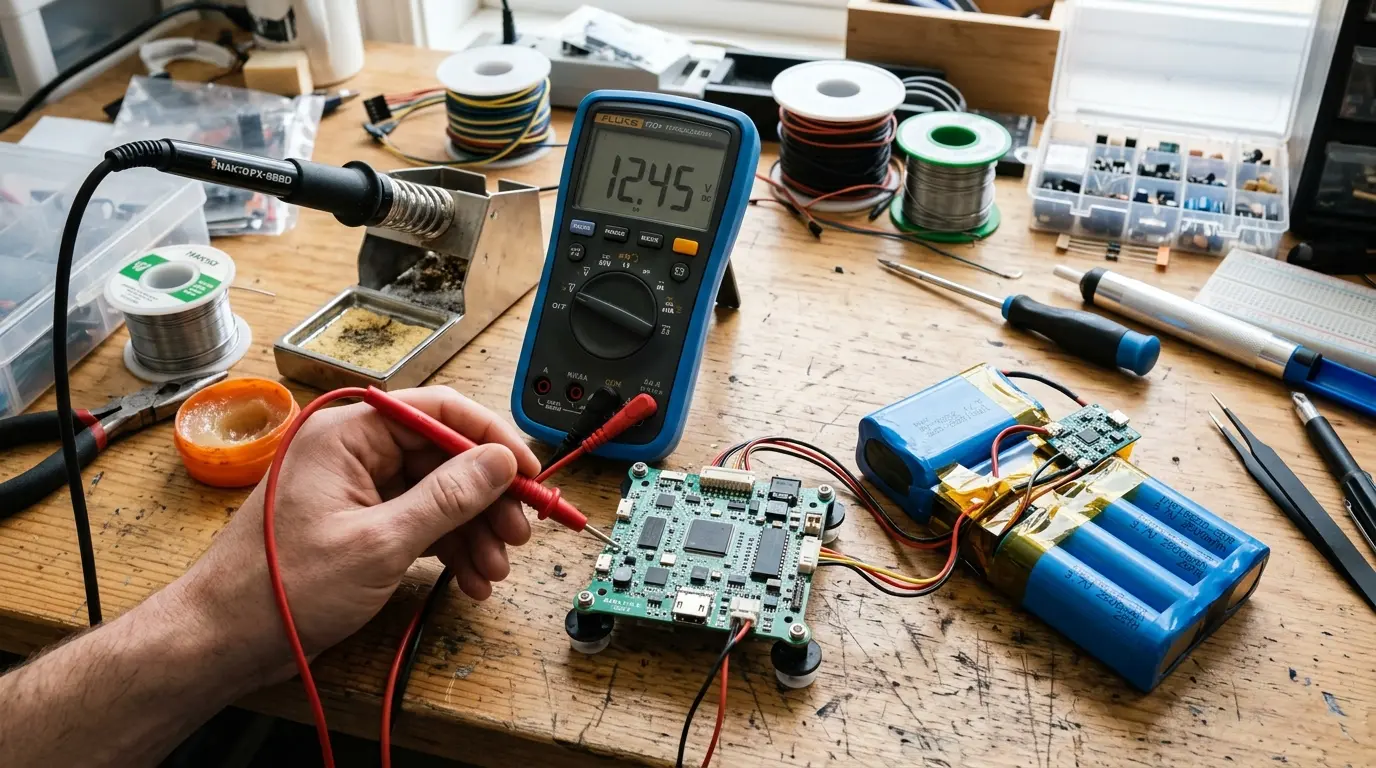
An ampere (A) measures the flow of electric charge per second. The milli- prefix means one-thousandth, so 1 mA = 0.001 A. Low-power electronics use milliamps because their current demand is small and easier to monitor at that scale.
- Milliamps (mA): Common for PCB traces, sensors, microcontrollers, IoT devices, and low-current BMS monitoring.
- Amps (A): Used for LiFePO4 battery banks, inverter input and output, EV charging equipment, and grid-tied energy storage systems.
In practical energy storage work, I use mA values to assess standby or control-circuit consumption, while ampere values describe the higher current handled by battery modules, inverters, and other power equipment.
How to Measure Current in mA and A with a Multimeter

I use the correct multimeter setting and input port before measuring any circuit current. The wrong port can blow the meter fuse or damage the instrument.
| Measurement | Meter setting | Input port |
|---|---|---|
| Micro-current | µA | Fused µA port |
| Low current | mA | Fused mA port |
| Higher current | A | 10 A or 20 A port, if rated |
To measure current, I connect the multimeter in series with the circuit while the load is operating. Current must flow through the meter, so I first switch off the circuit, connect the leads correctly, and then restore power. I never place an ammeter directly across a battery or power source.
For inductive or high-current equipment, I use a clamp meter with the correct AC or DC current function. It measures current around a conductor without opening the circuit, which is useful for battery cables, inverter inputs, and other high-drain wiring.
Safety rules:
- Start with the highest current range when the load is unknown.
- Keep high-drain devices away from the mA or µA jack.
- Check the meter fuse and lead position before testing.
- Confirm the meter’s maximum current rating before measuring a battery or energy storage circuit.
mAh to Ah Conversion for Battery Sizing
Milliamp-hours (mAh) and amp-hours (Ah) both measure battery capacity over time. The difference is scale:
- 1 Ah = 1,000 mAh
- mAh is common for consumer electronics and smaller battery packs.
- Ah is more practical for LiFePO4 batteries and industrial energy storage systems.
mAh to Ah Formula
Amp-hours (Ah) = Milliamp-hours (mAh) / 1,000
| Capacity | Conversion | Result |
|---|---|---|
| 1,000 mAh | 1,000 / 1,000 | 1 Ah |
| 10,000 mAh | 10,000 / 1,000 | 10 Ah |
| 100,000 mAh | 100,000 / 1,000 | 100 Ah |
| 314,000 mAh | 314,000 / 1,000 | 314 Ah |
For commercial energy storage sizing, a 314,000 mAh rating equals 314 Ah. This format is easier to compare with LiFePO4 battery systems rated at 100 Ah, 200 Ah, or 314 Ah.
BMS Parasitic Draw and Micro-Current Monitoring in Energy Storage Systems
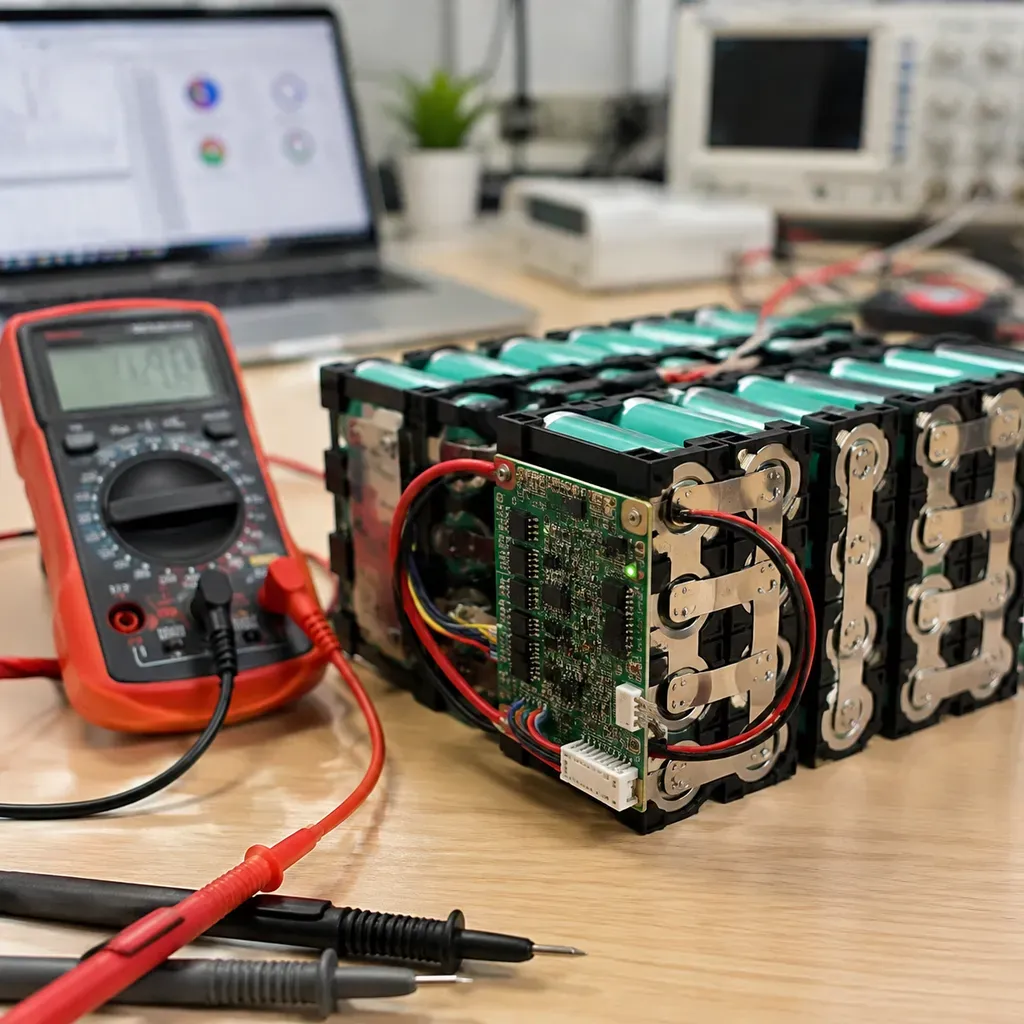
Precise milliamp current monitoring helps an intelligent battery management system (BMS) identify small idle-state drains before they affect battery performance. This is especially important in LiFePO4 energy storage systems with WiFi, Bluetooth, and other connected monitoring functions.
The BMS tracks standby consumption from sensors, communication modules, and control circuits. By detecting abnormal parasitic draw early, it helps reduce unnecessary discharge and lowers the risk of high-capacity batteries falling below their safe voltage range.
TURSAN LiFePO4 systems combine intelligent BMS monitoring for low-current idle telemetry with support for higher continuous loads from 100 A to 628 A. The systems use LFP prismatic cells rated for more than 6,000 cycles at 80% capacity retention, supporting demanding residential, commercial, and industrial applications. For project buyers, selecting a supplier with proven battery engineering and manufacturing experience is essential; our guide to choosing a floor-standing LiFePO4 battery manufacturer covers key evaluation points.
How to Convert Amps and Milliamps to Watts
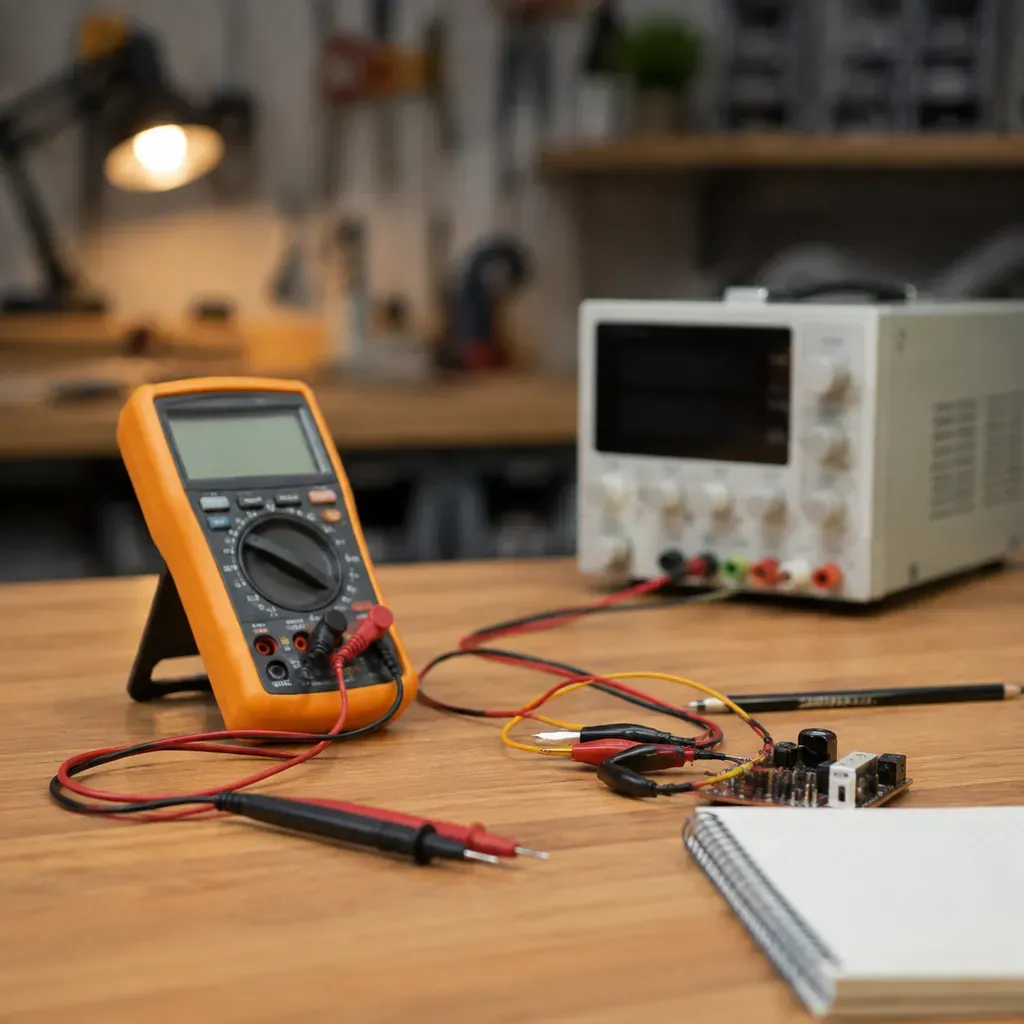
I use the power formula to calculate electrical output:
Watts (W) = Volts (V) × Amps (A)
For milliamps, convert the current first:
Watts (W) = Volts (V) × (Milliamps (mA) / 1,000)
Practical LiFePO4 Examples
| System voltage | Current | Power |
|---|---|---|
| 12.8 V auxiliary or marine system | 500 mA | 6.4 W |
| 25.6 V commercial DC backup system | 2 A | 51.2 W |
| 51.2 V residential or industrial ESS | 10 A | 512 W |
For example, a 500 mA load on a 12.8 V LiFePO4 system uses 12.8 × 0.5 = 6.4 W. Always convert mA to A before applying the watts formula.
Frequently Asked Questions About mA to A Conversion
How many amps are in 500 mA?
500 mA equals 0.5 A. Divide the milliamp value by 1,000:
500 ÷ 1,000 = 0.5 A
Is 1 A equal to 1,000 mA?
Yes. 1 ampere equals 1,000 milliamperes. To convert amps to milliamps, multiply by 1,000:
1 A × 1,000 = 1,000 mA
Why does a battery management system measure both mA and A?
A BMS uses mA to monitor low-current conditions such as sleep-mode consumption, standby losses, and telemetry activity. It uses A to measure higher current flowing during charging, discharging, inverter operation, and other battery loads. Reading both units helps me assess idle drain and operating demand accurately in LiFePO4 energy storage systems.
What happens if mA is misread as A when sizing electrical wiring?
Misreading the unit can cause a serious sizing error. Treating 500 mA as 500 A greatly overestimates the load, while treating 500 A as 500 mA severely underestimates it. The second mistake can lead to undersized wiring, overheating, voltage drop, or equipment damage. I always confirm the unit before selecting wiring, fuses, breakers, or battery protection. For a practical comparison of appliance current demand, see this guide to microwave amp usage.