 English
  العربية
  日本語
日本語  한국어
한국어  Tiếng Việt
  ไทย
ไทย  Bahasa Melayu
  فارسی
فارسی  Bahasa Indonesia
  ဗမာစာ
ဗမာစာ  简体中文
简体中文  香港中文
香港中文  繁體中文
繁體中文  Русский
  Deutsch
  Nederlands
  Italiano
  Français
  Español
  Português
  Afrikaans
  Azərbaycan dili
  Български
  ਪੰਜਾਬੀ
  हिन्दी
  اردو
اردو  বাংলা
বাংলা  Հայերեն
  Íslenska
  Қазақ тілі
  नेपाली
  Српски језик
  Kiswahili
  తెలుగు
  Basa Jawa
  தமிழ்
தமிழ்  मराठी
मराठी Capacity Engineering Brief
Why Effective Capacity Matters More Than Nominal Capacity for Wholesalers
Nominal capacity is a laboratory number. Effective capacity is what your customer actually gets after temperature derating, C-rate losses, and BMS reserve. Here is how to read the difference before you place a 500-unit order.
The gap is the derating your customer feels.
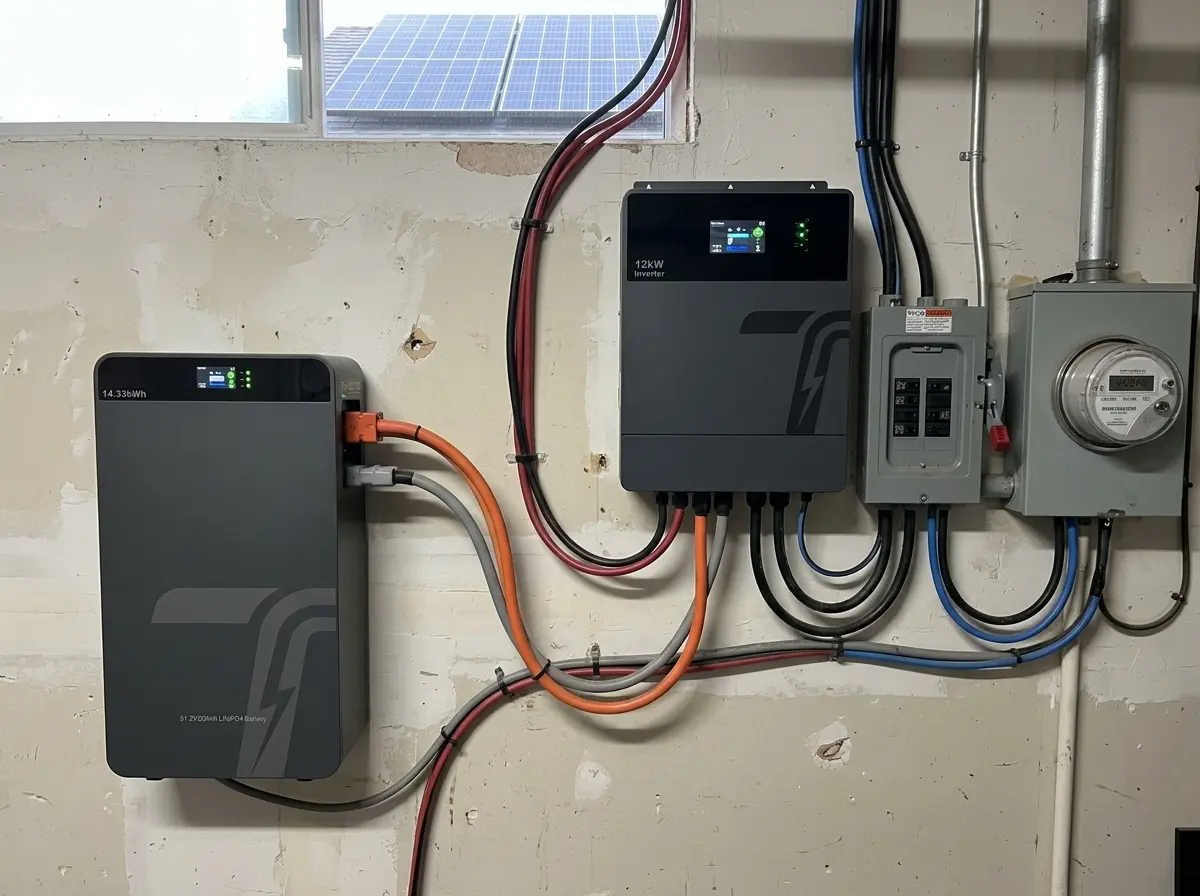
A distributor in Rotterdam ordered 300 wall-mount batteries rated at 10 kWh each. The datasheet said 10 kWh, the label said 10 kWh, and the invoice said 10 kWh. Six months later, his installers were fielding complaints that the systems were delivering closer to 8.2 kWh on cold winter mornings. Nothing was broken. The cells were fine, the BMS was fine, and the batteries were performing exactly as their chemistry allowed. The problem was that the buyer had purchased nominal capacity and expected effective capacity, and nobody had explained the gap.

This article closes that gap. It explains why the number printed on the front of a battery is not the number your customer experiences, and why a wholesaler who understands the difference wins repeat orders while one who doesn’t eats returns.
What Actually Separates Nominal from Effective Capacity
Nominal capacity is a laboratory number. It is the energy a cell delivers under a single, tightly controlled condition: a 0.2C discharge at 25°C, from full charge down to the manufacturer’s specified cut-off voltage. For an LFP cell, that cut-off is typically 2.5V per cell. For NMC, it is usually 2.8V. The test is real, but the conditions almost never match the field.
Effective capacity is what the same pack delivers under your customer’s actual operating conditions. Three variables move it, and each one is measurable.
Temperature. LFP cells lose usable capacity as they cool. At 0°C, a pack that delivers 10 kWh at 25°C may deliver only 8.5 kWh. At -10°C, that figure can fall to 7 kWh or lower, and charging below 0°C without a heating circuit damages the anode. This is not a defect; it is the Arrhenius behaviour of lithium-ion chemistry. A wholesaler selling into Scandinavia needs a different conversation than one selling into Southeast Asia.
Discharge rate. The 0.2C test is gentle. Pull 1C from the same pack and the internal resistance converts more energy into heat, so the terminal voltage sags earlier and the BMS hits the cut-off sooner. A 10 kWh pack discharged at 1C may yield 9.2 kWh. The gap widens as the C-rate climbs.
BMS reserve and depth of discharge. Most packs do not allow a true 100% depth of discharge. A BMS configured for 90% DoD to protect cycle life effectively caps the usable window at 9 kWh of a 10 kWh pack, before temperature and rate are even considered. Some OEMs quote nominal capacity at 100% DoD and some at 90%, which is why two “10 kWh” batteries from different factories can behave differently in the same installation.
The honest way to read a datasheet is to ask for the effective capacity at the customer’s worst-case condition, not the best-case one.
The OEM/ODM Edge in Capacity Honesty
A tier-one OEM does not hide the gap between nominal and effective capacity. It documents it. When you work with a factory that owns its cell line and its BMS firmware, you can request a derating curve for your specific market, and you can have that curve printed into your own branded datasheet.
This matters for three reasons. First, label branding: a white-label partner can specify whether the front label shows nominal or effective capacity, and a responsible OEM will advise you to show the number your customer can actually reproduce. Second, firmware tuning: the BMS reserve percentage and the low-temperature charge cut-off are configurable, so a pack destined for a cold climate can ship with a heating circuit enabled and a conservative charge window, while the same hardware for a warm market ships with a wider DoD. Third, MOQ flexibility: a factory that understands capacity derating will not force you to buy a single global configuration. It will let you split a 500-unit order across two firmware profiles without a tooling change.
The difference between an OEM and a drop-shipper is that the OEM can tell you why the number is what it is. The drop-shipper just forwards the datasheet.
Decision Matrix – Reading Capacity Across Configurations
| Configuration | Nominal Capacity | Typical Effective Capacity (25°C, 0.5C) | Effective at 0°C | Best-Fit Market |
|---|---|---|---|---|
| 48V 100Ah LFP wall-mount | 5.12 kWh | 4.8 kWh | 4.1 kWh | Mild-climate home backup |
| 48V 200Ah LFP rack | 10.24 kWh | 9.6 kWh | 8.2 kWh | Commercial / light industrial |
| 51.2V 100Ah LFP with heater | 5.12 kWh | 4.9 kWh | 4.7 kWh | Cold-climate off-grid |
| 48V 100Ah NMC | 4.8 kWh | 4.4 kWh | 3.9 kWh | Weight-sensitive mobile use |
The heater-equipped LFP row is the instructive one. Its nominal capacity is identical to the standard wall-mount, but its effective capacity at 0°C is 0.6 kWh higher. For a wholesaler selling into a cold region, that single component is worth more than any marketing claim.
Four Common Pitfalls When Buying on Nominal Capacity
- Comparing two factories on nominal capacity alone. Two suppliers can both print “10 kWh” while one tests at 0.2C and 25°C and the other at 0.5C and 20°C. The second is actually the better pack, but it looks worse on paper. Always ask for the test condition, not just the number.
- Ignoring the DoD setting. A pack quoted at 100% DoD will show a higher nominal figure than the same cells quoted at 90% DoD. If you don’t know the DoD, you don’t know the capacity.
- Selling a warm-climate configuration into a cold market. The cells are the same, but without a heating circuit and a conservative charge window, the customer sees a 20–30% winter shortfall and blames you, not the chemistry.
- Over-promising in your own marketing. If you advertise nominal capacity and the customer measures effective capacity, the gap becomes a warranty dispute. State the effective number for the customer’s climate and you pre-empt the complaint.
FAQ
Request a third-party test report that states the discharge rate, temperature, and cut-off voltage. A legitimate OEM will provide a UN38.3 report and a cycle-life test sheet without hesitation. If the supplier cannot name the test condition, treat the number as unverified.
At 25°C and 0.5C with a 90% DoD, expect roughly 90–95% of nominal. At 0°C, expect 80–85% for LFP without heating. Use these as sanity checks when reviewing any datasheet.
Print the effective capacity for your target climate. It is the number your customer can reproduce, and it protects you from warranty claims. A responsible OEM will help you decide and can print either on the same hardware.
Conclusion
Nominal capacity is a starting point, not a promise. Effective capacity is the number your customer actually lives with, and it is the number that determines whether your next order is a reorder or a return. Before you commit to a 500-unit purchase, ask your supplier for the derating curve, the DoD setting, and the test condition behind the headline figure.
Send us your target market’s temperature range and your customer’s typical discharge profile, and we’ll return a capacity derating table and a preliminary BOM within 24 hours.