 English
  العربية
  日本語
日本語  한국어
한국어  Tiếng Việt
  ไทย
ไทย  Bahasa Melayu
  فارسی
فارسی  Bahasa Indonesia
  ဗမာစာ
ဗမာစာ  简体中文
简体中文  香港中文
香港中文  繁體中文
繁體中文  Русский
  Deutsch
  Nederlands
  Italiano
  Français
  Español
  Português
  Afrikaans
  Azərbaycan dili
  Български
  ਪੰਜਾਬੀ
  हिन्दी
  اردو
اردو  বাংলা
বাংলা  Հայերեն
  Íslenska
  Қазақ тілі
  नेपाली
  Српски језик
  Kiswahili
  తెలుగు
  Basa Jawa
  தமிழ்
தமிழ்  मराठी
मराठी Energy Storage Field Guide
The Grid Connection Playbook: How Home Batteries Plug Into the Power Network.
“Every electron has a story. The grid decides how it ends.”
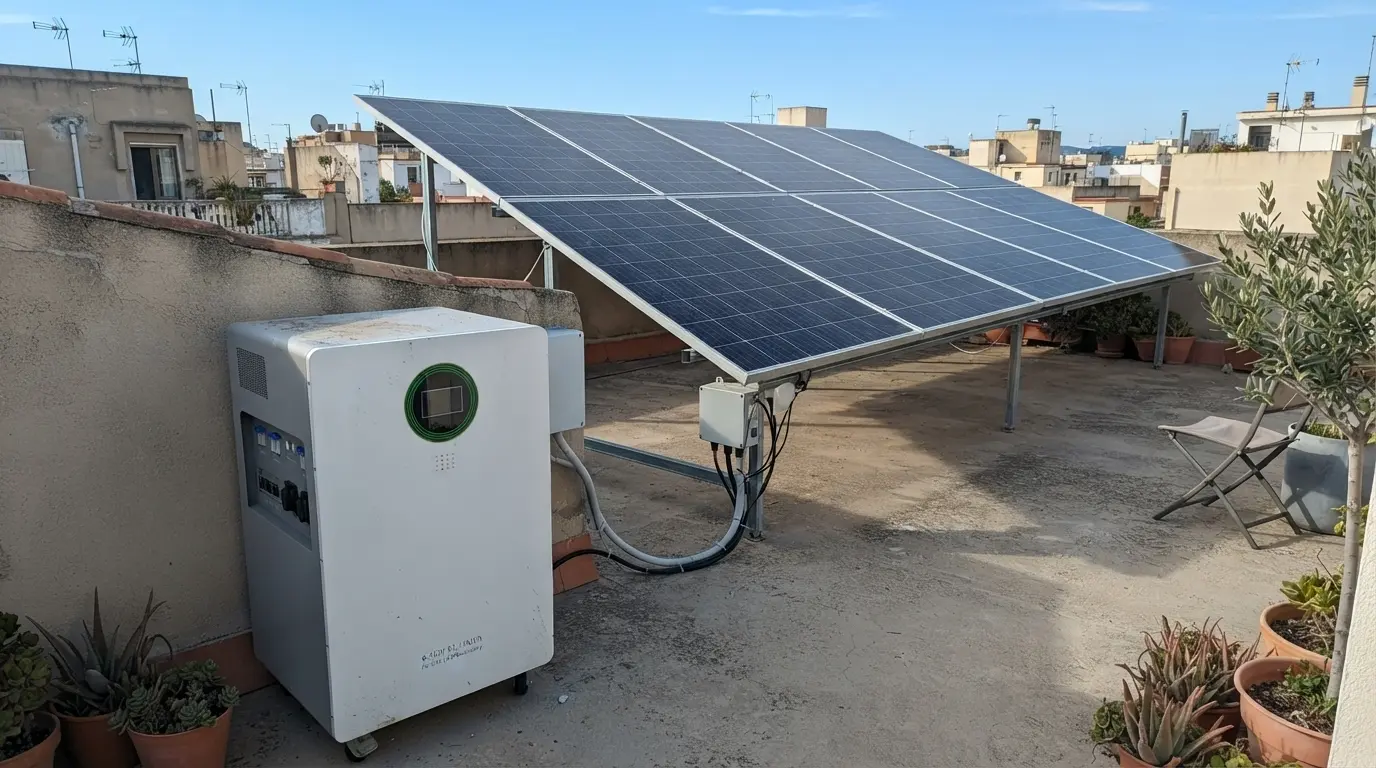
For most households, electricity arrives as an afterthought. The stack of panels, inverters, and batteries on the modern rooftop has rewritten that arrangement. A battery that cannot negotiate a proper grid connection is only half a product; it can store, but not trade, respond, or earn. This guide walks through how home storage connects to the network and what to verify before commissioning a system.
01The Anatomy of a Grid Connection
Every grid-connected home battery sits inside a carefully defined chain of hardware. Each link has one job, and a failure anywhere breaks the flow of power, or worse, endangers line workers.
The Inverter: A Translator Between Worlds
Photovoltaic panels and battery cells speak direct current; the grid speaks alternating current. The hybrid inverter sits between them, converting DC to AC at the voltage and frequency the utility expects, and reversing course when charging. Modern units synchronize their phase angle with the network within milliseconds, letting a household draw, store, and export simultaneously without a flicker. Efficiency and ride-through are the two specs that matter most at the point of grid connection.
The Meter: The Bookkeeper of Electrons
The utility meter is the financial boundary of the connection. Bidirectional meters record both import and export, and their readings determine credits and tariffs. Some regions require a separately sealed meter; others accept a single net meter. Reviewing the local tariff schedule before signing is the first step toward an honest savings forecast.
The Distribution Path: Wiring, Breakers, and Isolation
From inverter to meter, the battery’s alternating current travels through a dedicated breaker sized to the code that governs energy storage systems. Disconnects, ground-fault protection, and lockable service breakers turn an energy source into an installation inspectors will sign off on. The path matters for another reason: heat. Battery circuits run near their rating for hours, so conductor sizing is a reliability decision, not an administrative detail.

02How a Grid-Connected Battery Actually Works
A home battery is defined less by its chemistry than by its control logic, which weighs forecasts of weather, price, and load to choose among five operating modes.
Charge
Surplus solar tops the battery up before anything reaches the grid, capturing energy that would otherwise be sold at wholesale and repurchased at retail.
Self-Consume
As the sun fades, the battery serves the household load first, pulling imports toward zero during the expensive evening peak.
Export
Once the battery is full and the home is satisfied, excess power flows back to the network and earns credits under the local tariff.
Arbitrage
Under time-of-use pricing, the system charges overnight when electrons are cheap and discharges through the peak window, profiting from the spread.
Backup
When the grid fails, a transfer switch isolates the home from the network, and the battery becomes the sole source of power until the utility restores service.
These modes are not mutually exclusive; controllers blend them minute by minute, making the choice invisible to the homeowner. The result is a device that behaves less like an appliance and more like a small, disciplined power plant in the garage.

03Grid Codes, Permits, and Compliance
Before any electron flows in reverse, a grid connection must satisfy two audiences: the local inspector and the utility’s interconnection team. The hardware standards below are largely international, while the permitting rules around them remain stubbornly local.
| Requirement | Purpose | Typical Reference |
|---|---|---|
| Battery system safety | Certifies cell, pack, and enclosure fire behavior | UL 9540 |
| Inverter interconnection | Verifies synchronization, voltage, and ride-through | IEEE 1547 / UL 1741 |
| Storage installation | Defines wiring, clearance, and ventilation | NEC Article 706 |
| Utility agreement | Sets export limits and liability terms | Interconnection tariff |
| Field inspection | Confirms the build matches the approved drawings | Local building permit |
Anti-Islanding: The Non-Negotiable Rule
The most important thing a grid-tied inverter does is also what it refuses to do: keep powering the home after the grid goes down. Anti-islanding protection detects a loss of utility voltage and disconnects within seconds, protecting line workers who may assume the wire is dead. That is why most residential batteries need an external transfer switch for backup mode. Safety is the first constraint on every grid connection.
Export Limits: The Fine Print
Utilities rarely let a home export unlimited power. Export caps, usually measured in kilowatts, are fixed by the interconnection agreement and enforced inside the inverter’s firmware. A household that sizes its battery without checking the cap may find evening dispatch silently throttled. Most utilities publish an interconnection guide explaining the caps, the application queue, and the timeline.

04Reading the Grid’s Economic Signals
A grid connection is a two-way conversation, and the language is money. The same battery can produce wildly different payback periods in two identical homes because their utilities price electrons differently.
- Time-of-use rates make the timing of every kilowatt-hour more valuable than its volume, rewarding discharge during the peak window.
- Feed-in tariffs pay for exports; during renewable oversupply, cheap off-peak power can profitably refill the battery.
- Virtual power plant programs pay for availability and responsiveness, effectively renting the battery from its owner for a few hours a year.
- Demand charges, long a commercial concept, are creeping into residential tariffs and punish the household’s single largest import peak.
Whichever scheme a household faces, the principle is identical: a battery is only as valuable as the grid conversation it participates in.
05Frequently Asked Questions
Yes. In off-grid and backup configurations, the battery serves the home directly and relies on solar or a generator for recharge. Most modern systems prefer the grid whenever it is available, because grid power is cheap, reliable, and unlocks arbitrage. A battery that never connects forfeits export credits, time-of-use savings, and virtual power plant revenue.
Timelines range from a few weeks for straightforward net-metering applications to several months for systems that trigger transformer upgrades or export-limit studies. Most delays trace back to incomplete paperwork, so reviewing the utility’s application checklist before installation is the highest-leverage step a homeowner can take.
A grid-tied battery with backup capability detects the outage, opens its transfer switch, and keeps the selected circuits running. Because of anti-islanding rules, it cannot feed power back onto the line while the grid is down, and it resynchronizes automatically once utility power returns, typically within a minute or two.
Within the limits of the interconnection agreement, yes. Most systems export only surplus energy after the home’s load is met, with the agreed export cap enforced in firmware. Some utilities require export to be disabled entirely, in which case the inverter runs in zero-export mode and the battery only ever serves the home.