 English
  العربية
  日本語
日本語  한국어
한국어  Tiếng Việt
  ไทย
ไทย  Bahasa Melayu
  فارسی
فارسی  Bahasa Indonesia
  ဗမာစာ
ဗမာစာ  简体中文
简体中文  香港中文
香港中文  繁體中文
繁體中文  Русский
  Deutsch
  Nederlands
  Italiano
  Français
  Español
  Português
  Afrikaans
  Azərbaycan dili
  Български
  ਪੰਜਾਬੀ
  हिन्दी
  اردو
اردو  বাংলা
বাংলা  Հայերեն
  Íslenska
  Қазақ тілі
  नेपाली
  Српски језик
  Kiswahili
  తెలుగు
  Basa Jawa
  தமிழ்
தமிழ்  मराठी
मराठी HOME BACKUP / SYSTEM DESIGN
When a homeowner asks for whole-home backup, they usually mean more than keeping a few lights on. They may expect refrigeration, pumps, communications, air conditioning, and selected kitchen loads to continue during an outage. A 10kW hybrid inverter can support that goal, but the nameplate rating alone does not make every home a whole-home backup installation.
The practical answer is yes, if the home’s simultaneous demand, motor-starting surges, battery bank, and backup distribution board all match the inverter. This guide shows where the 10kW limit matters and how installers or distributors can specify the system without over-promising.
The 10kW Rating Must Match Real Loads
A 10kW inverter can normally deliver up to 10,000W of continuous AC output, subject to its operating temperature and local grid code. At a 230V single-phase output, that equals about 43.5A. At 120V, the equivalent current is about 83.3A. The service arrangement and breaker selection must reflect the actual voltage and phase configuration.
The difficult load is often not the steady load. A refrigerator compressor, well pump, air conditioner, or workshop motor can draw two to six times its running power for a short period. A hybrid inverter with a 20kW or higher surge rating for 1 to 5 seconds may start these loads, while a model with only a brief 12kW peak may trip even when the average household demand stays below 10kW.
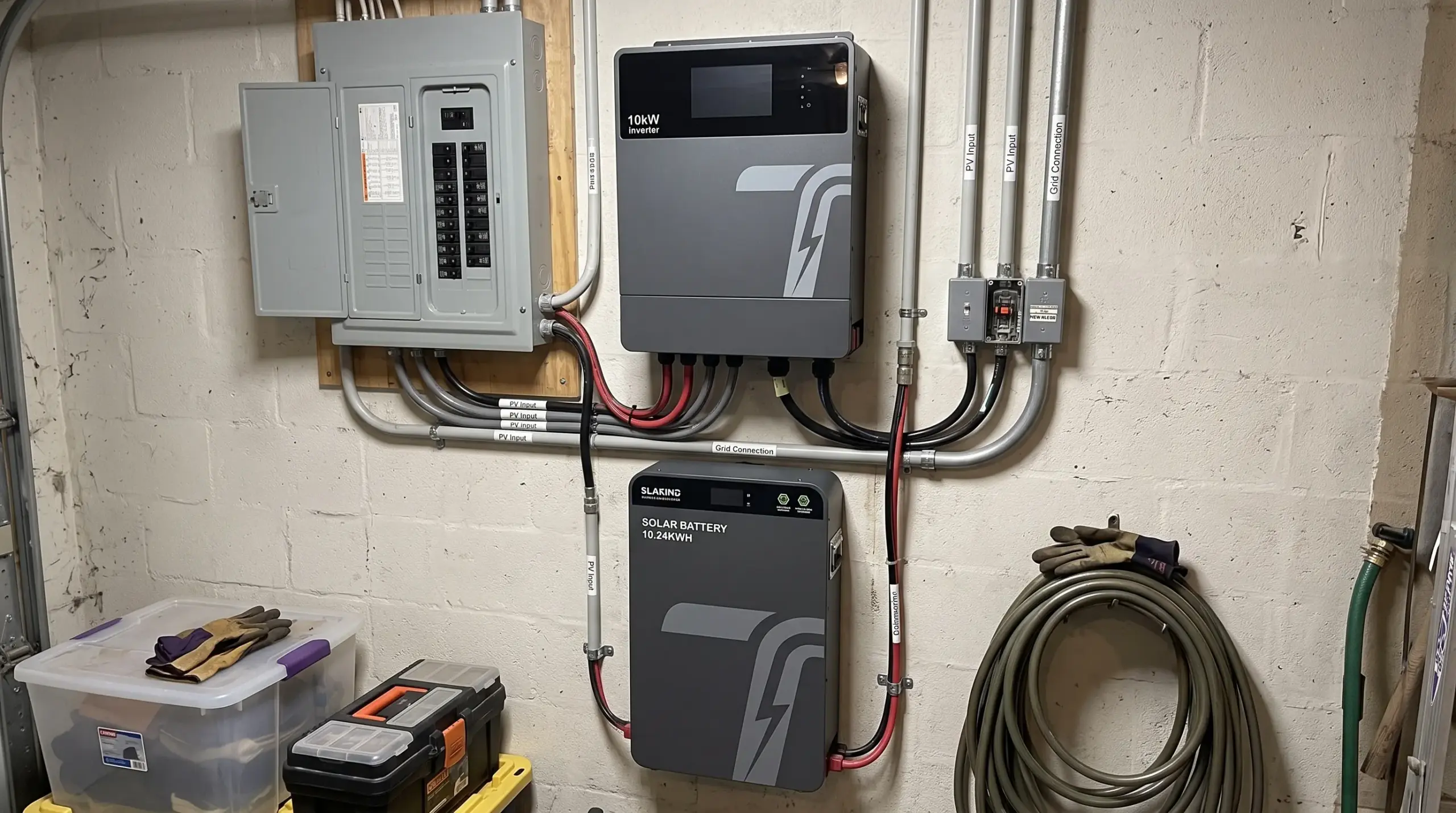
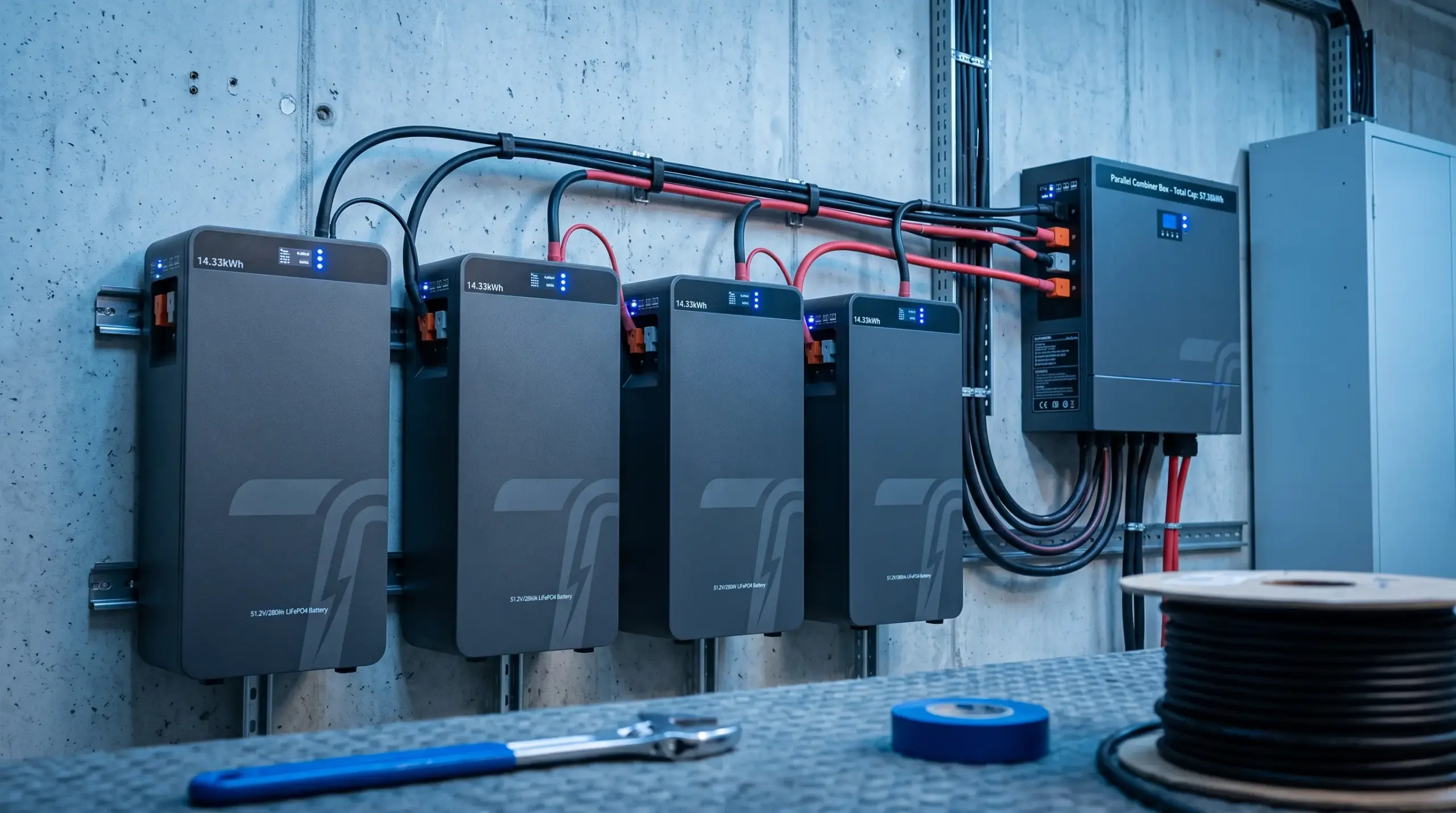
Battery voltage also affects performance. A 10kW output from a 51.2V LiFePO4 battery requires roughly 195A from the battery at 100% conversion efficiency, and closer to 205A after inverter losses. One 51.2V 100Ah battery usually cannot supply that current continuously. A practical design may use two or more 51.2V 100Ah modules in parallel, each with a BMS rated for at least 100A continuous discharge, or a larger rack battery with a higher current limit.
Runtime depends on energy, not inverter size. A 10.24kWh battery delivers about 8.2kWh of usable energy when the design limits depth of discharge to 80%. At a constant 2kW load, that provides roughly four hours before conversion and temperature losses. At 8kW, the same battery may last about one hour. A 10kW inverter can carry the load, but it cannot turn a small battery into a long-duration backup system.
For residential systems, LFP chemistry remains a common choice because it offers stable thermal behaviour and a typical design life of 4,000 to 6,000 cycles at 25 degrees C when operated within the manufacturer’s voltage and temperature limits. The battery BMS must communicate with the inverter over CAN or RS485 so that charge current, low-voltage cut-off, and temperature limits remain coordinated.
The OEM and ODM Specification Details
For a distributor or system integrator, the inverter and battery should be specified as a tested package rather than as unrelated catalogue items. Ask for the supported battery protocol list, maximum charge and discharge current, islanding behaviour, transfer time, and output derating above 45 degrees C.
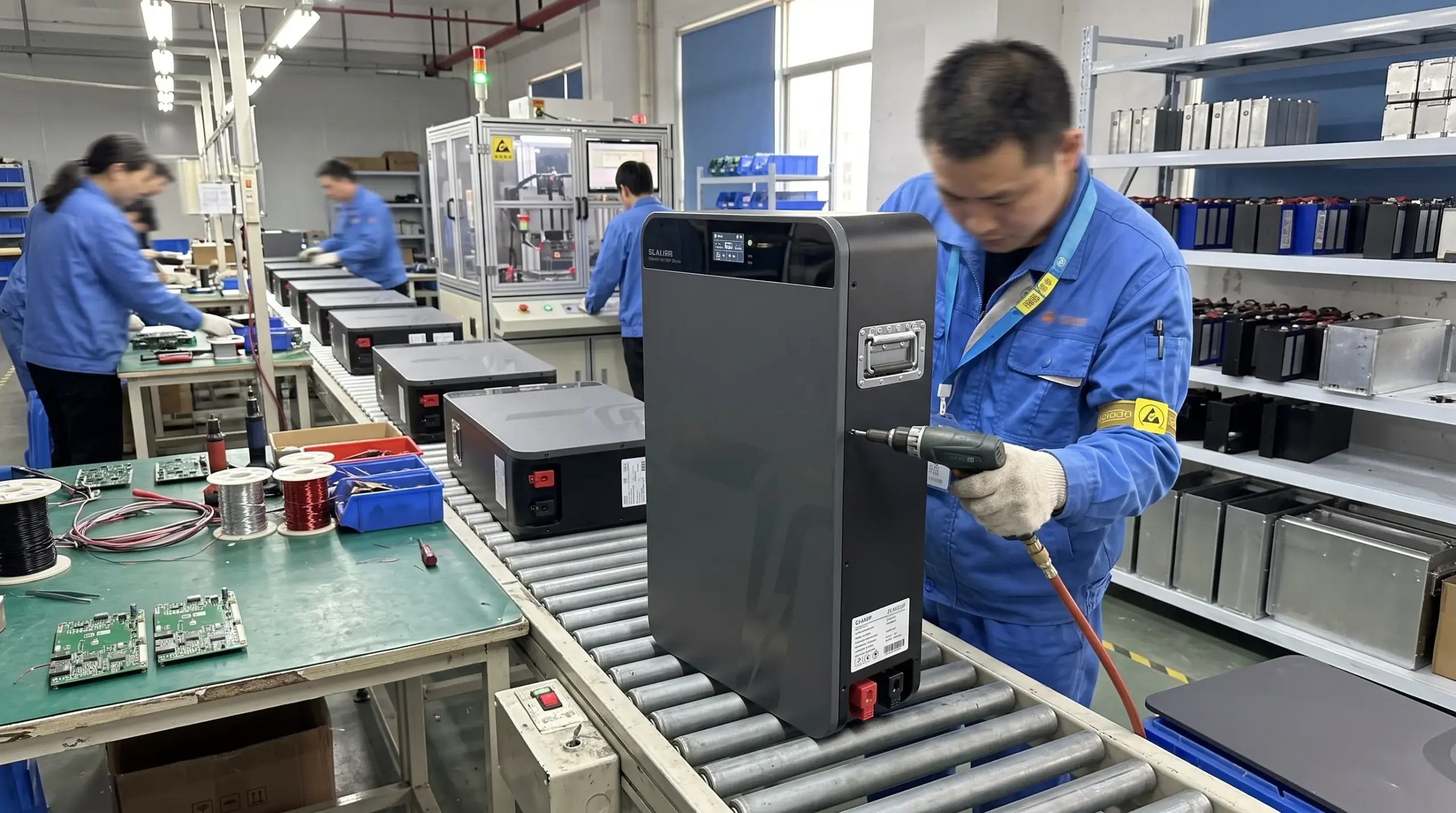
An OEM or ODM project can also define details that affect field installation. These include the AC terminal layout, MC4 or alternative PV connector selection, CAN and RS485 pin assignments, firmware settings for generator input, and the label or display language. A useful sample process tests the intended 51.2V battery, BMS alarm handling, and backup changeover before volume production.
For a 10kW residential platform, confirm whether the manufacturer supports parallel inverter operation, split-phase output, and an external automatic transfer switch. Sample lead times commonly depend on firmware and enclosure changes, not just assembly capacity. A clear BOM and a short load profile reduce that uncertainty for both OEM and white-label orders.
Which Backup Configuration Fits the Home?
| Configuration | Typical backed-up loads | Battery reference | Main limitation |
|---|---|---|---|
| 10kW inverter with 10.24kWh LFP battery | Lighting, refrigeration, networking, outlets, small pump | 51.2V 200Ah total | About 4 hours at a 2kW average load |
| 10kW inverter with 20.48kWh LFP battery | Above loads plus periodic air conditioning or larger pump use | 51.2V 400Ah total | High-current cabling and battery space required |
| 10kW inverter with 30kWh or more and load management | Most essential household circuits, selected HVAC and water heating | High-voltage or parallel low-voltage bank | Cost, code compliance, and peak-load coordination |
Swipe horizontally to compare all columns
The table describes starting points, not universal system sizes. An electric oven, resistance water heater, EV charger, or whole-house HVAC compressor can consume most of the available 10kW alone. Installers often place these circuits on a non-backup panel or control them with a contactor or energy management system.
Four Common Pitfalls
- Sizing from connected load only Add the loads that can run at the same time, then check compressor and pump starting current. A long appliance list does not show the actual peak.
- Ignoring battery current Check the inverter’s DC current at full output and compare it with the battery BMS continuous and peak ratings. Use the cable size, fuse rating, and terminal torque specified by the equipment supplier.
- Treating the main panel as a backup panel A proper backup installation needs approved isolation from the grid and a distribution arrangement that prevents the inverter from feeding circuits it cannot support. Local electrical rules determine whether an automatic transfer switch or backup sub-panel is required.
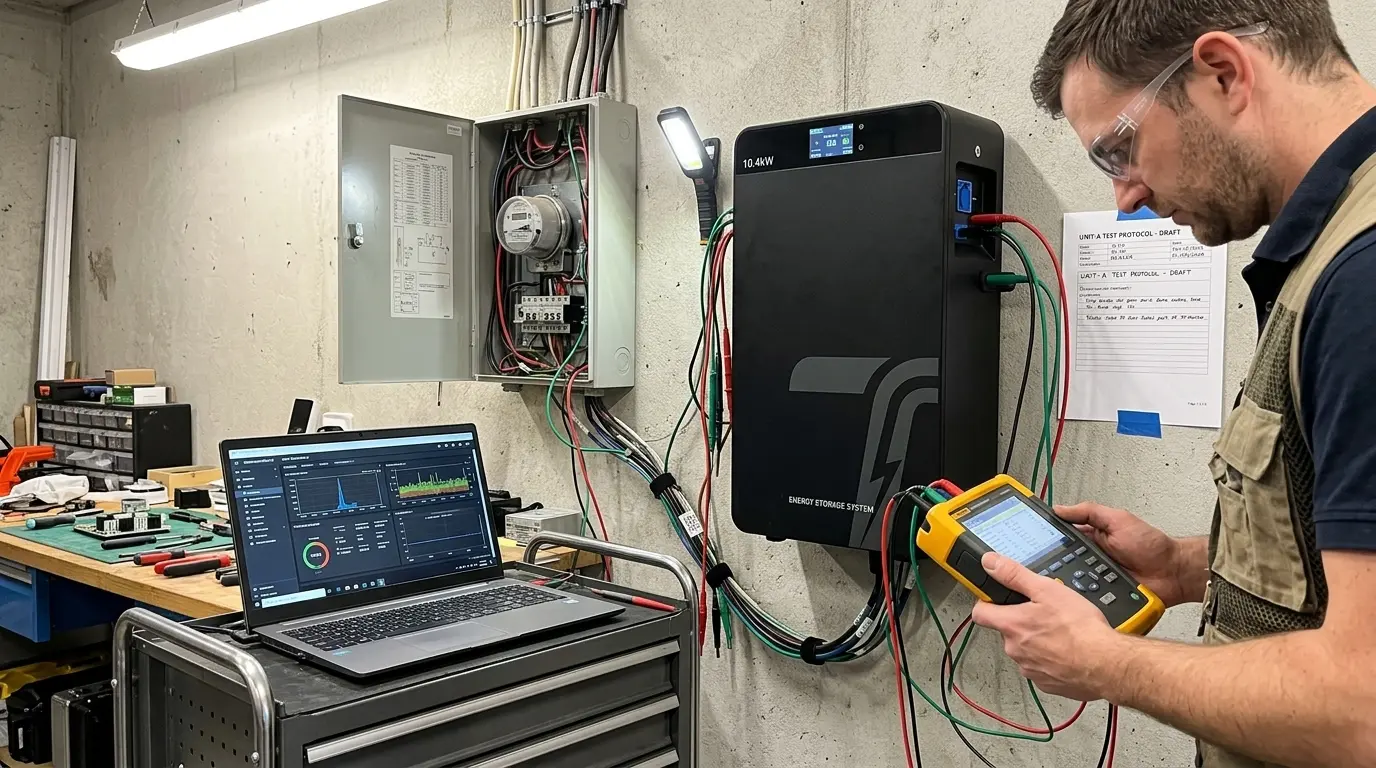
- Assuming solar power will always be available During a grid outage, PV output changes with clouds, shading, and time of day. Set battery reserve limits and test black-start behaviour with the PV disconnected. The inverter should recover safely when the battery reaches its low-voltage threshold.
FAQ
Can a 10kW inverter run a whole house at once?
How much battery capacity does a 10kW inverter need?
Is one 51.2V 100Ah battery enough?
Does whole-home backup require a 10kW inverter?
The Practical Answer
A 10kW hybrid inverter can provide whole-home backup power, but only as part of a matched system. Confirm the continuous load, motor-starting surge, battery discharge current, usable kWh, backup panel design, and local installation requirements before calling the system whole-home capable.
For an OEM, ODM, or installation quotation, send the site’s voltage, phase type, largest motor load, 24-hour outage load profile, and desired backup hours. Those five inputs are enough to return a preliminary inverter, battery, protection, and backup-panel BOM within 24 hours.