 English
  العربية
  日本語
日本語  한국어
한국어  Tiếng Việt
  ไทย
ไทย  Bahasa Melayu
  فارسی
فارسی  Bahasa Indonesia
  ဗမာစာ
ဗမာစာ  简体中文
简体中文  香港中文
香港中文  繁體中文
繁體中文  Русский
  Deutsch
  Nederlands
  Italiano
  Français
  Español
  Português
  Afrikaans
  Azərbaycan dili
  Български
  ਪੰਜਾਬੀ
  हिन्दी
  اردو
اردو  বাংলা
বাংলা  Հայերեն
  Íslenska
  Қазақ тілі
  नेपाली
  Српски језик
  Kiswahili
  తెలుగు
  Basa Jawa
  தமிழ்
தமிழ்  मराठी
मराठी How Much Electricity Can a 15kWh All-in-One System Deliver on a Hot Summer Day
A 15kWh all-in-one energy storage system will not normally deliver 15kWh to household sockets. That figure describes the battery’s nominal DC energy under test conditions, usually around 25°C. On a hot summer day, the actual result depends on the battery temperature, the reserve set in the BMS, inverter efficiency, and the load profile.
FIELD ESTIMATE / TYPICAL LiFePO4 SYSTEM / HOT SUMMER DAY
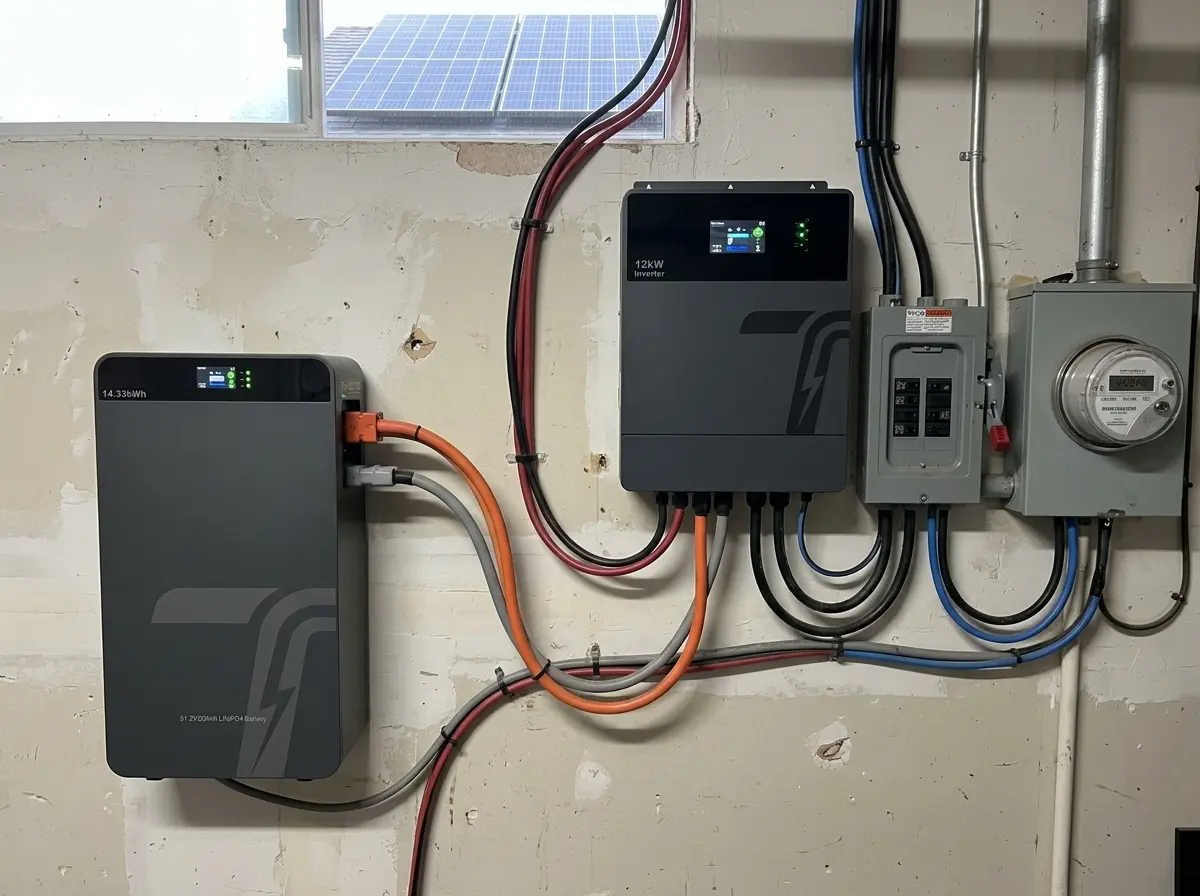
For a typical LiFePO4 system, a realistic planning figure is about 11.5 to 13kWh of usable AC electricity from a full charge. At moderate temperatures and with a low reserve, the system may approach 13kWh. A 51.2V 15kWh stacked all-in-one system is a useful reference point for this calculation. Under severe heat, high output power, or conservative protection settings, the available amount can fall closer to 11.5kWh.
Heat exposure / planning adjustment
The practical calculation behind 15kWh
Start with the rated battery energy, then account for the energy that the system deliberately keeps unavailable and the losses between the cells and the AC output.
| Calculation stage | Typical value | Energy remaining |
|---|---|---|
| Rated battery capacity | 15.0kWh | 15.0kWh |
| BMS reserve and operating window | 8% to 12% | 13.2 to 13.8kWh DC |
| Inverter and wiring efficiency | 92% to 96% | 12.1 to 13.2kWh AC |
| High-temperature planning adjustment | 3% to 8% | 11.5 to 12.8kWh AC |
The temperature adjustment does not mean that every LiFePO4 cell suddenly loses 8% capacity when the weather becomes hot. A well-designed battery normally operates from 0°C to 50°C for charging and around -20°C to 55°C for discharge, depending on the cell supplier and BMS firmware. For a closer look at the battery-side hardware, compare the 48V 15.36kWh LiFePO4 home backup battery. The bigger issue is that the enclosure, inverter, and power electronics may reach their protection thresholds when the ambient temperature stays above 35°C.
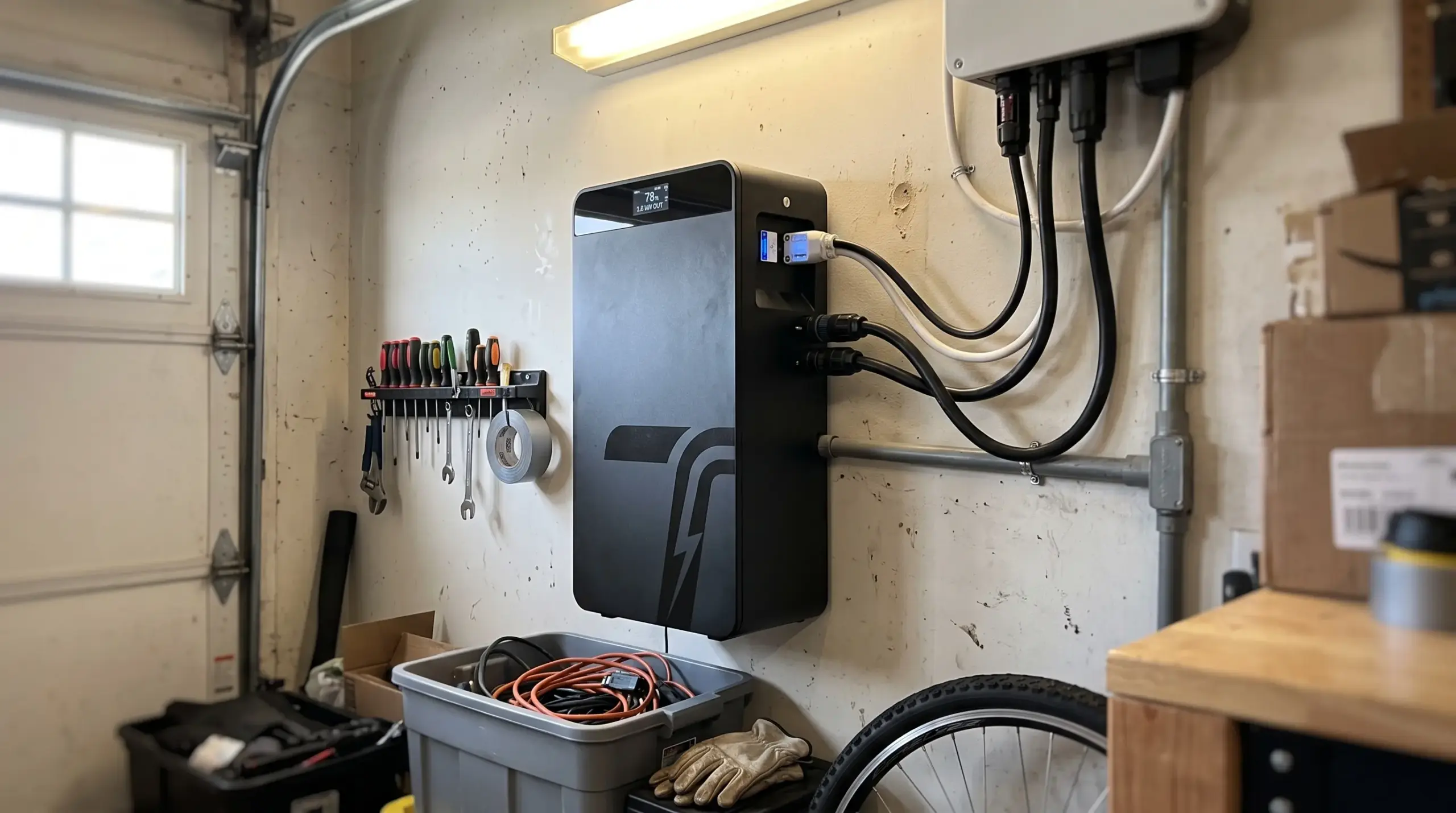
At 40°C ambient temperature, an outdoor cabinet can become considerably hotter in direct sunlight. The BMS may reduce charge or discharge current, while the inverter may derate its output to protect MOSFETs and capacitors. If the system runs at 0.5C, a 15kWh battery delivers roughly 7.5kW of DC power. Running near that level for a long period creates more heat than a steady 2kW household load and can reduce the energy you can access before thermal protection begins.
What changes the result in real use
The most important distinction is between energy capacity and load consumption. A 15kWh system can supply about 12kWh of AC energy, but a home using 2kW continuously will consume that energy much faster than a home with a 400W average load.
| Summer operating condition | Expected AC energy | Practical interpretation |
|---|---|---|
| Shaded, ventilated installation at 25°C to 30°C | 12.5 to 13.2kWh | Close to normal rated performance |
| Outdoor installation at 35°C to 40°C | 11.8 to 12.8kWh | Allow for inverter and enclosure derating |
| Direct sun, high discharge power, or poor airflow | 11.5 to 12.2kWh | Use the lower figure for planning |
An air conditioner can also change the answer even when the battery capacity stays the same. A 1.5kW compressor load may draw 2.5kW or more during startup, and its average demand changes with the indoor temperature. A 12kWh usable output could support a 1kW average load for roughly 12 hours, before considering solar charging during the day. It cannot reliably support a constant 5kW load for 12 hours because the inverter power rating and thermal limits become the constraints.
Four mistakes that inflate summer runtime estimates
- Treating 15kWh as socket output
The label usually refers to nominal DC battery energy. Use the inverter’s measured DC-to-AC efficiency and the configured state-of-charge window. - Ignoring the reserve setting
A 10% minimum state of charge leaves about 1.5kWh in the battery. That reserve protects cell life and provides emergency backup, but it is not available for normal loads. - Installing the cabinet in direct sunlight
Keep the enclosure shaded, maintain the manufacturer’s clearance, and avoid blocking the inverter’s air path. A lower internal temperature improves both output stability and component life. - Using the peak inverter rating as a continuous rating
A 10kW inverter may support a short surge but derate at high ambient temperatures. Check the continuous output curve at 40°C and 50°C before assigning large summer loads.
FAQ about 15kWh systems in hot weather
Question: Can a 15kWh system deliver exactly 15kWh?
Question: Does high temperature increase LiFePO4 capacity?
Question: What number should an installer use for system sizing?
The OEM and ODM details that affect usable energy
For private-label projects, an OEM or ODM partner can tune more than the enclosure label. TURSAN’s Home ESS support for solar installers and EPC projects is relevant when the system must match a regional load profile. Ask for the exact LiFePO4 cell grade, BMS over-temperature thresholds, CAN or RS485 communication map, inverter derating curve, and tested usable energy at 40°C. Firmware can also set the minimum state of charge and current limits for a particular climate, although those values must remain within the cell and inverter safety limits.
Before placing a production order, request a sample test with your intended load profile. Record DC battery energy, AC output energy, ambient temperature, cell temperature, peak current, and the point at which the inverter derates. This test gives a more useful answer than the 15kWh nameplate alone.

The planning answer
For planning purposes, budget 11.5 to 13kWh of AC electricity from a fully charged 15kWh all-in-one system on a hot summer day. Share the system’s temperature curve, reserve setting, and daily load profile with your OEM partner, and ask for a measured usable-energy report before finalising the specification.