Home ﹥ Project Cases ﹥ UK Community Energy Retrofit – High‑Safety Wall‑Mounted Home Storage System Mass Customization
Transforming legacy Victorian & Edwardian residential properties with ultra-slim, thermally shielded, and cloud-managed energy storage solutions. Tailored specifically for stringent UK fire regulations and fragile structural load limits.
Ultra-Slim Profile
Unit Capacity
Units Delivered (6 Mo)
Flame Spread (TR Test)
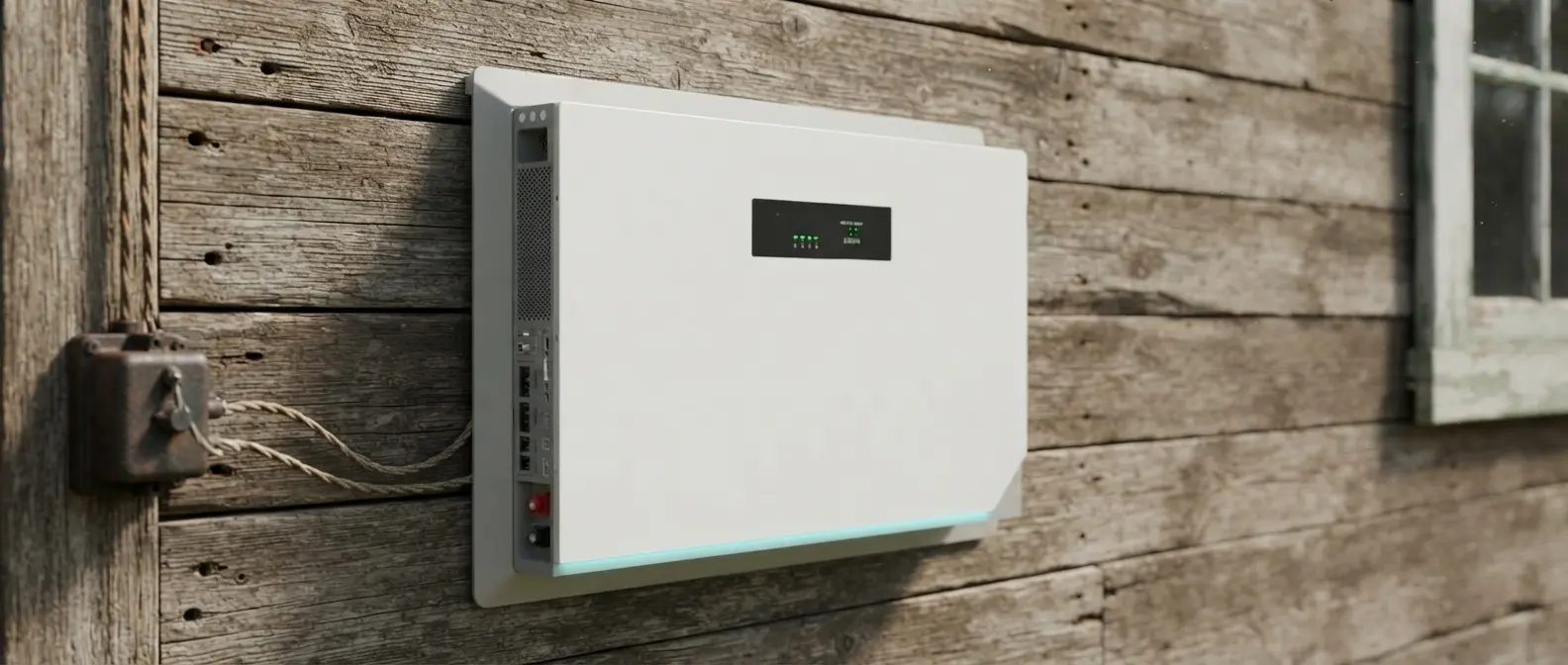
The foundation of this custom project was our flagship 7kW Standard Ultra-Slim Wall-Mounted platform. The partnership began serendipitously when the client's executive team spotted our standard unit during a business trip. Struck by its sleek form factor and technical baseline, they instantly recognized it as the perfect architectural starting point to solve their complex UK residential retrofit constraints, kicking off our mass-customization journey.
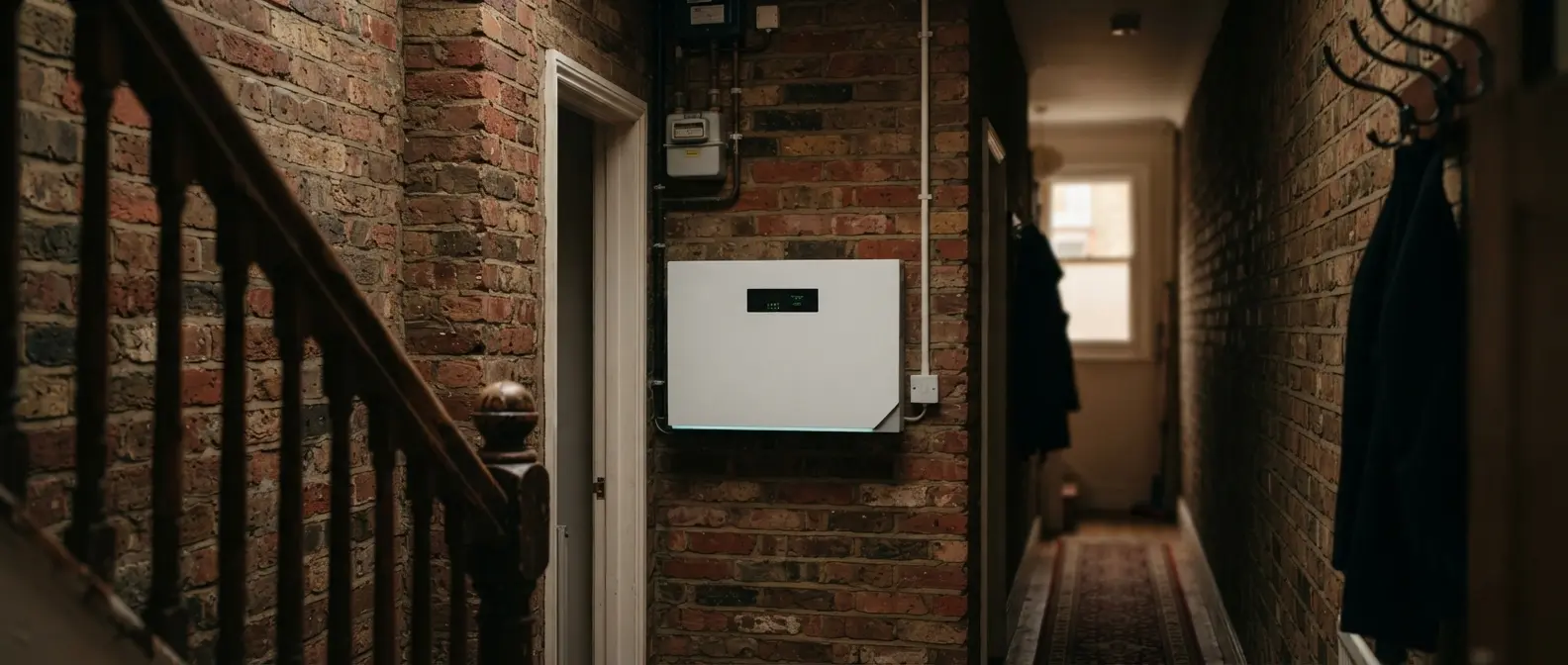
A leading UK community energy integrator tasked us with equipping thousands of households across London and the Southeast. The primary roadblock: British homes are predominantly older brick-and-timber structures. Installation space is severely restricted (often confined to narrow corridors or utility cupboards), and wall load-bearing capacities are extremely fragile.
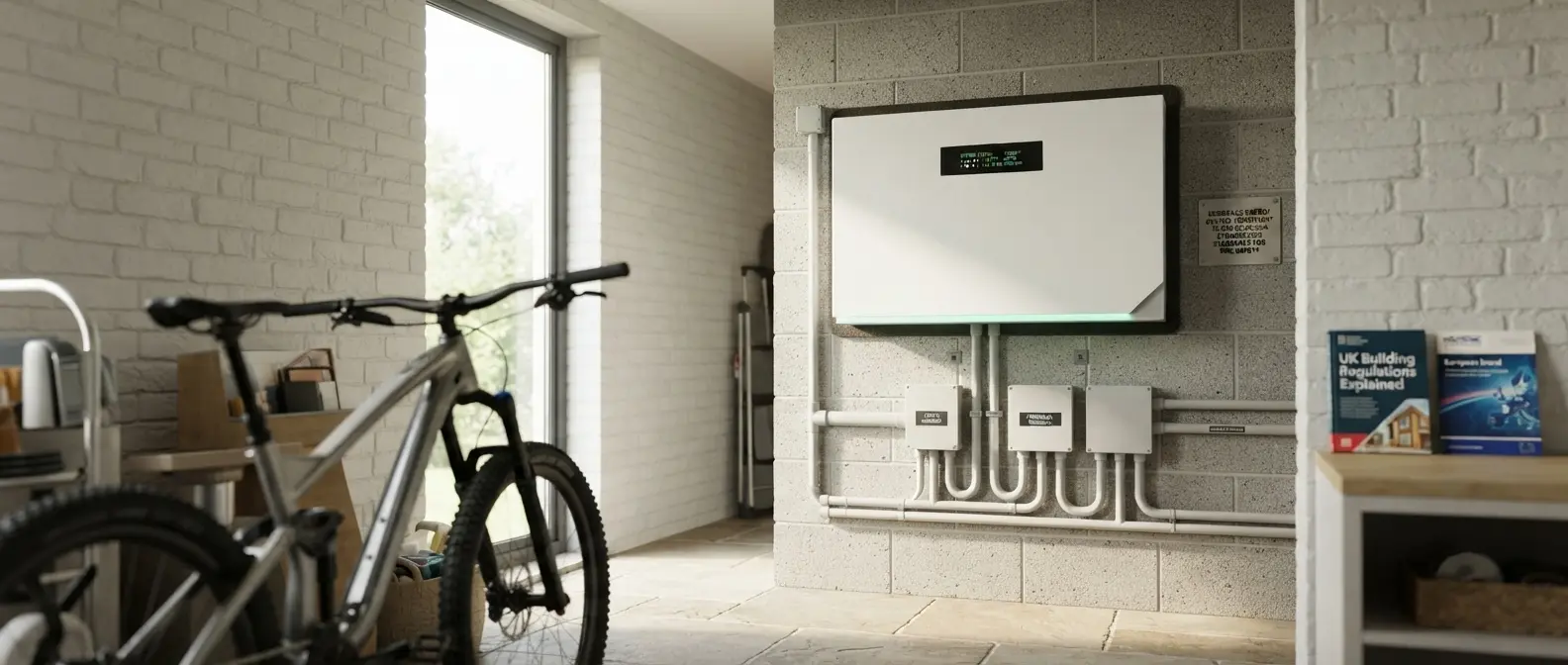
Post-Grenfell UK local fire regulations impose unforgiving standards (PAS 63100:2024) on residential storage equipment. The client required absolute certainty regarding installation placement, fire ratings, and thermal runaway (TR) propagation prevention. A standard off-the-shelf battery pack was legally and technically unviable.
We bypassed standard chassis designs to engineer a custom structural and thermal topology from the ground up, merging mechanical innovation with cloud telemetry.
≤ 120 mm
7.0 kWh
≤ 0.02 W/m·K
Real-time Cloud BMS
To resolve the wall load-bearing constraints of timber-stud and old brick walls, our mechanical engineering team conducted Finite Element Analysis (FEA) on the sheet metal enclosure.
Managing scattered units across dozens of residential communities requires a robust O&M backbone.
To meet IEC 62619 standards and strict UK fire codes, we implemented an active/passive hybrid defense architecture, containing thermal runaway at the microscopic and macroscopic levels.
Inserted 3mm aerogel thermal insulation pads between individual cells. With an ultra-low thermal conductivity of ≤0.02 W/m·K, combined with independent pressure relief valves, we ensured that a single cell thermal event is vented directionally, preventing heat propagation to adjacent modules.
Integrated a built-in, independent Perfluorohexanone (FK-5-1-12) automatic fire extinguishing module directly inside the cabinet. The system is designed to trigger automatically—without relying on external power—releasing the suppressing agent within 3 seconds of thermal runaway detection.
The exterior is fortified with a double-layer steel structure and specialized fire-retardant coating. An embedded physical breaker automatically severs power when internal cabinet temperatures exceed 80 °C, preventing external electrical ignition sources.
“The complete system passed IEC 62619 safety tests with zero flame spread outside the equipment during forced thermal runaway testing. This level of mass customization is exactly what the UK retrofit market demands.”
Whether you need ultra-slim mechanical designs, complex BMS algorithm adaptations, or extreme safety compliance for specific regional markets—we execute from prototyping to mass production.