Industrial-Grade BESS Manufacturer

Microgrid Energy Storage Systems

Power Your Grid.
Own Your Energy.

TURSAN designs and manufactures LiFePO4 battery energy storage systems purpose-built for microgrids — from remote islanded communities to grid-tied industrial campuses. Fully integrated EMS, SCADA-ready, and configurable from 5kWh to 307kWh.

0
kWh

Max Capacity

0
+

Cycle Life

0
%

Round-Trip Eff

0
+

Countries

Rack-mounted battery
Cycle Life
0 +
Certified
IEC 62619
Rack-mounted battery
Cycle Life
0 +
Certified
IEC 62619
Scroll

Full Certification

Modular Design

Multimodal Architecture

SCADA / Modbus / CAN

OEM / ODM Available

Target Operators

Who Deploys TURSAN Microgrids

From remote island utilities to C&I peak-shaving, our BESS systems are deployed across three primary market segments by operators who demand reliability and bankable ROI.

Remote & Island Utilities

Replace diesel generators with hybrid renewable + BESS microgrids. Achieve 80–100% renewable penetration with stable 24/7 power.

80–100% renewable penetration achievable
Diesel fuel cost elimination in 3–5 years
Island mode + grid-tie seamless switchover

C&I Campus & Industrial

Peak shaving, demand charge reduction, and backup power for factories, data centers, hospitals, and commercial campuses.

Demand charge savings of 20–40%/year
Sub-20ms failover for critical loads
ROI in 4–7 years on utility bills alone

Renewable Developers & EPCs

Integrate BESS with solar/wind PV plants for frequency regulation, ramp control, and grid ancillary services revenue.

AC & DC coupling for new + retrofit projects
Frequency regulation response in <100ms
White-label EMS with OEM branding
System Architecture

How a TURSAN Microgrid Works

Our BESS sits at the heart of the microgrid — intelligently dispatching stored energy from renewables and the grid to serve local loads with maximum efficiency and resilience.

GENERATION SOURCES Solar PV Generation 🌬 Wind Generation Utility Grid Backup / Export 🔋 TURSAN BESS LiFePO4 · 6000+ cycles ⚙ EMS / SCADA 🏠 Residential 🏭 Industrial 🔌 EV / Other LOCAL LOADS
Black-Start Capable
Seamless Island / Grid-Tie Switching

Automatic transfer in <10ms protects critical loads during utility outages. No manual intervention required.

Intelligent EMS Dispatch Logic

AI-driven energy management optimizes charge/discharge cycles based on tariffs, forecasts, and load profiles.

Modular Scalability

Add capacity in increments without downtime. Parallel systems scale seamlessly in a single installation.

Multi-Layer BMS Protection

Cell-level, module-level, and system-level protection against overvoltage, thermal runaway, and short circuit.

Product Line

Microgrid BESS Product Tiers

These three types of energy storage products cover all microgrid applications—from rural electrification to uninterruptible power supply for data centers.

Tier 1 — Entry
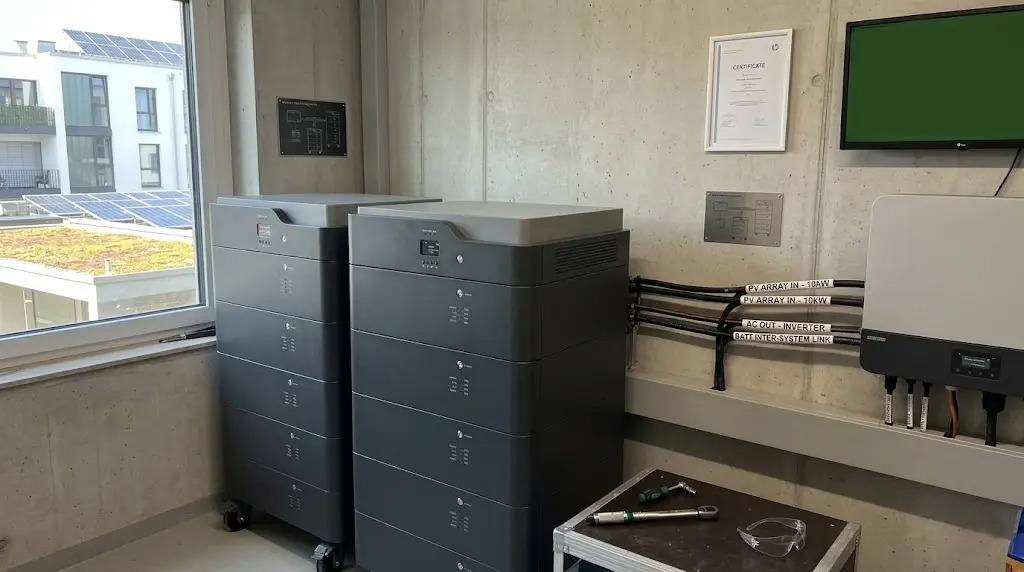
Stackable system
Stand-alone project facilities

A stackable solar energy storage system suitable for residential use, corporate microgrids, battery cells, and rural electrification projects.

  • Usable Capacity
    5–25 kWh
  • Chemistry
    LiFePO4 (Grade A BYD)
  • Cycle Life
    6000+ cycles
  • Coupling
    AC or DC
  • Enclosure
    IP54 Stacking
  • Communication
    CAN/RS-485
Rural Electrification
Telecom Towers
Residential
Tier 2 — Standard
Public Emergency Response

Suitable for power needs in agriculture, small communities, schools, supermarkets, and other small public spaces.

  • Usable Capacity
    2.5 kWh – 172 kWh
  • Chemistry
    LiFePO4 (Grade A BYD)
  • Cycle Life
    6000+ cycles
  • Coupling
    AC or DC
  • Enclosure
    IP54 Wall-Mounted
  • Communication
    CAN/RS-485
Community
School
Supermarket
Farm Irrigation System
Tier 3 — Infrastructure
Large-scale energy storage

Grid ancillary services, large-scale renewable energy integration, and utility-scale energy storage systems.

  • Usable Capacity
    5 kWh-307 kWh
  • Chemistry
    LiFePO4 (Grade A BYD)
  • Cycle Life
    6000+ cycles
  • Coupling
    AC + DC + Hybrid
  • Enclosure
    IP20 Indoor Energy Storage
  • Communication
    CAN/RS-485
Hospital
Public Energy Storage
Island
Data Center
System Architecture

LiFePO4 vs. Alternatives

Why do leading microgrid developers choose TURSAN LiFePO4 over lead-acid batteries or LiFePO4 from other manufacturers?

Specification
TURSAN LiFePO4
Other LiFePO4
Lead-Acid
Cycle Life
6,000+ cycles
4,000+ cycles
300–500 cycles
Round-Trip Efficiency
96–98%
90%-95%
70–80%
Thermal Safety
No thermal runaway
No thermal runaway
❗Acid risk
Operating Temp
–30°C to 55°C
–30°C to 55°C
0°C to 40°C
Energy Density
High (160 Wh/kg)
High (160 Wh/kg)
Very Low (30–50 Wh/kg)
Capex (per kWh)
Low–Medium
It's a Bit Pricey
Very Low
10-Year TCO
Lowest
❗Source unknown; may not last ten years
Highest (replacements)
Scalability
5kWh–300kWh
5kWh–160kWh
Limited
Maintenance
Near-zero
❗Post-sale risks
High (watering, checks)
Applications

Microgrid Use Cases

Island / Remote Utility

Eliminate Diesel. Power the Island.

Remote islands and off-grid communities running diesel generators face fuel costs of $0.40–$1.20/kWh. TURSAN BESS paired with solar or wind slashes that to under $0.08/kWh while delivering 24/7 reliable power. Black-start capable for full island restoration after outages.

Fuel cost reduction
0 %
Switchover time
< 0 ms
Renewable penetration
0 %
Typical payback
0 yr
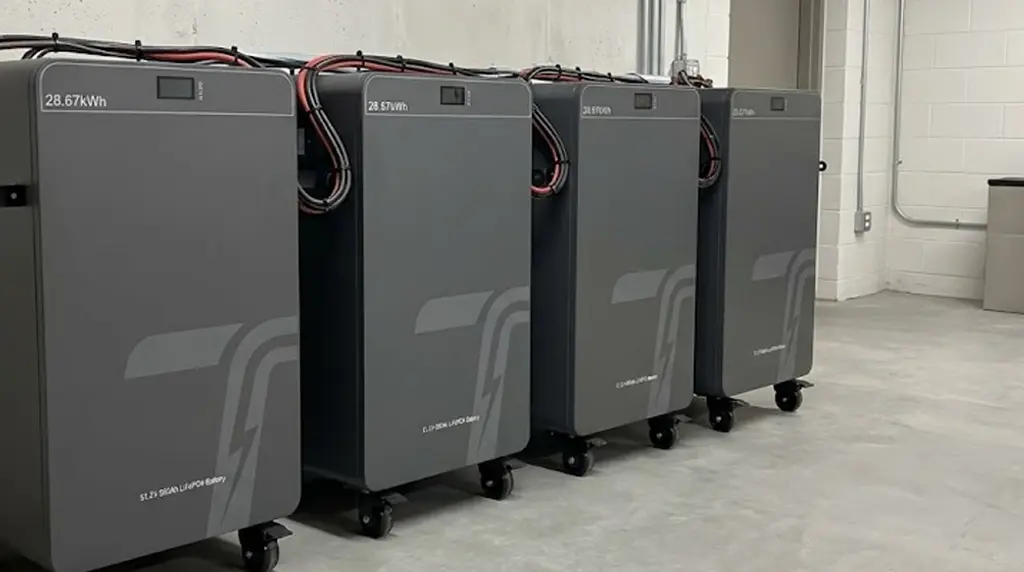
Island 51.2V 560Ah Battery
Commercial & Industrial

Cut Demand Charges. Eliminate Downtime.

Factories, data centers, hospitals, and large commercial facilities use TURSAN BESS to peak-shave demand spikes, provide backup during outages, and participate in demand-response programs for grid revenue. Sub-10ms transfer time meets the most critical uptime requirements.

Demand charge savings
0 %
Failover speed
< 0 ms
ROI timeline
4 -6yr
Uptime SLA
0 %
Mining & Resource Sites

Don’t let energy become a barrier to production.

Off-grid mines in remote areas rely on diesel generators, which require diesel to be transported underground by hand. Mining companies are purchasing TURSAN’s modular battery systems paired with solar panels for deployment at various underground off-grid mines, significantly reducing operating costs and accelerating construction.

Save time
0 %
Reduce Vibration
0 %
Dust protection
IP 0
Annual diesel savings
0 L
Telecommunications

Keep Towers Online. Anywhere.

Telecom tower operators use the TURSAN 5kWh wall-mounted battery as the primary or backup power source for off-grid or weak-grid tower sites. Remote monitoring via 4G/Ethernet and SNMP integration enables centralized visibility of thousands of sites from a Network Operations Center (NOC).

Tower uptime
0 %
Design life
0 yr+
Remote monitoring
SNMP v 3
MOQ for OEM
0 unit
5 kWh base station power supply.png
Solar + Storage

Firm the Intermittency. Sell the Stability.

Solar PV plants paired with TURSAN BESS can participate in grid ancillary services, smooth ramp rates, and discharge during peak pricing windows to maximize revenue per kWh. EMS integrates with plant SCADA for fully automated dispatch.

Revenue per kW
+ 0 %
Frequency response
< 0 ms
Round-trip efficiency
0 %
SCADA protocol
IEC 0
Emergency & Disaster Recovery

First Power On-Scene. When It Matters Most.

The deployable TURSAN BESS stackable units serve as rapid-response power infrastructure for disaster relief, military forward operating bases, and emergency medical facilities where grid power is unavailable or unreliable.

Deployment
0 minutes
Fluctuations
0
Protective capability
IP 0
Upgrade to
0 kWh
Emergency Power Supply for Earthquake Relief
Core Technology

Engineering Specifications

LiFePO4 Chemistry

Grade-A CATL / BYD cells with inherent thermal stability, no cobalt, and 6,000+ cycle life at 80% DoD. No thermal runaway risk even under abuse conditions.

Proprietary Multi-Level BMS

Cell-level, module-level, and system-level protection with active balancing. SoC accuracy ±1%, SoH tracking, and predictive cell fault detection.

98% Round-Trip Efficiency

Industry-leading efficiency driven by low-impedance cell design and advanced power conversion with digital control. Less energy wasted = higher ROI.

–20°C to 55°C Operation

Active liquid cooling and heating system maintains optimal cell temperature across arctic to desert environments without derate or capacity loss.

SCADA / EMS Integration

Native support for Modbus RTU/TCP, CAN Bus, IEC 61850, DNP3, and REST API. Compatible with SMA, ABB, Schneider, Siemens, and custom SCADA platforms.

Modular Stack Architecture

Hot-swappable battery modules with field-replaceable units (FRUs). Add capacity without system shutdown. Parallel strings support 300kWh+ in single installation.

Quality Validation

How We Test Every System

Every TURSAN BESS leaves the factory only after passing six rigorous validation tests aligned to IEC and UL standards for microgrid applications.

01
6,000-Cycle Endurance

Full charge-discharge cycle testing to confirm capacity retention above 80% DoD at end-of-life. Referenced to IEC 62619.

02
Thermal Runaway Propagation

Single-cell abuse testing to confirm no propagation between cells or modules. Fire and smoke containment verified per UL 9540A.

03

Cold-Climate Start –20°C

System charged and discharged at –20°C ambient to confirm heating system performance and capacity delivery in arctic conditions.

04

IP54 Ingress Protection

Dust and water jet ingress testing per IEC 60529. All enclosure penetrations, cable glands, and gaskets verified for outdoor deployment.

05

Vibration & Transport (IEC 60068-2-6)

Random vibration and shock testing simulating road, sea, and air freight. No cell damage or connection loosening after equivalent 10,000km shipment.

06

Grid Island & Black-Start

Full islanding and black-start test sequence. Confirmed successful grid formation from dead-bus and load pickup in less than 10ms.

Why TURSAN

Tier-1 BESS Manufacturer

battery production line
Production Facility
0
In-House BMS Development

Proprietary multi-level BMS firmware designed and tested in-house. Full stack ownership means faster customization and guaranteed long-term support.

Grade-A CATL & BYD Cells

Direct partnerships with China's top cell manufacturers. No B-grade or refurbished cells. Every batch traceable from cell production to final system.

OEM / White-Label

Full white-label support: custom enclosure color, brand logos, EMS UI branding, and custom documentation.

EMS Software Included

Every system ships with TURSAN EMS — a cloud-based or on-premise energy management platform with real-time monitoring, dispatch scheduling, and alarm management.

30+ Countries, 500+ Projects

Operational references across Africa, Southeast Asia, Pacific Islands, Latin America, and Europe. Bankable track record for project financing.

International Standards

Certifications & Compliance

TURSAN BESS systems are certified and compliant with international safety, grid, and transport standards required for bankable microgrid projects worldwide.

CE
IEC
UN38.3
UL
IP54
ISO 9001
RoHS
MSDS
Common Questions

Microgrid Storage FAQ

Answers to the most common questions from engineers, developers, and operators evaluating microgrid energy storage solutions.

What is an energy microgrid?

An energy microgrid is a self-contained, locally controlled electrical system that can generate, store, and distribute power to a defined geographic area — independently of, or in connection with, the main utility grid. It typically combines distributed energy resources (DERs) such as solar PV, wind turbines, diesel generators, or combined heat-and-power (CHP) units with a battery energy storage system (BESS) and an energy management system (EMS). Microgrids can operate in grid-connected mode (drawing from or exporting to the utility) or island mode (fully disconnected from the utility grid). They’re used in remote communities, industrial campuses, military bases, hospitals, and developing-world electrification projects where grid reliability or access is limited.

In simple terms, a microgrid is a mini power grid that you control yourself. Imagine a neighborhood, factory, or island that generates its own electricity from solar panels and stores it in batteries — and can keep the lights on even if the main power grid goes down. It’s essentially a smart local energy system with its own generation, storage, and controls. The key feature is the ability to “island” — to disconnect from the main grid and keep running independently. TURSAN’s BESS is the storage core that makes this possible: it stores excess renewable energy and delivers it on demand, around the clock.

The three main types of microgrids are:

1. Grid-Tied (Grid-Connected) Microgrids — Connected to the main utility grid, these systems can import or export power and participate in energy markets and ancillary services. They offer peak-shaving, backup power, and demand response benefits while still benefiting from grid backup.

2. Off-Grid (Islanded) Microgrids — Completely independent of the utility grid, these serve remote locations like islands, rural communities, or mining sites where grid connection is unavailable or uneconomical. Reliable storage (like TURSAN BESS) is essential to manage intermittent renewable generation.

3. Hybrid Microgrids — Capable of switching between grid-connected and islanded modes depending on grid availability, pricing, or intentional isolation. This is the most versatile configuration and the most common in new commercial and industrial deployments.

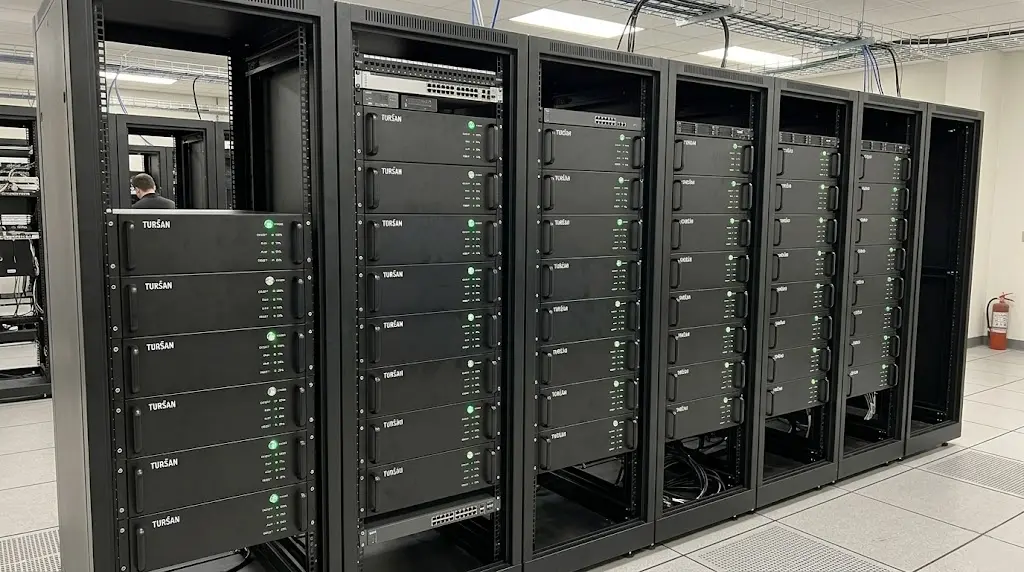
Microgrids use a Battery Energy Storage System (BESS) — like the TURSAN Rack-mounted battery series — as the central storage and dispatch mechanism. When renewable generation (solar, wind) exceeds local demand, excess energy is stored in the battery. When generation falls short or demand spikes, the battery discharges to fill the gap. An Energy Management System (EMS) continuously monitors supply, demand, battery state of charge, grid pricing, and forecasts to make intelligent dispatch decisions in real time. This ensures the battery is always ready when needed — whether for routine load management, backup during outages, or revenue-generating grid services. TURSAN BESS systems support both AC-coupled (storage connected on the AC bus) and DC-coupled (storage connected directly to the solar inverter DC bus) configurations.

Yes — microgrids are broadly recognized as a critical component of the global energy transition. The global microgrid market is projected to exceed $150 billion by 2030, driven by: declining battery and solar costs, increasing grid instability and extreme weather events, electrification of remote and developing regions, corporate and government net-zero commitments, and the rise of distributed energy resources (EVs, rooftop solar, smart loads). As the main utility grid faces increasing strain from decentralization and climate disruption, localized microgrids offer resilience, sustainability, and cost control. Leading utilities, developers, and governments are already deploying microgrids at scale — and the trend is accelerating rapidly.

The microgrid industry includes system integrators, EMS software providers, and BESS manufacturers. Major players include Schneider Electric, ABB, Siemens Energy, GE Grid Solutions, and Eaton on the integration and controls side. For battery storage — the most critical and cost-sensitive component — manufacturers like TURSAN, CATL, BYD, LG Energy Solution, and Samsung SDI supply the cells and integrated BESS modules that power these systems. TURSAN’s advantage is vertically integrated manufacturing: we design the BMS, assemble with Grade-A cells, and ship complete BESS systems ready for direct integration with any major microgrid controller or EMS platform — at factory-direct pricing with full OEM/ODM flexibility.

Microgrids can be AC, DC, or hybrid (AC+DC) — and the choice depends on the application. AC microgrids are the most common because they use standard 50/60Hz distribution equipment and are easy to connect to the utility grid and existing AC loads. DC microgrids are used in specific applications like data centers, EV charging hubs, telecom sites, and ships where most loads are naturally DC — they’re more efficient but require DC-compatible equipment. Hybrid AC/DC microgrids combine both buses and offer the most flexibility. TURSAN BESS supports both AC-coupled and DC-coupled configurations, making it compatible with any microgrid architecture your project requires.

Yes — microgrids can include local generation sources such as solar PV, wind turbines, diesel generators, combined heat-and-power (CHP) units, small hydro, or fuel cells. The battery energy storage system (BESS) does not generate electricity itself, but stores energy from generation sources and dispatches it on demand. Together, the generation + storage + EMS combination makes the microgrid a complete, self-sufficient power system. In many islanded microgrids, the BESS is the single most important component because it bridges the gap between intermittent renewable generation and 24/7 load demand — effectively enabling the microgrid to “generate” continuously even when the sun isn’t shining or the wind isn’t blowing.

Request a Proposal

Get Your Microgrid BESS Specification

Tell us about your project and our engineering team will respond within 24 hours with a technical proposal, system sizing estimate, and factory-direct pricing.

By submitting you agree to be contacted by TURSAN's engineering team. No spam, ever.

Make Contact Now

Speak to Our Experts in 1 min
Got a Question? Contact me directly and l will help you quickly and directly.
Speak to Our Experts in 1 min
Got a Question? Contact me directly and l will help you quickly and directly.
WeChat Video
Use WeChat to Swipe and Watch our Videos!

Make Contact Now

Speak Directly with Our Boss!
Got a Question? Contact me directly and l will help you quickly and directly.
Speak Directly with Our Boss!
Got a Question? Contact me directly and l will help you quickly and directly.

Make Contact Now

Speak to Our Experts in 1 min
Got a Question? Contact me directly and l will help you quickly and directly.
TURSAN Smart Manufacturing
Witness how our batteries are made — from cells to finished packs — with complete quality control and rigorous testing. Submit your request and our tour coordinator will reach out.