
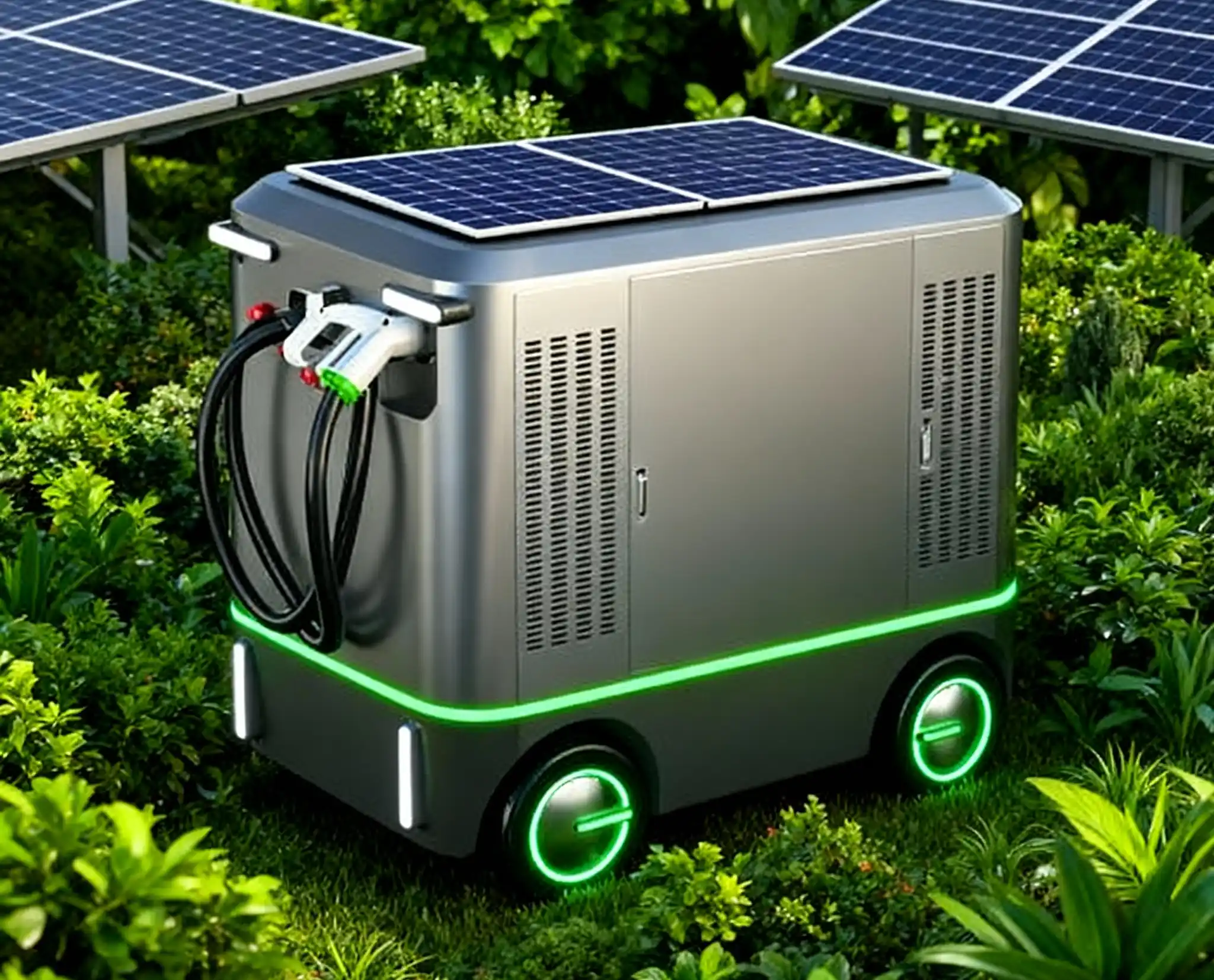
Electric fleets are no longer a far-off idea. Logistics companies are turning electric fast, but there’s one big issue—they can’t wait months for grid upgrades or new charging stations. That’s where Mobile EV Charging Trucks come in. Think of them as power on wheels, bringing energy right to where the trucks stop.
This article breaks down why logistics fleets are spending serious money on mobile EV charging, backed by real examples, data points, and clear business logic.
The Pressure Behind Fleet Electrification
Every logistics manager today is stuck between deadlines and decarbonization targets. Customers want much faster delivery, while governments promote lower emissions. Establishing long-term chargers at depots takes time, land, and permits– things most fleets don’t have.
So, fleets start electric pilots, but there’s a bottleneck: charging readiness. If vehicles can’t charge, they can’t move. Mobile EV charging offers an instant bridge—charging trucks, vans, or buses without touching the grid.
At TURSAN, we’ve seen logistics fleets across Europe, the Middle East, and Asia jump to portable and mobile EV power systems to keep their vehicles running on time.
How Mobile EV Charging Trucks Actually Work
Mobile charging trucks carry onboard battery packs—often using BYD LiFePO4 batteries for long life and safety—and pure sine-wave inverters to deliver stable DC fast charging.
They can recharge electric delivery vans in roughly 30–60 minutes, depending on model. For example, fleets can choose:
- 30 kW Mobile EV Charging Truck for light-duty operations.
- 60 kW Mobile EV Charging Business Truck for mixed fleets or rental depots.
- 120 kW Mobile EV Charging Station for regional delivery hubs.
- 200 kW Mobile EV Charging Trailer for heavy trucks and emergency backup.
Each model can charge multiple EVs on-site without fixed wiring. That’s the beauty of mobility—you bring power to the trucks, not the other way around.

Why Logistics Companies Are Buying or Leasing Them
Here’s what we hear most often from logistics clients and fleet operators.
| Key Motivation | Problem They’re Solving | Industry Proof |
|---|---|---|
| Minimize Downtime | Idle trucks waiting for chargers cut productivity. | Fleets use 120 kW+ mobile units to fast-charge vans within 1 hour—keeping routes active during peak hours. |
| Skip Grid Construction Delays | Permits and transformers take months; short-term depots need fast rollout. | Temporary mobile units deployed in 2–3 weeks instead of 3–6 months grid wait. |
| Pilot Electrification First | Unsure of long-term depot plans or route loads. | Fleets start small—5–20 EVs—using mobile trucks to test routes before investing in fixed chargers. |
| Support Last-Mile Delivery | Vans need reliable power near city centers with limited space. | Mobile EV chargers deliver on-demand fast charging, reducing “range anxiety” during same-day deliveries. |
| Meet ESG & Compliance Targets | CO₂ cuts required for contracts and city-zone access. | Operators use mobile EV charging to immediately reduce diesel use while waiting for grid upgrades. |
| Emergency or Peak-Load Backup | Outages or surges stop operations. | Mobile trailers act as rolling power banks during blackouts or seasonal spikes. |
These aren’t “cool tech” reasons—they’re operational and financial ones.
Real-World Fleet Scenarios
Urban Delivery Hubs
A city parcel company sets up a new cross-dock center in a leased lot. Grid access? Six months away. Instead of waiting, they deploy a 60 kW mobile charging truck to top off vehicles each night. Their vans run daily routes with zero downtime.
Long-Haul Fleets
A regional carrier tests electric heavy trucks between cities but doesn’t yet know where to place permanent chargers. A 200 kW mobile EV trailer follows the convoy and provides roadside fast charging. That keeps testing and deliveries moving while they collect data.
Seasonal Peaks
E-commerce spikes in November? Fleets roll in mobile chargers to temporary parking zones and remove them after the rush. It’s flexibility that fixed stations can’t match.
B2B Logic: From Downtime to ROI
In logistics, every minute counts. Downtime amounts to shed declines, missed SLAs, and unhappy clients. Mobile EV charging trucks turn that formula: much less waiting, a lot more relocating.
They also assist fleets avoid need costs from public fast-charging networks. Considering that mobile devices usually use battery-buffered systems, they can recharge from the grid during the night when electricity is affordable, after that release power right into automobiles throughout the day.
For drivers, that means smoother energy usage and reduced overall expense of ownership– without awaiting brand-new substations.
TURSAN supports OEM/ODM customization, letting integrators design Custom Mobile EV Charging systems fitted with BYD LiFePO4 cells, waterproof housings, and intelligent BMS.
Learn more here: Custom Mobile EV Charging OEM/ODM Solutions .

Why Mobile Charging Solves the “Last-Mile” Bottleneck
The last mile is where logistics truly feels the capture. Carriers can not risk hold-ups, yet electrical vans need routine top-ups. Installing a fast charger on every block isn’t practical.
That’s why fleets are buying from Mobile EV Charging Suppliers who can deliver fast-charge trucks ready to deploy anywhere—warehouse yards, parking lots, or roadside.
The concept fits modern logistics jargon perfectly:
- Fast rollout = deployable within weeks.
- Zero downtime = no parked assets waiting for infrastructure.
- Flexible energy routing = charge anywhere, anytime.
For distribution operators, these words translate directly into KPI improvement—higher utilization rates and better delivery-on-time scores.
How Mobile EV Charging Connects to Broader Energy Systems
A lot of logistics operators start with mobile chargers and later expand into full energy ecosystems—solar + storage + EV charging.
TURSAN already manufactures off-grid inverters, home battery systems, and portable power stations. That means fleets can source both mobile chargers and stationary backup power from one integrated supplier.
This one-stop sourcing helps maintain consistent battery chemistry, warranty terms, and BMS compatibility across the fleet’s charging and backup systems.
In simple terms: fewer vendors, smoother after-sales support, easier integration.
ESG and Compliance Value
ESG pressure is real. Global couriers must now publish their carbon data, and electric fleets are a major piece of that report. But converting 100 trucks at once isn’t cheap or instant.
Mobile EV charging provides a compliance shortcut. Operators can start running electric routes tomorrow—reporting real emissions cuts—without waiting for construction permits.
Government-funded pilot programs in Europe and North America already recognize mobile EV charging trailers as transitional assets that count toward zero-emission credits.
For B2B clients, this isn’t greenwashing—it’s a credible, measurable action that aligns with both sustainability goals and business continuity.
Integration and Customization: Where Manufacturers Add Value
Off-the-shelf units don’t always fit real-world courses. That’s why logistics partners prefer to work with a Mobile EV Charging Producer that uses OEM/ODM support, adaptable battery abilities, and quick production preparation.
TURSAN delivers:
- OEM/ODM design with free id design.
- Fast lead times — samples in 2 days, bulk in about 25 days.
- BYD LiFePO4 battery cells with nail-penetration safety testing (GB/T 31485–2015).
- Pure sine-wave output and multi-protection BMS.
These are not just spec lines—they are what logistics operators call “field reliability metrics.” A charger that overheats or surges in the middle of a shift costs real money.
Market Trend and Future Outlook
Global demand for Mobile EV Charging is expanding fast. As last-mile and heavy-truck electrification accelerate, companies realize permanent infrastructure alone can’t meet charging needs.
Analysts forecast double-digit growth in mobile charging services over the next decade, driven by:
- Temporary depots for electric fleets.
- Construction and mining sites needing mobile energy.
- Event and emergency power for public services.
In short, mobile chargers are not replacing stationary stations—they’re completing the ecosystem.
What Fleet Managers Say
Ask any fleet manager and you’ll hear phrases like:
- “Can’t wait six months for a transformer.”
- “We need chargers that move with the trucks.”
- “No downtime—no excuse.”
Those aren’t marketing slogans; they’re operational pain points. The decision to invest in mobile EV charging isn’t emotional—it’s logistical math: flexibility + speed + reliability = profit continuity.

The Business Value for Distributors and Integrators
If you’re a Wholesale Mobile EV Charging distributor or energy-storage integrator, the opportunity is clear:
- Sell to logistics companies transitioning their fleets.
- Offer bundled solutions—mobile chargers + backup batteries + inverters.
- Position yourself as an end-to-end Mobile EV Charging Supplier with strong technical backing.
TURSAN provides full OEM support for partners entering this field, helping them design, label, and deliver mobile charging systems under their own brands.
That’s real business leverage—shorter time to market, less engineering burden, more recurring B2B clients.
Summary Table: The Logistics ROI View
| Benefit Category | Description | Business Outcome |
|---|---|---|
| Operational Continuity | Keeps fleets charged even when infrastructure lags. | On-time deliveries, fewer missed routes. |
| Financial Efficiency | Lower capital risk; deploy mobile units first, invest later. | Faster return on assets. |
| Compliance & Branding | Demonstrates visible ESG progress. | Stronger bids, customer trust. |
| Flexibility | Move chargers where demand shifts. | Adaptive fleet strategy. |
| Technology Alignment | Same LiFePO4 chemistry across energy systems. | Easier integration, fewer maintenance costs. |
Final Thoughts
Mobile EV charging isn’t a “trend.” It’s a practical, fast-track solution helping logistics companies stay electric without slowing down.
Every kilometer matters in logistics, and waiting for grid upgrades simply doesn’t fit the pace of modern delivery.
With TURSAN as your Mobile EV Charging Manufacturer and energy-storage partner, fleets can deploy reliable, Custom Mobile EV Charging solutions built on BYD LiFePO4 battery technology, integrated BMS, and tested durability.
If your trucks are ready before your chargers are, you know what to do— bring the power to them.



 English
  العربية
  日本語
日本語  한국어
한국어  Tiếng Việt
  ไทย
ไทย  Bahasa Melayu
  فارسی
فارسی  Bahasa Indonesia
  ဗမာစာ
ဗမာစာ  简体中文
简体中文  香港中文
香港中文  繁體中文
繁體中文  Русский
  Deutsch
  Nederlands
  Italiano
  Français
  Español
  Português
  Afrikaans
  Azərbaycan dili
  Български
  ਪੰਜਾਬੀ
  हिन्दी
  اردو
اردو  বাংলা
বাংলা  Հայերեն
  Íslenska
  Қазақ тілі
  नेपाली
  Српски језик
  Kiswahili
  తెలుగు
  Basa Jawa
  தமிழ்
தமிழ்  मराठी
मराठी