
Choosing a high-discharge-rate LiFePO4 battery sounds easy on paper, but once you dive into real projects—off-grid systems, telecom cabinets, EV charging trucks, industrial gear—you realize the numbers on datasheets don’t always match what happens in the field. Loads spike. Temperature swings. BMS throttles. Voltage sag kicks in. And that’s where picking the right cell chemistry, discharge rating, and supplier relationship actually decide whether your system runs smooth or dies mid-peak.

So let’s walk through how professionals really choose a high-rate LiFePO4 battery, using real-world logic, practical benchmarks, and an honest look at what matters beyond marketing. I’ll also plug in some references to TURSAN, since they’re a global LiFePO4 Battery Supplier and LiFePO4 Battery Manufacturer working with B2B buyers across 30+ regions—OEM/ODM support, BYD-grade packs, and custom energy systems that actually survive harsh cycles.
LiFePO4 Battery High-Rate Discharge Basics
(accurate keyword requirement: “LiFePO4 Battery High-Rate Discharge”)
When engineers talk about “high-discharge-rate,” they’re usually referring to two things:
- Continuous discharge current — What the battery can output all the time without overheating.
- Peak discharge current — Short bursts for loads like inverters, pumps, EV chargers.
A battery with big Ah doesn’t automatically give big amps. And that’s the first mistake many buyers make. What you really want is a match between your load profile and the battery’s true output curve.
To keep the explanation simple:
- A 1C rate means a 100Ah battery can discharge 100A.
- A 2C rate means it can do 200A, but usually for shorter windows.
But high-C behavior depends on:
- internal resistance
- thermal management
- BMS limit
- quality of the cells (grade A or… “factory mystery box”)
This is why the partner you pick—your Wholesale LiFePO4 Battery vendor—matters more than the datasheet. A reliable manufacturer tests at temperature, load, and real-world duty cycles, not just lab-ideal numbers.
High-Rate LiFePO4 Battery Selection Factors
(accurate keyword requirement: “High-Rate LiFePO4 Battery”) Below is a table summarizing the core parameters you want to evaluate when choosing a high-rate model.
| Factor | Why It Matters | What to Check |
|---|---|---|
| Continuous Discharge Current | Defines real usable power output | Match inverter or motor continuous draw |
| Peak Discharge Current | Handles load spikes | Look at surge power of your equipment |
| Internal Resistance | Lower = less heat, less sag | Good suppliers disclose test data |
| Thermal Behavior | High-rate loads heat up cells | Ask for high-rate cycle curves |
| BMS Rating | Many packs derate because of cheap BMS | Check MOSFET specs, protection thresholds |
| Cycle Life Under High Load | 1C at 25°C ≠ 3C at 45°C | Ask for high-current aging tests |
| Certification & Safety | Essential for industrial clients | e.g., BYD Blade standards, nail-penetration tests |
TURSAN packs use ABS+PC V0 flame-retardant housing, multi-layer BMS, and BYD-grade LiFePO4 cells—features important if you work in telecom, mining, or off-grid sites. You can check sample LiFePO4 models here:

These are common baselines for solar, RV, marine, telecom backup, and small industrial systems.
High-Discharge-Rate LiFePO4 Battery Pack Behavior
(accurate keyword requirement: “High-Discharge-Rate LiFePO4 Battery”) High-rate packs behave differently compared to standard LiFePO4 batteries. Once you push cells over 2–4C, you start seeing effects like:
- noticeable voltage sag
- temperature climbing fast, especially in enclosed cabinets
- BMS thermal cutoffs
- capacity reduction under load
- faster long-term degradation if the pack wasn’t designed for industrial duty
Engineers call this “load-stress behavior.” If your supplier can’t show thermal curves, impedance growth tests, or high-rate cycle results… you’re basically buying blind.
The real question you should ask:
“At my target discharge current, how many cycles until I hit 80% capacity?”
Standard marketing will tell you “6000 cycles,” but that’s usually at 0.5C or 1C.
High-rate usage is a different world.
Real-World Scenarios Where High-Rate LiFePO4 Matters
(accurate keyword requirement: “High-Rate LiFePO4 Applications”)
You see these batteries deployed in harsh, real-duty scenarios like:
Off-grid inverter spikes
Inverters often spike 2–3× for a second or two. If your battery’s peak discharge is too low, your system resets even when capacity is OK. Many integrators solve this by upgrading to high-rate LiFePO4 modules or stacking packs.
Mobile EV charging trucks
Mobile charging rigs—like 30 kW or 60 kW systems—demand stable high current during boost phases. A typical RV battery won’t hold. You need a pack with industrial thermal control and strong BMS, like units used in TURSAN EV power modules.
Telecom & mining equipment
Telecom towers and mining tools often hit short, heavy loads. High-rate LiFePO4 ensures consistency even in heat or cold.
Portable stations under peak loads
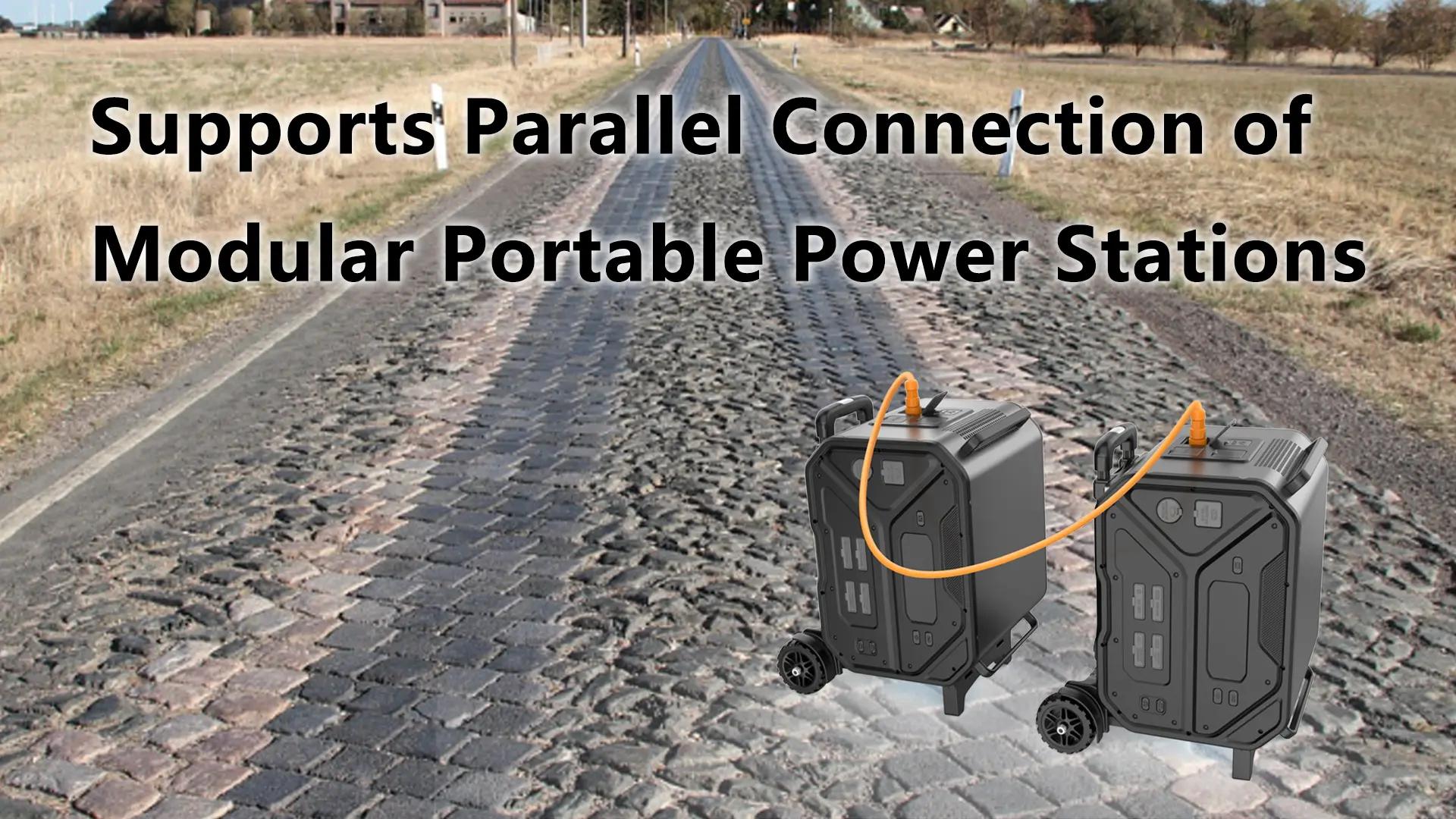
Even smaller devices like portable stations (e.g., 1–3 kW) need stable high discharge when powering grinders, welding tools, small pumps, etc. Examples inside TURSAN product line include:
These units rely on LiFePO4 packs with strong discharge capabilities to avoid inverter trips.
Matching Load Profiles to LiFePO4 Discharge Specs
(accurate keyword requirement: “LiFePO4 Discharge Specs”)
Here’s a simple way to match your equipment to the right battery.
| Load Type | Typical Behavior | Battery Feature Needed |
|---|---|---|
| Inverters (1–10 kW) | Surge 2–3× rated power | High peak current, strong BMS |
| Motors / Pumps | Hard start, high inrush | Low internal resistance |
| EV fast-charging trucks | Long continuous draws | High continuous current |
| Industrial backup | High burst + long runtime | High capacity + thermal stability |
| Outdoor/off-grid gear | Temp swings + burst loads | Wide temp range rating |
This is why professional buyers prefer Custom LiFePO4 Battery solutions—they can tune BMS cutoff limits, cables, cell geometry, and thermal design. A well-made Custom LiFePO4 Battery solves half of the “high-rate performance issues” before they appear.
Why Supplier Quality Defines High-Rate Performance
(accurate keyword requirement: “LiFePO4 Battery Supplier”) Even the best chemistry fails if the manufacturing is sloppy.
When choosing a LiFePO4 Battery Supplier, always check:
Cell sourcing (Grade A or uncertain origin?)

High-rate discharge exposes every weakness in low-quality cells.
BMS engineering
Cheap BMS = instant derating.
Industrial BMS = stable output.
Safety compliance
For B2B markets in Europe, GCC, Africa, SE Asia, certifications aren’t optional.
TURSAN units follow:
- GB/T 31485–2015
- GB 31241–2014 nail-penetration tests
- Flame-retardant housing
Total ecosystem (inverter, charger, cabinet)
A battery is only as strong as the system it works in.
This is why TURSAN offers matched inverters, EV mobile chargers, and home stacked batteries.
Choosing a LiFePO4 Manufacturer for High-Rate Projects
(accurate keyword requirement: “LiFePO4 Battery Manufacturer”) When selecting a LiFePO4 Battery Manufacturer, look for real production capability—not just trading.
Checklist:
- Can they do OEM/ODM?
- Do they have R&D engineers who can redesign pack layout?
- Are they familiar with B2B demands—MOQ, logistics, customs, documentation?
- Can they deliver samples fast enough for your validation cycles?
TURSAN clears these with:
- 50+ engineers
- 15 production lines
- low MOQ
- fast sampling (few days)
- delivery to 30+ countries
Having this kind of partner cuts project lead time heavily and lowers technical risks.
Data-Driven Comparison of High-Rate LiFePO4 Battery Types
(accurate keyword requirement: “LiFePO4 Battery Types Comparison”)
| Battery Type | Strength for High-Rate Use | Typical Uses |
|---|---|---|
| Plastic-Shell LiFePO4 | Lightweight, stable for 1–2C | Solar, RV, telecom light duty |
| Sheet-Metal LiFePO4 | Better heat dissipation, stronger shells | Industrial, mining, pumps, stacked systems |
| Wall-Mounted LiFePO4 | Good for home inverter surge loads | Residential backup, light commercial |
| Stacked Home Batteries | High continuous output | Micro-grids, off-grid houses, farms |
Sample models you can explore:
When You Should Choose a Custom LiFePO4 Pack
(accurate keyword requirement: “Custom LiFePO4 Battery”)
High-rate discharge systems often hit problems like:
- BMS cutoffs
- string imbalance
- heat buildup
- cable losses
- unstable surges
A Custom LiFePO4 Battery solves this by tuning:
- cell configuration (series/parallel ratio)
- MOSFET and BMS current rating
- cooling plate or airflow path
- wiring gauge
- terminal layout
- armored case (sheet metal) for harsh fields
This is common in:
- EV mobile chargers
- industrial carts
- off-grid containerized systems
- telecom towers
- remote operations / oil & gas
TURSAN offers OEM/ODM custom packs for exactly these use-cases, which is why many integrators prefer working directly with a manufacturer instead of stitching together random retail batteries.
Wholesale LiFePO4 Battery Wholesale Tips

(accurate keyword requirement: “Wholesale LiFePO4 Battery”)
When buying Wholesale LiFePO4 Battery batches, you should check:
- Batch consistency – same impedance, same aging curve
- BMS calibration – must be aligned across units
- Custom labels & packaging – important for resellers
- After-sales technical docs – wiring, inverter pairing, thermal guidelines
- Scalability – can the supplier support your long-term volume?
B2B buyers in Europe, Middle East, Africa often run into compliance and logistics headaches. A partner like TURSAN that offers one-stop export, customs clearance, and multilingual support cuts cost and time dramatically.
Conclusion: How to Choose a High-Discharge-Rate LiFePO4 Battery
To wrap it up, picking the right high-rate LiFePO4 battery isn’t just checking a C-rate number. It’s about understanding your load, verifying the continuous vs peak discharge, making sure the BMS can actually handle the amps, and choosing a LiFePO4 Battery Manufacturer who knows industrial-grade engineering—not just e-commerce packaging.
If your usage involves:
- big inverter spikes
- EV charging systems
- long duty cycles at high current
- dusty, hot industrial areas
- or harsh off-grid environments
…then a high-discharge-rate LiFePO4 battery is not optional. It’s mandatory.
And working with a supplier like TURSAN gives you access to Custom LiFePO4 Battery engineering, BYD-grade cells, strong BMS protection, and stable global supply—key for any serious B2B project.


 English
  العربية
  日本語
日本語  한국어
한국어  Tiếng Việt
  ไทย
ไทย  Bahasa Melayu
  فارسی
فارسی  Bahasa Indonesia
  ဗမာစာ
ဗမာစာ  简体中文
简体中文  香港中文
香港中文  繁體中文
繁體中文  Русский
  Deutsch
  Nederlands
  Italiano
  Français
  Español
  Português
  Afrikaans
  Azərbaycan dili
  Български
  ਪੰਜਾਬੀ
  हिन्दी
  اردو
اردو  বাংলা
বাংলা  Հայերեն
  Íslenska
  Қазақ тілі
  नेपाली
  Српски језик
  Kiswahili
  తెలుగు
  Basa Jawa
  தமிழ்
தமிழ்  मराठी
मराठी