
In the realm of modern energy storage, batteries play an indispensable role, powering everything from electric vehicles to renewable energy systems. Among the most commonly used battery types on the market today are Lithium Iron Phosphate (LiFePO4) batteries and lead-acid batteries. This article will delve into the key differences between these two battery types and explain why LiFePO4 batteries are the superior choice, while also highlighting the exceptional performance of our TURSAN 12V102Ah LiFePO4 battery.
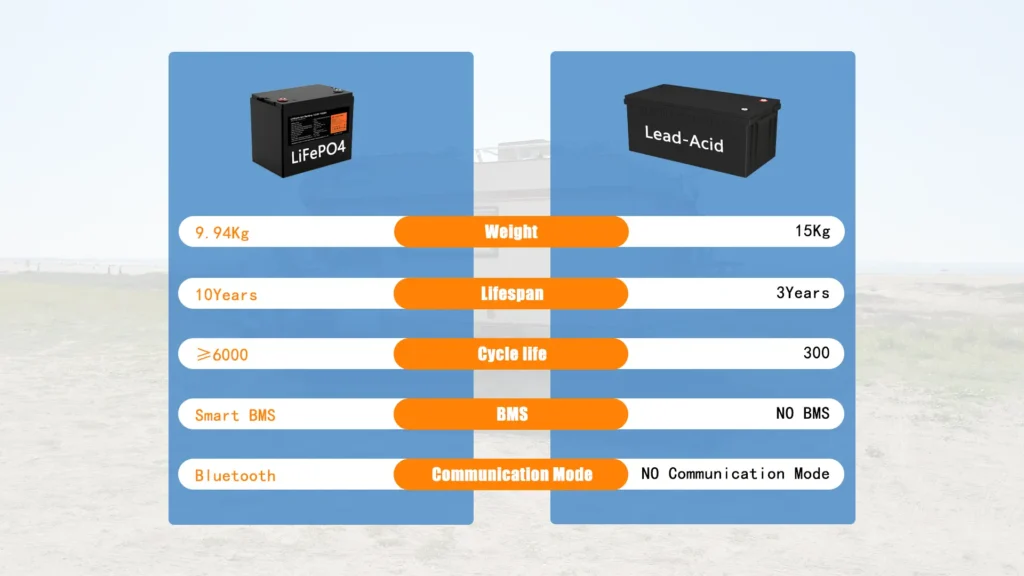
Lead-acid batteries, a technology with a long history, have been the preferred choice for various applications such as automotive starting, uninterruptible power supplies (UPS), and off-grid energy systems since their inception in the 19th century. Despite their long history and proven reliability, lead-acid batteries have inherent limitations, including heavy weight, shorter lifespan, and longer charging times. Furthermore, they require more maintenance and can pose environmental risks due to the presence of harmful substances like lead and sulfuric acid.
LiFePO4 batteries represent a new generation of lithium-based batteries that are rapidly gaining popularity due to their advanced performance characteristics. Compared to lead-acid batteries, LiFePO4 batteries are known for their higher energy density, longer lifespan, faster charging speeds, and safer design. LiFePO4 batteries are also more environmentally friendly, as they do not contain toxic materials like lead and are easier to recycle. These advantages make them an excellent choice for a wide range of applications, including electric vehicles, solar energy storage, and recreational vehicles (RVs).
Key Differences Between LiFePO4 and Lead-Acid Batteries——Why LiFePO4 is the Superior Choice
When choosing a battery for energy storage, it is crucial to understand the strengths and weaknesses of different types. LiFePO4 and lead-acid are two of the most widely used battery types today. Here’s a breakdown of their main differences and why LiFePO4 is the superior choice for various applications:
Weight and Size
Lead-acid batteries are generally heavier and bulkier. For the same power output, a lead-acid battery can weigh several times more than a LiFePO4 battery. This makes them unsuitable for applications where space and weight are critical factors, such as electric vehicles, RV systems, and portable energy storage devices.
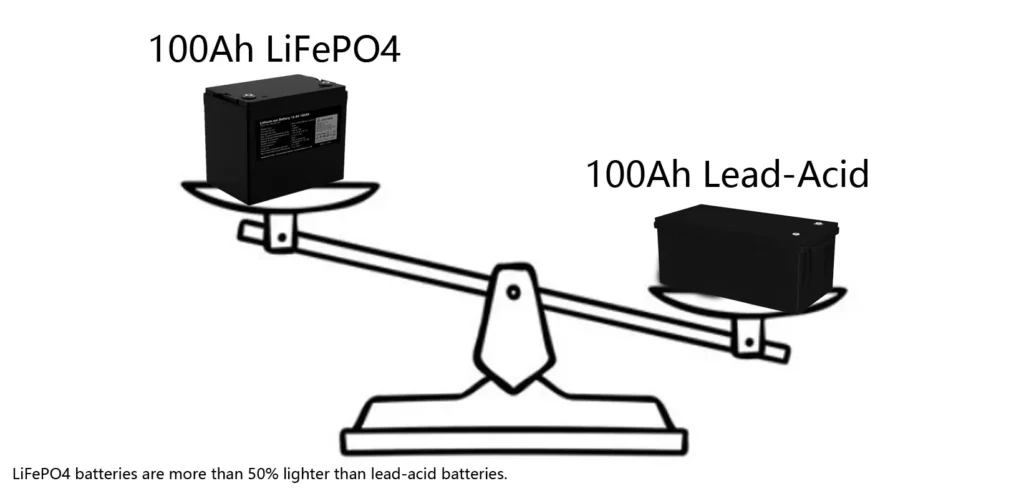
One of the primary advantages of LiFePO4 batteries is their lightweight and compact design. LiFePO4 batteries offer the same energy capacity as lead-acid batteries but in a much smaller and lighter package, making them an ideal choice for applications requiring portability or compact installations, such as trolling motors, solar systems, or backup power supplies.
Lifespan and Durability
Lead-acid batteries typically have a cycle life of only about 300-500 cycles. This relatively short lifespan means frequent replacements, leading to higher long-term costs and more maintenance.
In contrast, LiFePO4 batteries have a much longer lifespan, with a typical cycle life of 3,000 to 5,000 cycles. This translates to fewer replacements and significantly lower lifetime costs, making LiFePO4 a more economical and sustainable choice over time. Their superior lifespan makes them perfect for off-grid energy systems, golf carts, and electric vehicles, where long-term reliability is critical.
Our TURSAN 12V102Ah LiFePO4 battery boasts a cycle life of over 6000 cycles, far exceeding industry standards, ensuring a longer service life and a higher return on investment.
Charging Speed
Fully charging lead-acid batteries typically takes 8-12 hours, especially when the battery is deeply discharged. This slow charging process can be inconvenient, particularly in applications requiring fast recharge times.
LiFePO4 batteries can be charged much faster, usually taking only 2-3 hours to fully charge, even after a complete discharge. This feature is particularly beneficial for RVs and trolling motors, where fast charging can minimize downtime and get you back to enjoying your activities more quickly.
Efficiency and Power Output
Lead-acid batteries have a lower energy density, meaning they deliver less usable power for the same size or weight. Additionally, they tend to experience significant voltage drop during discharge, which reduces their overall efficiency.
LiFePO4 batteries offer a higher energy density, allowing them to deliver more usable power from a smaller, lighter package. Furthermore, LiFePO4 batteries maintain a consistent voltage output, providing reliable performance throughout their charge cycle and improving efficiency in power-hungry applications such as solar energy storage, electric vehicles, and RV batteries.
Environmental Impact
Lead-acid batteries contain toxic lead and sulfuric acid, which can be harmful to the environment if not disposed of properly. While they can be recycled, the recycling process can be complex and hazardous to both human health and the environment.
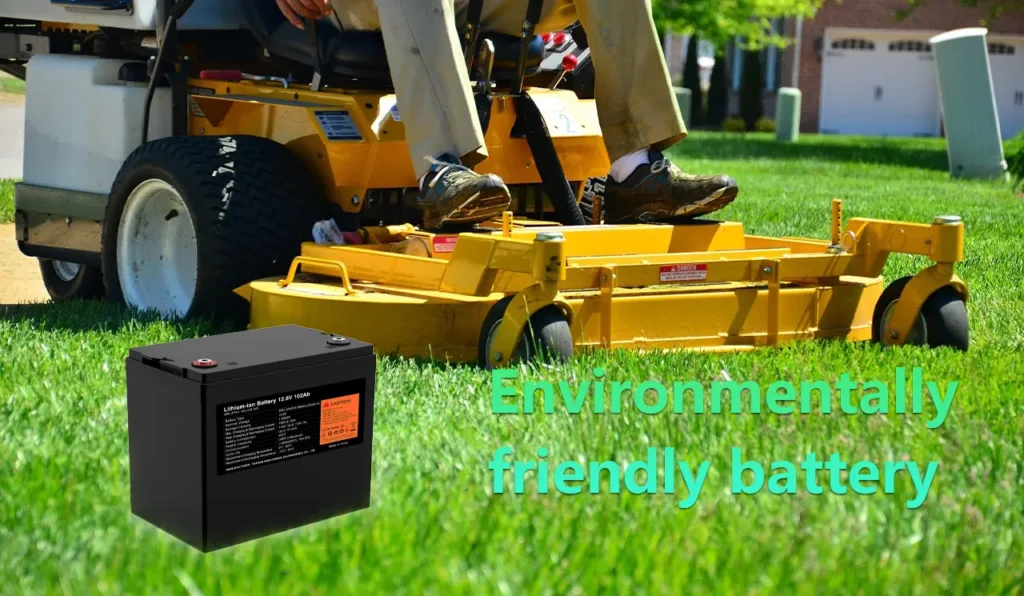
LiFePO4 batteries are non-toxic and environmentally friendly. They do not contain harmful substances like lead or sulfuric acid, and their recycling process is safer and simpler. LiFePO4 is a greener and more sustainable option, aligning with modern environmental concerns and green energy initiatives.
Safety
Lead-acid batteries can leak acid, corrode over time, and pose a risk of explosion, especially if overcharged or mishandled. The presence of toxic sulfuric acid also increases safety risks during handling.
LiFePO4 batteries are much safer due to their thermal stability and overcharge protection. They are less likely to overheat, catch fire, or explode, making them a safer choice for applications such as electric vehicles, solar power systems, and home energy storage batteries. Their inherent safety features make them a preferred choice in high-risk environments.
Our TURSAN 12V102Ah LiFePO4 battery uses BYD LiFePO4 cells and has passed the needle puncture test, ensuring excellent safety.
Cost Comparison
Lead-acid batteries have a lower initial cost compared to LiFePO4 batteries. However, due to their shorter lifespan, slower charging, and frequent maintenance requirements, their long-term costs can quickly add up.
While LiFePO4 batteries may have a higher initial cost, they offer better value in the long run due to their long lifespan, faster charging, lower maintenance costs, and higher efficiency. The savings from fewer replacements and lower maintenance costs make them a cost-effective solution over time, particularly in commercial and industrial applications.
Comparison Table——LiFePO4 vs. Lead-Acid Batteries
| Feature | LiFePO4 Battery | Lead-Acid Battery |
|---|---|---|
| Cycle Life | 3,000 – 5,000 cycles (TURSAN 12V102Ah: ≥ 6000 cycles) | 300 – 500 cycles |
| Weight | Lightweight (TURSAN 12V102Ah: 9.94Kg) | Heavy and bulky |
| Charging Time | 2-4 hours (fast charge) | 6-8 hours (slower charge) |
| Maintenance | Minimal maintenance | Frequent maintenance (e.g., water checks) |
| Operating Temperature | -10°C to 60°C | -10°C to 40°C |
| Initial Cost | Higher, but better long-term value | Lower, but requires frequent replacement |
| Environmental Impact | Non-toxic, eco-friendly | Contains lead and sulfuric acid |
| Safety | High thermal stability, overcharge protection (TURSAN 12V102Ah: BYD cells, needle puncture test) | Prone to leakage, corrosion, explosion risk |
| Communication Mode | Supports Bluetooth (TURSAN 12V102Ah) | None |
Our TURSAN 12V102Ah LiFePO4 Battery
Our TURSAN 12V102Ah LiFePO4 battery is a high-performance, high-reliability energy storage solution designed to meet the demands of various rigorous applications. It not only inherits all the advantages of LiFePO4 batteries but also achieves breakthroughs in key performance indicators:
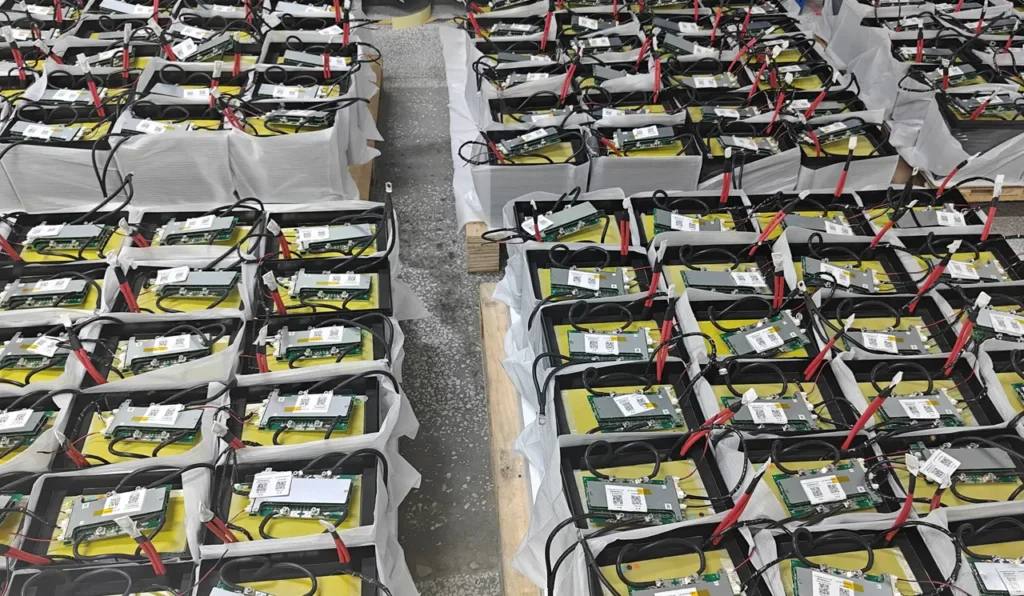
- Ultra-long Cycle Life: With a cycle life of over 6000 cycles (70% EOL), it ensures an exceptionally long battery life, significantly reducing long-term operating costs.
- Built-in Bluetooth Function: Supports real-time monitoring of battery status via a mobile app, including voltage, current, temperature, and remaining capacity, allowing you to stay informed about the battery’s health at all times.
- Excellent Safety: Utilizes BYD LiFePO4 cells and has passed rigorous needle puncture tests, ensuring safe and reliable operation even under extreme conditions.
- Lightweight and Compact: Measuring 255×165×210mm and weighing only 9.94Kg, it is easy to install and carry, suitable for space-constrained applications.
- Wide Operating Temperature Range: Can operate stably in temperatures ranging from -10℃ to 60℃, adapting to various harsh environments.
- PC+ABS Casing: Durable and provides additional protection.
Conclusion
In summary, while lead-acid batteries offer an advantage in initial cost, LiFePO4 batteries provide greater value in the long run due to their superior performance, longer lifespan, faster charging speeds, higher efficiency, smaller environmental impact, and enhanced safety, leading to a lower total cost of ownership. For users seeking high-performance, high-reliability, and sustainable solutions, LiFePO4 batteries are undoubtedly the smarter choice. Our TURSAN 12V102Ah LiFePO4 battery stands out as a leader in this field, offering an unparalleled energy storage experience.



 English
  العربية
  日本語
日本語  한국어
한국어  Tiếng Việt
  ไทย
ไทย  Bahasa Melayu
  فارسی
فارسی  Bahasa Indonesia
  ဗမာစာ
ဗမာစာ  简体中文
简体中文  香港中文
香港中文  繁體中文
繁體中文  Русский
  Deutsch
  Nederlands
  Italiano
  Français
  Español
  Português
  Afrikaans
  Azərbaycan dili
  Български
  ਪੰਜਾਬੀ
  हिन्दी
  اردو
اردو  বাংলা
বাংলা  Հայերեն
  Íslenska
  Қазақ тілі
  नेपाली
  Српски језик
  Kiswahili
  తెలుగు
  Basa Jawa
  தமிழ்
தமிழ்  मराठी
मराठी