
For outdoor lighting systems that are required to operate nightly—irrespective of winter conditions or persistent cloud cover—the verification process for LiFePO4 packs must extend beyond laboratory benchmarks. True validation simulates the real-world, day-night charging cycle, seasonal SOC variations, and environmental stresses like dust, heat, and cold. This document presents a practical, evidence-based methodology for B2B buyers to assess LiFePO4 batteries, and further illustrates the value proposition of a supplier like TURSAN through its OEM/ODM services, accelerated lead times, and comprehensive certification trail.
PV Off-Grid Battery Testing
If you test off-grid lighting batteries, start here. IEC 61427-1 defines how to assess secondary batteries in photovoltaic or pv off-grid systems. It presumes exactly what you see in road lights: fee throughout daytime, discharge in the evening, with multi-day freedom for poor climate. The standard groups methods into capacity checks, generic cycling endurance, charge retention, and cycling in extreme conditions—perfect building blocks for life testing LiFePO4 in lighting.
Day-Charge / Night-Discharge Cycle Profile
A typical street-light battery undergoes an 8-hour charge during daylight hours, followed by a 12-hour discharge cycle to support dusk-to-dawn operation. Field data from off-grid solar projects further reveals challenging charging conditions, characterized by periods of low current and a narrow peak harvest window around midday.

Seasonal SOC Drift and Autonomy Days
Lighting sites face seasonal under-charge and dark spells. Include test segments where the pack runs at low SOC for days, then recovers—exactly what the standard expects via autonomy and seasonal patterns. This is where weaker chemistries show early pain; LiFePO4 usually rides it out if BMS and charge control are sane.
Temperature Effects on LiFePO4 Battery Life
Temperature rules your lifetime. Long storage at high SOC and high temperature accelerates fade; low-temperature charging is a known hazard.
Low-Temperature Charging Limits
Do not charge below 0 °C without a low-temp protocol or pack heating. Sub-freezing charge can trigger lithium plating, which permanently damages cells. Your test must prove the BMS lockout works and the system either preheats or reduces current as designed.
High-Temperature & High-SOC Storage
Long dwell at elevated temperature and near-full SOC accelerates calendar aging—sometimes worse than cycling. Bake this into your test matrix (e.g., 40–45 °C chamber + high-SOC dwell), then measure capacity and DCIR drift. Keep it realistic; don’t torture for fun.
Depth of Discharge (DOD), C-Rate, and Cycle Life in Outdoor Lighting
Shallow DOD cycles (10–30%) and gentle C-rates stretch life for LiFePO4 in lighting duty. It’s standard engineering wisdom: DOD and temperature shape the fade curve. So, align your test DOD to the real nightly energy draw of the luminaire and the dimming scheme.
Field Patterns in Stand-Alone PV Street Lighting
Monitoring on stand-alone PV lighting reports ~8 h charge (late-morning peak) and ~12 h discharge, with average currents around low single-amp levels—small numbers, but repeated every single day. Design test points around that envelope and timing, not generic EV or UPS profiles.

Why LiFePO4 Beats Lead-Acid in Street Lighting
Across deployments, LiFePO4 brings longer cycle life and less maintenance than flooded or gel lead. You also get better round-trip efficiency and lighter weight for pole-top builds. Real-world buyers care because fewer truck rolls, less downtime, and cleaner warranty curves. No need to put cost math here; you feel it in ops.
Test Plan Checklist for Outdoor Lighting Systems
Use this list as your acceptance plan with suppliers and labs:
- Standards mapping: Declare IEC 61427-1 as the primary reference; include capacity test, generic cycling, charge retention, and extreme-condition cycles.
- Cycle profile: Program day-charge / night-discharge (8 h / 12 h) with your dimming schedule; include week-long under-charge sequences (cloudy) and recovery days.
- Temperature matrix: Chamber points at 25 °C, 40–45 °C, and sub-zero (discharge OK). Validate BMS low-temp charge lockout and any preheat logic.
- Aging metrics: Track capacity retention to EOL threshold (e.g., 80%), DCIR growth, Coulombic efficiency, and cumulative kWh throughput.
- Pack protection: Verify OVP/UVP, cell balancing, short-circuit response, and low-temp charge inhibit.
- Data logging: Record SOC window, DOD, C-rate, chamber temp, and per-string variance for binning.
- Acceptance: Define pass/fail by capacity retention and runtime against a dusk-to-dawn load profile, including autonomy days.
Compact Table: Variables, Test Settings, Metrics, Pass/Fail
| Variable | Test Setting (street-light scene) | Metric to Record | Pass/Fail Cue |
|---|---|---|---|
| Cycle profile | 8 h charge / ~12 h discharge, daily; include dimming | Nightly runtime vs. load; DOD | Meets dusk-to-dawn spec across test weeks |
| Seasonal under-charge | Multi-day low-SOC (winter/cloudy) + recovery | Capacity retention after sequence | No step loss; stable DCIR trend |
| Low-temp behavior | Discharge sub-zero; no charge < 0 °C (or preheat/low-current) | Charge-inhibit events; temp log | No sub-zero charge without protection |
| High-temp dwell | 40–45 °C, high-SOC dwell windows | Capacity loss & DCIR rise | Fade within target; no runaway drift |
| DOD & C-rate | Site-matched nightly DOD 10–30%; gentle C-rate | kWh throughput to EOL; cycles to 80% | Higher throughput vs. deep-DOD control |
| IEC structure | Capacity, generic cycling, charge retention, extreme cycles | Compliance to items | All items completed and reported |
Controller & BMS Notes
- BMS low-temp lockout: Hard block below 0 °C; allow preheat routine before enabling charge.
- SOC windowing: Run SOC 30–80% most nights if your energy budget allows; shallower swing slows aging.
- MPPT curve & dimming: Match MPPT harvest to evening dispatch curve; let dimming trim load after midnight to keep DOD shallow.
- Cell binning & pack QC: Tight IR and capacity binning reduces string drift; fewer early-life outliers.
- Thermal path: Don’t suffocate packs in sealed boxes without conduction to pole or shield—hot air kills calendar life.
Procurement Lens for B2B Buyers
When you shortlist a LiFePO4 Battery Manufacturer or LiFePO4 Battery Supplier, ask for:
- A written IEC 61427-1 mapping of their test protocol (with chamber temps and cycle scripts).
- Evidence of low-temp charge protection in the BMS (screenshots, logs, or third-party notes).
- Capacity-retention plots vs. DOD at ~25 °C and ~40 °C; a quick look shows whether they did the homework.
- Real street-light duty cycler scripts (8/12 timing) rather than UPS-style deep cycles.
You don’t need to compute exact costs; the field says fewer swaps, fewer night-time failures, happier municipalities.
TURSAN Resources for Custom LiFePO4 Battery
If you need a Custom LiFePO4 Battery for pole-top boxes or ground-mount cabinets, spec capacity and form factor, then run the test plan above during FAT/SAT. TURSAN provides OEM/ODM, BYD LiFePO₄ cells, and multilingual delivery to 30+ countries. Start with these reference builds and ask us to tune them for your street-light duty:
- 12V 102Ah LiFePO4 (compact, easy pole-box fit)
- 12V 204Ah LiFePO4(extra autonomy for winter/cloudy spells)
- 12V 306Ah LiFePO4(longer dusk-to-dawn + dimming reserve):
- Wall-Mounted 12V 102Ah(tight poles, kiosk cabinets)

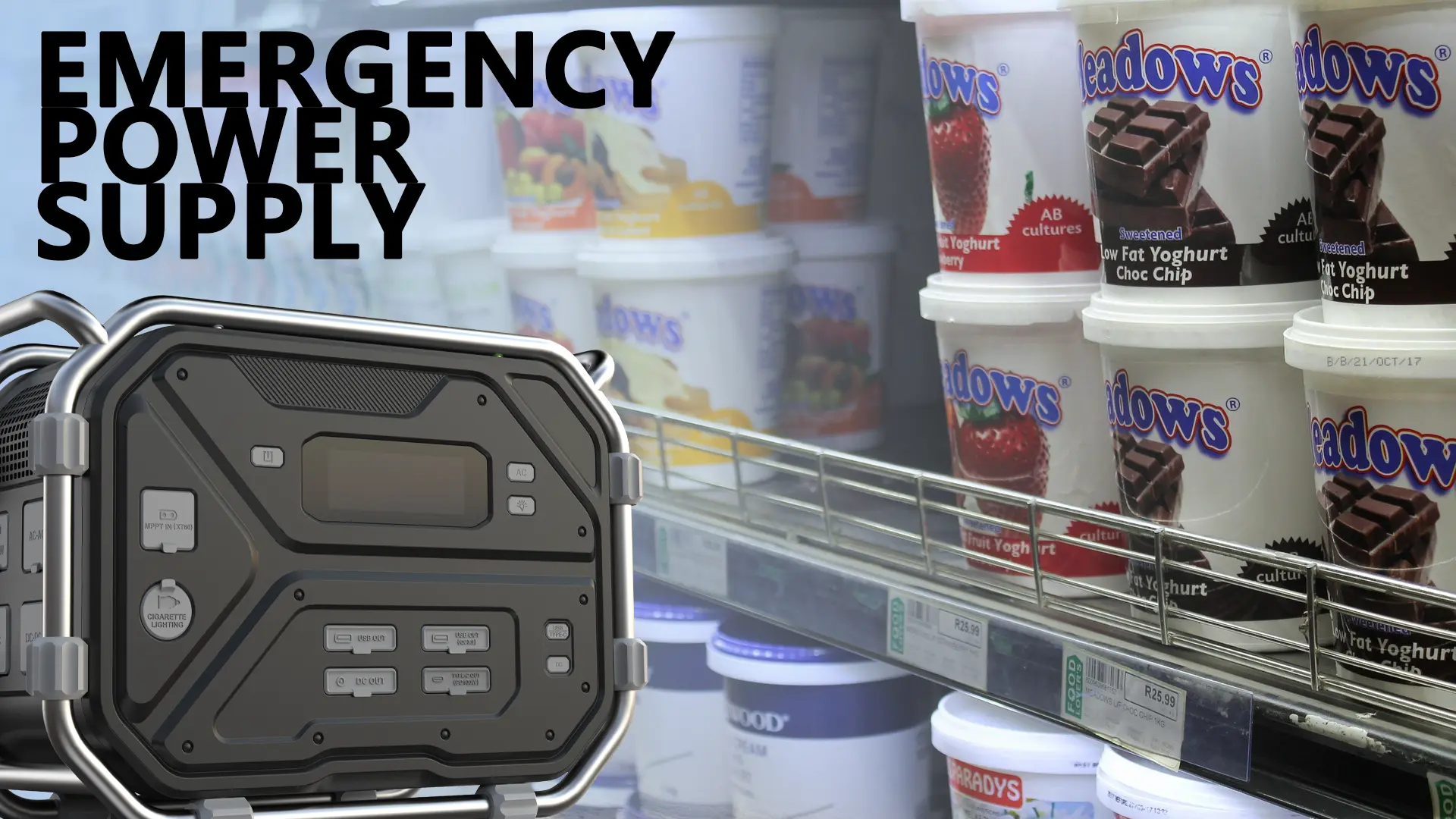
Need portable backup for installers or night commissioning? A small AC source helps with tools and firmware pushes:
- 600W Portable Power Station(field-friendly):
TURSAN — China-based LiFePO4 Battery Manufacturer with OEM/ODM, BYD LiFePO₄, inverters, EV chargers, home & off-grid systems. We support Wholesale LiFePO4 Battery programs and custom builds for outdoor/off-grid suppliers.
Closing
Outdoor lighting lives or dies by predictable nights. If your life test replicates the daily 8/12 rhythm, respects 0 °C charge limits, and keeps DOD and temperature realistic, LiFePO4 will do the job—quietly, for years. When you need builds tailored to pole space or cabinet depth, loop a LiFePO4 Battery Manufacturer like TURSAN into the plan and drop this checklist straight into the PO. Not magic, just good engineering and clean testing.



 English
  العربية
  日本語
日本語  한국어
한국어  Tiếng Việt
  ไทย
ไทย  Bahasa Melayu
  فارسی
فارسی  Bahasa Indonesia
  ဗမာစာ
ဗမာစာ  简体中文
简体中文  香港中文
香港中文  繁體中文
繁體中文  Русский
  Deutsch
  Nederlands
  Italiano
  Français
  Español
  Português
  Afrikaans
  Azərbaycan dili
  Български
  ਪੰਜਾਬੀ
  हिन्दी
  اردو
اردو  বাংলা
বাংলা  Հայերեն
  Íslenska
  Қазақ тілі
  नेपाली
  Српски језик
  Kiswahili
  తెలుగు
  Basa Jawa
  தமிழ்
தமிழ்  मराठी
मराठी