 اردو
اردو  English
  العربية
  日本語
日本語  한국어
한국어  Tiếng Việt
  ไทย
ไทย  Bahasa Melayu
  فارسی
فارسی  Bahasa Indonesia
  ဗမာစာ
ဗမာစာ  简体中文
简体中文  香港中文
香港中文  繁體中文
繁體中文  Русский
  Deutsch
  Nederlands
  Italiano
  Français
  Español
  Português
  Afrikaans
  Azərbaycan dili
  Български
  ਪੰਜਾਬੀ
  हिन्दी
  বাংলা
বাংলা  Հայերեն
  Íslenska
  Қазақ тілі
  नेपाली
  Српски језик
  Kiswahili
  తెలుగు
  Basa Jawa
  தமிழ்
தமிழ்  मराठी
मराठी ڈسچارج کی گہرائی کیا ہے اور یہ آپ کی بیٹری وارنٹی طے کرتی ہے
جنوبی افریقہ میں ایک پروکیورمنٹ مینجر دو موازنہ کر رہا ہے 10 kWh وال-ماؤنٹ بیٹریاں for the same installer network. One datasheet promises 6,000 cycles at 80% DOD. The other promises 4,000 cycles at 100% DOD. Both brands claim to be “the longest-lasting battery on the market.” The manager has no idea which one actually lasts longer, because the answer is hiding inside a three-letter abbreviation neither sales rep bothered to explain.
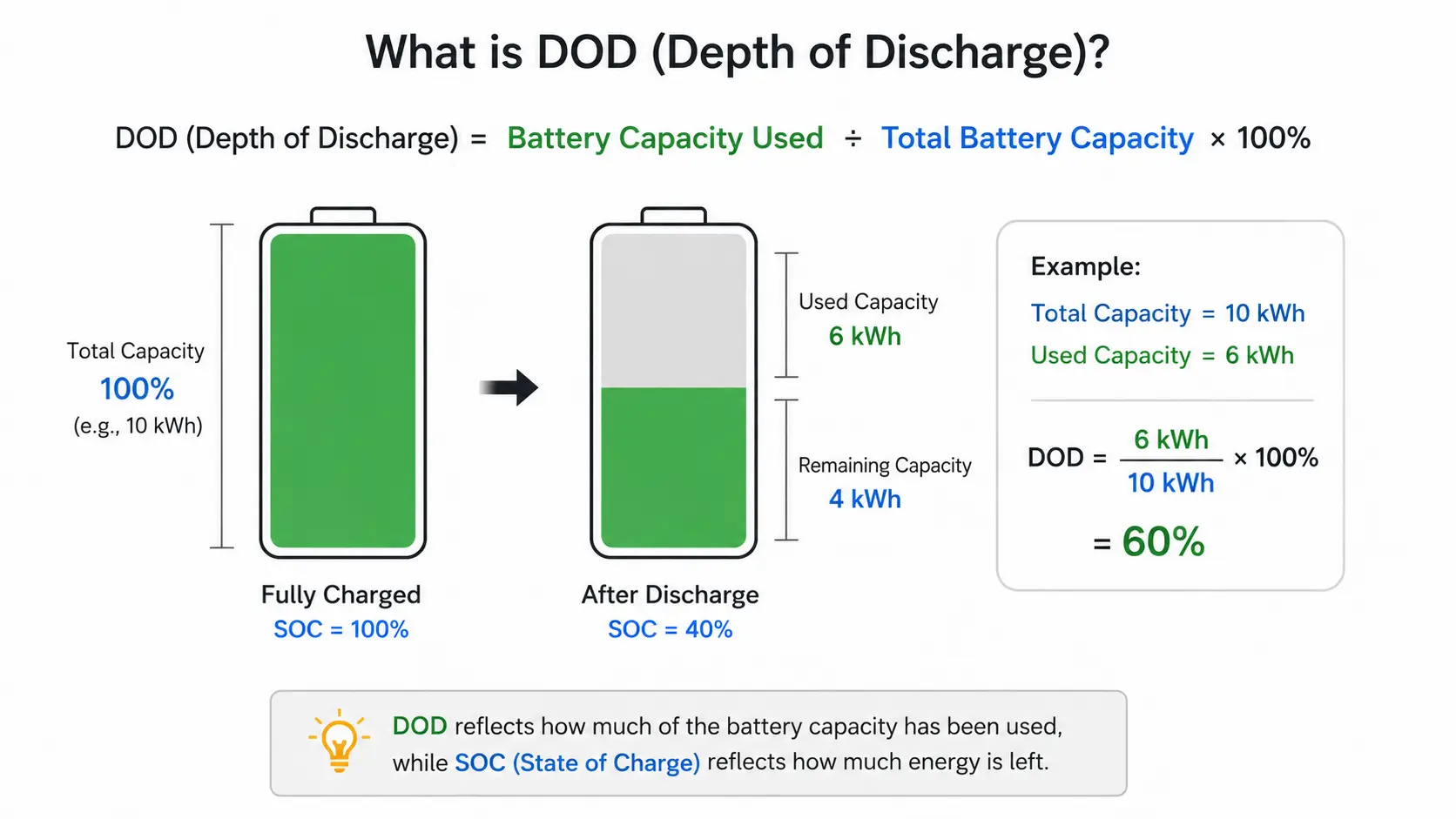
Depth of discharge – DOD – is the percentage of a battery’s stored energy you use before recharging it. Discharge a 10 kWh pack down to 5 kWh remaining and you’ve used 50% DOD. Run it until the BMS cuts off and you’ve hit 100% DOD. It sounds like a definition, but it’s actually the single most important number on the datasheet, because it sets the cycle life, the usable capacity and the warranty terms all at once.
یہ مضمون بتاتا ہے کہ DOD دراصل کیا ہے، وہ اعداد و شمار دیتا ہے جو بتاتے ہیں کہ آپ کو کتنی گہرائی تک ڈسچارج کرنا چاہئے، اور دکھاتا ہے کہ ایک سنجیدہ OEM/ODM پارٹنر کیسے DOD کو آپ کی مارکیٹ کے لیے بیٹری کو ٹیون کرنے کے لیے استعمال کرتا ہے۔.
وہ نمبر جو سائیکل لائف کو متعین کرتا ہے – DOD کس طرح سیل سطح پر کام کرتا ہے
DOD اور حالتِ سفر (SOC) ایک ہی سکے کے دو رخ ہیں۔ ایک بیٹری جس کی SOC 30% ہو اسے 70% DOD تک discharge کیا گیا ہے۔ بی ایم ایس دونوں کو ٹریک کرتا ہے، مگر جو لمبی عمر کے لئے اہم ہے وہ DOD ہے، کیونکہ ہر discharge سائیکل سیل کی کیمیا کو تھوڑا سا گھساتا ہے، اور گہری ڈسچارجز اسے زیادہ جلدی گھساتے ہیں۔.
Take a grade-A LFP prismatic cell with a 3.2V nominal voltage and a 2.5–3.65V operating window. Discharging to 2.5V per cell is 100% DOD. At 0.5C and 25°C, that cell typically delivers 4,000–6,000 cycles before it drops to 80% of original capacity. Now limit the same cell to 80% DOD – stop at 3.2V instead of 2.5V – and the cycle count climbs to roughly 6,000–8,000. Cut it to 50% DOD and you’re looking at 10,000 cycles or more.
You’ll also notice how close 3.25V and 3.2V are. The LFP discharge curve is so flat between 3.3V and 3.2V that voltage alone can’t tell you the DOD – which is why the BMS counts coulombs instead of just watching voltage. A cheap BMS that guesses DOD from voltage will drift, and the drift shows up as premature cutoffs or over-discharge in the field.

Here’s the counter-intuitive part. A 10 kWh pack cycled at 100% DOD for 5,000 cycles delivers about 50,000 kWh over its life. The same pack cycled at 50% DOD for 12,000 cycles delivers 60,000 kWh – 20% more total energy from the same hardware, just by discharging it half as deep each time. Depth of discharge doesn’t just change how many cycles you get; it changes how much total energy the pack will ever move.
That’s why the two datasheets in the opening can’t be compared directly. 6,000 cycles at 80% DOD and 4,000 cycles at 100% DOD are the same cell, tested under different rules. The first battery will actually deliver more total kilowatt-hours over its life.
ایک حقیقی OEM/ODM شریک DOD کے ساتھ کیا کرتا ہے
ایک تجارتی کمپنی وہ DOD نمبر پرنٹ کرتی ہے جو سیل سپلائر نے انہیں دیا۔ ایک مینوفیکچرر DOD کو ڈیزائن فیصلہ سمجھتا ہے، کیونکہ یہ بطورِ ڈیزائن فیصلہ ہے۔.
The DOD limit lives in the BMS firmware, not in the hardware. A genuine OEM/ODM partner will set the discharge cutoff voltage to match your market – 2.5V per cell for a 100% DOD product aimed at backup power, 3.2V for an 80% DOD product aimed at daily self-consumption – and they’ll tune the low-voltage warning thresholds to match. The same pack, the same cells, two different products, separated by a firmware parameter.
They’ll also align the warranty with the DOD setting. A serious manufacturer writes the warranty as a set of conditions – for example, 10 years or 6,000 cycles at 80% DOD, 0.5C, 25°C ambient – and they’ll tell you exactly what happens to the warranty if your installers run the pack deeper. If your market needs 100% DOD, they’ll spec a larger pack so the customer still gets the usable kilowatt-hours they paid for, instead of quietly voiding the warranty.
And they’ll handle the white-label side without blinking: your brand on the label, your connector variant, your firmware defaults, MOQ flexibility and sample lead times measured in weeks, not quarters. DOD is one of the parameters you get to own when you work with the factory directly.
50% بمقابلہ 80% بمقابلہ 100% DOD – فیصلہ سازی میٹرکس
یہ وہ تقابل ہے جو 10 kWh LFP رہائشی پیک کے لیے اہم ہے، گریڈ-A سیلز کو 0.5C اور 25°C پر استعمال کرتے ہوئے۔.
| تفصیلات | 50% ڈی او ڈی | 80% ڈی او ڈی | 100% ڈی او ڈی |
|---|---|---|---|
| فیچر فی الوقت فیچر: فی-cycle قابل استعمال صلاحیت | 5 کلو واٹ گھنٹہ | 8 کلو واٹ گھنٹہ | 10 کلو واٹ گھنٹہ |
| 80% تک روایتی سائیکل زندگی | 10,000+ | 6,000–8,000 | 4,000-6,000 |
| زندگی بھر کی توانائی کی گنجائش | ≈60,000 کلو واٹ گھنٹے | ≈56,000 کلو واٹ گھنٹے | ≈50,000 کلو واٹ گھنٹے |
| ہر سیل کی ڈسچارج کٹ آف | ≈3.25V | ≈3.2V | 2.5V |
| بہترین فٹ | گرڈ بیک اپ، کم خرابیوں کی بڑھتی ہوئی بندش | روزانہ کی خود استعمال | آف گرڈ، مکمل رات بھر استعمال |
| وارنٹی پوزیشن | سب سے طویل، سب سے آسان احترام | معیاری | سب سے مختصر، بڑے پیک کی ضرورت |

نمونہ واضح ہے۔ گہرا ڈسچارج آپ کو ہر سائیکل میں زیادہ قابل استعمال انرژی دیتا ہے لیکن کم سائیکل اور پیک کی زندگی میں کل کم توانائی دیتا ہے۔ سب سے ہلکا ڈسچارج وارنٹی کو بڑھاتا ہے لیکن آپ نے جو صلاحیت ادا کی تھی وہ ضائع ہوتا ہے۔ زیادہ تر رہائشی بازاروں کے لیے، 80–90% DOD میٹھی جگہ ہے – اور یہی وجہ ہے کہ زیادہ تر سنگین سازنندہ اپنے ہوم اسٹوریج پروڈکٹس کو 80% یا 90% DOD ڈیفالٹ کے ساتھ شِپ کرتے ہیں۔.
فیلڈ میں DOD کہاں غلط ہو سکتا ہے چار راستے
- ایک – DOD کے بغیر سائیکل لائف کا تقابلی جائزہ کرنا. 80% DOD پر 6,000 سائیکل کا دعویٰ اور 100% DOD پر 4,000 سائیکل کا دعویٰ ایک ہی سیل کی وضاحت کرتے ہیں۔ ہر سائیکل نمبر کے پیچھے DOD، C-ریٹ اور درجہ حرارت کا تقاضا کریں، ورنہ تقابل بیکار ہے۔.
- دو – لیتھیم پر لیتھیم کے بجائے لیڈ ایسڈ کی عادات لگانا. لیڈ ایسڈ بیٹریاں 50% DOD سے کم عمر میں مر جاتی ہیں، یہی وجہ ہے کہ پرانی نسل کے انسٹالر قابل استعمال صلاحیت کا دوگنا سائز لیتے ہیں۔ LFP عموماً 80–100% DOD برداشت کرتا ہے۔ اگر آپ کے انسٹالر اب بھی لیتھیم کو لیڈ کی طرح سائز کرتے ہیں، تو وہ گاہکوں کو وہی بیٹری بیچ رہے ہیں جس کی ضروری نہیں۔.
- تین – قابلِ ربط اور نامیاتی صلاحیت میں کنفیوژن۔. 80% DOD پر 8 kWh فی سائیکل فراہم کرتا ہے جب کہ پیک 10 kWh نہیں، 9 kWh روزانہ لوڈ ہو تو ہر رات کٹ آف لگتا ہے اور BMS اسے لاگ کرے گا۔ جس لوڈ پر آپ چلنا چاہتے ہیں اُس DOD پر پیک کا سائز بنائیں۔.
- چار – وارنٹی شرائط میں DOD کو نظر انداز کرنا۔. کچھ وارنٹیز 80% DOD پر لکھی جاتی ہیں اور اگر پیک گہرا چلے تو خاموشی سے گریڈ کرتی رہتی ہیں۔ اپنے کلائنٹ کو سائیکل زندگی کا اندازہ بتانے سے پہلے وارنٹی کی شرائط پڑھیں، اور DOD کی سیٹنگ تحریری طور پر تصدیق کرائیں۔.
خریدار DOD کے بارے میں سوالات کرتے ہیں
اپنے مارکیٹ کی واقعی ضرورت ڈاوڈ کی تعین کریں
ڈِیپتھ آف ڈِسچارج نہ صرف ایک مخصوصہ ہے۔ یہ وہ عدد ہے جو آپ کی سائیکل زندگی، آپ کی قابلِ استعمال صلاحیت اور آپ کی وارنٹی کے خطرے کو ایک ہی سانس میں طے کرتا ہے۔ اگر صحیح معلوم کیا جائے تو آپ وہ بیٹری بیچتے ہیں جو ڈیٹا شیٹ وعدہ کرتی ہے۔ اگر غلط ہو تو آپ تیسری سال میں وارنٹی دعووں کا سامنا کرتے ہیں۔.
If you’re sourcing residential storage at volume, send us your daily load profile, your target warranty period and your market’s peak ambient temperature, and we’ll return a DOD recommendation with the cycle-life test conditions and warranty terms named in full within 24 hours.