 فارسی
فارسی  English
  العربية
  日本語
日本語  한국어
한국어  Tiếng Việt
  ไทย
ไทย  Bahasa Melayu
  Bahasa Indonesia
  ဗမာစာ
ဗမာစာ  简体中文
简体中文  香港中文
香港中文  繁體中文
繁體中文  Русский
  Deutsch
  Nederlands
  Italiano
  Français
  Español
  Português
  Afrikaans
  Azərbaycan dili
  Български
  ਪੰਜਾਬੀ
  हिन्दी
  اردو
اردو  বাংলা
বাংলা  Հայերեն
  Íslenska
  Қазақ тілі
  नेपाली
  Српски језик
  Kiswahili
  తెలుగు
  Basa Jawa
  தமிழ்
தமிழ்  मराठी
मराठी What Is Depth of Discharge and Why It Decides Your Battery Warranty
مدیر خرید در ایران دو تا را مقایسه میکند باتریهای دیواری ۱۰ کیWh for the same installer network. One datasheet promises 6,000 cycles at 80% DOD. The other promises 4,000 cycles at 100% DOD. Both brands claim to be “the longest-lasting battery on the market.” The manager has no idea which one actually lasts longer, because the answer is hiding inside a three-letter abbreviation neither sales rep bothered to explain.
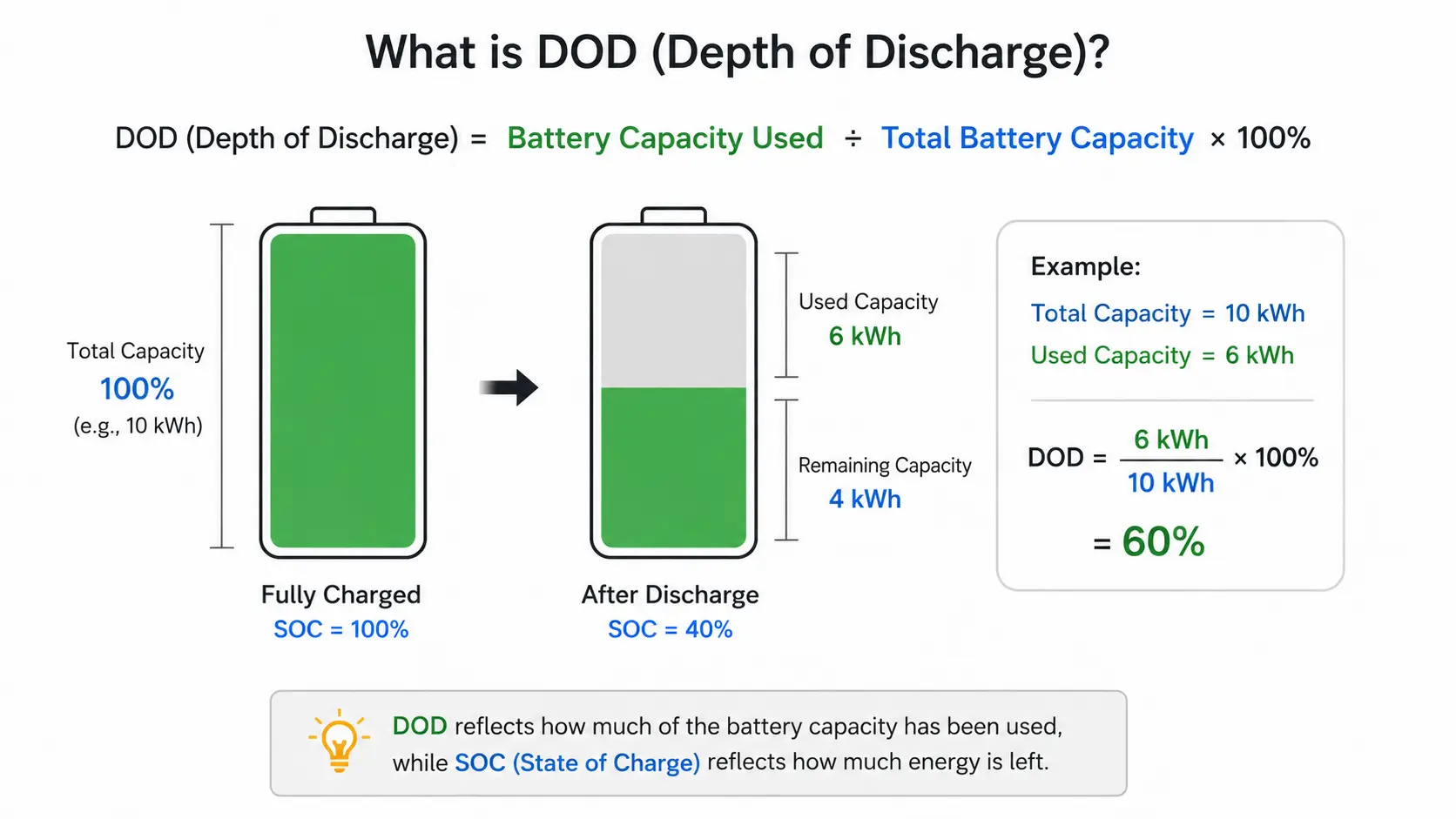
Depth of discharge – DOD – is the percentage of a battery’s stored energy you use before recharging it. Discharge a 10 kWh pack down to 5 kWh remaining and you’ve used 50% DOD. Run it until the BMS cuts off and you’ve hit 100% DOD. It sounds like a definition, but it’s actually the single most important number on the datasheet, because it sets the cycle life, the usable capacity and the warranty terms all at once.
این مقاله توضیح میدهد DOD واقعاً چیست، اعداد را که تصمیم میگیرند تا چه عمقی باید تخلیه کنید ارائه میدهد و نشان میدهد چگونه یک شریک OEM/ODM جدی از DOD برای تنظیم باتری برای بازار شما استفاده میکند.
عددی که عمر چرخه را تعیین میکند – چگونه DOD در سطح سلول کار میکند
DOD و وضعیت شارژ (SOC) دو روی یک سکه هستند. باتری با SOC 30% به مقدار DOD 70% تخلیه شده است. BMS هر دو را پیگیری میکند، اما آنچه برای طول عمر مهم است DOD است، زیرا هر چرخه تخلیه کمی ترکیب شیمیایی سلول را فرسوده میکند و تخلیههای عمیقتر سریعتر آن را فرسوده میکند.
Take a grade-A LFP prismatic cell with a 3.2V nominal voltage and a 2.5–3.65V operating window. Discharging to 2.5V per cell is 100% DOD. At 0.5C and 25°C, that cell typically delivers 4,000–6,000 cycles before it drops to 80% of original capacity. Now limit the same cell to 80% DOD – stop at 3.2V instead of 2.5V – and the cycle count climbs to roughly 6,000–8,000. Cut it to 50% DOD and you’re looking at 10,000 cycles or more.
You’ll also notice how close 3.25V and 3.2V are. The LFP discharge curve is so flat between 3.3V and 3.2V that voltage alone can’t tell you the DOD – which is why the BMS counts coulombs instead of just watching voltage. A cheap BMS that guesses DOD from voltage will drift, and the drift shows up as premature cutoffs or over-discharge in the field.

Here’s the counter-intuitive part. A 10 kWh pack cycled at 100% DOD for 5,000 cycles delivers about 50,000 kWh over its life. The same pack cycled at 50% DOD for 12,000 cycles delivers 60,000 kWh – 20% more total energy from the same hardware, just by discharging it half as deep each time. Depth of discharge doesn’t just change how many cycles you get; it changes how much total energy the pack will ever move.
That’s why the two datasheets in the opening can’t be compared directly. 6,000 cycles at 80% DOD and 4,000 cycles at 100% DOD are the same cell, tested under different rules. The first battery will actually deliver more total kilowatt-hours over its life.
چه چیزی واقعاً یک شریک OEM/ODM با DOD انجام میدهد
یک شرکت بازرگانی هر شماره DOD را که تأمینکننده سلول به آنها داده است چاپ میکند. یک سازنده DOD را بهعنوان یک تصمیم طراحی میبیند، زیرا چنین است.
The DOD limit lives in the BMS firmware, not in the hardware. A genuine OEM/ODM partner will set the discharge cutoff voltage to match your market – 2.5V per cell for a 100% DOD product aimed at backup power, 3.2V for an 80% DOD product aimed at daily self-consumption – and they’ll tune the low-voltage warning thresholds to match. The same pack, the same cells, two different products, separated by a firmware parameter.
They’ll also align the warranty with the DOD setting. A serious manufacturer writes the warranty as a set of conditions – for example, 10 years or 6,000 cycles at 80% DOD, 0.5C, 25°C ambient – and they’ll tell you exactly what happens to the warranty if your installers run the pack deeper. If your market needs 100% DOD, they’ll spec a larger pack so the customer still gets the usable kilowatt-hours they paid for, instead of quietly voiding the warranty.
And they’ll handle the white-label side without blinking: your brand on the label, your connector variant, your firmware defaults, MOQ flexibility and sample lead times measured in weeks, not quarters. DOD is one of the parameters you get to own when you work with the factory directly.
50% در برابر 80% در برابر 100% DOD – ماتریس تصمیم
اینجا مقایسهای است که برای یک بسته خانگی LFP 10 kWh اهمیت دارد، با استفاده از سلولهای درجه-A در 0.5C و 25°C.
| مشخصات | 50% DOD | 80% DOD | 100% DOD |
|---|---|---|---|
| ظرفیت قابل استفاده در هر سیکل | ۵ کیلووات ساعت | ۸ کیلووات ساعت | ۱۰ کیلووات ساعت |
| عمر چرخه معمول تا 80% | 10,000+ | 6,000–8,000 | 4000–6000 |
| عبور انرژی با طول عمر | ~60,000 کیلووات-ساعت | ~56,000 کیلووات-ساعت | ~50,000 کیلووات-ساعت |
| قطع تخلیه هر سلول | ~3.25V | ~3.2V | 2.5V |
| بهترین تناسب | پشتیبان شبکه، خاموشیهای نادر | تولید برق روزانه برای خود | در خارج از سیستم، استفاده کامل شبانه-روز |
| موقعیت گارانتی | طولانیترین، سادهترین برای تعهد | استاندارد | کوتاهترین، نیاز به بسته بزرگتر |

الگوی کار روشن است. عمیقترین تخلیه بیشترین انرژی قابل استفاده در هر چرخه را میدهد اما کمترین چرخهها و کمترین انرژی کل در عمر پک را به همراه دارد. کمعمقترین تخلیه گارانتی را طولانی میکند اما ظرفیتی که پرداخت کردهاید را تلف میکند. برای اکثر بازارهای مسکونی، 80–90% DOD نقطه عسل است – و دقیقاً به همین دلیل است که اکثر سازندگان جدی محصولات ذخیرهسازی خانگی خود را با پیشفرض DOD 80% یا 90% ارسال میکنند.
چهار راهی که DOD در میدان اشتباه میرود
- ۱– مقایسه عمر چرخه بدون DOD. ادعای ۶۰۰۰ چرخه در DOD 80% و ادعای ۴۰۰۰ چرخه در DOD 100% همان سلول را توصیف میکند. از هر چرخه عدد، DOD، نرخ C و دما پشت سر هر عدد چرخه را مطالبه کنید که مقایسه بیمعنی نباشد.
- ۲– به کارگیری عادات سرب-اسیدی برای لیتیم. باتریهای سرب-اسیدی سریعتر از 50% DOD میمیرند، به همین دلیل نصابهای قدیمی بانکهای سربی را با دو برابر ظرفیت قابل استفاده اندازه میگیرند. LFP بهطور معمول 80–100% DOD را مدیریت میکند. اگر نصابان شما هنوز لیتیم را مانند سرب اندازه میگیرند، دو برابر باتری که به مشتری میدهند را میفروشند.
- ۳– سردرگمی ظرفیت قابل استفاده و ظرفیت نامی. یک پک 10 کیلووات-ساعت در DOD 80% در هر چرخه 8 کیلووات-ساعت ارائه میدهد، نه 10. اگر بار روزانه مشتری 9 کیلووات-ساعت است، پک هر شب به قطعرسی میخورد و BMS آن را ثبت میکند. پک را متناسب با بار در DODی که قصد دارید اجرا کنید اندازه کنید.
- ۴– بیتوجهی به DOD در شرایط گارانتی. برخی گارانتیها در 80% DOD نوشته میشوند و اگر بسته عمیقتر تخلیه شود به طور خاموشی تضعیف میشوند. قبل از اینکه عمر چرخه را به مشتری خود بگویید، شرایط گارانتی را مطالعه کنید و تنظیمات DOD را بهصورت مکتوب تأیید کنید.
سوالاتی که خریداران درباره DOD مطرح میکنند
DOD را تعیین کنید که بازار شما واقعاً به آن نیاز دارد
عمق تخلیه یک مشخصه نیست که بتوان از آن به سادگی عبور کرد. این عدد است که عمر چرخه، ظرفیت قابل استفاده شما و میزان قرارگیری در معرض گارانتی را در یک ضربه مشخص میکند. درست آن را به دست آورید تا باتریای بفروشید که همان چیزی را که دیتاشیت وعده میدهد ارائه دهد. نادرست آن را بدانید و در سال سوم با ادعاهای گارانتی روبهرو خواهید شد.
If you’re sourcing residential storage at volume, send us your daily load profile, your target warranty period and your market’s peak ambient temperature, and we’ll return a DOD recommendation with the cycle-life test conditions and warranty terms named in full within 24 hours.