 Հայերեն
  English
  العربية
  日本語
日本語  한국어
한국어  Tiếng Việt
  ไทย
ไทย  Bahasa Melayu
  فارسی
فارسی  Bahasa Indonesia
  ဗမာစာ
ဗမာစာ  简体中文
简体中文  香港中文
香港中文  繁體中文
繁體中文  Русский
  Deutsch
  Nederlands
  Italiano
  Français
  Español
  Português
  Afrikaans
  Azərbaycan dili
  Български
  ਪੰਜਾਬੀ
  हिन्दी
  اردو
اردو  বাংলা
বাংলা  Íslenska
  Қазақ тілі
  नेपाली
  Српски језик
  Kiswahili
  తెలుగు
  Basa Jawa
  தமிழ்
தமிழ்  मराठी
मराठी Ինչ է Հորանջման խորությունը և ինչու է դա որոշում ձեր մարտկոցի երաշխավագիրը
Նախագիծ խոշոր գնորդը Հարավային Աֆրիկայում երկու դինամիկա համեմատում է 10 կՎտժ-վարժված պատի-կապման մարտկոցներ for the same installer network. One datasheet promises 6,000 cycles at 80% DOD. The other promises 4,000 cycles at 100% DOD. Both brands claim to be “the longest-lasting battery on the market.” The manager has no idea which one actually lasts longer, because the answer is hiding inside a three-letter abbreviation neither sales rep bothered to explain.
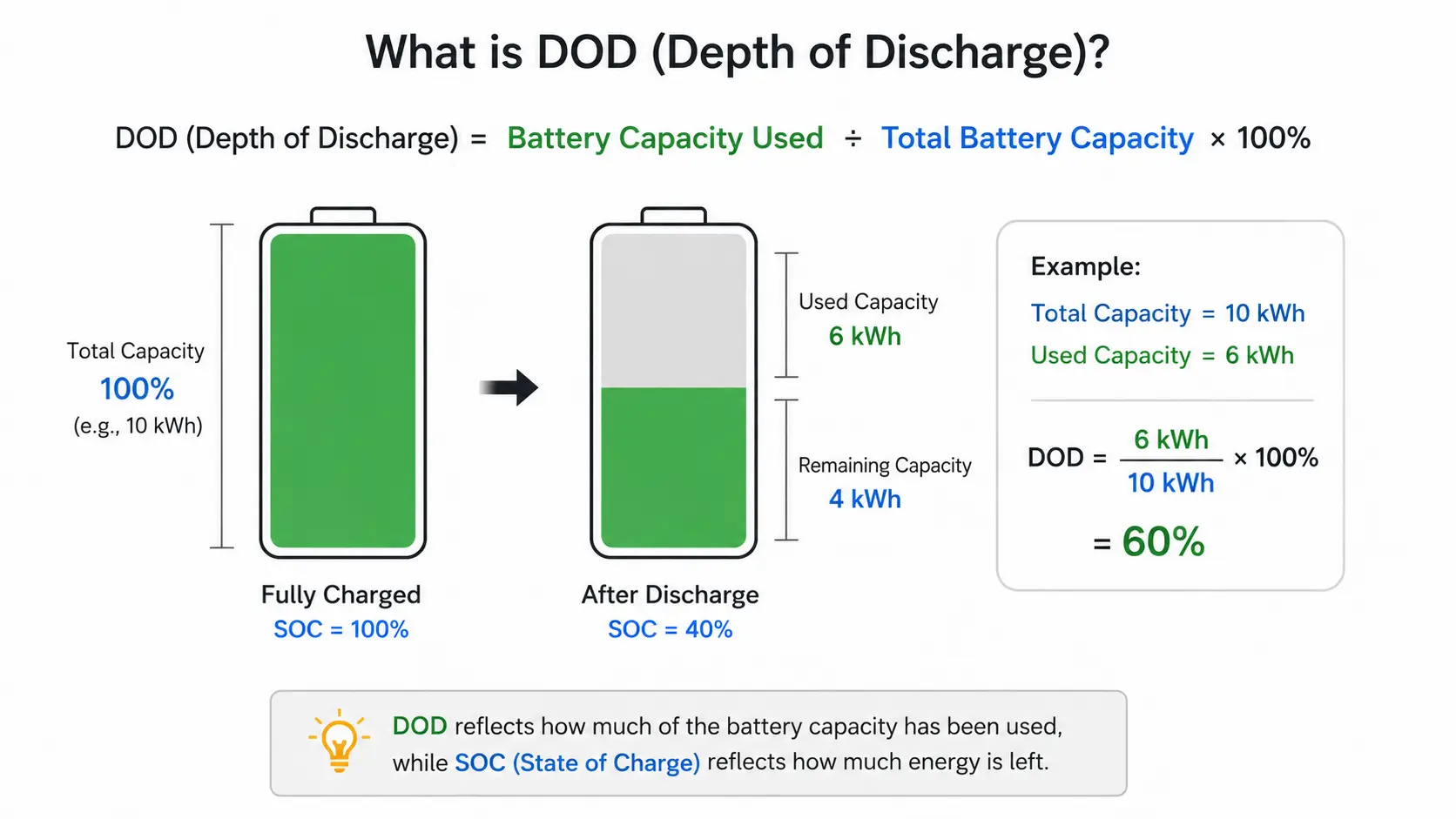
Depth of discharge – DOD – is the percentage of a battery’s stored energy you use before recharging it. Discharge a 10 kWh pack down to 5 kWh remaining and you’ve used 50% DOD. Run it until the BMS cuts off and you’ve hit 100% DOD. It sounds like a definition, but it’s actually the single most important number on the datasheet, because it sets the cycle life, the usable capacity and the warranty terms all at once.
Այս հոդվածը բացատրում է, թե ինչ է իրական DOD-ը, տալիս է ձեզ այն թվերը, որոնք որոշում են, որքան խոր եք համարկում, և ցույց է տալիս, ինչպես զուգահեռ OEM/ODM գործընկերը օգտագործում է DOD-ը, որպեսզի ձեր շուկայի համար լիցքավորեր բջիջը.
Տվեքի միավորը, ով հանդիսանում է շրջված կյանքի արժեքը – ինչպես է DOD-ն գործում բջջի մակարդակում
DOD-ը և վառելիքի վիճակը (SOC) երկու կողմ են նույն կիսափայլի վրա: Բջուրը 30% SOC-ում եղել է հանված 70% DOD-ին: BMS-ը երկուին էլ հետևում է, բայց երկարատևության համար կարևոր է DOD-ը, քանի որ յուրաքանչյուր զուգահեռ վերյշված ցիկլ բջջի քիմիան դանդաղորեն հագեցնում է, իսկ ավելի խոր զուգահեռները արագ հագեցնում են אותה.
Take a grade-A LFP prismatic cell with a 3.2V nominal voltage and a 2.5–3.65V operating window. Discharging to 2.5V per cell is 100% DOD. At 0.5C and 25°C, that cell typically delivers 4,000–6,000 cycles before it drops to 80% of original capacity. Now limit the same cell to 80% DOD – stop at 3.2V instead of 2.5V – and the cycle count climbs to roughly 6,000–8,000. Cut it to 50% DOD and you’re looking at 10,000 cycles or more.
You’ll also notice how close 3.25V and 3.2V are. The LFP discharge curve is so flat between 3.3V and 3.2V that voltage alone can’t tell you the DOD – which is why the BMS counts coulombs instead of just watching voltage. A cheap BMS that guesses DOD from voltage will drift, and the drift shows up as premature cutoffs or over-discharge in the field.

Here’s the counter-intuitive part. A 10 kWh pack cycled at 100% DOD for 5,000 cycles delivers about 50,000 kWh over its life. The same pack cycled at 50% DOD for 12,000 cycles delivers 60,000 kWh – 20% more total energy from the same hardware, just by discharging it half as deep each time. Depth of discharge doesn’t just change how many cycles you get; it changes how much total energy the pack will ever move.
That’s why the two datasheets in the opening can’t be compared directly. 6,000 cycles at 80% DOD and 4,000 cycles at 100% DOD are the same cell, tested under different rules. The first battery will actually deliver more total kilowatt-hours over its life.
Ի՞նչ է իրական OEM/ODM գործընկերը անում DOD-ով
Առևտրի ընկերությունը տպում է DOD նշանը ստացող սել աղբյուրի կողմից տրված համարը: Ենթարկող արտադրողը treats DOD- ին որպես դիզայնի որոշում, քանի որ դա այդպիսին է:.
The DOD limit lives in the BMS firmware, not in the hardware. A genuine OEM/ODM partner will set the discharge cutoff voltage to match your market – 2.5V per cell for a 100% DOD product aimed at backup power, 3.2V for an 80% DOD product aimed at daily self-consumption – and they’ll tune the low-voltage warning thresholds to match. The same pack, the same cells, two different products, separated by a firmware parameter.
They’ll also align the warranty with the DOD setting. A serious manufacturer writes the warranty as a set of conditions – for example, 10 years or 6,000 cycles at 80% DOD, 0.5C, 25°C ambient – and they’ll tell you exactly what happens to the warranty if your installers run the pack deeper. If your market needs 100% DOD, they’ll spec a larger pack so the customer still gets the usable kilowatt-hours they paid for, instead of quietly voiding the warranty.
And they’ll handle the white-label side without blinking: your brand on the label, your connector variant, your firmware defaults, MOQ flexibility and sample lead times measured in weeks, not quarters. DOD is one of the parameters you get to own when you work with the factory directly.
50% DOD বন 80% DOD বন 100% DOD – ՀԱՆԴՐՈՒԹՅԱՆ ՄԱՏՐԻՑՈՒՄ
այստեղ տրված է այն համեմատությունը, որը կարևոր է 10 kWh LFP բնակիչ հաղորդաթմբի համար, օգտագործելով A դասի բջիջներ 0.5C և 25°C պայմաններում։.
| Հստակեցում | 50% DOD | 80% DOD | 100% DOD |
|---|---|---|---|
| Օգտագործելի կիարակի շրջանային հզորություն | 5 կՎտժ | 8 կՎտժ | 10 կՎտժ |
| Տիպիկ շրջանի կյանքը մինչև 80% | 10,000+ | 6,000–8,000 | 4000–6000 |
| Ավարտավոր էներգիայի միավորների շրջանառություն | ~60,000 կՎհ | ~56,000 կՎհ | ~50,000 կՎհ |
| Ելքային կտրուկ per սաղմ | ~3.25V | ~3.2V | 2.5V |
| Լավագույն համապատասխանությունը | Ինքնակայման/Grid-ային резервառություն, հազվադեպ վաթաններ | Օրվա ընթացքում մարմինների սպառումն | Պոտաք եզակա, ամբողջ գիշեր օգտագործում |
| Վաշխարության դիրքը | Հայեցիկը երկարատև, հեշտ կպահի | Ստանդարտ | Կարճքաշ, պահանջում է մեծ աշխատատեղ |

Նկատողությունը հստակ է. ամենախորը արտաքսումը ձեզ կտա առավել գործածելի էներգիան յուրաքանչյուր ճահճում, բայց ամենափոքր ցիկլեր և ընդհանուր էներգիայի նվազագույն քանակը պարկի կյանքի ընթացքում: Սահմանափակ արտաքսումն ընդարձակում է երաշխիքը, բայց վատնում է ձեր վճարված կարողությունը: Բազմաթիվ բնակելի շուկաներում 80–90% DOD-ը հաճելի կետն է՝ և դրանում է ճիշտ պատճառը, որ շատ լուրջ արտադրողները իրենց տնային պահեստային ապրանքներն ուղարկելիս ունեն 80% կամ 90% DOD ձևաչափի դետալներ.
Չորս ոչ միակողմանի սխալ դաշտում DOD–ի հետ
- Մեկը – ցիկլի կյանքը համեմատել DOD-ը բացթողելով. 6,000 ցիկլի պահանջ 80% DOD-ում և 4,000 ցիկլի պահանջ 100% DOD-ում նկարագրում են նույն բջիջը: Արդիականացրեք յուրաքանչյուր ցիկլի համար hinter DOD, C-հարաբերությունն ու ջերմաստիճանը, այլապես համեմատությունը անիմաստ է:.
- Երկարը – լիթիումի հիմնական սովորույթներին չհարմարվածով խառնուրդ. Lead-թղթի բազաները սպառվում են արագ 50% DOD-ի ներքո, և այս պատճառով հին դասի տեղադրելողները չափում են լիթիի պահեստների գումարը կրկնապատիկ: LFP-ը մշտապես կառավարում է 80–100% DOD-ը: Եթե ձեր տեղադրողները շարունակում են լիթիումը խփել որպես լիդ, նրանք հաճախորդներին վաճառում են երկու անգամ անհրաժեշտ բազան:.
- Երեք – օգտագործելի և անվանական կարողությունների բարդացում. 10 kWh սարքը 80% DOD-ով ամեն ցիկլում տալիս է 8 kWh, ոչ թե 10-ը: Եթե հաճախորդի ամենօրեկան լոդը կազմում է 9 kWh, ապա հավաքը կկորչի ամեն գիշերը և BMS-ը այն գրի: Սահմանեք հավաքը լոդին համապատասխան DOD-ով, որով ցանկանում եք գործել:.
- Չորս – Դոդի անտեսումը երաշխիքային պայմաններում. Մի որոշ վկայագրեր տրվում են 80% DOD- ում և լուռ նվազում են, եթե փաթեթը ավելի դանդաղ է գործել: Կարդացեք վկայագրի պայմանները, երբ ձեր հաճախորդին կցուցադրեք շրջանառության կյանքը, և ստուգեք DOD կարգավորումը գրավոր ձևով:.
Հարցեր, որոնք շախթահաշվիչներ են Զանգել DOD-ի մասին
Սահմանեք DOD-ը, որն իրականում Ձեր շուկան պահանջում է
Depth of discharge is not a spec to skim. It’s the number that sets your cycle life, your usable capacity and your warranty exposure in one stroke. Get it right and you sell a battery that delivers what the datasheet promises. Get it wrong and you’re fielding warranty claims in year three.
If you’re sourcing residential storage at volume, send us your daily load profile, your target warranty period and your market’s peak ambient temperature, and we’ll return a DOD recommendation with the cycle-life test conditions and warranty terms named in full within 24 hours.