 العربية
  English
  日本語
日本語  한국어
한국어  Tiếng Việt
  ไทย
ไทย  Bahasa Melayu
  فارسی
فارسی  Bahasa Indonesia
  ဗမာစာ
ဗမာစာ  简体中文
简体中文  香港中文
香港中文  繁體中文
繁體中文  Русский
  Deutsch
  Nederlands
  Italiano
  Français
  Español
  Português
  Afrikaans
  Azərbaycan dili
  Български
  ਪੰਜਾਬੀ
  हिन्दी
  اردو
اردو  বাংলা
বাংলা  Հայերեն
  Íslenska
  Қазақ тілі
  नेपाली
  Српски језик
  Kiswahili
  తెలుగు
  Basa Jawa
  தமிழ்
தமிழ்  मराठी
मराठी ما هو عمق التفريغ ولماذا يحدد ضمان بطاريتك
مدير مشتريات في مصر يقارن بين اثنين بطاريات مثبتة على الحائط سعة 10 كيلوواط ساعة for the same installer network. One datasheet promises 6,000 cycles at 80% DOD. The other promises 4,000 cycles at 100% DOD. Both brands claim to be “the longest-lasting battery on the market.” The manager has no idea which one actually lasts longer, because the answer is hiding inside a three-letter abbreviation neither sales rep bothered to explain.
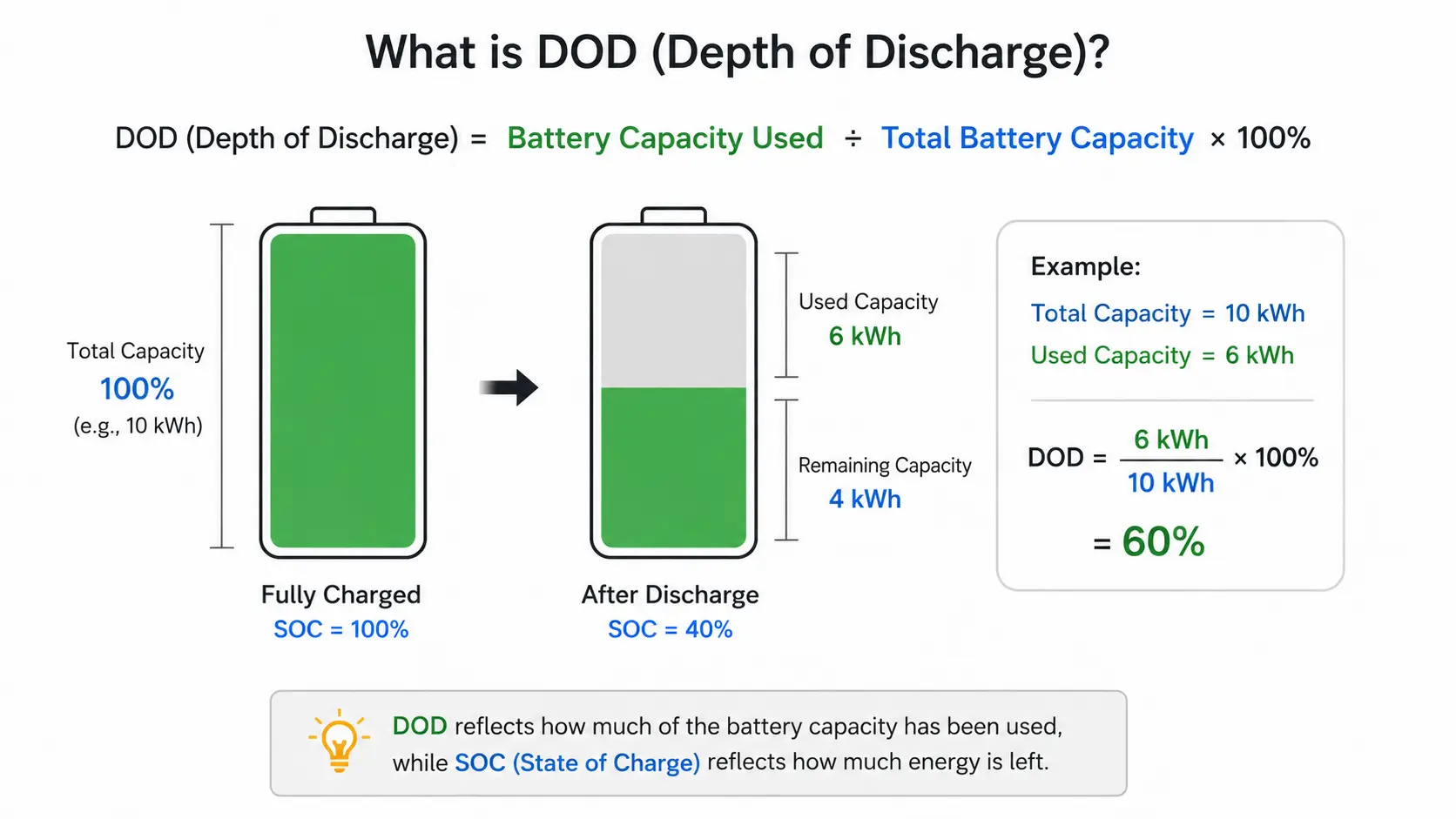
Depth of discharge – DOD – is the percentage of a battery’s stored energy you use before recharging it. Discharge a 10 kWh pack down to 5 kWh remaining and you’ve used 50% DOD. Run it until the BMS cuts off and you’ve hit 100% DOD. It sounds like a definition, but it’s actually the single most important number on the datasheet, because it sets the cycle life, the usable capacity and the warranty terms all at once.
يشرح هذا المقال ما هو DOD حقاً، يعطيك الأرقام التي تقرر مدى عمق التفريغ الذي يجب أن تتخذه، ويوضح لك كيف يستخدم شريك OEM/ODM جاد DOD لضبط بطارية لسوقك.
الرقم الذي يحدد عمر الدورة – كيف يعمل DOD على مستوى الخلية
DOD وحالة الشحن (SOC) وجهان لعملة واحدة. بطارية عند SOC 30% تم تفريغها إلى DOD 70%. يراقب BMS كلاهما، لكن المهم لبقاء العمر هو DOD، لأن كل دورة تفريغ تضر كيمياء الخلية قليلاً، والتفريغ الأعمق يعبئها بشكل أسرع.
Take a grade-A LFP prismatic cell with a 3.2V nominal voltage and a 2.5–3.65V operating window. Discharging to 2.5V per cell is 100% DOD. At 0.5C and 25°C, that cell typically delivers 4,000–6,000 cycles before it drops to 80% of original capacity. Now limit the same cell to 80% DOD – stop at 3.2V instead of 2.5V – and the cycle count climbs to roughly 6,000–8,000. Cut it to 50% DOD and you’re looking at 10,000 cycles or more.
You’ll also notice how close 3.25V and 3.2V are. The LFP discharge curve is so flat between 3.3V and 3.2V that voltage alone can’t tell you the DOD – which is why the BMS counts coulombs instead of just watching voltage. A cheap BMS that guesses DOD from voltage will drift, and the drift shows up as premature cutoffs or over-discharge in the field.

Here’s the counter-intuitive part. A 10 kWh pack cycled at 100% DOD for 5,000 cycles delivers about 50,000 kWh over its life. The same pack cycled at 50% DOD for 12,000 cycles delivers 60,000 kWh – 20% more total energy from the same hardware, just by discharging it half as deep each time. Depth of discharge doesn’t just change how many cycles you get; it changes how much total energy the pack will ever move.
That’s why the two datasheets in the opening can’t be compared directly. 6,000 cycles at 80% DOD and 4,000 cycles at 100% DOD are the same cell, tested under different rules. The first battery will actually deliver more total kilowatt-hours over its life.
ماذا يفعل شريك OEM/ODM حقيقي مع DOD
تتعامل شركة تجارة مع أي رقم DOD أعطته لها شركة الخلايا. يعامل المُصنّع DOD كقرار تصميم، لأنه كذلك.
The DOD limit lives in the BMS firmware, not in the hardware. A genuine OEM/ODM partner will set the discharge cutoff voltage to match your market – 2.5V per cell for a 100% DOD product aimed at backup power, 3.2V for an 80% DOD product aimed at daily self-consumption – and they’ll tune the low-voltage warning thresholds to match. The same pack, the same cells, two different products, separated by a firmware parameter.
They’ll also align the warranty with the DOD setting. A serious manufacturer writes the warranty as a set of conditions – for example, 10 years or 6,000 cycles at 80% DOD, 0.5C, 25°C ambient – and they’ll tell you exactly what happens to the warranty if your installers run the pack deeper. If your market needs 100% DOD, they’ll spec a larger pack so the customer still gets the usable kilowatt-hours they paid for, instead of quietly voiding the warranty.
And they’ll handle the white-label side without blinking: your brand on the label, your connector variant, your firmware defaults, MOQ flexibility and sample lead times measured in weeks, not quarters. DOD is one of the parameters you get to own when you work with the factory directly.
50% مقابل 80% مقابل 100% DOD – مصفوفة القرار
إليك المقارنة التي تهم عبوة بطارية منزلية من فئة 10 كWh LFP، باستخدام خلايا من الدرجة A عند 0.5C و25°C.
| تخصيص | DOD لـ 50% | DOD لـ 80% | DOD 100% |
|---|---|---|---|
| القدرة القابلة للاستخدام لكل دورة | 5 كيلوواط ساعة | 8 كيلوواط ساعة | 10 كيلوواط ساعة |
| متوسط عمر الدورة حتى 80% | 10,000+ | 6,000–8,000 | 4000–6000 |
| إجمالي كفاءة الطاقة مدى الحياة | ~60,000 كيلوواط-ساعة | ~56,000 كيلوواط-ساعة | ~50,000 كيلوواط-ساعة |
| إيقاف التفريغ لكل خلية | ~3.25 فولت | ~3.2 فولت | 2.5 فولت |
| أفضل ملاءمة | دعم الشبكة، انقطاعات نادرة | الاستهلاك الذاتي اليومي | بعيداً عن الشبكة، استخدام طوال الليل بالكامل |
| موضع الضمان | الأطول عمراً والأسهل الامتثال للضمان | معيار | الأقصر، يحتاج إلى حزمة أكبر |

النمط واضح. أكثر تفريغ عميق يمنحك أكبر طاقة قابلة للاستخدام لكل دورة لكن مع أقل عدد دورات وأقل إجمالي طاقة عبر عمر الحزمة. التفريغ الأقل عمقاً يطيل الضمان ولكنه يهدر سعة دفعتها. بالنسبة لمعظم الأسواق السكنية، نسبة 80–90% من التوقف عند 5T DOD هي النقطة الحلوة – وهذا بالضبط سبب شحن معظم المصنعين الجادين لمنتجات التخزين المنزلي بقرار افتراضي DOD من 80% أو 90%.
أربعة أخطاء لـ DOD في الميدان
- الأول – مقارنة عمر الدورة بدون DOD. ادعاء 6,000 دورة عند DOD 80% وادعاء 4,000 دورة عند DOD 100% يصفان خلية واحدة. اطلب DOD ومعدل الشحن والتسخين وراء كل رقم دورة، وإلا فالمقارنة بلا معنى.
- الثاني – تطبيق عادات الرصاص الحمض على الليثيوم. بطاريات الرصاص الحمض تموت بسرعة دون 50% DOD، ولهذا يحدد المثبتون التقليديون مصفوفات الرصاص بحجم مضاعف للسعة القابلة للاستخدام. بطاريات LFP تتعامل مع 80–100% DOD بانتظام. إذا كان المثبتون لديك ما زالوا يحجمون الليثيوم مثل الرصاص، فهم يبيعون للعملاء بطارية مضاعفة لما يحتاجونه.
- الثالث – الخلط بين السعة القابلة للاستخدام والسعة الاسمية. حزمة سعة 10 kWh عند DOD 80% توفر 8 kWh لكل دورة، وليس 10. إذا كان الحمل اليومي للعميل 9 kWh، فستصل الحزمة إلى الحد في كل ليلة وسيسجلها الـ BMS. صِغ الحزمة وفق الحمل عند DOD الذي تنوي التشغيل به.
- أربعة - تجاهل DOD في شروط الضمان. بعض الضمانات مكتوبة عند 80% DOD وتنهار صمتاً إذا تعمّق الحزمة. اقرأ شروط الضمان قبل أن تقتبس عمر الدورة لعميلك، وتأكد من كتابة إعداد DOD كتابياً.
الأسئلة التي يطرحها المشترون عن DOD
ضبط DOD الذي يحتاجه سوقك فعلياً
عمق التفريغ ليس speci معياراً يُنظر إليه باستخفاف. إنه الرقم الذي يحدد دورة حياتك السِلكية، وسعتك القابلة للاستخدام والتعرض للضمان في خطوة واحدة. إذا أحسنت حسابه ستبيع بطارية تُقدم ما تَعِد به البيانات الفنية. إذا أخطأت ستتلقى طلبات ضمان في السنة الثالثة.
If you’re sourcing residential storage at volume, send us your daily load profile, your target warranty period and your market’s peak ambient temperature, and we’ll return a DOD recommendation with the cycle-life test conditions and warranty terms named in full within 24 hours.