95% vs 90% Round-Trip Efficiency in Home Energy Storage
Residential energy storage / field note
10 kWh · daily cycle
Five points しないでください disappear.
When a home battery cycles every day, the distance between a 95% and 90% round trip becomes a visible operating cost.
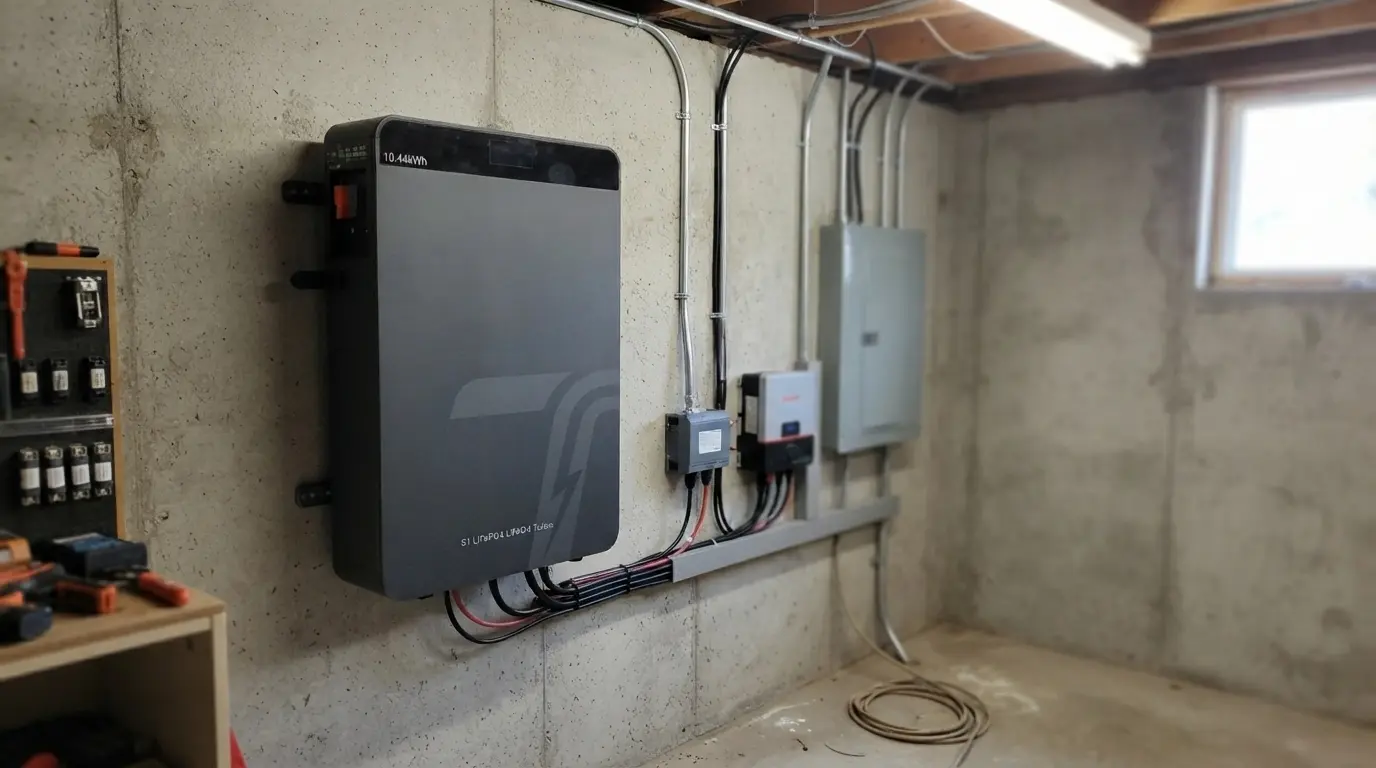
A distributor is comparing two 10 kWh home storage systems for a European retrofit program. System A lists 95% round-trip efficiency. System B lists 90%. Both use LFP cells, both pair with a 5 kW hybrid inverter, and both fit the same wall-mount enclosure. The five-point difference looks small on a sales sheet. It is not small when the battery cycles every day for ten years.
The confusion starts with the word efficiency. Some suppliers quote battery DC efficiency, some quote inverter efficiency, and others quote a best-case round-trip figure measured at a specific load, temperature and state of charge. These numbers do not describe the same boundary.
This article shows what the 95% and 90% figures mean in a complete residential system, how much energy the difference represents, and which design and procurement questions prevent an attractive datasheet number from becoming a field performance problem.
01 / Measurement boundary
The Five Percentage Points That Disappear in the Power Path
Round-trip efficiency measures the energy you can recover after charging and discharging the system. If the system absorbs 10 kWh from the AC side during charging and later returns 9.5 kWh to the AC side, its round-trip efficiency is 95%.
The calculation is simple:
ENERGY DELIVERED DURING DISCHARGE ÷ ENERGY ABSORBED
DURING CHARGE
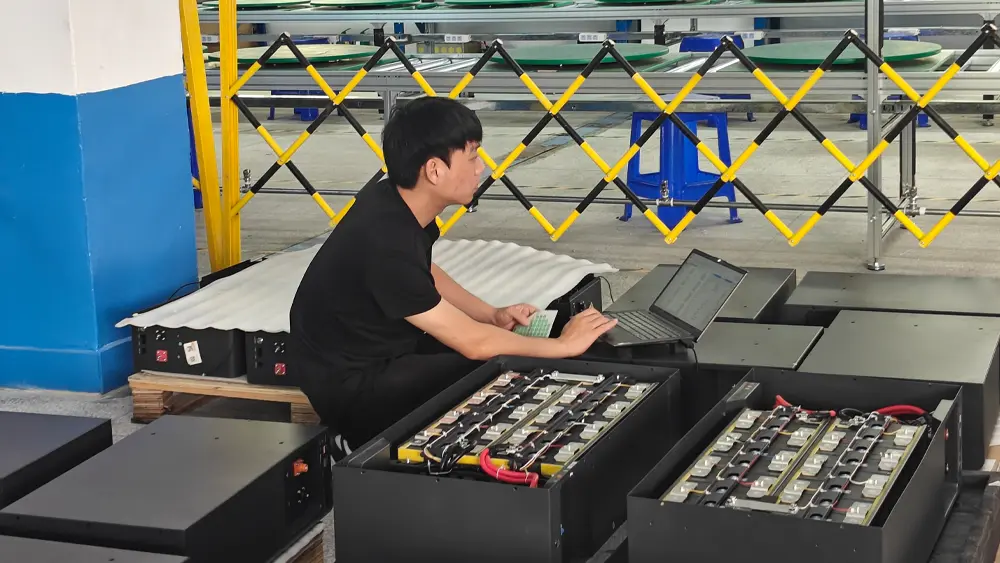
For a complete AC-coupled or DC-coupled home system, losses come from several physical components. A 51.2 V LFP pack usually contains sixteen 3.2 V nominal cells in series. The cells and busbars create resistive loss. The BMS consumes a small amount of power. MOSFETs, fuses, contactors and cables add more. The hybrid inverter then converts AC to DC while charging and DC back to AC while discharging.
A complete system loss boundary
At 25°C and around 0.5C, a well-built 10.24 kWh LFP battery may achieve 97–99% DC battery efficiency under a controlled test. That does not mean the complete installation achieves 97–99%. A hybrid inverter might reach 96–98% in its efficient operating range, while standby consumption, MPPT conversion and low-load switching reduce the result at the system boundary.
Consider two typical paths for a 10 kWh nominal battery:
| Energy path | 95% system | cURL Too many subrequests by single Worker invocation. To configure this limit, refer to https://developers.cloudflare.com/workers/wrangler/configuration/#limits |
|---|---|---|
| cURL Too many subrequests by single Worker invocation. To configure this limit, refer to https://developers.cloudflare.com/workers/wrangler/configuration/#limits | 10.00 kWh | 10.00 kWh |
| cURL Too many subrequests by single Worker invocation. To configure this limit, refer to https://developers.cloudflare.com/workers/wrangler/configuration/#limits | 9.50 kWh | cURL Too many subrequests by single Worker invocation. To configure this limit, refer to https://developers.cloudflare.com/workers/wrangler/configuration/#limits |
| cURL Too many subrequests by single Worker invocation. To configure this limit, refer to https://developers.cloudflare.com/workers/wrangler/configuration/#limits | cURL Too many subrequests by single Worker invocation. To configure this limit, refer to https://developers.cloudflare.com/workers/wrangler/configuration/#limits | cURL Too many subrequests by single Worker invocation. To configure this limit, refer to https://developers.cloudflare.com/workers/wrangler/configuration/#limits |
| cURL Too many subrequests by single Worker invocation. To configure this limit, refer to https://developers.cloudflare.com/workers/wrangler/configuration/#limits | — | cURL Too many subrequests by single Worker invocation. To configure this limit, refer to https://developers.cloudflare.com/workers/wrangler/configuration/#limits |
cURL Too many subrequests by single Worker invocation. To configure this limit, refer to https://developers.cloudflare.com/workers/wrangler/configuration/#limits
cURL Too many subrequests by single Worker invocation. To configure this limit, refer to https://developers.cloudflare.com/workers/wrangler/configuration/#limits.
cURL Too many subrequests by single Worker invocation. To configure this limit, refer to https://developers.cloudflare.com/workers/wrangler/configuration/#limits
cURL Too many subrequests by single Worker invocation. To configure this limit, refer to https://developers.cloudflare.com/workers/wrangler/configuration/#limits.
cURL Too many subrequests by single Worker invocation. To configure this limit, refer to https://developers.cloudflare.com/workers/wrangler/configuration/#limits
0.5
cURL Too many subrequests by single Worker invocation. To configure this limit, refer to https://developers.cloudflare.com/workers/wrangler/configuration/#limits
1,825
cURL Too many subrequests by single Worker invocation. To configure this limit, refer to https://developers.cloudflare.com/workers/wrangler/configuration/#limits
cURL Too many subrequests by single Worker invocation. To configure this limit, refer to https://developers.cloudflare.com/workers/wrangler/configuration/#limits.
cURL Too many subrequests by single Worker invocation. To configure this limit, refer to https://developers.cloudflare.com/workers/wrangler/configuration/#limits
cURL Too many subrequests by single Worker invocation. To configure this limit, refer to https://developers.cloudflare.com/workers/wrangler/configuration/#limits.
cURL Too many subrequests by single Worker invocation. To configure this limit, refer to https://developers.cloudflare.com/workers/wrangler/configuration/#limits
cURL Too many subrequests by single Worker invocation. To configure this limit, refer to https://developers.cloudflare.com/workers/wrangler/configuration/#limits.
アーキテクチャ
cURL Too many subrequests by single Worker invocation. To configure this limit, refer to https://developers.cloudflare.com/workers/wrangler/configuration/#limits.
コミュニケーション
cURL Too many subrequests by single Worker invocation. To configure this limit, refer to https://developers.cloudflare.com/workers/wrangler/configuration/#limits.
cURL Too many subrequests by single Worker invocation. To configure this limit, refer to https://developers.cloudflare.com/workers/wrangler/configuration/#limits
cURL Too many subrequests by single Worker invocation. To configure this limit, refer to https://developers.cloudflare.com/workers/wrangler/configuration/#limits.
cURL Too many subrequests by single Worker invocation. To configure this limit, refer to https://developers.cloudflare.com/workers/wrangler/configuration/#limits
cURL Too many subrequests by single Worker invocation. To configure this limit, refer to https://developers.cloudflare.com/workers/wrangler/configuration/#limits.
cURL Too many subrequests by single Worker invocation. To configure this limit, refer to https://developers.cloudflare.com/workers/wrangler/configuration/#limits
cURL Too many subrequests by single Worker invocation. To configure this limit, refer to https://developers.cloudflare.com/workers/wrangler/configuration/#limits.
cURL Too many subrequests by single Worker invocation. To configure this limit, refer to https://developers.cloudflare.com/workers/wrangler/configuration/#limits
cURL Too many subrequests by single Worker invocation. To configure this limit, refer to https://developers.cloudflare.com/workers/wrangler/configuration/#limits.
| 仕様 | cURL Too many subrequests by single Worker invocation. To configure this limit, refer to https://developers.cloudflare.com/workers/wrangler/configuration/#limits | cURL Too many subrequests by single Worker invocation. To configure this limit, refer to https://developers.cloudflare.com/workers/wrangler/configuration/#limits | cURL Too many subrequests by single Worker invocation. To configure this limit, refer to https://developers.cloudflare.com/workers/wrangler/configuration/#limits |
|---|---|---|---|
| cURL Too many subrequests by single Worker invocation. To configure this limit, refer to https://developers.cloudflare.com/workers/wrangler/configuration/#limits | cURL Too many subrequests by single Worker invocation. To configure this limit, refer to https://developers.cloudflare.com/workers/wrangler/configuration/#limits | 9.0 kWh | 0.5 kWh extra daily loss at 90% |
| Approximate annual loss | 182.5 kWh | 365 kWh | Based on one full equivalent cycle per day |
| Ten-year extra loss at 90% | — | 1,825 kWh | Excludes degradation and idle periods |
| Typical DC battery efficiency | 97–99% | 94–97% | Verify test boundary and C-rate |
| Likely system use case | Daily solar shifting | Backup or lower-cycle use | Match efficiency to operating profile |
| Priority during sourcing | Thermal and firmware validation | Price and standby control | A low purchase price may hide operating cost |
cURL Too many subrequests by single Worker invocation. To configure this limit, refer to https://developers.cloudflare.com/workers/wrangler/configuration/#limits
For a battery that cycles only during occasional outages, the 90% system may be commercially sensible. It loses fewer kilowatt-hours because it rarely moves energy. For a battery that shifts solar energy every day under a time-of-use tariff, 95% normally earns its premium more quickly.
Do not compare efficiency without checking the usable SOC window. A product that claims 95% at 90% usable DOD may deliver less daily energy than a 90% product with a larger pack or a wider validated operating window. Divide the purchase price by expected lifetime AC-delivered kilowatt-hours to make the comparison fair.
05 / Field checklist
Four Common Efficiency Mistakes in Home Storage Projects
One – Comparing DC efficiency with AC efficiency. A battery supplier may quote 98% DC-to-DC efficiency while an inverter supplier quotes 97% peak conversion efficiency. Multiplying those figures does not produce a complete annual round-trip result because standby power and operating conditions remain outside the calculation. Define the measurement boundary first.
Two – Treating peak efficiency as average efficiency. Inverter efficiency often peaks around 30–60% of rated power. A 5 kW unit running continuously at 200 W may consume a much larger percentage of the transferred energy than the same unit running at 3 kW. Request an efficiency curve and an idle-power figure.
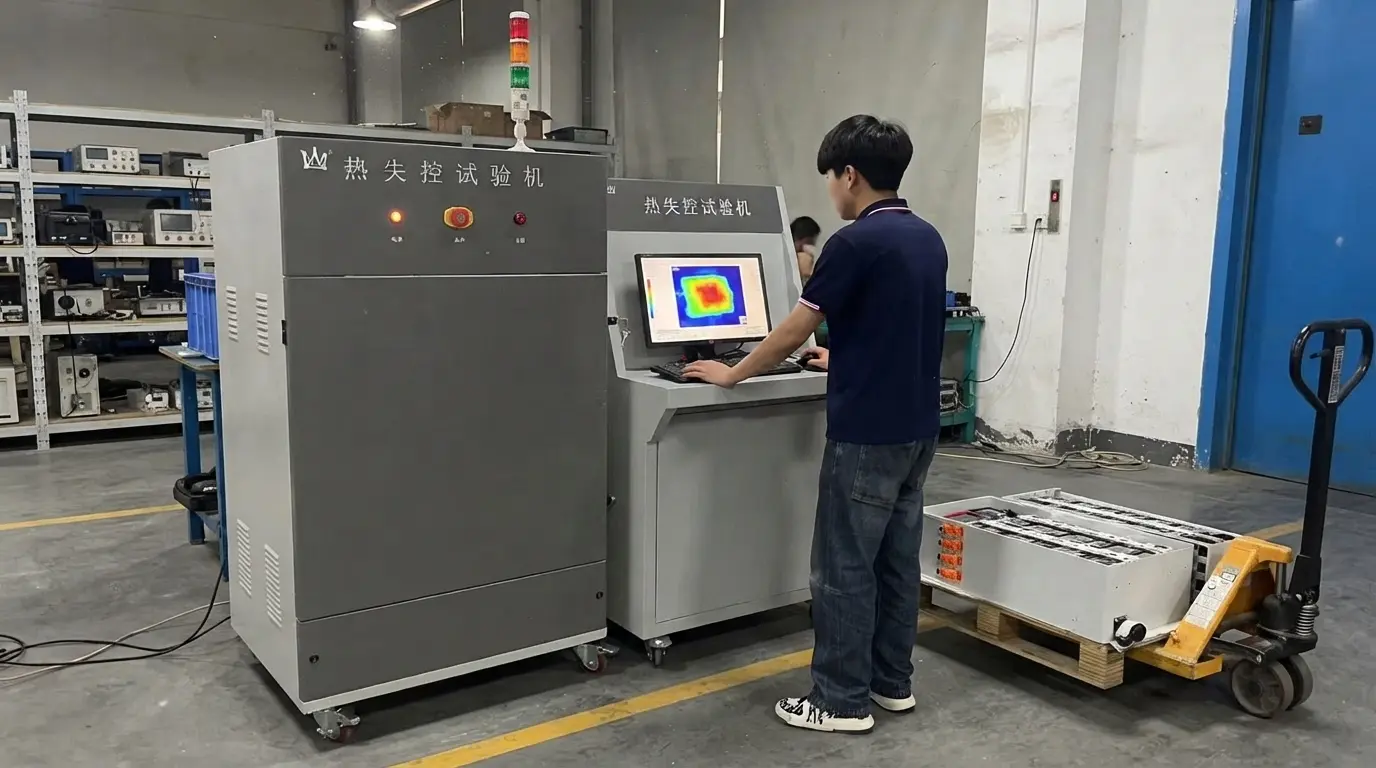
Three – Ignoring temperature and current. A 10 kWh LFP pack at 25°C and 0.5C does not behave like the same pack at 40°C and 1C. Check thermal derating, charge limits below 0°C, and whether the enclosure uses passive cooling, forced airflow or an integrated heater.
Four – Allowing installation losses to erase the specification. Long DC cables, loose terminals, poor crimping and incorrect CAN termination can reduce delivered energy and trigger false alarms. For a 51.2 V pack delivering nearly 100 A, follow the cable gauge, fuse rating, connector pinout and terminal torque specified by the manufacturer.
06 / Buyer FAQ
Questions Buyers Ask About Conversion Efficiency
Is 95% round-trip efficiency worth paying more for?
Does 95% mean the battery itself is 95% efficient?
cURL Too many subrequests by single Worker invocation. To configure this limit, refer to https://developers.cloudflare.com/workers/wrangler/configuration/#limits
cURL Too many subrequests by single Worker invocation. To configure this limit, refer to https://developers.cloudflare.com/workers/wrangler/configuration/#limits.
cURL Too many subrequests by single Worker invocation. To configure this limit, refer to https://developers.cloudflare.com/workers/wrangler/configuration/#limits
What Is Depth of Discharge and Why It Decides Your Battery Warranty
cURL Too many subrequests by single Worker invocation. To configure this limit, refer to https://developers.cloudflare.com/workers/wrangler/configuration/#limits
5kWh, 10kWh or 15kWh – How to Choose the Right Residential Energy Storage Capacity