 Italiano
 English
 العربية
 日本語
 한국어
 Tiếng Việt
 ไทย
 Bahasa Melayu
 فارسی
 Bahasa Indonesia
 ဗမာစာ
 简体中文
 香港中文
 繁體中文
 Русский
 Deutsch
 Nederlands
 Français
 Español
 Português
 Afrikaans
 Azərbaycan dili
 Български
 ਪੰਜਾਬੀ
 हिन्दी
 اردو
 বাংলা
 Հայերեն
 Íslenska
 Қазақ тілі
 नेपाली
 Српски језик
 Kiswahili
 తెలుగు
 Basa Jawa
 தமிழ்
 मराठी
How Does Cold Weather Affect Energy Storage Battery Performance?
Residential energy storage batteries can still work in cold weather, but they may deliver less usable energy, support less power and charge more slowly. In freezing conditions, some batteries stop charging altogether to protect their cells.
For a home that relies on battery backup, this can mean shorter runtime during a winter outage. The important distinction is that a battery’s ability to discharge in the cold does not mean it can safely recharge at the same temperature. This article focuses on lithium iron phosphate (LiFePO4, or LFP), a common chemistry in home storage.
What Changes Inside a Cold Battery
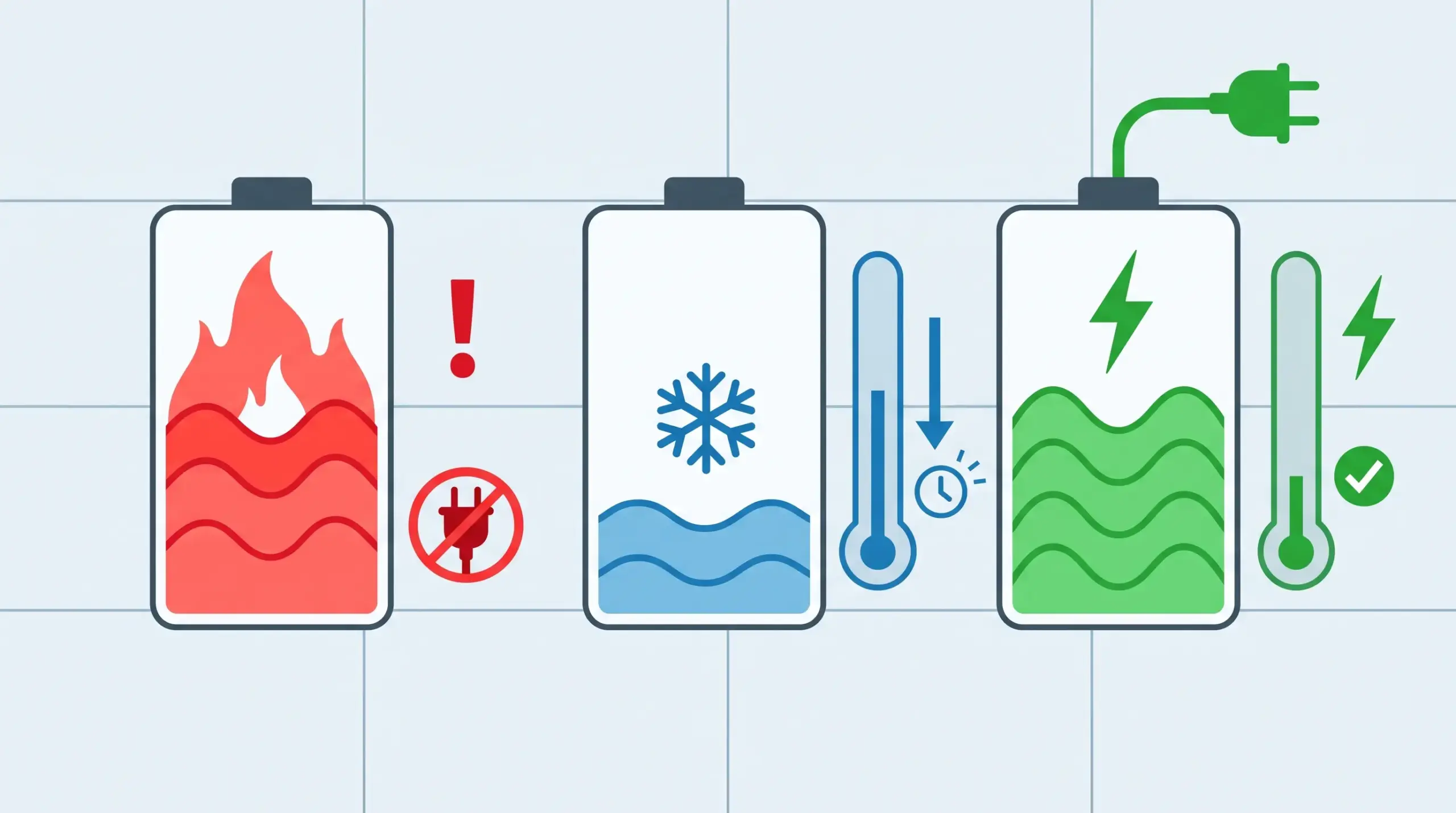
Low temperatures slow electrochemical reactions and increase internal resistance. Under load, battery voltage drops more sharply, so the battery management system (BMS) may reach its discharge cutoff sooner. You get less usable energy before shutdown, even if the battery started fully charged.
There is no single percentage for this loss. Cell design, temperature, discharge current and cutoff settings all matter. Many LFP products specify discharge operation down to around -20 degrees C and a charging range beginning around 0 degrees C, but those limits are product-specific. An operating limit does not guarantee full capacity or rated power.
For perspective, a 51.2 V, 100 Ah battery stores a nominal 5.12 kWh. A cold-weather installation should not assume that all 5.12 kWh will reach household loads. Discharge limits, inverter losses and any battery heater consumption also reduce available backup energy.
Charging needs particular care. Charging conventional LFP cells below their permitted temperature can cause lithium plating and permanent damage. A temperature-aware BMS should block or restrict charging as required by the cell specification. On a heated pack, the cells must reach a safe temperature before normal charging starts; warm outdoor air alone does not prove that the cells are ready.
When a Winter-Specific Battery Design Helps
An unheated garage and an exposed outdoor cabinet create different demands. Insulation slows heat loss, but it cannot keep an idle battery warm indefinitely. A controlled heater can make winter charging possible, although it consumes energy and may delay charging while the cells warm up. For outdoor placement, review this outdoor energy storage rain-shelter guide alongside the thermal requirements.
Per OEM or ODM projects, prioritise heater control, cell-temperature sensing and charging limits over cosmetic customisation. Confirm the heater’s power source and consumption, then request performance data at your expected winter temperature. Branding, connector options, minimum order quantities and sample timing can follow once the cold-weather requirements are clear.

Which Installation Makes Sense
| Configurazione | Cold-weather behaviour | Cosa controllare |
|---|---|---|
| Battery in a temperature-controlled indoor space | More consistent capacity and charging | Approved location, clearances and local installation rules |
| Unheated battery in a garage or outdoor enclosure | Reduced output and possible charging lockout | Actual cell temperature and charge/discharge limits |
| Insulated battery with controlled heating | Can restore charging conditions after warm-up | Heater energy use, power source and warm-up time |
On smaller screens, scroll the table horizontally to compare all three columns.
An enclosure’s IP rating describes protection against water and dust, not its ability to keep cells warm. Check the difference between weather protection and thermal control when selecting a home ESS configuration.
Four Common Cold-Weather Mistakes
- Treating discharge limits as charging limits. A battery may supply power below freezing while refusing to accept a charge.
- Bypassing a charging lockout. Do not override low-temperature protection to force charging.
- Expecting insulation to generate heat. It helps retain existing heat; it does not replace a heater in prolonged freezing conditions.
- Sizing backup from nameplate capacity alone. Allow for winter derating, heater consumption and the loads you actually need to run.
Domande frequenti
Does cold weather permanently reduce battery capacity?
Much of the temporary capacity reduction reverses when the cells warm up. However, charging outside the approved temperature range can cause lasting damage. Temporary winter derating and permanent degradation are different issues.
Can solar panels recharge a battery on a freezing day?
Only if the battery’s cell temperature allows charging. Solar generation may be available while the BMS keeps charging disabled. A compatible heated system can use available power to warm the pack first, depending on its design.
Should every outdoor battery have a heater?
Not necessarily. A heater becomes more useful when cells regularly fall below the charging limit and reliable winter recharging matters. Base the decision on the installation temperature, outage requirements and the manufacturer’s tested performance.
La conclusione
Cold weather usually reduces usable capacity and power, but safe charging is the more important constraint. Check separate charging and discharging limits, choose an approved installation location and account for heating energy when estimating winter runtime.
For a winter installation, ask your supplier for capacity and power test results at your expected minimum temperature, along with the charging cutoff and heater specifications. Those details tell you more than a broad claim that a battery “works in the cold.”