 Kiswahili
  English
  العربية
  日本語
日本語  한국어
한국어  Tiếng Việt
  ไทย
ไทย  Bahasa Melayu
  فارسی
فارسی  Bahasa Indonesia
  ဗမာစာ
ဗမာစာ  简体中文
简体中文  香港中文
香港中文  繁體中文
繁體中文  Русский
  Deutsch
  Nederlands
  Italiano
  Français
  Español
  Português
  Afrikaans
  Azərbaycan dili
  Български
  ਪੰਜਾਬੀ
  हिन्दी
  اردو
اردو  বাংলা
বাংলা  Հայերեն
  Íslenska
  Қазақ тілі
  नेपाली
  Српски језик
  తెలుగు
  Basa Jawa
  தமிழ்
தமிழ்  मराठी
मराठी Field guide / outdoor installation
An IP rating is a test boundary, not a weather plan. The right shelter decision starts at the site.
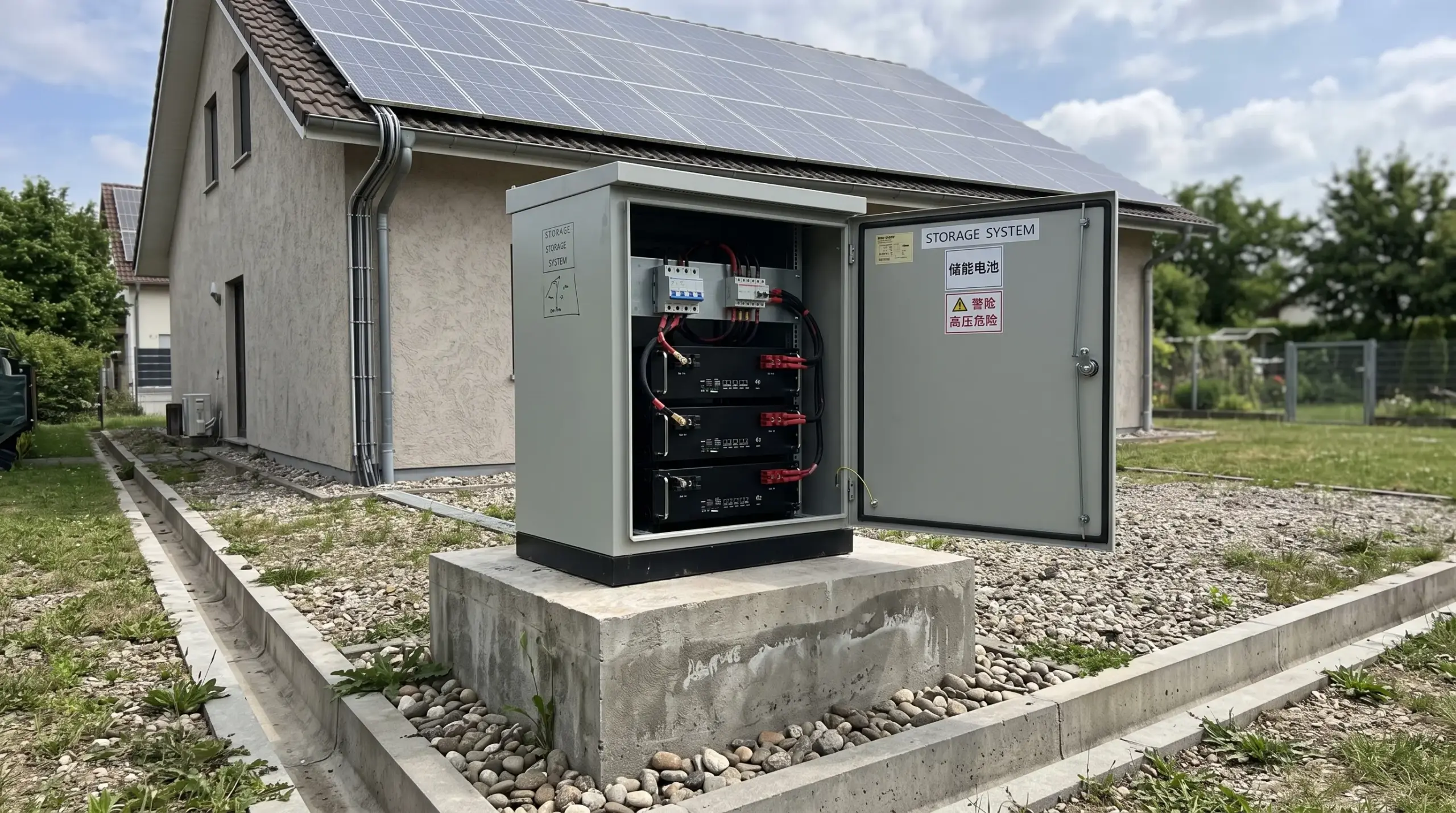
An outdoor battery cabinet may carry an IP65 or IP66 rating, yet that does not automatically make a rain shelter unnecessary. The enclosure rating protects against defined test conditions. It does not solve standing water, snow loading, blocked ventilation, salt spray, or poor cable entry on a real installation site.
For most projects, the practical answer is conditional. A certified outdoor system can operate without a separate roof when the cabinet, foundation, drainage, and clearances meet the manufacturer’s installation requirements. A simple canopy remains a sensible choice in locations with driving rain, heavy snow, intense sun, or frequent maintenance work.
Exposure is a system condition
Shelter the system.
Keep it breathing.
Runoff · clearance · airflow · service access
What the Enclosure Rating Actually Protects
An IP code describes resistance to solids and water ingress. IP65 generally means dust-tight protection and resistance to water jets. IP66 adds protection against more powerful water jets. Neither rating means the cabinet can sit in a flooded area or receive unlimited exposure to wind-driven rain.
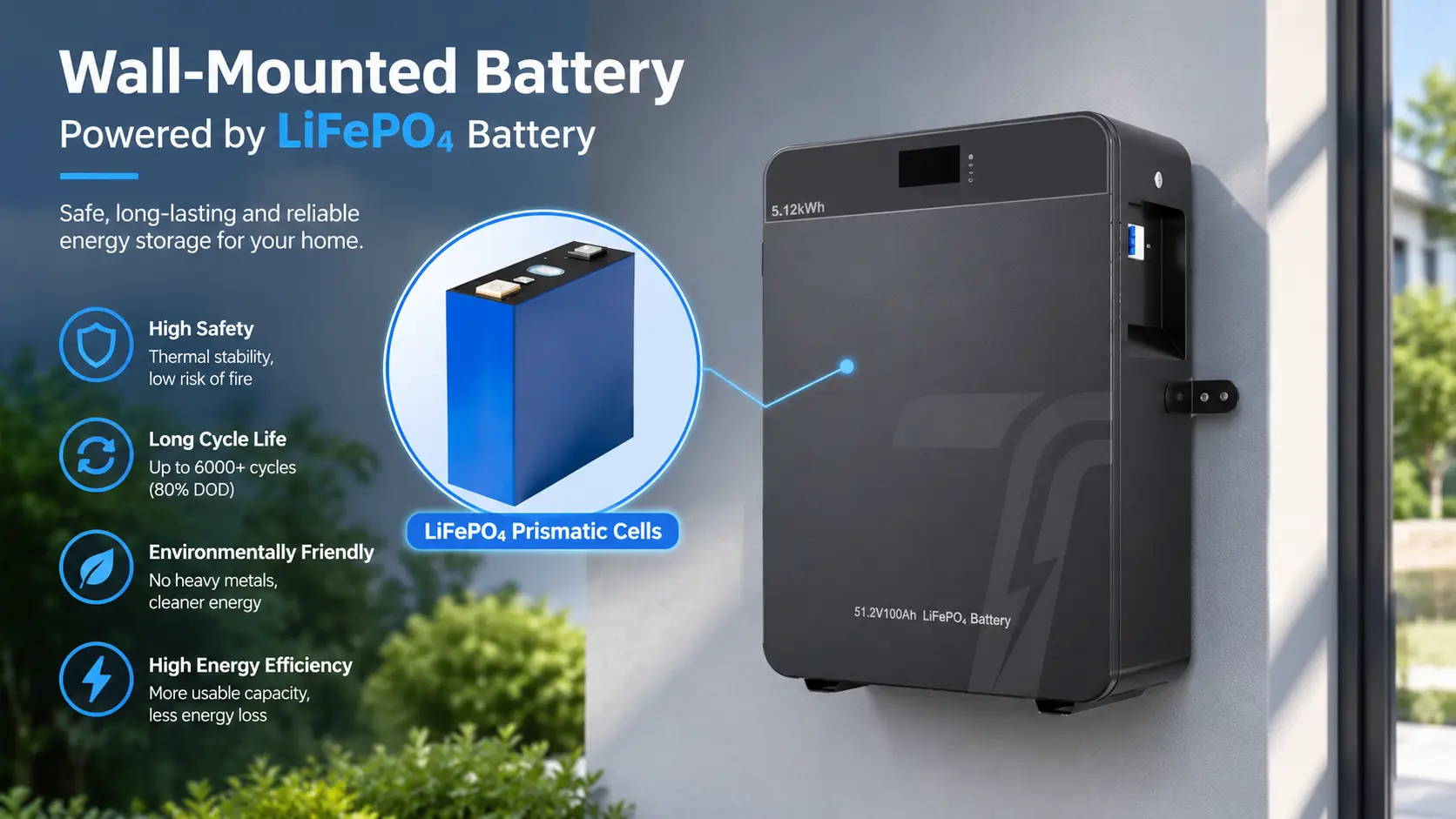
Most residential and small commercial systems use lithium iron phosphate (LFP) cells with a battery management system (BMS). A typical 51.2 V, 100 Ah module stores about 5.12 kWh, while its BMS monitors cell voltage, current, and temperature. The electronics still need a stable environment. Many systems specify charging from 0 C to 45 C and discharging from -20 C to 50 C, with output derating near the limits. A shelter can reduce direct solar heating and temperature swings, but it must not trap hot air around the cabinet.
Keep the cabinet above the site’s highest expected standing-water level. Use a raised concrete plinth, slope the surrounding surface away from the equipment, and seal every cable gland to the specified size. Leave the manufacturer’s ventilation clearance, often 300-500 mm at the front or sides, even when a canopy is installed.
Condensation deserves equal attention. A dry-looking cabinet can collect moisture when warm air enters after a cold night. Choose an enclosure with suitable pressure equalisation, avoid placing the system beside sprinklers or cooling exhaust, and inspect door seals during scheduled service.
When a Shelter Adds Real Value
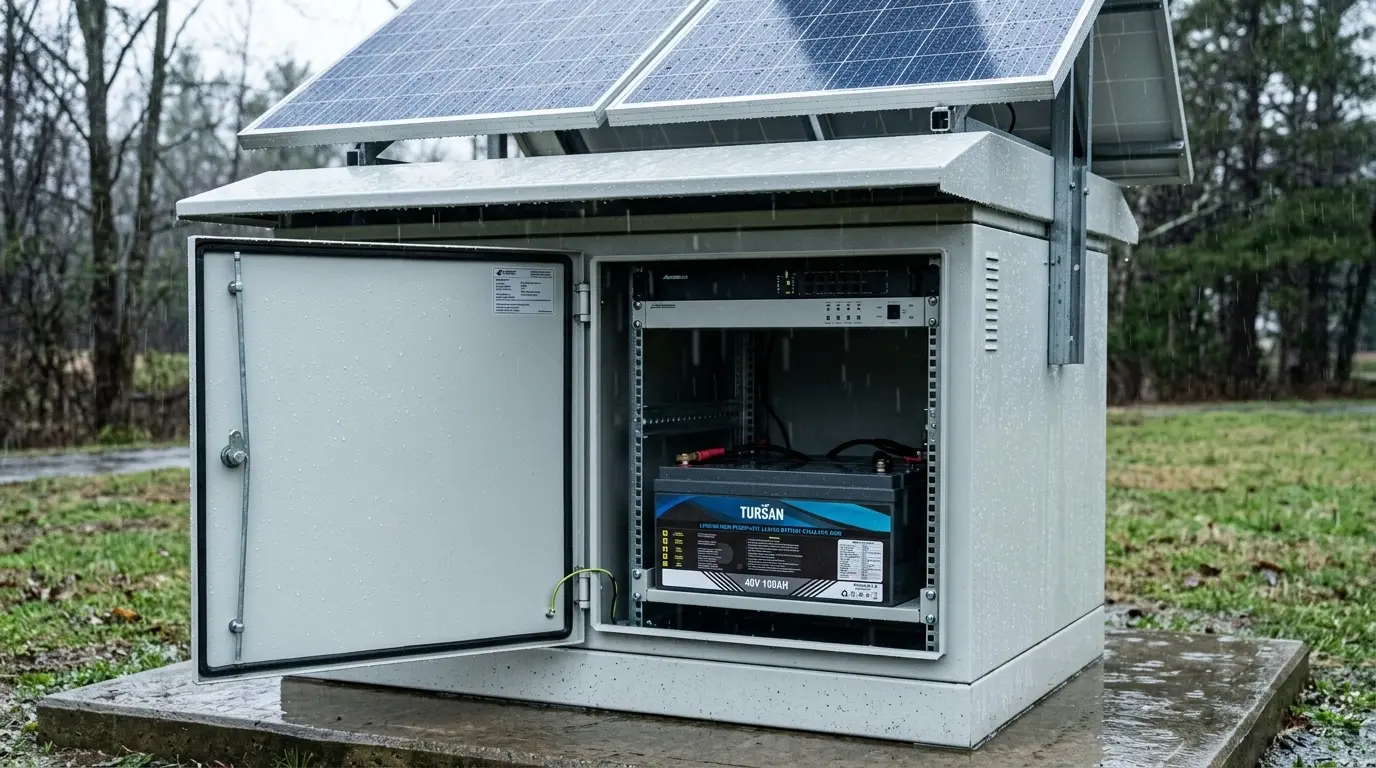
A rain shelter is strongly recommended when the site has monsoon rain, coastal salt exposure, hail, drifting snow, or a roofless location with direct afternoon sun. It also helps installers work safely during service and keeps leaves, ice, and debris away from air filters and cable glands.
The canopy should extend beyond the cabinet on all sides and discharge water away from the foundation. Do not build a sealed box around the battery. A dark metal roof with no airflow can raise the local temperature well above the ambient rating and shorten the life of cells, contactors, and inverter capacitors.
For distributors and system integrators, the shelter decision should be part of the site survey rather than an informal add-on. Confirm the IP rating of the complete assembly, not only the battery module. The inverter, combiner box, emergency stop, and communication connectors may have different limits.
Survey the complete assembly and the water path around it. A canopy is useful only when it protects the equipment without restricting ventilation, access, or heat rejection.
Three Practical Installation Choices
| Installation choice | Suitable site conditions | Main controls to verify |
|---|---|---|
| Open outdoor installation | IP-rated cabinet, good drainage, moderate weather | Plinth height, cable glands, ventilation, direct sun exposure |
| Ventilated rain canopy | Heavy rain, strong sun, occasional snow | Roof overhang, airflow, snow load, water discharge |
| Enclosed equipment shelter | Severe weather, coastal sites, shared commercial plant rooms | Active ventilation, fire separation, access, temperature control |
Four Common Installation Pitfalls
- Treating IP65 as flood protection – Place the cabinet above the flood line and provide a defined drainage route.
- Blocking airflow with a low canopy – Maintain the clearance in the installation manual and check temperature at full charge and discharge.
- Using household sealant on cable entries – Select glands rated for the cable diameter and the enclosure environment. Poor sealing can void the IP protection.
- Ignoring the inverter and accessories – Match the shelter and environmental limits to every component in the mifumo ya kuhifadhi nishati, including the BMS communication and emergency-stop hardware.
OEM and ODM Design Options
An cURL Too many subrequests by single Worker invocation. To configure this limit, refer to https://developers.cloudflare.com/workers/wrangler/configuration/#limits can adapt the outdoor package for the target climate. Useful options include a powder-coated aluminium or galvanised-steel cabinet, replaceable door seals, a rain hood, anti-condensation heaters, salt-resistant coating, and cable glands matched to local wiring standards. Firmware can also set temperature-based charge limits and alarm thresholds for the selected LFP cells.
Ask for test evidence for the complete cabinet, such as IP testing, thermal operating limits, and UN38.3 documentation for battery transport. Before placing a larger order, request a sample cabinet and confirm that the proposed canopy does not interfere with door opening, service clearance, or emergency access.
Maswali Yanayoulizwa Mara Kwa Mara
Can an IP65 battery cabinet stay outside without a roof?
Does a shelter improve battery life?
How large should the canopy be?
What should a buyer send to an OEM?
Jibu fupi
Outdoor energy storage equipment does not always need a rain shelter, but every installation needs protection from flooding, uncontrolled runoff, condensation, and excessive heat. Use an approved outdoor cabinet, raise it above the drainage line, preserve airflow, and add a ventilated canopy when the climate or service conditions justify it. Share the site climate and cabinet layout with your OEM partner, and ask for a preliminary enclosure and installation BOM before final procurement.