 Basa Jawa
  English
  العربية
  日本語
日本語  한국어
한국어  Tiếng Việt
  ไทย
ไทย  Bahasa Melayu
  فارسی
فارسی  Bahasa Indonesia
  ဗမာစာ
ဗမာစာ  简体中文
简体中文  香港中文
香港中文  繁體中文
繁體中文  Русский
  Deutsch
  Nederlands
  Italiano
  Français
  Español
  Português
  Afrikaans
  Azərbaycan dili
  Български
  ਪੰਜਾਬੀ
  हिन्दी
  اردو
اردو  বাংলা
বাংলা  Հայերեն
  Íslenska
  Қазақ тілі
  नेपाली
  Српски језик
  Kiswahili
  తెలుగు
  தமிழ்
தமிழ்  मराठी
मराठी Carane Milih Pabrik Baterai Stand-tingkat Lantai
Kanggo distributor, instalator surya lan pembeli EPC, supplier baterai stand-tingkat lantai sing bener kudu mbuktèkaké luwih saka kapasitas. Kualitas sel, komunikasi BMS, dokumen safety, kontrol pabrik lan dhukungan sawise adol kabeh mengaruhi asil proyek nyata.
Nalika pembeli takon marang kita carane milih pabrik baterai stand-tingkat lantai, kita miwiti karo platform baterai—ora brosur. Sistem panyimpenan energi sing dipercaya kudu divalidasi kualitas sel, kapasitas sing cocog, lan komunikasi BMS sing cocog karo sistem sing dikarepake.
Kimia Baterai lan Sel
Baterai omah stand-tingkat lantai kita nggunakake Sel LiFePO4 otomotif Grade-A kanthi traceability batch lengkap. LiFePO4 iku kimia sing ditemtokake ing kabeh rentang panyimpenan energi omah kita.
| Pos Pemeriksaan | Apa sing Kita Verifikasi |
|---|---|
| Kimia sel | LiFePO4 Grade-A |
| Kontrol sel | Sorting lan grading sadurunge perakitan |
| Jejak traceability | Traceability batch lengkap |
| Siklus urip desain | 6.000+ siklus |
Aja nyegah supplier sing ora bisa kanthi cetha ngenali grade sel, kimia, utawa proses traceability. Spesifikasi NCM ora kudu diparingi minangka padha karo LiFePO4 tanpa dokumentasi sing cetha lan khusus model.
Urip Siklus lan DoD
Tuntutan siklus urip kudu didhukung dening desain baterei lan proses testing sing wis ditemtokake dening pabrikan. Baterei LiFePO4 sing dipasang ing lantai kita dirancang kanggo 6.000+ siklus.
Kedalaman discharge (DoD) kudu dikonfirmasi kanggo model sing tepat lan kondisi operasi. Iki mengaruhi energi sing bisa digunakake lan kinerja baterei jangka panjang, mula kita nyaranake mriksa spesifikasi teknis lengkap tinimbang mung ngandelake angka siklus utama.
Integrasi BMS
Ing sistem manajemen baterei (BMS) minangka pusat operasi lan integrasi paket. Kita ndhukung pilihan komunikasi BMS kalebu:
- RS485
- KAN
- Bluetooth
Proses integrasi BMS sing mampu kudu nyelarasake desain listrik baterei, setelan proteksi, lan kabutuhan komunikasi karo syarat proyek. Kita ngintegrasi fungsi BMS nalika produksi ing omah lan nguji saben paket sing wis rampung sadurunge dikirim.
Kapasitas lan Desain Papan Lantai
Panyedhiya baterei papan lantai kudu nawakake pilihan kapasitas sing cocog kanggo macem-macem syarat panyimpenan energi residensial. Lineup papan lantai 51.2V kita kalebu:
| Tegangan nominal | Kapasitas | Energi |
|---|---|---|
| V 51.2 | 200Ah | 10,24kWh |
| V 51.2 | 314Ah | 16.08kWh |
| V 51.2 | 560Ah | 28,67 kWh |
| V 51.2 | 628Ah | 32,15kWh |
Kita uga nyedhiyakake platform ESS omah ing 25.6V lan 51.2V konfigurasi. Kanggo proyek sing mbutuhake baterei panyimpenan energi sing bisa ditumpuk utawa format enclosure liyane, kustomisasi listrik lan mekanik kudu direview minangka bagian saka scope OEM/ODM.
Carane Milih Pabrikan Baterei Papan Lantai: Kepatuhan Safety
Dokumentasi safety kudu dadi bagian sing ora bisa dinegosiasi saka review sistem panyimpenan energi papan lantai. TURSAN nyedhiyakake sertifikasi lan dokumentasi sing cocog karo syarat safety baterei internasional lan ekspor.
Sertifikasi Baterai Inti
Kanggo pemasok BESS omah, verifikasi dokumentasi kanggo standar sing ditrapake, kalebu:
- UL 1973
- IEC 62619
- IEC 62133
- CE
- UKCA
- RoHS
- ISO 9001
UL 9540 ora kalebu ing sertifikasi sing ditemtokake dening TURSAN, mula para pembeli kudu konfirmasi syarat UL 9540 khusus proyek sadurunge nemtokake sistem.
Dokumen Pengiriman lan Transportasi
Produsen baterai LiFePO4 sing bisa dipercaya kudu ndhukung persiapan ekspor sing patuh. Dokumen ekspor bisa kalebu:
- UN38.3
- MSDS
- Dokumentasi IATA
Cathetan kasebut mbantu ndhukung perencanaan transportasi baterai lan nyuda penundaan sing bisa dihindari sajrone pengiriman internasional.
Syarat Lokal Penting
Proyek ing Indonesia uga kudu netepi aturan utilitas lokal, bangunan, interkoneksi jaringan, lan keamanan geni. Cocokake sertifikasi lan dokumentasi sing kasedhiya saka baterai lantai karo syarat lokasi instalasi sadurunge tuku.
Kompatibilitas Inverter lan Integrasi Protokol
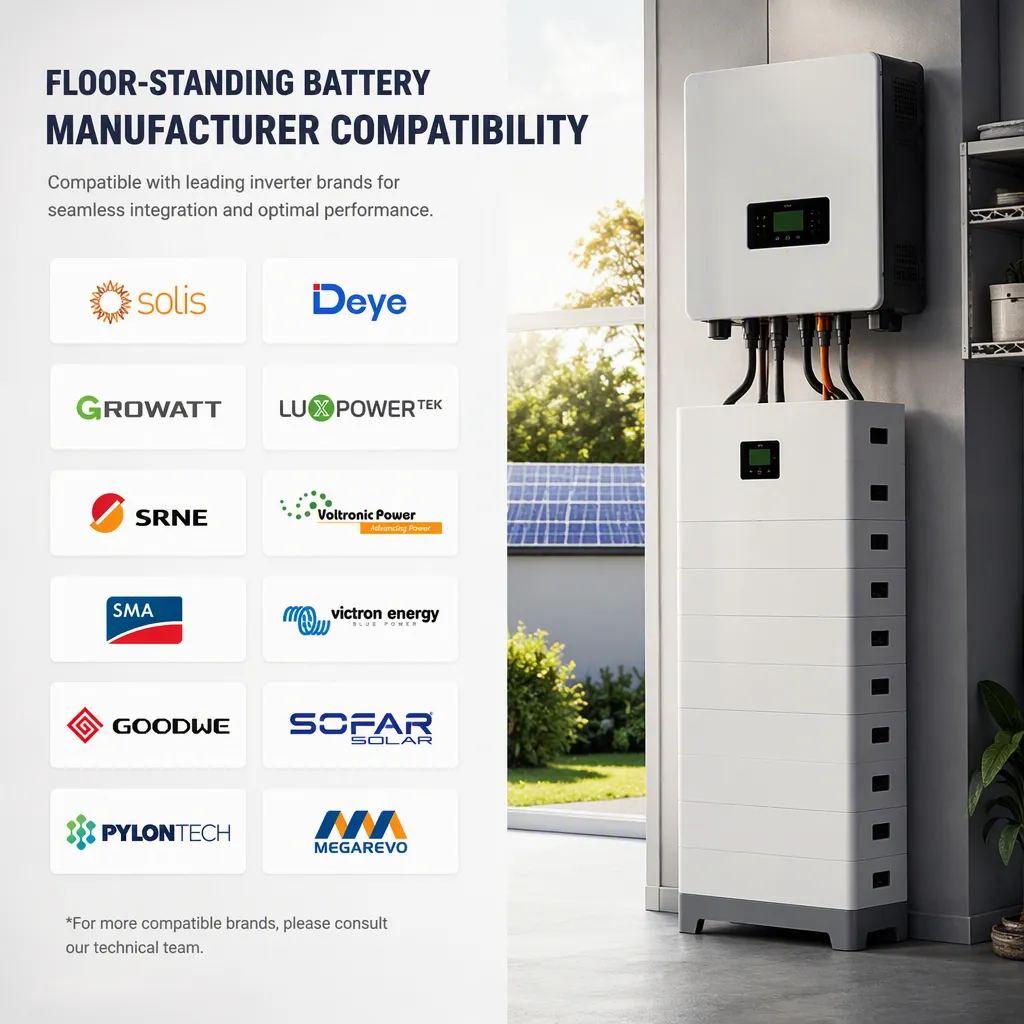
Nalika kita ngevaluasi carane milih pabrik baterai stand-tingkat lantai, komunikasi inverter minangka syarat inti. Sistem panyimpenan energi lantai kudu ijol-ijolan data sing bisa dipercaya karo inverter supaya pangisian daya, pembuangan, proteksi, lan status sistem bisa digunakake kaya sing dikarepake.
Verifikasi Kompatibilitas Inverter
Aja nganggep baterai bakal bisa digunakake karo kabeh merek inverter. Kanggo instalasi sing nggunakake Victron, Deye, Solis, Growatt, utawa platform inverter liyane, konfirmasi kompatibilitas kanggo model baterai lan inverter tartamtu sadurunge pesen.
Deleng platform baterai omah lantai lan njaluk dokumentasi sing jelas kanggo konfigurasi sistem sing dikarepake. Kompatibilitas kudu luwih saka cocog voltase dhasar. Uga kudu ngatasi komunikasi baterai-karo-inverter lan setelan proteksi.
Cocokake Protokol CAN lan RS485
Sistem manajemen baterei (BMS) sing mampu kudu ndhukung metode komunikasi sing dibutuhake dening inverter. TURSAN ndhukung RS485, CAN, lan Bluetooth Integrasi BMS kanggo proyek baterei kustom.
Pengecekan utama kalebu:
- Komunikasi CAN kanggo kontrol inverter sing kompatibel lan pertukaran status baterei
- Komunikasi RS485 yen dibutuhake dening inverter utawa setelan manajemen energi
- Setelan protokol sing bener kanggo konfigurasi inverter sing dipilih
- Laporan akurat babagan status baterei, alarm, lan kondisi operasi
- Akses Bluetooth yen cocog kanggo monitoring baterei lokal
Padanan protokol penting amarga sambungan sing ora kompatibel bisa matesi visibilitas sistem utawa nyegah pengisian lan pengosongan sing terkoordinasi.
Dukungan Firmware lan Monitoring
Kita uga nggoleki dhukungan sing cetha babagan konfigurasi BMS, penanganan firmware, lan integrasi monitoring. Pemasok kudu bisa nemtokake syarat listrik lan komunikasi baterei nalika tahap proyek, utamane kanggo pesenan OEM lan ODM.
Kanggo aplikasi label pribadi utawa khusus, dukungan grosir TURSAN lan OEM/ODM bisa kalebu desain listrik kustom, integrasi BMS, lan syarat enclosure. Iki mbantu nyelarasake baterei sing dipasang ing lantai karo protokol inverter, kabutuhan branding, lan syarat pasar target tanpa gumantung marang paket baterei siji ukuran kanggo kabeh.
Skala pabrik lan Kapabilitas OEM/ODM
Nalika nemtokake carane milih pabrik baterai stand-tingkat lantai, kita ndeleng luwih saka katalog produk. Pabrik baterei OEM/ODM sing mampu kudu ngontrol proses produksine ing omah, saka pilihan sel nganti packing ekspor pungkasan.
TURSAN ngoperasikake sawijining fasilitas produksi luwih saka 20.000+ m² kanthi 15 garis produksi. Kontrol pabrik iki mbantu pembeli B2B kanggo ngevaluasi apa supplier bisa ndhukung volume sing stabil, kualitas bangunan sing konsisten, lan pesenan mbaleni. Takon kapasitas khusus proyek, cathetan inspeksi, lan rencana pangiriman tinimbang mung gumantung marang judhul pabrik wae.
Audit Proses Produksi
Suweg panyedhiya panyimpen energi sing andal kudu bisa nerangake saben tahap produksi kanthi cetha:
- Pemisahan lan grading sel kanggo voltase, kapasitas, lan resistansi internal
- Pengurutan otomatis lan pengelasan modul baterei
- Integrasi BMS karo setelan perlindungan sing dibutuhake lan pilihan komunikasi
- Kemas lan rakitan kemasan
- Uji penuaan plus pengisian/munggah muatan sadurunge dikirim
- Kemas ekspor lan dokumentasi persiapan
Kita nggunakake sel LiFePO4 Grade-A lan traceability batch. TURSAN’s proses grading sel lan kontrol kualitas ndhukung cocog konsisten sadurunge sel mlebu menyang perakitan paket baterei. Saben paket sing wis rampung diuji sadurunge dikirim.
Priksa QC, Ora Mung Klaim Kapasitas
Volume produksi tegese sethithik tanpa kontrol kualitas. Verifikasi manawa pabrikan nindakake grading sel, pengemasan umur, lan tes listrik minangka bagian saka produksi normal—ora mung kanggo conto. Proses kontrol kualitas kudu kalebu inspeksi mlebu, pemeriksaan ing proses, burn-in, traceability lan cathetan rilis pungkasan.
Kanggo distributor ing Indonesia lan panyedhiya panyimpen energi surya, jejak dokumentasi iki penting nalika mriksa kiriman, ngatur nomer seri, lan ndhukung instalasi pelanggan. Mirsani TURSAN’s Kemampuan R&D lan rekayasa bareng karo dokumentasi QC-e sadurunge nyetujoni platform.
Konfirmasi Dukungan Branding Kustom lan Desain
Kemitraan OEM/ODM kudu cocog karo pasar sampeyan tinimbang maksa sampeyan menyang produk standar. Kita ndhukung:
- Branding label pribadi
- Desain listrik lan mekanik kustom
- Kothak baterei kustom
- Integrasi BMS kanggo RS485, CAN, lan Bluetooth
- Konfigurasi baterei ing sakabehe 25.6V lan 51.2V platform panyimpenan energi omah
Produsen baterei sing ngadeg ing lantai karo layanan iki bisa mbantu nggawe garis produk sing cocog karo syarat merek sampeyan nalika njaga produksi pabrik, pengujian, lan tinjauan kesiapan pabrik lan ekspor ing siji proses koordinasi.
Garansi, RMA, lan Dhukungan Teknis
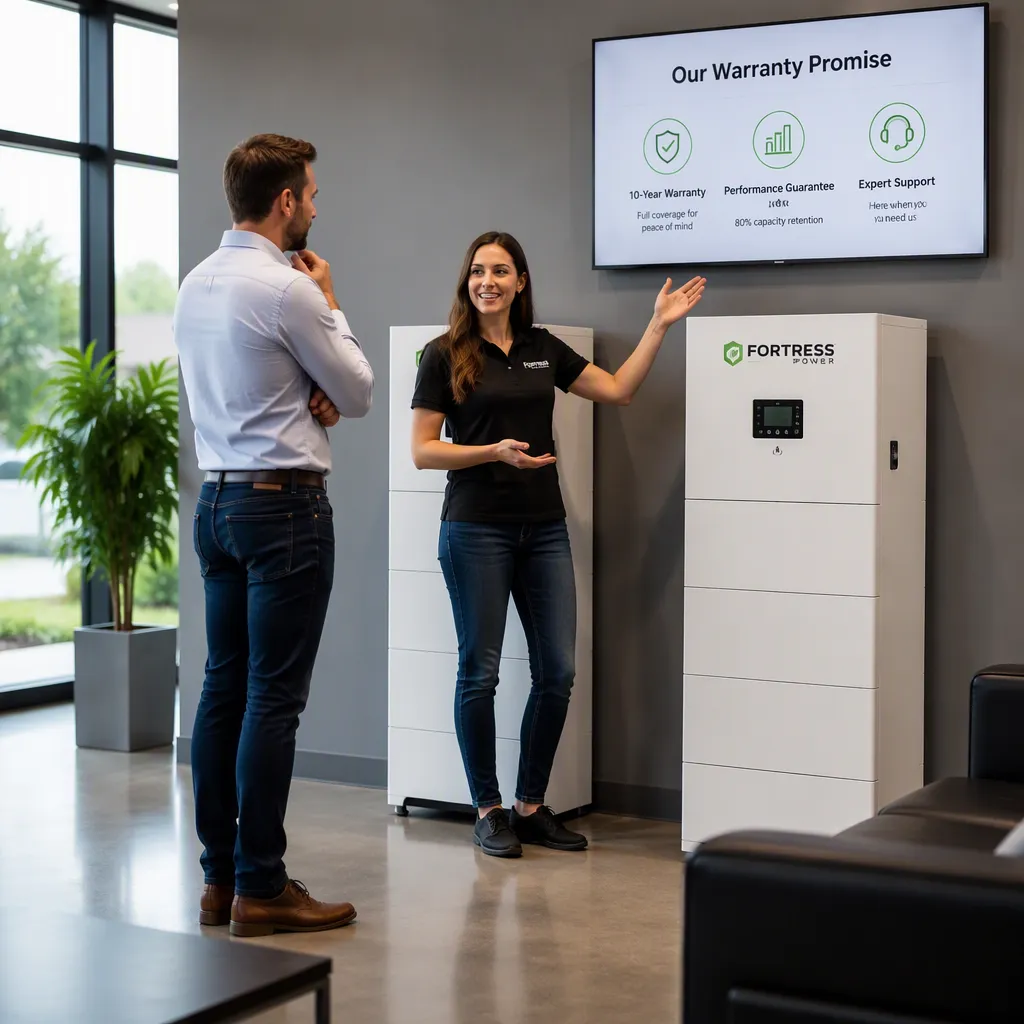
Nalika nemtokake carane milih pabrik baterai stand-tingkat lantai, kita nganggep dhukungan sawise adol sama serius karo kapasitas baterei. Sistem panyimpenan energi sing ngadeg ing lantai iku instalasi jangka panjang, mula basa garansi, penanganan bali, lan proses tanggapan teknis kudu cetha sadurunge tuku.
Waca Ketentuan Garansi kanthi Teliti
Sawetara pemasok nawakake garansi kinerja linier 10 taun, nanging syarat cakupan nyata bisa beda. Tinjau syarat tertulis kanggo model baterei sing dilindungi, standar retensi kapasitas, pengecualian, lan prosedur klaim.
| Pamariksaan Garansi | Apa sing Kita Verifikasi |
|---|---|
| Periode cakupan | Durasi garansi sing kasebut lan tanggal wiwitane |
| Ketentuan kinerja | Syarat kapasitas-retensi utawa kinerja linier |
| Komponen sing dilindhungi | Baterai pack, BMS, wadah, lan bagian sing gegandhengan |
| Pengecualian | Instalasi, salah panggunaan, lingkungan, utawa modifikasi tanpa ijin |
| Proses klaim | Nomor seri sing dibutuhake, cathetan tes, lan dokumentasi |
Garansi sing cetha kudu cocog karo konfigurasi produk sing didokumentasikake dening pabrikan lan traceability batch. Kanggo perbandingan antar format panyimpenan energi omah, review TURSAN’s Baterai LiFePO4 48V 200Ah sing dipasang ing tembok saliyane syarat sistem sing dipasang ing lantai.
Evaluasi Proses RMA
Kebijakan RMA kudu nemtokake carane panyedhiya nangani masalah baterai sing wis diverifikasi. Kita golek proses sing didokumentasikake tinimbang jaminan sing samar-samar.
- Verifikasi kesalahan: Langkah diagnostik sing cetha, kalebu data BMS utawa cathetan tes baterai
- Otorisasi: Persetujuan tertulis sadurunge pengiriman bali
- Logistik bali: Persyaratan pengiriman, pengepakan, lan dokumen ekspor sing wis ditemtokake
- Laluan resolusi: Perbaikan, pengganti, utawa solusi liyane sing kasebut ing perjanjian
- Suku cadang: Konfirmasi apa unit BMS pengganti, kabel, utawa bagian liyane sing cocog bisa disuplai kanggo proyek kasebut
Kanggo pembeli Indonesia, ketersediaan suku cadang lokal lan pengaturan logistik sing realistis bisa nyuda wektu mandheg. Pemasok uga kudu nyedhiyakake dokumen ekspor sing bener kanggo pengiriman baterei, kalebu UN38.3, MSDS, lan dokumentasi IATA yen perlu.
Priksa Kapabilitas Respon Teknis
Dhukungan teknis kudu nutupi loro baterei lan setelan komunikasi. Kita prioritasake pabrikan sing duwe tim rekayasa lan kualitas ing omah sing bisa ndhukung integrasi BMS liwat RS485, CAN, lan Bluetooth protokol.
| Wilayah Dhukungan | Apa Sing Dadi Dhukungan Sing Apik |
|---|---|
| Sadurunge instalasi | Dokumentasi produk lan pandhuan konfigurasi listrik |
| Komisioning | Bantuan karo komunikasi BMS lan setelan sistem |
| Troubleshooting | Analisis kesalahan terstruktur nggunakake informasi seri lan tes |
| Dhukungan teknik | Akses menyang tim sing paham karo kustomisasi listrik lan mekanik |
| Penanganan tanggapan | Kontak dhukungan sing wis ditemtokake lan proses tindak lanjut sing didokumentasikake |
Salah siji pabrikan sing ngontrol grading sel, rakitan paket, tes umur, lan tes pungkasan garis luwih becik kanggo nyelidiki kasus dhukungan kanthi cathetan produksi sing bisa dilacak. TURSAN’s proses layanan sawise-penjualan kudu ditinjau bareng karo syarat garansi kanggo model sing dipilih.
Regane, MOQ, lan Total Biaya Kepemilikan
Nalika nemtokake carane milih pabrik baterai stand-tingkat lantai, kita ndeleng luwih saka rega baterei sing dikutip. Angka awal sing luwih murah bisa dadi larang yen biaya pengangkutan, dokumentasi, bea cukai, lan kabutuhan dhukungan ditambahake.
Bandhingake Biaya per kWh
Bandhingake model adhedhasar kapasitas nameplate sing bisa digunakake, ora ukuran lemari utawa label pemasaran. Pemasok kudu cetha nyatakake voltase, rating amp-jam, lan kapasitas kWh.
| Model Standar Lantai | Spesifikasi Nominal | Energi Digawe |
|---|---|---|
| Sistem Kompak | 51.2V 200Ah | 10,24kWh |
| Sistem kapasitas menengah | 51.2V 314Ah | 16.08kWh |
| Sistem kapasitas gedhe | 51.2V 560Ah | 28,67 kWh |
| Sistem kapasitas dhuwur | 51.2V 628Ah | 32,15kWh |
Kita ngitung biaya per kWh kanthi mbagi rega baterei sing dikutip karo kWh sing digawe. Iki menehi pembeli titik wiwitan sing resik nalika mbandhingake sistem panyimpenan energi standar lantai karo produk kaya 51.2V 314Ah 16.07kWh Sistem panyimpen energi omah LiFePO4.
Aja bandhingake biaya saben kWh wae. Kalebu grade sel, komunikasi BMS, testing, sertifikasi, desain enclosure, lan kesiapan ekspor ing bandhingan.
MOQ lan Evaluasi Sampel
MOQ gumantung marang model baterei, ruang lingkup kustomisasi, branding, lan perencanaan produksi. Kanggo pesenan OEM utawa ODM, konfirmasi rincian komersial sadurunge produksi, kalebu:
- Voltase sing dibutuhake, kapasitas, lan protokol BMS
- Desain artwork label pribadi lan syarat enclosure kustom
- Pengaturan sampel utawa unit evaluasi
- Jumlah batch lan jadwal produksi
- Kebutuhan kemasan lan dokumen ekspor
Evaluasi sampel mbantu pembeli mriksa kecocokan, penampilan, komunikasi, lan syarat instalasi sadurunge nggawe pesenan luwih akeh.
Itung Biaya Tiba
Angka tuku nyata yaiku biaya tiba, ora mung kutipan pabrik. Lebokake saben item biaya menyang siji sheet tuku.
| Item Biaya | Apa sing kudu dikonfirmasi |
|---|---|
| Rega baterei | Model, kapasitas, lan jumlah pesenan |
| Pengiriman | Jalur angkutan barang, tujuan, lan syarat pengiriman |
| Dokumen ekspor | UN38.3, MSDS, lan syarat dokumentasi IATA |
| Biaya impor | Tarif, bea, pajak, lan biaya broker sing berlaku |
| Pengantaran lokal | Gudang, pengangkutan jarak akhir, lan penanganan |
| Pekerjaan cukai | Label pribadi, perubahan enclosure, lan integrasi BMS |
Kanggo pemasok utawa distributor BESS residensial, nilai paling kuat asal saka pabrik langsung sing bisa ndhukung pesenan saka grading sel nganti tes akhir lan persiapan ekspor. Pendekatan iki nggawe perencanaan biaya luwih cetha lan nyuda kekurangan sumber daya sing bisa dihindari.
Tanda Merah Nalika Nggawe Sumber Baterai Stand-Standing
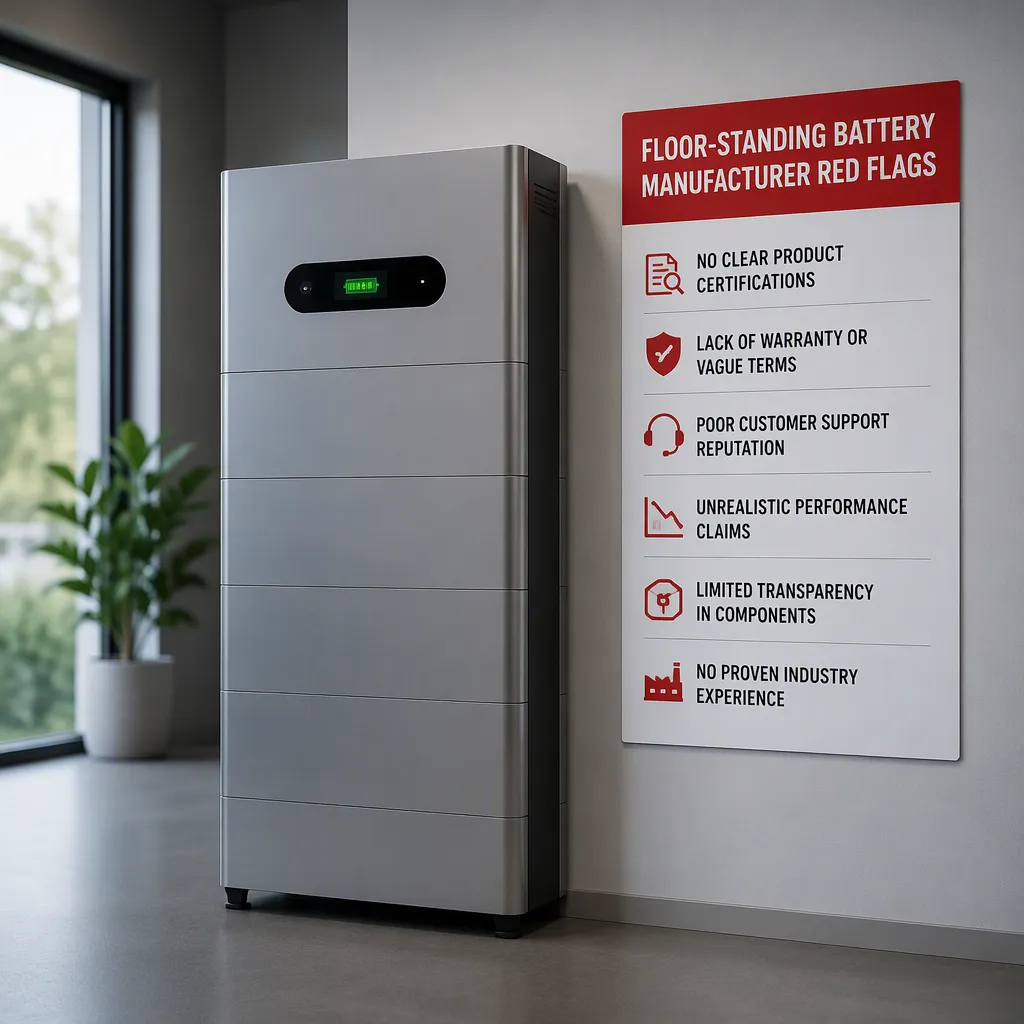
Nalika kita ngevaluasi pabrikan baterai stand-stand, kita ngliwati kapasitas lan rega utama. Kutipan murah bisa nyumputake sumber sel sing lemah, tes sing ora lengkap, utawa tanggung jawab purna jual sing ora cetha. Masalah iki bisa nambah biaya nyata saka sistem panyimpenan energi stand-stand sawise mlebu pasar Indonesia.
Sel Daur Ulang utawa B-Grade
Ati-ati nalika supplier ora bisa konfirmasi kanthi cetha grade sel, sumber sel, lan cathetan batch. Sel lithium-ion daur ulang, bekas, utawa B-grade bisa nyedhiyakake kapasitas sing ora konsisten, umur layanan sing luwih cendhak, lan kinerja sing ora rata ing sak pack baterei.
Pabrikan baterei LiFePO4 sing dipercaya kudu bisa ndhukung:
- Sel LiFePO4 otomotif Grade-A
- Sortir sel miturut voltase, kapasitas, lan resistance internal
- Traceability batch saka sel mlebu nganti nomer seri pack rampung
- Pengujian penuaan lan pengisian/pengecasan sadurunge dikirim
Ing TURSAN, kita nggunakake sel LiFePO4 Grade-A lan nindakake grading lan cocog sel minangka bagian saka produksi internal. Kualitas sel iku utamane penting kanggo sistem lantai sing nduweni kapasitas dhuwur, ing endi siji sel sing lemah bisa mengaruhi kabeh baterei.
Sertifikat Keamanan sing Durung Diverifikasi
Aja gumantung marang logo sertifikat sing dicithak ing lembar data utawa wadah produk. Pethik dokumen sing bisa diverifikasi sing cocog karo model baterei lan pabrikan sing nyata. Sertifikat saka pabrik liyane, model liyane, utawa laporan sing kadaluwarsa ora mastikake yen produk kasebut cocog kanggo sumber.
Dokumen utama kanggo baterei sing siap diekspor sing dipasang ing lantai bisa kalebu:
- UL 1973
- IEC 62619
- IEC 62133
- CE, UKCA, lan RoHS
- UN38.3, MSDS, lan dokumen transport IATA
Rekaman sing bener mbantu distributor ngindhari keterlambatan pengiriman lan kekosongan dokumen. TURSAN’s dokumen kontrol kualitas bisa dijaluk kanggo garis produk sing dipilih.
Tuntutan Umur Siklus sing Digawe Nambah
Angka-angka umur siklus ora kudu mandiri. Pemasok sing ngaku jumlah siklus sing dhuwur banget tanpa nyebutake kimia baterei, kondisi uji, utawa basis desain kudu diperlakukan kanthi ati-ati. Kinerja siklus gumantung marang kondisi operasi, prilaku pengisian daya, tingkat discharge, lan desain sistem.
Contone, baterei omah sing dipasang ing lantai nggunakake kimia Grade-A LiFePO4 kanthi a Luwih saka 6.000 siklus desain urip. Bandhingake pernyataan siklus-urip bareng grade sel, proses testing, konfigurasi BMS, lan traceability—ora mung minangka angka pemasaran tunggal.
Cetakan Cilik Garansi Sing Ragu-ragu
Aja milih supplier sing promosiake garansi dawa nanging ora nyedhiyakake syarat tertulis sing cetha. Garansi kudu nemtokake apa sing kalebu, dokumen apa sing dibutuhake, lan carane ngatasi masalah teknis. Yen supplier ora bisa nerangake cathetan testing utawa tanggung jawab produksi, dhukungan garansi bisa dadi angel kanggo dijaluk mengko.
Sadurunge pesen kanthi jumlah akeh, priksa manawa pabrikan bisa ngenali saben paket liwat traceability nomer seri lan nyedhiyakake bukti kontrol kualitas sing cetha. Kanggo aplikasi voltase luwih murah, mriksa TURSAN’s Dokumentasi baterei 12V LiFePO4 Uga bisa mbantu pembeli ngerti tingkat rincian sing kudu diwenehake dening pabrik baterei langsung.
FAQ: Kepiye Carane Milih Pabrikan Baterai Stand Dhasar?
| Pitakon | Wangsulan Langsung |
|---|---|
| Ngapa milih baterai stand dhasar tinimbang desain dipasang ing tembok? | Sistem panyimpenan energi sing dipasang ing lantai cocog kanggo proyek sing butuh kapasitas unit tunggal sing luwih dhuwur. Rentang lantai 51.2V TURSAN kalebu sistem saka sakitar 10kWh nganti luwih saka 32kWh. Kanggo tata letak omah cilik, sawijining baterai omah sing dipasang ing tembok bisa dadi alternatif praktis. |
| Kepiye carane verifikasi sel LiFePO4 Grade-A? | Pirsani bukti pemilahan, grading, lan traceability batch sel. Pabrikan kudu bisa nyambungake data sel mlebu karo nomer seri paket rampung lan cathetan tes. |
| Apa baterai sing dipasang ing lantai bisa disambungake paralel kanggo proyek komersial? | Konfigurasi paralel kudu dikonfirmasi kanggo baterai, inverter, lan desain proyek sing spesifik. Priksa syarat komunikasi BMS, kalebu RS485, CAN, lan Bluetooth, sadurunge ngrampungake rencana sistem. |
| Apa wektu pangarep-arep kanggo pesenan panyimpenan energi OEM khusus sing dipasang ing lantai? | Wektu pangarep-arep gumantung marang konfigurasi baterei, kabutuhan enclosure, label, integrasi BMS, lan volume pesenan. Proyek OEM lan ODM khusus mbutuhake review proyek sadurunge wektu produksi bisa dikonfirmasi. |
Nalika mbandhingake pabrikan baterai sing dipasang ing lantai, fokusake marang kualitas sel sing didokumentasikake, traceability, tes, kompatibilitas BMS, lan kesiapan ekspor—ora mung klaim umum wae.