 Íslenska
  English
  العربية
  日本語
日本語  한국어
한국어  Tiếng Việt
  ไทย
ไทย  Bahasa Melayu
  فارسی
فارسی  Bahasa Indonesia
  ဗမာစာ
ဗမာစာ  简体中文
简体中文  香港中文
香港中文  繁體中文
繁體中文  Русский
  Deutsch
  Nederlands
  Italiano
  Français
  Español
  Português
  Afrikaans
  Azərbaycan dili
  Български
  ਪੰਜਾਬੀ
  हिन्दी
  اردو
اردو  বাংলা
বাংলা  Հայերեն
  Қазақ тілі
  नेपाली
  Српски језик
  Kiswahili
  తెలుగు
  Basa Jawa
  தமிழ்
தமிழ்  मराठी
मराठी Hagnýt leiðarvísir til að stækka rafhlöðubanka með trausti: skilja innan við ytri ráðstöfun, hlaupandi straum, vörn og hönnunarákvarðanir sem gera samsöfnun skráðra geymsla örugga.
Meginefnið á bak við Rafhlöðu samsetningu
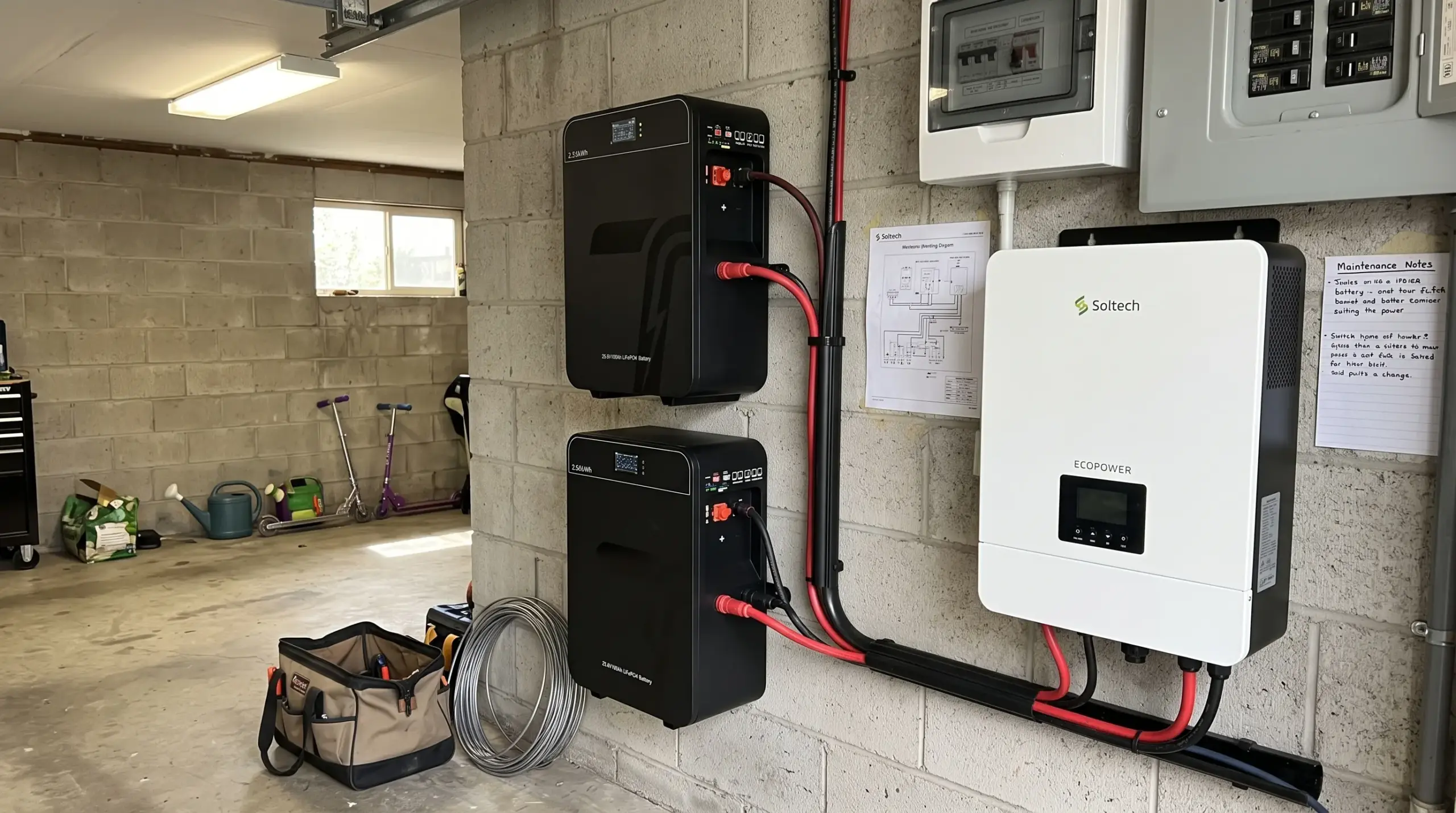
Tengja rafhlöður í samsetningu sameinar jákvæðu raflás eða og neikvæðu raflásana. Kerfið viðheldur sama nafnvirði spennu en eykur tiltæka getu og straum. Tveir samsíða 12,8 V, 100 Ah rafhlöður, til dæmis, mynda bankann 12,8 V, 200 Ah. Það er aðdráttaraflið: lengri rekstrartími, meiri nothæf orka og skrefin að útvíkkun án þess að hanna alla rafkerfið að nýju.
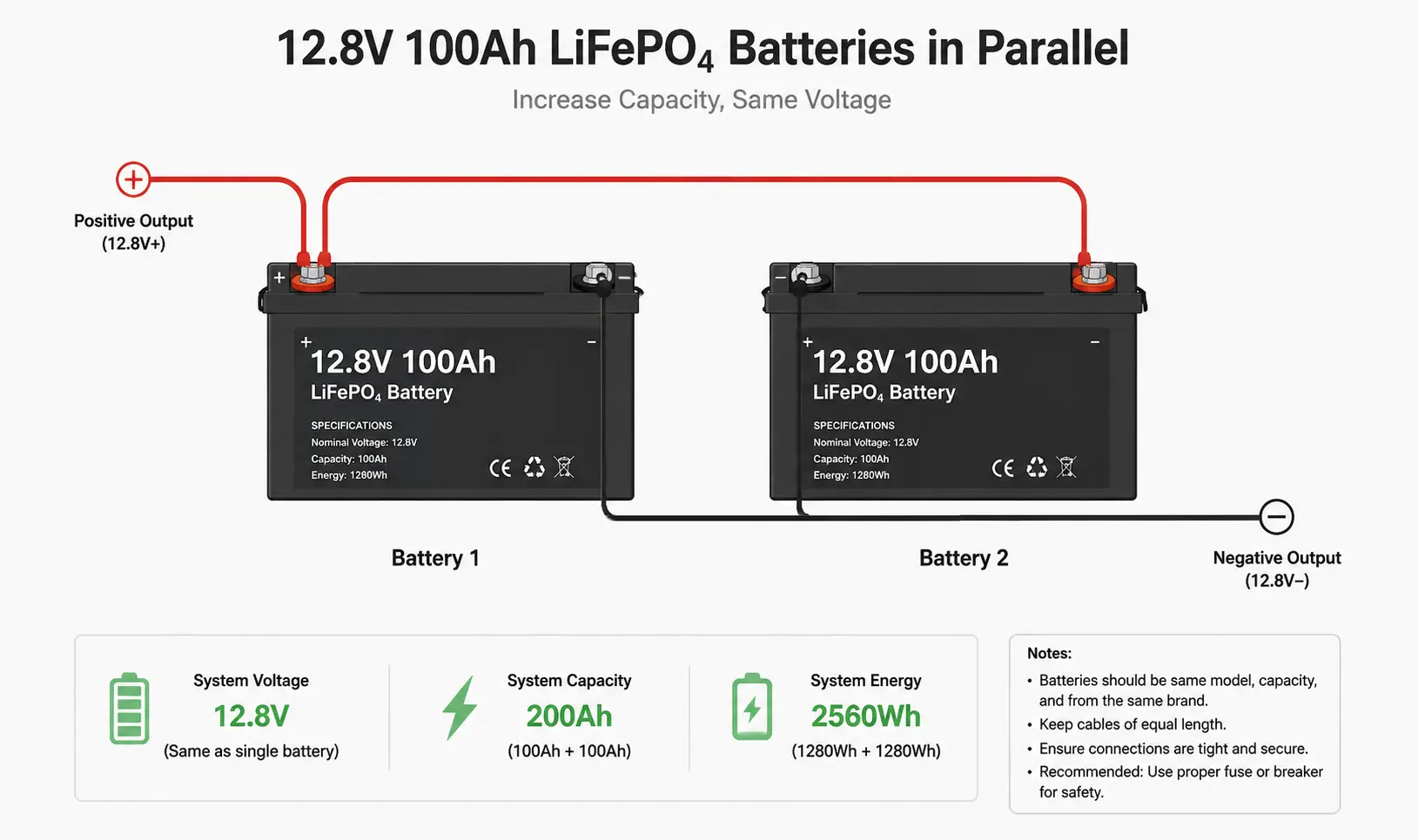
Samsetning í samhliða tengingu er ekki bara “bæta við enn einni rafhlöðu”. Hún býr til sameiginlegt rafnet, svo hvert hnappar, sinnar, tengi og rafhlöðumús, verður hluti af jöfnuferlinu. Þegar hlutirnir eru samstilltir og rétt tengdir, skiptir rafmagnið náttúrulega. Þegar þeir eru ekki, einn rafhlöðu getur unnið meira, elst hraðar eða kveikt fyrir verndar forrit áður en gangsetning bankans er fullkomin.
Hvað breytist, og hvað helst óbreytt
Samhliða rafhlöður halda spennu en auka amperstundarGeta. 51,2V uppbyggingin stendur 51,2V eftir að viðbætur samhæfu modúli í samhliða, meðan tiltækar Ah og wattstundir aukast. Þetta gerir samhliða útvíkkun gagnlega fyrir sólarorku geymslu, varabúnað, fjarskipta tækjabúnað, hafnir kerfi og hreyfanleg vinnsludótthildi sem þurfa lengri sjálfstæði frekar en hærra kerfisspennu.
- Spenna: er þau óbreytt þegar rafhlöður eru tengdar í samhliða.
- Stærð: bætir við saman, eykur keyrslutíma við sambærilegt álag.
- Tiltæk núverandi: can increase, subject to each battery’s BMS and the system wiring.
- Kerfið takmarkar: endurgefari, hlaðari, brennsluljós og afleggjarar þurfa enn rétt völd.
Hvernig á að byggja jafnvægið hliðstæða bankann
Byrja með samsvörun rafhlöðna
Notaðu rafhlöður með sömu efnafræði, tiltekna spennu, afkastagetu og samþykkt viðeigandi starfsskilyrða. Aðgerðarlegt er að einingar komist úr sömu módelfjölskyldu og hafi svipaðan aldur og stöðu laddu. Að blanda nýrri rafhlöðu við vel eldri einingu getur valdið ósamræmdri innri mótstöðu, sem gerir straumskiptan verra fyrirud. Samhæfður rafhlaðustýrikerfi er jafn mikilvægt vegna þess að vörðu viðbrot verða að virka saman.
Jafngreining straumleiðarinnar
Allar rafhlöður ættu að sjá sambærilega koparstút. Heiðarlegt aðferð er bussbararröðun: tengja hvern rafhlöðu við jákvæða og neikvæða bussboga með tengingum af sömu lengd og þykkt, tengja síðan álag og hlaðara við bussbararnar. Forðastu að taka álagið af fyrstu rafhlöðunni í keðjunni. Það stuttanleysi getur gert nálægasta rafhlöðuna að bjóða meiri straum en fjærsta.
Before closing the circuit, bring batteries to a similar voltage and confirm polarity with a meter. Install a fuse or breaker close to each battery’s positive terminal. The protection device should interrupt a fault before the cable becomes the limiting component. For larger banks, use a main disconnect and label every branch clearly.
| Stillingar | Nafnspenna | Getu | Áætluð orka |
|---|---|---|---|
| Einn 12,8V / 100Ah eining | 12,8V | 100 Ah | 1.28kWh |
| Tveir einingar í samhliða | 12,8V | 200 Ah | 2.56kWh |
| Fjórar einingar í samhliða | 12,8V | 400Ah | 5,12kWh |
| Tvö 51,2V / 100Ah einingar | 51,2V | 200 Ah | 10.24kWh |
Framleiðni, öryggi og endingu
Parallel expansion increases stored energy, but it does not automatically increase every part of system performance. The inverter must support the intended continuous and surge load. The charger must be compatible with the bank’s voltage and maximum charge current. If four batteries can each accept 50A, the theoretical bank limit may be 200A, but the actual permitted value depends on the manufacturer, temperature, wiring, and BMS communication.
Þrjár athuganir áður en þú virkjarð
- Staðfesta jöfn hleðsluástand og samhæft rafhlöðufirmware eða samskiptasetningar.
- Staðfestu póstaflougu, káleikstærðir, borðstykki, afkopanir og breytoraendi eru metin fyrir mögulegua galla og rekstrarstraum.
- Prófaðu bankann undir mældu álagi, athugaðu spennudropp, hita og hvort straumur deilist samvisst.
Hitinn er gagnlegt merki. Hlýr tengiliður, viðhaldsdæla eða samtengivesti gefa orku og þurfa skorthreystan rannsókn. Halda tengingum hreinum og togsterkum samkvæmt tilteknu, búa til loftræstingu sem hæfir ílátinu og leika pláss fyrir skoðun. Í faglegri uppsetningu eigi að fylgjast með pakka-spennu, straumi, hita og slæm boðaná, en ekki aðeins prósentuá).
LiFePO4 batteries are often selected for parallel storage because of their stable chemistry and long cycle life, but chemistry alone is not a safety strategy. The battery pack, BMS, enclosure, protection, and installation method must be treated as a complete design. Follow the manufacturer’s parallel limits and local electrical codes, especially for high-voltage or whole-home systems.
Þegar Battery Parallel er rétti valmöguleikinn
Veldu samsetningu í beint parallel þegar núverandi kerfis-spenna er rétt og raunverulegi vandi er rekstrartími eða nothæfur afköst. Það virkar vel þegar eftirspurn vex smám saman: útihús bætir íkælingu, sólarsnið styður fleiri nóttarlestir, eða farma verkstæði þarf lengri vaktir milli hlaða. Stýrð útvíkkun eykur einnig þjónustugetu vegna þess að ein grein getur verið einangruð til skoðunar þegar kerfið uppbygging leyfir.
Parallel er ekki alhliða lausn. Ef vídd kála verður of umfangsmikil, uppsetningin þarf að hafa háa spennu, eða inverterinn hefur náð fullu aflramma, þá gæti hærri spenna bygging eða nýtt samþætt ESS verið viðeigandi. Afkastahönnun ætti að hefjast með daglegum watt-klukkum, hámarkswöttum, krafnið bakupklukkutíma og hlaðskilyrðum. Útvíkkun er verðmæti þegar hún fylgir þessum mælingum frekar en áætlun.
Algengar spurningar
Hefur Battery Parallel á áhrif á spennu?
Nei. Paralellepp þær halda sama nafnspennu og bæta afköst. Til að auka spennu þarf að tengja rafhlöðurnar í raðtengingu, sem krefst annarra hönnunar og samhæfrar verndunar.
get ég Parallel rafhlöður með mismunandi afköstum?
Aðeins þegar framleiðandi leyfir það skýrt. mismunandi afköst og innri mótstaða geta myndað ójafna dreifingu straums. Samræmd líkamsgerð, spenna, efnasamsetning, aldur og hleðsluástand eru traustari nálgun.
Hver er besti rafrásarmynstur fyrir samhliða rafhlöðum?
Notaðu jafnt langa greinarlagnir frá hverri rafhlöðu til sameiginlegra jákvæðra og neikvæðra bassa. Setja skammhlaup eða togi nálægt hverjum jákvæðum tengi, síðan tengja hlaðvara og load við bassana.
Hversu margar rafhlöður má tengja saman í paralleli?
takmarkið er sérútvarp. Athugaðu rafhlöðu leiðbeiningarnar fyrir hámarksfjölda samhliða eininga, BMS-samskiptakrav, hlaðara- takmörk og leyfð spennuborð eða þversnið bassa áður en þeim er fjölgað.