 বাংলা
 English
 العربية
 日本語
 한국어
 Tiếng Việt
 ไทย
 Bahasa Melayu
 فارسی
 Bahasa Indonesia
 ဗမာစာ
 简体中文
 香港中文
 繁體中文
 Русский
 Deutsch
 Nederlands
 Italiano
 Français
 Español
 Português
 Afrikaans
 Azərbaycan dili
 Български
 ਪੰਜਾਬੀ
 हिन्दी
 اردو
 Հայերեն
 Íslenska
 Қазақ тілі
 नेपाली
 Српски језик
 Kiswahili
 తెలుగు
 Basa Jawa
 தமிழ்
 मराठी
A battery stops charging, and the owner expects a warranty replacement. The supplier asks for installation records and battery logs first. That can feel frustrating, but those records help distinguish a faulty component from a system configuration problem.
An energy storage battery warranty generally covers manufacturing defects and, when explicitly included, a minimum level of retained capacity. It usually excludes damage from misuse, unsuitable installation, and operation outside specified limits. Here’s how to tell the difference before you buy or file a claim.
What the Warranty Usually Covers
Manufacturing defects. Coverage commonly includes defective cells, internal connections, or a faulty battery management system (BMS), provided the failure meets the warranty conditions. A BMS fault and a protective shutdown aren’t the same thing: a battery that correctly disconnects during an overload may not have a defect.
Capacity below a promised threshold. Some warranties separately guarantee retained capacity. For example, if a contract guarantees 70% of an initial 10 kWh usable capacity, its threshold would be 7 kWh under the specified test conditions. These numbers illustrate the calculation; they aren’t a universal warranty standard.
10 kWh initial usable capacity7 kWh 70% retained capacity, under the contract’s specified test conditions.
Check how the supplier measures capacity and which limit ends coverage. A warranty may expire after a stated number of years, cycles, or cumulative energy throughput, whichever comes first. A cycle-life figure on a datasheet doesn’t automatically create a warranty entitlement.
Repair or replacement. The supplier may choose to repair the battery, replace it, or provide a prorated credit. Replacement doesn’t necessarily mean a new unit or a fresh warranty period. Read the remedy clause.
What OEM and ODM Buyers Should Confirm
For distributors buying OEM or ODM batteries, agree on coverage for the actual supplied configuration. Branding, connector variants, and firmware tuning should not leave uncertainty about which inverter combinations the supplier approves.
Keep warranty terms separate from commercial details such as minimum order quantities and sample lead times. Also define who handles diagnostics, replacement stock, and customer claims in each sales region.
Common Coverage Scenarios
| পরিস্থিতি | Typical treatment | What determines the outcome |
|---|---|---|
| Cell or BMS manufacturing fault | Often covered | Diagnosis, eligibility, and claim records |
| Capacity falls below a written guarantee | Potentially covered | Test method and remaining time or usage allowance |
| Gradual capacity loss within the guarantee | Usually not covered | The stated capacity-retention threshold |
| Water ingress or damage from incorrect wiring | Often excluded | Installation requirements, enclosure rating, and cause of damage |
The written warranty controls these outcomes, subject to applicable law. A supplier’s exclusions may not remove statutory rights.
Four Common Reasons Claims Are Rejected
- Operation outside the limits. Excessive current, deep discharge, or unsuitable temperatures may exclude related damage. For an LFP battery, check charging restrictions near or below 0°C; permitted operation depends on the pack’s design and heating provisions.
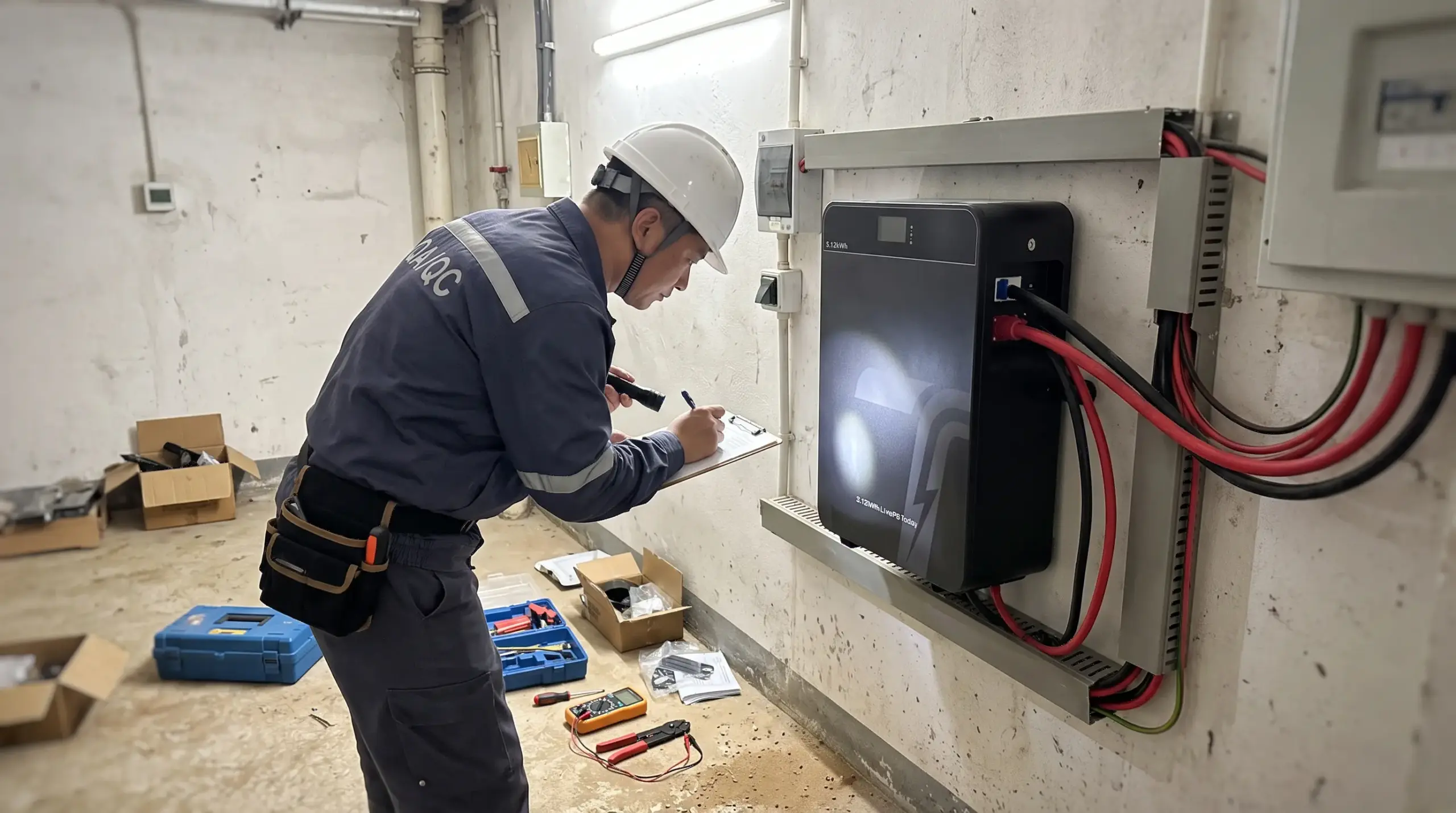
- Incorrect installation or incompatible equipment. Wrong polarity, loose terminals, or incorrect inverter settings can damage the battery. Use the specified torque and approved communication settings.
- Unsuitable storage or exposure. Flooding, impact, fire, or prolonged storage without required maintenance charging may fall outside coverage. An IP rating does not make an enclosure suitable for every location.
- Unapproved modification. Opening the pack, changing internal wiring, or installing unsupported firmware can affect eligibility under the terms. Get written approval before altering the supplied configuration.
সচরাচর জিজ্ঞাস্য
Does the warranty pay for labor and shipping?
Not necessarily. A covered replacement may still exclude removal, reinstallation, freight, or site visits. Check these costs separately, especially where battery transport requires specialist handling.
Does a battery warranty cover the inverter too?
Usually, a battery-only warranty doesn’t. Inverters and other system components may have separate warranties, even when one seller supplies everything.
What should I prepare for a claim?
Keep the purchase invoice, serial number, commissioning records, fault codes, and available BMS logs. Ask for return authorization before arranging shipment, and do not ship a damaged battery through ordinary parcel services.
তলদেশের সরুরেখা
Warranty length alone tells you very little. The useful details are what counts as a defect, how capacity is measured, when coverage expires, and who pays to put the system back into service.
Before placing an order, send the supplier your battery configuration and inverter model and request the matching warranty document, capacity-test criteria, and claim-cost breakdown in writing.