 Русский
  English
  العربية
  日本語
日本語  한국어
한국어  Tiếng Việt
  ไทย
ไทย  Bahasa Melayu
  فارسی
فارسی  Bahasa Indonesia
  ဗမာစာ
ဗမာစာ  简体中文
简体中文  香港中文
香港中文  繁體中文
繁體中文  Deutsch
  Nederlands
  Italiano
  Français
  Español
  Português
  Afrikaans
  Azərbaycan dili
  Български
  ਪੰਜਾਬੀ
  हिन्दी
  اردو
اردو  বাংলা
বাংলা  Հայերեն
  Íslenska
  Қазақ тілі
  नेपाली
  Српски језик
  Kiswahili
  తెలుగు
  Basa Jawa
  தமிழ்
தமிழ்  मराठी
मराठी When you’re sourcing energy storage batteries, a supplier’s website may show production lines, certificates, and an extensive product range. None of those alone proves that the company manufactures the product you’re buying.
The most useful approach is to check who controls production, testing, and engineering changes for your specific model. A trading company can be a reliable partner, but you should know who makes the battery and who takes responsibility when something goes wrong.
Check Whether the Technical Records Match the Product
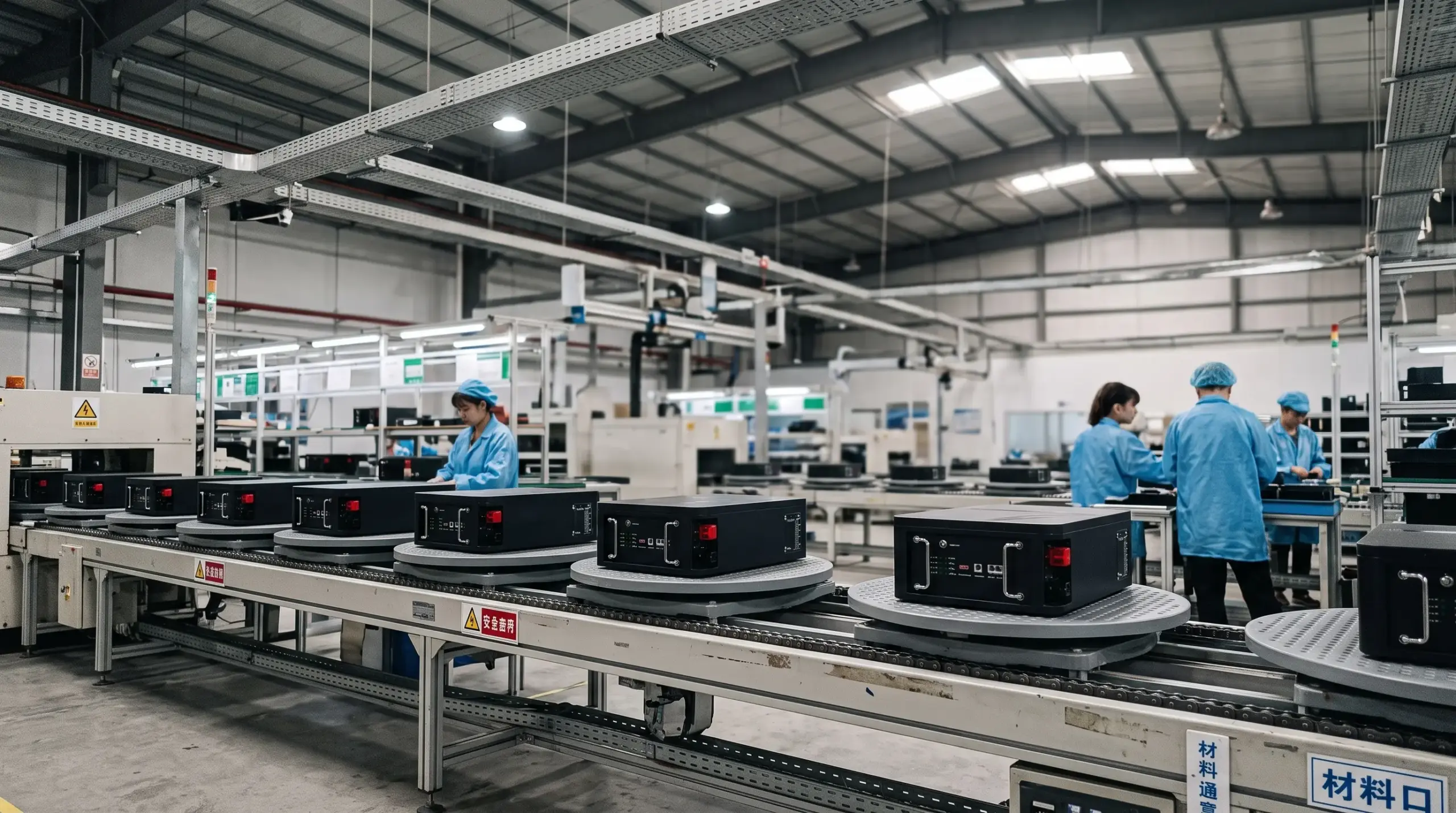
Start by asking what the supplier actually manufactures. A battery pack factory may purchase lithium iron phosphate (LFP) cells, BMS boards, and enclosures, then assemble and test the finished battery. Buying these components does not make it a trading company.
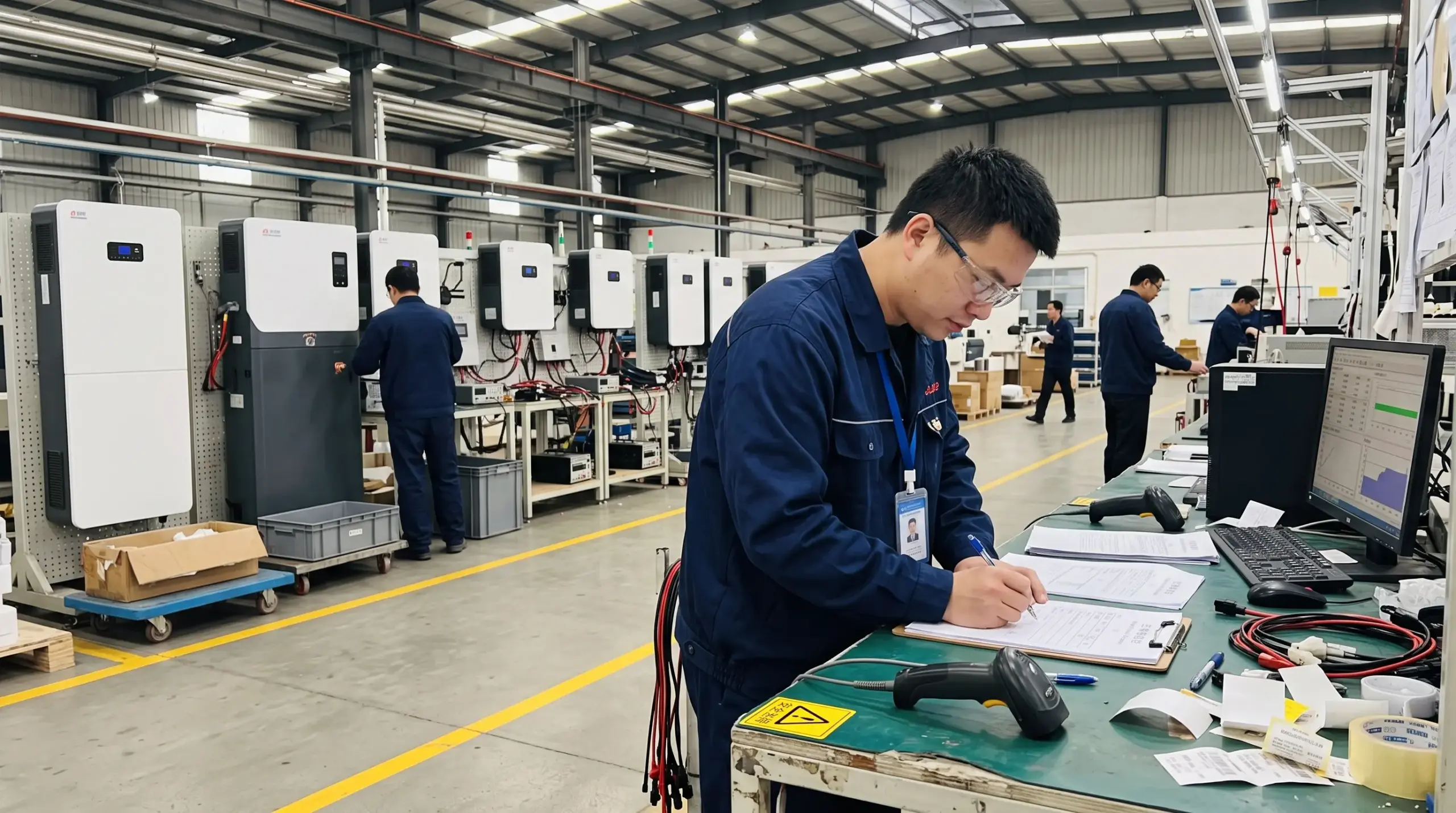
Use one model to check the explanation. For example, a nominal 51.2 V, 100 Ah LFP battery typically uses 16 cells in series and stores 5.12 kWh of nominal energy. Ask for its assembly flow, cell inspection criteria, BMS protection settings, and a sample final-test record.
The records should identify the model, test conditions, acceptance limits, and unit or batch reference. Ask how the factory links a finished battery’s serial number to incoming cells and test results. Consistent answers matter more than a polished datasheet.
Next, arrange a site visit or a live video walkthrough. Ask to see incoming inspection, pack assembly, BMS installation, and final testing for the relevant product. A quiet line may simply reflect the production schedule, so confirm it against recent batch records rather than drawing conclusions from one visit.

Use OEM and ODM Questions to Identify Engineering Control
Logo printing is easy to arrange through either a factory or a trader. More revealing OEM or ODM requests involve connector variants, enclosure changes, or BMS firmware tuning, including CAN or RS485 communication with a specified inverter.
Ask who reviews the change, who validates it, and who approves the updated drawings or firmware. Request the MOQ and sample lead time for your actual configuration, not a general promise of “full customization.”
A manufacturer should explain its process and limits. A trading company may coordinate the same work successfully, but it should clearly identify the engineering and production responsibilities rather than imply that it owns them.
Compare the Evidence Before You Decide
| Supplier type | What it controls | Evidence to request |
|---|---|---|
| Battery pack manufacturer | Pack assembly and finished-product testing | Relevant production walkthrough and traceable batch records |
| Trading company | Sourcing, commercial coordination, and possibly after-sales service | Manufacturing partner disclosure and clear warranty responsibilities |
| Manufacturer with outsourced processes | In-house operations plus contracted production steps | Process breakdown and quality controls for outsourced work |
A company may manufacture one product range and trade another. Verify the exact model you intend to order.
Четыре распространенные ловушки
- Treating certificates as proof of factory ownership. Check the applicant, manufacturer, production address where listed, and covered models. These roles may legitimately belong to different entities.
- Confusing pack manufacturing with cell manufacturing. Many genuine storage battery factories buy cells rather than produce them.
- Accepting factory photos without verification. Use a live walkthrough or an independent site audit to connect the facility to the supplier and product.
- Assuming factory-direct means better quality. Compare sample performance, traceability, warranty terms, and engineering support regardless of company type.
Часто задаваемые вопросы
Does a business license prove that a supplier is a factory?
No. Manufacturing activities on a registration document support the claim, but they don’t confirm that the company currently produces your model. Check operational evidence as well.
Is a trading company always a poor choice?
No. A transparent trader may offer useful sourcing, logistics, or local support. The risk is unclear manufacturing responsibility, not the trading-company label itself.
What should I request before placing an order?
Request a relevant production walkthrough, a redacted batch test report, and written clarification of the manufacturing entity and warranty provider. For a significant order, consider an independent audit and sample testing.